
Take a Photo. AI Fills the Form
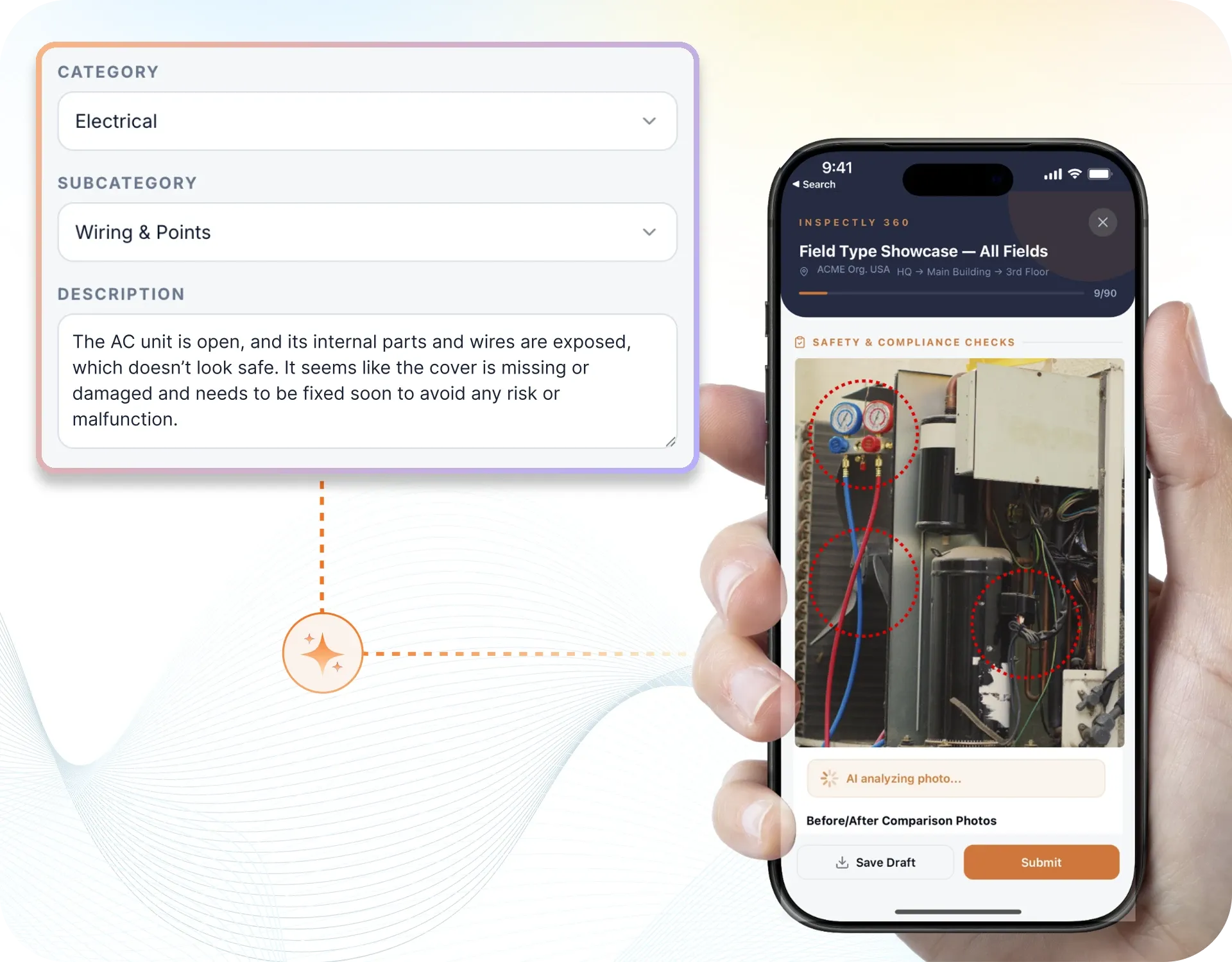
Your inspector takes a photo of any asset or defect. AI reads it and fills the inspection form automatically. No typing. No manual entry.

Convert your checklist into Mobile App
Air compressor inspection software is the platform that Manufacturing Plant Engineers, Reliability Engineers, Compressed Air Engineers, Facilities Engineering Managers, Energy Managers, Process Engineers, Authorised Persons (Pressure Systems), and Compressed Air AMC Service Contractors use to run air compressor inspections across factories, process plants, breweries, food manufacturing, pharmaceutical, automotive, and multi-site portfolios with defensible evidence at every step.
Everything your field team does on paper, Inspectly360 does automatically: faster, more accurate, and without the admin.
Your inspector takes a photo of any asset or defect. AI reads it and fills the inspection form automatically. No typing. No manual entry.
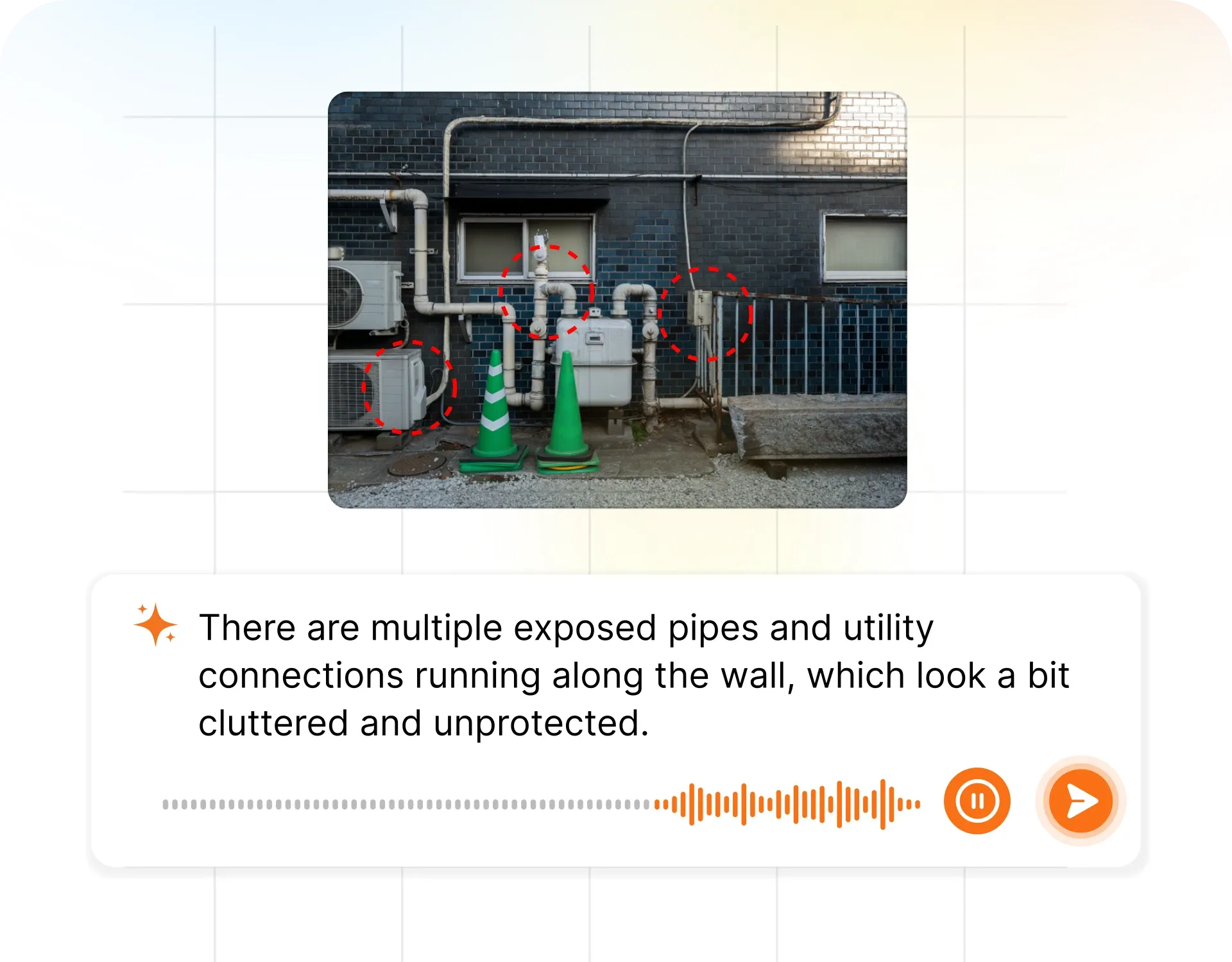
Inspectors speak their observations in any language. AI transcribes and fills the form in real time. Completely hands-free in the field.
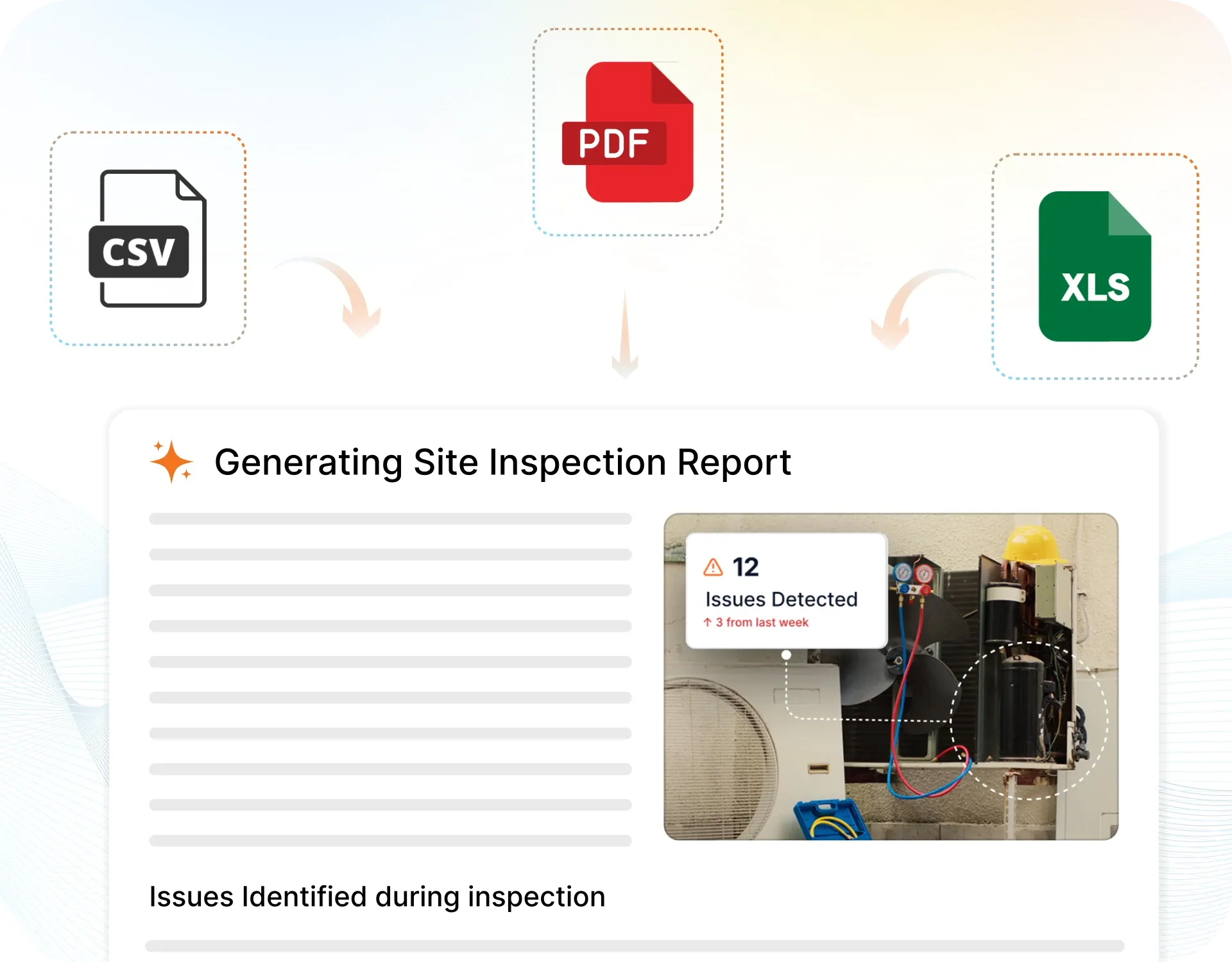
The moment an inspection is submitted, a branded PDF, Excel, or CSV report generates automatically. No manual work. No waiting.

Inspectly360 integrates with the tools your team already uses, including Zoho, Microsoft 365, and SAP. No double entry.
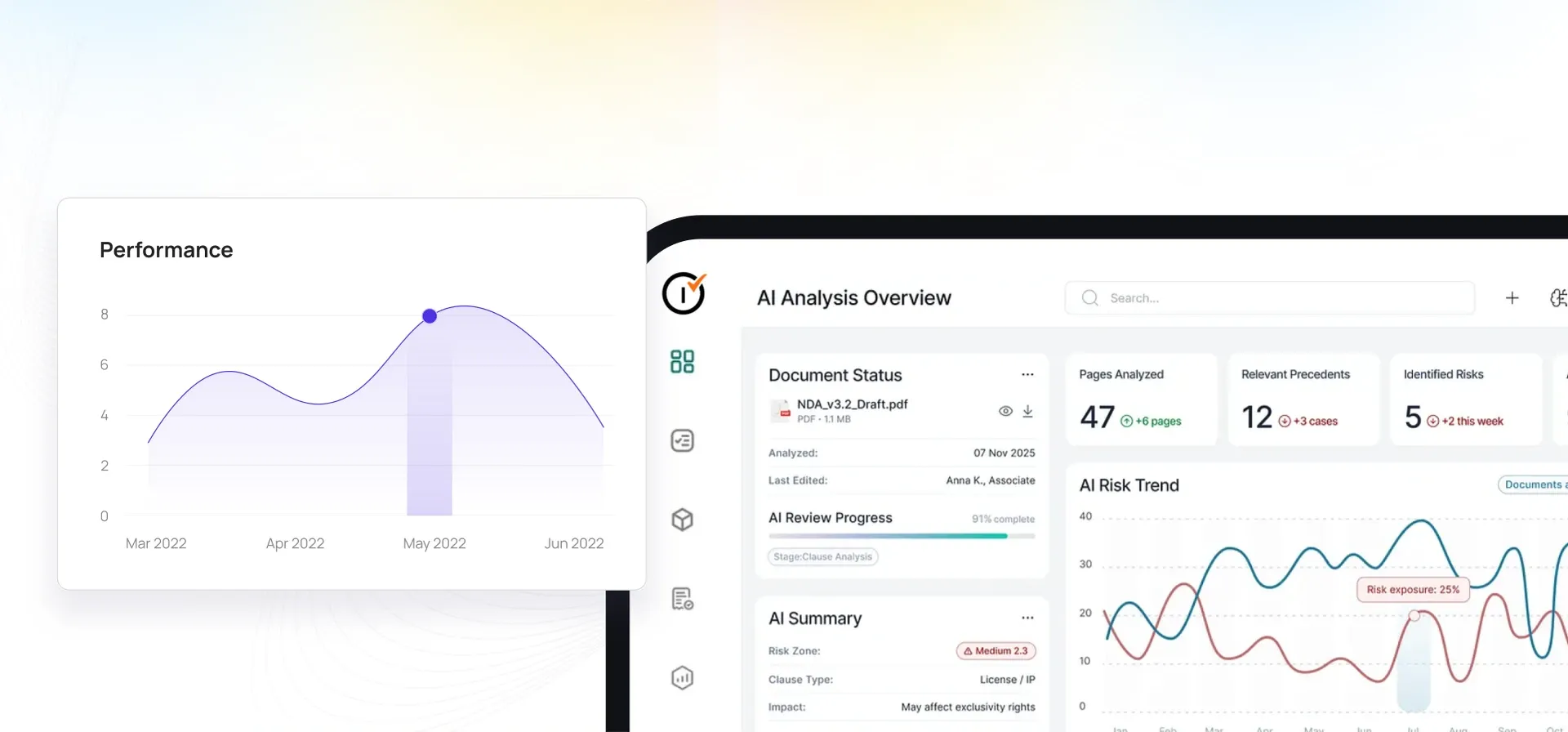
Your operations team sees completion rates, open issues, and compliance scores across all sites in real time. No chasing updates.
What changes once air compressor inspection software runs on one mobile-first platform with photo proof and live dashboards.
Air compressor inspection software is the platform that Manufacturing Plant Engineers, Reliability Engineers, Compressed Air Engineers, Facilities Engineering Managers, Energy Managers, Process Engineers, Authorised Persons (Pressure Systems), and Compressed Air AMC Service Contractors use to run air compressor inspections across factories, process plants, breweries, food manufacturing, pharmaceutical, automotive, and multi-site portfolios with defensible evidence at every step. Inspectly360 digitises the full air compressor inspection cycle with structured templates aligned to PSSR 2000 (UK Pressure Systems Safety Regulations), ASME BPVC Section VIII Division 1 (US pressure vessel code), PED 2014/68/EU (Pressure Equipment Directive), API 618 (reciprocating positive displacement compressors), API 619 (rotary type positive displacement compressors), API 617 (axial and centrifugal compressors for process service), ISO 8573 series (compressed air contaminants and purification), ISO 1217 (acceptance testing for displacement compressors), ASME B19.3 (safety standard for compressors), ASME PCC-2 (repair of pressure equipment), HSE Control of Noise at Work Regulations 2005 and EU Directive 2003/10/EC, OSHA 1910.169 (US air receivers), British Compressed Air Society (BCAS) best-practice guidance, Compressed Air and Gas Institute (CAGI) data sheets, and the Environmental Permitting Regulations and EPA discharge permits for condensate management.
The pain it solves is the everyday reality of compressed air operations: a PSSR 2000 written scheme of examination on the main 7-bar receiver that drifted six months past the scheme cycle because the Competent Person engagement lapsed when the contractor changed, an oil-water separator discharging hydrocarbon-in-water above the Environment Agency consent limit because nobody tested at the discharge point, an ISO 8573-1 Class 1.4.1 instrument-air specification that no engineer can verify at the point-of-use because the design test ports were never plumbed, a compressed air leak survey that catalogued 80 leaks twelve months ago and only 15 were ever fixed because the closure workflow lived on a spreadsheet, a rotary screw airend that failed at 38,000 hours because vibration trend over the prior 12 months was never plotted, a reciprocating compressor head valve that failed because the head temperature trend nobody saw was 15 degrees C above the prior 6-month baseline, a refrigerated dryer that drifted on pressure dew point because the refrigerant top-up was self-certified by the AMC contractor without an F-Gas Certified Engineer log, an air receiver safety valve that lifted prematurely because nobody recorded the last bench test result, and a SCADA trend showing kW per cfm specific power drifting that nobody correlated with the loaded inlet filter in the inspection record. Compressed air is typically the largest electrical load in a manufacturing plant; paper compressor logs do not protect that load.
Inspectly360 combines ready-made templates for daily walk-around (oil sight glass, oil temperature, discharge pressure, motor amps, condensate drain function, intake filter pressure drop), weekly inspections (belt tension and alignment, coupling condition, after-cooler approach temperature, refrigerated dryer pressure dew point, desiccant dryer tower switch-over, oil-water separator condition, vibration spot readings), monthly inspections (oil sample, intake filter element, separator element, oil filter, motor amperage trend, vibration full scan), quarterly inspections (coupling alignment, V-belt or geared timing alignment, head valve clearance for reciprocating, airend rotor clearance and shaft seal for rotary screw), annual inspections (full overhaul or major service, pressure-vessel internal examination if Competent Person scheme requires, safety valve bench test, motor megger test, PE earth bond), PSSR 2000 written scheme of examination per pressure-bearing component (air receiver, intercooler, aftercooler, separator, dryer vessels) with Safe Operating Limit (SOL), statutory examination interval, last Competent Person date, and outstanding scheme corrective actions, ASME BPVC Section VIII nameplate and PED 2014/68/EU category data per vessel, ISO 8573-1 air purity class verification at point-of-use with oil aerosol test, water vapour test via pressure dew point, particulate test via particle counter, and oil vapour test, ultrasonic compressed air leak survey with leak rate in cfm and annualised kWh cost attribution, vibration trend per API 619 and API 618 with FFT spectrum data and bearing condition unit, oil analysis with water content, particulate to ISO 4406, viscosity, TAN / TBN, wear-metal spectrometry, condensate management with automatic drain function and oil-water separator discharge hydrocarbon-in-water test, energy benchmarking per compressor with kW per cfm specific power and load-unload duty cycle, and noise survey per HSE Control of Noise at Work Regulations; AI fault detection on the engineer's photo for slack belts, leaking shaft seals, oil sight glass condition, dirty intake filter, condensate freezing on after-coolers, blown gauges, and corroded receiver shells; QR-tagged compressors, receivers, dryers, separators, and filter housings with full service history; offline capture in metal-clad compressor rooms and noisy plant rooms where signal disappears; statutory clocks per asset with renewal alerts for PSSR examination, ASME inspection, ISO 8573 sampling, API 619 vibration cycle, oil sample cycle, and safety valve bench test; and white-label PDF reports that generate the moment the engineer closes out. Authorised Persons (Pressure Systems) and Competent Persons under PSSR 2000 operate as scoped roles producing credentialed audit packs.
Plant Engineering Managers, Reliability Engineers, and Compressed Air Service Contractors follow this loop for daily walk-arounds, statutory pressure-vessel examinations, ISO 8573 air-purity verifications, and energy programmes.
Daily walk-around, weekly belt and coupling check, monthly oil sample and filter, quarterly alignment and clearance check, annual overhaul, PSSR 2000 written scheme of examination, ASME BPVC Section VIII vessel inspection, ISO 8573-1 air purity sampling at compressor outlet and at point-of-use, compressed air leak survey with ultrasonic detector, vibration trend per API 619 and API 618, oil analysis to ISO 4406, condensate and oil-water separator check, refrigerated dryer pressure dew point verification, safety valve bench test, motor megger and PE earth bond test, or noise survey. Each pack carries the rubric the regulator, the Competent Person, the lab, or the AMC client SLA expects.
Engineers scan the QR tag on the compressor, receiver, dryer, separator, or filter housing. The right checklist opens for the right compressor class (oil-flooded rotary screw, oil-free rotary screw, reciprocating single-stage, reciprocating two-stage, centrifugal, scroll); nameplate kW and cfm, ASME BPVC or PED category for pressure-bearing components, PSSR written scheme reference and SOL, last oil sample result, last leak survey count, and any open CAPA surface so repeat issues are visible from the device.
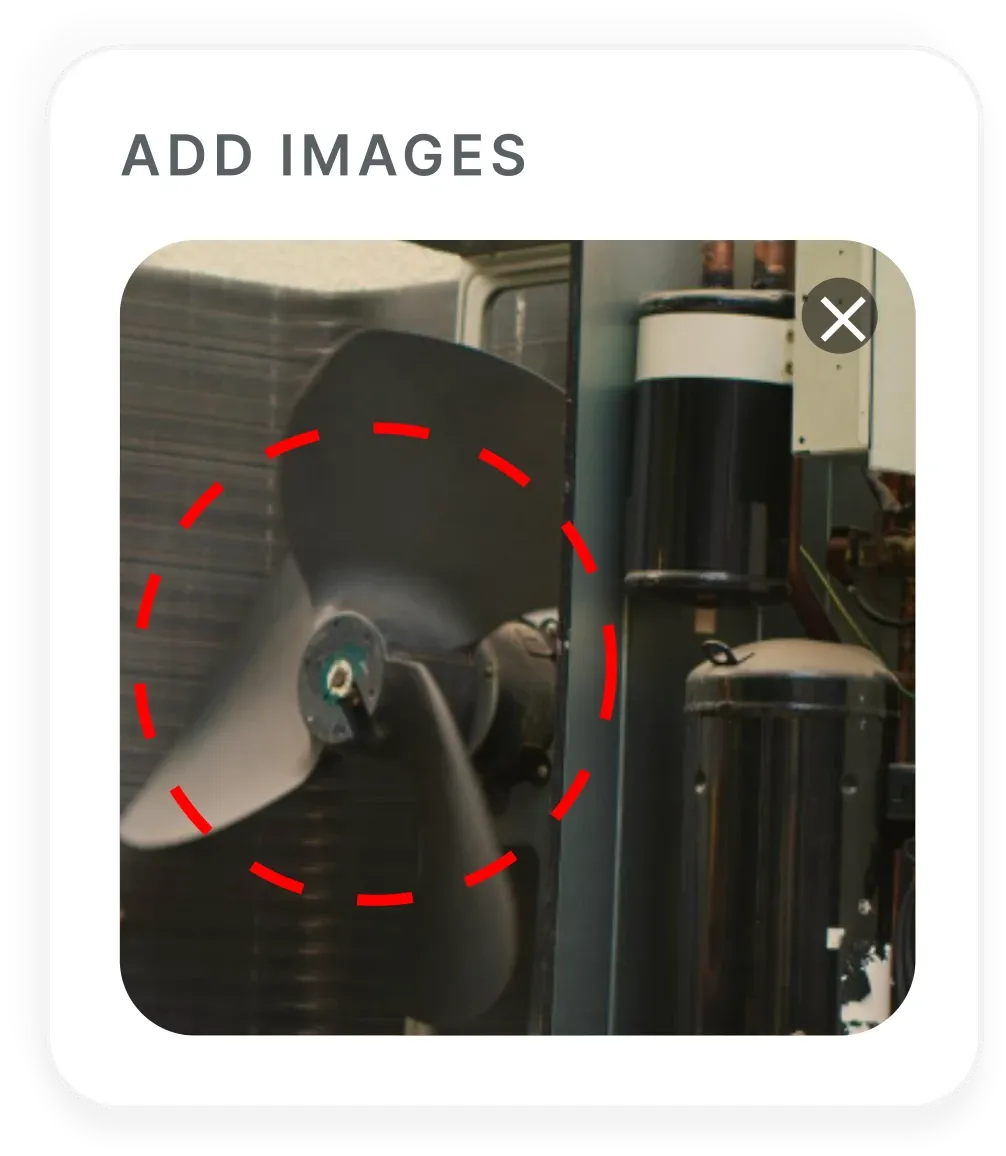
Capture in metal-clad compressor rooms, basement plant rooms, and noisy factory floors where signal disappears. AI flags slack or cracked drive belts, leaking shaft seals and oil staining, dirty intake filter against the clean baseline, condensate freezing on after-coolers, blown gauges, corroded receiver shells, sweating refrigerated dryer vessels, and oil saturation on oil-water separators from the engineer's photo and suggests fault classification for the engineer to confirm or override.
SCADA and IIoT integrations push trend data per compressor (kW draw, motor amperage per phase, discharge pressure, discharge temperature, oil temperature, oil pressure, ambient temperature, load-unload duty cycle, hours run, specific power in kW per 100 cfm, refrigerated dryer pressure dew point, intake filter differential pressure) into the inspection record. AI correlates trend deviation with recent inspection findings so the loaded intake filter before the specific power rise, or the failing head valve before the discharge temperature climb, is visible from one record.
Branded PDFs (AMC client compressor PPM report, PSSR 2000 written scheme corrective-action pack, ISO 8573-1 air purity verification, compressed air leak survey with kWh cost attribution, vibration trend report per API 619 / API 618, oil analysis trend) generate the moment the engineer closes out via /features/automated-reports; statutory clocks per asset update with renewal alerts for PSSR examination cycle, ASME inspection cycle, ISO 8573 sampling, API vibration cycle, oil sample cycle, safety valve bench test, and refrigerated dryer F-Gas leak check via /features/notifications.
Answers to common long-tail questions, kept on one canonical page to avoid thin duplicate URLs.
Inspectly360 sits as the air compressor inspection evidence and compliance defensibility layer beside the platforms manufacturing and reliability teams already run. Maximo, IBM TRIRIGA, Planon, eMaint, Limble, Fiix, SAP PM, and Infor EAM stay the system of record for compressor work orders, PPM scheduling, and asset register. SCADA / DCS (Rockwell Automation FactoryTalk, Siemens WinCC, Wonderware, GE Proficy, ABB 800xA) and IIoT compressor controllers (Atlas Copco Smartlink, Kaeser Sigma Air Manager, Ingersoll Rand Helix Connect, CompAir Air Performance Manager) stay where they are for live trending and load-unload sequencing. The compressor OEM service portal (Atlas Copco, Kaeser, Ingersoll Rand, CompAir, Sullair, Quincy, Gardner Denver) stays where it is for service history and remote diagnostics. The compressed air AMC service contractor's job-management tool stays where it is for scheduling and invoicing. Inspectly360 produces the structured compressor inspection evidence, AI fault detection on compressor and receiver photos, PSSR 2000 written-scheme corrective-action tracking, ASME BPVC and PED 2014/68/EU pressure-vessel evidence, ISO 8573-1 air purity verification at point-of-use, ultrasonic leak survey with kWh cost attribution, API 619 / API 618 vibration trend, and SCADA-correlated findings those platforms reference but do not collect.
Plant Engineering Managers typically pilot the PSSR 2000 written scheme of examination programme across one site and one Competent Person engagement and measure scheme cycle compliance and corrective-action closure. Reliability Engineers pilot the API 619 vibration trend and oil analysis programme across one rotary screw plant and measure mean-time-between-failure improvement. Compressed Air Engineers pilot the ISO 8573-1 air purity verification across one critical point-of-use (paint shop, instrument air, food contact, pharmaceutical) and use the evidence to defend the application specification. Compressed Air AMC Service Contractors pilot the client SLA evidence pack workflow with one client and use the structured per-compressor inspection record to defend tender retention and upsell condition-based maintenance. Energy Managers pilot the ultrasonic leak survey with kWh cost attribution across one plant and measure annualised compressed air leak cost and pay-back of repair effort.
Compressor operations involve multiple parties: plant or facility owner, FM aggregator, compressed air AMC service contractor (often the OEM or an OEM-authorised partner), Competent Person under PSSR 2000 (for the written scheme of examination of pressure-bearing components), Authorised Person (Pressure Systems) for permit-to-work, oil analysis lab (Wearcheck, Bureau Veritas, SGS, Castrol), ultrasonic leak survey contractor (SDT, UE Systems, FLIR Si124 certified), refrigerated dryer F-Gas Certified Engineer (UK Refcom or City & Guilds qualified), the Environment Agency or EPA for condensate discharge, and the local environmental regulator. RBAC scopes each party to the compressors, vessels, and evidence they are entitled to. Competent Persons under PSSR 2000 operate as scoped roles producing credentialed written-scheme corrective-action evidence intact; AMC contractor self-certification of monthly inspections is replaced by named engineer sign-off with QR-scanned asset identity and GPS-verified timestamp.
Procurement and engineering should validate seven requirements before any compressor rollout: SSO via SAML or OIDC tied to the operator's IdP, RBAC granular enough to scope a Competent Person under PSSR 2000 to pressure-bearing components only, offline capture verified in a real metal-clad compressor room, configurable retention aligned to PSSR scheme retention windows (typically lifetime of the vessel plus 2 years), ASME inspection retention, and oil analysis trend retention, statutory export formats acceptable to the Competent Person, the lab, and the local environmental regulator, SCADA and OEM controller integration depth via OPC UA, Modbus TCP, MQTT, or REST API into the operator's control system, and a documented CMMS integration path. For cross-jurisdiction estate operators (UK, US, EU, India, UAE, APAC), regional data residency aligns to the local data protection regulator and the regional pressure-equipment regulator.
The platform capabilities that power air compressor inspection software across every site.
Plant Engineers, Reliability Engineers, Compressed Air Engineers, and Energy Managers comparing Inspectly360 to paper compressor logs, spreadsheet PSSR records, and disconnected SCADA trends see the difference fastest on five dimensions: PSSR 2000 and ASME BPVC pressure-vessel written-scheme defensibility per receiver and per separator, ISO 8573-1 air purity class verification at point-of-use, compressed air leak survey results with ultrasonic detector evidence and energy cost attribution, vibration and bearing condition trends per API 619 for rotary screw and per API 618 for reciprocating, and condensate management and oil-water separator discharge evidence aligned to environmental regulations.
| Topic | Typical Gaps | With Inspectly360 |
|---|---|---|
| PSSR 2000 and ASME BPVC pressure-vessel written-scheme defensibility | The PSSR 2000 written scheme of examination (UK Pressure Systems Safety Regulations) for the air receiver, after-cooler, and separator vessels lives in the Competent Person's report from the last visit. Verification dates, safe operating limits (SOLs), and corrective actions arising sit in the plant engineer's filing cabinet. The next PSSR examination is triggered by a calendar reminder rather than the verified scheme cycle. | Each pressure-bearing component (air receiver, intercooler, aftercooler, oil-water separator, dryer vessel) carries a QR tag with PSSR written scheme reference, statutory examination interval, Safe Operating Limit (SOL) per the scheme, last Competent Person examination date, and outstanding corrective actions. ASME BPVC Section VIII Division 1 nameplate data, PED 2014/68/EU category, and Pressure Equipment Safety Authority registration details attach per vessel. |
| ISO 8573-1 air purity class verification at point-of-use | Air quality complaints arrive from process areas: oil aerosol contaminating product, water carryover damaging instrumentation, particulate in a paint shop. The ISO 8573-1 purity class designed for the application (e.g. Class 1.4.1 for paint, Class 2.2.1 for instrument air, Class 0 for food contact) is in the design specification but not verified at the point-of-use. | ISO 8573-1 sampling templates capture oil aerosol class (Class 0 to Class X), water vapour class via pressure dew point measurement, and particulate class via particle counter at the compressor outlet, the dryer outlet, and each major point-of-use. ISO 8573-2 oil aerosol test, ISO 8573-3 water vapour test, ISO 8573-4 particulate test, and ISO 8573-5 oil vapour test results attach per sample with calibrated-instrument certificate. |
| Compressed air leak survey with ultrasonic evidence and kWh cost attribution | Annual leak surveys produce a spreadsheet of tagged leaks. Six months later the same leaks are still leaking because nobody chased closure, and an additional 20 leaks have formed. The cost of leaks in kWh per year is estimated rather than measured, and the leak-cost-to-fix payback is never calculated for the maintenance team. | Ultrasonic leak detector readings (SDT, UE Systems, FLIR Si124) attach per tagged leak with leak rate in cfm, pressure, hours of operation per week, electricity tariff in currency per kWh, and calculated annualised cost. Repair workflow tracks each tagged leak from detection to verified repair with re-measurement evidence. Site-level leak survey trend shows compressed air loss as a percent of total compressor output. |
| Vibration, bearing, and oil analysis trends per API 618 / API 619 | Vibration readings on rotary screw end caps and reciprocating crosshead guides happen at the last contracted condition-monitoring visit. Oil analysis sample results sit in lab PDF reports nobody filed. Bearing life predictions and crank pin clearances drift outside design tolerance without anyone noticing until a failure event. | Vibration trend templates per API 619 (rotary screw and dynamic) and API 618 (reciprocating positive displacement) capture overall vibration velocity in mm/s RMS, FFT spectrum data, bearing condition unit reading, and shaft alignment. Oil analysis sample results (water content, particulate count to ISO 4406, viscosity, TAN / TBN, wear-metal spectrometry) attach per sample with lab reference. AI flags trend deviation above the configurable alarm threshold per asset. |
| Condensate management and oil-water separator discharge evidence | Condensate from after-cooler, dryer, and receiver drains flows to an oil-water separator that nobody tests for hydrocarbon-in-water at discharge. The Environmental Permitting Regulations breach risk sits unmeasured. The oil-water separator is changed when it overflows rather than per service life. | Condensate management templates capture automatic drain function (zero-loss vs timed solenoid), oil-water separator service life and oil saturation indicator, discharge hydrocarbon-in-water test result (mg/litre against Environment Agency or EPA limit), and separator media replacement evidence. Discharge consent compliance per Environmental Permitting Regulations or EPA discharge permit lives in one record per separator. |
What changes once air compressor inspection software is standardised on Inspectly360.
Get started with inspection and audit checklist templates.

Use this Shift Start Production Readiness inspection to verify critical checkpoints and safety controls, compliance records and sign-off and corrective actions with photo evidence…

Use this End of Shift Shutdown & Handover inspection to verify critical checkpoints and safety controls, compliance records and sign-off and corrective actions with photo evidence…
Use these apps to run inspections and audits.

by Inspectly360
Inspect air compressors with structured pressure, leak, and lubrication checks plus defect logging.

by Inspectly360
Run air compressor inspections on phones and tablets with offline forms, photo and voice capture, and instant reports.

by Inspectly360
Audit air compressor programmes with weighted scoring, photo evidence, and corrective action tracking across plants.

by Inspectly360
Run air compressor inspections on Android phones and rugged tablets with offline forms, QR asset scans, and photo capture.

by Inspectly360
Run air compressor maintenance with scheduled pressure, leak, and lubrication tasks plus service history records.
Air compressor inspection management software is the layer that schedules daily walk-arounds, weekly belt and coupling checks, monthly oil sample and filter changes, quarterly alignment and clearance checks, annual overhauls, PSSR 2000 written scheme of examination cycles per pressure-bearing component, ASME BPVC Section VIII inspection cycles, ISO 8573-1 air purity sampling at compressor outlet and each major point-of-use, ultrasonic leak surveys, API 619 and API 618 vibration trend cycles, oil analysis cycles, safety valve bench tests, refrigerated dryer F-Gas leak checks, and noise surveys across every compressor in the estate from one programme library. RBAC scopes each plant engineer, reliability engineer, compressed air engineer, AMC contractor, Competent Person under PSSR 2000, Authorised Person (Pressure Systems), oil analysis lab, ultrasonic leak survey contractor, and refrigerated dryer F-Gas Certified Engineer to the compressors, vessels, and evidence they are entitled to. Template governance lives at Plant Engineering Manager or Reliability Manager level; site-specific overrides (food-contact ISO 8573 Class 0 cadence, pharmaceutical Grade A) attach without breaking the corporate baseline.
Air compressor inspection audit software runs scored audit programmes against PSSR 2000 (UK Pressure Systems Safety Regulations), ASME BPVC Section VIII Division 1 (US pressure vessel code), PED 2014/68/EU (Pressure Equipment Directive), API 618 (reciprocating positive displacement compressors), API 619 (rotary type positive displacement compressors), API 617 (axial and centrifugal compressors), ISO 8573 series (compressed air purity), ISO 1217 (acceptance testing for displacement compressors), ASME B19.3 (safety standard for compressors), ASME PCC-2 (repair of pressure equipment), HSE Control of Noise at Work Regulations 2005, OSHA 1910.169 (US air receivers), and Environmental Permitting Regulations for condensate discharge. Each audit produces a weighted score per compressor and per pressure-bearing component, photo evidence per non-conformance, CAPA per finding, and a branded PDF export the Competent Person, the lab, the HSE inspector, the AMC client, and the local environmental authority recognise. The 12-month audit history per compressor retrieves in one click; named credentialed sign-off protects defensibility.
Air compressor inspection compliance software produces the evidence chain regulators expect across PSSR 2000 (UK pressure systems written scheme of examination, Safe Operating Limit, Competent Person engagement, corrective-action closure), ASME BPVC Section VIII Division 1 (US pressure vessel inspection, nameplate retention, repair per ASME PCC-2), PED 2014/68/EU (EU pressure equipment category, conformity assessment, periodic re-examination), ISO 8573-1 (point-of-use air purity class verification with oil aerosol, water vapour, particulate, and oil vapour evidence), API 619 and API 618 (vibration trend and reliability evidence per compressor class), HSE Control of Noise at Work Regulations 2005 (noise survey at 80 dB(A) lower exposure action level and 85 dB(A) upper exposure action level), OSHA 1910.169 (US air receiver inspection), and Environmental Permitting Regulations (oil-water separator discharge hydrocarbon-in-water consent). Every compressor inspection carries credentialed engineer identity, GPS-verified timestamp, asset confirmation, and required photo evidence. Statutory clocks per asset track PSSR examination cycle, ASME inspection cycle, ISO 8573 sampling cycle, API vibration cycle, oil sample cycle, safety valve bench test, and refrigerated dryer F-Gas leak check.
Air compressor inspection tracking software runs every finding through the same lifecycle: severity classification (immediate for a PSSR written-scheme prohibition condition, immediate for a safety valve failing bench test, immediate for an oil-water separator discharging above the Environment Agency consent limit, scheduled for vibration trend above the configurable alarm threshold, periodic for a tagged compressed air leak), named owner assignment, deadline by severity, required closure evidence, and named approver verification before the finding closes. PSSR findings trigger the Competent Person workflow with written-scheme reference, Safe Operating Limit verification, repair per ASME PCC-2 or equivalent, and Competent Person re-examination. Tagged leak findings trigger a repair workflow with ultrasonic re-measurement evidence and kWh cost-saved attribution. Tracking dashboards surface PSSR corrective-action status, ISO 8573-1 sample result trend, vibration alarm count, leak survey closure rate, AMC contractor closure performance, and CAPA age.
Air compressor inspection monitoring software runs a live multi-plant dashboard aggregating compressor inspection completion, PSSR written-scheme corrective-action status, ISO 8573-1 sample result trend per point-of-use, ultrasonic leak survey closure rate and annualised cost, vibration alarm count per compressor, oil analysis trend (water content, particulate to ISO 4406, wear-metal), refrigerated dryer pressure dew point trend, kW per cfm specific power per compressor, and SCADA-correlated findings. AI daily briefing delivers a plain-language summary to the Plant Engineering Manager, Energy Manager, and FM Director inbox before the operating committee: which compressors missed PPM cycles, which pressure-bearing components are within 30 days of PSSR examination, which leaks remain open above a kWh cost threshold, which compressors have vibration alarms, and which points-of-use are drifting on ISO 8573-1 class. Natural-language dashboard queries let leadership ask 'which plants have compressed air leak cost above £20,000 annualised?' and receive a filtered answer rather than a manual report.
Compressed air leakage is typically the single largest energy waste in a manufacturing plant compressed-air system: a poorly maintained plant loses 20 to 40% of total compressor output through leaks, an average-maintained plant loses 10 to 15%, and a well-maintained plant runs below 5%. Ultrasonic leak detection (SDT 200, UE Systems Ultraprobe, FLIR Si124) uses the high-frequency ultrasound that turbulent leak flow generates as it expands through an orifice; the detector ranges in and the engineer tags the leak. The leak rate in cfm derives from the orifice size and pressure: a 1.5 mm diameter leak at 7 bar runs roughly 17 cfm and costs roughly £1,500 to £3,000 per year in electricity at typical UK industrial tariffs. The platform captures leak rate, system pressure, hours of operation per week, electricity tariff in currency per kWh, and calculated annualised cost per tag, then tracks closure with ultrasonic re-measurement evidence. Site-level leak survey trend shows compressed air loss as a percent of total output.
Air Compressor Inspection Software on Inspectly360 connects directly to the inspection apps, checklist templates, forms, industries, and adjacent solutions linked below.
See Inspectly360 in action with a live demo tailored to your needs. No credit card required.