
Convert your checklist into Mobile App

Contact Now

Construction Site InspectionAudit Software

Construction site inspection audit software scoring discipline against ISO 9001, ISO 45001, and NEC quality plans, with weighted scoring and CAPA tracking.

Quick Answer

Construction site inspection audit software is a scored-audit system that turns the site walk from a list-builder into a measurable, weighted, evidence-led programme aligned to ISO 9001 documented-information requirements, ISO 45001 occupational health and safety, NEC quality plan obligations, JCT inspection regimes, and FIDIC engineer audit requirements. Inspectly360 is built for quality directors, internal auditors, and contract administrators who need scored construction site programmes that survive ISO 9001 surveillance, ISO 45001 surveillance, and contract administrator review, and who carry personal accountability for the quality the field actually delivered.

AI-Powered Features for Your Field Workflows

Everything your field team does on paper, Inspectly360 does automatically: faster, more accurate, and without the admin.

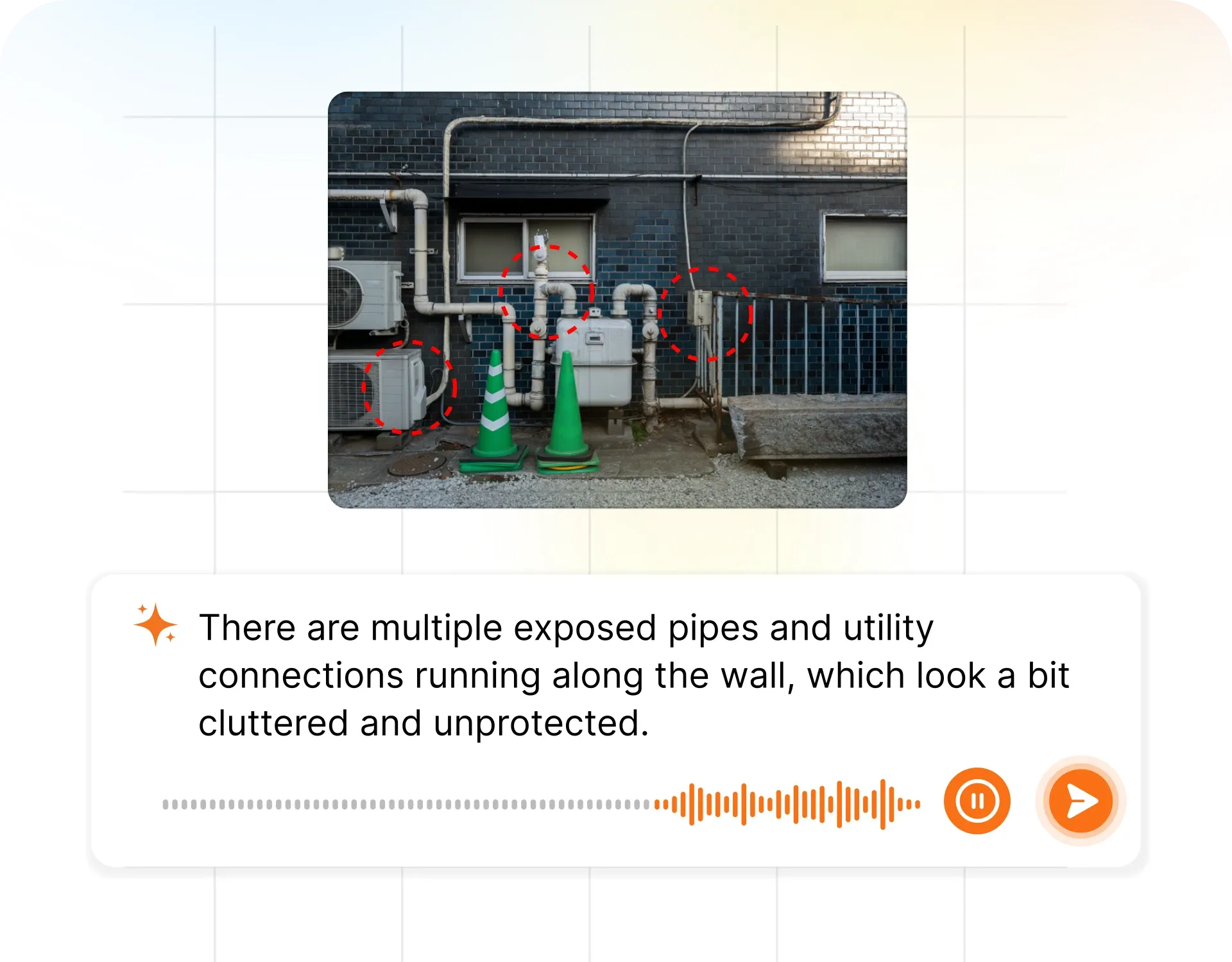
Take a Photo. AI Fills the Form illustration

Take a Photo. AI Fills the Form

Your inspector takes a photo of any asset or defect. AI reads it and fills the inspection form automatically. No typing. No manual entry.

Speak. AI Writes It Down illustration

Speak. AI Writes It Down.

Inspectors speak their observations in any language. AI transcribes and fills the form in real time. Completely hands-free in the field.
Inspections Done. Report Ready illustration

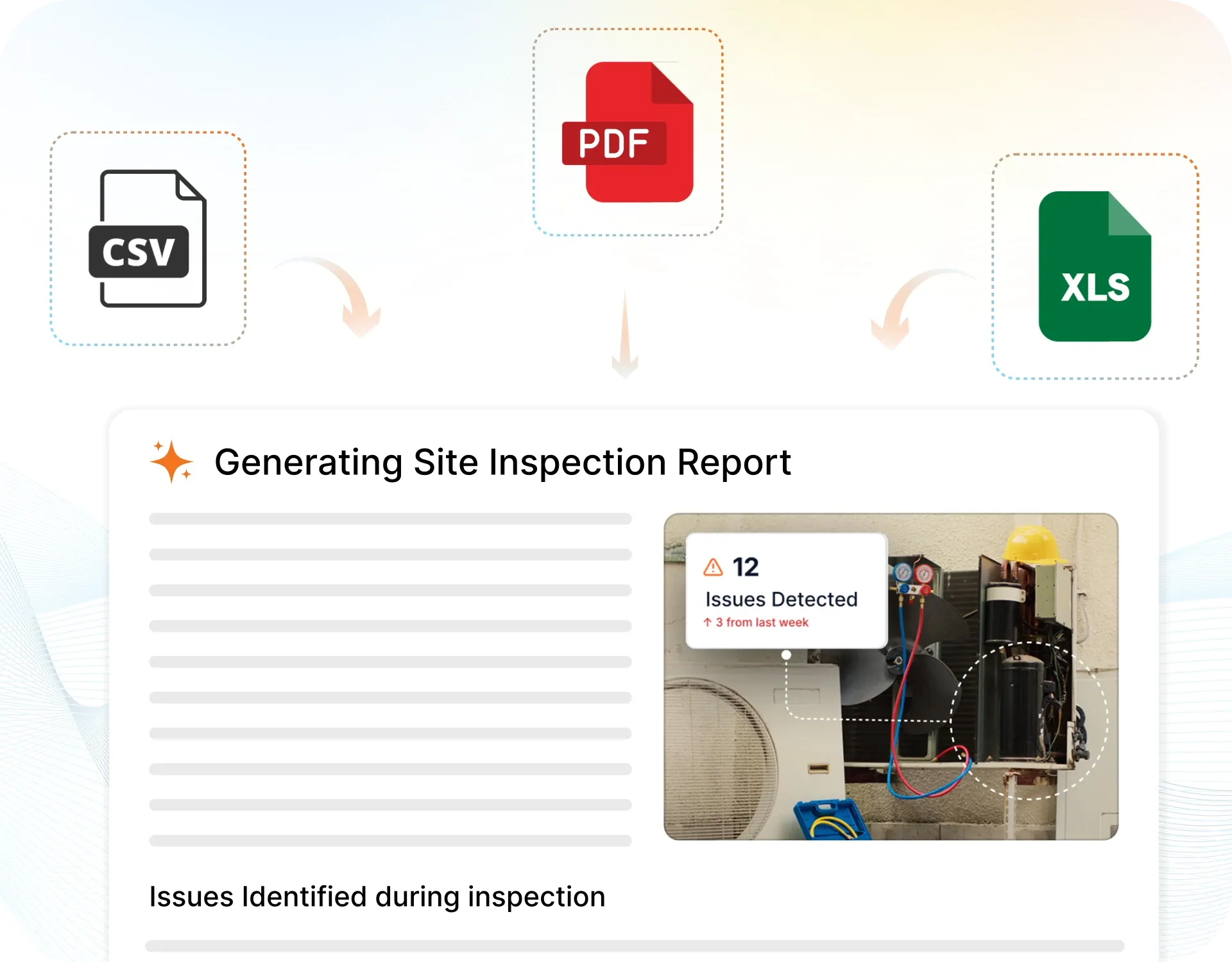
Inspections Done. Report Ready.

The moment an inspection is submitted, a branded PDF, Excel, or CSV report generates automatically. No manual work. No waiting.

Connect Your Existing Tools illustration

Connect Your Existing Tools.

Inspectly360 integrates with the tools your team already uses, including Zoho, Microsoft 365, and SAP. No double entry.
Live Dashboard. Every Site. Always On illustration

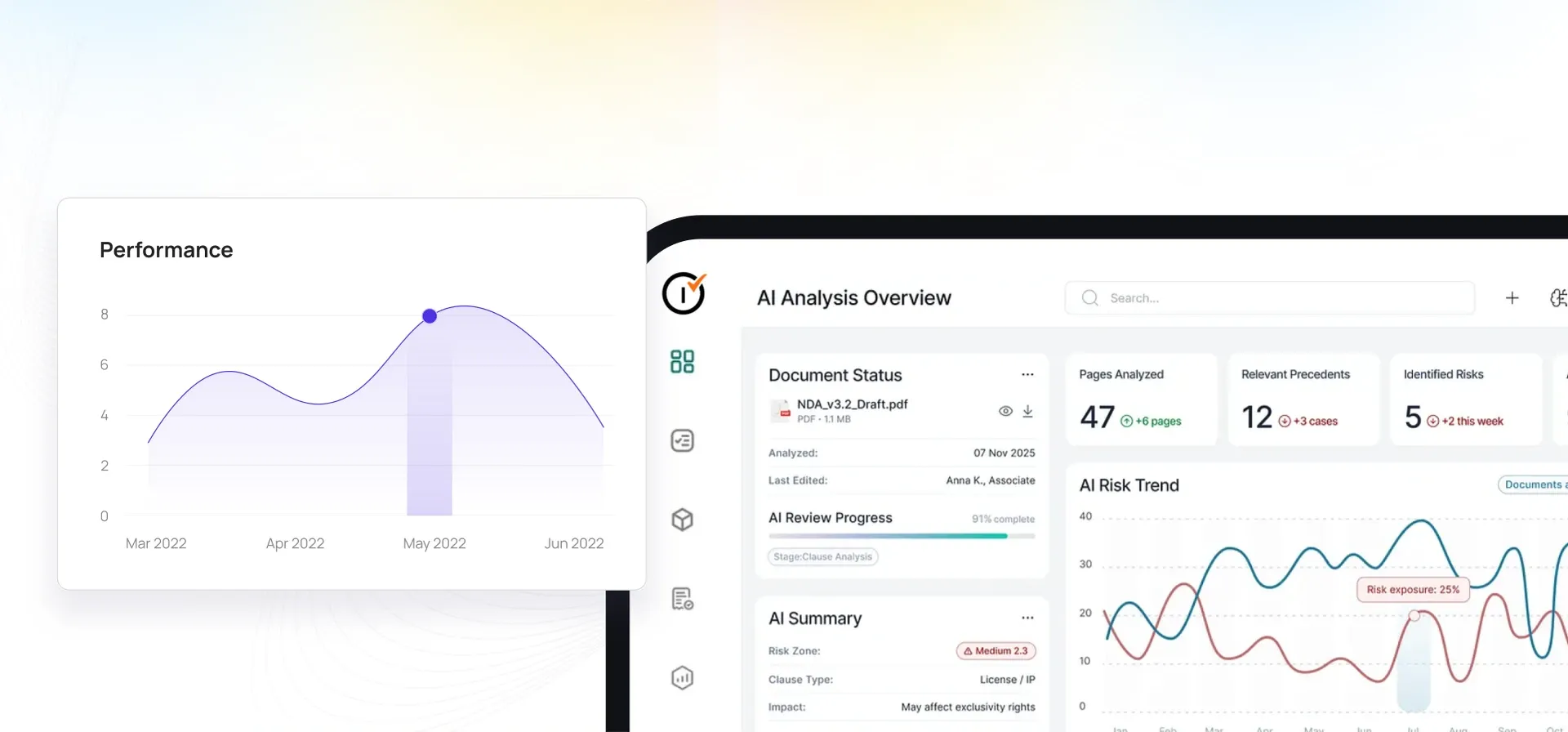
Live Dashboard. Every Site. Always On.

Your operations team sees completion rates, open issues, and compliance scores across all sites in real time. No chasing updates.

Before and After Inspectly360

What changes once construction site inspection audit software runs on one mobile-first platform with photo proof and live dashboards.

Before Inspectly360

  • Construction audit scores are flat percentages from Excel checklists. A 95% score on a project with one critical structural NCR looks identical to a 95% score on a project with 50 minor finish defects. The score does not distinguish handover-blocking issues from cosmetic ones.
  • Audit findings are recorded as text in Excel. Photo evidence is suggested but not enforced; the auditor moves on under project pressure. Six months later the contract administrator review arrives and the photo that would have closed the dispute does not exist.
  • Audit findings get assigned in an email; nobody owns closure; the next audit re-discovers the same finding because the corrective action was never verified. Repeat findings become the dominant pattern.
  • ISO 9001 surveillance auditors, ISO 45001 auditors, and FIDIC engineers ask for documented information; the QC team scrambles to compile Excel audit workbooks, photo galleries, and CAPA trails from different folders.
  • Each project produces its own audit score in its own workbook. The quality director compiles across projects on Friday afternoons; portfolio-wide audit trends are reconstructed weeks after they happened.

After Inspectly360

  • Weighted scoring per item and per section; critical-failure rules force overall fail when a flagged item fails regardless of total. Structural NCRs, MEP material breaches, and project quality plan critical items carry the right weight in the score the contract administrator sees.
  • Photo evidence is mandatory per audit finding with minimum count, required angle, AI defect categorisation at capture, and on-device watermark. Audit findings without evidence cannot submit; the dispute trail stays defensible.
  • Every audit finding routes to a named owner with deadline, severity-matched verification, and photo-verified closure. Repeat-finding rate drops because closure is verified, not asserted.
  • Audit-grade event logs, versioned audit templates, scored audit history, and CAPA closure trails export in one click. ISO 9001 documented-information requirements meet; FIDIC engineer audits open with proof rather than narrative.
  • Portfolio dashboards aggregate scored audit results by project, by trade, by subcontractor, and by contract type in real time. Procurement, quality, and operations see the same scored trend, which is what drives the next tender qualification round.

What Is Construction Site Inspection Audit Software, and How Do Quality Directors Score Project Quality Plans?

Construction site inspection audit software is a scored-audit system that turns the site walk from a list-builder into a measurable, weighted, evidence-led programme aligned to ISO 9001 documented-information requirements, ISO 45001 occupational health and safety, NEC quality plan obligations, JCT inspection regimes, and FIDIC engineer audit requirements. Inspectly360 is built for quality directors, internal auditors, and contract administrators who need scored construction site programmes that survive ISO 9001 surveillance, ISO 45001 surveillance, and contract administrator review, and who carry personal accountability for the quality the field actually delivered.

For the audit team, the platform replaces Excel audit workbooks, paper audit files, and ad-hoc photo galleries with weighted scoring per item and per section, critical-failure rules that force overall fail on flagged items, mandatory photo evidence at capture, and a closed-loop CAPA workflow that requires verified closure rather than asserted closure. The score the contract administrator sees on the audit PDF is the score the audit programme built from the field record.

For the quality director, scored audit results aggregate by project, by trade, by subcontractor, and by contract type. Repeat findings surface across projects. CAPA closure rates per trade become the leading indicator of subcontractor performance. The next ISO 9001 surveillance audit opens with audit-grade event logs and CAPA closure trails ready, not with a Friday-afternoon compile cycle.

How Does a Scored Construction Site Audit Programme Run from Audit Plan to Verified Closure?

Scored construction site audits follow a more disciplined cadence than field walks. The five-step loop below is what quality directors standardise across projects.

  1. 1

    Build the Scored Construction Audit Template Library

    Author weighted audit templates per project type (residential, commercial fit-out, infrastructure, capital), contract framework (NEC, JCT, FIDIC), and trade with item weights, section weights, and critical-failure rules. The library lives in version control with named approvers aligned to ISO 9001 requirements.

  2. 2

    Schedule Scored Audits Against Project Quality Plans

    Audits schedule against quality plan milestones (foundation audit, structural audit, MEP audit, finish audit, pre-handover audit). Each audit carries its own scored template, its own audit window, and its own named auditor.

  3. 3

    Run the Audit with Mandatory Evidence Capture

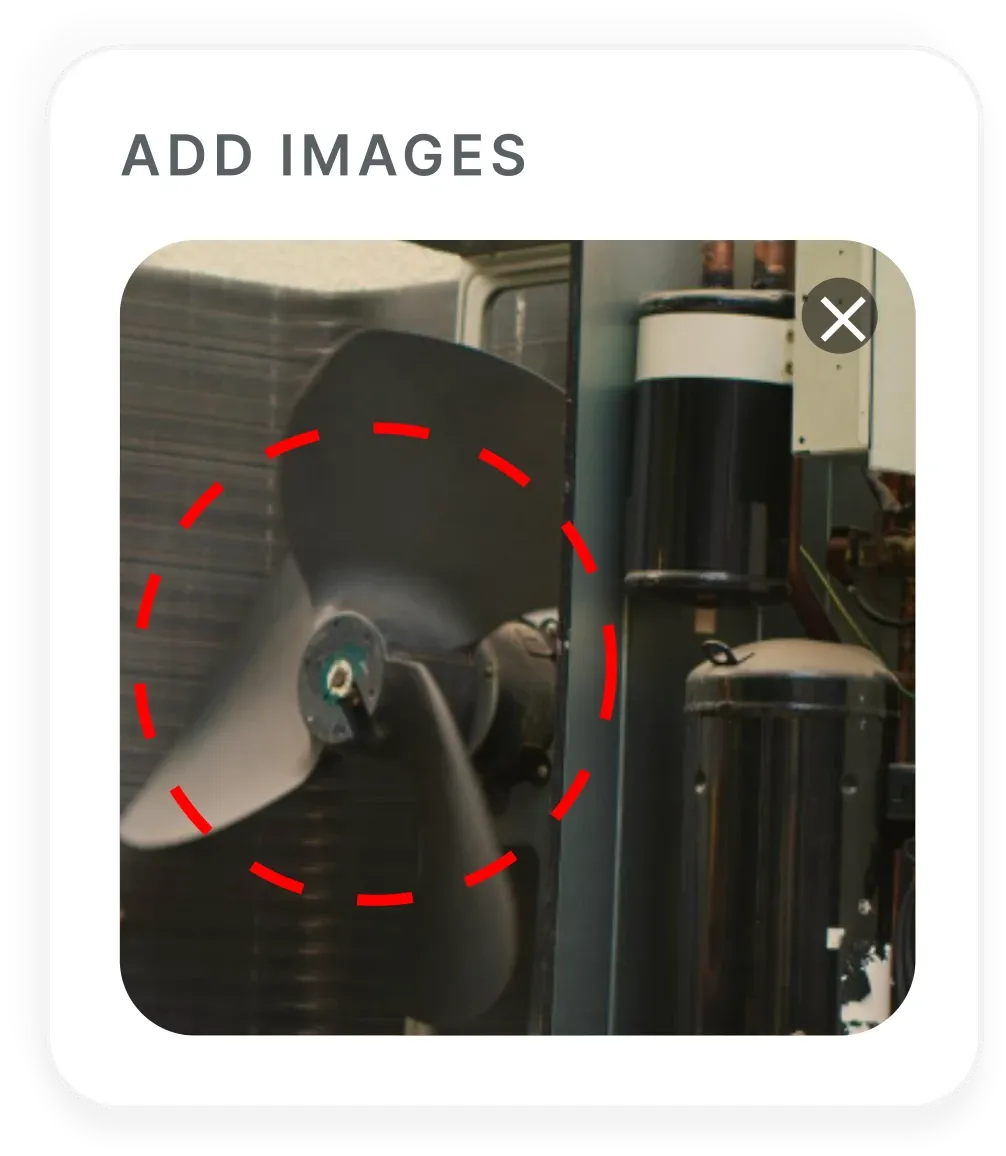
    Auditor runs the scored walk on the device. Every finding requires photo evidence with minimum count, required angle, and AI defect categorisation at capture. Submissions that lack required evidence are rejected at submission.

  4. 4

    Route CAPA on Audit Findings with Verified Closure

    Audit findings auto-route to named owners with deadline, severity-matched verification, and photo-verified closure. Critical findings escalate to the construction director and the contract administrator. Repeat findings carry the full audit history.

  5. 5

    Export Audit Packs and Roll Up Portfolio Trends

    Scored audit PDFs export with the evidence index, the CAPA trail, and the version of the audit template in force. Portfolio dashboards aggregate scored results across projects, trades, and subcontractors.

How Should Quality Directors Pilot Scored Site Audits Across Live Projects?

Answers to common long-tail questions, kept on one canonical page to avoid thin duplicate URLs.

How Should the First Scored Construction Site Audit Run Without Stalling Live Projects?

Start with one scored audit template on one project type at one stage (typically the structural audit on a single residential block, where snag volume is high but the next milestone is still recoverable). Run two cycles in parallel with the existing Excel audit; measure auditor cycle time, finding-evidence completeness, and CAPA closure rate against the corporate quality plan. Layer the weighted scoring once the master template is trusted, switch on critical-failure rules once the closure workflow is established, and roll the validated audit template to similar projects in waves.

What Should Quality and IT Validate During Audit Procurement?

Quality and IT should validate seven enterprise audit requirements: SSO via SAML or OIDC; RBAC scoped to project, audit template, and auditor role; offline mobile capture verified on a real audit walk; configurable retention aligned to ISO 9001 documented-information requirements (commonly 7 years, longer for residential JCT 12-year DLP); regional data residency for global operators; audit-grade event logs that survive litigation hold; and the documented integration path into the project management and quality stack already in place.

Security, Audit Data Residency, and ISO 9001 Posture

Production scored audit programmes carry client representative data, subcontractor PII, audit findings, and CAPA trails that ISO 9001 surveillance auditors, FIDIC engineers, and contract administrators may request years later. Inspectly360 supports configurable retention per contract type, audit-grade event logs, encrypted at-rest evidence, and regional data residency. Audit-grade event logs are append-only and survive litigation hold.

Migration from Excel Audit Workbooks Without Losing Historical Evidence

Existing Excel audit workbooks, paper audit files, and ad-hoc photo galleries batch-import as searchable evidence against the same project and unit. Historical audit findings carry forward as closed CAPA items with the original evidence attached. The corporate audit template library publishes to active projects on the effective date; projects already in audit continue with the version in force at audit time.

Which Capabilities Help Quality Directors Score, Evidence, and Close Construction Audit Findings?

The platform capabilities that power construction site inspection audit software across every site.

Ready to Move Construction Site Inspection Audit Off Paper?

Book a Free Demo

How Is This Different from Excel Audit Workbooks and Paper Audit Files?

Quality directors comparing Inspectly360 to Excel audit workbooks, paper audit files, and generic forms apps care about five things specific to scored construction site auditing: whether weighted scoring reflects real project handover risk, whether photo evidence is enforced at the source, whether CAPA actually closes verified rather than asserted, whether audit findings survive ISO 9001 surveillance, and whether scored programmes roll up across projects to drive procurement decisions.

TopicTypical GapsWith Inspectly360
Weighted construction audit scoring with critical-failure rulesConstruction audit scores are flat percentages from Excel checklists. A 95% score on a project with one critical structural NCR looks identical to a 95% score on a project with 50 minor finish defects. The score does not distinguish handover-blocking issues from cosmetic ones.Weighted scoring per item and per section; critical-failure rules force overall fail when a flagged item fails regardless of total. Structural NCRs, MEP material breaches, and project quality plan critical items carry the right weight in the score the contract administrator sees.
Photo evidence enforcement on construction audit findingsAudit findings are recorded as text in Excel. Photo evidence is suggested but not enforced; the auditor moves on under project pressure. Six months later the contract administrator review arrives and the photo that would have closed the dispute does not exist.Photo evidence is mandatory per audit finding with minimum count, required angle, AI defect categorisation at capture, and on-device watermark. Audit findings without evidence cannot submit; the dispute trail stays defensible.
Closed-loop CAPA on construction audit findingsAudit findings get assigned in an email; nobody owns closure; the next audit re-discovers the same finding because the corrective action was never verified. Repeat findings become the dominant pattern.Every audit finding routes to a named owner with deadline, severity-matched verification, and photo-verified closure. Repeat-finding rate drops because closure is verified, not asserted.
ISO 9001, ISO 45001, and contract audit defensibilityISO 9001 surveillance auditors, ISO 45001 auditors, and FIDIC engineers ask for documented information; the QC team scrambles to compile Excel audit workbooks, photo galleries, and CAPA trails from different folders.Audit-grade event logs, versioned audit templates, scored audit history, and CAPA closure trails export in one click. ISO 9001 documented-information requirements meet; FIDIC engineer audits open with proof rather than narrative.
Scored audit rollup across the construction portfolioEach project produces its own audit score in its own workbook. The quality director compiles across projects on Friday afternoons; portfolio-wide audit trends are reconstructed weeks after they happened.Portfolio dashboards aggregate scored audit results by project, by trade, by subcontractor, and by contract type in real time. Procurement, quality, and operations see the same scored trend, which is what drives the next tender qualification round.

What Changes for Quality Directors, Internal Auditors, PMs, and Contract Administrators?

What changes once construction site inspection audit software is standardised on Inspectly360.

  • Quality Directors: One scored construction audit programme across the portfolio with ISO 9001 surveillance-ready event logs, versioned audit templates, and CAPA closure trails. The next surveillance opens with proof, not narrative.
  • Internal Auditors: Scored audit walks on the device with AI defect categorisation, mandatory photo evidence, and CAPA routing on submission. The audit ends with the report already published, not the report still being typed.
  • PMs: Audit findings route to named owners with verified closure rather than email assignment. Repeat findings drop because closure is verified, and the next audit cycle starts cleaner than the previous one.
  • Contract Administrators and FIDIC Engineers: Scored audit PDFs export with the evidence index, the CAPA trail, and the version of the audit template in force. NEC, JCT, and FIDIC audit posture meets contract framework requirements without manual reconstruction.
  • Construction Directors: Portfolio audit dashboards show scored trends across projects, trades, and subcontractors. The next tender qualification round opens with data rather than relationship narrative.
  • Site Engineers and Clerk-of-Works: AI defect categorisation removes the drift between auditors that used to make scored audits unusable for trend analysis. The data finally drives the conversation.
  • Developers and Clients: FIDIC engineer audits, JCT contract administrator reviews, and ISO 9001 surveillance open with scored audit history, evidence indexes, and CAPA closure trails.

Which Construction Audit Templates Should Quality Directors Start With?

Get started with inspection and audit checklist templates.

View All Checklist Templates
Snagging Inspection Checklist
Snagging / Punch List

Snagging Inspection Checklist

Catch defects before handover and generate punch list reports in minutes. Room-by-room finish checks, evidence, and corrective actions.

52,000+GET
New Build Apartment Snagging Checklist
Snagging / Punch List

New Build Apartment Snagging Checklist

Pre-handover snagging for new build apartments. Room-by-room finish checks, MEP, and defect tracking before keys.

28,500+GET
Scaffolding Inspection Checklist
Safety Inspection

Scaffolding Inspection Checklist

Utilize this Scaffolding Safety Inspection Checklist to spot hazards, verify stability, and ensure compliance with safety standards before work begins.

19,800+GET
Field Service Report Form
Service Report

Field Service Report Form

Capture job details, measurements, work performed, photos, and sign-offs in one structured field service report form.

14,200+GET

Frequently Asked Questions About Construction Site Inspection Audit Software

How does weighted scoring work for construction site audits, and why does it matter at handover?

Each audit item carries a configurable weight, commonly on a 1-10 scale or a low-medium-high-critical band, and section weights aggregate the item scores into a section result. Critical-failure rules sit on top of the arithmetic: any critical-item fail forces an overall fail regardless of the total score. This matters most at handover, because a 95% score on a project with one critical structural NCR and a 95% on a project with 50 minor finish defects are not the same outcome at all. Weighted scoring is how the contract administrator distinguishes them, so a high headline number can never disguise an unresolved structural or life-safety issue when the building is handed over.

How is photo evidence enforced during a construction audit?

Each audit item supports its own photo-evidence rules: a minimum and maximum photo count, a required angle or subject, mandatory AI defect categorisation, and an on-device watermark carrying time, GPS, and the auditor's name. The submission flow rejects any finding that lacks the required evidence, so the auditor cannot complete the audit until the evidence is in place. Where signal is unavailable, the validation runs locally on the device, so the rule still holds offline on the basement levels and remote site areas where construction audits often happen. The result is that the handover evidence pack is built as the audit runs rather than reconstructed afterwards, and every scored item is backed by an image the contract administrator can open.

How does CAPA routing work on a construction audit finding?

Audit findings auto-route to a named owner based on the trade, the severity, and the project assignment, so nothing waits in a shared inbox for someone to claim it. Verified closure requires a photo-evidence upload, a severity-matched approval, and a final verification by the auditor or quality director. Asserted closure, where a subcontractor simply says they fixed it, does not pass verified closure, so 'marked done' and 'actually fixed' finally line up. Because the routing matches the severity to the right approver, a critical structural finding gets engineer-level scrutiny while a minor finish defect is handled efficiently, and the quality director keeps a live view of what is open, overdue, and verified closed across every project.

How does the platform support ISO 9001 and ISO 45001 surveillance audits?

Both standards expect documented-information governance: versioned templates, approval workflows, change audit trails, internal-audit evidence, and CAPA closure trails. Inspectly360 produces all of these as audit-grade event logs that export in one click, scoped to the certification boundary and the surveillance window. ISO 9001 and ISO 45001 surveillance auditors get scoped read-only access for that window, so they review the live record rather than waiting for the team to assemble one. Because the evidence is a by-product of normal site audits rather than something prepared for the visit, a surveillance audit becomes a walkthrough of records that already exist instead of a scramble to reconstruct them across a dozen concurrent projects.

Can scored audit results compare across projects, trades, and subcontractors?

Yes. Portfolio dashboards aggregate scored audit results by project type, by trade, by named subcontractor, by contract framework, and by audit cycle, so leadership compares like with like across the portfolio. Trend analysis surfaces repeat findings that recur across different projects, which is the systemic pattern a single-project view can never see. CAPA closure rate per trade becomes a leading indicator of subcontractor performance, sitting alongside their NCR rate and hold-point compliance. That lets a construction director rank projects, trades, and subcontractors on objective scored data, target attention where the numbers are slipping, and carry the same evidence into the next tender qualification rather than relying on impression.

How does the platform support FIDIC engineer audits and contract administrator reviews?

FIDIC engineer audits export in the format the engineer expects, carrying the inspection record, the NCR closure trails, and the version of the quality-plan template that was in force at the time. NEC contract administrator reviews and JCT defects schedule reviews export in their own framework-specific formats, with retention aligned to the contract type. Because the platform holds the template version, the named approvers, and the timestamped evidence behind each inspection, the engineer or contract administrator reviews a complete, contemporaneous record rather than a reconstruction. That is what keeps a payment milestone or a handover certificate from stalling while the team hunts for the inspection evidence the contract requires before the engineer will sign.

Less Paperwork. More Visibility.

See Inspectly360 in action with a live demo tailored to your needs. No credit card required.

  • 30 Days Free Trail
  • 1000+ Templates
  • Unlimited Integration