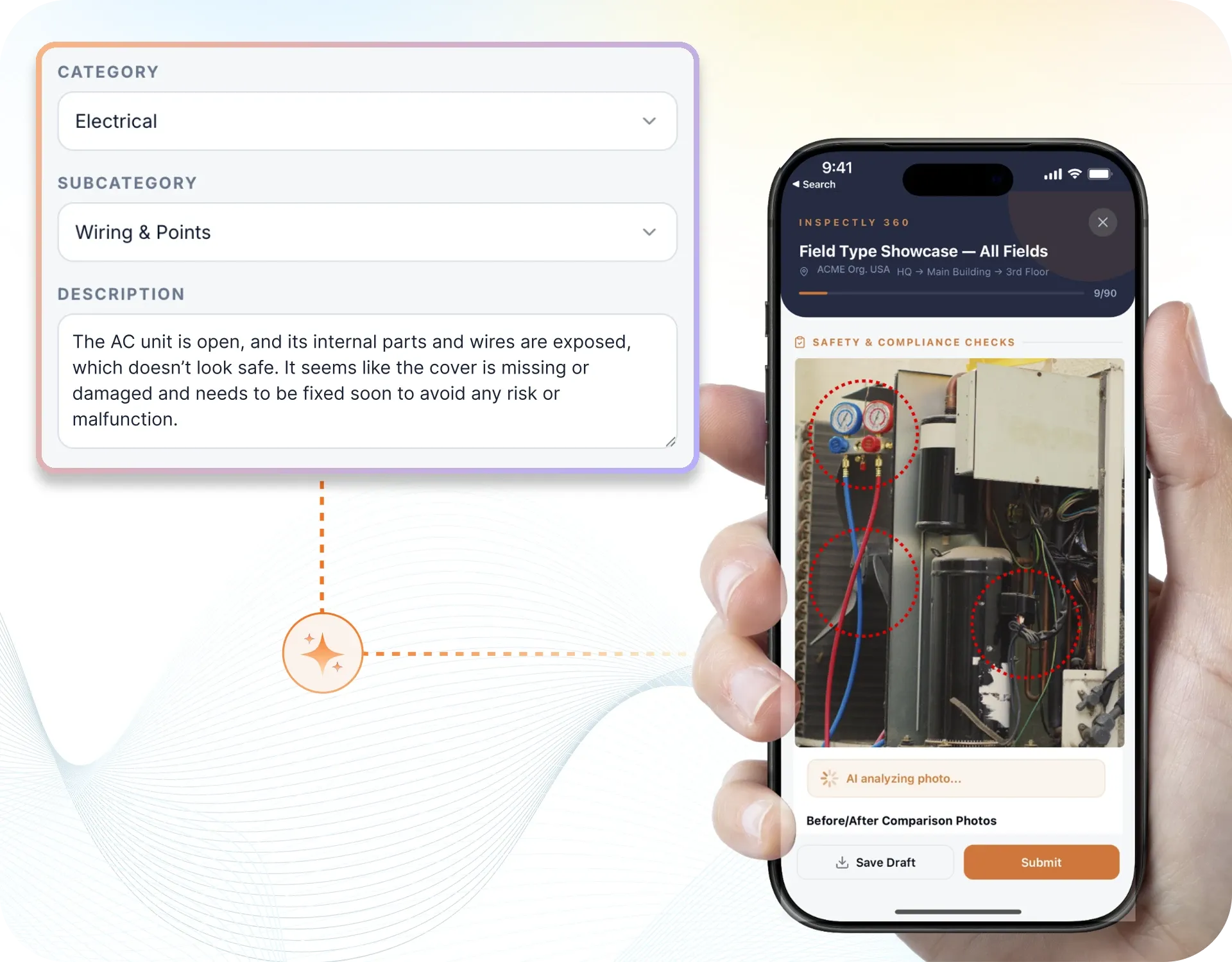
Take a Photo. AI Fills the Form
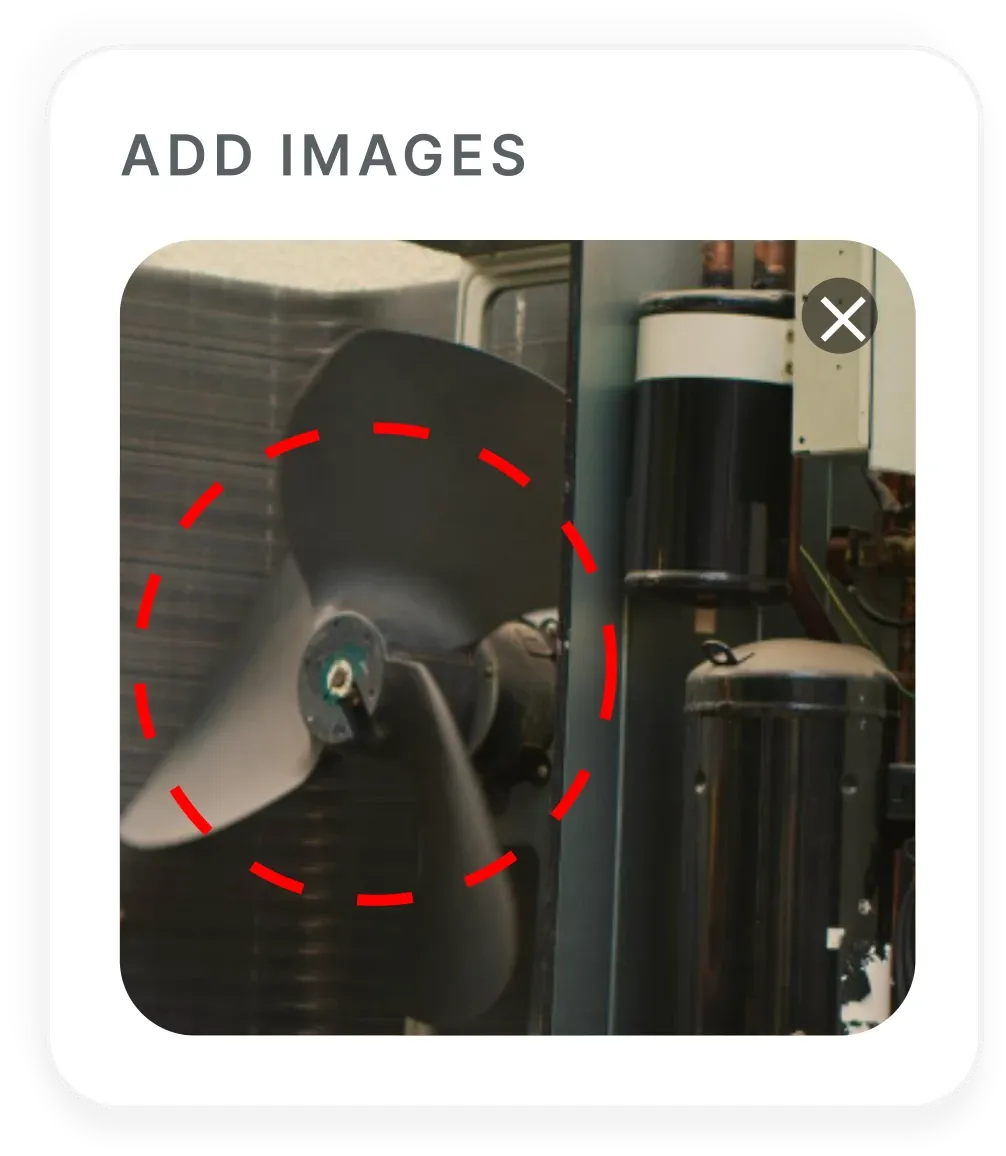
Your inspector takes a photo of any asset or defect. AI reads it and fills the inspection form automatically. No typing. No manual entry.

Convert your checklist into Mobile App
Electrical panel inspection software is the platform that FM Engineering Managers, Electrical Contractors, Approved Electricians, Authorised Persons (Electrical), NETA Certified Technicians (Level II and Level III), Industrial Electrical Engineers, Level II IR Thermographers, Switchgear OEM Service Engineers, Hospital Estates Leads, and Manufacturing Plant Engineers use to run Distribution Board, switchboard, panel board, Motor Control Centre (MCC), low-voltage switchgear, and medium-voltage switchgear inspections across commercial buildings, hospital estates, data centres, manufacturing campuses, and multi-site portfolios with defensible evidence at every step.
Everything your field team does on paper, Inspectly360 does automatically: faster, more accurate, and without the admin.
Your inspector takes a photo of any asset or defect. AI reads it and fills the inspection form automatically. No typing. No manual entry.
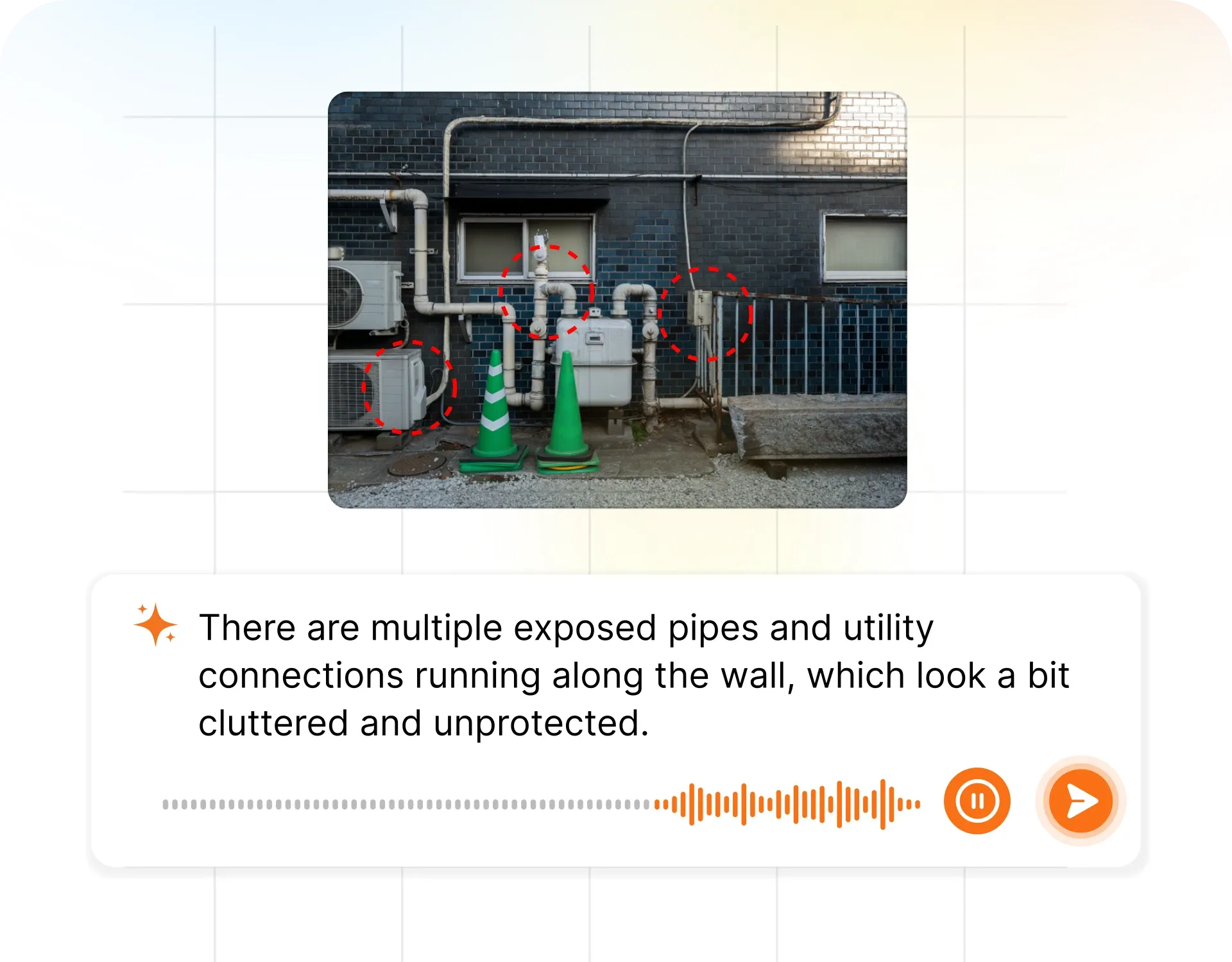
Inspectors speak their observations in any language. AI transcribes and fills the form in real time. Completely hands-free in the field.
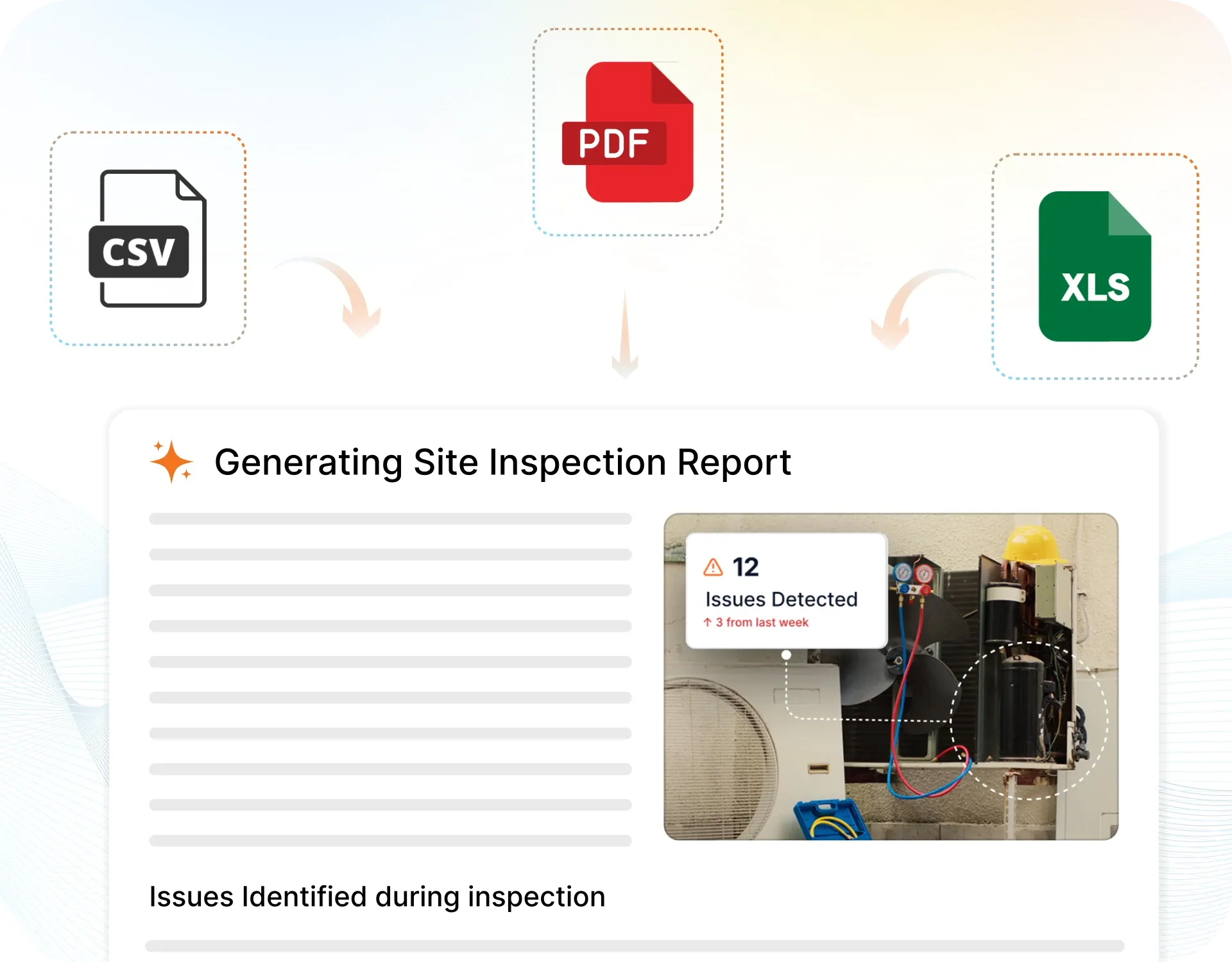
The moment an inspection is submitted, a branded PDF, Excel, or CSV report generates automatically. No manual work. No waiting.
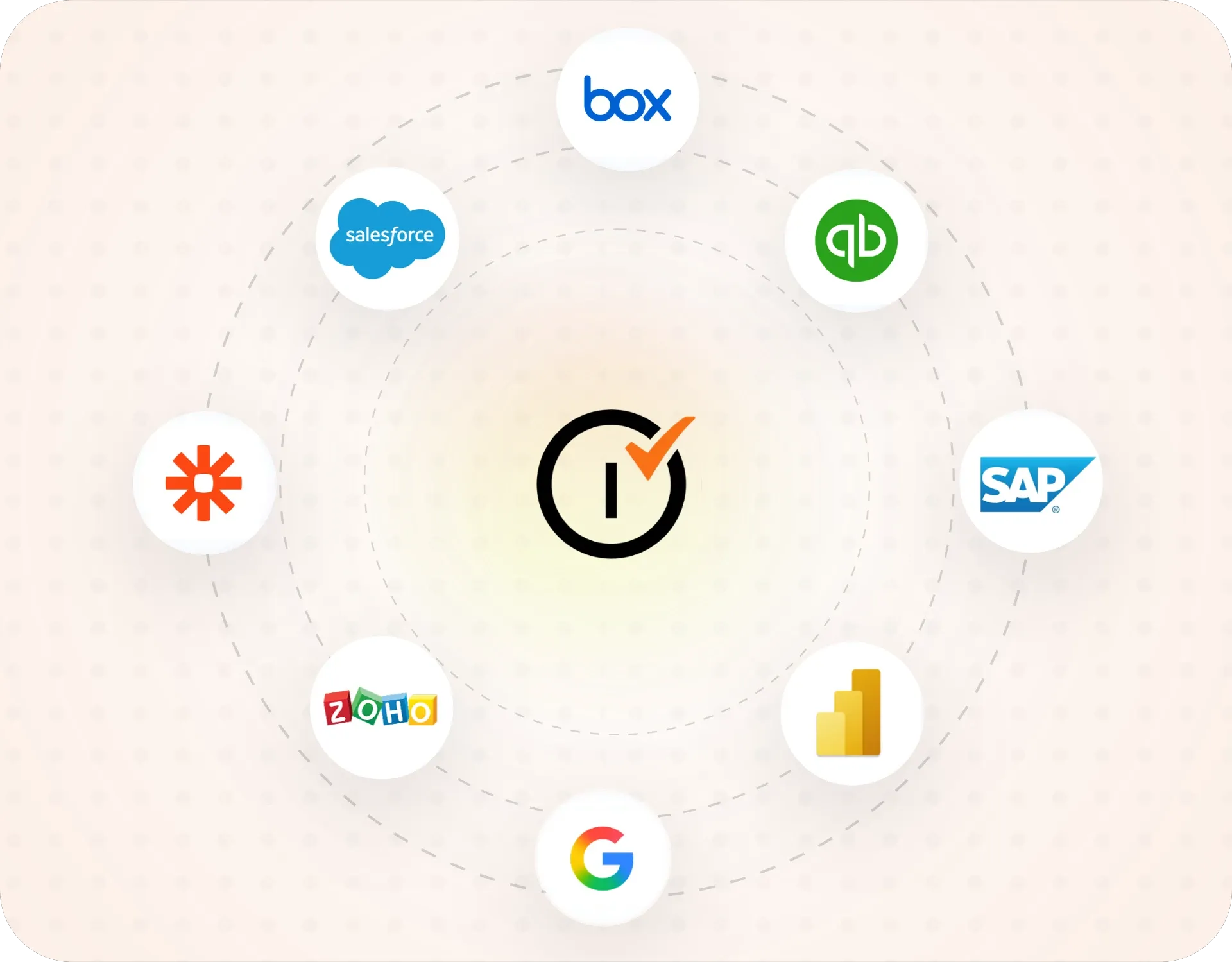
Inspectly360 integrates with the tools your team already uses, including Zoho, Microsoft 365, and SAP. No double entry.
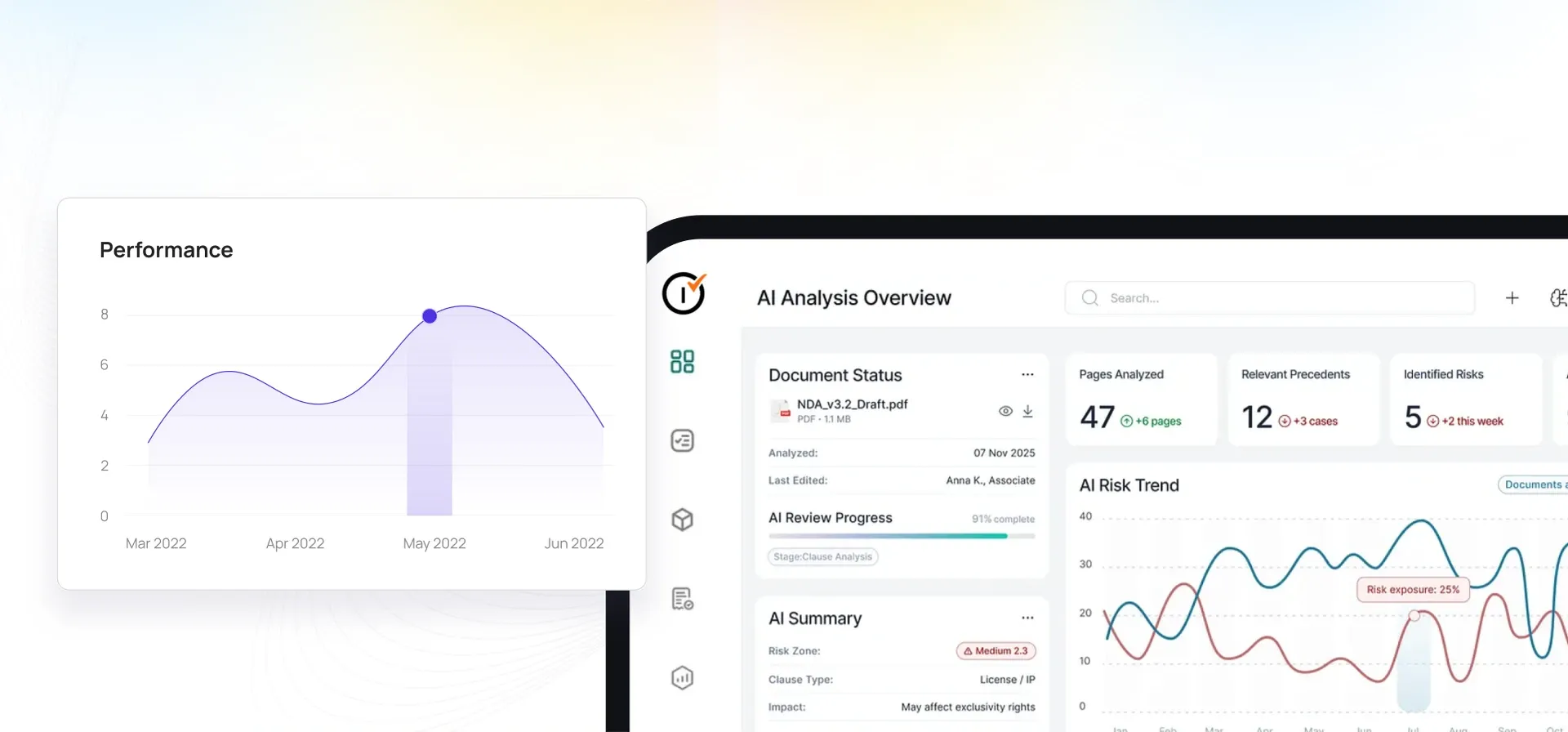
Your operations team sees completion rates, open issues, and compliance scores across all sites in real time. No chasing updates.
What changes once electrical panel inspection software runs on one mobile-first platform with photo proof and live dashboards.
Electrical panel inspection software is the platform that FM Engineering Managers, Electrical Contractors, Approved Electricians, Authorised Persons (Electrical), NETA Certified Technicians (Level II and Level III), Industrial Electrical Engineers, Level II IR Thermographers, Switchgear OEM Service Engineers, Hospital Estates Leads, and Manufacturing Plant Engineers use to run Distribution Board, switchboard, panel board, Motor Control Centre (MCC), low-voltage switchgear, and medium-voltage switchgear inspections across commercial buildings, hospital estates, data centres, manufacturing campuses, and multi-site portfolios with defensible evidence at every step. Inspectly360 digitises the full electrical panel inspection cycle with structured templates aligned to NFPA 70 (NEC), NFPA 70B (electrical equipment maintenance), NFPA 70E (electrical safety in the workplace), NETA MTS and NETA ATS, IEC 61439 series (low-voltage switchgear and controlgear assemblies), BS 7671 18th Edition Amendment 2 (UK Distribution Board verification), BS EN 60439 series (legacy LV assembly references retained on older panels), IEEE Std 1584 (arc-flash hazard calculations), IEEE C37 series (high-voltage circuit breakers, switchgear, and assemblies), OSHA 1910 Subpart S and 1910.147 LOTO, Electricity at Work Regulations 1989, HTM 06-01 (UK healthcare electrical service), AS/NZS 3000 (Australia), and CSA Z462 (Canada).
The pain it solves is the everyday reality of electrical panel operations: an annual IR thermography report from 14 months ago that flagged a hot spot on a 400 A LV circuit breaker termination at delta T 28 degrees C above ambient that nobody actioned because the report PDF was never opened, an NFPA 70E arc-flash label on a 480V switchboard with the original 12 cal/cm2 incident energy that the panel has since had a downstream breaker replaced and the label is no longer accurate, a molded-case circuit breaker that was last NETA MTS tested 9 years ago because the primary injection test is time-consuming and the AMC contractor kept skipping it, an MCC with internal busbar dust accumulation that the panel inspection list called out 18 months ago but was never cleaned because the housekeeping workflow lived on a spreadsheet, a Distribution Board with a missing dead-front cover that exposed live parts because the cover was removed for a circuit modification and never refitted, an IEC 61439 Part 2 PSC-assembly with a IP54 design rating that drifted below IP31 because cable gland plates were modified without re-verifying IP, a panel-door gasket that perished and let condensation onto a 24V control circuit, an MCC arc-flash boundary breach during a routine isolation because the NFPA 70E label was outdated and the technician did not see the actual incident energy, and a switchgear bay where the earth-bonding strap continuity was never re-checked after a busbar modification. Electrical panels are the highest arc-flash risk concentration in any building or plant; paper panel logs do not protect that exposure.
Inspectly360 combines ready-made templates for Distribution Board inspections (dead-front cover integrity, gland-plate condition, IP rating verification against design, isolator handle function, lock function, arc-flash label currency, panel-door gasket condition, internal busbar shroud integrity, earth-bonding strap continuity, internal dust and cleanliness, circuit identification labels, MCB / RCBO / RCD condition), switchboard and panel board inspections (LV breaker count and rating, busbar configuration, neutral and earth bar integrity, surge protection device condition, internal lighting and heater function), Motor Control Centre (MCC) inspections (bucket-style or fixed mounted, motor protection relay condition per IEEE C37.96, soft starter and variable speed drive panel condition, internal panel cleanliness, busbar joint torque), low-voltage switchgear inspections (air circuit breaker condition per IEEE C37.13, withdrawable cassette condition, shutter mechanism, mechanical interlock function, racking-in / racking-out procedure verification), medium-voltage switchgear inspections (vacuum circuit breaker condition per IEEE C37.04, SF6 gas pressure for SF6 breakers, oil-filled breaker condition for legacy oil breakers, busbar VTs and CTs condition), IR thermography per panel with dated baseline overlay and hot-spot delta T tracking per IEEE Std 1584 thermography categories, NFPA 70E arc-flash assessment per panel with incident energy in cal/cm2, arc-flash boundary, limited approach boundary, restricted approach boundary, PPE category, and label currency against single-line diagram revision, NETA MTS testing per LV breaker, molded-case breaker, air circuit breaker, transformer, and protective relay with insulation resistance, contact resistance, primary injection at 300% rated current, secondary injection, time-travel analysis, and partial discharge readings, IEC 61439 LV assembly verification (Type Test Certificate reference, Icc / Icw / Ipk ratings, IP rating, routine verification cycle), and OSHA 1910.147 LOTO procedure validation per panel; AI fault detection on the engineer's photo for charred terminations and arc-fault evidence, corroded earth bonds, dust accumulation, missing arc-flash labels, blown indicators, exposed live parts and missing dead-front covers, damaged panel doors and broken locks, missing or broken gland plates, perished door gaskets, and IR hot-spot delta T against the baseline overlay; QR-tagged Distribution Boards, switchboards, panel boards, MCCs, LV switchgear, and MV switchgear with full service history; offline capture in metal-clad switchrooms and basement panel rooms where signal disappears; statutory clocks per panel with renewal alerts for IR thermography annual cycle, NFPA 70E arc-flash refresh (typical 5 years or after any single-line diagram change), NETA MTS cycle per asset class, IEC 61439 routine verification, panel housekeeping cycle, and EICR cycle where the panel is part of a wider installation; and white-label PDF reports that generate the moment the engineer closes out.
Electrical Contractors, NETA Certified Technicians, IR Thermographers, and Authorised Persons (Electrical) follow this loop for panel PPM cycles, IR thermography surveys, NETA MTS test cycles, and NFPA 70E arc-flash assessments.
Distribution Board routine inspection, MCC bucket inspection per cubicle, LV switchboard with air circuit breaker withdrawable cassette inspection, panel board inspection, MV switchgear vacuum circuit breaker inspection, IR thermography survey with baseline overlay per panel, NFPA 70E arc-flash assessment refresh, NETA MTS primary injection per LV breaker, NETA MTS contact resistance DLRO per breaker, IEC 61439 routine verification (insulation resistance, dielectric test, continuity, IP rating verification), panel housekeeping and cleanliness cycle, or LOTO procedure validation per panel. Each pack carries the rubric the AHJ, the NETA cert body, the Approved Body, or the AMC client SLA expects.
Engineers scan the QR tag on the Distribution Board, switchboard, panel board, MCC cubicle, LV switchgear bay, or MV switchgear panel. The right checklist opens for the right panel class (IEC 61439 Part 2 PSC-assembly, Part 3 DBO, Part 4 construction site, Part 5 PSC for public network, or US UL 891 switchboard, UL 845 MCC, UL 1558 metal-enclosed switchgear), nameplate data (Icc, Icw, Ipk, IP rating, NEMA enclosure type), last IR survey baseline and date, NFPA 70E incident energy and PPE category, NETA MTS history per asset within the panel, and any open CAPA surface so repeat issues are visible from the device.
Capture in metal-clad switchrooms, basement panel rooms, MCC enclosures, and outdoor substations where signal disappears. AI flags charred terminations and arc-fault evidence, corroded earth bonds, dust accumulation on busbars and isolators, missing arc-flash labels, blown indicators, exposed live parts, missing dead-front covers, broken panel locks, missing or broken gland plates, perished door gaskets, and IR hot-spot delta T above the baseline overlay threshold from the engineer's photo and suggests fault classification for the engineer to confirm or override.
Test-instrument integrations pull readings per breaker and busbar joint from Megger, Fluke, Vanguard, OMICRON, and Doble instruments via Bluetooth, USB, or QR tag: insulation resistance, contact resistance via DLRO, primary injection trip curve, secondary injection of trip unit, time-travel analysis. IR camera integrations from FLIR, Fluke Ti, Seek Thermal, and Testo pull thermal imagery with annotated hot spots and delta T against ambient. AI correlates IR readings against the panel baseline overlay and against NFPA 70B condition class so a hot spot above delta T 20 degrees C against ambient or above delta T 10 degrees C against similar adjacent component is flagged Level 2 or higher.
Branded PDFs (Level II IR thermography report with baseline overlay, NFPA 70E arc-flash study with panel labels, NETA MTS test report with primary injection curves, IEC 61439 routine verification certificate, panel housekeeping audit, LOTO procedure validation pack) generate the moment the engineer closes out via /features/automated-reports; statutory clocks per panel update with renewal alerts for IR thermography annual cycle, NFPA 70E refresh (5 years or after single-line diagram change), NETA MTS cycle per asset class, IEC 61439 routine verification, panel housekeeping cycle, and EICR cycle where the panel is part of a wider installation via /features/notifications.
Answers to common long-tail questions, kept on one canonical page to avoid thin duplicate URLs.
Inspectly360 sits as the electrical panel inspection evidence and arc-flash defensibility layer beside the platforms electrical and FM teams already run. Maximo, IBM TRIRIGA, Planon, eMaint, Limble, Fiix, SAP PM, and Infor EAM stay the system of record for panel work orders, PPM scheduling, and panel asset register. IR camera software (FLIR Tools, FLIR Ignite, Fluke Connect, Testo IRSoft, Seek Thermal) stays where it is for raw thermal image capture and annotation. NETA test instrument software (Megger PowerDB, OMICRON Test Universe, Doble TDR, Vanguard EZCT) stays where it is for raw test data. NFPA 70E arc-flash study tools (SKM Power Tools, ETAP, EasyPower, Schneider EcoStruxure Power Design CAD) stay where they are for incident-energy calculation. The switchgear OEM service portal (Schneider, ABB, Siemens, Eaton, GE) stays where it is for module service history and protective relay setting files. Inspectly360 produces the structured panel inspection evidence, AI fault detection on panel-interior photos, IR thermography baseline overlay per panel, NFPA 70E arc-flash label currency against single-line diagram revision, NETA MTS test result repository per breaker, IEC 61439 verification per panel, and panel housekeeping evidence those platforms reference but do not collect.
FM Engineering Managers typically pilot the annual IR thermography programme with baseline overlay across one panel population in one building and measure year-over-year hot-spot drift detection. Electrical Contractors and switchgear OEM service partners pilot the NETA MTS testing cycle for LV power circuit breakers across one substation and measure named credentialed evidence quality compared with previous PDF-only delivery. Data Centre Engineers pilot the NFPA 70E arc-flash label currency programme across one switchroom and measure label-to-single-line-diagram-revision alignment. Hospital Estates Leads pilot the HTM 06-01 LV panel inspection alongside the NETA MTS cycle across one critical care switchroom and measure AHJ submission preparation time. Manufacturing Plant Engineers pilot the MCC bucket inspection programme across one production line and measure bucket condition-class evidence quality.
Panel operations involve multiple parties: building or plant owner, FM aggregator, electrical AMC service contractor, switchgear OEM service engineer (Schneider, ABB, Siemens, Eaton, GE), NETA Certified Technician (Level II Field Service Technician or Level III Field Service Technician Senior, via NETA member companies), Level II IR thermographer (ITC certified or equivalent), Authorised Person (Electrical) for permit-to-work, Authorised Person (HV / LV) for high-voltage switching, arc-flash study engineer, IEC 61439 panel manufacturer or rebuild specialist, the AHJ, and the regulator (HSE in UK, OSHA in US). RBAC scopes each party to the panels, breakers, and evidence they are entitled to. NETA Certified Technicians operate as scoped roles producing credentialed test evidence intact across multiple instructing clients; Level II ITC thermographers preserve their credential against the IR survey report; switchgear OEM service engineers produce credentialed module service history per panel.
Procurement and engineering should validate seven requirements before any panel rollout: SSO via SAML or OIDC tied to the operator's IdP, RBAC granular enough to scope a NETA Certified Technician to specific panels and breakers only, offline capture verified in a real metal-clad switchroom or MCC enclosure, configurable retention aligned to NETA MTS retention (asset lifetime plus 2 years), IR thermography retention (typical 7 years for trend continuity), NFPA 70E arc-flash study retention (lifetime of the panel), and IEC 61439 routine verification retention, statutory export formats acceptable to the AHJ, NETA cert body, ITC body, and IEC 61439 panel manufacturer, IR camera and test-instrument integration depth via Bluetooth, USB, NFC, or QR for FLIR, Fluke Ti, Megger, OMICRON, Doble, and Vanguard, and a documented CMMS integration path. For cross-jurisdiction estate operators (UK, US, EU, India, UAE, APAC, ANZ), regional data residency aligns to the local data protection regulator and the regional electrical regulator.
The platform capabilities that power electrical panel inspection software across every site.
FM Engineering Managers, Electrical Contractors, NETA Certified Technicians, and Level II IR Thermographers comparing Inspectly360 to paper panel logs, spreadsheet IR reports, and disconnected NETA test CSV downloads see the difference fastest on five dimensions: IR thermography per panel with dated baseline overlay and hot-spot delta T tracking, NFPA 70E arc-flash labels per panel kept current with single-line diagram changes, IEC 61439 LV switchgear and controlgear assembly verification per panel, NETA MTS test cycle per low-voltage circuit breaker and molded-case breaker, and dead-front and panel-housekeeping evidence per inspection.
| Topic | Typical Gaps | With Inspectly360 |
|---|---|---|
| IR thermography per panel with baseline overlay and hot-spot tracking | Annual IR thermography reports sit in PDF attachments from the Level II thermographer. Year-over-year hot-spot drift on a specific 400 A breaker termination or busbar joint is reconstructed manually from prior PDFs nobody indexed by panel. The next survey is triggered by calendar reminder rather than the prior baseline trend. | Each panel carries a QR tag with IR thermography baseline image, annotated hot-spot locations, delta T baseline per termination and busbar, last IR survey date, named Level II ITC thermographer credential, and trend over service life. AI flags new hot spots above the baseline delta T threshold and proposes Level 1, 2, or 3 severity per IEEE Std 1584 thermography categories. |
| NFPA 70E arc-flash label currency against single-line diagram | Arc-flash labels printed at the original NFPA 70E study sit on the panel doors. The single-line diagram has since changed: a new transformer was added, a downstream breaker was replaced, a fault-current calculation was redone for a different operating mode. The labels do not reflect the change, and the AHJ inspection asks how the panel labels were verified after each change. | Each panel carries NFPA 70E incident energy in cal/cm2, arc-flash boundary, limited approach boundary, restricted approach boundary, PPE category, date of last arc-flash study, working distance assumption, and single-line diagram revision reference. Single-line diagram changes (transformer, breaker, fault-current source) trigger a re-label workflow before the panel returns to service. |
| IEC 61439 LV switchgear and controlgear assembly verification | IEC 61439 (Low-voltage switchgear and controlgear assemblies) Type Test Certificate (Part 1) and Power Switchgear and Controlgear Assembly (PSC-assembly) verification per Part 2, Distribution Board verification per Part 3, or Switchgear and Controlgear for Construction Sites per Part 4 lives in the panel manufacturer's commissioning pack from years ago. Routine verifications (insulation resistance, dielectric test, continuity, IP rating) drift unrecorded after years of modifications. | Each panel record stores IEC 61439 Part reference (Part 2 PSC-assembly, Part 3 DBO assembly, Part 4 construction site, Part 5 power distribution in public networks), Type Test Certificate reference, designed Icc, Icw, and Ipk ratings, IP rating (typically IP31, IP54, IP55, IP66), routine verification cycle, last insulation resistance and dielectric test result, and modification history. Modifications trigger a re-verification workflow. |
| NETA MTS test cycle per low-voltage breaker and molded-case breaker | NETA MTS testing of low-voltage power circuit breakers (insulation resistance, contact resistance, primary injection at 300% rated current, secondary injection of trip unit, time-travel analysis) happens on the AMC contractor's schedule. The molded-case circuit breaker primary injection is skipped because it is destructive and time-consuming, and the breaker is left untested for years. | Each LV circuit breaker, molded-case breaker, and air circuit breaker carries NETA MTS test history (insulation resistance per pole-to-pole and pole-to-ground, contact resistance via DLRO, primary injection test result, secondary injection of trip unit, time-travel analysis), named NETA Certified Technician (Level II or Level III) credential, recommended next test interval per NETA MTS Table 100, and degradation trend over service life. |
| Dead-front, panel-housekeeping, and IP rating evidence per inspection | Dead-front covers removed for inspection are sometimes not refitted with the correct gland-plate replaced. Dust accumulation, missing arc-flash labels, broken locks, painted-over isolators, and lost panel keys go unrecorded between annual visits. Cable entries with missing glands degrade the panel IP rating below the design value. | Panel inspection templates capture dead-front cover integrity, gland-plate condition and cable entry sealing against design IP rating, dust accumulation and cleanliness, isolator handle function, arc-flash label currency, panel-door gasket condition, lock function, internal busbar shroud integrity, and earth-bonding strap continuity. AI flags missing dead-front covers, exposed live parts, and missing arc-flash labels from the engineer's photo. |
What changes once electrical panel inspection software is standardised on Inspectly360.
Get started with inspection and audit checklist templates.
Standard site-level inspections for construction, safety, and compliance. Capture conditions, photos, and follow-ups in one place.

Inspect assets and equipment: condition, location, photos, and maintenance history. Track condition over time.
Complete work orders with checklist items, photos, and sign-off. Track completion and proof of work.
Preventive and corrective maintenance inspections. Log repairs, parts, and condition with photos and follow-ups.
Use these apps to run inspections and audits.

by Inspectly360
Inspect electrical distribution panels with structured tests, photo evidence, and corrective actions per panel.

by Inspectly360
Audit electrical panel programmes with weighted scoring, photo evidence, and corrective action tracking across sites.

by Inspectly360
Run electrical panel inspections on Android phones and rugged tablets with offline forms, QR asset scans, and photo capture.

by Inspectly360
Inspect electrical distribution panels with structured tests, photo evidence, and corrective actions per panel.

by Inspectly360
Run electrical inspections on phones and tablets with offline forms, photo and voice capture, and instant reports.
Electrical panel inspection management software is the layer that schedules quarterly panel housekeeping checks, annual IR thermography surveys with baseline overlay per panel, NETA MTS testing cycles per LV breaker and molded-case breaker per NETA MTS Table 100, IEC 61439 routine verification cycles, NFPA 70E arc-flash assessment refresh (typical 5 years or after any single-line diagram change), MCC bucket inspection cycles, LV and MV switchgear PPM cycles per IEEE C37 series, and OSHA 1910.147 LOTO procedure validation across every panel in the estate from one programme library. RBAC scopes each electrical contractor, NETA Certified Technician (Level II or Level III), Level II IR thermographer, switchgear OEM service engineer, Authorised Person (Electrical), Authorised Person (HV / LV), and arc-flash study engineer to the panels, breakers, and evidence they are entitled to. Template governance lives at FM Director or Engineering Manager level; site-specific overrides (HTM 06-01 healthcare cadence, data centre Tier maintainability, US NFPA 70 jurisdiction) attach without breaking the corporate baseline.
Electrical panel inspection audit software runs scored audit programmes against NFPA 70 NEC, NFPA 70B (electrical equipment maintenance), NFPA 70E (electrical safety in the workplace), NETA MTS and NETA ATS, IEC 61439 series (LV switchgear and controlgear assemblies), BS 7671 18th Edition Amendment 2 (UK Distribution Board verification), BS EN 60439 series (legacy LV assembly references), IEEE Std 1584 (arc-flash hazard calculations), IEEE C37 series (HV circuit breakers and switchgear), OSHA 1910 Subpart S and 1910.147 LOTO, Electricity at Work Regulations 1989, HTM 06-01 (UK healthcare electrical service), AS/NZS 3000, and CSA Z462. Each audit produces a weighted score per panel, photo evidence per non-conformance, CAPA per finding, and a branded PDF export the AHJ, NETA cert body, ITC thermography body, IEC 61439 panel manufacturer, AMC client, HSE inspector, OSHA inspector, and local environmental authority recognise. The 12-month audit history per panel retrieves in one click; named credentialed sign-off protects defensibility.
Electrical panel inspection compliance software produces the evidence chain regulators, AHJs, and certification bodies expect across NFPA 70E (arc-flash assessment with incident energy in cal/cm2, arc-flash boundary, approach boundaries, PPE category labels per panel, refresh per single-line diagram change), NETA MTS and NETA ATS (insulation resistance, contact resistance, primary injection, secondary injection, time-travel analysis per breaker), IEC 61439 (Type Test Certificate reference, Icc / Icw / Ipk, IP rating, routine verification cycle), IEEE Std 1584 (arc-flash hazard calculation methodology behind labels), IEEE C37 series (HV breaker and switchgear maintenance methodology), OSHA 1910 Subpart S (qualified-person register, NFPA 70E PPE check, working-on-live justification), OSHA 1910.147 (LOTO with lockout-device assignment per panel, multi-source isolation, tryout procedure), HTM 06-01 (UK healthcare electrical service evidence), and Electricity at Work Regulations 1989. Statutory clocks per panel track IR thermography annual cycle, NFPA 70E refresh, NETA MTS cycle, IEC 61439 routine verification, and panel housekeeping cycle.
Electrical panel inspection tracking software runs every finding through the same lifecycle: severity classification (immediate for an IR hot spot above delta T 40 degrees C against ambient or Level 3 thermography category per IEEE Std 1584, immediate for an arc-flash label out of step with the single-line diagram revision in service, immediate for a missing dead-front cover with exposed live parts, immediate for a NETA MTS primary injection failure, scheduled for IR hot spots at Level 1 or Level 2, periodic for dust accumulation or housekeeping gaps). Named owner assignment, deadline by severity, required closure evidence, and named approver verification before the finding closes. IR hot-spot findings trigger a re-thermography workflow with named Level II ITC thermographer credential; arc-flash label gaps trigger a re-study and re-label workflow with single-line diagram revision intact. Tracking dashboards surface IR hot-spot trend, NFPA 70E label currency, NETA MTS cycle status, IEC 61439 verification status, AMC contractor closure performance, and CAPA age.
Electrical panel inspection monitoring software runs a live multi-site dashboard aggregating panel PPM completion, IR thermography hot-spot trend per panel, NFPA 70E arc-flash label currency per panel against single-line diagram revision, NETA MTS cycle status per LV breaker and molded-case breaker, IEC 61439 routine verification status, MCC bucket condition-class trend, dead-front and gland-plate integrity, OSHA 1910.147 LOTO procedure validation rate, and AMC contractor closure performance. AI daily briefing delivers a plain-language summary to the FM Director, Engineering Manager, Health & Safety Manager, and Hospital Estates Lead inbox before the operating committee: which panels have IR hot spots at Level 2 or 3, which arc-flash labels are out of step with the current single-line diagram revision, which LV breakers are within 30 days of NETA MTS cycle, and which MCC buckets are at condition class 3 or 4. Natural-language dashboard queries let leadership ask 'which sites have IR hot spots above delta T 30 degrees C open over 14 days?' and receive a filtered answer rather than a manual report.
Each panel carries an IR thermography baseline image captured by a Level II ITC certified thermographer at commissioning or first survey, with annotated hot-spot reference points per termination, busbar joint, breaker termination, and cable lug. Subsequent annual surveys compare against the baseline; the platform overlays the current thermal image and quantifies delta T per reference point. NFPA 70B and NETA MTS guidance, mirroring IEEE Std 1584 thermography categories, classify severity as Level 1 (delta T 1 to 10 degrees C above similar adjacent component or above ambient depending on test method; investigate and schedule), Level 2 (delta T 11 to 20 degrees C; prioritise repair within months), Level 3 (delta T 21 to 40 degrees C; repair within weeks), and Level 4 / Critical (delta T above 40 degrees C; immediate action). AI flags new hot spots above the baseline delta T threshold per panel and proposes severity for the thermographer to confirm or override. The trend over service life makes the case for the next NETA MTS contact resistance test before the breaker termination degrades to failure.
Electrical Panel Inspection Software on Inspectly360 connects directly to the inspection apps, checklist templates, forms, industries, and adjacent solutions linked below.
See Inspectly360 in action with a live demo tailored to your needs. No credit card required.