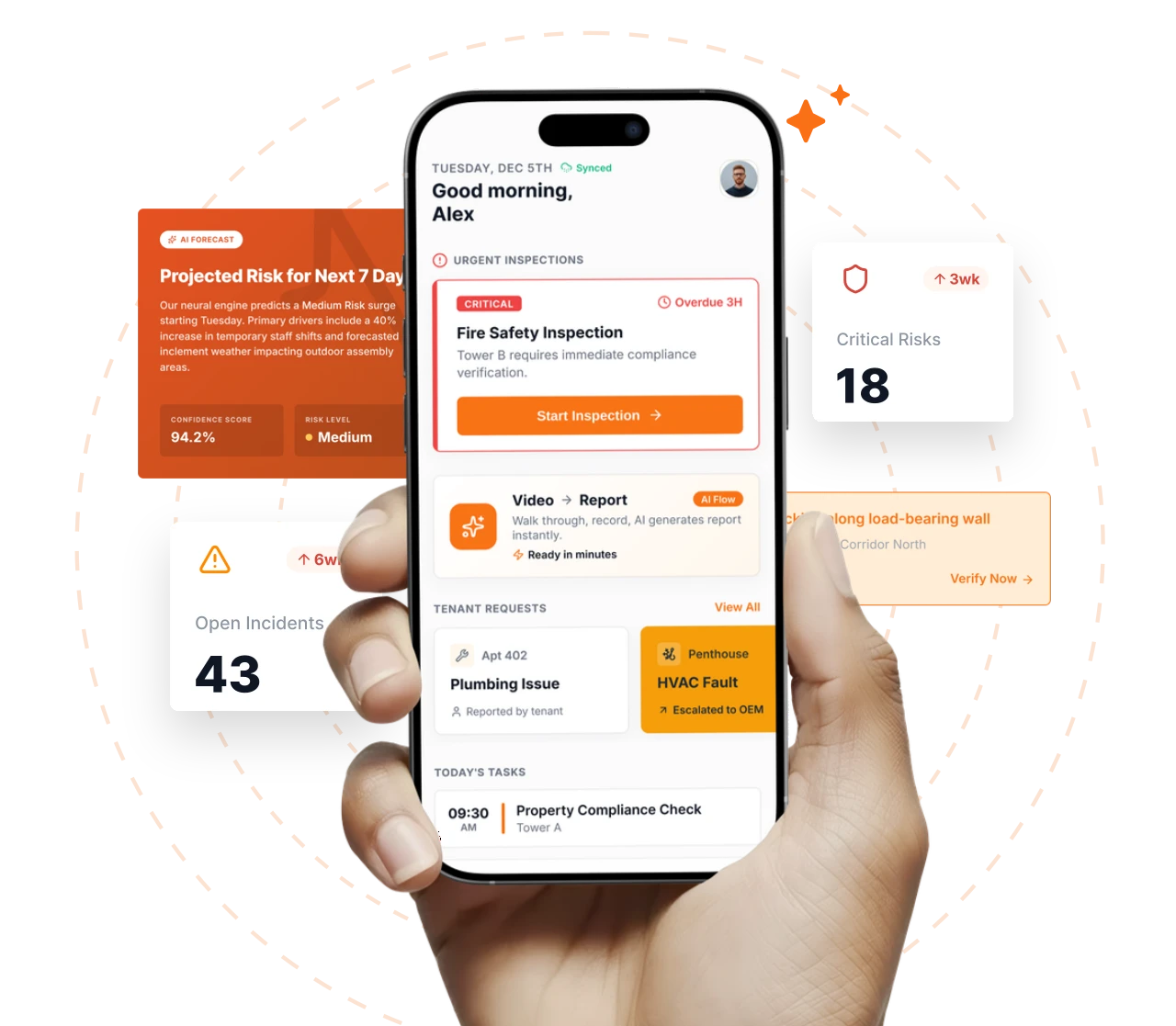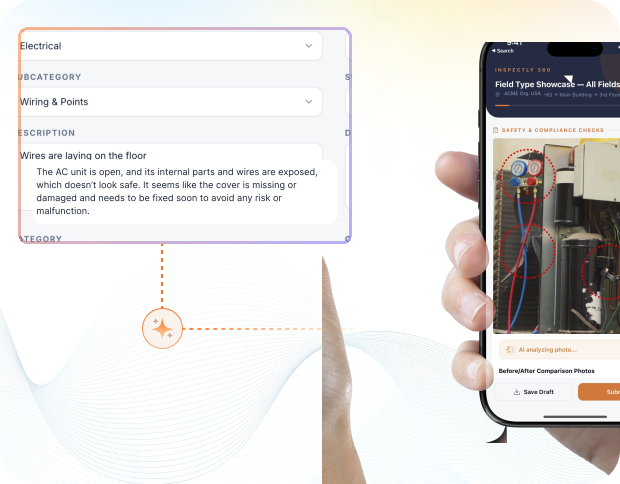
Take a Photo. AI Fills the Form
Your inspector takes a photo of any asset or defect. AI reads it and fills the inspection form automatically. No typing. No manual entry.

Convert your checklist into Mobile App
Jetway safety software is the platform airside safety managers, PBB (passenger boarding bridge) teams, and operations staff use to control passenger and ramp hazards on boarding bridges and keep defensible records under a safety management system. Inspectly360 digitises walkway slip and trip hazard capture, docking contact risk, safety shoe and emergency stop assurance, and near-miss reporting in one record aligned to ISO 45001 and the airport safety management system (SMS).
Everything your field team does on paper, Inspectly360 does automatically: faster, more accurate, and without the admin.
Your inspector takes a photo of any asset or defect. AI reads it and fills the inspection form automatically. No typing. No manual entry.
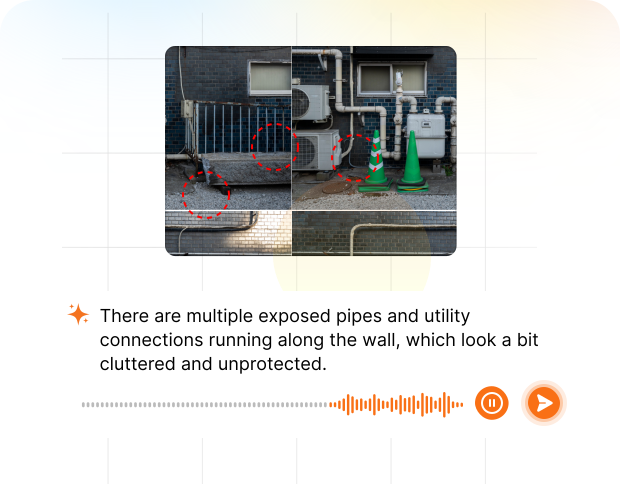
Inspectors speak their observations in any language. AI transcribes and fills the form in real time. Completely hands-free in the field.
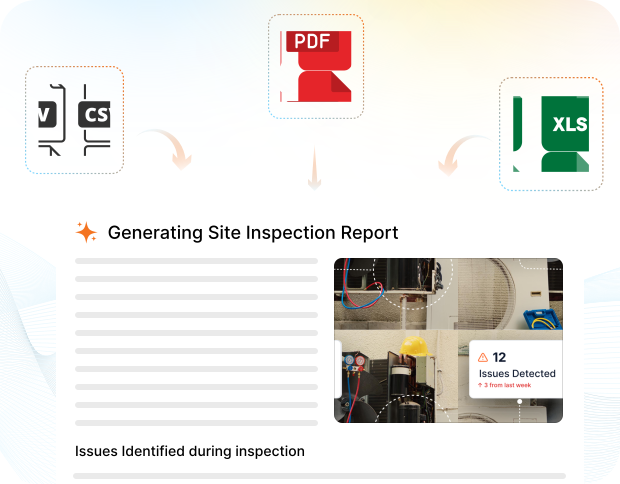
The moment an inspection is submitted, a branded PDF, Excel, or CSV report generates automatically. No manual work. No waiting.
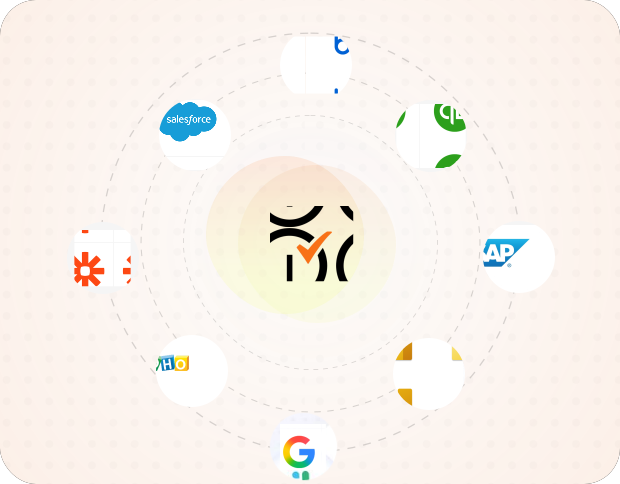
Inspectly360 integrates with the tools your team already uses, including Zoho, Microsoft 365, and SAP. No double entry.
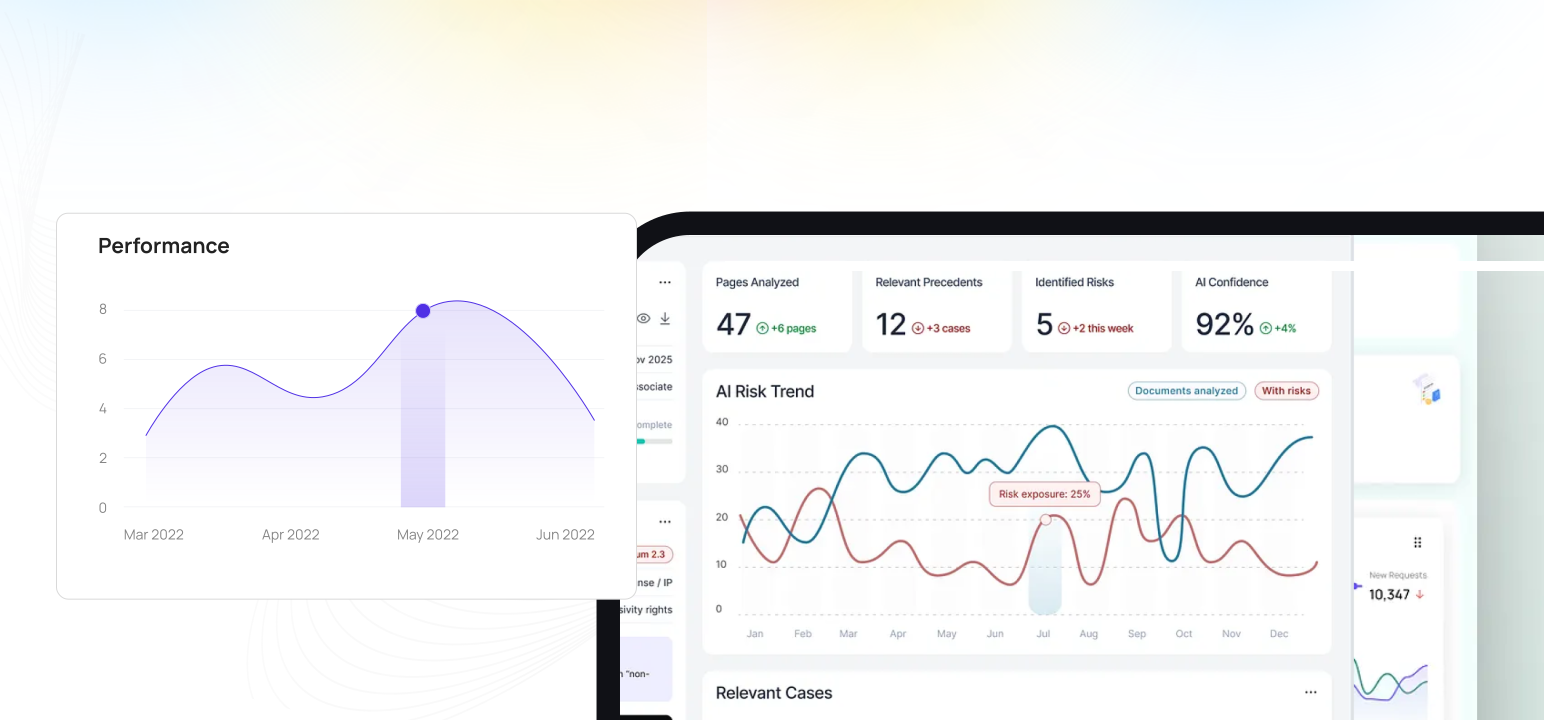
Your operations team sees completion rates, open issues, and compliance scores across all sites in real time. No chasing updates.
What changes once jetway / passenger boarding bridge safety software runs on one mobile-first platform with photo proof and live dashboards.
Jetway safety software is the platform airside safety managers, PBB (passenger boarding bridge) teams, and operations staff use to control passenger and ramp hazards on boarding bridges and keep defensible records under a safety management system. Inspectly360 digitises walkway slip and trip hazard capture, docking contact risk, safety shoe and emergency stop assurance, and near-miss reporting in one record aligned to ISO 45001 and the airport safety management system (SMS).
Today a wet or damaged walkway is noticed and forgotten, a near-contact during docking is discussed informally and never reaches the SMS, and the proof that a bridge was checked for hazards does not exist. When a passenger slips on the walkway, a bridge nearly contacts an aircraft during docking, or the safety shoe fails, the safety team often learns about it only after an incident. Across many bridges, every team reports hazards a little differently, so the safety manager cannot see the live risk picture across the terminal.
Inspectly360 replaces that with mobile capture on iOS and Android: any worker logs a hazard or near-miss with a photo and bridge identity, safety shoe and emergency stop failures are recorded against the bridge, and every finding routes to a tracked risk action with owner and deadline. A branded safety evidence pack exports per bridge when the safety manager or authority reviews how boarding bridge hazards are managed under the SMS.
Airside safety and PBB teams follow this loop for hazard spotting, docking risk, and near-miss reporting on every bridge.
Any worker reports a walkway hazard or docking near-miss on mobile in seconds with a photo and bridge identity.
Docking near-contacts and safety shoe or emergency stop failures are recorded against the bridge with detail.
Each hazard is given a severity so the safety team focuses on the risks most likely to harm passengers or staff.
On jetway / passenger boarding bridge safety programmes, every action carries an owner and deadline and is tracked to verified closure within the safety management system.
Open hazards and overdue actions roll up across bridges and a safety evidence pack exports per bridge.
Answers to common long-tail questions, kept on one canonical page to avoid thin duplicate URLs.
Start with a single pier so the hazard categories, docking risk workflows, and near-miss reporting are validated against real bridge operations before rollout to other piers and remote stands.
PBB teams and ramp staff get hazard and near-miss reporting, the safety manager gets read access to the live risk picture across every bridge through role-based access.
The platform capabilities that power jetway / passenger boarding bridge safety software across every site.
Any worker reports a walkway hazard or docking near-miss with a photo in seconds. Why it matters: a near-miss that never reaches the SMS is a warning the safety team never gets to act on.
Near-contacts during docking are recorded against the bridge with detail and severity. Why it matters: a bridge contacting an aircraft causes costly damage and a serious safety event.
Failures and tests of the safety shoe and emergency stop are recorded and tracked per bridge. Why it matters: these systems protect anyone in the bridge path, so a failure must be visible and acted on.
Each hazard is given a severity so the team focuses on the highest risks first. Why it matters: treating every hazard the same buries the ones most likely to harm a passenger.
For jetway / passenger boarding bridge safety field teams, every corrective action carries an owner and deadline and is tracked to verified closure. Why it matters: an open action with no owner is the gap an incident investigation exposes.
Open hazards, near-misses, and overdue actions roll up across bridges. Why it matters: the safety manager sees the live risk picture without waiting for a monthly report.
Airside safety and PBB teams comparing Inspectly360 to paper hazard forms, spreadsheet logs, and verbal near-miss reports see the difference fastest on passenger hazard capture, docking contact risk, safety shoe and emergency stop assurance, near-miss reporting, and bridge-wide visibility aligned to ISO 45001 and the airport safety management system.
| Topic | Typical Gaps | With Inspectly360 |
|---|---|---|
| Passenger slip and trip hazards | A wet or damaged walkway is noticed and mentioned later if anyone remembers. | Walkway slip and trip hazards are logged on the spot with a photo and routed to an owner. |
| Docking contact risk | A near-contact during docking is discussed informally and never reaches the safety system. | Docking near-contacts are reported as near-misses on mobile and enter the SMS with detail. |
| Safety shoe and emergency stop assurance | Safety shoe and emergency stop function assumed without a recorded test or failure log. | Failures and tests of the safety shoe and emergency stop are recorded and tracked per bridge. |
| Near-miss reporting | A near-miss is reported verbally and never reaches the safety management system. | Any worker reports a near-miss on mobile in seconds and it enters the SMS with a photo. |
| Bridge safety status | Safety manager has no live view of open hazards and overdue actions across the bridges. | Live dashboard of open hazards, near-misses, and overdue actions across every bridge. |
What changes once jetway / passenger boarding bridge safety software is standardised on Inspectly360.
Get started with inspection and audit checklist templates.

Use this template to perform a comprehensive safety inspection of light vehicles. This check ensures all critical components are checked ...
Use these apps to run inspections and audits.

by Inspectly360
Streamline facilities inspections with forms, photos, and reports.

by Inspectly360
Building condition and compliance inspections with evidence and follow-ups.

by Inspectly360
Digitize building inspection apps workflows with forms, evidence capture, and automated reporting.

by Inspectly360
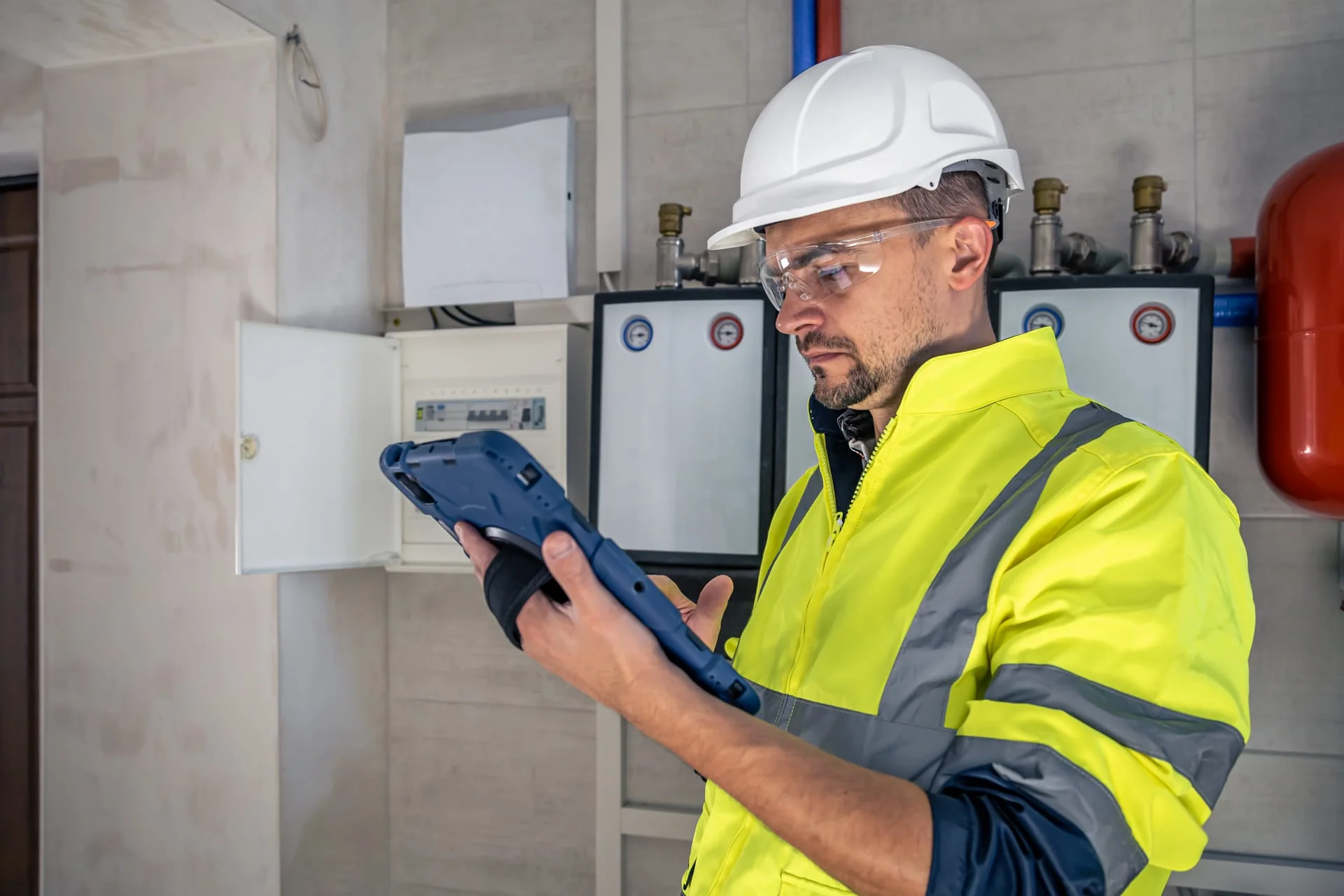
Run building inspections on phones and tablets with offline forms, photo evidence, and instant reports.
by Inspectly360
Audit buildings with structured scoring, photo evidence, and corrective action tracking across portfolios.
Any worker reports a walkway slip or trip hazard on a boarding bridge in seconds, capturing a photo and the bridge identity. A wet floor, a damaged surface, a loose threshold plate, or poor lighting enters the safety management system immediately with a severity, rather than being mentioned verbally and forgotten. The safety team assigns a corrective action with an owner and deadline and tracks it to verified closure. Because passengers, including those with reduced mobility, move through the bridge constantly, a walkway hazard is a direct injury and claim risk. Fast, photo-backed reporting means the hazard is fixed before it harms someone, rather than discovered after a passenger has already slipped or tripped.
Yes. A near-contact between the bridge and the aircraft during docking, or any docking event that could have caused damage, is reported as a near-miss on mobile with detail and severity. It enters the safety management system rather than being discussed informally and lost. The safety team can analyse docking near-misses across bridges to spot a pattern, such as a bridge with a drifting auto-leveller or an operator technique issue, and act before an actual contact occurs. This matters because a bridge contacting an aircraft causes expensive structural damage, takes the aircraft and stand out of service, and is a serious reportable safety event that the authority will scrutinise.
The safety shoe under the cab and the emergency stop controls are critical protections, and the platform records both their scheduled tests and any failure against the specific bridge. If a safety shoe does not stop the bridge on contact, or an emergency stop does not halt motion, the failure is logged with a severity and routed as a high-priority action, and the bridge can be flagged before it carries passengers again. This gives the safety team visibility of which bridges have had safety-system failures and ensures each is fixed and verified. It closes the gap where these systems are assumed serviceable until the moment they are needed and do not work.
Yes. Capture works fully offline on iOS and Android, which matters inside the bridge, at the stand, and at remote piers where signal is weak. Workers report hazards and near-misses, and teams record safety-system tests with photos, all while offline, and records sync automatically once the device reconnects. Nothing is lost if a report is made in a dead zone, and the timestamp reflects when the hazard was actually spotted, not when it synced. This keeps the live risk picture accurate and ensures a docking near-miss or walkway hazard reported at a remote bridge still reaches the safety management system promptly rather than being lost or delayed.
Inspectly360 gives the SMS the field layer it needs for boarding bridges: hazard identification, near-miss reporting, safety-system assurance, risk assessment, and corrective action tracking, all captured with evidence at the bridge. Each hazard is recorded with a severity, each action carries an owner and deadline, and closure is verified rather than assumed. The safety manager sees a live picture of open hazards and overdue actions across every bridge and can export a scoped evidence pack for an audit or review. This aligns day-to-day bridge safety work with the ISO 45001 cycle of identifying hazards, controlling risk, and demonstrating continual improvement, rather than leaving safety as a feeling backed by scattered paper.
Every hazard report, near-miss, safety-system test, and closed action is stored with a timestamp, the named person, a severity, and photo evidence against the specific bridge. When a safety audit or an incident review needs the trail, you export a scoped, branded safety evidence pack per bridge covering the period in minutes. The pack shows walkway hazards identified, docking near-misses reported, safety shoe and emergency stop tests recorded, and corrective actions closed with verified sign-off. This replaces the scramble across paper hazard forms and verbal reports, and gives an investigator a clear, defensible account of how bridge risk was being managed before and after any event.
Jetway Safety Software on Inspectly360 connects directly to the inspection apps, checklist templates, forms, industries, and adjacent solutions linked below.
See Inspectly360 in action with a live demo tailored to your needs. No credit card required.