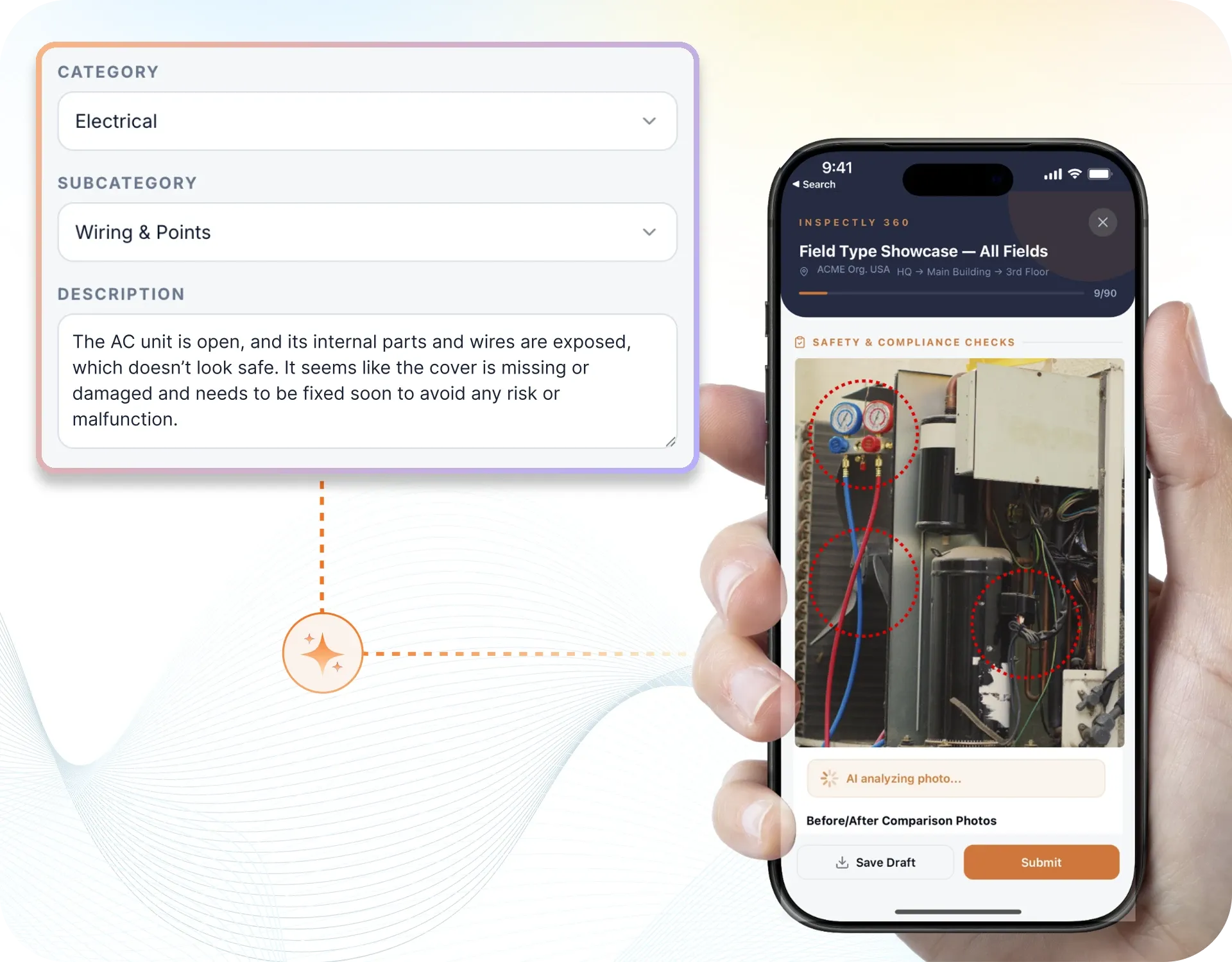
Take a Photo. AI Fills the Form
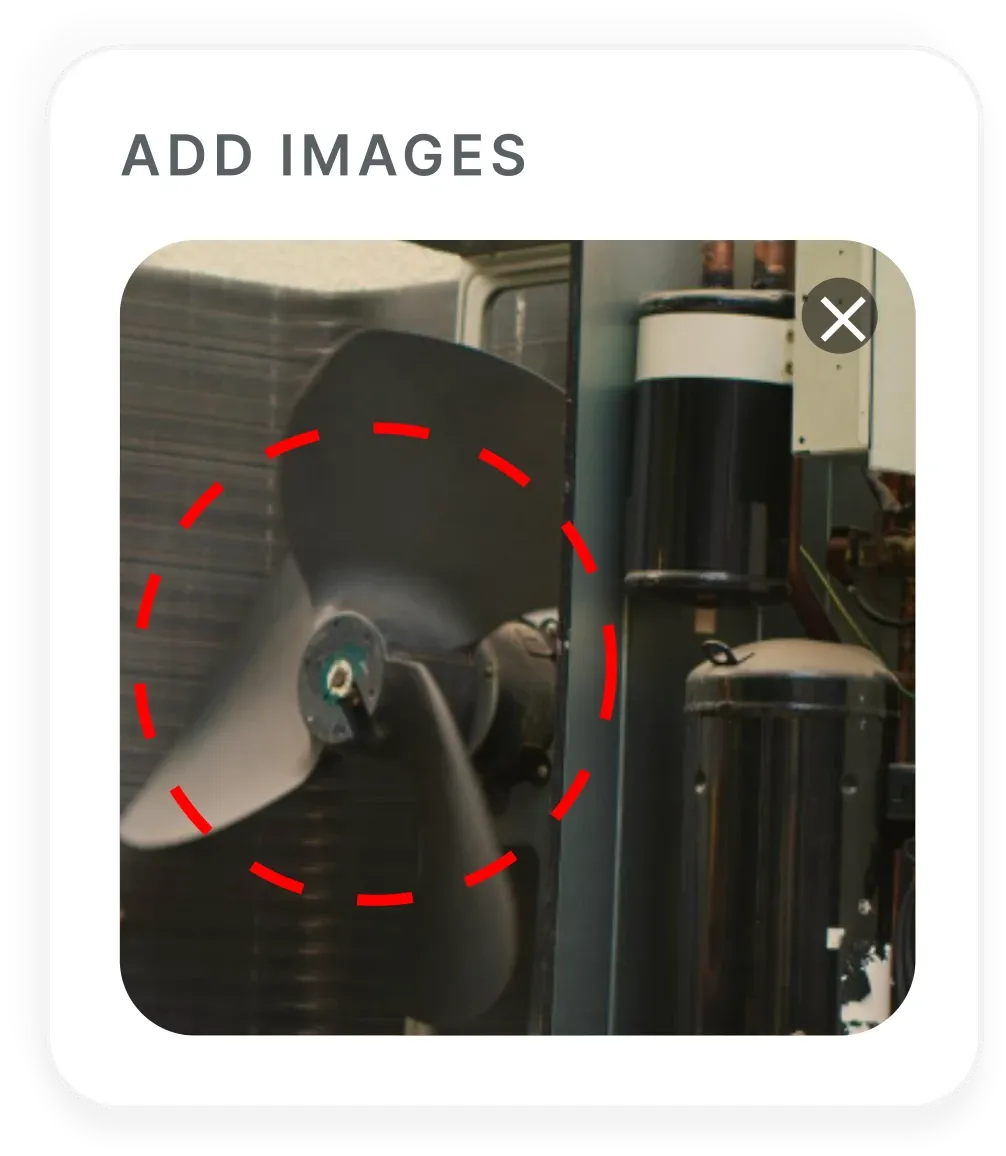
Your inspector takes a photo of any asset or defect. AI reads it and fills the inspection form automatically. No typing. No manual entry.

Convert your checklist into Mobile App
One quality inspection management platform for QC Managers and Quality Directors running smart checklists with conditional logic, weighted scoring, and required photo evidence across phones, tablets, and shop-floor terminals. Templates stay versioned, evidence stays defensible, and findings stay tracked to verified closure.
Centered on in-process and first-article checks, non-conformance, and CAPA. Quality inspection management software is a mobile-first system that authors, distributes, and governs the smart checklists, scored audits, and required-evidence inspection programs that quality teams use across multi-site operations. It replaces fragmented Excel checklist libraries, paper QC tickets, and uncontrolled vendor templates with one versioned program library aligned to ISO 9001, IATF 16949, AS9100, FSSC 22000, and customer-specific audit frameworks.
Available on Mobile
Inspect on iOS and Android with no internet required. Capture photos, let AI flag defects, and generate audit-ready reports in the field.
For the field team, the platform delivers checklists with conditional logic (the next question depends on the previous answer), weighted scoring, mandatory photo evidence, measurement fields, and barcode binding to the work order or batch. The form opens on the right device (iOS, Android, rugged Android, shop-floor tablet), runs offline, and submits with audit-grade timestamps and inspector identity.
What changes once quality inspection management runs on one mobile-first platform.
Programs roll out in three layers: prove one checklist at one plant, then scale by program family, then enable the template marketplace and customer-specific forks once the governance discipline is established.
Build the checklist in a no-code editor with conditional branches (if defect category equals contamination, ask three follow-up questions), weighted scoring per item, USL / LSL for measurement fields, required photo evidence, mandatory comments on fail, and barcode binding to the work order or batch. The template captures the inspection intent rather than just the form structure.
Templates publish through an approval workflow with a named approver. Each version carries a change log, a distribution scope (sites, lines, programs), and an effective-date window. The audit trail records every template change and who approved it, which is what ISO 9001 surveillance auditors expect to find.
Templates render natively on iPhone, iPad, Android phone, rugged Android, and shop-floor tablet with the same conditional logic and scoring across devices. Offline capture works in plants, basements, and remote sites; sync happens in the background once coverage returns.
Checklists are translated into the field team's working languages (English, Hindi, Marathi, Spanish, Arabic, Filipino, others on request) with the inspector seeing the form in their language while the corporate report renders in the standard reporting language. Multilingual checklists are first-class, not an afterthought.
The template marketplace surfaces ready-made templates for ISO, IATF, AS9100, FSSC, NABH, NABL, and other frameworks. Customer-specific forks layer on top with versioned change tracking, so a customer-specific audit template stays current with upstream updates rather than drifting silently.
Everything your field team does on paper, Inspectly360 does automatically: faster, more accurate, and without the admin.
Your inspector takes a photo of any asset or defect. AI reads it and fills the inspection form automatically. No typing. No manual entry.
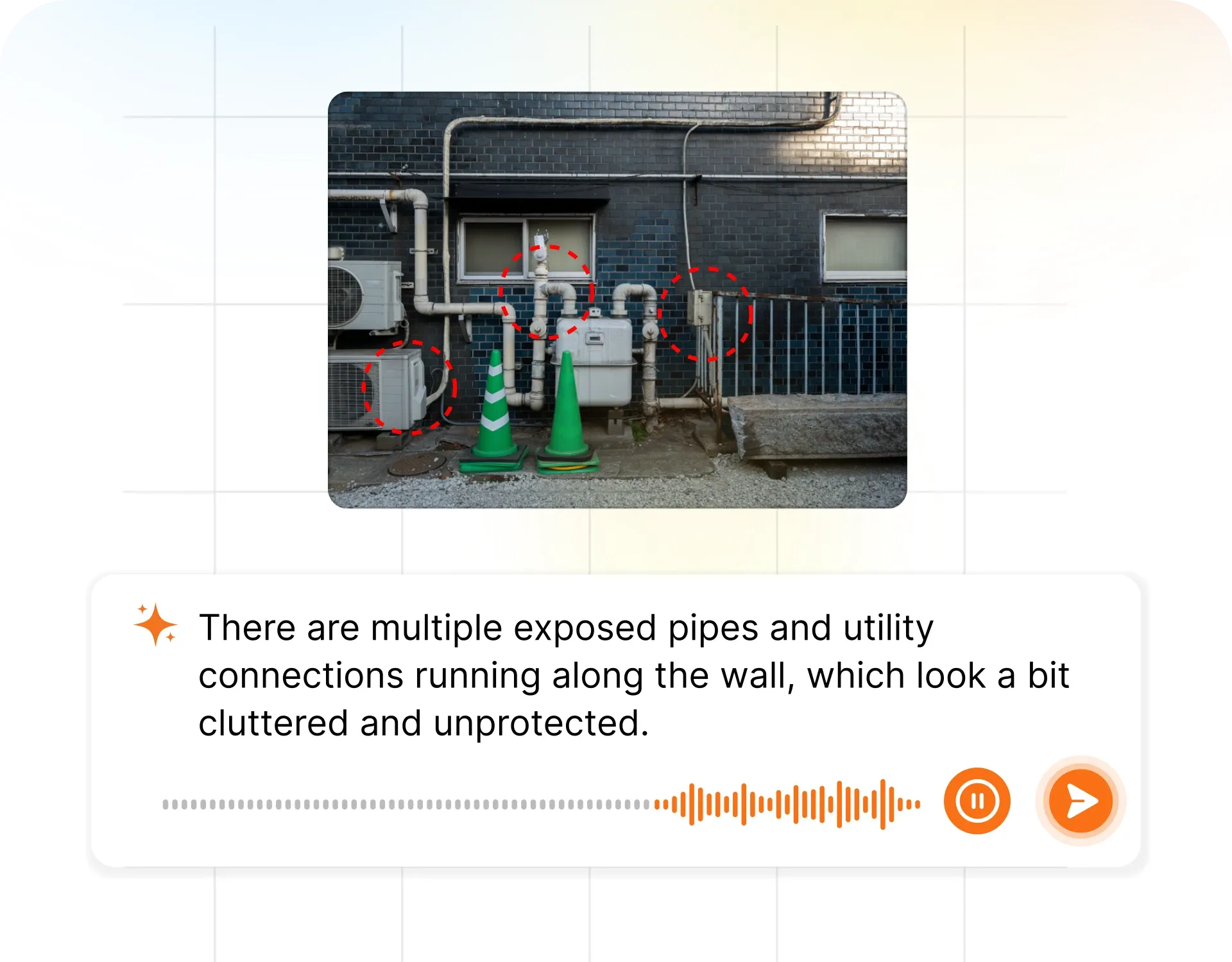
Inspectors speak their observations in any language. AI transcribes and fills the form in real time. Completely hands-free in the field.
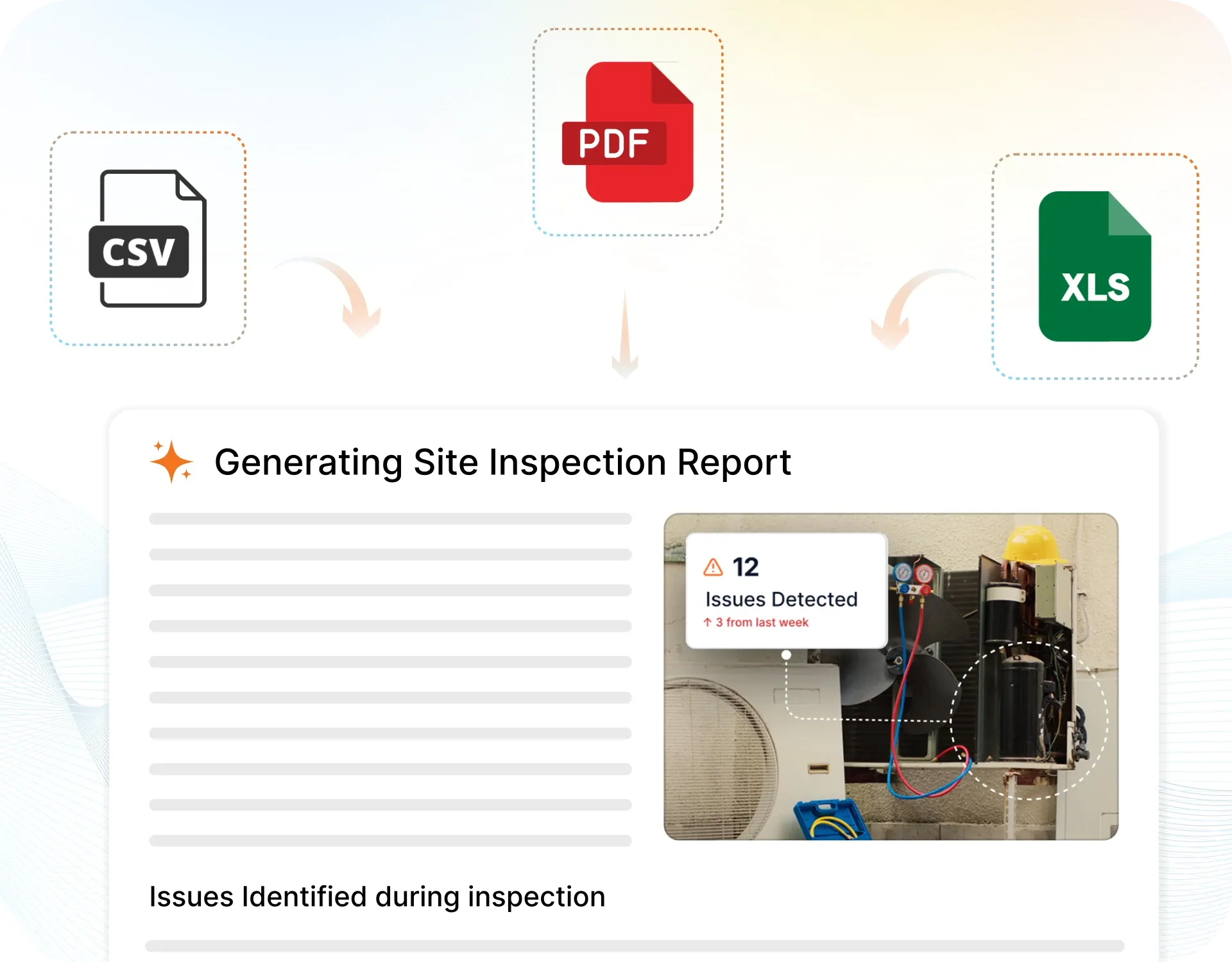
The moment an inspection is submitted, a branded PDF, Excel, or CSV report generates automatically. No manual work. No waiting.

Inspectly360 integrates with the tools your team already uses, including Zoho, Microsoft 365, and SAP. No double entry.
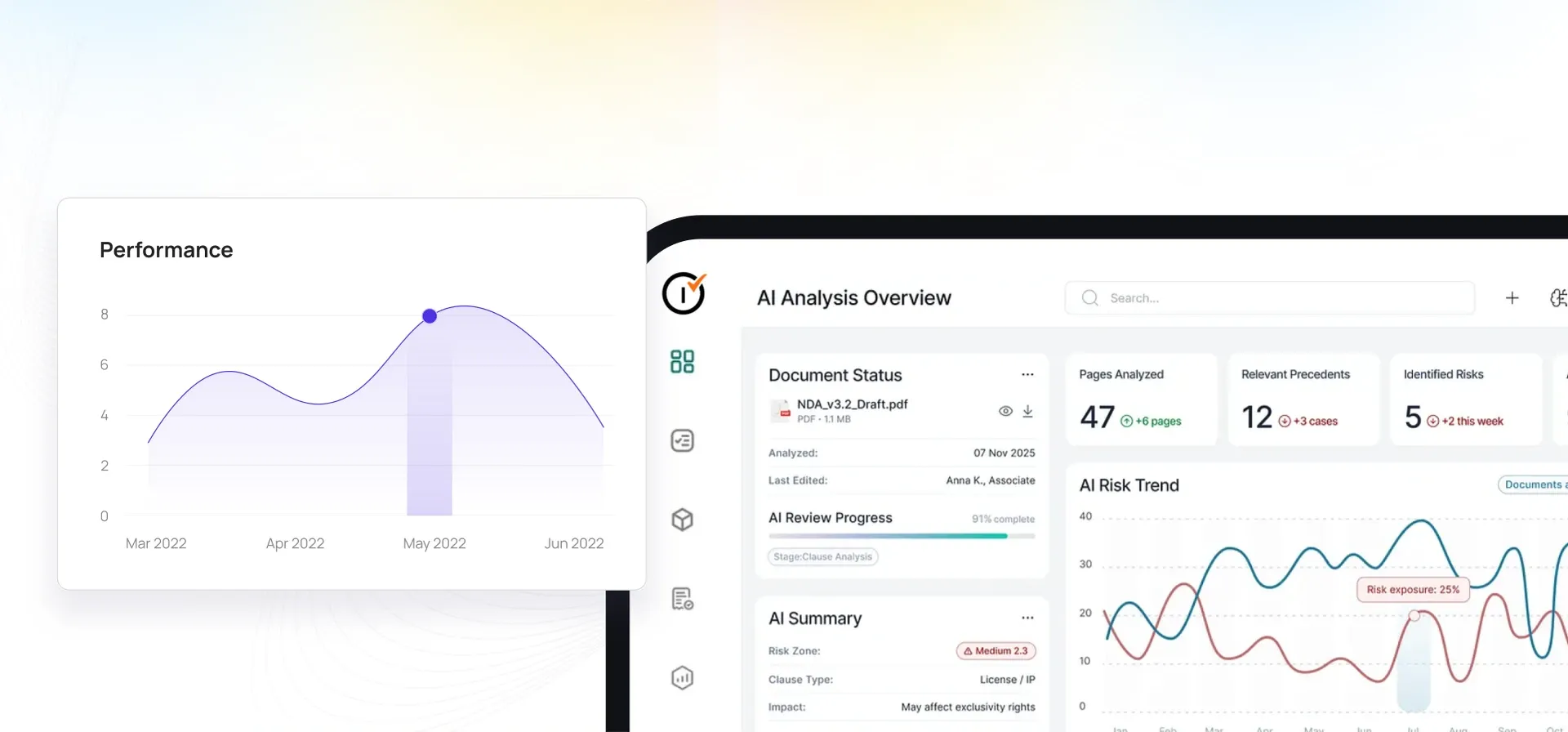
Your operations team sees completion rates, open issues, and compliance scores across all sites in real time. No chasing updates.
Manage every checklist in one connected workspace, capture evidence on mobile at the point of work, and let AI turn field inputs into clear, stakeholder-ready reports in minutes.


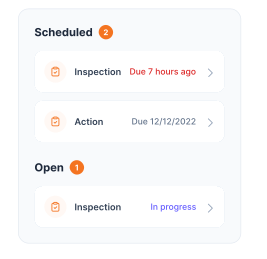
See which checklists your team has in progress across every site, jump into the same inspection with one tap, and keep field, supervisor, and back-office views in sync without sending screenshots on WhatsApp.


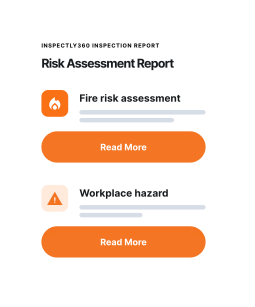
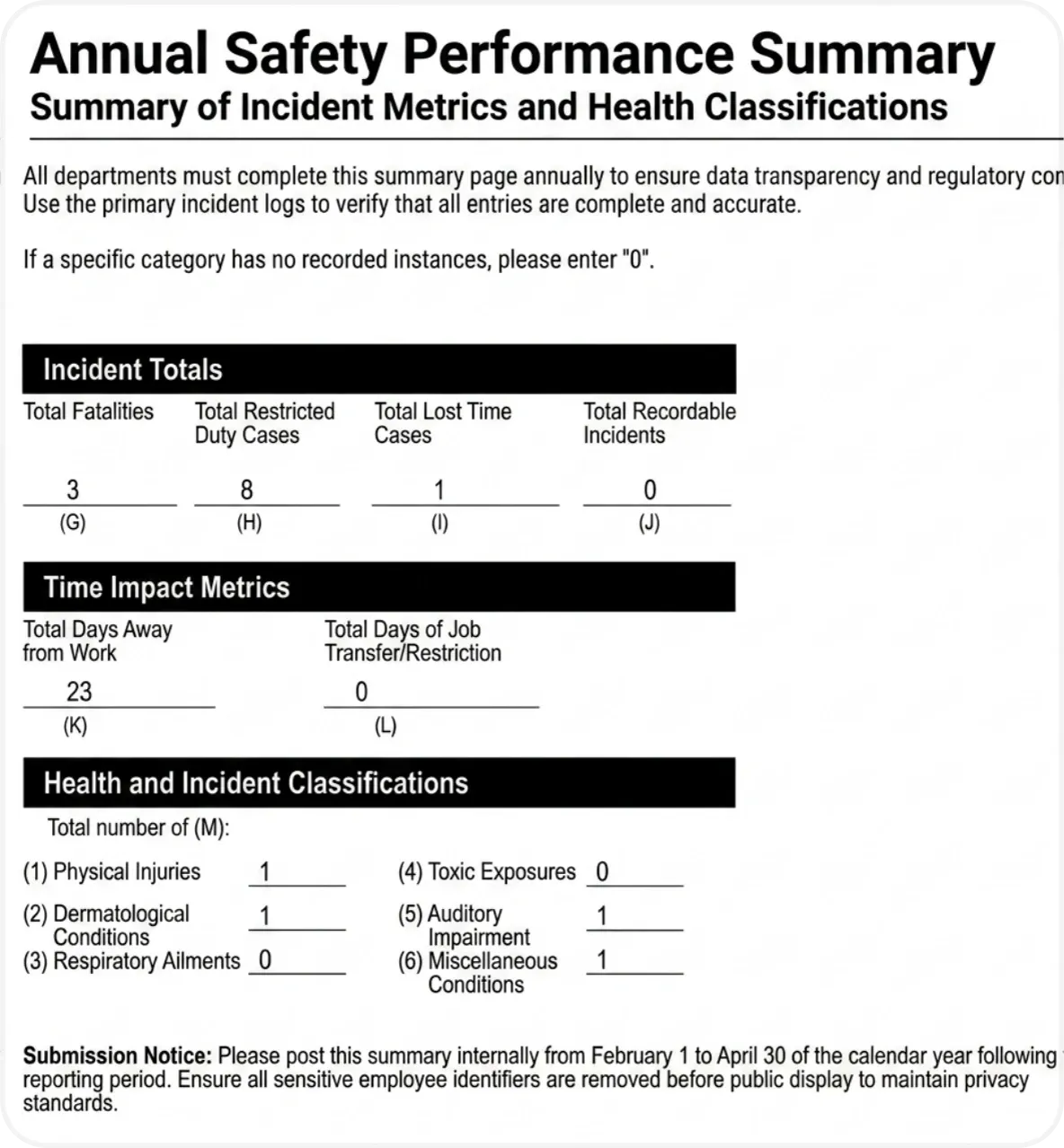


Every team reports differently. Build the report your operations, quality, or compliance leads actually want to read, share it as a branded PDF, and schedule delivery to the stakeholders who need it.


See completion, pass rate, and recurring findings across every checklist and every site, without pulling spreadsheets together at the end of the month.
What changes once quality inspection management is standardised on Inspectly360.







“Inspectly360 transformed how we manage site safety inspections. The offline capability alone saved us countless hours. Our compliance rate jumped from 72% to 96% in just three months.”
Sarah Mitchell
Meridian Construction Group

“The AI-powered defect detection has changed how we work. Our inspectors capture photos and the system flags issues we'd have missed. It's like having an expert reviewer on every site visit.”
James Chen
Pacific Manufacturing Co.
“Rolling out digital checklists across multiple projects gave us instant visibility into recurring safety issues. We now resolve critical findings in hours instead of days.”
Olivia Carter
Northbridge Infrastructure
Get started with inspection and audit checklist templates.

Use this Shift Start Production Readiness inspection to verify critical checkpoints and safety controls, compliance records and sign-off and corrective actions with photo evidence…

Use this End of Shift Shutdown & Handover inspection to verify critical checkpoints and safety controls, compliance records and sign-off and corrective actions with photo evidence…
Use these apps to run inspections and audits.

by Inspectly360
Quality checks with pass/fail, defect logging, and trends.

by Inspectly360
QA/QC inspections with criteria, evidence, and reports.
by Inspectly360
Run manufacturing quality inspections with defect evidence, scoring, and corrective action follow-up.

by Inspectly360
Use structured audit apps to standardize execution, scoring, and follow-up actions.

by Inspectly360
Run construction quality control checks with defect evidence, owner tracking, and closure verification.
Conditional logic supports unlimited nesting depth in practice (the platform has been tested with branch trees twelve levels deep on production-grade checklists). Branches can depend on any prior answer in the form, on calculated fields, on barcode-scanned context (work order, batch, supplier lot, drawing revision), and on AI-suggested classifications. Templates carry a built-in simulator so the author validates every branch before publication; the approval workflow gates publication until the simulator confirms full coverage. Inspectors see only the questions relevant to their actual situation, which is what makes a smart checklist faster than a paper one rather than slower.
Each item carries a configurable weight (commonly 1-10 or low-medium-high-critical). Sections carry their own weight so a 30-item operator-safety section can outweigh a 60-item cosmetic section. Critical-failure rules attach to flagged items: any fail on a critical item drives an overall fail regardless of the total score. The audit-score formula is configurable per program (percentage, points, capped, banded) and rendered with both the raw and weighted components on the audit report so a customer auditor can inspect the math. This is what makes the score defensible: the customer auditor and the QC team can both see how the number was built.
Each item supports photo-evidence rules: minimum photo count, maximum photo count, required angle (front, top, side, close-up), mandatory AI defect-category confirmation, on-device watermark, and required mark-up annotation. The submission flow rejects submissions that lack required evidence rather than warning then accepting; the inspector cannot complete the inspection until evidence is in place. For inspections where signal is unavailable, the validation runs locally on the device, so the rule holds offline. The audit-trail event log records every evidence rule that fired and how it was satisfied, which is what mature quality programs need at customer-audit time.
Checklists are translated into the field team's working languages (English, Hindi, Marathi, Spanish, Arabic, Filipino, others on request) through a named-approver workflow rather than machine translation. The author publishes the master template in the corporate-standard language; named translators or external translation vendors translate the form; the translated version is reviewed by a quality-team approver before publication. Conditional logic, scoring weights, and evidence rules apply identically across languages because they are properties of the template structure rather than the surface text. Inspectors see the form in their language; corporate reports render in the reporting language without round-trip translation.
Templates carry semantic version numbers (1.0, 1.1, 2.0) with a published change log per version. Each version captures the author, the named approver, the effective date, the distribution scope (sites, lines, programs), and the diff against the previous version. The audit trail records every inspection submission against the template version that was active when the submission ran, so a customer audit looking at an inspection from six months ago sees the exact template that was in force, not the current one. ISO 9001 surveillance auditors expect exactly this discipline (control of documented information), and it is what spreadsheet libraries cannot deliver.
The template marketplace surfaces ready-made templates for ISO 9001, IATF 16949, AS9100, FSSC 22000, NABH, NABL, OSHA, ISO 45001, and other major frameworks. Customers fork the template to layer customer-specific controls on top (customer-specific severity rules, customer-specific evidence requirements, customer-specific scoring weights). Forks carry an upstream link so when the upstream marketplace template updates (regulatory amendment, framework revision), the fork sees the diff and the customer's quality team chooses whether to accept the change. This stops the customer-specific fork from drifting silently away from the framework standard.
See Inspectly360 in action with a live demo tailored to your needs. No credit card required.