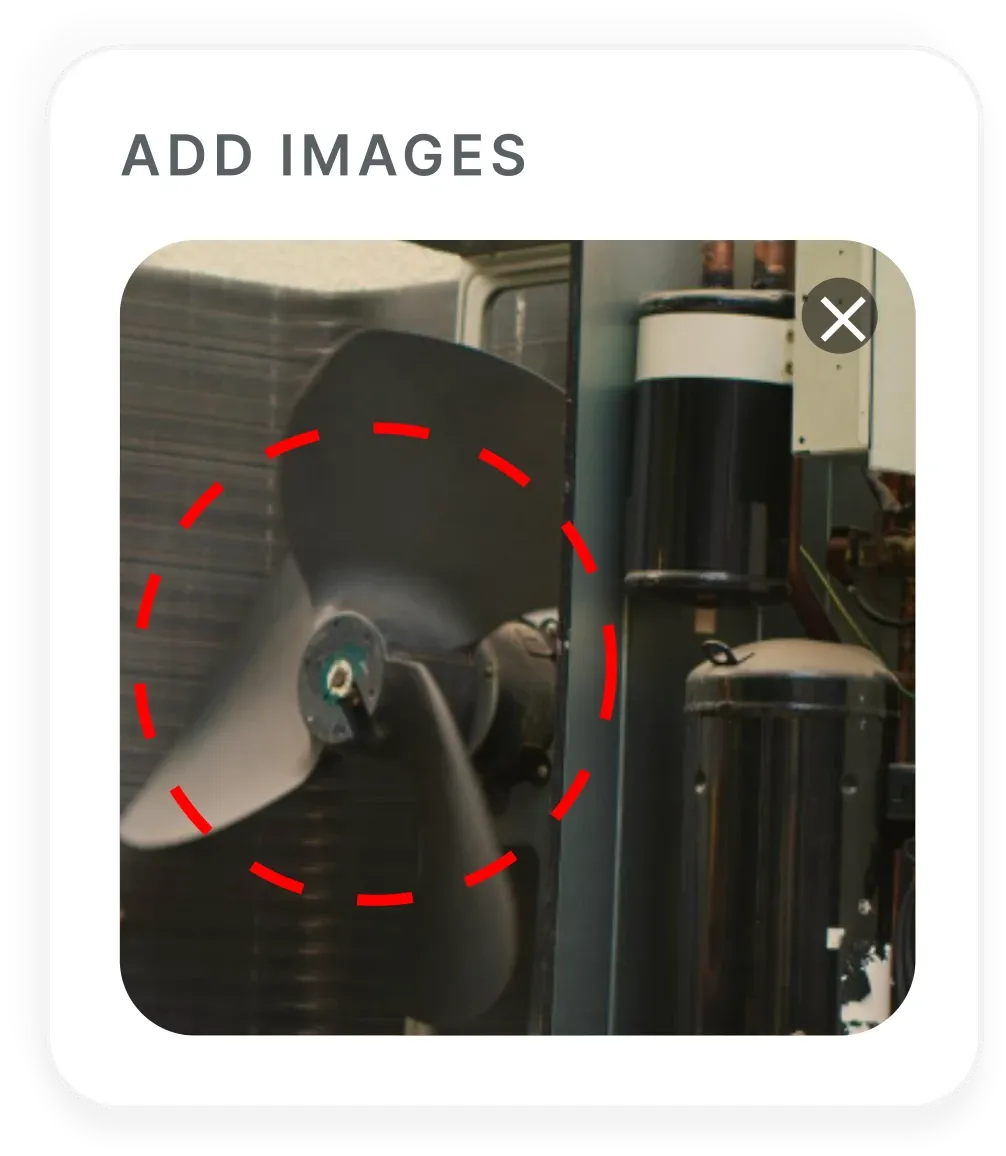
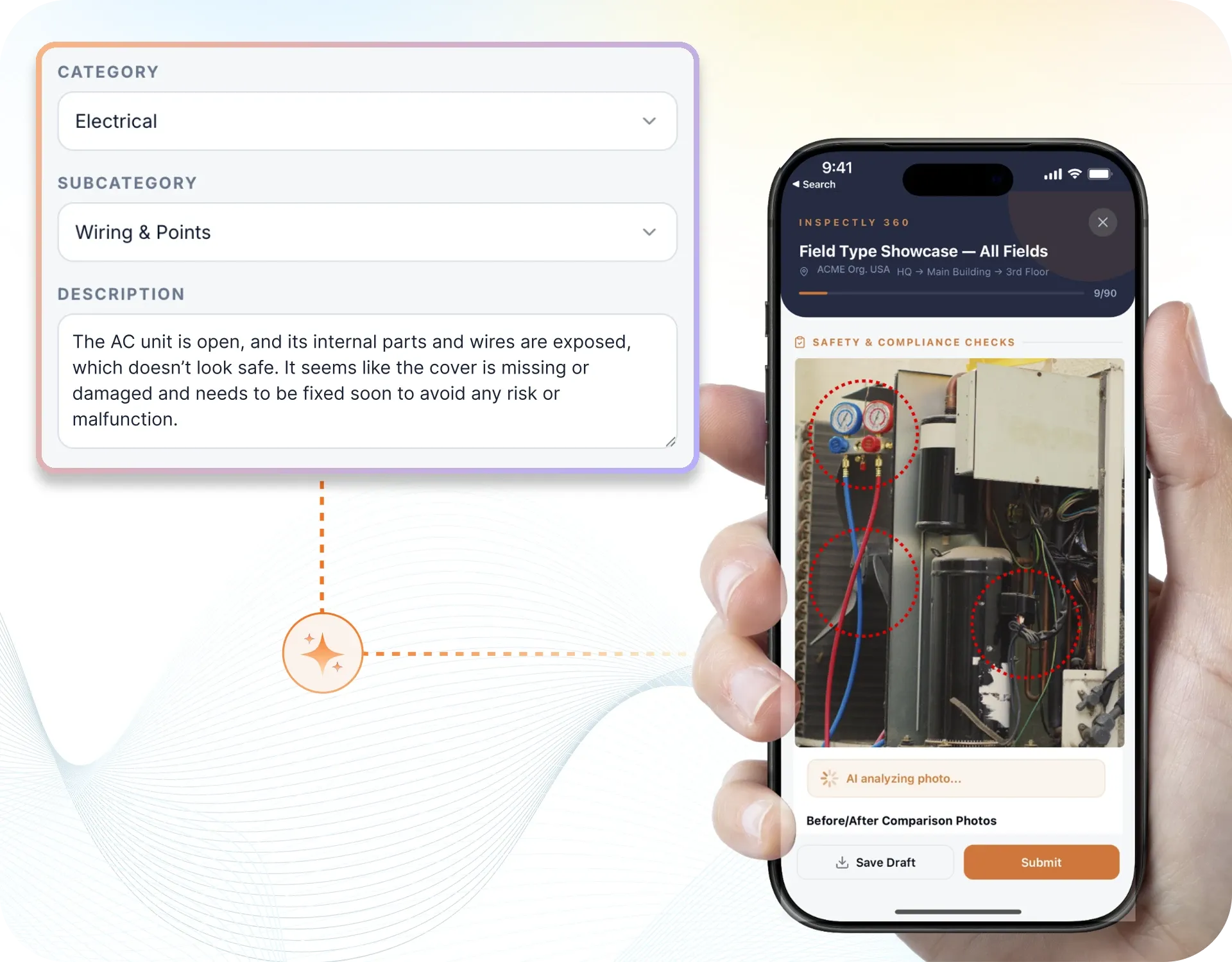
Take a Photo. AI Fills the Form
Your inspector takes a photo of any asset or defect. AI reads it and fills the inspection form automatically. No typing. No manual entry.

Convert your checklist into Mobile App
UPS inspection software is the platform that Critical Power Engineers, Data Centre Engineers, FM Engineering Managers, MEP Engineers, UPS AMC Service Contractors, Authorised Persons (Electrical), Hospital Estates Leads, and Site Reliability Engineers use to run uninterruptible power supply inspections across data centres, hospital critical care areas, manufacturing process plants, telco exchanges, and multi-site critical facilities with defensible evidence at every step.
Everything your field team does on paper, Inspectly360 does automatically: faster, more accurate, and without the admin.
Your inspector takes a photo of any asset or defect. AI reads it and fills the inspection form automatically. No typing. No manual entry.
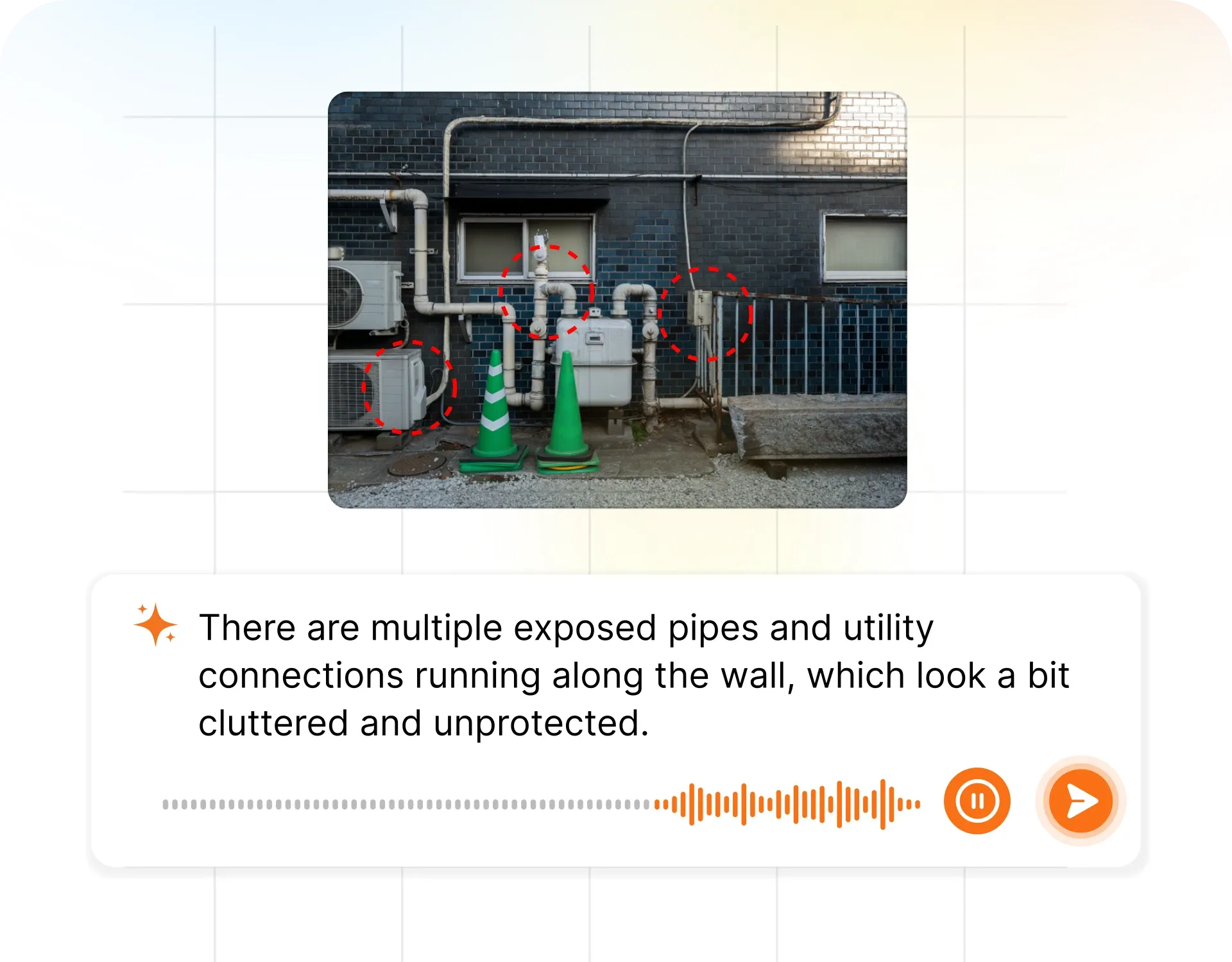
Inspectors speak their observations in any language. AI transcribes and fills the form in real time. Completely hands-free in the field.
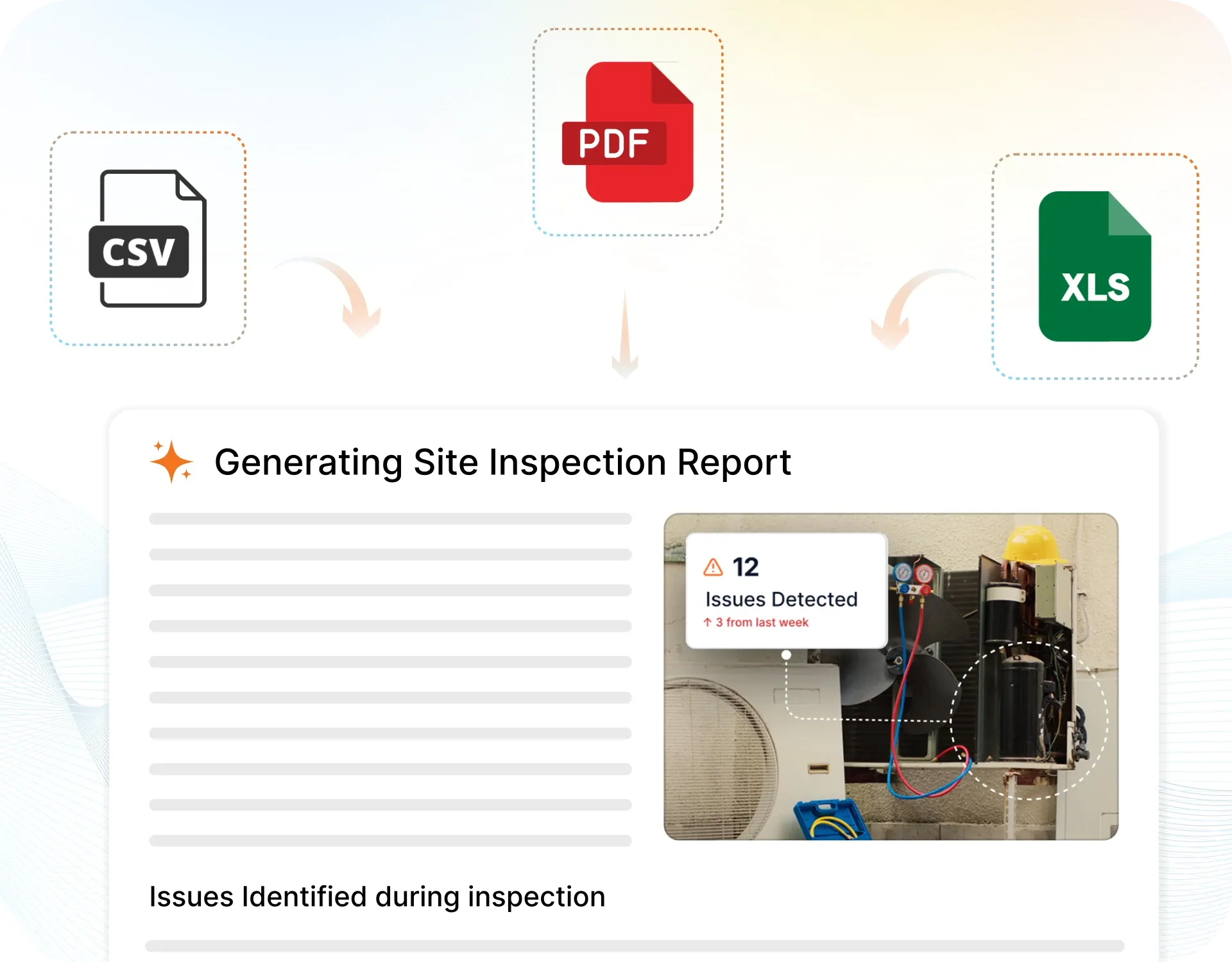
The moment an inspection is submitted, a branded PDF, Excel, or CSV report generates automatically. No manual work. No waiting.
Inspectly360 integrates with the tools your team already uses, including Zoho, Microsoft 365, and SAP. No double entry.
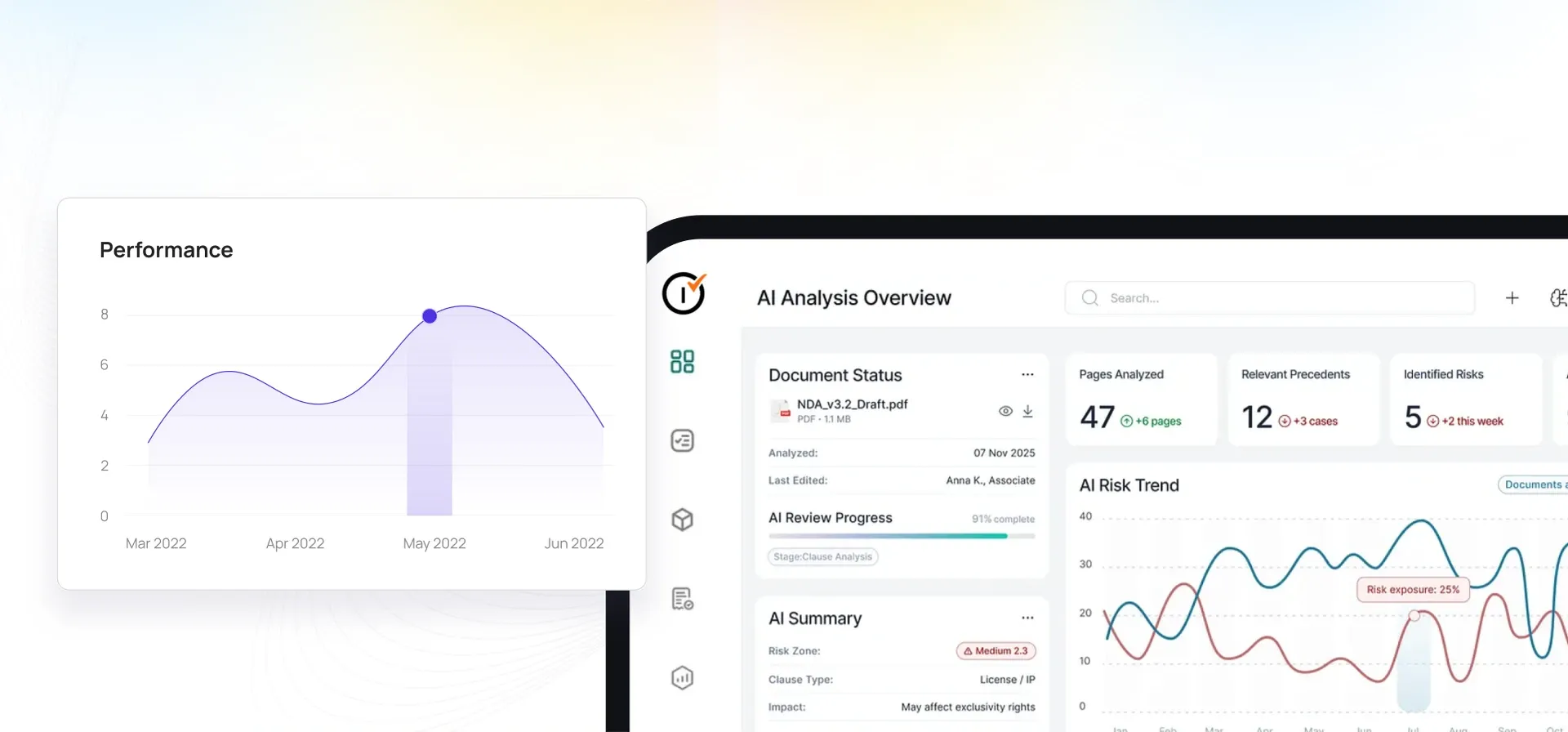
Your operations team sees completion rates, open issues, and compliance scores across all sites in real time. No chasing updates.
What changes once ups inspection software runs on one mobile-first platform with photo proof and live dashboards.
UPS inspection software is the platform that Critical Power Engineers, Data Centre Engineers, FM Engineering Managers, MEP Engineers, UPS AMC Service Contractors, Authorised Persons (Electrical), Hospital Estates Leads, and Site Reliability Engineers use to run uninterruptible power supply inspections across data centres, hospital critical care areas, manufacturing process plants, telco exchanges, and multi-site critical facilities with defensible evidence at every step. Inspectly360 digitises the full UPS inspection cycle with structured templates aligned to IEEE 1188 (VRLA battery maintenance), IEEE 450 (vented lead-acid maintenance), IEEE 1106 (Ni-Cd maintenance), IEEE 1184 (battery selection), IEEE 485 (battery sizing), IEEE 1491 (stationary battery monitoring), BS EN 62040 series and IEC 62040 (UPS general, EMC, performance, and methods of test), BS EN 50272 (battery installation safety), BS 6290 (lead-acid stationary battery), NFPA 70 NEC Article 480 (storage batteries), NFPA 110 (emergency and standby power), UL 1778 (UPS safety), ANSI/TIA-942 (data centre infrastructure standard), Uptime Institute Tier Standards (Tier I to Tier IV), OSHA 1910.305 (electrical safety), and ISO 27001 Annex A.11 physical and environmental security for data centres.
The pain it solves is the everyday reality of UPS operations: a VRLA battery string that failed an annual discharge test because cell-level impedance drift had not been tracked monthly for the prior 36 months, a static bypass transfer that did not happen as designed because the bypass test had been recorded as passed on a paper log without measured transfer time, a fan bearing in a 200 kVA module that degraded to failure because nobody scheduled the 5-to-7-year capacitor and fan refresh, an IR thermography report from 18 months ago that flagged a hot spot on a battery interconnect that nobody actioned, a hospital emergency power Level 1 system that missed its NFPA 110 Chapter 8 monthly test cycle because the AMC contractor changed and the new contractor inherited an empty logbook, a data centre Tier III site that lost concurrent maintainability claim because the parallel UPS sync test evidence could not be produced, a battery cabinet ambient temperature that drifted above 25 degrees C for months and silently halved battery life, an annual load bank test result recorded as pass with no kW or kVA reading captured, and a DCIM trend showing autonomy drop that nobody correlated with the cell impedance trend in the inspection record. Critical power carries the highest cost of failure of any building system; paper UPS logbooks do not protect that load.
Inspectly360 combines ready-made templates for UPS module visual and electrical inspections (front panel alarms, event log capture, input and output voltage per phase, frequency, power factor, kW and kVA load per module, module efficiency, internal temperature, fan condition, capacitor visual condition), battery cabinet inspection per IEEE 1188 and IEEE 450 (cell-level impedance, float voltage per cell and per string, specific gravity for VLA, ambient and cell temperature, terminal torque check, corrosion check, electrolyte level for VLA, jar and cover inspection for VRLA), annual capacity discharge testing with documented kW load and time-to-end-voltage, IEEE 1491 stationary battery monitoring system verification, BS EN 62040 UPS performance class verification, BS EN 50272 battery room safety (hydrogen venting, eye-wash station, insulating mats, signage), NFPA 110 emergency power Level 1 and Level 2 inspection cycles (weekly visual, monthly transfer, annual load bank to nameplate, 4-year operational test), IR thermography per UPS module and battery cabinet with baseline tracking, static bypass and maintenance bypass operational testing with measured transfer times, parallel module synchronisation verification, generator interface and ATS handover testing, capacitor and fan end-of-life tracking per module, Uptime Institute Tier maintenance cycle alignment, and ANSI/TIA-942 evidence packs for data centre tier certification; AI fault detection on the engineer's photo for corroded battery terminals, swollen VRLA jars, hot-spot indicators on the IR overlay, capacitor bulging, dirty fan grilles, alarm panel LED status, and event log screenshots; QR-tagged UPS modules, battery strings, switchgear, and ATS panels with full service history; offline capture in basement UPS rooms and metal-clad data halls where signal disappears; statutory clocks per UPS with renewal alerts for IEEE 1188 quarterly impedance cycle, IEEE 450 monthly float reading, NFPA 110 weekly Level 1, annual load bank, 4-year operational test, BS EN 62040 annual performance test, IR thermography annual cycle, and capacitor and fan refresh cycle; and white-label PDF reports that generate the moment the engineer closes out. Authorised Persons (Electrical) operate as scoped roles producing credentialed audit packs; UPS AMC service contractors deliver scoped client SLA evidence per module rather than per visit.
Critical Power Engineers, Data Centre Engineers, and UPS AMC Service Contractors follow this loop for PPM cycles, statutory testing, and Tier maintainability programmes.
UPS module weekly visual, monthly Level 1 inspection per NFPA 110 Chapter 8, quarterly VRLA battery impedance per IEEE 1188, monthly VLA float reading per IEEE 450, annual UPS performance test per BS EN 62040, annual load bank to nameplate with kW and kVA evidence, capacity discharge test, static bypass transfer test, maintenance bypass operational procedure, parallel module synchronisation, IR thermography with baseline overlay, capacitor and fan refresh, generator ATS handover, or ANSI/TIA-942 Tier evidence pack. Each pack carries the rubric the AHJ, the Authorised Person (Electrical), the Tier auditor, or the AMC client SLA expects.
Engineers scan the QR tag on the UPS module, battery cabinet, ATS panel, or switchgear cubicle. The right checklist opens for the right UPS class (on-line double-conversion, line-interactive, modular, parallel-redundant, transformer-based, transformerless); battery string topology (VRLA, VLA, lithium-ion, Ni-Cd), cell count, nameplate kVA and kW, BS EN 62040 performance class, redundancy mode (N+1, 2N, 2N+1), capacitor and fan refresh cycle, last impedance baseline, and any open CAPA surface so repeat issues are visible from the device.
Capture in basement UPS rooms, data halls, and metal-clad mechanical rooms where signal disappears. AI flags corroded battery terminals, swollen VRLA jars, capacitor bulging, dirty fan grilles, hot-spot indicators on the IR overlay against the baseline thermal image, alarm panel LED status, and event log screenshots from the engineer's photo and suggests fault classification for the engineer to confirm or override.
DCIM integrations (Schneider EcoStruxure IT, Vertiv Trellis, Eaton Brightlayer, Sunbird dcTrack) push trend data per UPS module (input voltage and frequency per phase, output voltage and frequency per phase, kW and kVA load, module efficiency, battery autonomy in minutes, battery temperature per string, alarm history) into the UPS inspection record. AI correlates trend deviation with recent inspection findings so the cell impedance drift before the autonomy drop, or the capacitor replacement before module derating, is visible from one record.
Branded PDFs (AMC client UPS PPM report, IEEE 1188 battery impedance audit pack, NFPA 110 Level 1 monthly inspection record, BS EN 62040 annual performance test report, IR thermography report with baseline overlay, ANSI/TIA-942 Tier evidence pack) generate the moment the engineer closes out via /features/automated-reports; statutory clocks per UPS update with renewal alerts for IEEE 1188 quarterly impedance cycle, IEEE 450 monthly float, NFPA 110 weekly Level 1 and annual load bank, BS EN 62040 annual performance, IR thermography annual cycle, and capacitor and fan refresh via /features/notifications.
Answers to common long-tail questions, kept on one canonical page to avoid thin duplicate URLs.
Inspectly360 sits as the UPS inspection evidence and compliance defensibility layer beside the platforms critical power and data centre teams already run. Maximo, IBM TRIRIGA, Planon, Archibus, FSI Concept Evolution, eMaint, Limble, and Fiix stay the system of record for UPS work orders, PPM scheduling, and asset register. DCIM (Schneider EcoStruxure IT, Vertiv Trellis, Eaton Brightlayer, Sunbird dcTrack, Nlyte, Cormant CS) stays where it is for live UPS monitoring, capacity planning, and rack-level telemetry. The UPS manufacturer's monitoring portal (Schneider EcoStruxure Asset Advisor, Vertiv Life, Eaton PredictPulse) stays where it is for module event logs and remote alarms. The UPS AMC service contractor's job-management tool stays where it is for scheduling and invoicing. Inspectly360 produces the structured UPS inspection evidence, AI fault detection on cabinet photos, IEEE 1188 cell-by-cell impedance tracking, NFPA 110 Level 1 cycle records, BS EN 62040 performance evidence, IR thermography baseline tracking, and DCIM-correlated findings those platforms reference but do not collect. CMMS integrations push UPS defect tickets and battery-replacement events into the work order queue; DCIM API integrations pull trend data into the UPS inspection record.
Critical Power Engineers typically pilot the IEEE 1188 quarterly VRLA battery impedance programme across one UPS plant and measure cell-level drift detection and pre-emptive cell replacement rate. Data Centre Engineers pilot the ANSI/TIA-942 and Uptime Institute Tier evidence pack across one suite and measure Tier audit preparation time. Hospital Estates Leads pilot the NFPA 110 Level 1 emergency power inspection cycle across one critical care UPS and measure AHJ submission preparation time. UPS AMC Service Contractors pilot the client SLA evidence pack workflow with one client and use the structured per-module inspection record to defend tender retention or upsell battery refresh contracts. Site Reliability Engineers pilot the DCIM trend correlation with inspection findings across one parallel UPS plant and measure mean-time-to-detect for capacitor and fan end-of-life. In every case, the pilot keeps the existing CMMS as the work order system and the DCIM as the live monitoring system.
UPS operations almost always involve multiple parties: data centre or building owner, FM aggregator, UPS AMC service contractor (often the OEM or an OEM-authorised service partner), battery AMC contractor (often separate from the UPS AMC), Authorised Person (Electrical) for permit-to-work, Authorised Person (HV / LV) for switchgear, IR thermography contractor (often Level II ITC certified), load bank rental contractor, Tier auditor (Uptime Institute Accredited Tier Designer / Specialist), the AHJ for NFPA 110 jurisdictions, and the regulator (Environment Agency for battery waste, HSE for COMAH if applicable). RBAC scopes each party to the modules, batteries, and evidence they are entitled to. Authorised Persons (Electrical) operate as scoped roles producing credentialed permit and isolation evidence intact. AMC contractor self-certification of monthly inspections is replaced by named engineer sign-off with QR-scanned asset identity and GPS-verified timestamp.
Procurement and engineering should validate seven requirements before any UPS rollout: SSO via SAML or OIDC tied to the operator's IdP, RBAC granular enough to scope an Authorised Person (Electrical) to specific UPS plants and permit-to-work cycles only, offline capture verified in a real basement UPS room or data hall, configurable retention aligned to NFPA 110 record-keeping windows (minimum 3 years for Level 1 and Level 2 records), statutory export formats acceptable to the AHJ, the Tier auditor, and the local environmental regulator, DCIM integration depth via SNMP, BACnet, Modbus, or REST API into the operator's DCIM, and a documented CMMS integration path. For cross-jurisdiction estate operators (UK, US, EU, India, UAE, APAC), regional data residency aligns to the local data protection regulator; battery hazardous-waste handling under the EU Waste Battery Directive, UK Hazardous Waste Regulations, or US EPA Universal Waste Rule tracks per battery string serial number.
The platform capabilities that power ups inspection software across every site.
Critical Power Engineers, Data Centre Engineers, FM Engineering Managers, and UPS AMC Service Contractors comparing Inspectly360 to paper UPS logbooks, spreadsheet battery logs, and disconnected DCIM trends see the difference fastest on five dimensions: battery health defensibility per cell and string per IEEE 1188 and IEEE 450, BS EN 62040 UPS performance and load-walk evidence per module, NFPA 110 emergency power system traceability, IR thermography of UPS cabinets and battery terminals with dated baseline, and DCIM trend correlation with inspection findings.
| Topic | Typical Gaps | With Inspectly360 |
|---|---|---|
| Battery health defensibility per cell and string (IEEE 1188 / IEEE 450) | Quarterly VRLA impedance readings, monthly float voltage checks, and annual capacity discharge tests live on paper held by the UPS AMC contractor. Cell-level impedance trend is reconstructed at battery end-of-life rather than tracked through service life. A failing cell drives a string failure that the discharge test would have caught six months earlier. | Each battery string carries a QR tag with cell-by-cell baseline impedance (in milliohms), float voltage, specific gravity for vented lead-acid (VLA), ambient temperature compensation, and discharge capacity test results. IEEE 1188 (VRLA) and IEEE 450 (VLA) cycles run with named-engineer sign-off; AI flags cells drifting more than 20% above baseline impedance. |
| BS EN 62040 UPS performance and load-walk defensibility per module | Annual UPS performance tests, bypass operation checks, and load walks happen at site visits the AMC contractor self-certifies. BS EN 62040 (IEC 62040) performance class data and on-line / line-interactive / off-line UPS topology behaviour are buried in the UPS commissioning report from years ago. Module synchronisation evidence is not produced. | Each UPS module carries BS EN 62040-3 performance class (VFI-SS-111 for on-line double-conversion, VI-SS-111, VFD), nameplate kVA and kW rating, redundancy topology (N+1, 2N, 2N+1), and annual performance test results with load-walk evidence captured on the device. Module synchronisation, static bypass transfer time, and maintenance bypass procedures are signed off per inspection. |
| NFPA 110 emergency power and life-safety system traceability | NFPA 110 Class, Type, and Level requirements for emergency and standby power systems are documented in the original design submission. The monthly Level 1 testing, annual load bank testing, and 4-year operational testing run on paper. The AHJ inspection scrambles to assemble the prior 12 months of test records. | NFPA 110 inspection templates cover Class (minutes of operation), Type (start-up time), and Level (Level 1 life-safety, Level 2 non-critical) per system. Monthly Level 1 inspection cycle, annual load bank to nameplate, 4-year operational test, and weekly visual inspections per NFPA 110 Chapter 8 run with named-engineer sign-off. The AHJ submission exports in one click. |
| IR thermography and capacitor / fan end-of-life tracking | Annual IR thermography reports sit in PDF attachments from the thermographic contractor. Year-over-year hot-spot drift on UPS power module connections, battery terminals, switchgear, and circuit breakers is reconstructed manually. Capacitor end-of-life and fan bearing degradation surface only when a UPS goes to bypass unexpectedly. | IR thermography templates capture FLIR thermal imagery against a baseline per asset for UPS power modules, battery terminals, switchgear, and parallel switchgear cabinets. Capacitor cycle (typically 5 to 7 years) and fan bearing cycle (typically 5 to 7 years) tracked per module with replacement evidence. AI flags hot spots above the baseline delta T threshold and proposes Level 1, 2, or 3 severity per IEEE Std 1584 thermography categories. |
| DCIM trend correlation with UPS inspection findings | The DCIM (Schneider EcoStruxure IT, Vertiv Trellis, Eaton Brightlayer, Sunbird dcTrack) shows kW load drift, battery autonomy reduction, and module efficiency decline that the engineer never correlates with the UPS inspection finding. A failing capacitor bank causes module derating that the DCIM logs and the inspection paperwork never connects. | DCIM integrations push trend data per UPS module (input voltage, output voltage, kW load, kVA load, battery autonomy in minutes, battery temperature per string, module efficiency, alarm history) into the UPS inspection record. AI correlates trend deviation with recent inspection findings so the capacitor replacement before module derating, or the cell impedance drift before the autonomy drop, is visible from one record. |
What changes once ups inspection software is standardised on Inspectly360.
Get started with inspection and audit checklist templates.
Standard site-level inspections for construction, safety, and compliance. Capture conditions, photos, and follow-ups in one place.

Inspect assets and equipment: condition, location, photos, and maintenance history. Track condition over time.
Complete work orders with checklist items, photos, and sign-off. Track completion and proof of work.
Preventive and corrective maintenance inspections. Log repairs, parts, and condition with photos and follow-ups.
Use these apps to run inspections and audits.

by Inspectly360
Inspect UPS with structured checks, photo evidence, and corrective action tracking.

by Inspectly360
Run UPS inspections on phones and tablets with offline forms, photo evidence, and instant reports.

by Inspectly360
Audit UPS inspection programmes with weighted scoring, photo evidence, and corrective action tracking.

by Inspectly360
Run UPS inspections on Android phones and rugged tablets with offline forms and photo capture.
by Inspectly360
Inspect data centre UPS with battery impedance samples, bypass indicators, load walks, and alarm logs.
UPS inspection management software is the layer that schedules weekly visual inspections per NFPA 110 Chapter 8, monthly Level 1 transfer cycles, quarterly VRLA impedance cycles per IEEE 1188, monthly VLA float readings per IEEE 450, annual BS EN 62040 UPS performance tests, annual load bank to nameplate, 3-year battery capacity discharge tests, 4-year NFPA 110 operational tests, IR thermography annual cycles, capacitor and fan refresh on the 5-to-7-year cycle, and Tier maintainability evidence packs across every UPS module and battery string in the estate from one programme library. RBAC scopes each Critical Power Engineer, Data Centre Engineer, UPS AMC service contractor, battery AMC contractor, IR thermography contractor, Authorised Person (Electrical), Authorised Person (HV / LV), and Tier auditor to the modules, batteries, and evidence they are entitled to. Template governance lives at FM Director or Critical Power Engineering Manager level; site-specific overrides (NFPA 110 hospital cadence, ANSI/TIA-942 Tier III concurrent maintainability) attach without breaking the corporate baseline.
UPS inspection audit software runs scored audit programmes against IEEE 1188 (VRLA maintenance), IEEE 450 (VLA maintenance), IEEE 1106 (Ni-Cd), IEEE 1184 (battery selection), IEEE 485 (battery sizing), IEEE 1491 (stationary battery monitoring), BS EN 62040 series and IEC 62040 (UPS performance and methods of test), BS EN 50272 (battery installation safety), BS 6290 (lead-acid stationary battery), NFPA 70 NEC Article 480 (storage batteries), NFPA 110 (emergency and standby power Levels 1 and 2), UL 1778 (UPS safety), ANSI/TIA-942 (data centre infrastructure standard), Uptime Institute Tier Standards (Tier I to Tier IV), OSHA 1910.305 (electrical safety), and ISO 27001 Annex A.11. Each audit produces a weighted score per module and per battery string, photo evidence per non-conformance, CAPA per finding, and a branded PDF export the AHJ, the Tier auditor, the Authorised Person, the AMC client, and the local environmental authority recognise. The 12-month audit history per UPS retrieves in one click.
UPS inspection compliance software produces the evidence chain regulators, AHJs, and Tier auditors expect across IEEE 1188 (VRLA quarterly impedance, annual capacity discharge, cell-by-cell baseline), IEEE 450 (VLA monthly float, specific gravity, electrolyte level), IEEE 1106 (Ni-Cd-specific maintenance), NFPA 110 (Level 1 weekly visual, monthly transfer, annual load bank to nameplate, 4-year operational test, 3-year battery discharge), BS EN 62040 (annual UPS performance test, BS EN 62040-3 performance class verification, static bypass transfer time, parallel synchronisation), BS EN 50272 (battery room hydrogen venting, eye-wash station, insulating mats, signage), ANSI/TIA-942 (Tier I to Tier IV data centre infrastructure), Uptime Institute Tier (Tier III concurrent maintainability, Tier IV fault tolerance), and OSHA 1910.305 electrical safety. Every UPS inspection carries credentialed engineer identity, GPS-verified timestamp, asset confirmation, and required photo evidence. Statutory clocks per UPS track IEEE 1188 quarterly cycle, NFPA 110 weekly, monthly, annual, and 4-year cycles, BS EN 62040 annual performance, IR thermography annual cycle, and capacitor and fan refresh.
UPS inspection tracking software runs every finding through the same lifecycle: severity classification (immediate for a static bypass transfer time outside specification, immediate for a cell impedance reading above 50% baseline drift, immediate for a swollen VRLA jar or thermal runaway risk, scheduled for capacitor and fan refresh on cycle approach, periodic for cosmetic cabinet damage), named owner assignment, deadline by severity, required closure evidence, and named approver verification before the finding closes. Battery cell findings trigger the IEEE 1188 cell-replacement workflow with cell serial number, replacement cell impedance baseline, and named engineer sign-off. Static bypass findings trigger a permit-to-work workflow with Authorised Person (Electrical) credential intact. Tracking dashboards surface battery health trend per string, capacitor and fan refresh status per module, IR thermography hot-spot trend, NFPA 110 Level 1 cycle status, AMC contractor closure performance, and CAPA age.
UPS inspection monitoring software runs a live multi-site dashboard aggregating UPS inspection completion, defect closure, battery autonomy per plant, module efficiency, kW and kVA load per UPS, IEEE 1188 impedance cycle status, NFPA 110 Level 1 cycle status, BS EN 62040 annual performance compliance, IR thermography hot-spot trend, capacitor and fan refresh status, Tier maintainability evidence status, and DCIM trend correlation per module. AI daily briefing delivers a plain-language summary to the Critical Power Engineering Manager, Data Centre Engineering Manager, and FM Director inbox before the operating committee: which UPS plants missed PPM cycles, which battery strings drifted on impedance, which modules approached capacitor or fan refresh, which NFPA 110 Level 1 cycles are within 30 days, and which Tier audits are within 90 days. Natural-language dashboard queries let leadership ask 'which UPS plants have battery autonomy below design by more than 20%?' and receive a filtered answer rather than a manual report.
Each battery string carries cell-by-cell impedance baseline data in milliohms captured at commissioning or first inspection, with quarterly readings tracked over service life per IEEE 1188 for VRLA and per IEEE 450 for VLA. A typical VRLA cell baseline is 4 to 7 milliohms for a 100 Ah cell; a cell drifting more than 20% above baseline indicates the start of internal degradation, and a cell more than 50% above baseline indicates imminent failure. The annual capacity discharge test verifies the string can deliver design autonomy at the design kW load to the end-voltage threshold, but cell-level impedance drift over the prior 36 months catches the failing cell six months earlier. AI flags cells drifting above the configurable threshold and prompts cell-level replacement before the string-level failure. Ambient temperature compensation matters: every 8 degrees C above 25 degrees C halves VRLA service life, so battery cabinet temperature trend pulls into the same record.
UPS Inspection Software on Inspectly360 connects directly to the inspection apps, checklist templates, forms, industries, and adjacent solutions linked below.
See Inspectly360 in action with a live demo tailored to your needs. No credit card required.