What are AI compliance inspections?
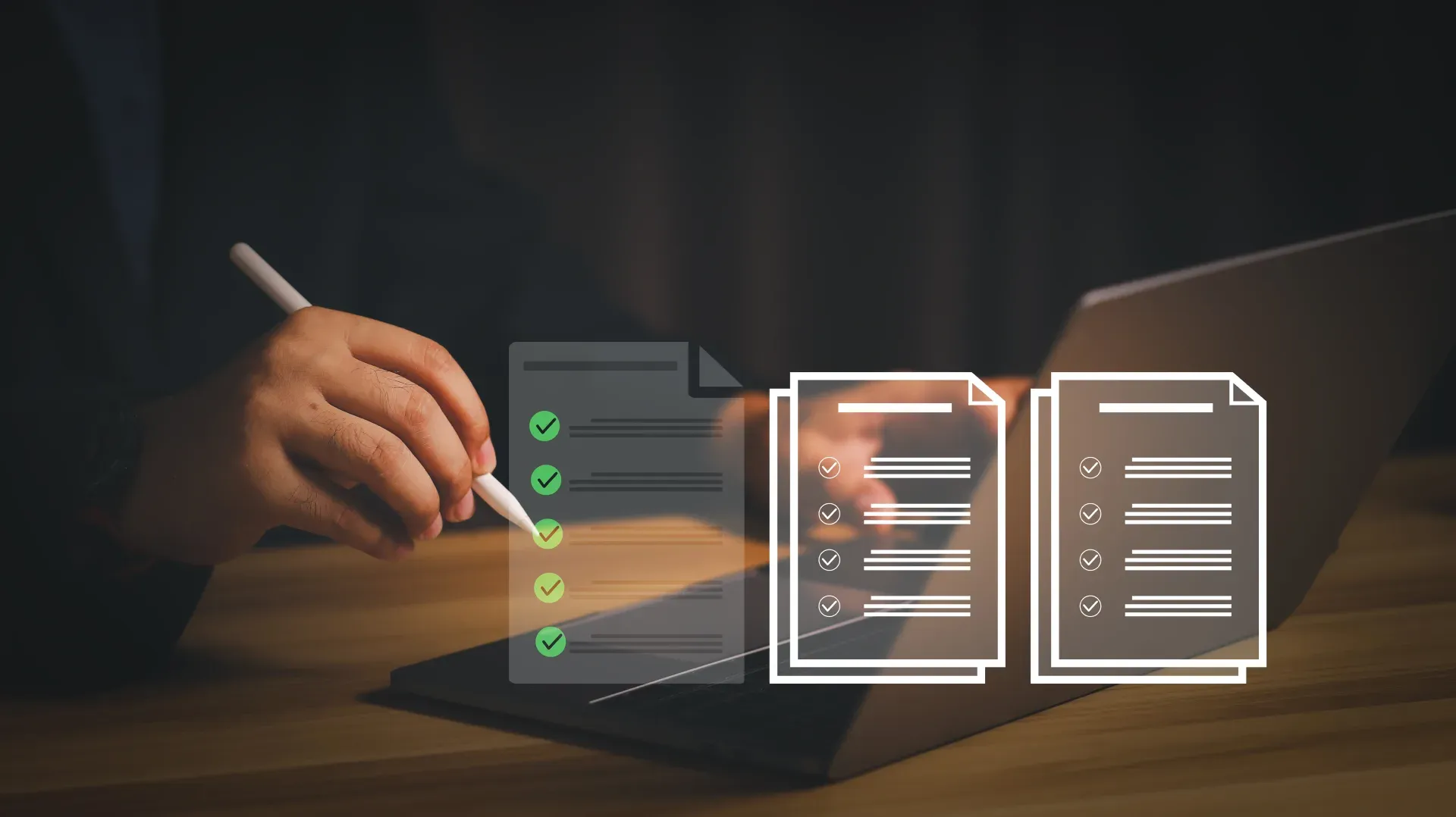
AI compliance inspections are compliance checks that use AI to make flagging more consistent, evidence easier to gather, and reports audit-ready. In practice, the software analyzes photos and responses against your criteria to flag potential nonconformities, suggests categories or severity, ties findings to timestamps and corrective actions, and surfaces trends across many inspections. The purpose is to reduce risk and strengthen proof, not to make the compliance decision. A qualified person still determines whether a finding breaches a standard and what it requires. Done well, AI compliance inspections give auditors and inspectors a consistent first pass and a clear, attributable trail from what was checked to what was found and how it was resolved.
How do AI compliance inspections reduce risk?
They reduce risk in several connected ways. Consistent AI flagging means nonconformities are less likely to be missed or judged differently by different inspectors. Faster evidence collection produces more complete audit packs, because photos are attached to the right checklist items and timestamps automatically. Clear audit trails link every finding to the step, the reviewer, and the corrective action, which stands up to regulator scrutiny. Trend detection surfaces recurring issues so root causes get fixed rather than repeatedly patched. And closed-loop corrective actions ensure findings are resolved and verified, reducing repeat findings. Together these move a program from hoping checks were done to being able to prove they were, which is where most compliance risk actually sits.
Does AI make the compliance decision?
No. AI assists with the mechanical parts of a compliance inspection, but the compliance decision and sign-off stay with a qualified person. A model can flag a possible nonconformity, suggest a severity, or summarize a response, but deciding whether something genuinely breaches a standard, how serious it is in context, and what action is required depends on human interpretation and accountability. This matters especially in compliance, because a regulator holds a named organization or person responsible, not a model. The reliable model treats AI output as a draft that a compliance professional confirms or overturns, with that decision recorded. Used this way, AI strengthens a compliance program by speeding up the evidence work while keeping the judgment where accountability lies.
How do AI compliance inspections support audits?
They support audits by producing a clear, attributable trail as a natural by-product of the inspection. Because AI output is tied to specific inspection steps, timestamps, and corrective actions, an auditor can see what was checked, what was flagged by both AI and human, and how each issue was resolved. Evidence is attached to the right checklist items automatically, so building an audit pack is faster and more complete than assembling one from scattered photos and notes. The ability to produce this history on demand, rather than reconstructing it before an audit, is a significant advantage. It lets an organization spend the audit demonstrating a managed compliance process rather than hunting for the evidence that the required checks actually took place.
How do we start with AI compliance inspections?
Start by identifying the compliance checks that are photo-heavy, repeated often, and carry real risk, since those are where consistent AI flagging and faster evidence add the most value. Run a short pilot that compares AI-assisted results with your current process, and confirm that findings flow into corrective actions with owners and due dates and into audit-ready reports. Keep human sign-off central from the outset, so the AI clearly assists rather than decides. Once the pilot shows more consistent flagging and a cleaner audit trail, extend the approach to more checks and sites using the same templates so data stays comparable. Building in closed-loop corrective actions and trend analysis from the start is what turns the effort into proactive, provable compliance.