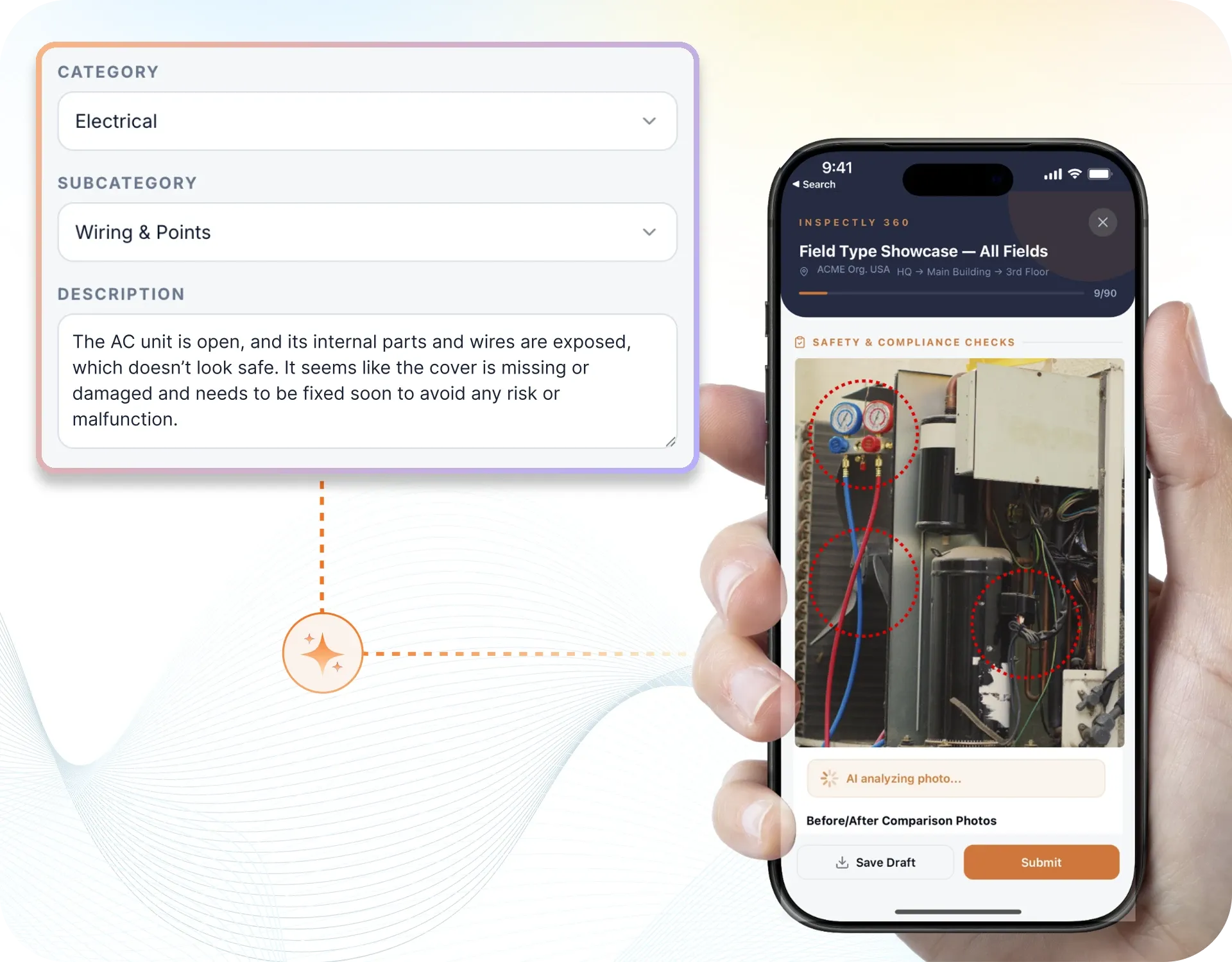
Take a Photo. AI Fills the Form
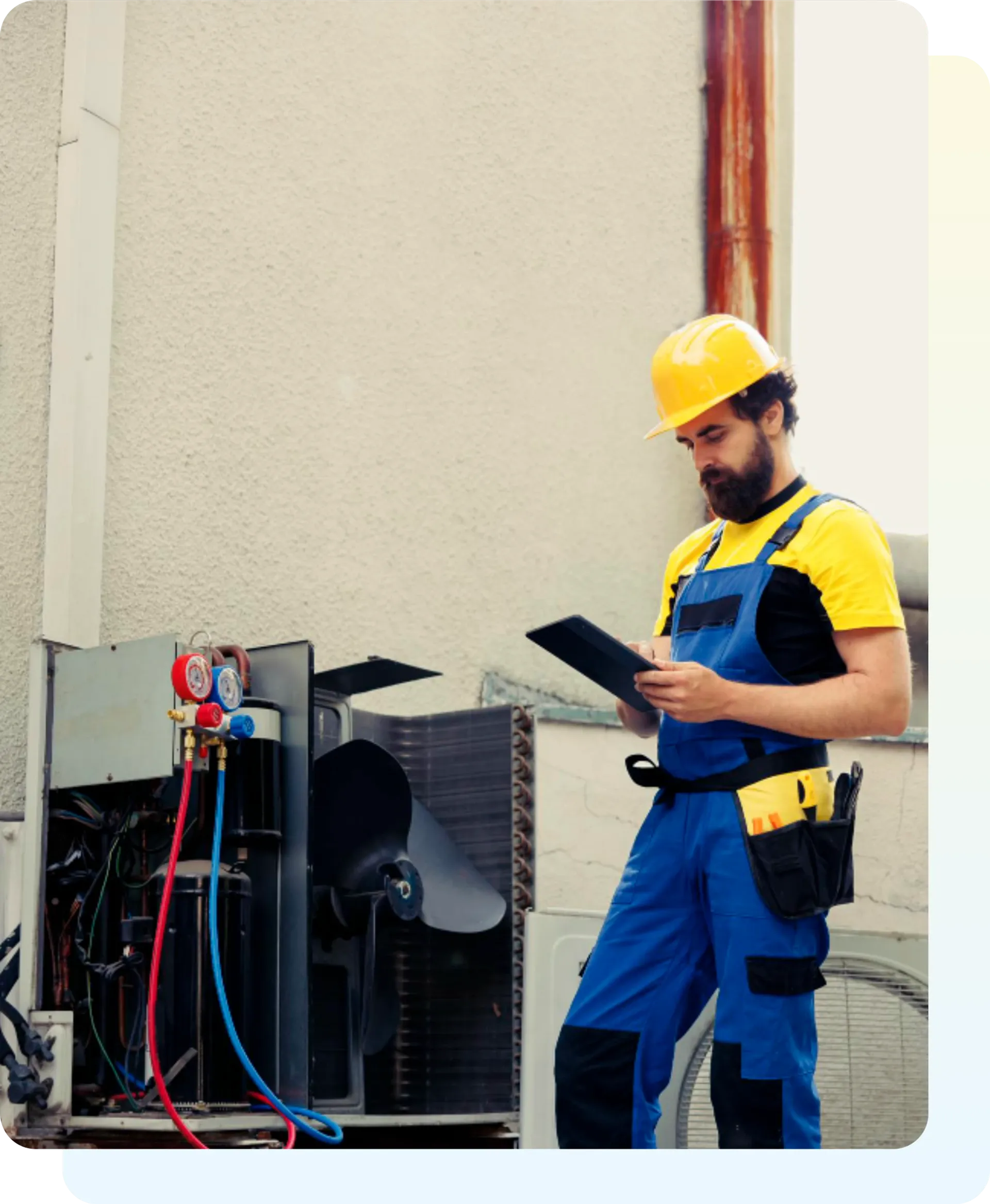
Your inspector takes a photo of any asset or defect. AI reads it and fills the inspection form automatically. No typing. No manual entry.

Convert your checklist into Mobile App
One safety platform for EHS leaders running multi-site OSHA, ISO 45001, and contractor programs. Every inspection earns photo evidence, every incident routes to a verified CAPA, and every site carries a live compliance score the auditor sees the same morning the director does.
Centered on safety inspections, observations, and closed-loop corrective actions. Safety and compliance management software is a mobile-first system that runs the safety inspections, near-miss reports, incident investigations, and corrective actions behind every regulated multi-site operation. It replaces paper JSAs, WhatsApp hazard photos, and disconnected spreadsheets with one defensible record aligned to OSHA 1910, OSHA 1926, ISO 45001, and the local safety code in force.
Available on Mobile
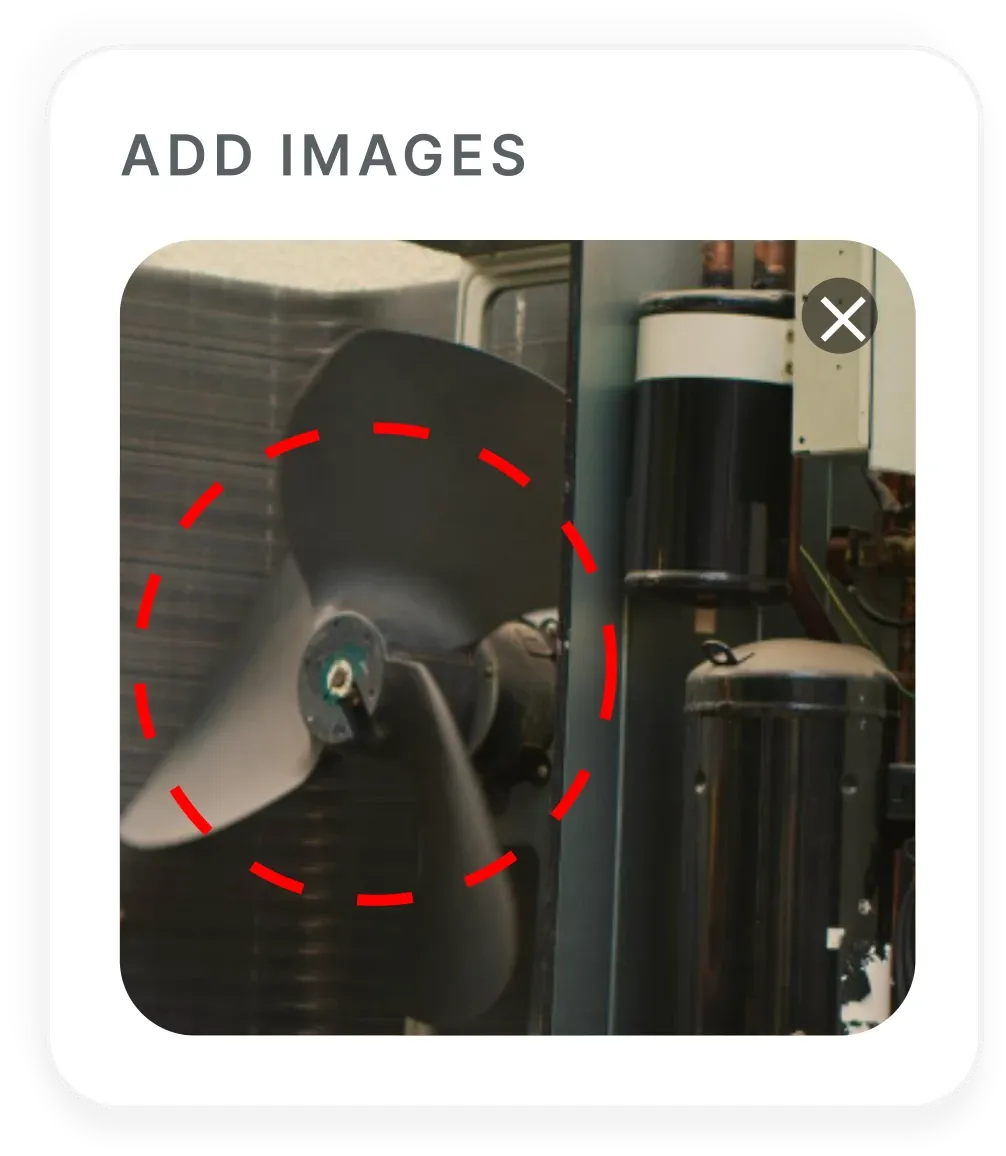
Inspect on iOS and Android with no internet required. Capture photos, let AI flag defects, and generate audit-ready reports in the field.
For the field team, the platform replaces clipboard JSAs and verbal toolbox talks with offline-first capture on Android and iOS. Inspectors run a pre-shift walk, AI Visual Inspection flags missing PPE, blocked egress, and exposed energy from the photo, and Voice AI records the corrective conversation so the inspector never stops to type.
What changes once safety & compliance management runs on one mobile-first platform.
EHS rollout follows a measured sequence: prove the inspection layer first, then layer incident and CAPA discipline on top before the regulatory reporting cycle closes.
Import existing job hazard analyses, pre-shift checks, weekly safety walks, and contractor inductions into versioned digital programs with required photo evidence, hazard categories, and risk-ranked scoring. The library becomes the corporate safety standard, not a regional interpretation of it.
Define the operating structure once: regions, plants, zones, energy sources, and high-consequence tasks. Permit-to-work, LOTO, confined space, and hot-work obligations attach to the asset and the activity rather than living in the supervisor's head.
Configure who is notified within minutes of a Stop Work, who owns the 24-hour investigation window, and how 5 Whys, fishbone, or TapRoot results promote into a CAPA. Multilingual hazard reporting opens the channel for field-language voices that paper forms silenced.
SSO via SAML or OIDC removes shadow accounts. SCIM provisioning links inspector identity to the HRIS so a lapsed forklift certificate auto-restricts the assignment. Training records pull from the LMS so toolbox attendance is tied to the named worker, not a sign-in sheet.
Recordable incidents auto-populate OSHA 300, 300A summary, and 301 forms. Annual posting falls inside the platform with audit-grade timestamps; multi-site OSHA establishment records stay separated; injury rates, severity rates, and TRIR roll up to the board pack without anyone re-keying them.
Safety compliance audit checks hazard identification and risk assessment, PPE and safe-work controls, permit to work and isolation, incident and near-miss reporting, training and toolbox-talk records, and emergency preparedness. HSE and safety teams capture a photo and a reading on each point, offline where signal is poor, and a named reviewer signs the round off, so every workplace safety record proves what was checked, when, and by whom, and stays aligned to ISO 45001, OSHA, and local safety regulations.
Templates align to ISO 45001, OSHA, local safety regulations.
Everything your field team does on paper, Inspectly360 does automatically: faster, more accurate, and without the admin.
Your inspector takes a photo of any asset or defect. AI reads it and fills the inspection form automatically. No typing. No manual entry.
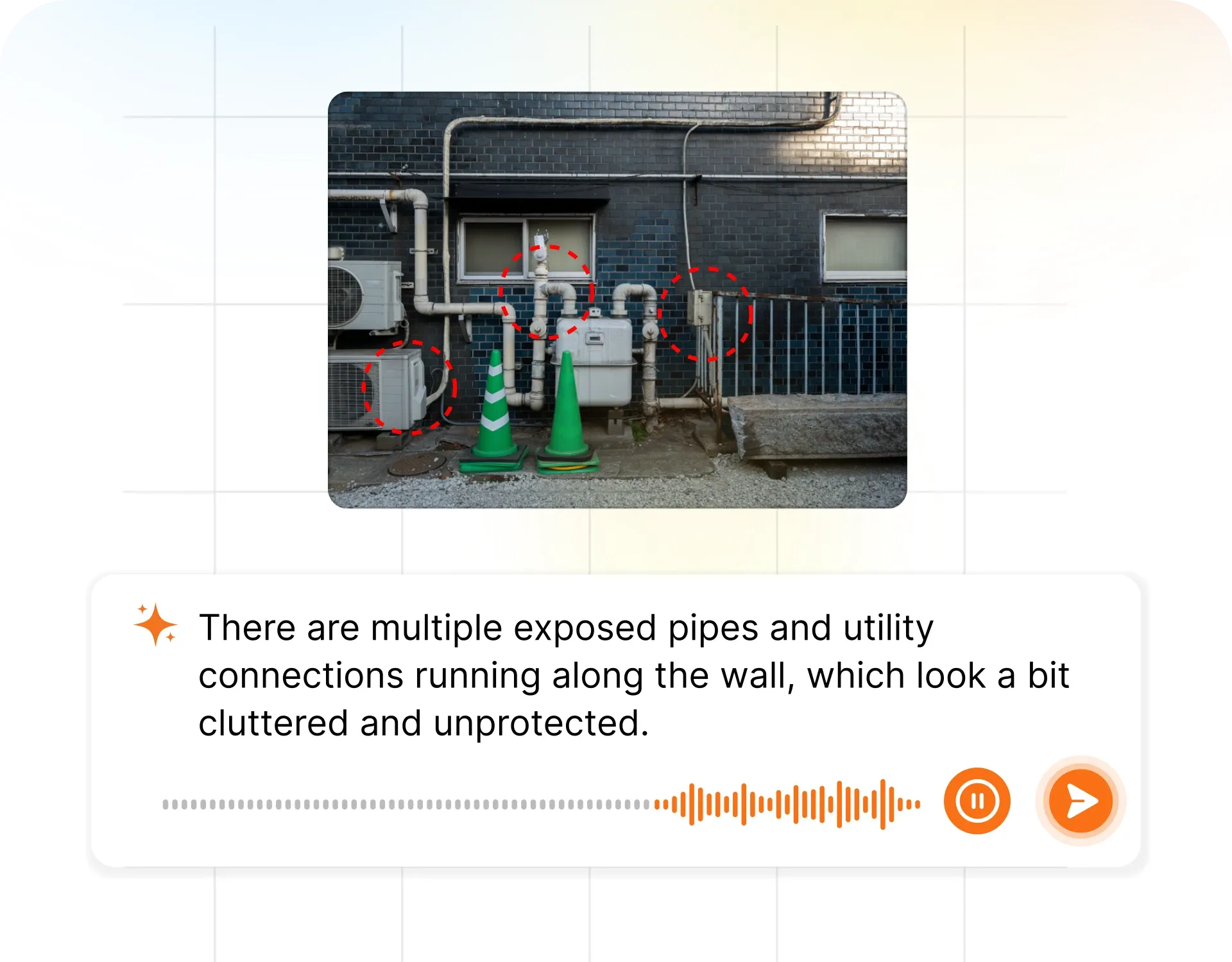
Inspectors speak their observations in any language. AI transcribes and fills the form in real time. Completely hands-free in the field.
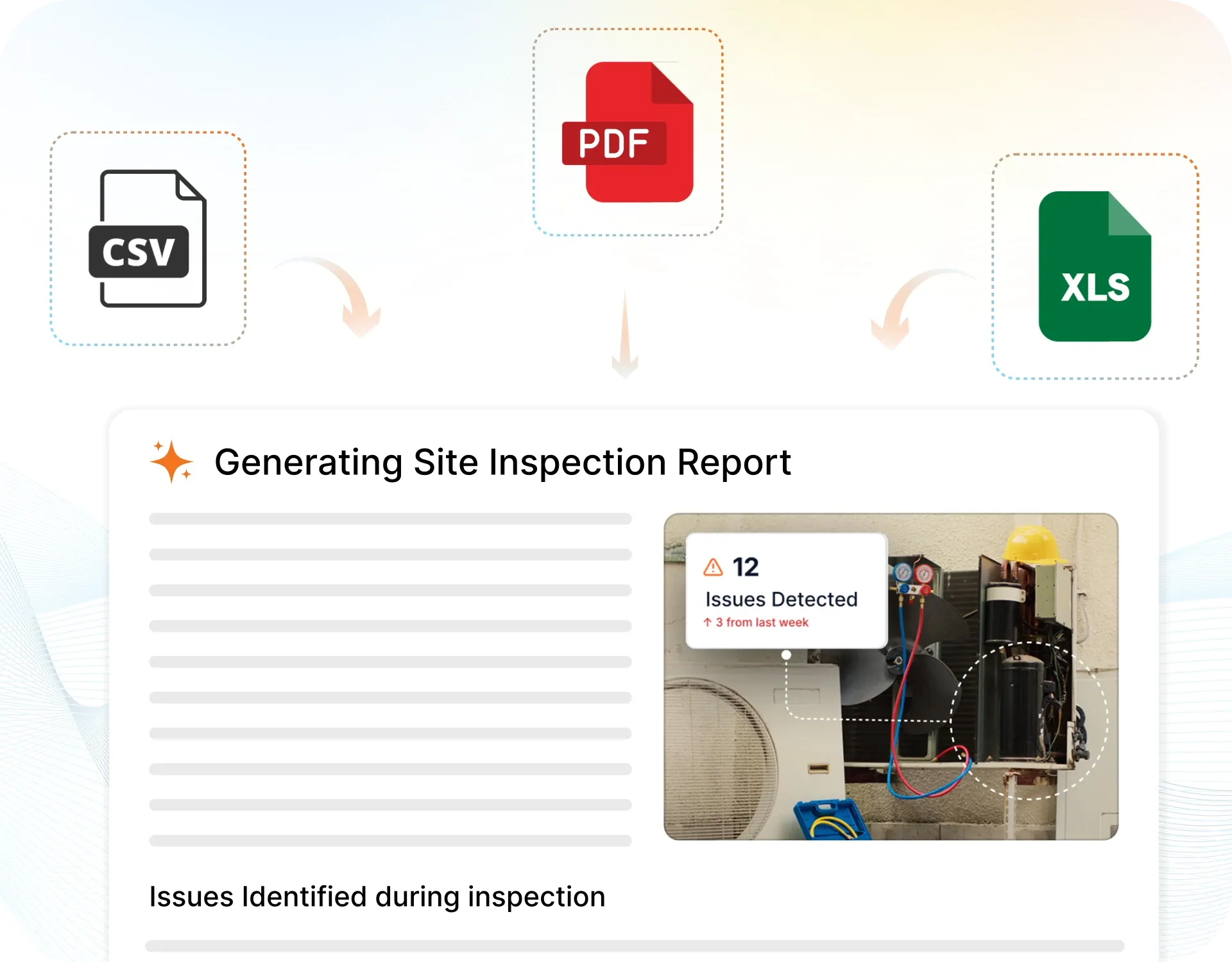
The moment an inspection is submitted, a branded PDF, Excel, or CSV report generates automatically. No manual work. No waiting.
Inspectly360 integrates with the tools your team already uses, including Zoho, Microsoft 365, and SAP. No double entry.
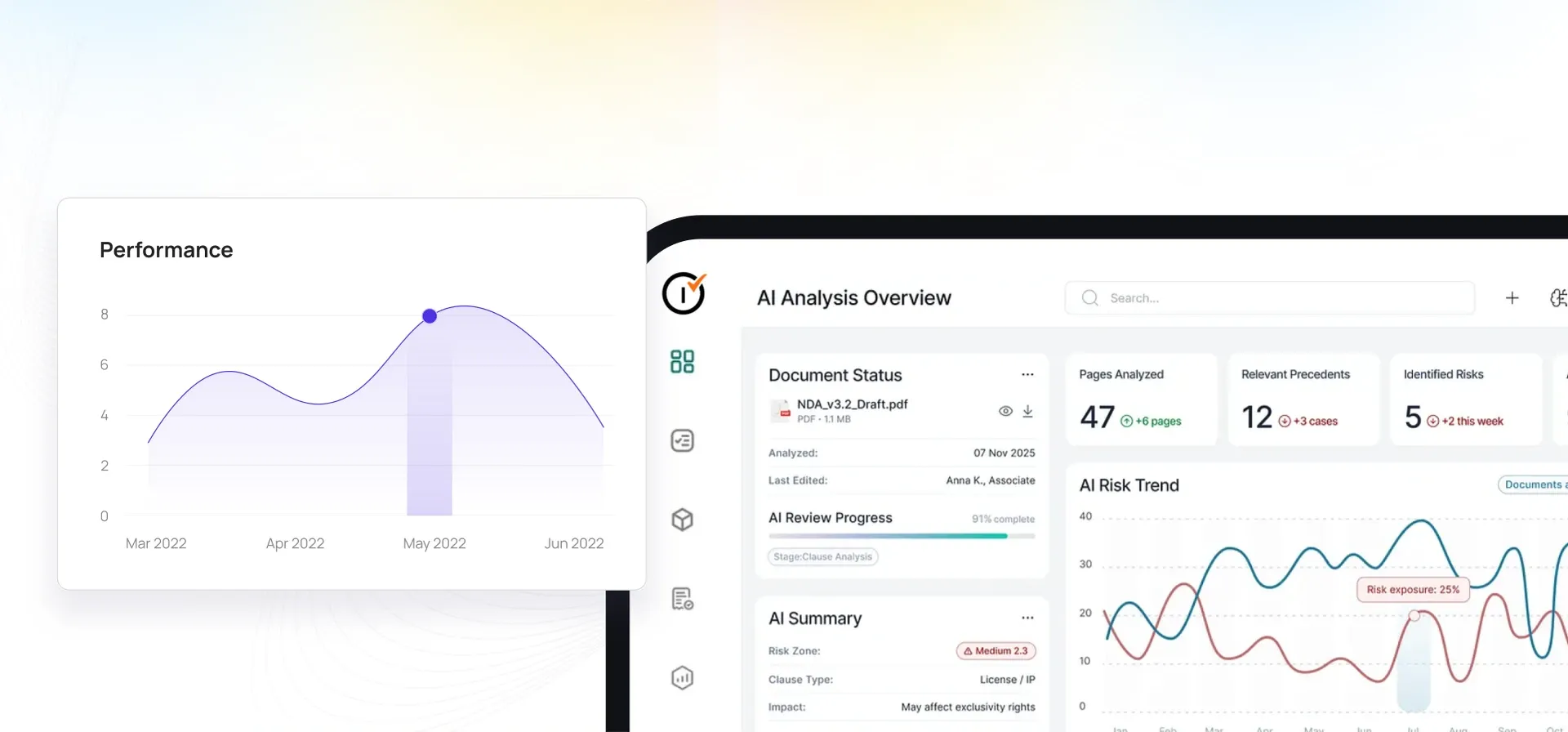
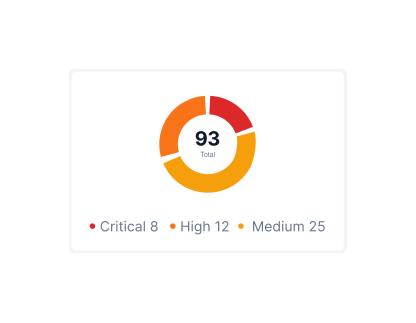
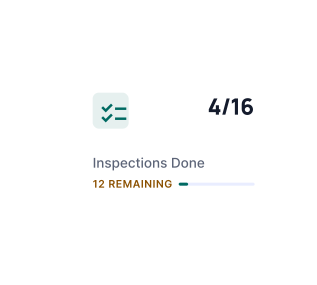
Your operations team sees completion rates, open issues, and compliance scores across all sites in real time. No chasing updates.
Manage every checklist in one connected workspace, capture evidence on mobile at the point of work, and let AI turn field inputs into clear, stakeholder-ready reports in minutes.
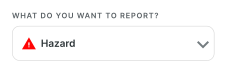
See which checklists your team has in progress across every site, jump into the same inspection with one tap, and keep field, supervisor, and back-office views in sync without sending screenshots on WhatsApp.


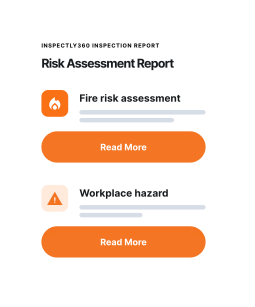
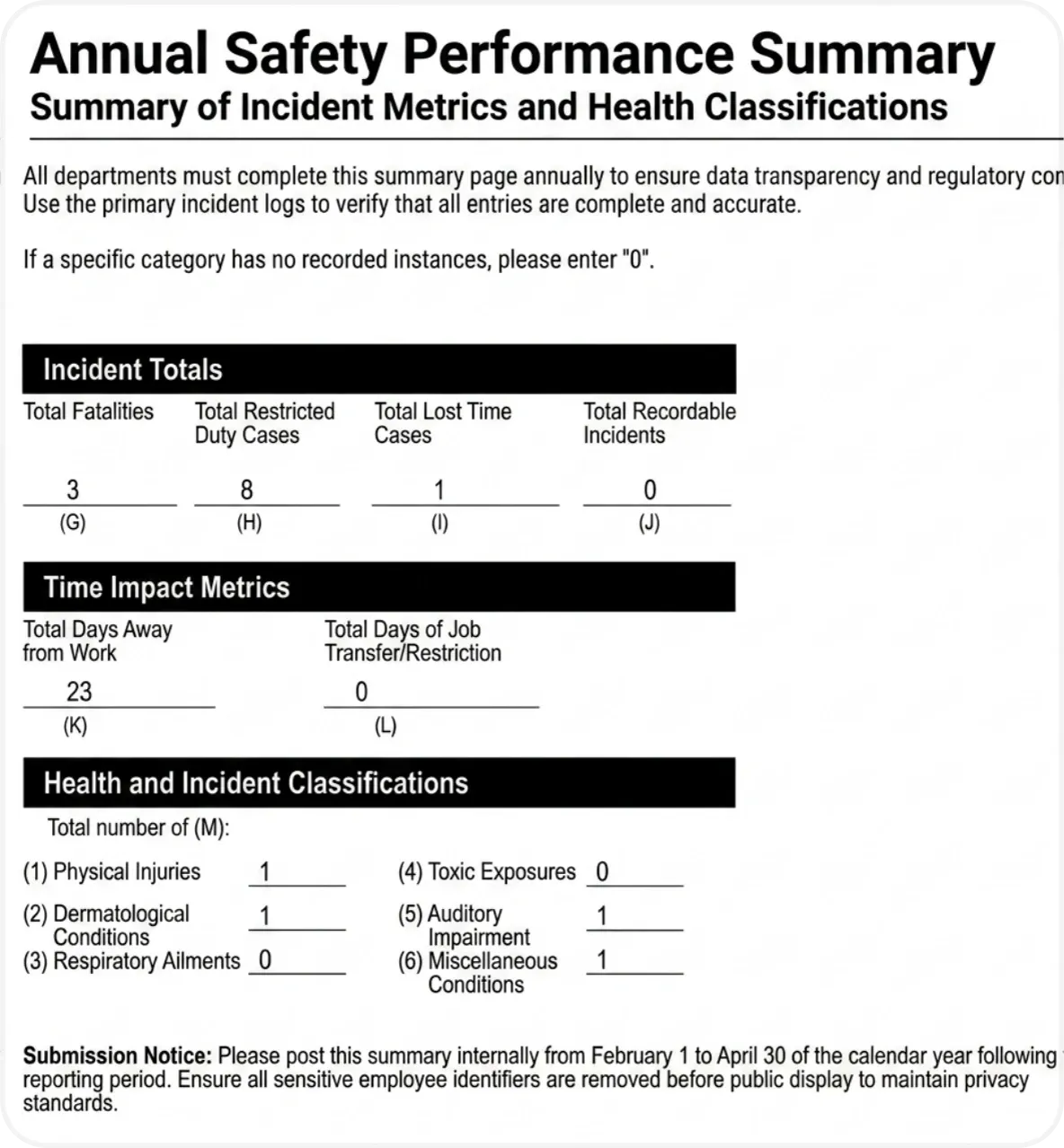


Every team reports differently. Build the report your operations, quality, or compliance leads actually want to read, share it as a branded PDF, and schedule delivery to the stakeholders who need it.
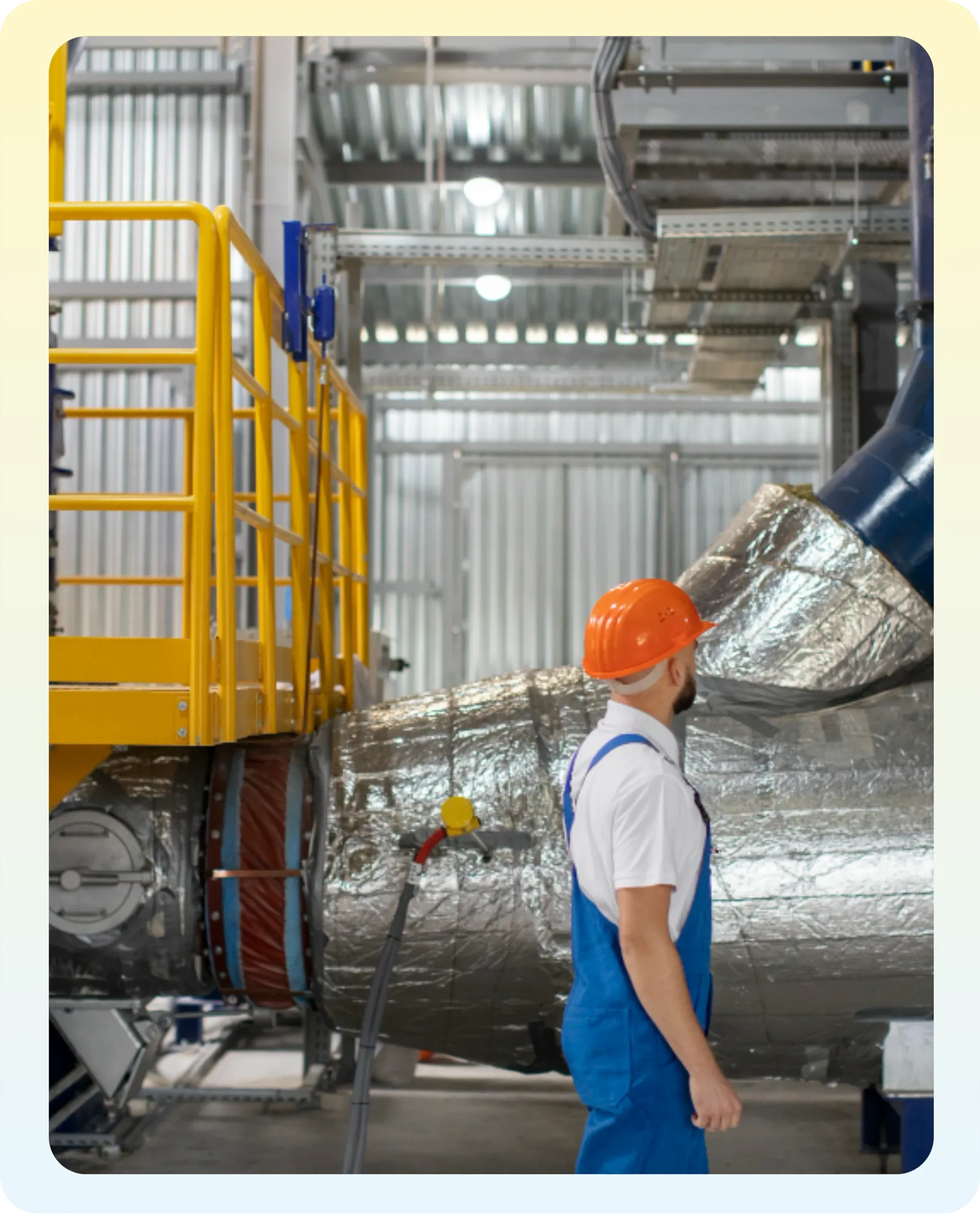
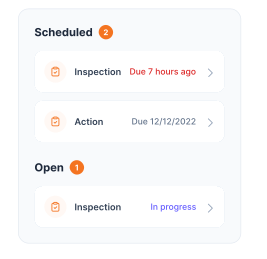

See completion, pass rate, and recurring findings across every checklist and every site, without pulling spreadsheets together at the end of the month.
What changes once safety & compliance management is standardised on Inspectly360.





“Inspectly360 transformed how we manage site safety inspections. The offline capability alone saved us countless hours. Our compliance rate jumped from 72% to 96% in just three months.”
Sarah Mitchell
Meridian Construction Group
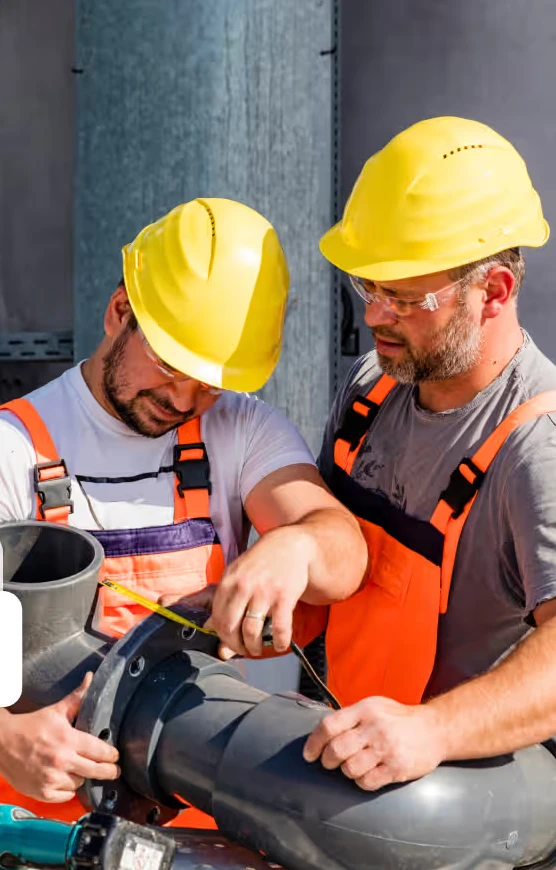
“The AI-powered defect detection has changed how we work. Our inspectors capture photos and the system flags issues we'd have missed. It's like having an expert reviewer on every site visit.”
James Chen
Pacific Manufacturing Co.
“Rolling out digital checklists across multiple projects gave us instant visibility into recurring safety issues. We now resolve critical findings in hours instead of days.”
Olivia Carter
Northbridge Infrastructure
Get started with inspection and audit checklist templates.

Safety inspections with hazard identification, corrective actions, and compliance reporting. Offline capture and evidence.
Report incidents and near-misses with details, photos, location, and timeline. Ready for safety or quality review.
Verify arc-flash labels on electrical equipment: presence, visibility, legibility, equipment identification, voltage and incident-energy information, PPE data, and label condition.
Inspect grounding and bonding systems: grounding conductors and electrodes, bonding connections, equipment grounding, continuity, corrosion, and panel connections.
Use these apps to run inspections and audits.

by Inspectly360
Safety inspections with offline capture, evidence, and compliance reporting.

by Inspectly360
Compliance-focused inspections with evidence and audit trails.

by Inspectly360
Track incidents from report to closure with ownership, SLA visibility, and escalation controls.
by Inspectly360
Fire safety inspections with extinguisher, exit, and alarm checks.

by Inspectly360
Manage audit schedules, forms, and corrective actions.
The intake captures who, what, when, where, mechanism, body part, and witness statements within minutes of a notification, with optional anonymity for the reporter. A 24-hour preliminary form pushes to the Safety Director automatically; the structured investigation (5 Whys, fishbone, or TapRoot) opens with the case and feeds contributing factors into the CAPA engine. OSHA 300, 300A, and 301 fields populate as the case progresses, severity reclassification (recordable, lost-time, DART) re-runs the rate calculations, and the case closes only when CAPA verification is signed off by the named approver. Litigation-hold workflows freeze the record for legal counsel without breaking the audit trail.
Recordables flow into the OSHA 300 log automatically as they are classified during investigation. The 301 individual incident form is built from the same case data, and the 300A annual summary calculates DART, severity, and incidence rates against hours worked from the HRIS integration. Each establishment maintains its own log set, so multi-site operators meet the 29 CFR 1904.30 separation rule without manual reconciliation. Retention is configurable but defaults to OSHA 1904.33's five-year window with audit-grade event logs that cannot be silently edited. On 1 February the 300A posting renders as a regulator-ready PDF for each cited establishment.
Near-miss capture is built for low friction. A worker opens the app, takes a photo, dictates the hazard in their own language, and submits in under 30 seconds. Voice AI transcribes English, Hindi, Marathi, Spanish, and Arabic into structured fields; the hazard category, energy source, and severity prediction are AI-suggested for confirmation. Reporter identity is optional. EHS leaders can require attribution for recordable incidents while leaving hazard observations and near misses anonymous, which is what published OSHA research on safety culture supports. Reporting rates climb because the form stops being the disincentive.
Contractor companies get a scoped tenant inside the host's safety program with their own user list, inspection assignments, incident intake, and CAPA queue. Prequalification (insurance, EMR, EHS plan, training currency) attaches to the company record; expiry alerts gate site access automatically. Contractor incidents land in the host establishment's OSHA log when 29 CFR 1904.31 multi-employer rules apply, while contractor-only metrics (TRIR, severity rate, CAPA cycle time) feed a separate scorecard used in renewal conversations and bid evaluation. Visitors and short-term hires run a lighter version of the same model.
Every create, edit, approval, comment, attachment, and access event is written to an append-only event log with the named actor, IP, and device fingerprint. The log cannot be silently edited and is retained for the program's configured window (OSHA recordkeeping defaults to five years; states such as California extend it). Litigation-hold flags freeze a case so deletion is impossible while counsel is engaged. For ISO 45001 surveillance audits, the auditor receives a read-only role scoped to the certification scope and the audit window. Insurers and regulators get the same evidence model the EHS team uses internally.
Lagging indicators (TRIR, DART, LTIFR, severity rate, fatality count) calculate continuously from the OSHA 300 record and HRIS hours worked. Leading indicators (hazard observations per shift, audit completion rate, CAPA cycle time, training currency, pre-task plan completion) calculate from the same data layer rather than a separate spreadsheet. Both render on one dashboard with the same site and time-window filters, so the safety committee meeting opens on the leading-to-lagging correlation specific to this operation. Plants trending toward an incident surface before the incident; mature programs prove their preventive controls with numbers, not narrative.
See Inspectly360 in action with a live demo tailored to your needs. No credit card required.