
“Inspectly360 transformed how we manage site safety inspections. The offline capability alone saved us countless hours. Our compliance rate jumped from 72% to 96% in just three months.”
Sarah Mitchell
Meridian Construction Group

Convert your checklist into Mobile App
One workforce platform for Field Operations Managers running dispersed inspection, maintenance, and audit teams across sites and shifts. Skill-based assignment, certification expiry control, training tracking, and geo-verified attendance keep the right qualified inspector on the right job at the right time.
Workforce management software coordinates dispersed field teams: assignment, competency, attendance, and scheduling across sites and shifts. Inspectly360 provides the field-workforce and competency layer for inspection, maintenance, and audit teams, built on our mobile platform, with skill-based assignment, certification-expiry control, geo-verified attendance, and competency records, integrated with the HRIS and LMS you already run.
Without it, rosters live in spreadsheets and certifications expire unnoticed. The wrong or unqualified person is sent to a job, attendance is unverified, and a client or auditor cannot see that qualified people did the work.
Workforce rollouts run in layers: identity and skill matrix first, then certification and training, then geo-attendance, then contractor management once the employee model has stabilised.
We map how your team works and where your HRIS and LMS fits, so the solution matches your real workflow rather than a generic template.
We build your checks, workflows, roles, and evidence rules on the platform as mobile forms that match your process.
We integrate with your HRIS and LMS so records flow between the solution and your system of record without double entry.
You prove the solution with one team on real work, then we roll it out across your sites and support it with dashboards live from day one.
Workforce management checks shift and roster coverage, competency and certification currency, attendance and geofenced check-in, task assignment and completion, safety induction and PPE, and performance and closure tracking. Operations and workforce teams capture a photo and a reading on each point, offline where signal is poor, and a named reviewer signs the round off, so every multi-site record proves what was checked, when, and by whom, and stays aligned to ISO 45001, and local labour regulations.
Templates align to ISO 45001, local labour regulations.
Start at one region with the workforce data already cleanest (typically the area with the strongest supervisor discipline). Build the skill matrix for that region's workers, configure certification expiry alerts, and run geo-attendance check-in for two cycles in parallel with the existing roster. Measure mis-assignment frequency, certification-lapse incidents, and attendance accuracy. Layer contractor scoping once the employee model has stabilised, and connect Workday, BambooHR, SAP SuccessFactors, or the corporate HRIS only after the workforce data dimensions have been validated.
Validate SSO via SAML or OIDC, SCIM provisioning lifecycle from the corporate HRIS, RBAC scoped to region and program, mobile attendance verified on a real shift rather than a demo room, configurable retention windows for personnel data aligned to GDPR Article 5(1)(e), country-specific data-protection law (PDPA, LGPD, CCPA), and the documented integration path into the HRIS and LMS already in place. Contractor and visitor data carry their own retention windows because their lifecycle is shorter than the employee's.
Existing rosters, skill spreadsheets, and certification registers import via CSV with worker identity reconciled against the HRIS feed. Active certifications carry their original expiry dates and accrediting documents; training completion history loads against the worker record so the analytics layer has history from day one. Contractor companies and their workers migrate as separate entities with their own records, so multi-tier subcontractor models stay defensible without flattening the relationship structure.
What Workforce Management covers for your team.
Assign the right qualified person to each job based on skills and certifications.
Track certification and training expiry, so an expired qualification blocks assignment before it becomes a risk.
Confirm who was on site and when with geo-verified check-in, so attendance is evidenced.
Assign tasks and track them to completion across dispersed, multi-site teams.
Hold competency and training records per person, searchable and audit-ready.
Link back to the HRIS and LMS that hold payroll, HR records, and course delivery.
Field Operations Managers comparing Inspectly360 to spreadsheet rosters, HRIS modules, generic field-service apps, and project staffing tools look at five different things: whether skill-based assignment actually prevents the wrong inspector accepting the wrong job, whether certification expiry auto-restricts before lapse, whether geo-verified attendance produces defensible time records, whether contractor sprawl is governed on the same model as employees, and whether the workforce data layer integrates with the HRIS the corporate records already live in.
| Capability | Without Inspectly360 | With Inspectly360 |
|---|---|---|
| Skill-based assignment discipline | Assignment is the supervisor's memory plus the spreadsheet on their laptop. The wrong inspector accepts the wrong job, the audit finding lands a quarter later, and the corrective action is a training session that may or may not happen. | The skill matrix is the source of truth. Assignment rules match the inspector's certification scope against the job's required scope at allocation; the wrong match cannot be accepted. Audit findings about wrong-qualification assignments stop occurring because the data layer prevents them. |
| Certification expiry and auto-restriction | Certification expiry surfaces during an inspection when the certificate is asked for. Expired forklift, confined-space, LOTO, or trade certifications run for weeks before anyone notices. Renewals happen in panic; compliance gaps live in the open. | Each certification carries expiry, alerts fire at 90, 60, and 30 days, and assignment auto-restricts once lapsed. The inspector cannot accept the assignment requiring the lapsed scope; the supervisor sees the gap on the dashboard before it becomes an incident. |
| Geo-verified attendance | Attendance is self-reported. Inspectors sign in remotely; the supervisor cannot tell which site was actually attended. SLA disputes lack defensible time records and contracted hours billed exceed contracted hours worked. | Geo-fence check-in confirms physical arrival at the assigned site within the assigned shift. Attendance records carry geo-coordinates, timestamp, and device fingerprint. SLA evidence and payroll inputs become defensible by default. |
| Contractor onboarding and scorecard | Contractors onboard via email PDFs and supervisor introductions. Insurance currency, induction training, and certification scope are tracked in three different places; the contractor's first shift starts before compliance has caught up. | Contractor companies onboard with prequalification, insurance, induction, and certification scope captured against the company and worker records. Contractor inspectors run on the same skill matrix as employees; scorecards measure closure quality, training currency, and attendance. |
| HRIS and LMS integration | The HRIS holds employee records; the LMS holds training; the workforce roster is a third spreadsheet. Joiner-mover-leaver changes propagate by manual edit and inevitably drift; new joiners log in to systems they should not, and leavers retain access they should not. | SCIM provisioning syncs joiner-mover-leaver from Workday, BambooHR, SAP SuccessFactors, ADP, UKG, and BambooHR. LMS completions flow back as certification updates. The HRIS stays the system of record; the workforce data layer stays current automatically. |
Manage every checklist in one connected workspace, capture evidence on mobile at the point of work, and let AI turn field inputs into clear, stakeholder-ready reports in minutes.

See which checklists your team has in progress across every site, jump into the same inspection with one tap, and keep field, supervisor, and back-office views in sync without sending screenshots on WhatsApp.


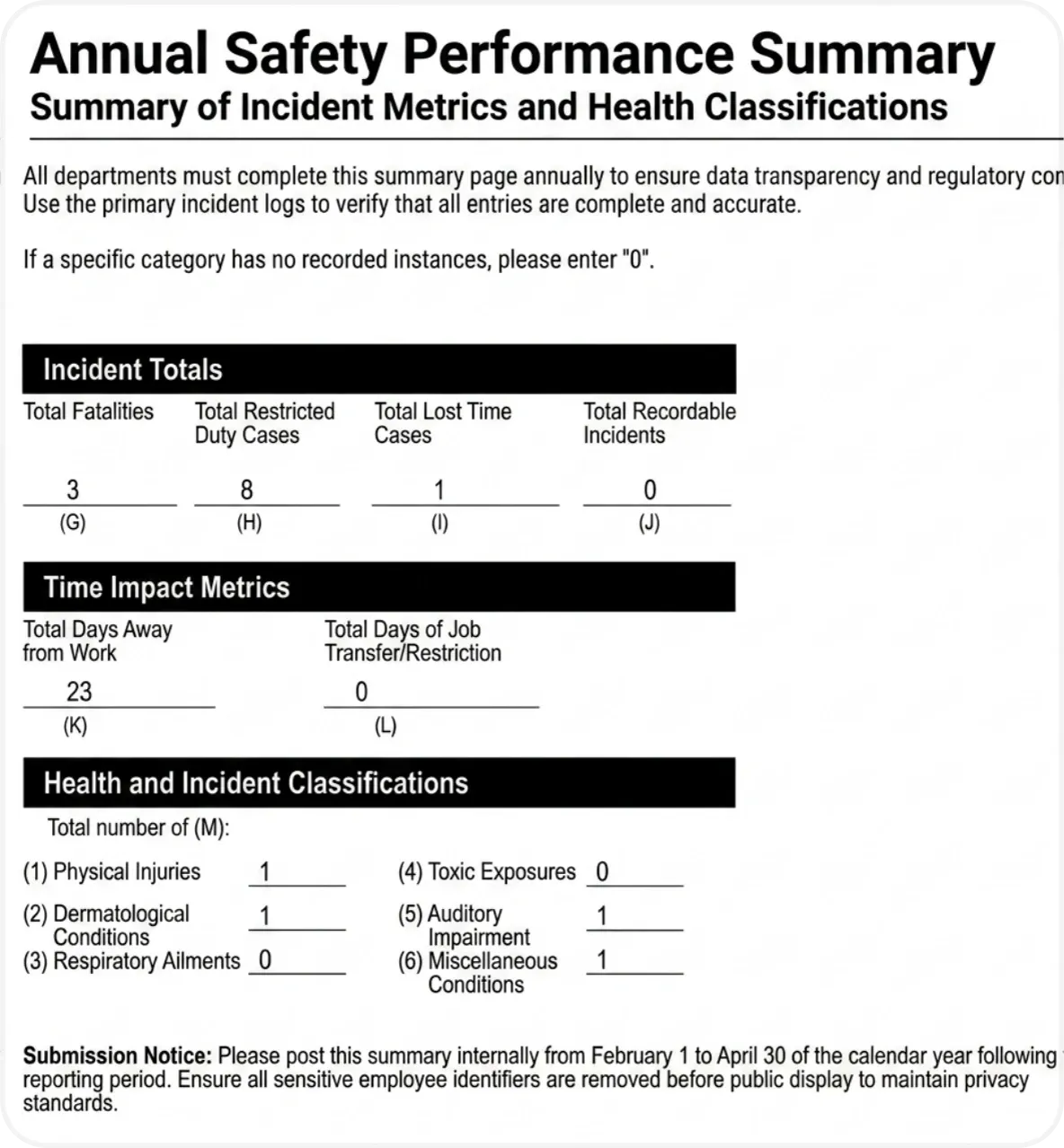


Every team reports differently. Build the report your operations, quality, or compliance leads actually want to read, share it as a branded PDF, and schedule delivery to the stakeholders who need it.

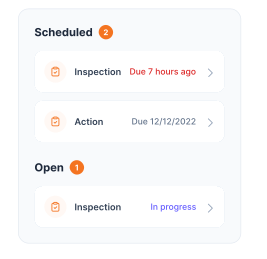

See completion, pass rate, and recurring findings across every checklist and every site, without pulling spreadsheets together at the end of the month.
What changes once workforce management is standardised on Inspectly360.
Workforce competence, training, and certification controls in the platform align with ISO 45001 management-system requirements for worker competency:
ISO 45001 - Occupational Health and SafetyCertification scope and expiry-driven auto-restriction support OSHA training and qualification requirements for regulated tasks (forklift, confined space, LOTO, fall protection):
OSHA Training and Certification RequirementsWorkforce planning architecture in the platform draws on SHRM workforce-planning practice for skill matrix, capacity, and contractor governance:
SHRM - Workforce Planning





“Inspectly360 transformed how we manage site safety inspections. The offline capability alone saved us countless hours. Our compliance rate jumped from 72% to 96% in just three months.”
Sarah Mitchell
Meridian Construction Group

“The AI-powered defect detection has changed how we work. Our inspectors capture photos and the system flags issues we'd have missed. It's like having an expert reviewer on every site visit.”
James Chen
Pacific Manufacturing Co.
“Rolling out digital checklists across multiple projects gave us instant visibility into recurring safety issues. We now resolve critical findings in hours instead of days.”
Olivia Carter
Northbridge Infrastructure
Get started with inspection and audit checklist templates.

Standard site-level inspections for construction, safety, and compliance. Capture conditions, photos, and follow-ups in one place.

Inspect assets and equipment: condition, location, photos, and maintenance history. Track condition over time.

Complete work orders with checklist items, photos, and sign-off. Track completion and proof of work.

Preventive and corrective maintenance inspections. Log repairs, parts, and condition with photos and follow-ups.
Use these apps to run inspections and audits.

by Inspectly360
Execute audits in the field with guided workflows, evidence capture, and real-time progress visibility.

by Inspectly360
Schedule recurring inspections with ownership, reminders, and completion visibility across sites.

by Inspectly360
Assign tasks with clear ownership, deadlines, and accountability trails.
by Inspectly360
Coordinate team task lists with role-based assignment and workload visibility.

by Inspectly360
Manage audit schedules, forms, and corrective actions.
The skill matrix configures by program or by region with unlimited skill definitions per worker. Each skill carries a proficiency level (commonly 1-4 or novice-competent-proficient-expert), evidence of the proficiency (training certificate, supervisor sign-off, time-in-role, or assessment), and the date the proficiency was awarded. Skills can roll into skill families so the assignment rule matches the family rather than every individual skill. Skill matrix changes carry an audit trail with the named approver, which is what ISO 45001 surveillance auditors look for when competence claims are challenged. Workers can see their own skill matrix in the app, which is what mature programs find drives engagement with the development process.
Each certification record carries expiry date, renewal window, accrediting body, document attachment, and the assignment scope it gates. Alerts fire to the worker and supervisor at 90, 60, and 30 days before expiry. Once a certification lapses, the worker cannot accept assignments requiring that scope; the assignment rule prevents the wrong match at allocation rather than after. Critical certifications (forklift, confined-space entry, LOTO, fall protection, electrical work) commonly carry tighter alert windows and stricter gating; lower-criticality certifications carry softer rules. The audit trail records every assignment decision and the certification status that supported it, which is what regulators and customer auditors expect.
Role and program definitions carry their required training scope. When a worker is assigned to a role or moves into a program, the required training auto-assigns to their training queue. Training completions flow back from the corporate LMS (Cornerstone, SAP SuccessFactors Learning, Workday Learning, Docebo, TalentLMS) via REST API and SCIM-adjacent connectors, or from the platform-native training module where the LMS does not cover field-specific content. Completion updates the certification record automatically. Training currency renders on the workforce dashboard so the operations team sees skill-and-training coverage in the same view.
Shift patterns configure per region or per site with calendar, 12-hour, 8-hour, rotating, and continental rotations supported. Handover windows (the overlap where the outgoing and incoming shift co-occur) are first-class so handover inspection rounds, communication protocols, and shared task lists are scheduled into the window rather than left to memory. Public holiday calendars apply per geography. Shift coverage dashboards show on-shift, late, absent, and unplanned overtime per site and per role so the supervisor reallocates before the gap becomes a service issue. Integration with the HRIS time-and-attendance module keeps payroll inputs defensible.
Geo-fence check-in confirms the worker's device is physically inside the configured geo-fence (typically 50 to 200 metres depending on site size) at the assigned shift-start window. The check-in carries GPS coordinates, timestamp, device fingerprint, and network signature. Spoofing detection flags inconsistent signatures: a device that reports impossible travel between two sites within an unrealistic window, a geo-spoofing tool signature, or a GPS reading that conflicts with the network signature. Spoofing flags do not auto-discipline the worker; they surface to the supervisor for human review, which is the discipline mature workforce programs prefer to algorithmic punishment.
Contractor companies onboard via a guided flow: company profile, insurance currency, prequalification questionnaire, and induction training assignment. Each contractor worker onboards with identity verification, certification scope, induction training completion, and PPE confirmation. Site access is gated by all of the above; the first shift cannot begin until every gate is green. Contractor scorecards (closure quality, training currency, attendance, customer-facing feedback) carry forward across projects so the next site that hires the same contractor inherits the performance history. Contractor cost (rate card, monthly billing reconciliation) integrates with the procurement and finance stack where contracted.
See Inspectly360 in action with a live demo tailored to your needs. No credit card required.