Convert your checklist into Mobile App

Contact Now
Feature

Automated Inspection Reports Software:From Field to Branded PDF

Generate branded PDF reports with photos, annotations, scores, and corrective actions automatically. Schedule delivery to stakeholders and keep a complete audit trail of every report.

Quick Answer

Automated reports in Inspectly360 generate a branded PDF the moment an inspection is completed, with all checklist data, annotated photos, compliance scores, and corrective actions included. They replace hours of manual report writing in Word and Excel. A report that used to take an afternoon to assemble is ready in seconds, formatted for clients and regulators.

Automated inspection reports software in Inspectly360 generates a digital inspection report the moment an inspection is completed, so operations teams stop assembling reports by hand. Each report pulls every checklist response, annotated photos, compliance scores, corrective actions, digital signatures, and GPS verification into a branded PDF audit report, ready for a client or a regulator. Real-time inspection reporting means managers see results as they sync, not days later. The platform replaces manual compilation in Word and Excel, removes copy-paste errors, and turns an afternoon of admin into a single step.

What this replaces

Before Inspectly360

  • A manager spends an afternoon assembling an inspection report in Word from photos and notes.
  • Copy-paste errors creep in, and the report reaches the client days after the inspection.
  • When an auditor asks for proof, the team scrambles to find scattered records and rebuild the report.

After Inspectly360

  • Field teams complete the inspection and a branded PDF report is generated automatically in seconds.
  • Managers and clients receive an accurate, consistent report on a reliable schedule.
  • Every report is stored with a timestamped audit trail, ready the moment an auditor asks.

How Automated Reports works

  1. 1

    An inspector completes the inspection

    Field teams finish the inspection on the mobile app, capturing checklist responses, annotated photos, signatures, and GPS verification.

  2. 2

    The report generates instantly

    The moment the inspection is submitted, the platform compiles every response, photo, and score into a branded PDF with no manual formatting.

  3. 3

    It is delivered to the right people

    The report is available immediately and can be sent automatically by email to managers, clients, and regulators on a set schedule.

  4. 4

    Every report is logged

    Each report generated, opened, and delivered is recorded with a timestamp and user identity, building a complete audit trail.

How does a facilities manager produce a client report without spending Friday afternoon on it?

The manual version of this job is assembly. Someone gathers the photos, types the findings, formats a document, totals the scores, and produces a file, usually days after the inspection happened. The delay is not only administrative: corrective actions start late because the findings are still sitting in a half-written document.

Automated reporting removes the assembly step rather than speeding it up. When the inspector submits on the mobile app, every checklist response, annotated photo, compliance score, corrective action, digital signature, and GPS verification is compiled into a branded PDF. The photos land in the correct sections with their severity markups and captions already attached, because the report is built from the inspection record rather than from a folder of files.

Delivery is scheduled too. Reports go out daily, weekly, or monthly by email, with different reports for different groups, so a property owner receives their site report while an executive receives the portfolio summary. For a facilities management company running many client properties, that is the difference between one recurring afternoon of work and none.

How do you tailor one inspection into reports for an executive and for a regulator?

The same inspection rarely suits both audiences. An executive wants the summary and the score. A regulator wants the evidence: which item failed, what the photo shows, who signed, and when. Custom report templates handle this by controlling layout, sections, and data fields, so elements such as photos, scores, or the corrective action list are included or excluded to match the purpose.

Because both documents are generated from one inspection record, they cannot contradict each other. That is the practical risk with manual reporting, where a summary compiled separately from a detail pack drifts from it. Here the summary and the evidence pack are two renderings of the same underlying data, and the format options extend to Excel and CSV for analysis and JSON for systems that consume the data programmatically.

Branding is applied once at the template level. Logo, brand colours, headers, footers, and cover pages are configured so every report of that type comes out consistent, and the quality of a client-facing document no longer depends on who produced it. Every report generated, accessed, and delivered is logged with timestamps and user identities, so distribution itself forms part of the audit trail.

Why operations teams use Automated Reports

  • Remove hours of manual report creation every week
  • Professional branded reports ready for client presentation
  • Zero copy-paste error in report data compilation
  • Instant availability, reports ready in seconds, not days
  • Complete audit trail satisfies regulatory requirements
  • Multiple format support: PDF, Excel, CSV, JSON

Where teams use Automated Reports

Client Deliverables for FM Companies

Facilities management companies automatically generate branded inspection reports for each client property, delivered on schedule with full photo evidence and compliance scores.

Regulatory Compliance Documentation

Safety teams generate audit-ready compliance reports with all required records, corrective actions, sign-offs, and timestamps, ready for submission against OSHA or ISO 45001 requirements.

Executive Summary Reports

Weekly or monthly summary reports aggregate inspection data across every site, highlighting trends, compliance gaps, and areas that need management attention.

Ready to run Automated Reports on your sites?

Book a Free Demo

AI-Powered Features for Your Field Workflows

Everything your field team does on paper, Inspectly360 does automatically: faster, more accurate, and without the admin.

Take a Photo. AI Fills the Form illustration

Take a Photo. AI Fills the Form

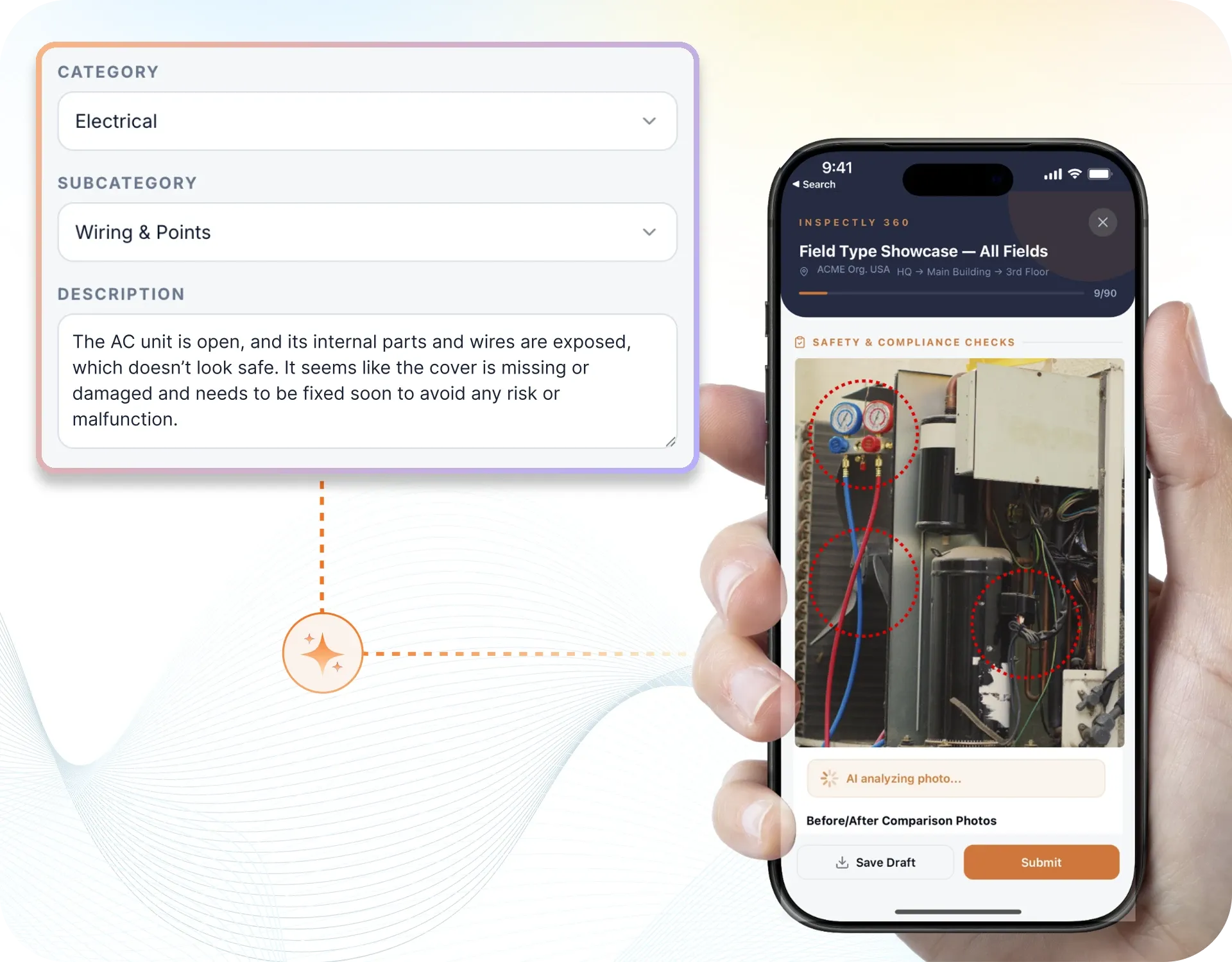
Your inspector takes a photo of any asset or defect. AI reads it and fills the inspection form automatically. No typing. No manual entry.

Speak. AI Writes It Down illustration

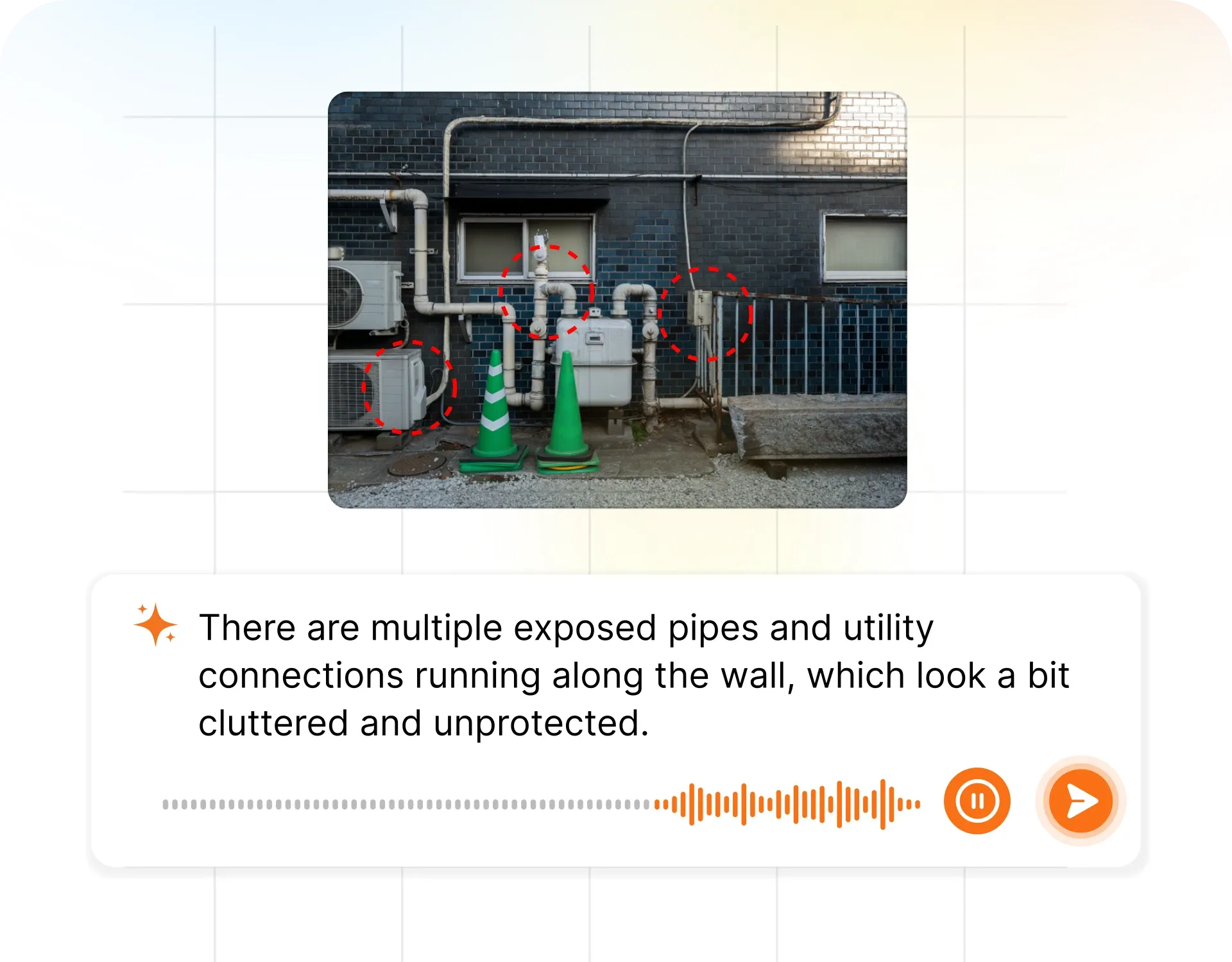
Speak. AI Writes It Down.

Inspectors speak their observations in any language. AI transcribes and fills the form in real time. Completely hands-free in the field.

Inspections Done. Report Ready illustration

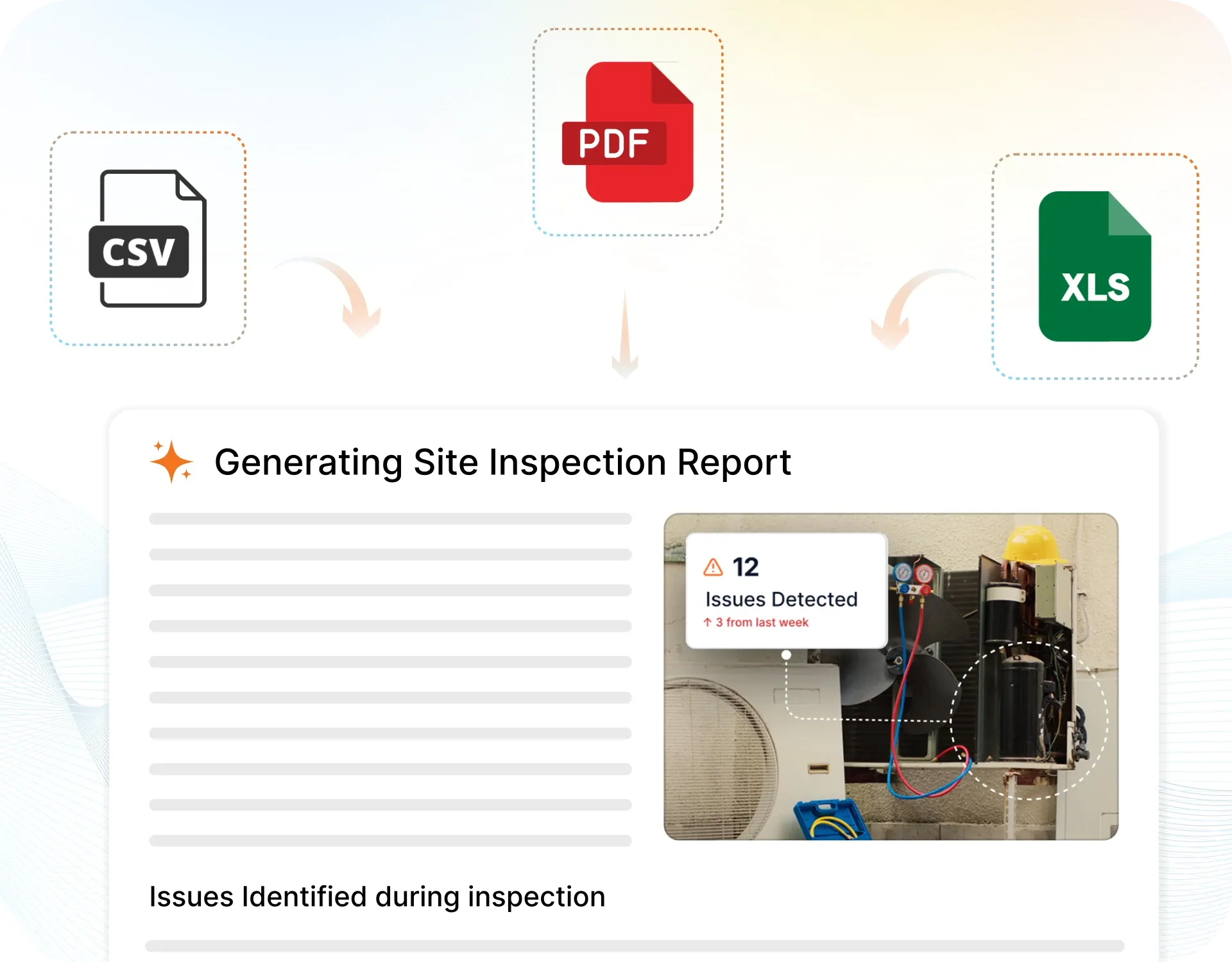
Inspections Done. Report Ready.

The moment an inspection is submitted, a branded PDF, Excel, or CSV report generates automatically. No manual work. No waiting.

Connect Your Existing Tools illustration

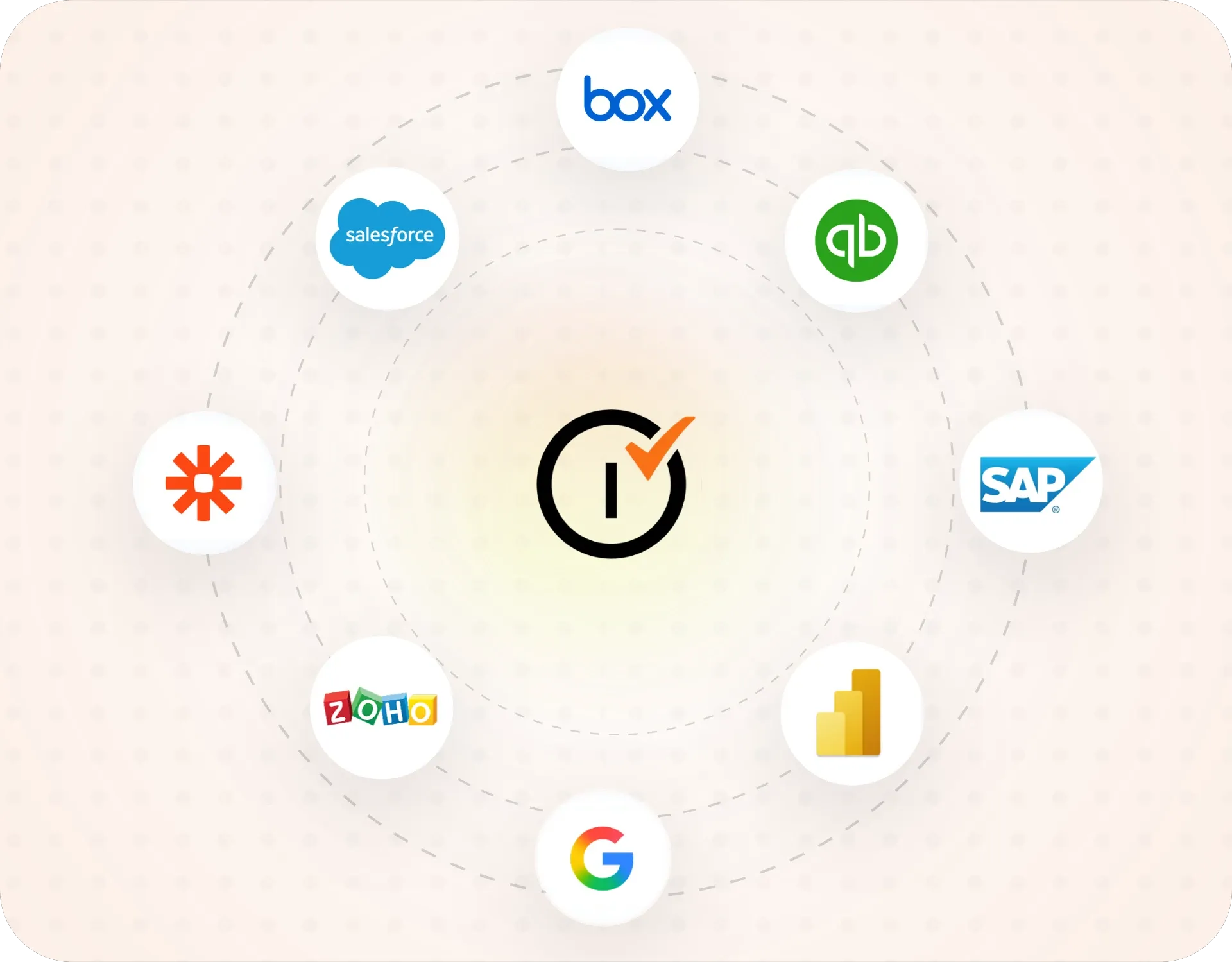
Connect Your Existing Tools.

Inspectly360 integrates with the tools your team already uses, including Zoho, Microsoft 365, and SAP. No double entry.

Live Dashboard. Every Site. Always On illustration

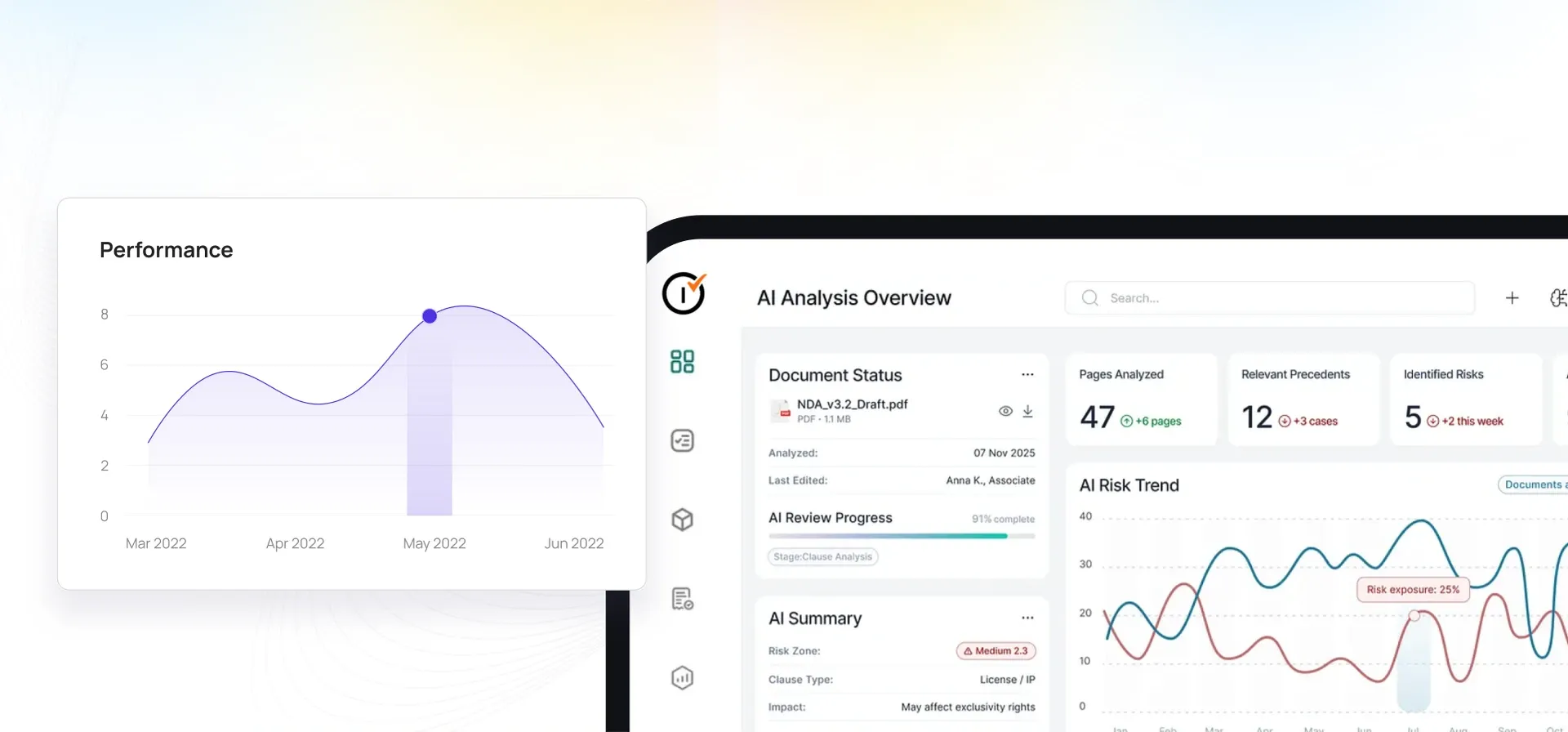
Live Dashboard. Every Site. Always On.

Your operations team sees completion rates, open issues, and compliance scores across all sites in real time. No chasing updates.

Frequently Asked Questions

Can I customize the report layout?

Yes. In Inspectly360 you can create custom report templates with the layout, sections, and data fields you need. You can include or exclude specific elements, for example photos, scores, or the corrective action list, based on the report's purpose and audience. A short summary for an executive can differ from a detailed evidence pack for a regulator, even though both draw on the same inspection. Branding is fully configurable: upload your logo, set brand colours, and customise headers, footers, and cover pages so every report is consistent with your company identity. This consistency matters when reports go to clients, because a polished, uniform document reflects on the professionalism of your operation. Once a template is set up, every inspection of that type produces a report in the same format automatically, so quality does not depend on who is compiling it.

What report formats are available?

Inspectly360 supports PDF, Excel, CSV, and JSON. Branded PDF is the most widely used format for client and regulatory distribution, because it presents photos, annotations, compliance scores, and corrective actions in a fixed, professional layout that cannot be accidentally edited. Excel and CSV are used when a team needs to analyse the underlying data or share it with finance, quality, or another function that works in spreadsheets. JSON is available for API-driven workflows and custom reporting, where another system consumes the report data programmatically. Every format reflects the same inspection record, so there is no risk of one stakeholder working from a figure that contradicts another. You can choose the right format for each audience: PDF for distribution and proof, Excel or CSV for analysis, and JSON for automation and integration.

Can reports be generated through the API?

Yes. The Inspectly360 report API allows programmatic report generation and retrieval. You can trigger report creation from your own workflows, fetch a completed report by its ID, and integrate inspection reporting directly into your existing systems, such as a project management tool or a document management platform. This is useful for scheduled batch reporting, for example generating a set of client reports overnight, and for automated client or compliance deliverables that need to land in another system without manual handling. Because the API exposes the same reports the platform generates internally, an integration produces documents identical to those a manager would download. Combined with webhooks, the API lets you build a fully automated reporting pipeline: an inspection completes, a report generates, and it is delivered or filed in the right place without anyone touching it.

How are reports stored and kept for audits?

Every generated report is stored in your Inspectly360 account with configurable retention, so you control how long records are kept to meet your compliance obligations. Reports can also be backed up automatically to your own cloud storage, such as Amazon S3, Azure Blob, or Google Cloud, for long-term archiving. Access is controlled by role and scope, so only authorised users can view or download a given report. This storage approach is what makes Inspectly360 audit-ready. When an auditor asks for proof that an inspection happened, the report is already there, complete with photos, scores, signatures, GPS verification, and a timestamped audit trail showing when it was created and who accessed it. There is no scramble through phones, drives, and filing cabinets. Compliance becomes a fact you can produce on demand rather than a feeling you hope holds up.

How much time do automated reports save compared with manual reporting?

Manual inspection reporting is one of the biggest hidden costs in operations. Someone collects photos, types up findings, formats a document, calculates scores, and assembles everything into a presentable file. For a detailed inspection this can take an afternoon, and it usually happens days after the inspection itself, which delays any corrective action. Automated reports remove that work entirely. The moment an inspector submits an inspection on the mobile app, the platform compiles every response, annotated photo, compliance score, and corrective action into a branded PDF. What took an afternoon is ready in seconds. Beyond the time saved, automation removes copy-paste errors and guarantees a consistent format every time. Managers get their Friday afternoons back, clients receive reports faster, and corrective actions start sooner because the findings are not sitting in a half-written document on someone's desktop.

See Automated Reports in Action

Book a free demo. We will configure this feature against your workflow and show how it runs at your sites.

  • 30 Days Free Trial
  • 1000+ Templates
  • Unlimited Integration