Convert your checklist into Mobile App

Contact Now

Image Annotations:How Inspectors Mark Up Photos with Clear Context

A photo says a thousand words, but an annotated photo says exactly what was found and where. Mark up defects, highlight concerns, and add context directly on inspection photos.

Quick Answer: Image annotations in Inspectly360 let inspectors draw directly on inspection photos to mark defects, add measurements, and explain what was found. Inspectors use arrows, callouts, text labels, and severity colours, then the annotated photo attaches to the inspection item automatically. It works offline. It replaces vague, context-free photos and the back-and-forth messages needed to explain which crack, which pipe, or which fixture is the problem.

Image annotations in Inspectly360 turn raw inspection photos into clear, actionable evidence. A photo without context creates confusion: was the crack in the beam or the column, and which pipe is leaking? Inspectly360's annotation tools let inspectors draw directly on photos to highlight defects, mark exact locations, add measurements, and apply severity colours. The annotated image attaches automatically to the relevant checklist item, issue, or corrective action. Everyone from the field crew to the client sees precisely what was found and where, without a single follow-up message or phone call.

How Image Annotations works

  1. 1

    Capture the photo in the app

    The inspector takes a photo of a defect, asset, or area of concern with the integrated camera inside the Inspectly360 app.

  2. 2

    Mark up the finding

    The inspector draws arrows, circles, and measurement lines, adds text callouts, and applies a severity colour to show exactly what the issue is and where.

  3. 3

    Attach to the inspection item

    The annotated photo attaches automatically to the relevant checklist item, issue, or corrective action with a timestamp and GPS location.

  4. 4

    Flow into reports and re-inspection

    The marked-up photo appears in the PDF report and stays with the issue, so re-inspection can compare it against the corrective action evidence.

What this replaces

Before Inspectly360

  • Inspectors take plain photos with no marks and no context.
  • The office cannot tell which crack or fixture the photo refers to.
  • Messages and calls go back and forth just to explain a single finding.

After Inspectly360

  • Inspectors mark the exact defect with arrows, callouts, and severity colours.
  • The annotated photo attaches itself to the right inspection item.
  • Anyone reading the report sees exactly what was found and where, with no follow-up.

Why operations teams use Image Annotations

  • Eliminate ambiguity in defect documentation
  • Faster, clearer issue communication between field and office
  • Professional annotated reports for clients and regulators
  • Severity colour-coding enables instant visual triage
  • Complete photo audit trail with timestamps and GPS
  • Works offline, annotate photos without internet

Where teams use Image Annotations

Construction Defect Documentation

Site inspectors photograph cracks in concrete, draw measurement lines across the defect, add severity callouts, and attach the annotated photo to a punch list item with a responsible party assigned.

Facility Condition Reporting

Property managers photograph water stains, damaged fixtures, and safety hazards, then annotate with arrows and labels so the maintenance team knows exactly what to fix.

Equipment Damage Assessment

Maintenance technicians photograph equipment damage, circle the affected areas, note wear patterns, and build before-and-after documentation showing repair completion.

AI-Powered Features for Your Field Workflows

Everything your field team does on paper, Inspectly360 does automatically: faster, more accurate, and without the admin.

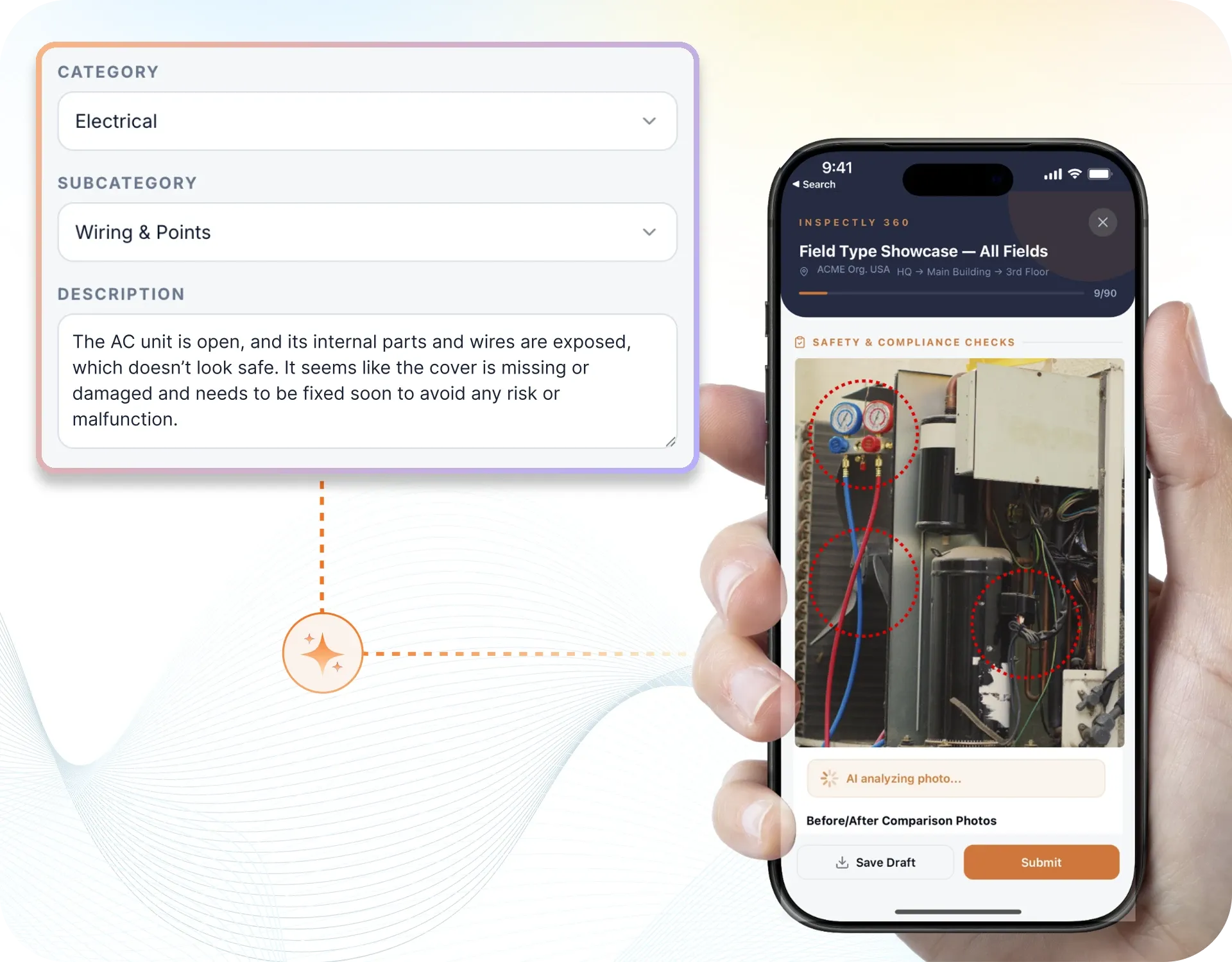
Take a Photo. AI Fills the Form illustration

Take a Photo. AI Fills the Form

Your inspector takes a photo of any asset or defect. AI reads it and fills the inspection form automatically. No typing. No manual entry.

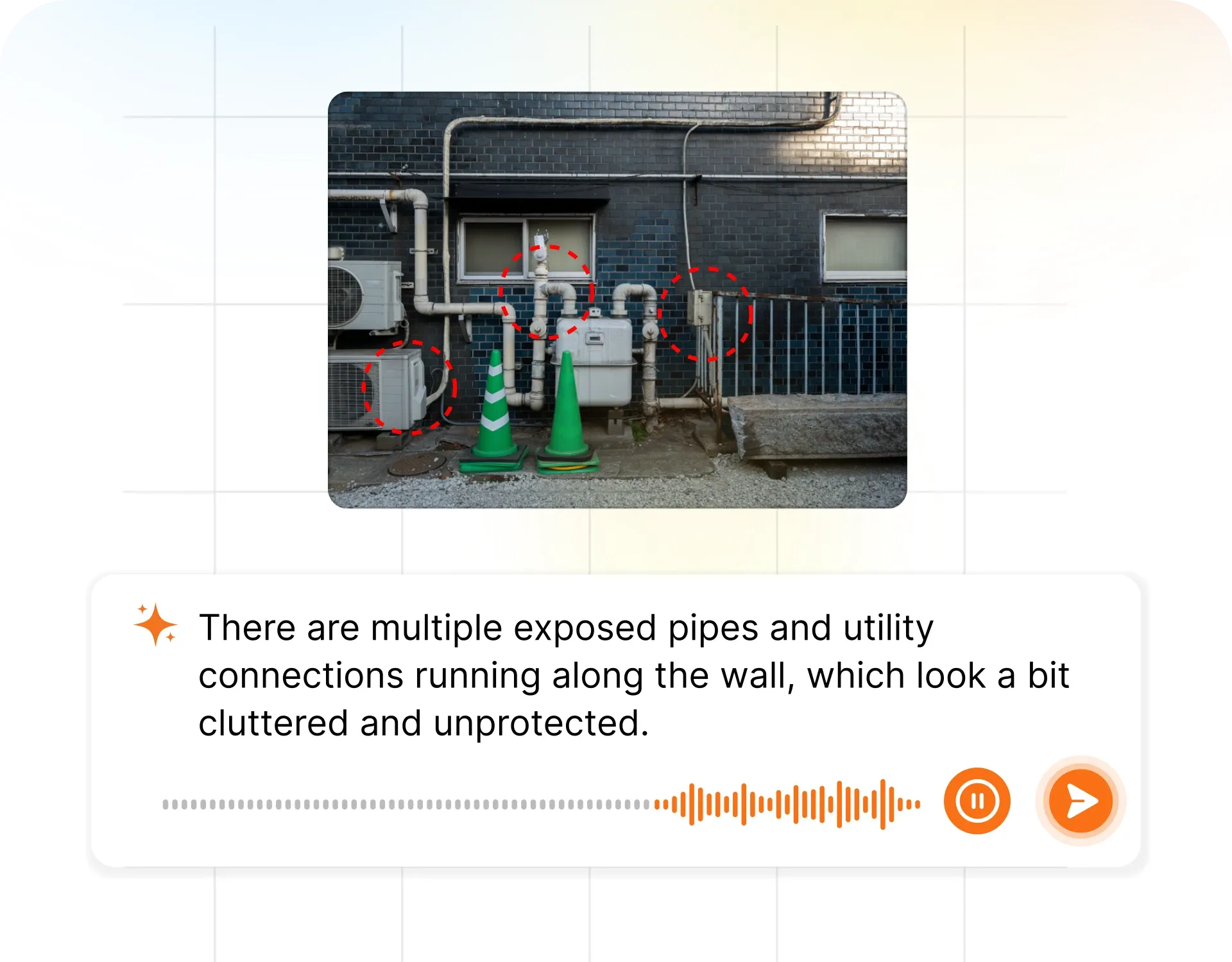
Speak. AI Writes It Down illustration

Speak. AI Writes It Down.

Inspectors speak their observations in any language. AI transcribes and fills the form in real time. Completely hands-free in the field.

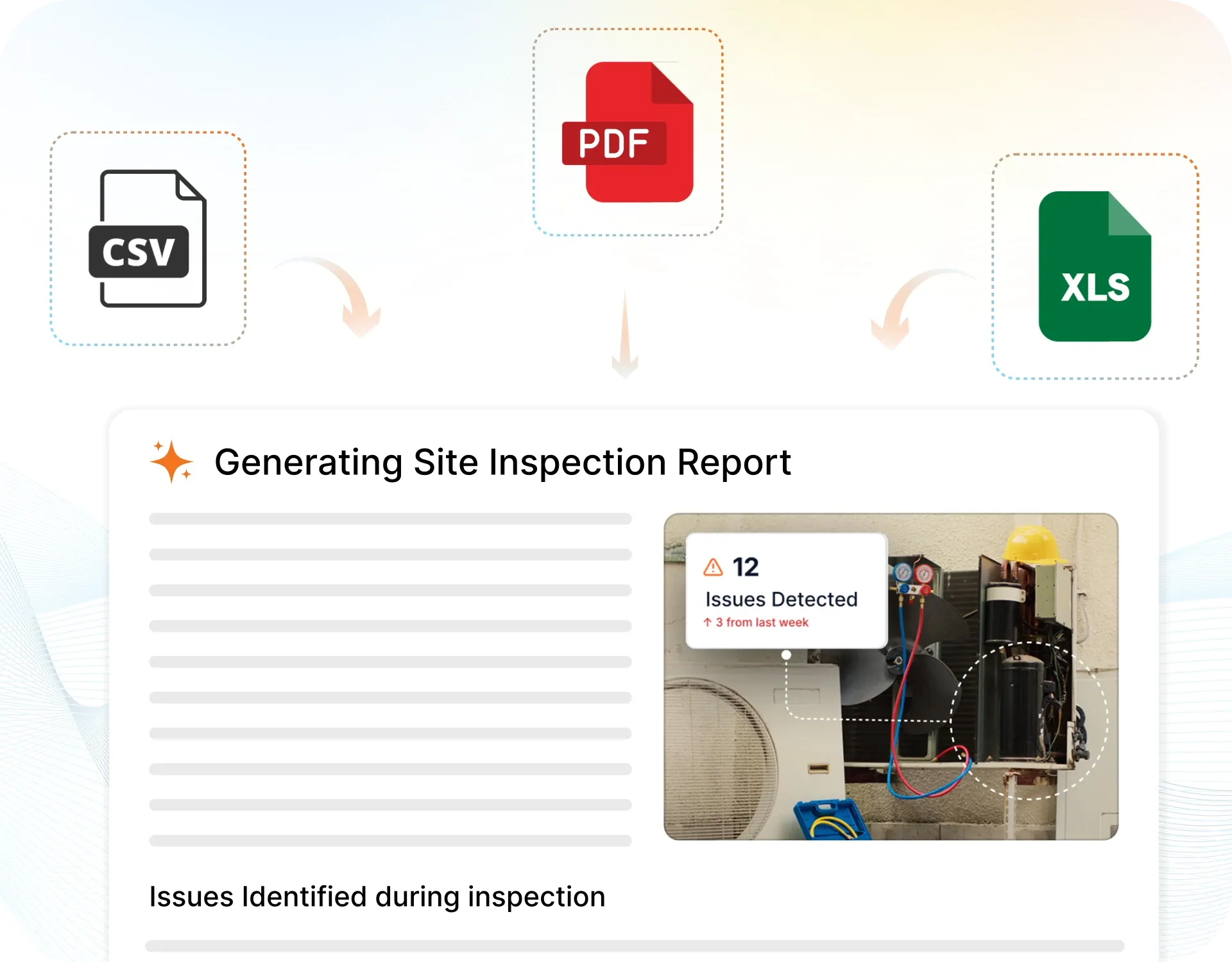
Inspections Done. Report Ready illustration

Inspections Done. Report Ready.

The moment an inspection is submitted, a branded PDF, Excel, or CSV report generates automatically. No manual work. No waiting.

Connect Your Existing Tools illustration

Connect Your Existing Tools.

Inspectly360 integrates with the tools your team already uses, including Zoho, Microsoft 365, and SAP. No double entry.

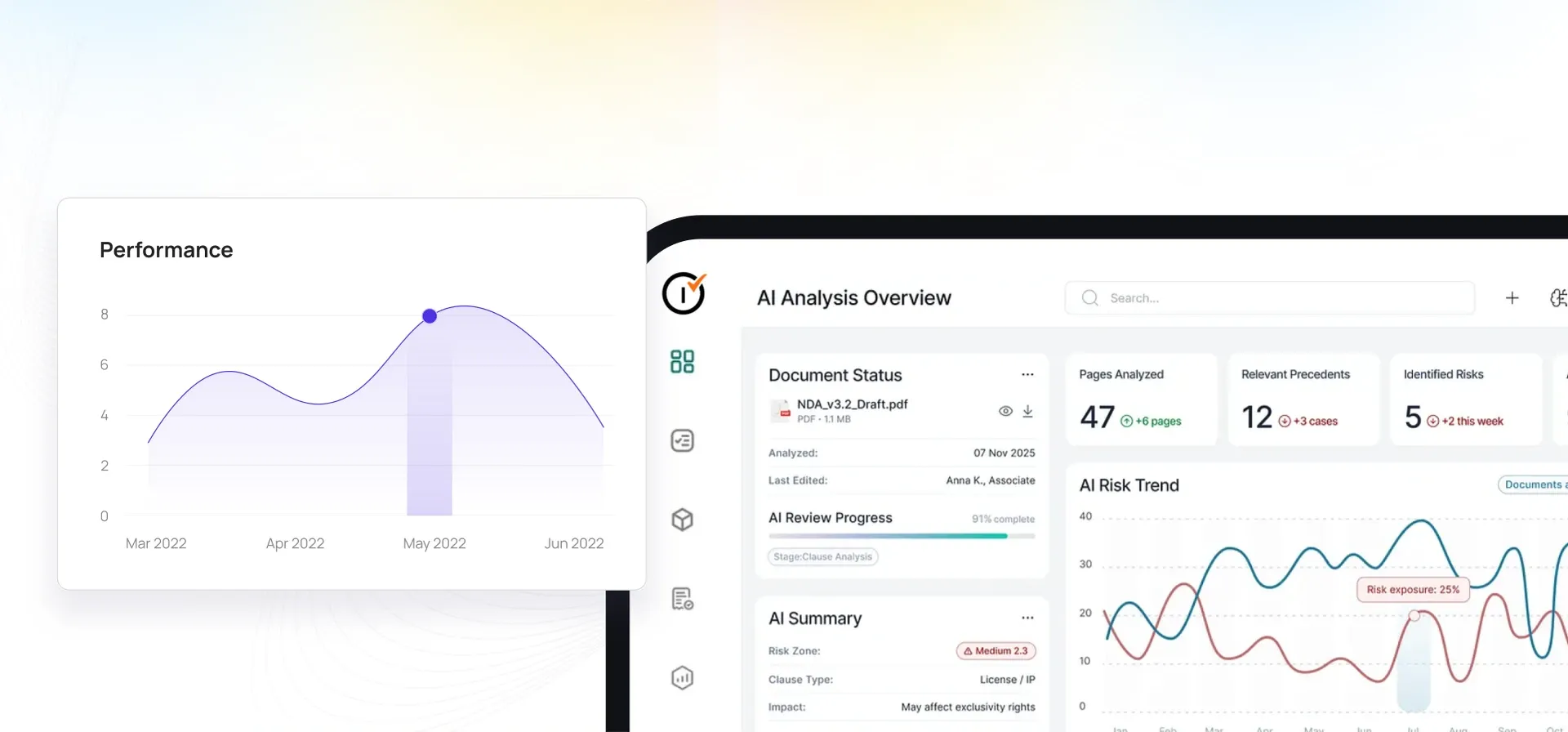
Live Dashboard. Every Site. Always On illustration

Live Dashboard. Every Site. Always On.

Your operations team sees completion rates, open issues, and compliance scores across all sites in real time. No chasing updates.

Frequently Asked Questions

Can I annotate photos offline?

Yes. All Inspectly360 image annotation tools work fully offline. Annotations are saved locally with the photo and sync to the cloud automatically when connectivity returns. Inspectors can mark up defects, add callouts, and apply severity colours in the field with no signal, exactly as they would online. This matters because many defects are found in the worst places for connectivity: basements, plant rooms, remote sites, and buildings still under construction. Once the device reconnects, the annotated images appear in reports and issue records with the full markup preserved, so nothing is lost between the field and the office.

What annotation tools are available?

Inspectly360 offers arrows, circles, rectangles, freehand drawing, text labels, callout boxes, measurement lines, and severity stamps. Tools can be customised with colours and line weights to match your reporting standards, and severity colours follow a consistent scheme, such as red for critical, orange for major, and yellow for minor. Every annotation attaches directly to the inspection item or issue it documents. This means a single photo can carry several marks: an arrow to the defect, a callout describing it, a measurement line for scale, and a severity stamp. The result is a clear record that supports corrective actions, re-inspection, and client or regulatory reports.

Are annotated photos included in reports?

Yes. All annotated photos are automatically included in Inspectly360 PDF reports with their full markup, labels, and severity indicators intact. Reports are suitable for client handover, punch lists, and compliance documentation, and you can choose which annotations to include and how the report is laid out, so deliverables stay professional and consistent. Because the annotation is part of the photo record, there is no separate step to assemble visual evidence: the report is generated with the marked-up images already in place. A manager can produce a client-ready document in one action instead of editing photos by hand.

Can I compare before and after photos?

Yes. Inspectly360's side-by-side comparison view shows the original finding alongside the corrective action evidence, clearly documenting that an issue has been resolved. This is especially useful for closing out snagging items, defect fixes, and compliance findings, because it gives visual proof rather than a simple status change. When a contractor or vendor marks an issue as fixed, the re-inspection photo sits next to the original, and a reviewer can confirm the fix at a glance. The before-and-after pair stays attached to the issue record, so it remains available for handover, audit, and any future dispute about whether work was actually completed.

How do annotations improve communication between field teams and managers?

Annotations remove ambiguity. A plain photo of a wall raises questions: which crack, how big, how urgent? An annotated photo answers all of them at once. The inspector circles the exact defect, adds a callout describing it, draws a measurement line for scale, and applies a severity colour. A manager or office team then sees a finding they can act on immediately, without calling the inspector back. This shortens the loop between finding an issue and assigning a fix. It also makes severity triage visual: a manager scanning a report can spot every red critical annotation in seconds and prioritise those sites and assets first.

See Image Annotations in Action

Book a free demo. We will configure this feature against your workflow and show how it runs at your sites.

  • 30 Days Free Trail
  • 1000+ Templates
  • Unlimited Integration