How accurate is the AI defect detection?
Inspectly360's AI models are trained to flag common defect categories such as cracks, corrosion, and safety hazards. Accuracy varies by industry, defect type, photo quality, and lighting, and the models improve as the system learns from more inspection data. Every detection includes a confidence score, so inspectors can act on high-confidence findings quickly and apply their own judgement to the rest. Enterprise customers can train custom models on their own inspection imagery to improve relevance for their specific assets and defect types. The AI flags potential issues, but the qualified inspector always makes the final call, so accountability stays with your team.
Does AI replace human inspectors?
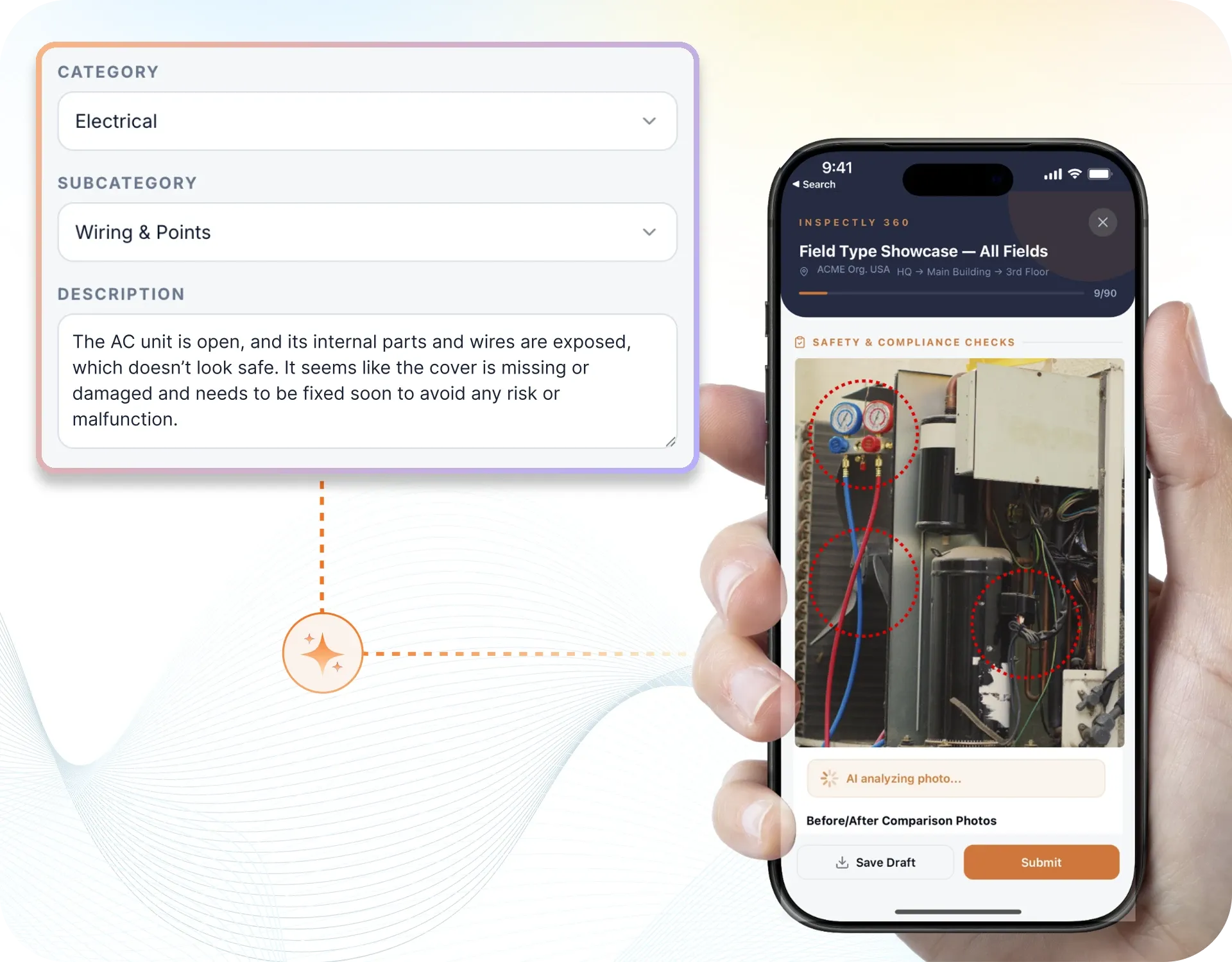
No. AI augments human inspectors by flagging potential issues for review. The final determination is always made by the qualified inspector, so accountability and compliance stay with your team. The AI is most useful as a second set of eyes: it catches what a person might miss because of fatigue, distraction, poor light, or a rushed schedule, and it does so consistently across every photo. It also speeds up the work, suggesting categories and form fields so the inspector taps to confirm instead of typing. The inspector still walks the site, applies judgement, and decides what counts as a defect.
Can I train custom AI models for my industry?
Yes. Enterprise customers can train custom detection models using their own inspection data, optimised for the defect types, materials, and scenarios specific to their operations. Custom models improve relevance and accuracy for niche use cases, such as a particular asset type, a specialised coating, or a regulatory requirement, while still running on-device for offline use. This matters when standard models do not capture what your team needs to find. A custom model trained on your own pipeline welds, concrete finishes, or production samples will flag the issues that actually matter to your inspections rather than generic defect categories.
Is inspection photo data used for AI training?
Only with explicit customer consent. AI model improvement uses anonymised, aggregated data when the customer permits it, and enterprise customers can opt out entirely so their inspection photos are never used for training. No identifiable site, project, or customer data is ever used, and processing can be confined to your instance where compliance requires it. Because the AI runs on-device, photos do not need to leave the phone or tablet for analysis at all. This gives operations teams in regulated sectors a clear answer when their security or compliance team asks what happens to inspection imagery.
How fast does the AI return results in the field?
Results appear within seconds of capturing a photo. Because the AI runs on-device with Edge processing, there is no upload, no waiting for a server, and no dependency on signal strength. An inspector takes a photo of a crack or a corroded valve and sees the AI's findings almost immediately, while still standing in front of the asset. This speed matters for field work: the inspector can act on a flagged hazard, capture a follow-up photo, or escalate an issue without breaking their flow. It also means the AI works just as fast in a basement or remote site as it does anywhere else.
How does AI inspection support safety compliance?
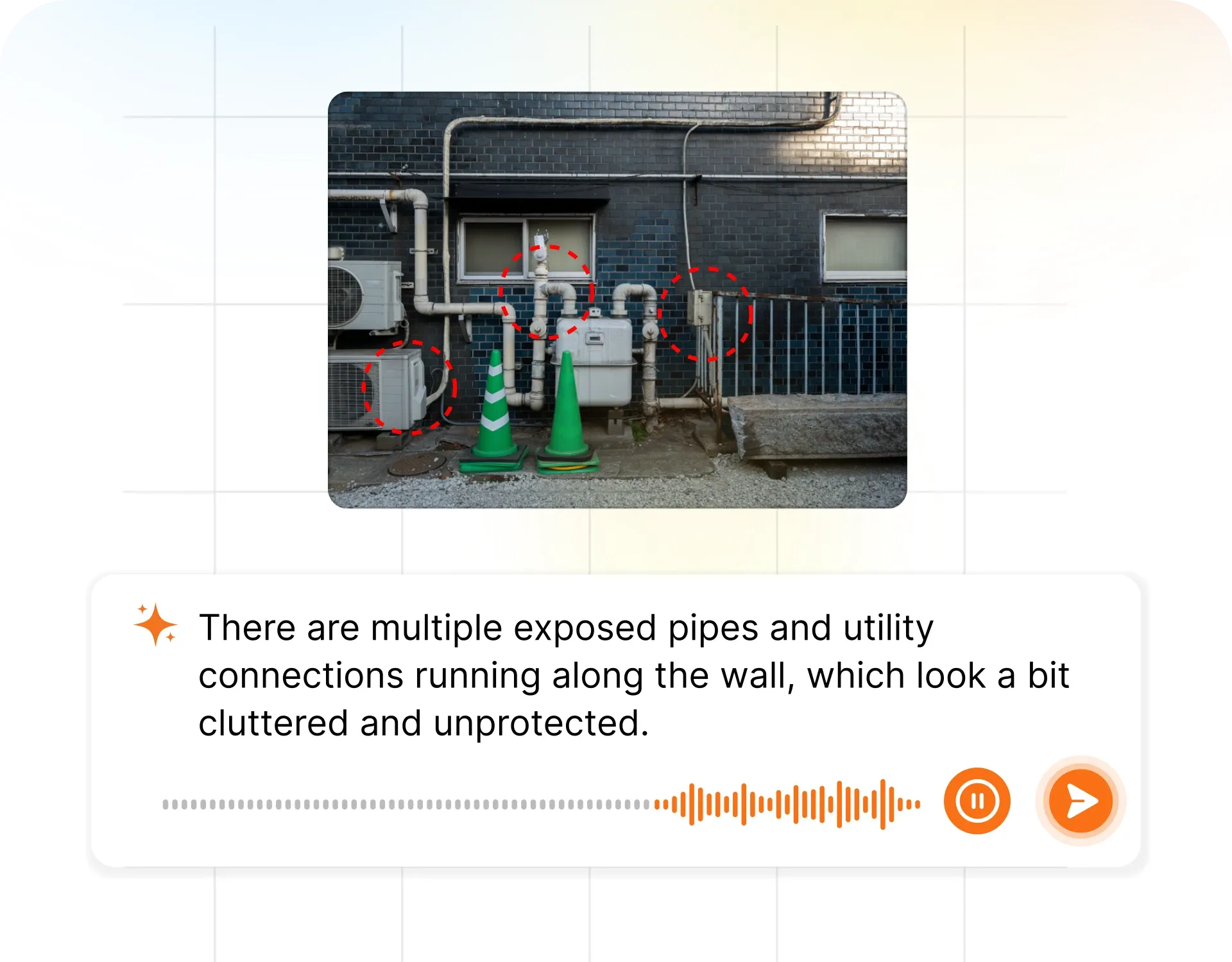
AI inspection helps teams meet standards such as OSHA and ISO 45001 by adding a consistent check for visible safety hazards on every photo. The AI flags missing PPE, blocked fire exits, exposed wiring, and trip hazards, so an inspector is prompted to log and act on them rather than walk past. Each detection is timestamped, scored, and attached to the inspection record, which builds a clear audit trail showing that hazards were identified and addressed. When an auditor asks for evidence that safety checks happened, the team can show photo-backed records with AI-flagged findings instead of relying on memory or paper notes.