Take a Photo. AI Fills the Form
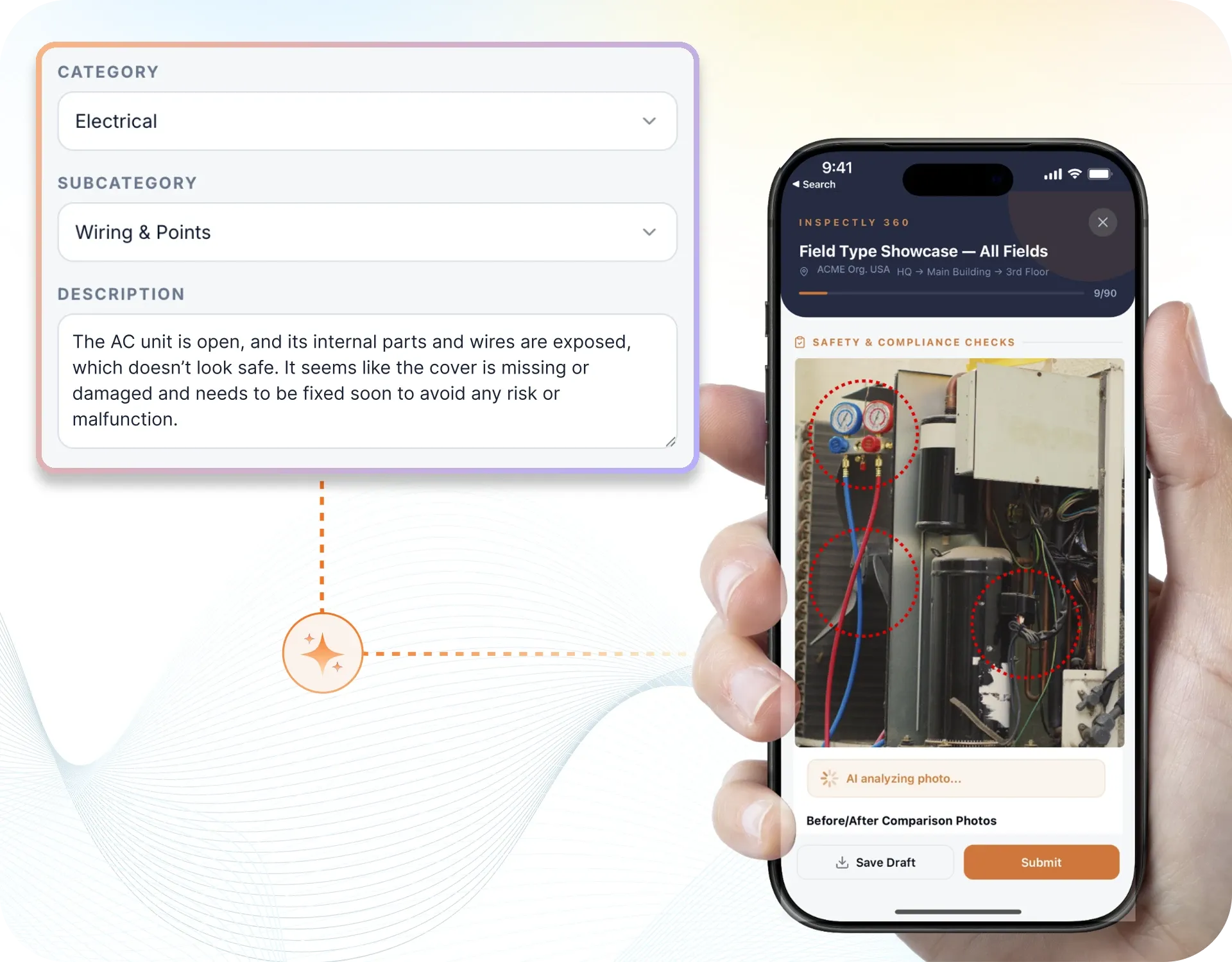
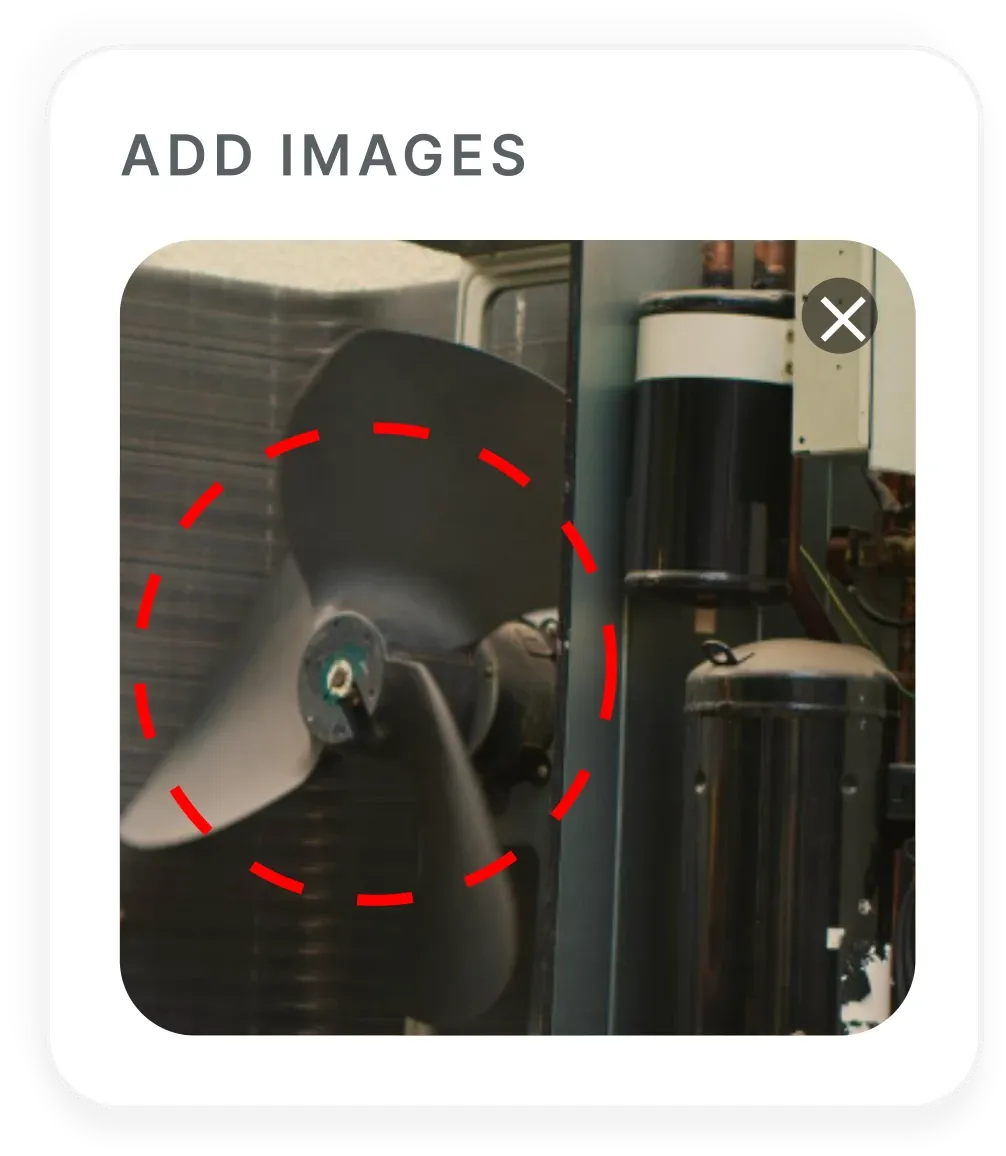
Your inspector takes a photo of any asset or defect. AI reads it and fills the inspection form automatically. No typing. No manual entry.

Convert your checklist into Mobile App
Centered on structured audit software (2026) checks, corrective actions, and clear reporting. AI audit software is the platform that Heads of Internal Audit, operational assurance teams, and engagement leads use to run scored audit programmes with defensible working papers across every site in the audit universe.
Available on Mobile
Inspect on iOS and Android with no internet required. Capture photos, let AI flag defects, and generate audit-ready reports in the field.
The pain it solves is familiar to any Head of Assurance: working papers scattered across SharePoint and personal drives, sampling decisions that nobody can reconstruct three months later, findings reclassified in the final week before the audit committee, and peer reviewers spending more time rebuilding the chain of evidence than challenging the conclusions. By the time an external assessor or regulator asks for the underlying support, half the trail is in an inbox.
What changes once ai audit software runs on one mobile-first platform.
Heads of Internal Audit standardise this five-step loop before scaling across the annual audit plan.
Map the approved audit programme, control library, sampling logic, and severity rubric into versioned digital templates so every engagement runs the methodology the audit charter actually approved.
Generate statistical or risk-based samples per population stratum with auditor sign-off; coverage updates live so engagement leads see gaps inside the fieldwork window rather than at issue.
Engagement teams capture working papers, supporting photos, control walkthroughs, and interview notes offline; AI-assisted evidence review flags anomalies in large photo sets for auditor confirmation.
Findings carry severity, control linkage, and recurrence indicators; AI CAPA prioritisation surfaces high-risk items first, then routes each finding to a named first-line owner with second-line risk visibility.
Peer reviewers filter working papers in seconds; finalised engagements export to AuditBoard, MetricStream, or ServiceNow GRC with evidence intact through /features/integrations.
Everything your field team does on paper, Inspectly360 does automatically: faster, more accurate, and without the admin.
Your inspector takes a photo of any asset or defect. AI reads it and fills the inspection form automatically. No typing. No manual entry.
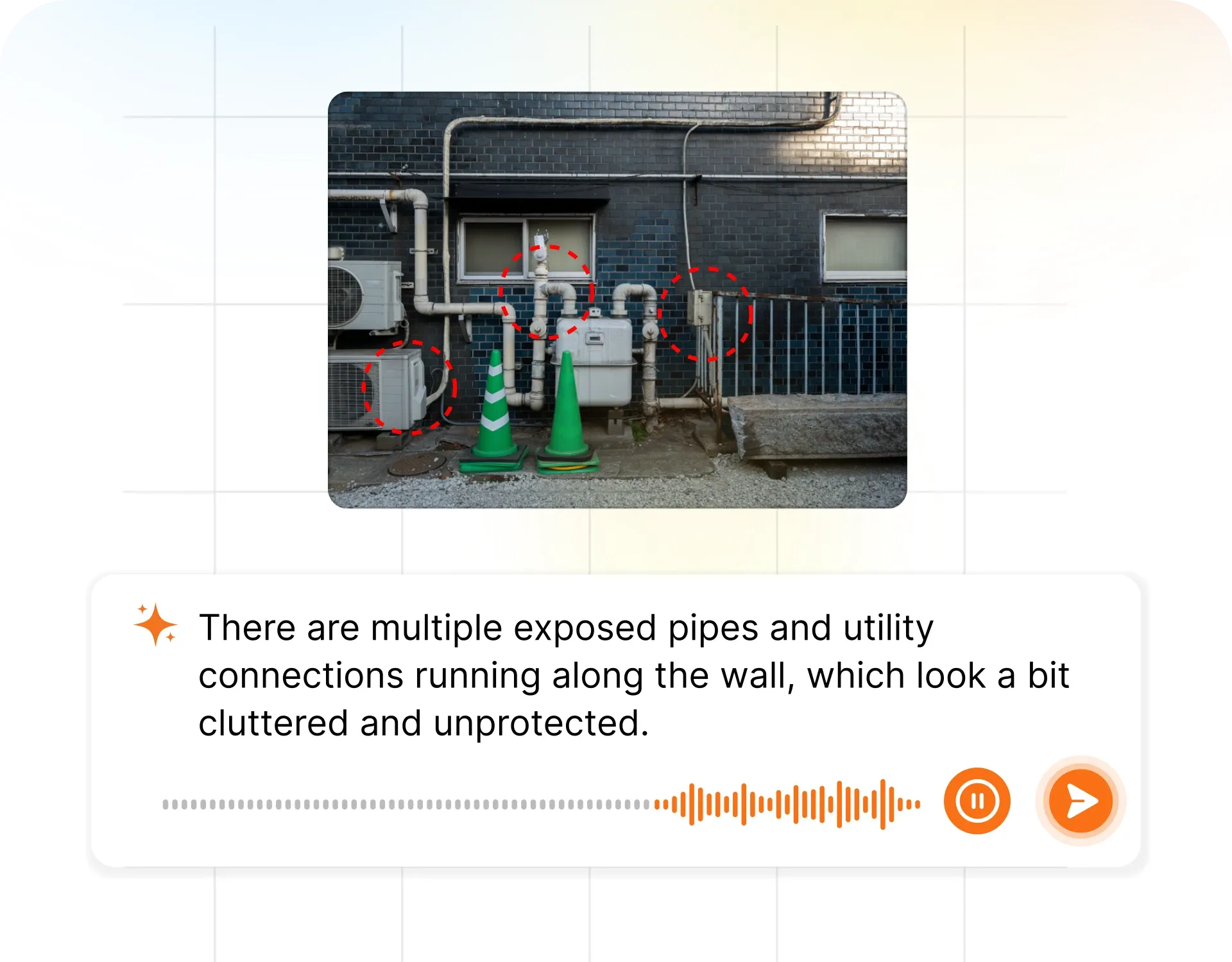
Inspectors speak their observations in any language. AI transcribes and fills the form in real time. Completely hands-free in the field.
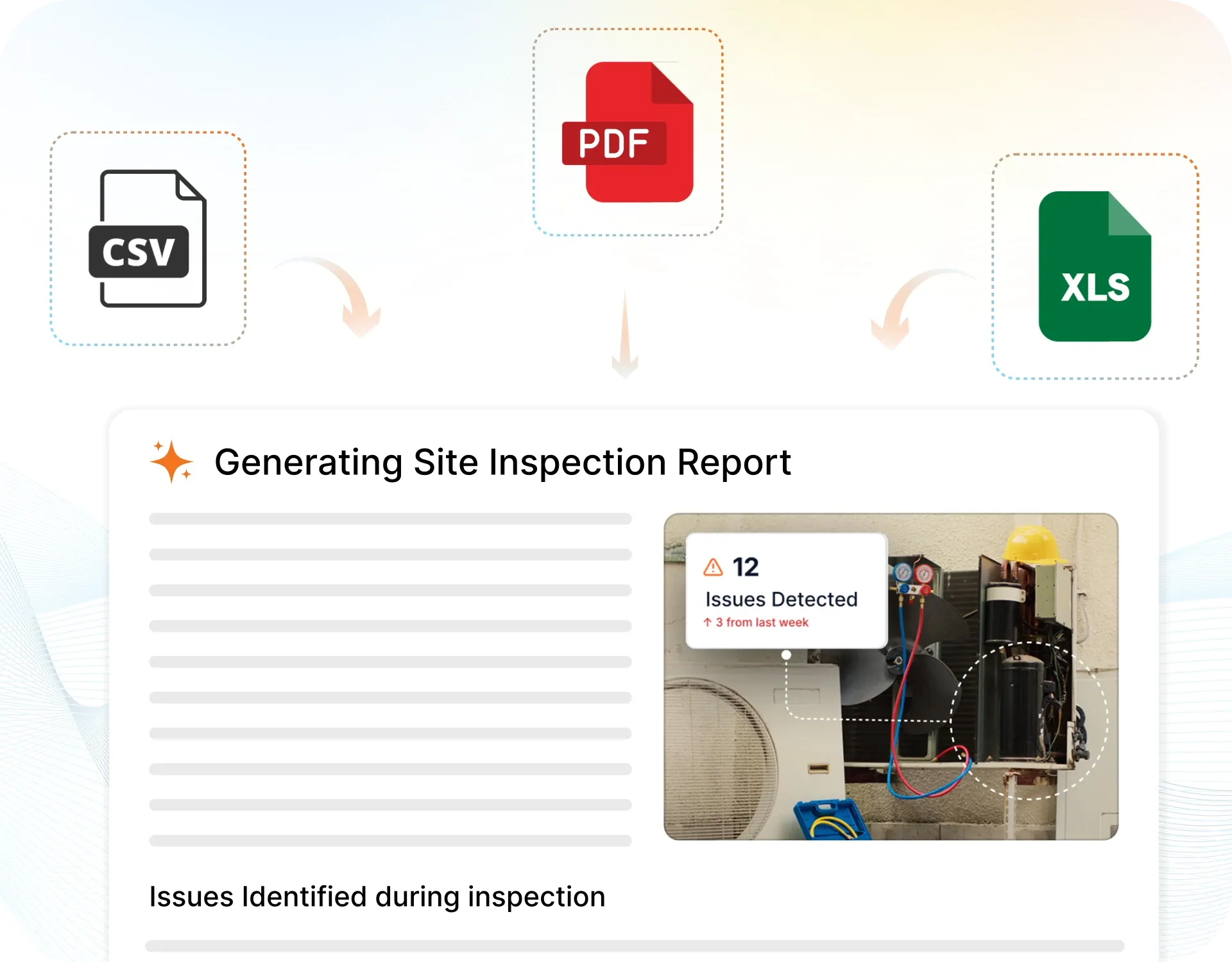
The moment an inspection is submitted, a branded PDF, Excel, or CSV report generates automatically. No manual work. No waiting.
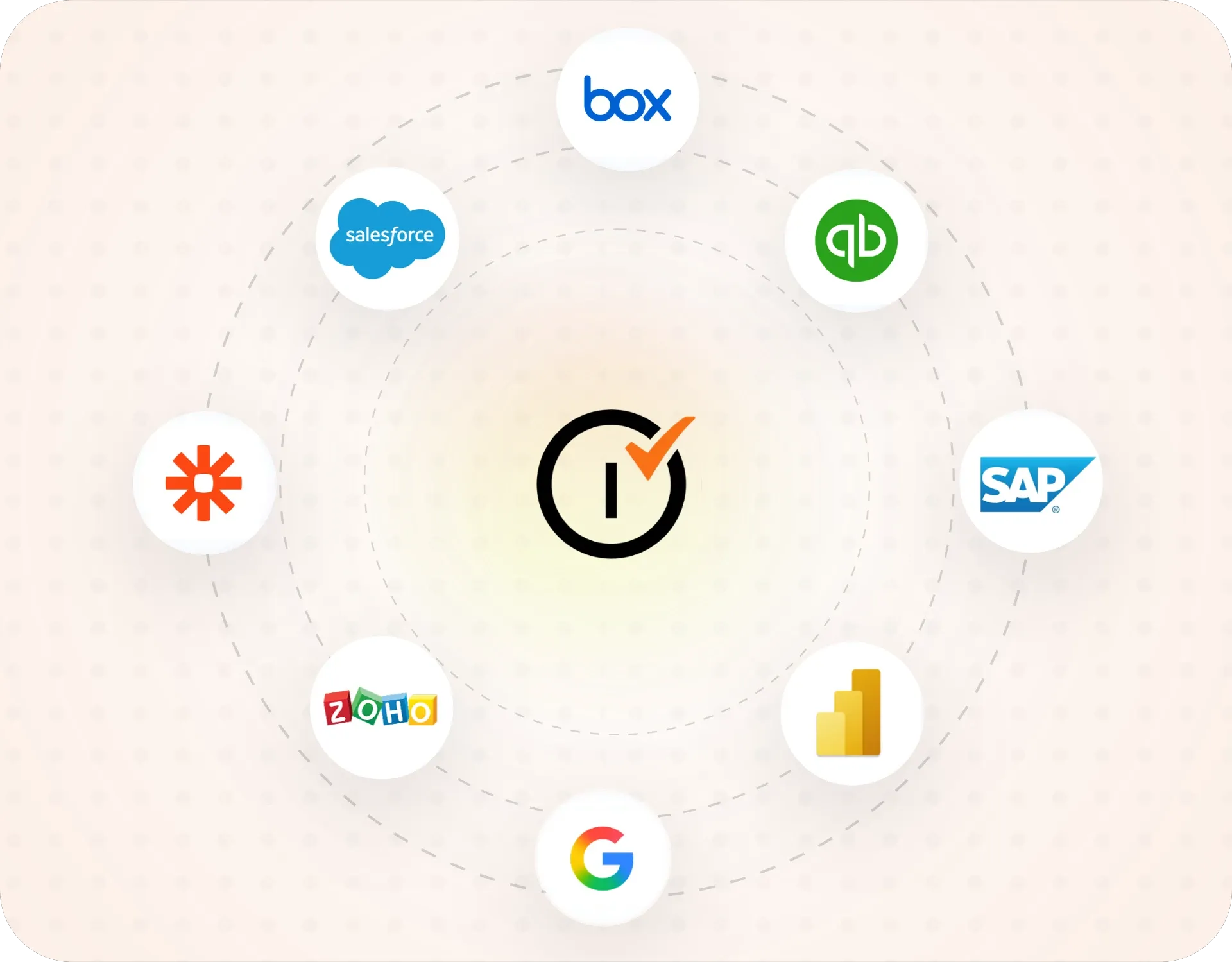
Inspectly360 integrates with the tools your team already uses, including Zoho, Microsoft 365, and SAP. No double entry.
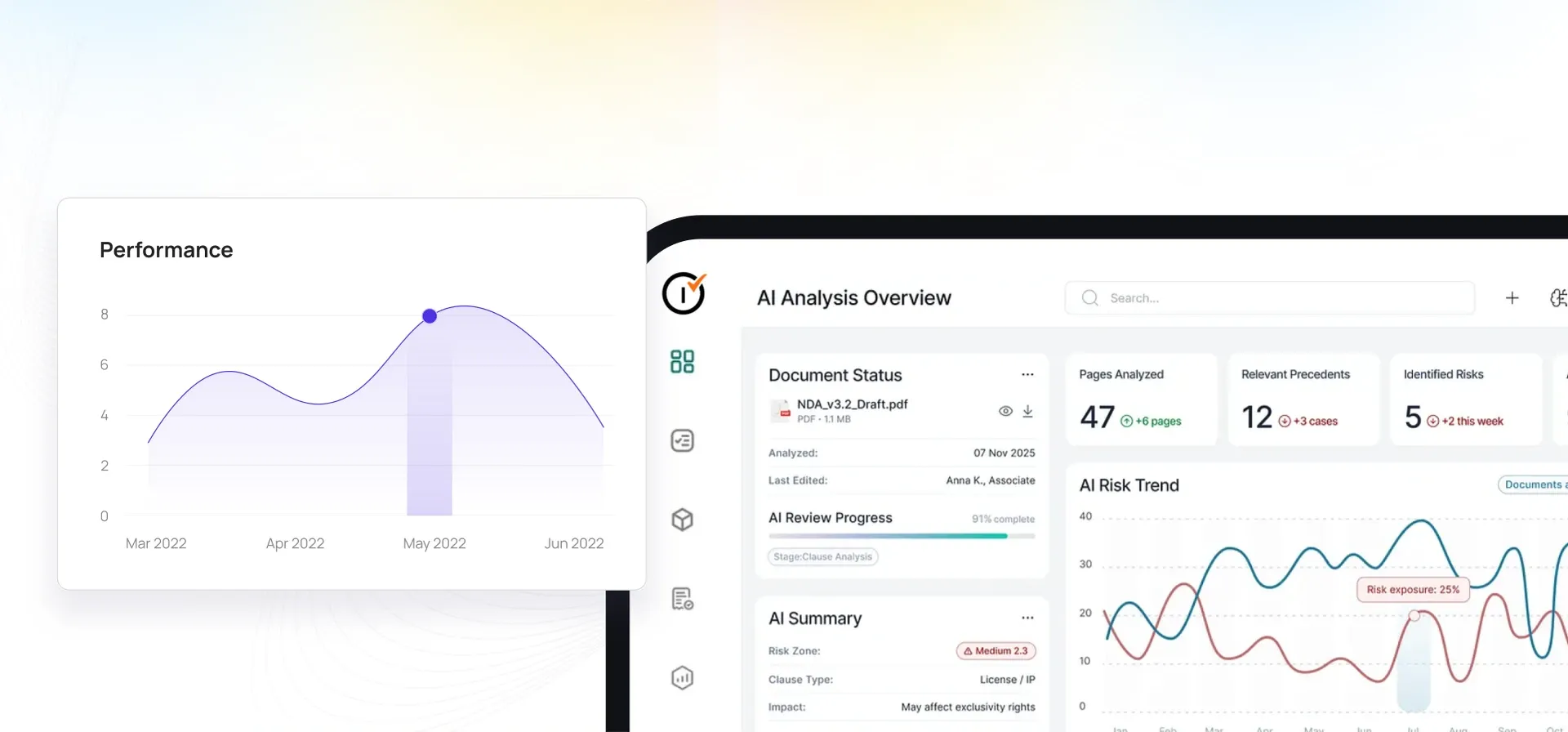
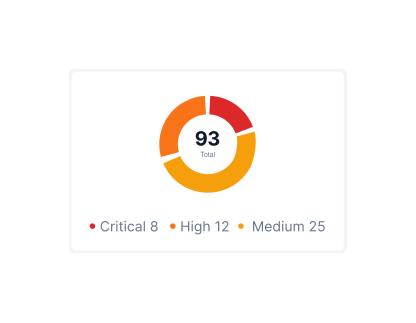
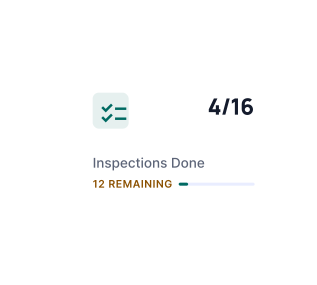
Your operations team sees completion rates, open issues, and compliance scores across all sites in real time. No chasing updates.
Manage every checklist in one connected workspace, capture evidence on mobile at the point of work, and let AI turn field inputs into clear, stakeholder-ready reports in minutes.


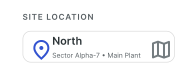
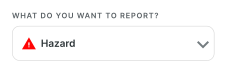
See which checklists your team has in progress across every site, jump into the same inspection with one tap, and keep field, supervisor, and back-office views in sync without sending screenshots on WhatsApp.


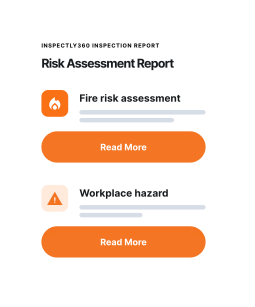
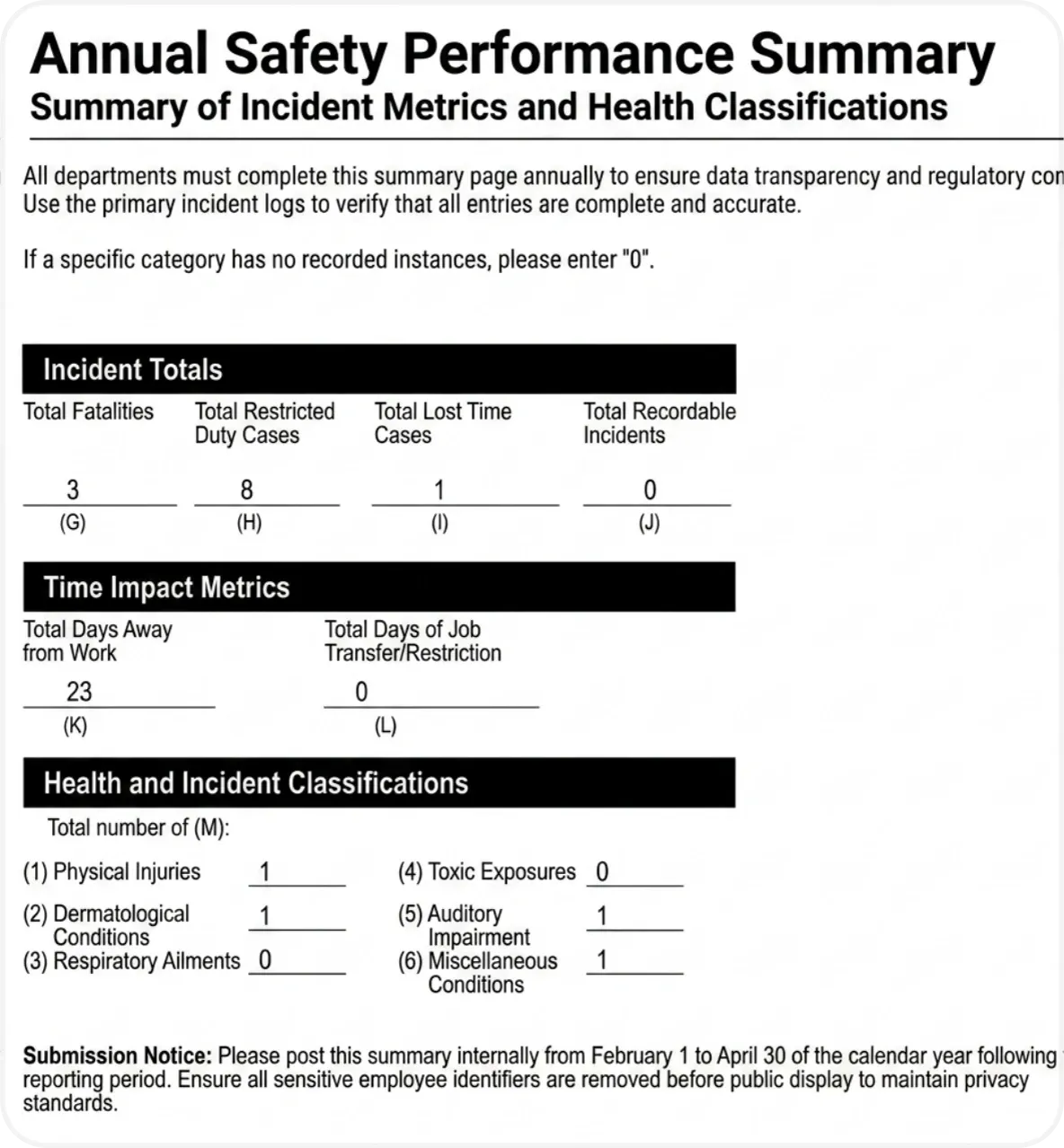


Every team reports differently. Build the report your operations, quality, or compliance leads actually want to read, share it as a branded PDF, and schedule delivery to the stakeholders who need it.

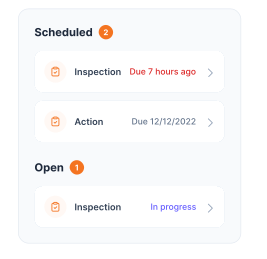

See completion, pass rate, and recurring findings across every checklist and every site, without pulling spreadsheets together at the end of the month.
What changes once ai audit software is standardised on Inspectly360.





“Inspectly360 transformed how we manage site safety inspections. The offline capability alone saved us countless hours. Our compliance rate jumped from 72% to 96% in just three months.”
Sarah Mitchell
Meridian Construction Group

“The AI-powered defect detection has changed how we work. Our inspectors capture photos and the system flags issues we'd have missed. It's like having an expert reviewer on every site visit.”
James Chen
Pacific Manufacturing Co.
“Rolling out digital checklists across multiple projects gave us instant visibility into recurring safety issues. We now resolve critical findings in hours instead of days.”
Olivia Carter
Northbridge Infrastructure
Get started with inspection and audit checklist templates.

Internal and external audits with scoring, evidence, and corrective actions. Full audit trail and report generation.

Compliance-focused inspections with evidence capture and audit trails. Meet regulatory and internal requirements.
Use these apps to run inspections and audits.

by Inspectly360
Audits and inspections with scoring, evidence, and reports.

by Inspectly360
Manage audit schedules, forms, and corrective actions.

by Inspectly360
Compliance-focused inspections with evidence and audit trails.

by Inspectly360
Run risk assessments with scoring matrices, controls, and mitigation action tracking.

by Inspectly360
Track inspection status, findings, and corrective actions through verified closure.
Inspectly360 holds the audit programme template library as the operational expression of the audit charter. Each programme template references the approved control library, sampling methodology, severity rubric, working-paper structure, and reporting cadence that the audit committee signed off. Programme templates are versioned, so when the charter is updated, the change propagates to every engagement that inherits the template. Heads of Internal Audit can publish a portfolio-wide change in one place rather than re-issuing programme paperwork to every engagement team. The annual plan is then expressed as scheduled programme deployments per auditee, with coverage against the audit universe visible at all times rather than reconstructed at year-end. This makes the audit charter operational rather than aspirational.
Sampling logic bakes into the audit programme template rather than living in engagement-team Excel files. Each programme specifies the population definition, stratification rules, statistical or judgmental basis, sample size formula, and approver. The platform generates samples from the operational population at fieldwork start, records the random seed or selection criteria, and stores the sampling memo as part of the working papers. Coverage status updates per stratum as fieldwork progresses, so engagement leads see gaps inside the fieldwork window and can extend the sample within methodology. Peer reviewers can reproduce the sample selection in seconds rather than rebuilding the Excel that produced it.
Every finding carries a named first-line owner, second-line risk function, and third-line audit oversight, plus severity, control linkage, and recurrence indicators at capture. First-line owners receive the finding with a CAPA deadline and the required closure evidence type defined at the programme level. Second-line risk gets read access plus an aggregate view of open findings, control failure rates, and emerging risks across business units. Third-line audit maintains oversight without operating in first or second-line workflows. The three lines see the same finding from the angle their mandate requires, which is the point of the model. RBAC enforces separation server-side.
Retention is configurable per programme type and per evidence class so working papers, supporting photos, control walkthroughs, and management commentary can each hold for the window that internal policy, the external auditor, or the regulator requires. Typical configurations: financial-adjacent fieldwork retained for the statutory financial records window, operational audit working papers retained for five to seven years, and supporting media retained for the underlying audit retention window. Audit-grade event logs are immutable for the retention period, encryption at rest and in transit is on by default, and regional data residency options support multi-jurisdiction internal audit functions operating under GDPR, HIPAA-adjacent, or local data protection regimes.
Working papers export in three formats commonly requested by external assessors: a structured PDF pack with sampling memo, control walkthrough evidence, photo index, severity rubric, and CAPA status; a CSV or Excel structured-data export of findings, controls, and supporting evidence references for re-aggregation in the assessor's review tool; and a direct REST API push into AuditBoard, MetricStream, or ServiceNow GRC where the external QA reviewer reads the engagement. The PDF skeleton is configurable so engagement packs mirror the format the audit committee, external assessor, or regulator already expects rather than forcing a generic shape.
REST API integrations push structured findings, control linkage, severity, supporting evidence references, and CAPA status into AuditBoard, MetricStream, ServiceNow GRC, Workiva, and IBM OpenPages. The integration ships finding-level rather than engagement-level data so the GRC platform aggregates findings consistent with its risk taxonomy. CAPA closure status syncs back so the audit committee view in GRC and the operational view in Inspectly360 stay aligned. Webhooks support real-time finding push for organisations running event-driven GRC stacks. Integration paths and field mapping validate during the pilot rather than after the procurement decision, which is the most common late-stage disqualifier when teams skip them up front.
See Inspectly360 in action with a live demo tailored to your needs. No credit card required.