How long can the app work offline?
Indefinitely. The Inspectly360 app stores all inspection data locally and can operate without connectivity for weeks or longer. Storage capacity depends on the device, but most modern smartphones and tablets hold thousands of inspections, photos, and checklist submissions offline. The key step is preparation: before heading to a remote location, inspectors should open the app while connected so site data, checklists, and reference documents cache to the device. After that, the app behaves exactly the same offline as it does online. When the device finally reconnects, every stored inspection syncs automatically, so a long stretch with no signal never means lost work.
What happens if two inspectors edit the same record offline?
Inspectly360 uses an intelligent conflict resolution system. When devices sync, it detects concurrent edits made to the same record and merges them automatically wherever possible. In the rare case where two changes cannot be merged safely, the system flags the conflict for a manager to review rather than silently overwriting one version. This means several inspectors can work offline on the same site, building, or asset without losing each other's work. Each version keeps its timestamp and author, so the audit trail stays intact and a reviewer can always see exactly what each inspector recorded and when.
Does AI defect detection work offline?
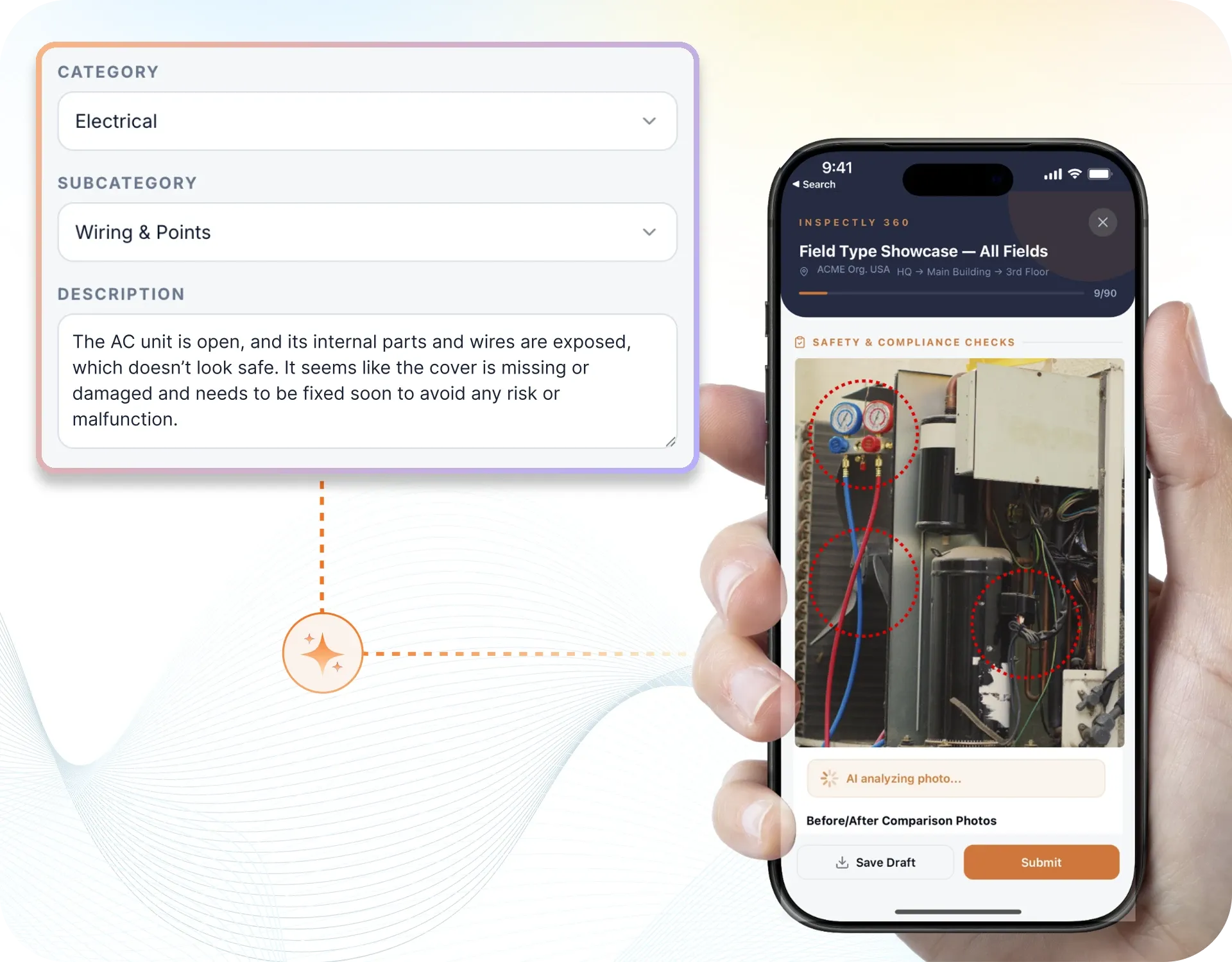
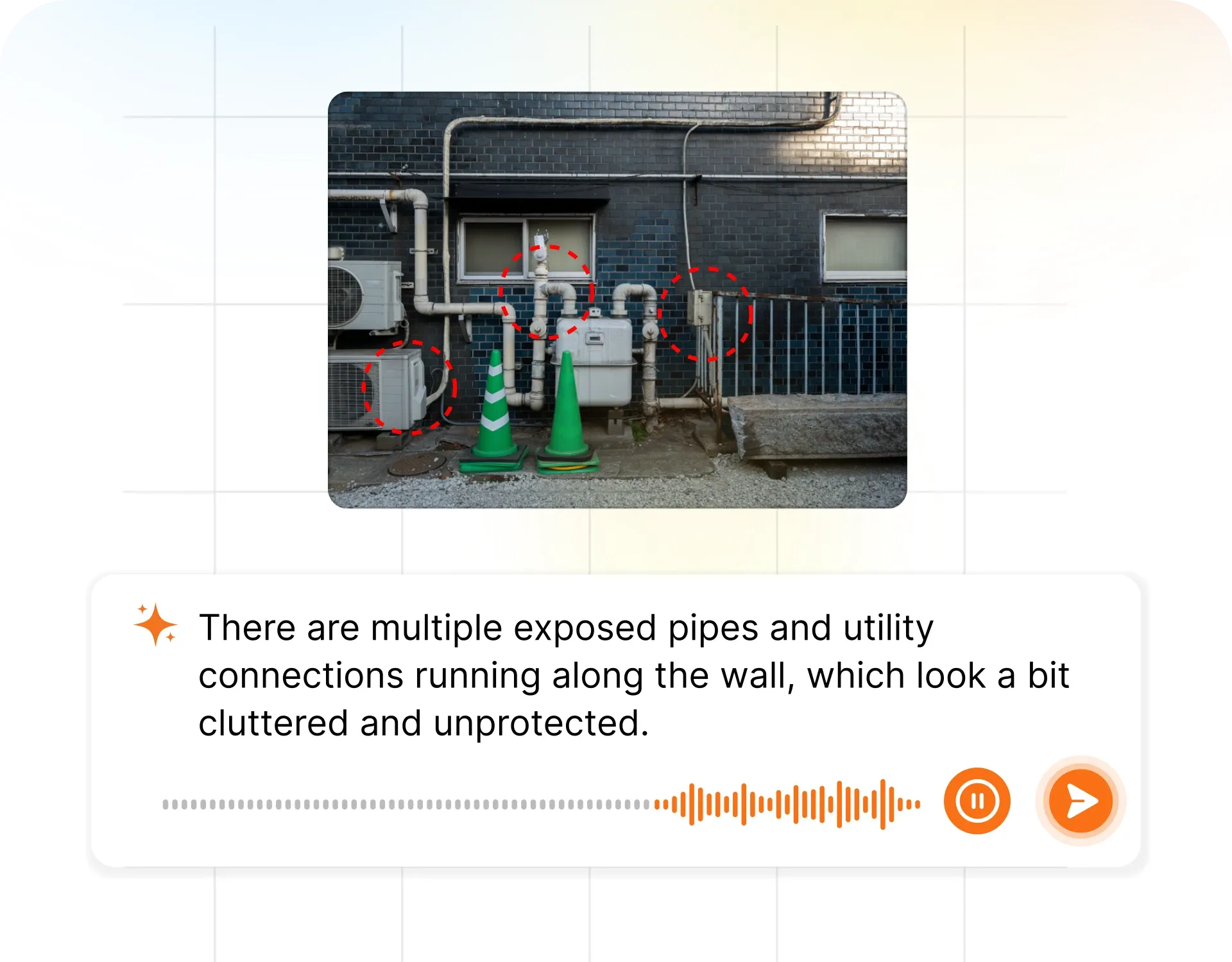
Yes. Inspectly360's AI models run on the mobile device using Edge AI, not in the cloud. Photo analysis for defects, hazards, and anomalies works with no internet connection, so inspectors get real-time AI suggestions in the field even in tunnels, basements, or remote sites with zero signal. Because the images never leave the device for processing, analysis is fast and private. This matters most exactly where connectivity is worst: an inspector deep in a plant or underground still gets the same AI second check as a colleague working in an office with full coverage.
How does sync work when connectivity returns?
Sync happens automatically in the background as soon as the device detects a connection. There is no manual upload step, and inspectors can keep working while sync runs. The system queues every change, syncs it in order, resolves conflicts where possible, and preserves a full audit trail. Sync is resilient to brief connection drops: if the signal disappears mid-sync, the app retries until all offline data is safely uploaded. Once sync completes, the live dashboard reflects the new inspections, so managers see results from low-signal sites without anyone having to remember to send anything.
Is offline inspection data secure on the device?
Yes. Offline inspection data, including checklists, photos, and notes, is encrypted at rest on the device. Access to the app is protected by user authentication, and on managed fleets, IT can enforce device policies through enterprise MDM. Because on-device AI processes images locally, sensitive photos do not need to travel to a server for analysis. If a device is lost, the data is encrypted and tied to the user account rather than left as readable files. This lets operations teams use the app in regulated environments where leaving inspection evidence unprotected on a phone would not be acceptable.
Why does offline-first matter for multi-site inspections?
Multi-site operations always include locations with poor connectivity: a basement plant room, a rural utility site, an underground car park, a building still under fit-out. An app that needs a live connection quietly creates gaps, because inspectors either skip those checks or fall back to paper. An offline-first design removes that gap entirely. Every site gets the same inspection workflow, the same photo evidence, and the same AI checks regardless of signal. Managers then get one consistent dataset across the whole portfolio, instead of a dashboard that is accurate for well-connected sites and blank for the difficult ones.