Is the API well documented?
Yes. Inspectly360 provides comprehensive API documentation with OpenAPI and Swagger specifications, code examples in several languages, and SDKs for Python, JavaScript, and .NET. A sandbox environment is available for testing, so your developers can build and validate an integration without affecting production data. The API covers inspections, issues, users, templates, and reporting, which means you can connect inspection management to almost any existing system. The documentation explains authentication, rate limits, and error handling clearly, so the team building the integration is not guessing. Whether you are creating inspections from another tool, pulling results into a data warehouse, or syncing asset records, the documented endpoints and examples shorten development time and reduce the back-and-forth that slows most integration projects.
What authentication does the API use?
The Inspectly360 API supports OAuth 2.0 and API key authentication, so you can choose the method that fits your security model. Enterprise customers can route API access through their existing identity provider using SSO and SAML integration, which keeps API access aligned with the same access policies that govern staff logins. All API traffic is encrypted in transit, and every call is audit-logged with a timestamp and the identity that made it. That logging matters for compliance, because it gives you a complete record of which system read or changed inspection data and when. Combining OAuth, SSO, and audit logging means an integration is not a security blind spot: access can be granted, scoped, reviewed, and revoked using the controls your organisation already trusts.
Can I build custom integrations without developers?
Yes. Inspectly360 supports Zapier and Microsoft Power Automate, which let you build workflows connecting the platform to thousands of other apps without writing code. You can trigger an inspection from another system, send a completed report to a CRM or project tool, post a notification to a chat channel, or sync data between platforms, all through a visual builder. This puts useful automation within reach of operations teams that do not have engineering resource. For workflows that need custom logic or high volume, the REST API and webhooks give developers full control. Most teams use a mix: no-code tools for straightforward connections and the API for the few integrations that need precise behaviour. Either way, the goal is the same: inspection data moves automatically instead of through manual export.
Are there rate limits on the API?
Yes, the API applies rate limits to keep the platform stable for everyone. Standard plans include generous limits that suit most use cases, including data synchronisation, scheduled reporting, and workflow automation. Enterprise plans offer higher or custom rate limits, dedicated API endpoints, and SLA guarantees for high-volume or business-critical integrations. The documentation explains the limits and the response headers that tell your integration how much capacity remains, so a well-built client can pace its requests and avoid being throttled. If you expect heavy traffic, for example a large nightly sync or a real-time feed to a busy dashboard, the team can review your integration volume and recommend the right plan. The aim is reliable performance for your integration without affecting other customers.
Which systems can Inspectly360 connect to?
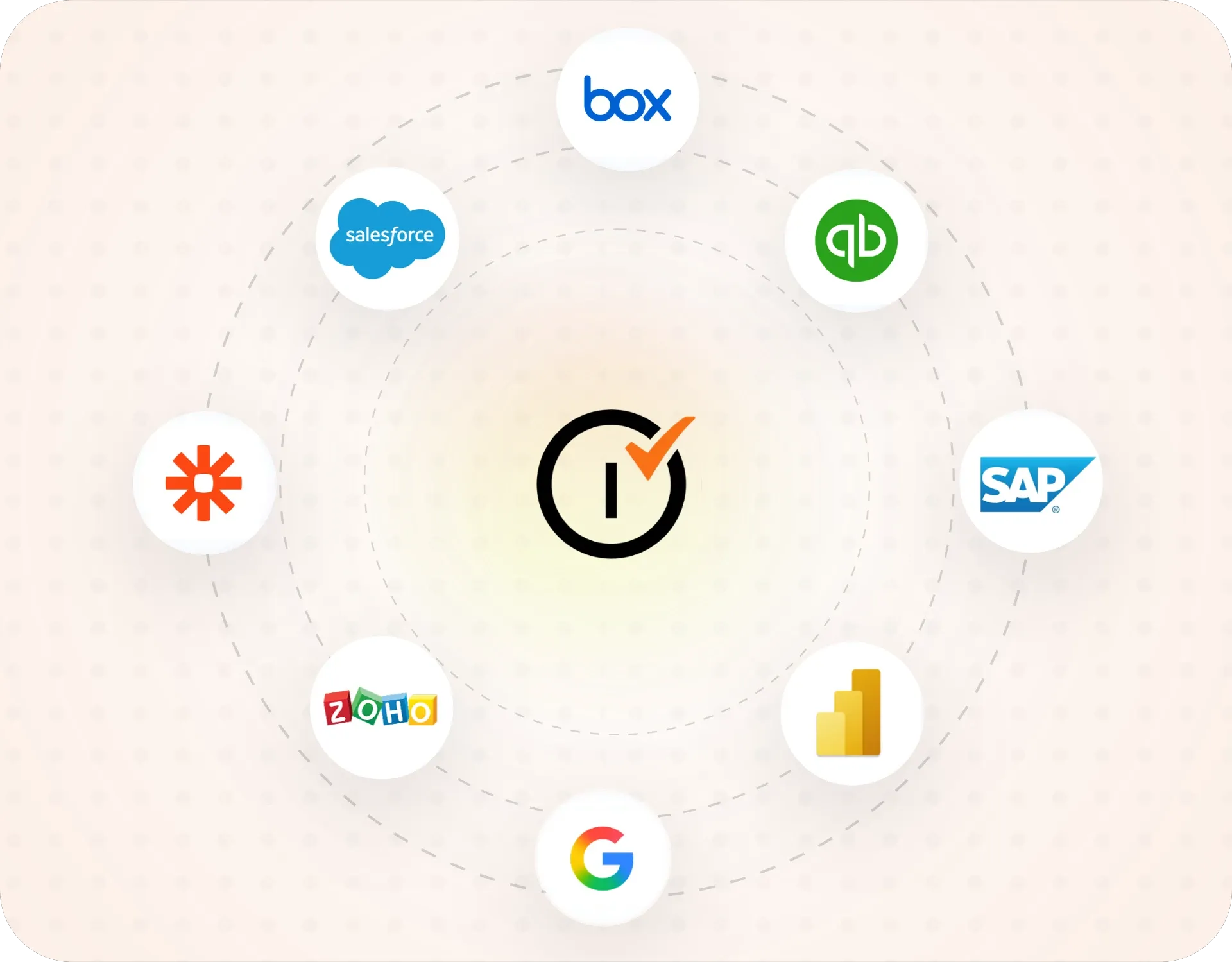
Inspectly360 connects to the core systems most operations teams already run. Pre-built connectors cover ERP and CMMS platforms, project management tools, and BI software such as Power BI and Tableau. SSO works with Azure AD, Okta, Google Workspace, OneLogin, and any SAML 2.0 identity provider. For tools without a dedicated connector, the REST API and webhooks support custom integration, and Zapier and Power Automate cover thousands of additional apps with no code. Typical connections include sending inspection findings into a CMMS as work orders, syncing punch list items with a construction project tool, feeding compliance data to a BI dashboard, and posting alerts to Slack or Microsoft Teams. Because the integration framework is API-first, if a system has its own API, Inspectly360 can almost always exchange data with it.