Convert your checklist into Mobile App

Contact Now

AI Quality Control Software

AI quality control software runs AQL sampling, control plans, FAI, NCR-to-CAPA closure, supplier scorecards, and SPC export for ISO 9001 and IATF 16949.

Quick Answer

AI quality control software is the QC programme platform that QC Managers and Supplier Quality Engineers use when defects need to be sampled correctly under AQL rules, contained quickly, traced through the supplier lot and the customer complaint, and closed through verified CAPA. Inspectly360 ties sampling plans, control-plan execution, First Article Inspection, defect taxonomies, NCR workflows, supplier scorecards, customer-complaint linkage, SPC export, and machine vision integration into one platform that lives on the shop floor, at receiving, and in supplier quality reviews.

AI-Powered Features for Your Field Workflows

Everything your field team does on paper, Inspectly360 does automatically: faster, more accurate, and without the admin.

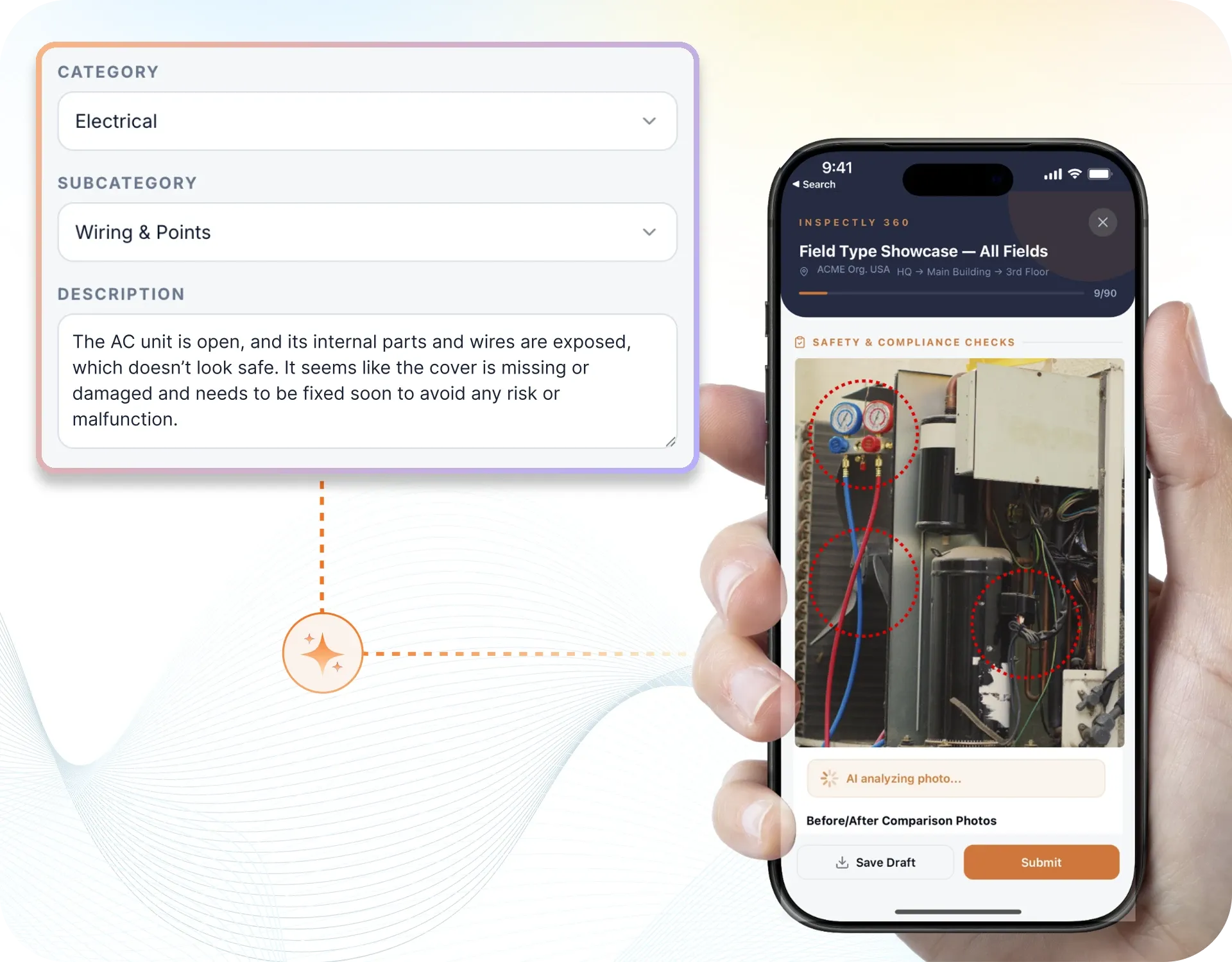
Take a Photo. AI Fills the Form illustration

Take a Photo. AI Fills the Form

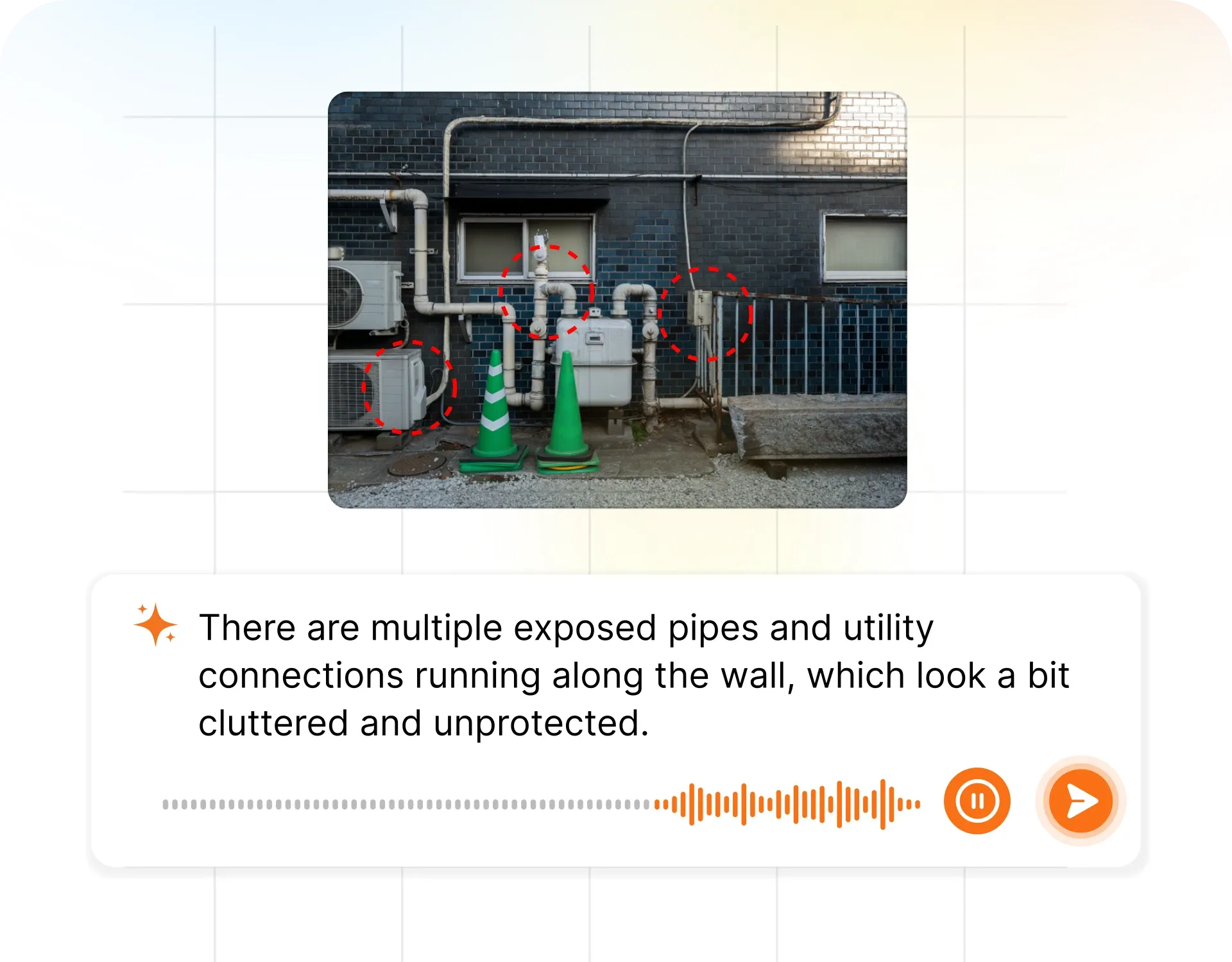
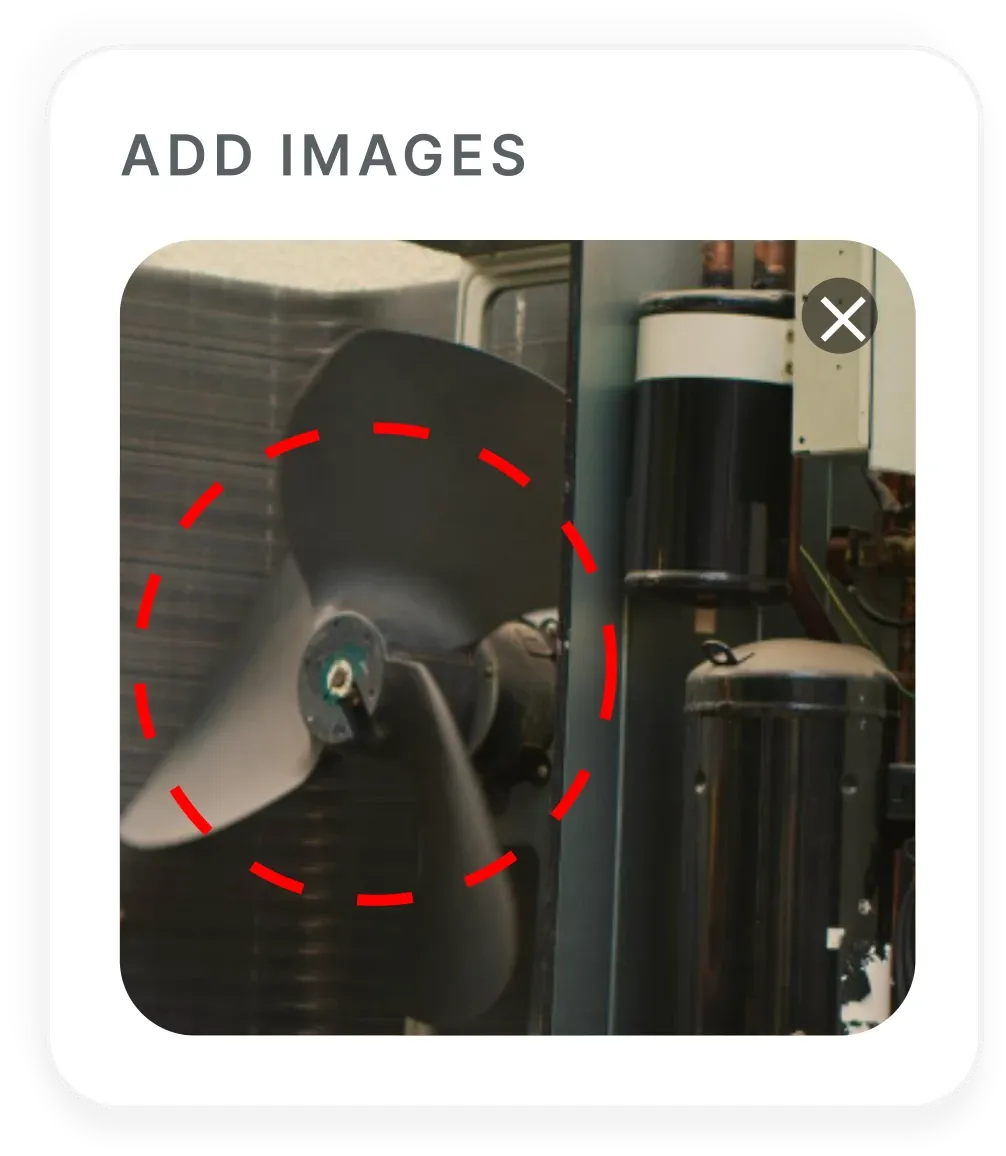
Your inspector takes a photo of any asset or defect. AI reads it and fills the inspection form automatically. No typing. No manual entry.

Speak. AI Writes It Down illustration

Speak. AI Writes It Down.

Inspectors speak their observations in any language. AI transcribes and fills the form in real time. Completely hands-free in the field.
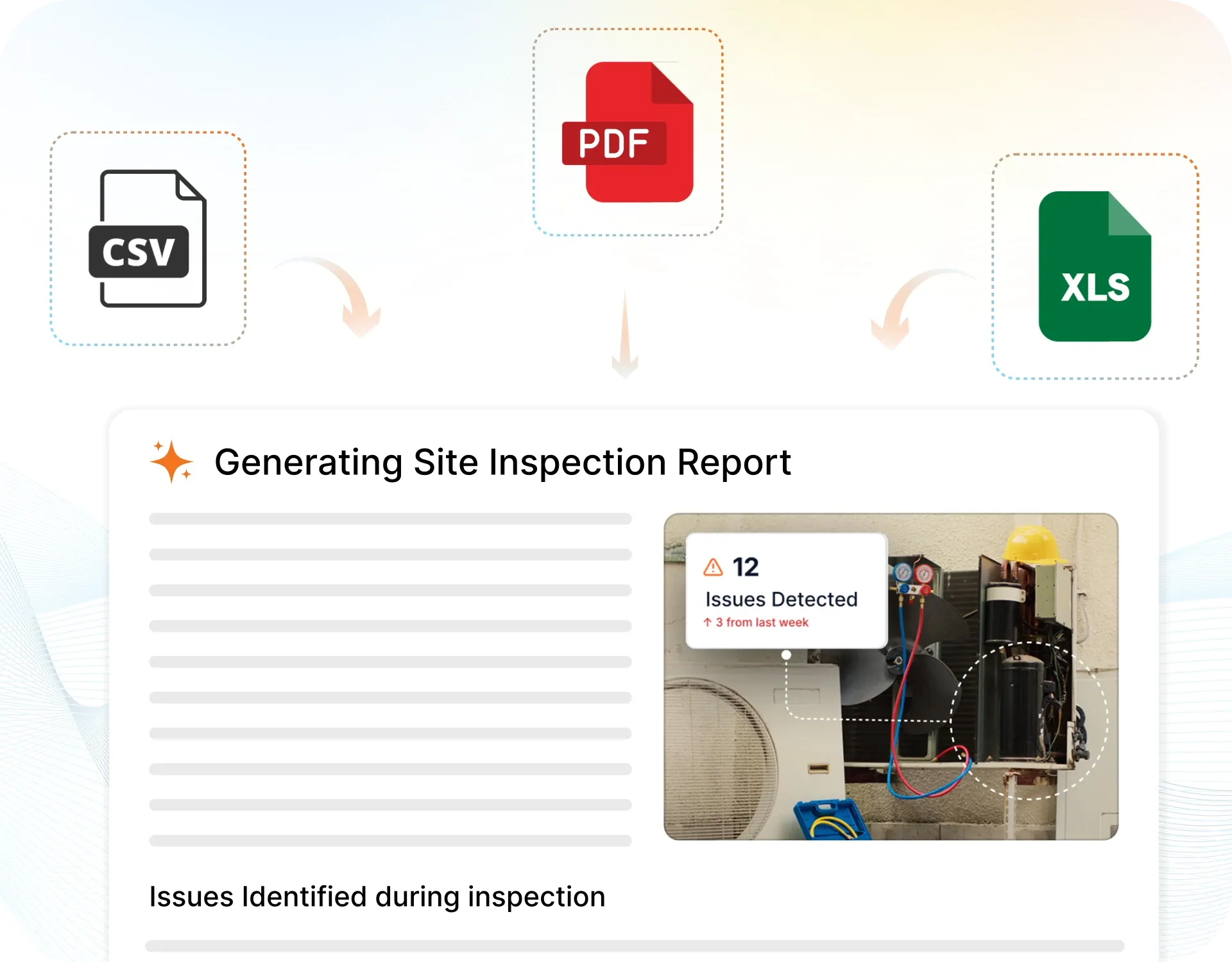
Inspections Done. Report Ready illustration

Inspections Done. Report Ready.

The moment an inspection is submitted, a branded PDF, Excel, or CSV report generates automatically. No manual work. No waiting.
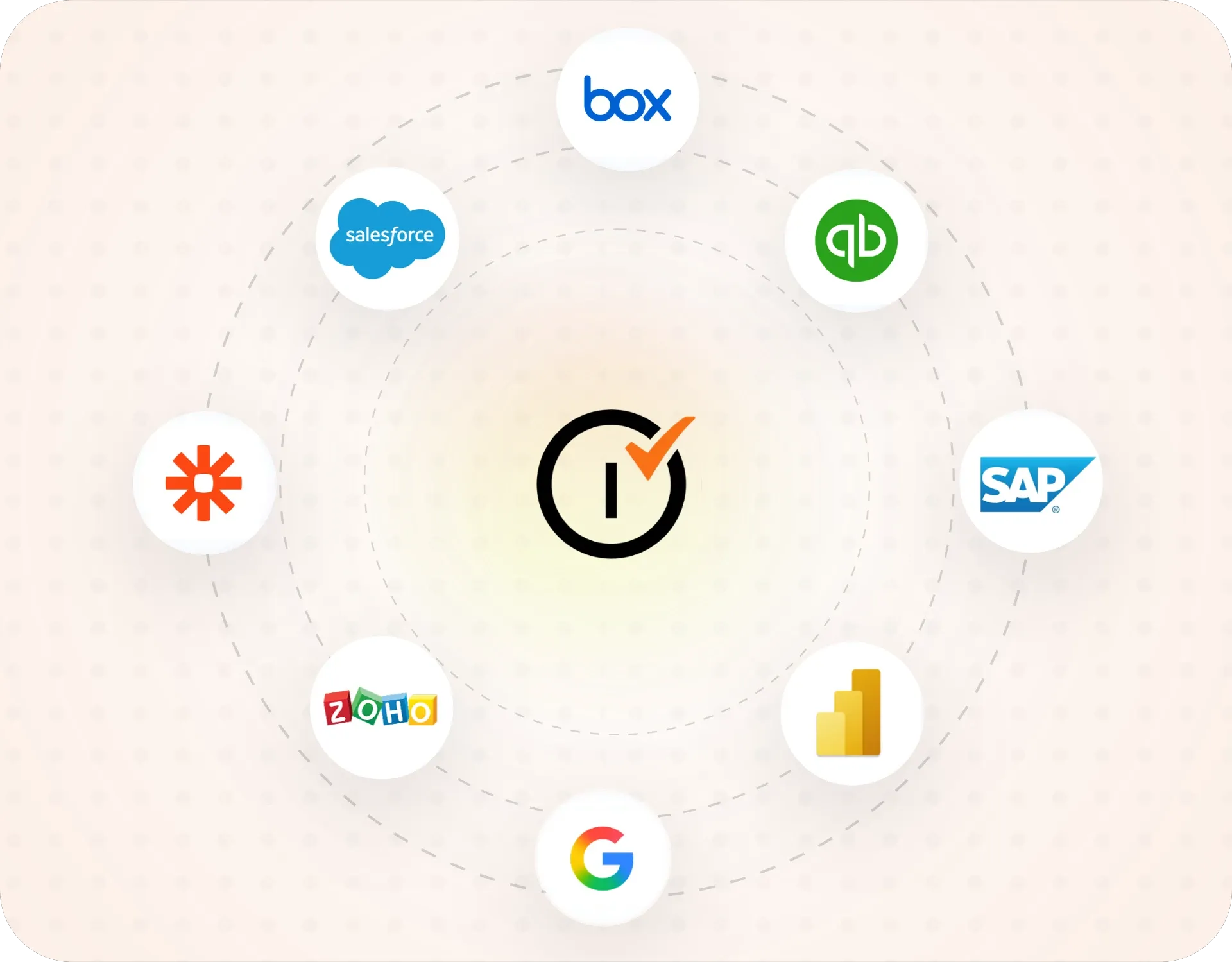
Connect Your Existing Tools illustration

Connect Your Existing Tools.

Inspectly360 integrates with the tools your team already uses, including Zoho, Microsoft 365, and SAP. No double entry.
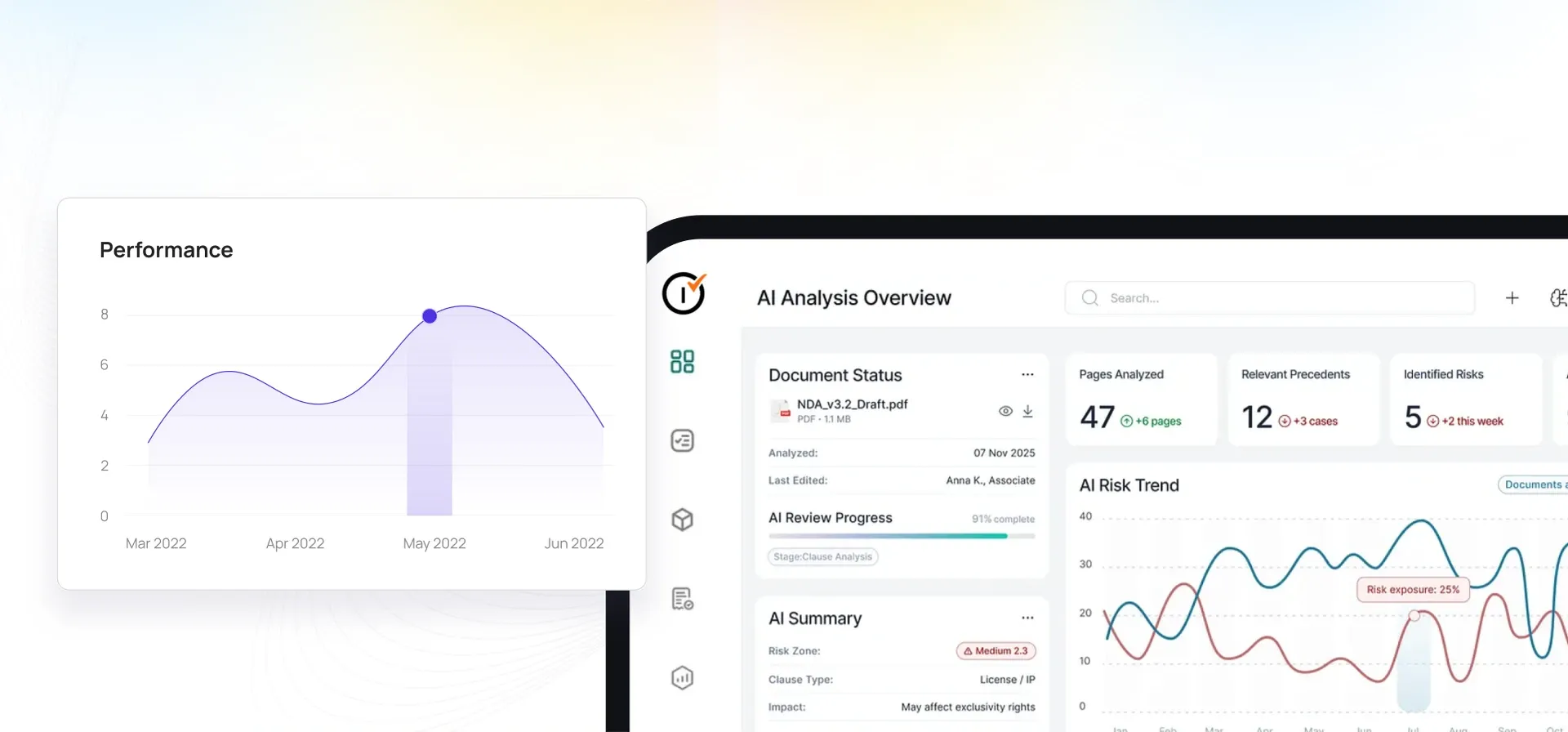
Live Dashboard. Every Site. Always On illustration

Live Dashboard. Every Site. Always On.

Your operations team sees completion rates, open issues, and compliance scores across all sites in real time. No chasing updates.

Before and After Inspectly360

What changes once ai quality control software runs on one mobile-first platform with photo proof and live dashboards.

Before Inspectly360

  • AQL sampling plans documented in PDFs and pinned to QC station walls. Inspectors apply them inconsistently across shifts and lots; sample size drifts in practice and acceptance numbers vary between operators.
  • Control plans live in QC engineering folders and First Article Inspection records sit in another binder. The shop floor cannot reach the current control-plan characteristic list during the shift and FAI sign-off arrives days later.
  • Defect categories drift between operators and shifts. Pareto analysis is unreliable because the same defect type gets logged under three different names across the week, and customer complaints cannot be reconciled to internal NCRs.
  • Customer complaints sit in CRM; internal NCRs sit in Excel; lot traceability sits in ERP. Linking a customer escape back to a supplier batch and the originating NCR takes days of cross-system detective work.
  • SPC charts live in Minitab on a QC engineer's laptop. Machine vision systems run on the line but their detections sit in a vendor portal that nobody opens. Inspector observations on the line never meet machine vision data.

After Inspectly360

  • AQL sampling rules (Acceptable Quality Limit) encoded into QC templates with ANSI/ASQ Z1.4 sampling logic. Inspectors follow the approved sample size and acceptance number automatically; sampling consistency is enforced at the point of capture.
  • Control-plan characteristics drive the QC template the operator runs; First Article Inspection forms (AS9102, IATF 16949 PPAP, or your custom format) execute on tablet with named approver sign-off; the shop floor runs the current plan.
  • Defect taxonomy is centrally maintained with picklists, examples, and AI-assisted classification. Pareto analysis is reliable; internal NCRs and customer complaints reconcile against the same defect codes.
  • Customer complaints link to NCRs, lots, suppliers, and FAI records on one quality record. Tracing a customer escape to the source supplier batch takes one query and the 8D response writes from the same data.
  • Measurement data exports to Power BI, Tableau, Minitab, and JMP for SPC analysis. Machine vision detections feed into the quality record via API or webhook alongside inspector findings, so line drift surfaces from both data sources.

What Is Quality Control Software, and How Does It Differ from Quality Inspection Software?

AI quality control software is the QC programme platform that QC Managers and Supplier Quality Engineers use when defects need to be sampled correctly under AQL rules, contained quickly, traced through the supplier lot and the customer complaint, and closed through verified CAPA. Inspectly360 ties sampling plans, control-plan execution, First Article Inspection, defect taxonomies, NCR workflows, supplier scorecards, customer-complaint linkage, SPC export, and machine vision integration into one platform that lives on the shop floor, at receiving, and in supplier quality reviews.

The pain it solves is the daily reality of multi-line manufacturing QC: AQL plans pinned to QC station walls but applied inconsistently across shifts, control plans living in QC engineering folders that the shop floor cannot reach, First Article Inspection sign-off arriving days late, defect taxonomies drifting between operators so Pareto analysis is unreliable, NCRs in Excel that cannot link to a customer complaint or a supplier batch, customer 8D responses rebuilt from spreadsheet archaeology, and SPC data living on one laptop while machine vision data sits in a vendor portal nobody opens.

Inspectly360 encodes AQL sampling rules into QC templates so inspectors follow the approved plan at capture. Control-plan characteristics drive the operator's template; FAI forms (AS9102, IATF 16949 PPAP, or custom) execute on tablet with named approver sign-off. Edge AI assists visual defect classification at receiving or on the line under one defect taxonomy; engineers disposition every anomaly. Failed items auto-create NCRs linked to lot, SKU, work order, supplier, and customer complaint. CAPAs require closure verification before NCR resolution. Supplier scorecards drive procurement renewal conversations. SPC and machine vision data feed into one quality record. This page is the QC programme layer; everyday visual inspection workflows live on /solutions/ai-quality-inspection-software.

How Does a QC Programme Tie AQL Sampling, Control Plans, FAI, NCR, and Customer Complaints Together?

QC Managers usually wire these five steps before scaling across additional lines, products, suppliers, and customer programmes.

  1. 1

    Define AQL Sampling, Control Plans, and Defect Taxonomies

    Encode ANSI/ASQ Z1.4 AQL sampling rules, measurement specifications with upper and lower limits, visual acceptance criteria, control-plan characteristic lists, and a centrally maintained defect taxonomy into QC templates. Required photo evidence per defect type enforces the SOP rather than relying on the wall poster.

  2. 2

    Run FAI and Receiving Inspection with Approver Sign-Off

    First Article Inspection forms (AS9102 for aerospace, IATF 16949 PPAP for automotive, or custom format) execute on tablet with named approver sign-off. Receiving inspection runs against the control plan with lot, SKU, work order, operator, and supplier attached automatically.

  3. 3

    Assist Defect Classification with AI, Decide with Engineers

    Edge AI ranks defects by severity and matches to the central defect taxonomy. QC engineers disposition every anomaly (rework, scrap, return to supplier, use-as-is with concession) with full traceability. Critical product decisions stay with the human and the audit trail records both the AI suggestion and the human decision.

  4. 4

    Contain Suppliers and Link Customer Complaints

    Supplier scorecards track reject rate, NCR count, on-time delivery, and quality trend per product line. Customer complaints link to NCRs, lots, and the originating supplier batch; 8D responses write from the same record. Repeat defects trigger containment, escalation, and CAPA assignment back to the supplier.

  5. 5

    Close NCRs, Feed SPC, and Integrate Machine Vision

    NCRs require closure evidence (re-inspection, photo proof, supervisor sign-off) before resolution. Measurement data feeds Power BI, Tableau, Minitab, and JMP for SPC analysis. Machine vision detections feed into the same quality record via API or webhook so inspector findings and machine vision data meet on one line view.

How Should QC Managers Pilot Sampling, Control Plans, and NCR Workflows Across Lines?

Answers to common long-tail questions, kept on one canonical page to avoid thin duplicate URLs.

Where Does QC Software Sit Beside ERP, MES, SPC, and Machine Vision?

Inspectly360 is the operational QC layer beside the systems of record manufacturing already runs. ERP (SAP, Oracle, NetSuite, Plex) continues to own production orders, lots, and supplier master. MES continues to own work order execution. SPC tools (Minitab, JMP) continue to own statistical analysis. Machine vision systems continue to own automated detection on the line. Inspectly360 owns the QC programme: sampling, control-plan execution, FAI, NCR, CAPA, defect taxonomy, supplier scorecards, customer-complaint linkage. Two-way integrations pull production order context into the inspector's template and push NCR status, supplier scores, and CAPA closure back into ERP for procurement and quality reviews.

What Should QC Procurement Validate Before a Multi-Line Rollout?

Procurement, IT, and the QC director should validate five enterprise requirements during the pilot: ERP and MES integration verified against the actual production order flow, AQL sampling logic verified against ANSI/ASQ Z1.4 plans the QC engineering team uses today, machine vision integration if vision systems are already on the line, configurable retention aligned to customer programme requirements (frequently seven to ten years for automotive and aerospace), and offline mobile capture verified in the real shop-floor environment rather than a demo.

Security, Proprietary Product Imagery, and Customer Programme Data

QC programmes carry proprietary product imagery, lot-level traceability data, supplier confidential information, and customer programme data that may be requested by customer quality teams under contract or by regulators years after the lot shipped. Inspectly360 supports configurable retention, encrypted at-rest evidence, regional data residency, on-device Edge AI so proprietary imagery never leaves the facility, audit-grade event logs, and permission boundaries between QC engineering, line operators, supplier quality, and external customer auditors enforced server-side.

Migration from Excel QC, Control Plan PDFs, and Side SPC Tools

Existing AQL plans, control plans, FAI templates, defect taxonomies, and NCR logs rarely need to be retyped. The pilot starts forward-looking on one line while past PDFs, Excel NCR logs, and SPC chart history are imported as searchable evidence against the same product or supplier. Defect taxonomy seeds from the current QC engineering picklist and is rationalised during the pilot. The first cycle runs in parallel with the existing process so operators and QC engineers see the new flow before the legacy spreadsheets are retired.

Which Capabilities Run AQL Sampling, FAI, Supplier Scorecards, and SPC Export Together?

The platform capabilities that power ai quality control software across every site.

Ready to Move AI Quality Control Off Paper?

Book a Free Demo

How Is This Different from Excel-Driven QC, SPC-Only Tools, and Standalone Inspection Apps?

QC Managers and Supplier Quality Engineers comparing Inspectly360 to Excel-driven QC, SPC-only tools, and standalone inspection apps evaluate five things: whether AQL sampling rules are enforced at capture, whether the control plan and First Article Inspection actually drive shop-floor execution, whether NCR-to-CAPA closure ties back to lot, supplier, and customer complaint, whether the defect taxonomy stays consistent across lines and shifts, and whether SPC and machine vision data flow into one quality record.

TopicTypical GapsWith Inspectly360
AQL sampling rigourAQL sampling plans documented in PDFs and pinned to QC station walls. Inspectors apply them inconsistently across shifts and lots; sample size drifts in practice and acceptance numbers vary between operators.AQL sampling rules (Acceptable Quality Limit) encoded into QC templates with ANSI/ASQ Z1.4 sampling logic. Inspectors follow the approved sample size and acceptance number automatically; sampling consistency is enforced at the point of capture.
Control plan and FAI executionControl plans live in QC engineering folders and First Article Inspection records sit in another binder. The shop floor cannot reach the current control-plan characteristic list during the shift and FAI sign-off arrives days later.Control-plan characteristics drive the QC template the operator runs; First Article Inspection forms (AS9102, IATF 16949 PPAP, or your custom format) execute on tablet with named approver sign-off; the shop floor runs the current plan.
Defect taxonomy consistencyDefect categories drift between operators and shifts. Pareto analysis is unreliable because the same defect type gets logged under three different names across the week, and customer complaints cannot be reconciled to internal NCRs.Defect taxonomy is centrally maintained with picklists, examples, and AI-assisted classification. Pareto analysis is reliable; internal NCRs and customer complaints reconcile against the same defect codes.
Customer-complaint to NCR linkageCustomer complaints sit in CRM; internal NCRs sit in Excel; lot traceability sits in ERP. Linking a customer escape back to a supplier batch and the originating NCR takes days of cross-system detective work.Customer complaints link to NCRs, lots, suppliers, and FAI records on one quality record. Tracing a customer escape to the source supplier batch takes one query and the 8D response writes from the same data.
SPC and machine vision integrationSPC charts live in Minitab on a QC engineer's laptop. Machine vision systems run on the line but their detections sit in a vendor portal that nobody opens. Inspector observations on the line never meet machine vision data.Measurement data exports to Power BI, Tableau, Minitab, and JMP for SPC analysis. Machine vision detections feed into the quality record via API or webhook alongside inspector findings, so line drift surfaces from both data sources.

What Changes for QC Managers, Supplier Quality Engineers, Procurement, and Customer Quality?

What changes once ai quality control software is standardised on Inspectly360.

  • QC Managers: AQL sampling enforced at capture, control plans driving the operator's template, and FAI sign-off arriving the same shift rather than days later.
  • Supplier Quality Engineers: per-supplier scorecards and NCR-to-supplier traceability that turn supplier reviews from anecdote to defect data.
  • Line Operators and Shop-Floor Inspectors: the right control plan and the right defect taxonomy on the tablet during the shift, with AI-assisted classification cutting form-fill time.
  • Procurement and Sourcing: live supplier scorecards available before renewal conversations, with reject rate and on-time delivery on the same view.
  • Customer Quality Engineers and 8D Owners: customer complaints linked to NCRs, lots, and supplier batches; 8D responses write from one record rather than reconstructed.
  • Quality Engineering and SPC Owners: measurement data flowing into Power BI, Tableau, Minitab, and JMP without manual export, and machine vision detections meeting inspector findings on one record.
  • ISO 9001, IATF 16949, and AS9100 Auditors: closed-NCR traceability, FAI evidence, and control-plan execution available on demand under multi-year retention.

Which QC Templates Help Reduce Defects and Streamline NCR Closure?

Get started with inspection and audit checklist templates.

View All Checklist Templates
Shift Start Production Readiness Checklist
Template

Shift Start Production Readiness Checklist

Use this Shift Start Production Readiness inspection to verify critical checkpoints and safety controls, compliance records and sign-off and corrective actions with photo evidence…

500+GET
End of Shift Shutdown & Handover Checklist - FREE PDF
Template

End of Shift Shutdown & Handover Checklist - Free PDF

Use this End of Shift Shutdown & Handover inspection to verify critical checkpoints and safety controls, compliance records and sign-off and corrective actions with photo evidence…

500+GET
Chemical Spill Response Drill
Template

Chemical Spill Response Drill

Use this Chemical Spill Response Drill inspection to verify critical checkpoints and safety controls, compliance records and sign-off and corrective actions with photo evidence on…

500+GET
Colombia Emergency Brigade Training Checklist
Template

Colombia Emergency Brigade Training Checklist

Use this Colombia Emergency Brigade Training Checklist to verify critical steps, capture evidence, assign corrective actions, and keep operations safe and compliant.

500+GET

Frequently Asked Questions About AI Quality Control Software

How does AI quality control software handle AQL sampling on the shop floor?

AQL sampling rules (Acceptable Quality Limit) encode into QC templates using ANSI/ASQ Z1.4 sampling logic. The template tells the operator the sample size and acceptance number for the lot size and AQL level, so sampling stays consistent across shifts and operators. Where the customer programme requires a specific switching rule between normal, tightened, and reduced inspection, the platform applies it automatically based on the recent quality history of that supplier or product. Sampling stays a structured rule rather than a wall poster.

How does the platform drive control-plan execution on the line?

Control-plan characteristics drive the QC template the operator runs at each control point. When QC engineering updates the control plan, the operator's template updates on the next shift rather than requiring a binder reprint. Characteristic-level measurement specs, frequency, sample size, reaction plan, and responsible role flow from the control plan into the operator's workflow. The shop floor runs the current plan; QC engineering retains version control over what the current plan actually is.

How does SPC data flow out of the platform for Minitab, Power BI, and JMP analysis?

Measurement data exports via REST API and scheduled exports to Minitab, JMP, Power BI, Tableau, Looker, and Google Data Studio. SPC engineers run control charts, capability studies, and process performance indices on the live data rather than copy-pasting from QC station spreadsheets. Where the SPC tool supports it, the platform can push real-time events on out-of-control conditions so the line reacts immediately rather than at the next QC engineering review.

How does NCR-to-CAPA workflow handle disposition, root cause, and verified closure?

When a QC inspection records a non-conformance, Inspectly360 auto-creates an NCR with the failed item, photo evidence, lot, SKU, work order, operator, and supplier pre-attached. Disposition workflow (rework, scrap, return to supplier, use-as-is with concession) assigns owners and tracks decisions. CAPAs link to the NCR with root-cause analysis fields, owners, deadlines, and required closure evidence. Closure requires verification (re-inspection, photo proof, supervisor sign-off) before the NCR is fully resolved. Full traceability satisfies ISO 9001, IATF 16949, and AS9100 requirements.

How do supplier scorecards work in supplier quality reviews?

Each supplier is a first-class entity with its own scorecard covering reject rate, NCR count, on-time delivery percentage, quality trend per product line, and CAPA closure performance against supplier-assigned actions. Procurement and supplier quality engineers share the same view; supplier reviews and renewal conversations open with the scorecard rather than reputation. Recurring defects from a supplier trigger automatic containment actions, including escalation, re-source recommendations, and CAPA assignments back to the supplier where the relationship and contract allow.

How does First Article Inspection (FAI) run on the platform?

FAI forms execute on tablet against AS9102 (aerospace), IATF 16949 PPAP (automotive), or a configured custom format. The form covers part identification, material certification, measurement results against the drawing, characteristic accountability, and named approver sign-off with timestamps. FAI evidence retains under multi-year retention aligned to the customer programme. Customer quality audits requesting FAI evidence two or five years after the lot shipped see structured records rather than a binder hunt, and FAI handover to a new customer programme reuses the platform-resident template rather than starting from scratch.

Less Paperwork. More Visibility.

See Inspectly360 in action with a live demo tailored to your needs. No credit card required.

  • 30 Days Free Trail
  • 1000+ Templates
  • Unlimited Integration