Convert your checklist into Mobile App

Contact Now
Feature

CAPA Management Software:Corrective Actions from Finding to Verified Closure

Turn a failed inspection item into a tracked corrective action with an owner, a due date, and proof of the fix. Manage corrective and preventive actions in one place, so every issue is resolved and verified, not just marked done.

Quick Answer

CAPA management software in Inspectly360 turns a failed inspection item into a tracked corrective action with an owner, a due date, and a required photo of the fix. It handles corrective action tracking and preventive actions in one place, so an issue is resolved and verified rather than marked done. It replaces WhatsApp follow-ups and spreadsheet issue logs with a defensible record for every defect.

CAPA management software in Inspectly360 records every corrective and preventive action from the moment an inspection fails a check to verified closure. When an inspector flags a defect, the platform creates an issue with a named owner, a severity, a due date, and a required photo of the fix. Corrective action tracking and issue resolution happen in one place, and a preventive action captures the root cause so the same defect does not recur. It replaces spreadsheet issue logs and standalone NCR software with defect management that everyone can see.

What this replaces

Before Inspectly360

  • A failed check becomes a WhatsApp message or a line in a spreadsheet.
  • Vendors and staff self-certify that an issue was fixed, with no proof.
  • The same defect reappears next month because nobody recorded the root cause.

After Inspectly360

  • Every failed check becomes a tracked corrective action with an owner and a deadline.
  • Closure requires photo evidence and a re-inspection before an issue is marked done.
  • Preventive actions capture root cause, so recurring defects are caught and addressed.

How CAPA & Issue Tracking works

  1. 1

    A check fails

    During an inspection, an inspector marks an item as failed and captures a photo, a severity, and a note describing the defect.

  2. 2

    An issue is raised

    The platform creates a corrective action with a named owner and a due date, and links it to the inspection, asset, and location it came from.

  3. 3

    The fix is verified

    The owner completes the work and attaches photo evidence. The item moves to a re-inspection step and closes only when the fix is confirmed.

  4. 4

    Root cause is captured

    A preventive action records why the defect happened and what changed, so recurring issues are flagged and addressed rather than repeated.

What is the difference between a corrective action and a preventive action in practice?

A corrective action deals with the instance. An inspector fails a check, an issue is raised with a named owner, a severity, and a due date, and the fix is evidenced with a photo before the issue closes. That resolves the specific defect in front of the team, and for most findings it is the whole job.

A preventive action deals with the cause. It exists because the same defect keeps returning, which means fixing each instance is treating a symptom. Capturing the root cause is what changes the outcome: a fault that recurs monthly because of a maintenance interval, a supplier, or a training gap will keep recurring no matter how promptly each instance is closed.

Keeping both in one place is the point. When corrective and preventive actions live in separate systems, or the preventive half lives in a meeting note, the link between a pattern and the action taken about it is lost. Here the recurring defect and the preventive action sit against the same record, so the reasoning survives after the people involved have moved on.

What stops an issue being marked as done when the work was never verified?

Self-certified closure is the weak point in most issue logs. A row in a spreadsheet can be set to closed by whoever owns the sheet, and the record then shows a resolved issue with nothing behind it. Vendors closing their own work is the same problem with a commercial edge.

Closure here requires evidence. The issue carries a required photo of the fix, so the person verifying sees the completed work rather than a status change. Where a defect needs a physical recheck, a re-inspection confirms the fix in place. The difference is between an issue that is marked done and one that is demonstrably resolved.

That also makes the history defensible. Every issue holds its owner, its severity, its due date, and the evidence of resolution, so a client dispute or an audit is answered from the record. An issue log that cannot show what was actually fixed provides no protection at the moment it is most needed.

Why operations teams use CAPA & Issue Tracking

  • Every defect becomes a tracked corrective action with an owner and a deadline
  • Issues close only after photo evidence and a re-inspection confirm the fix
  • Preventive actions capture root cause, so recurring defects are addressed
  • NCR and defect management sit in the same record as the inspection
  • Overdue actions escalate automatically before they become audit findings
  • A complete, timestamped audit trail for every issue for regulators and clients

Where teams use CAPA & Issue Tracking

Manufacturing Non-Conformance

A line inspection fails a check, an NCR opens with a named owner and disposition, and a CAPA records the root cause. Recurring failures across shifts and batches become visible instead of repeating every month.

Construction Snag Closeout

A snag raised on a site walk becomes a corrective action assigned to the responsible trade. Closing it requires photo evidence and a re-inspection, so the defect does not reappear at the pre-handover walk.

Healthcare Compliance Findings

An infection control or safety round raises a finding, an owner is assigned with a due date, and the corrective action is tracked to verified closure, so an assessor sees the finding was resolved and confirmed.

Ready to run CAPA & Issue Tracking on your sites?

Book a Free Demo

AI-Powered Features for Your Field Workflows

Everything your field team does on paper, Inspectly360 does automatically: faster, more accurate, and without the admin.

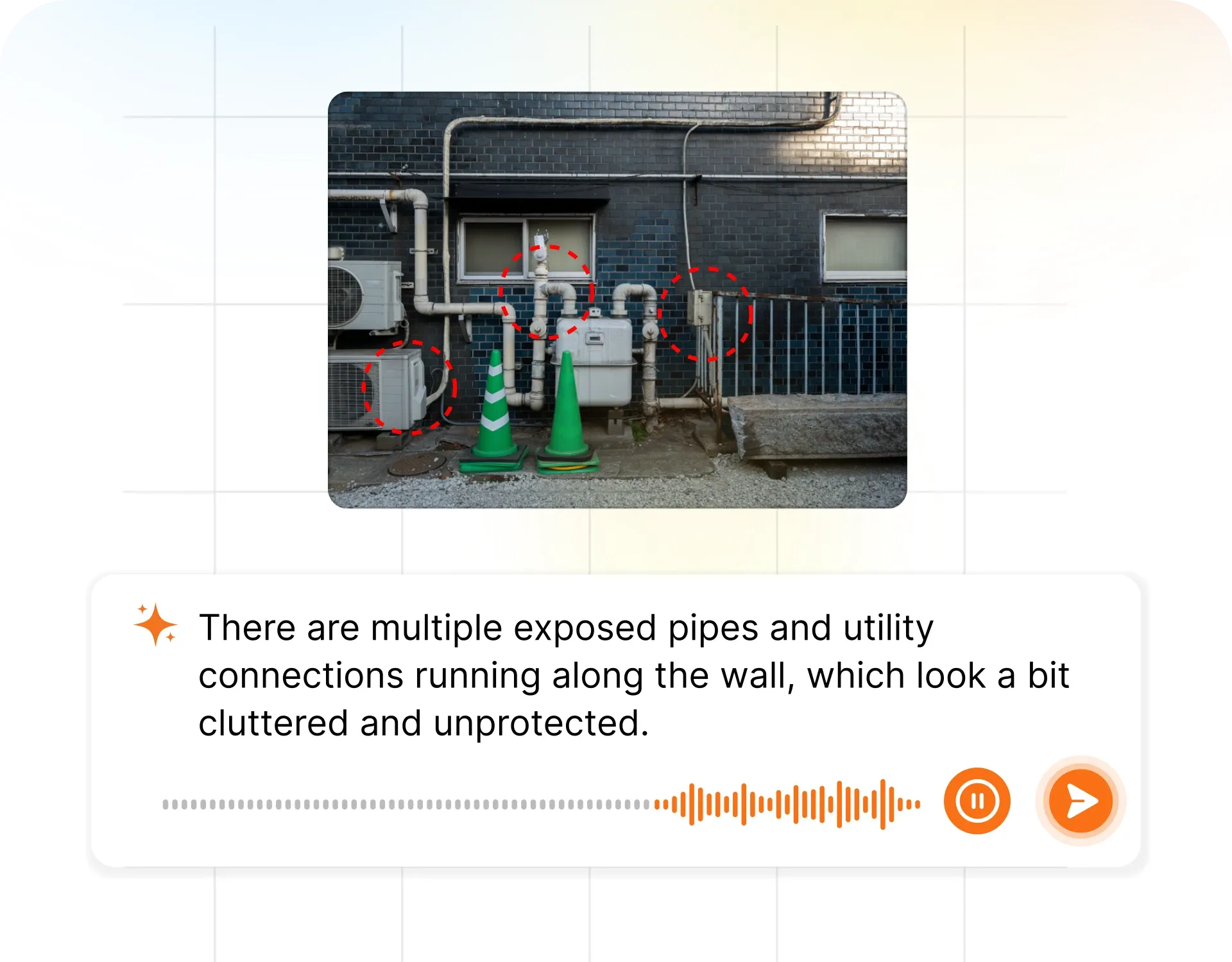
Take a Photo. AI Fills the Form illustration

Take a Photo. AI Fills the Form

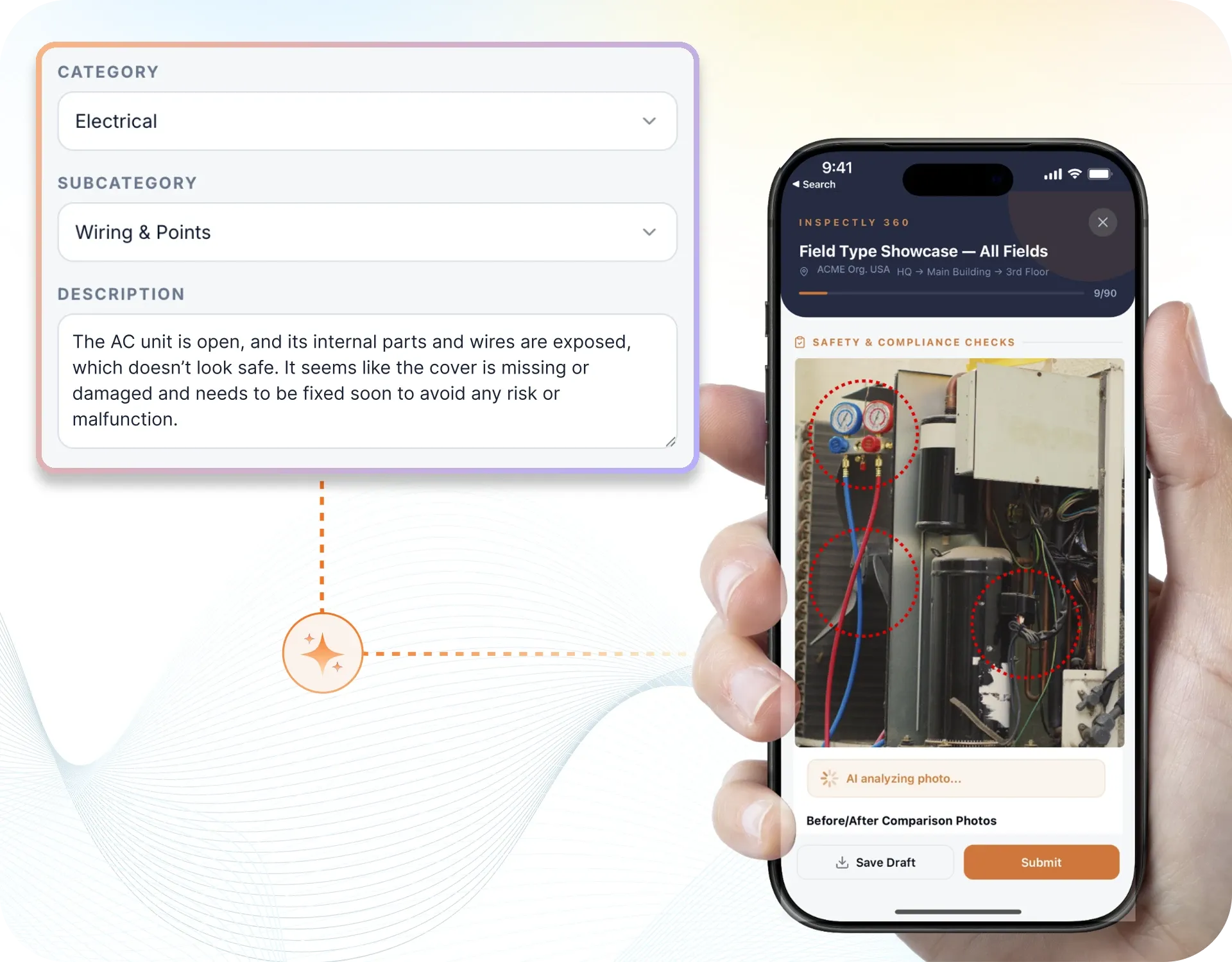
Your inspector takes a photo of any asset or defect. AI reads it and fills the inspection form automatically. No typing. No manual entry.

Speak. AI Writes It Down illustration

Speak. AI Writes It Down.

Inspectors speak their observations in any language. AI transcribes and fills the form in real time. Completely hands-free in the field.

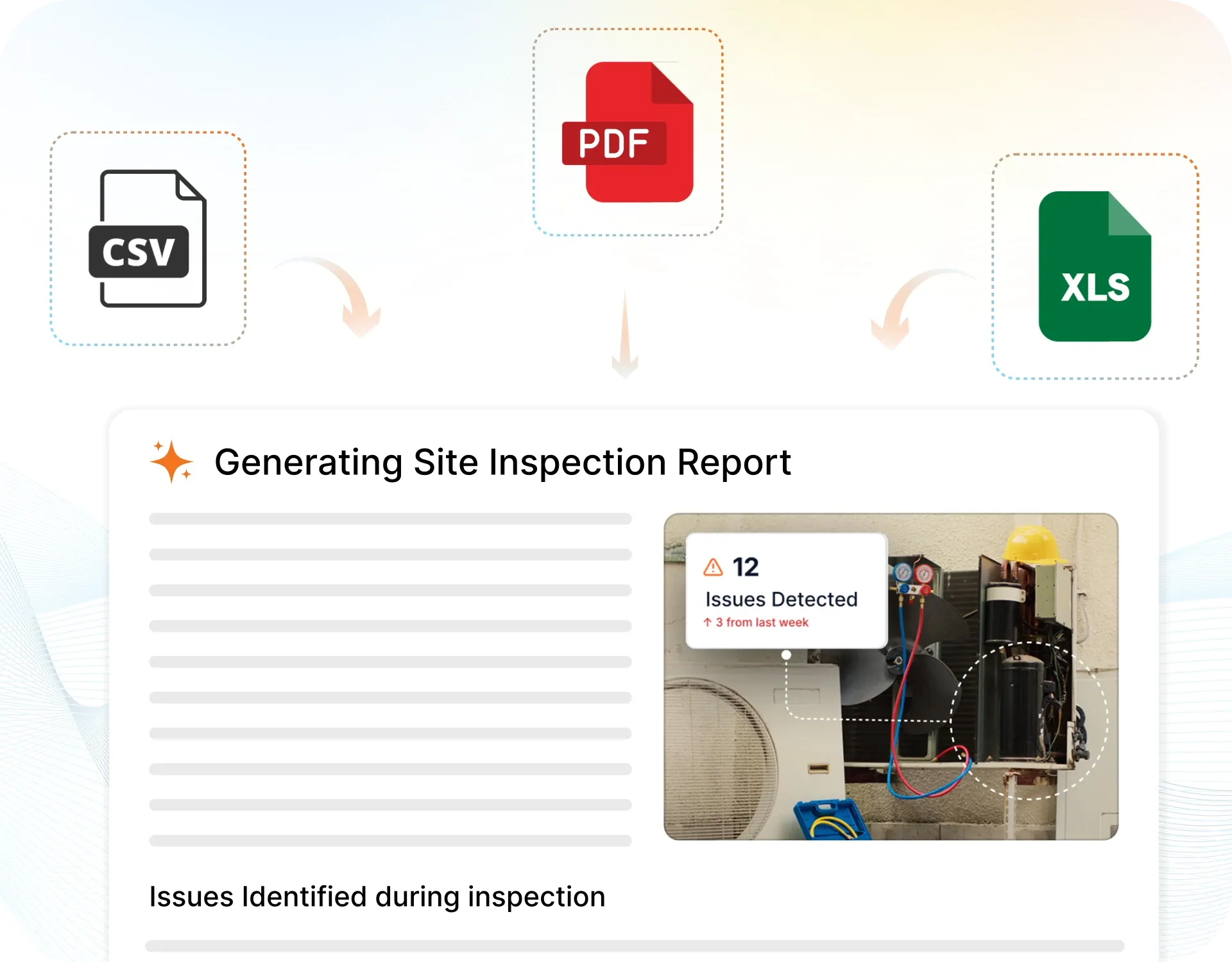
Inspections Done. Report Ready illustration

Inspections Done. Report Ready.

The moment an inspection is submitted, a branded PDF, Excel, or CSV report generates automatically. No manual work. No waiting.

Connect Your Existing Tools illustration

Connect Your Existing Tools.

Inspectly360 integrates with the tools your team already uses, including Zoho, Microsoft 365, and SAP. No double entry.

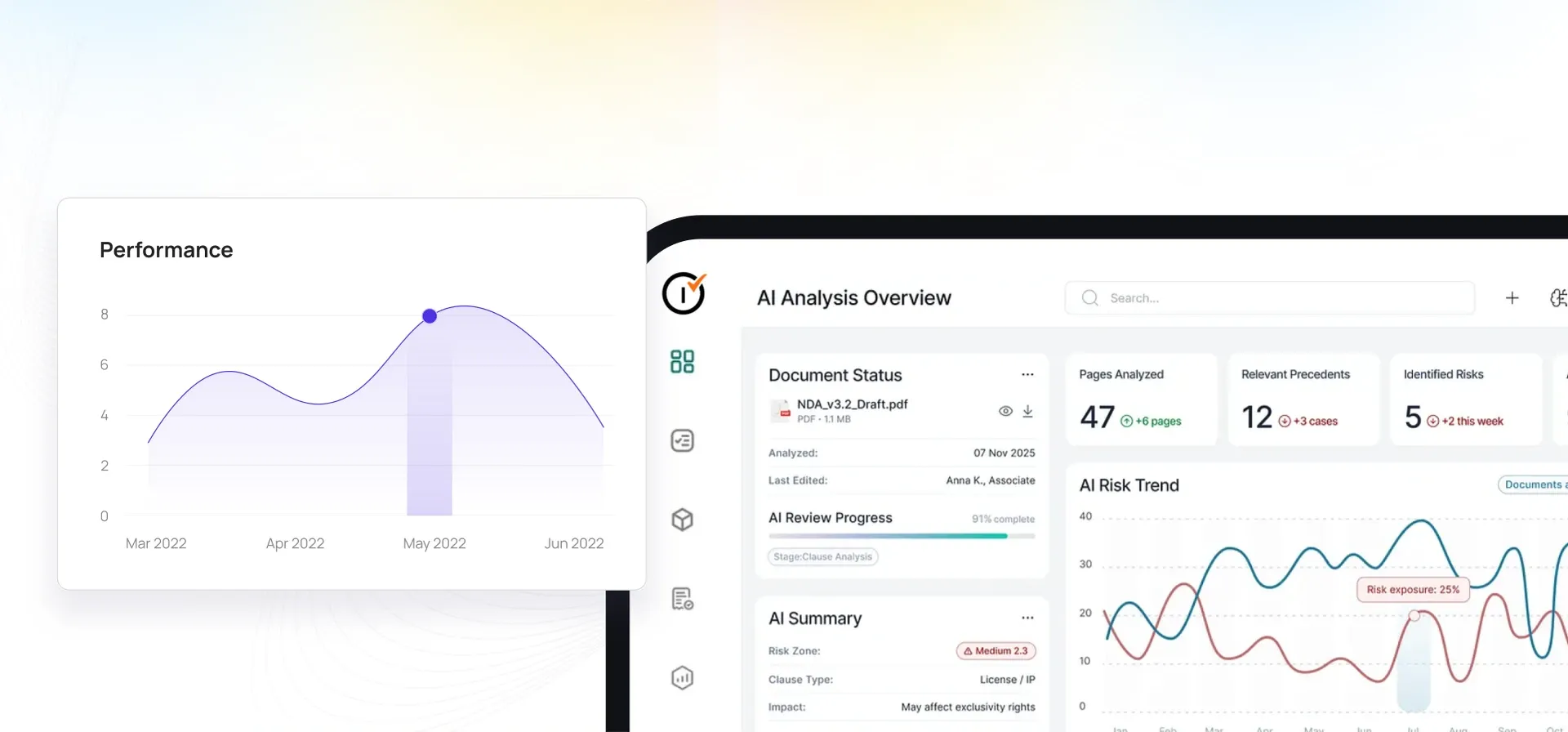
Live Dashboard. Every Site. Always On illustration

Live Dashboard. Every Site. Always On.

Your operations team sees completion rates, open issues, and compliance scores across all sites in real time. No chasing updates.

Frequently Asked Questions

What stops the person who caused a defect from signing off their own fix?

Closure is not a self-certification. An issue cannot be closed on somebody marking it done: it requires photo evidence of the fix and a re-inspection step, so the work is confirmed by the record rather than by the person responsible for it. Each issue also carries a named owner, a severity, and a due date, so it is clear who is accountable and when. This is the difference between an issue being closed and a defect being resolved, and it is where spreadsheet issue logs and chat follow-ups fail, because in those systems closing an item costs nothing and proves nothing. Requiring evidence at closure also protects the person doing the work, because a fix that was genuinely completed has proof attached if it is questioned later.

Who gets chased when a corrective action goes overdue?

Escalation is automatic rather than a person remembering. Every corrective action has an owner and a due date, and when a deadline passes the issue escalates to the right person instead of sitting quietly in a list. This matters because overdue actions are rarely ignored deliberately. They are usually forgotten in the gap between an inspection and the next audit, and the first time anyone notices is when a regulator or client finds them. Surfacing a missed deadline while it is still a small problem changes what an audit finds, because the record shows a system that caught its own slippage. It also removes the least productive part of an operations week, which is manually chasing people for updates on work they already agreed to do.

How do we show an auditor that a non-conformance was properly closed?

You show the chain rather than a status. A non-conformance runs from detection through disposition inside the same record as the inspection that raised it, so the audit trail contains the failed check, the corrective action with its owner and due date, the photo of the fix, the re-inspection that verified it, and the root cause captured at the end. That sequence is what an auditor is actually testing when they ask about corrective action tracking, because a closed status on its own tells them nothing about whether the process works. Keeping preventive actions in the same workflow matters too, since it demonstrates that the organisation addressed why the defect happened and not only the defect itself.

Can the same defect appearing at different sites be linked?

Yes, and this is usually where the pattern becomes obvious. Recurring issue detection watches for the same defect appearing repeatedly at a site, an asset, or a zone, and flags it rather than leaving it to whoever happens to remember the last occurrence. That is difficult to do by eye across a portfolio, because each individual instance looks like a one-off to the person handling it. Once the repetition is visible, the response changes. Instead of raising the eleventh corrective action for the same fault, the team can open a preventive action against the cause. For an operations director this is often the most valuable output, because it converts a stream of recurring work orders into a small number of fixable root causes.

Does this fit a manufacturing NCR process?

It is built around that shape. A failed check raises a non-conformance, the non-conformance carries an owner, a severity, and a due date, the disposition is recorded, closure requires evidence and re-inspection, and the root cause is captured so a preventive action can follow. That is the same sequence a manufacturing quality team runs on paper or in a spreadsheet, with the difference that the inspection which found the defect and the record proving it was resolved live together rather than in separate systems. Because escalation is automatic, an NCR that stalls is visible before the next internal audit rather than during it, which is normally when a quality manager discovers how many items were sitting unclosed.

See CAPA & Issue Tracking in Action

Book a free demo. We will configure this feature against your workflow and show how it runs at your sites.

  • 30 Days Free Trial
  • 1000+ Templates
  • Unlimited Integration