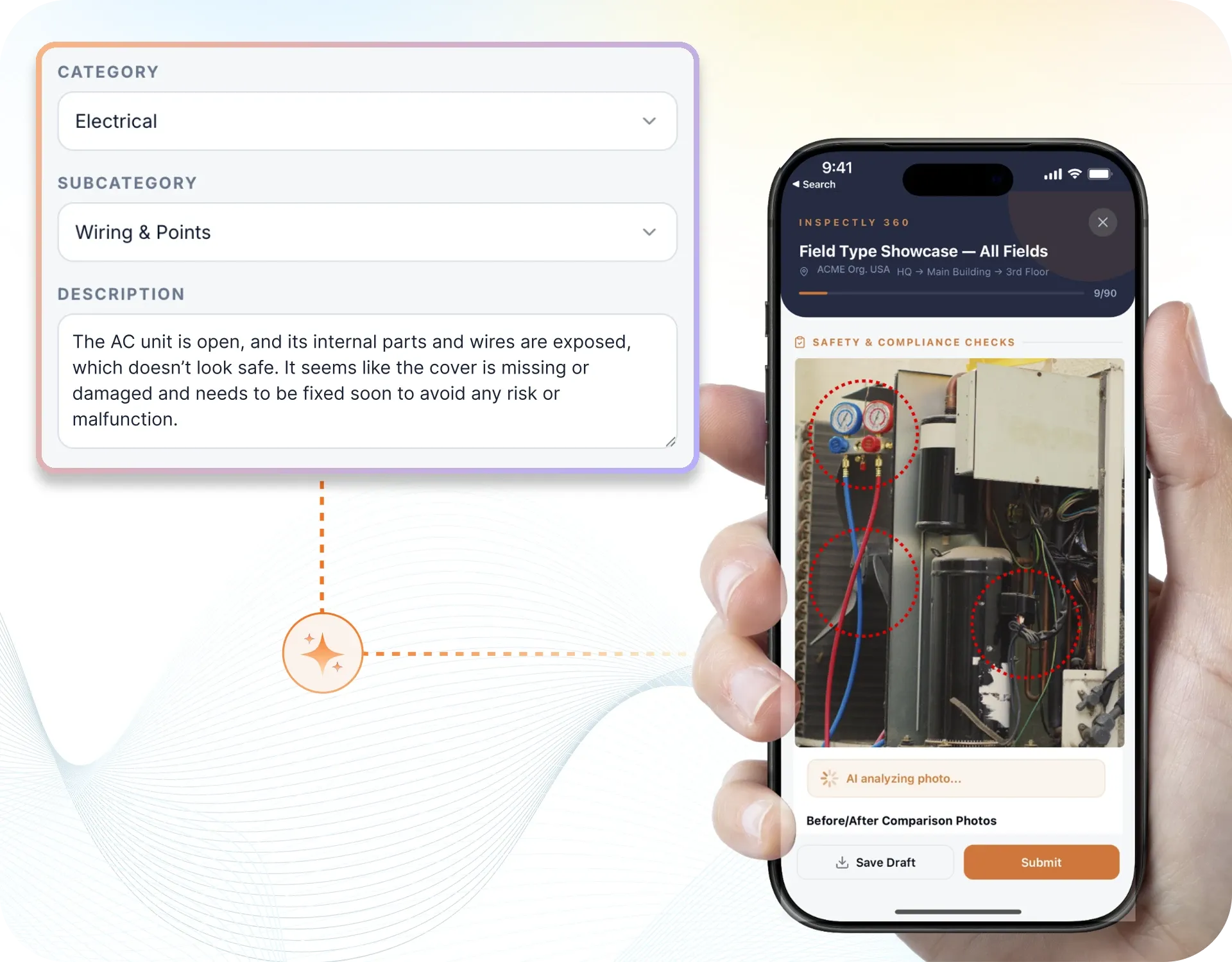
Take a Photo. AI Fills the Form
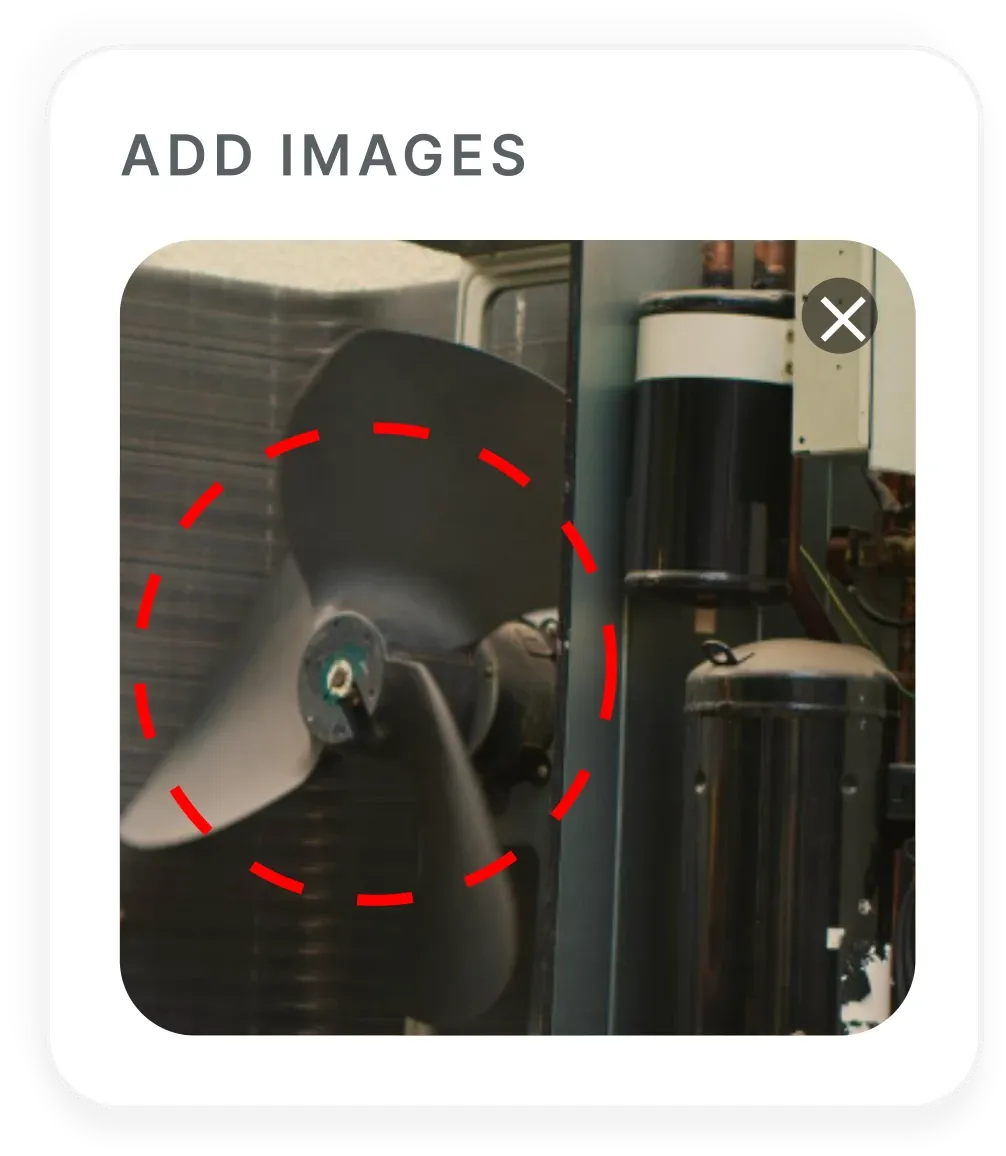
Your inspector takes a photo of any asset or defect. AI reads it and fills the inspection form automatically. No typing. No manual entry.

Convert your checklist into Mobile App
One issue platform for operations managers and site managers running multi-site programs where 'marked done' and 'actually fixed' have to be the same thing. Every issue carries assignment, deadline, escalation path, photo evidence, and verified closure aligned to the SLA the operation is measured on.
Centered on sEMA racking checks, damage grading, and corrective tracking. Issue tracking and resolution software is a mobile-first system that captures, assigns, escalates, and verifies the closure of every operational issue raised by an inspection, complaint, audit finding, or field observation.
Available on Mobile
Inspect on iOS and Android with no internet required. Capture photos, let AI flag defects, and generate audit-ready reports in the field.
For the field team, a failed inspection item, a customer complaint, or a contractor observation creates an issue with photo evidence, location, severity, and the originating context attached. Voice AI captures the description without typing; AI smart suggestions pre-fill category and likely owner; the inspector confirms or overrides. The issue is on the right person's screen before the inspector leaves the site.
What changes once issue tracking & resolution runs on one mobile-first platform.
Issue programs roll out from the inspection layer outward: capture and assignment discipline first, then SLA-aware escalation, then root-cause coding and ITSM connectivity once the operating model has earned them.
Issues are auto-created the moment an inspection item fails or a complaint is logged. Photo evidence, location, severity, and inspector notes attach automatically. Manual issue creation is allowed for off-inspection observations but inherits the same data model.
Configure routing rules that pick the right owner from the start: by category (electrical, HVAC, cleaning), by site, by vendor scope, or by skill match. Round-robin and workload balance prevent the same supervisor inheriting every issue.
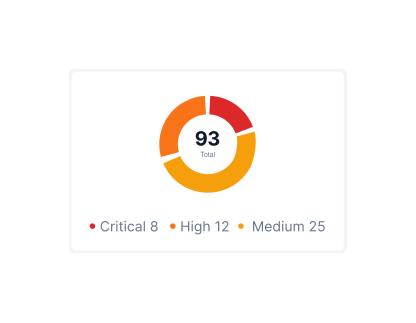
Severity-driven SLA timers (critical 4 hours, high 24 hours, medium 72 hours, low 7 days) escalate to the named supervisor, the on-call manager, and the director on the documented breach windows. Quiet hours and shift-handover rules avoid waking the wrong person.
Closure requires a root-cause code (5 Whys, Ishikawa, or ITIL problem category) so issue data feeds preventive controls rather than just resolution metrics. Repeat-issue detection cross-references asset, zone, vendor, and category to surface failure modes the operation should already have controlled.
Bidirectional integration with ServiceNow, Jira Service Management, Zendesk, Zoho Desk, and Microsoft Dynamics keeps issue and ticket data in sync. Customer-facing visibility (scoped, read-only) replaces the email update with a shareable status link.
Issue tracking checks issue capture and triage, ownership and assignment, severity and SLA targets, corrective-action progress, closure verification with evidence, and recurrence analysis. Operations and maintenance teams capture a photo and a reading on each point, offline where signal is poor, and a named reviewer signs the round off, so every multi-site record proves what was checked, when, and by whom, and stays aligned to ISO 9001, and ISO 45001.
Templates align to ISO 9001, ISO 45001.
Everything your field team does on paper, Inspectly360 does automatically: faster, more accurate, and without the admin.
Your inspector takes a photo of any asset or defect. AI reads it and fills the inspection form automatically. No typing. No manual entry.
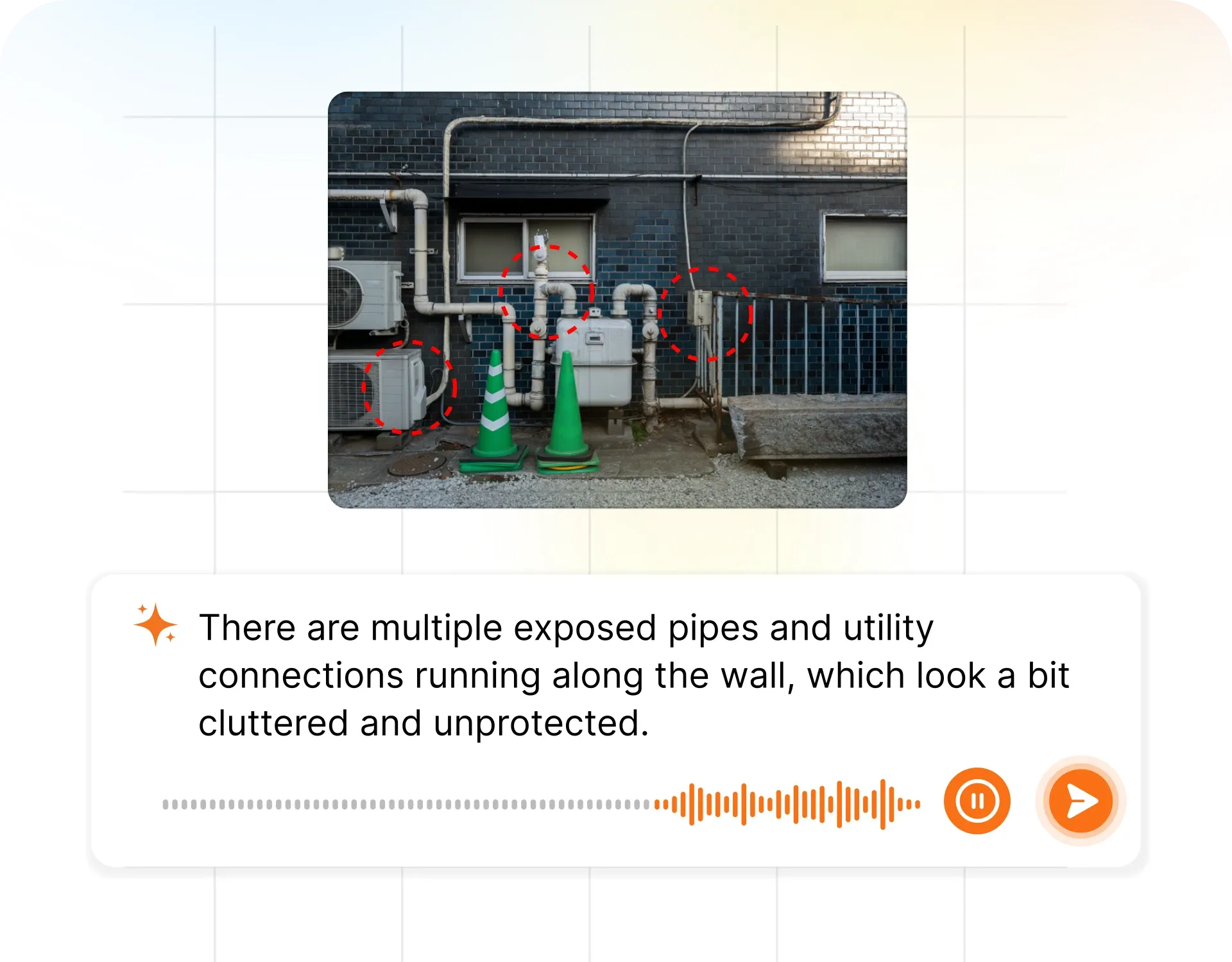
Inspectors speak their observations in any language. AI transcribes and fills the form in real time. Completely hands-free in the field.
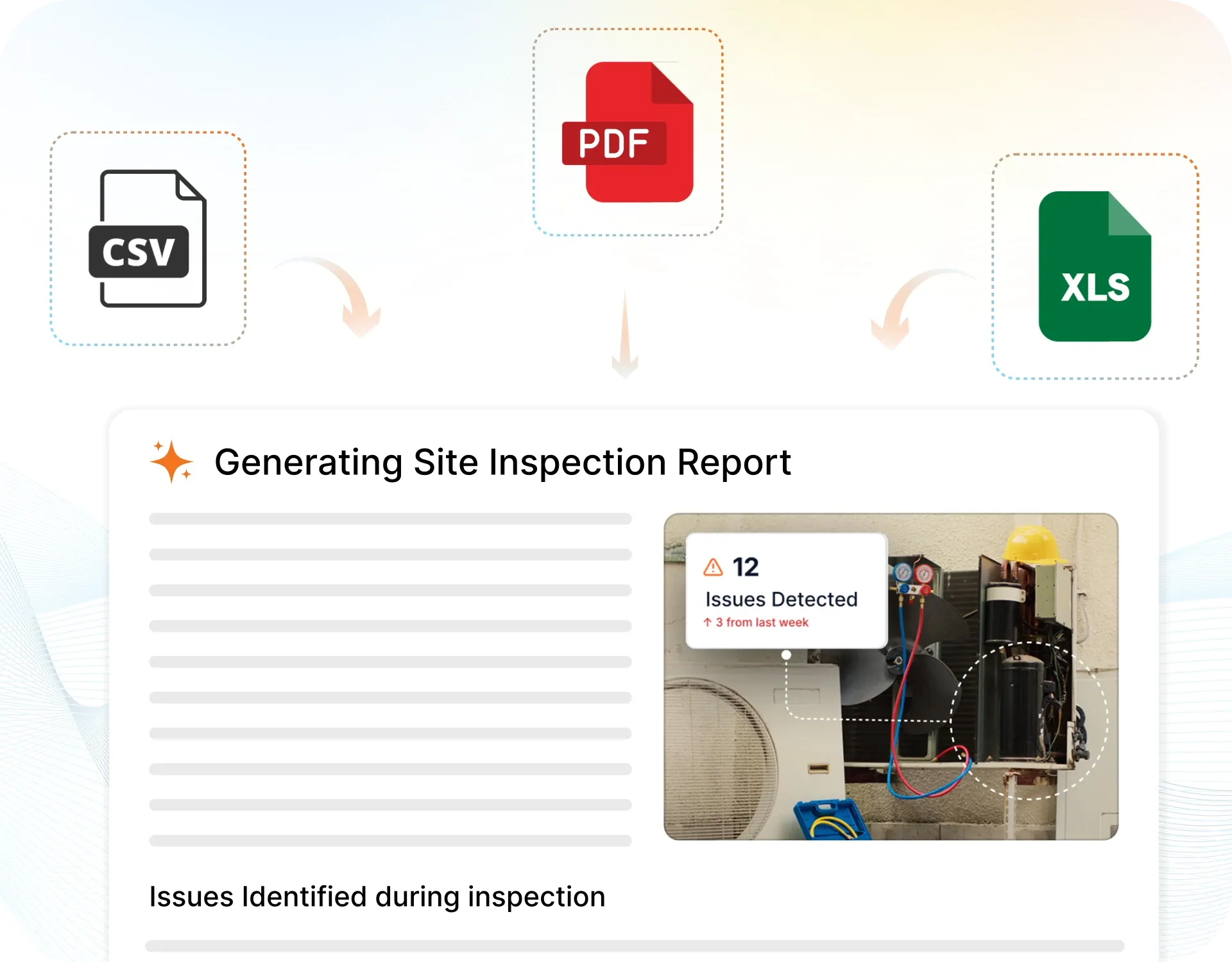
The moment an inspection is submitted, a branded PDF, Excel, or CSV report generates automatically. No manual work. No waiting.
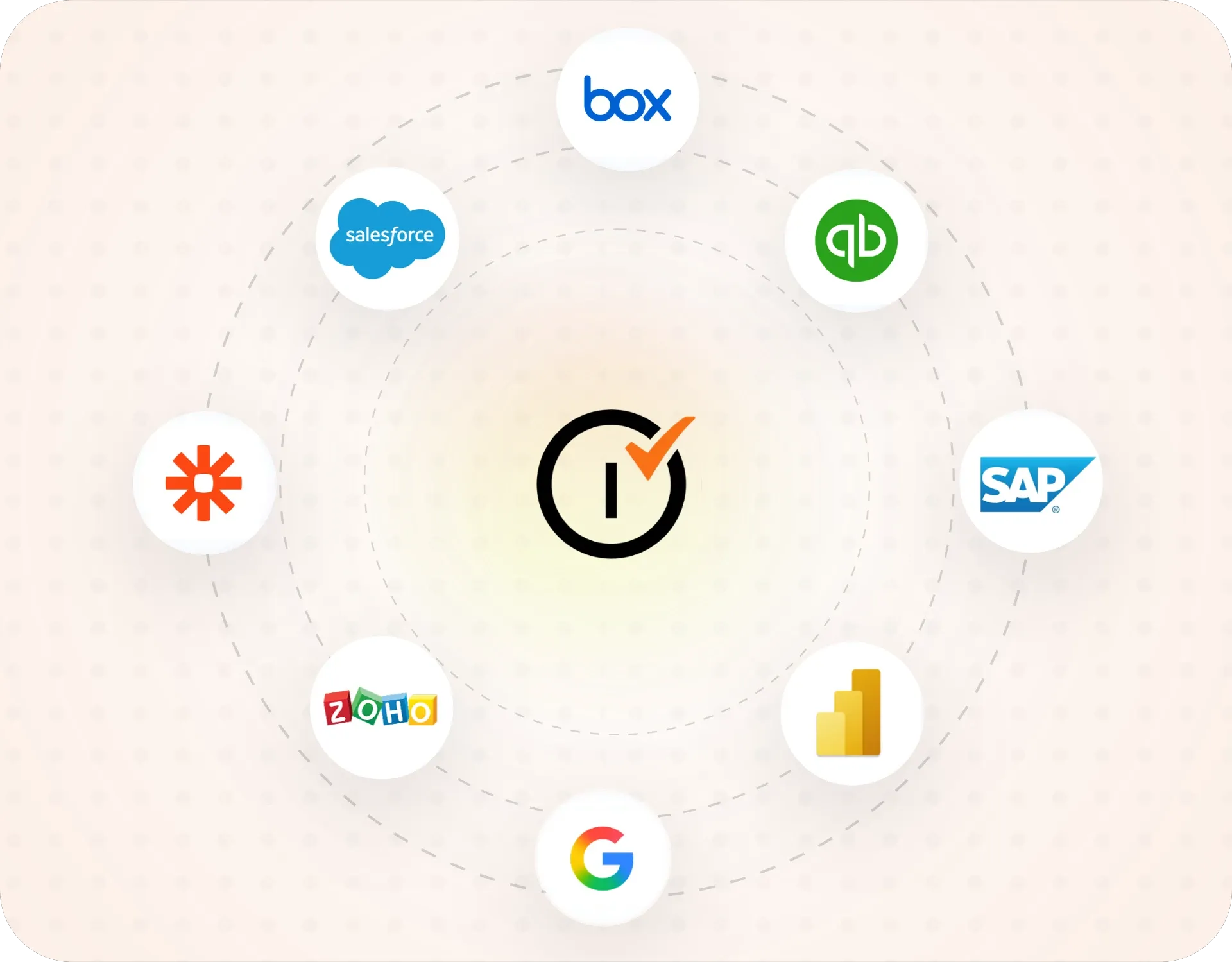
Inspectly360 integrates with the tools your team already uses, including Zoho, Microsoft 365, and SAP. No double entry.
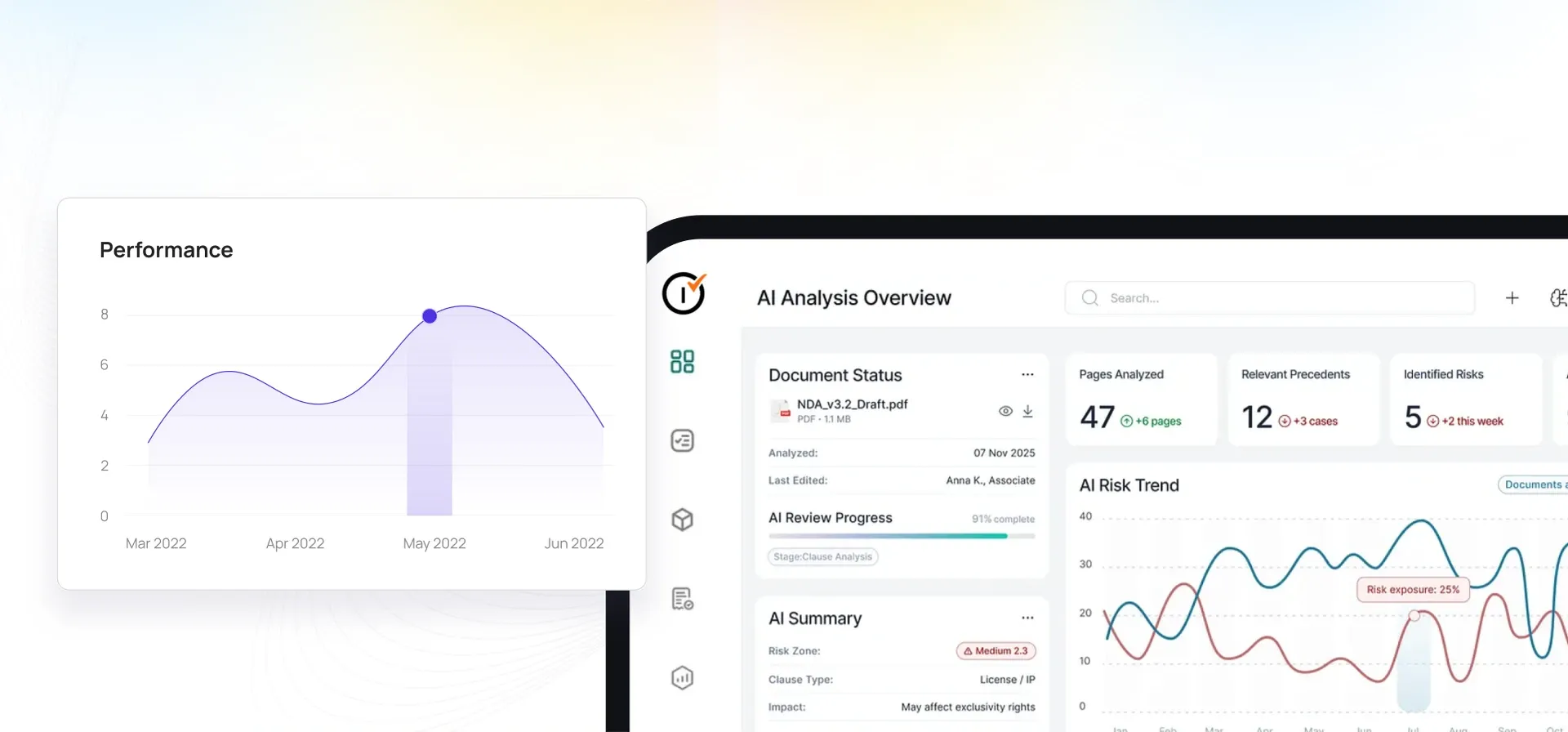
Your operations team sees completion rates, open issues, and compliance scores across all sites in real time. No chasing updates.
Manage every checklist in one connected workspace, capture evidence on mobile at the point of work, and let AI turn field inputs into clear, stakeholder-ready reports in minutes.

See which checklists your team has in progress across every site, jump into the same inspection with one tap, and keep field, supervisor, and back-office views in sync without sending screenshots on WhatsApp.


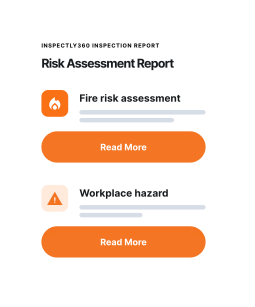


Every team reports differently. Build the report your operations, quality, or compliance leads actually want to read, share it as a branded PDF, and schedule delivery to the stakeholders who need it.

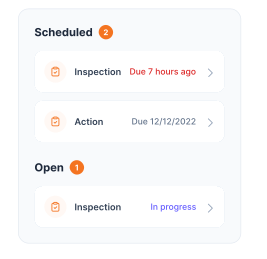

See completion, pass rate, and recurring findings across every checklist and every site, without pulling spreadsheets together at the end of the month.
What changes once issue tracking & resolution is standardised on Inspectly360.





“Inspectly360 transformed how we manage site safety inspections. The offline capability alone saved us countless hours. Our compliance rate jumped from 72% to 96% in just three months.”
Sarah Mitchell
Meridian Construction Group

“The AI-powered defect detection has changed how we work. Our inspectors capture photos and the system flags issues we'd have missed. It's like having an expert reviewer on every site visit.”
James Chen
Pacific Manufacturing Co.
“Rolling out digital checklists across multiple projects gave us instant visibility into recurring safety issues. We now resolve critical findings in hours instead of days.”
Olivia Carter
Northbridge Infrastructure
Get started with inspection and audit checklist templates.

Catch defects before handover and generate punch list reports in minutes. Room-by-room finish checks, evidence, and corrective actions.

Pre-handover snagging for new build apartments. Room-by-room finish checks, MEP, and defect tracking before keys.

Utilize this Scaffolding Safety Inspection Checklist to spot hazards, verify stability, and ensure compliance with safety standards before work begins.

Capture job details, measurements, work performed, photos, and sign-offs in one structured field service report form.
Use these apps to run inspections and audits.

by Inspectly360
Track operational issues from identification to resolution with ownership and closure evidence.

by Inspectly360
Digitize snagging and punch list workflows with forms, evidence capture, and automated reporting.

by Inspectly360
Assign, track, and verify corrective actions with accountability and proof of closure.

by Inspectly360
Track defects from detection to verified closure with ownership, SLA timelines, and proof.

by Inspectly360
Track incidents from report to closure with ownership, SLA visibility, and escalation controls.
Each issue inherits a severity (critical, high, medium, low) from the inspection finding, the customer complaint, or manual classification. Severity drives the SLA timer (commonly 4 hours, 24 hours, 72 hours, 7 days, but fully configurable per program). The timer respects quiet hours, shift handover, and on-call rotations so an after-hours critical wakes the on-call engineer, not the office-hours supervisor. Breach prediction flags issues likely to miss SLA at 25 percent before the deadline with a recommended action (re-assign, escalate, request extension). Escalation history is logged for accountability, and SLA performance per site, category, and vendor renders on the live dashboard so the operations review opens on the actual SLA picture rather than a sample.
AI cross-references closed and open issues by asset class, zone, location, vendor, category, and structured root-cause code over a rolling window (default 90 days, configurable). The model surfaces clusters that share two or more of those dimensions, so an HVAC fault flagged seven times in six weeks across three sites under the same AMC vendor surfaces automatically with frequency, affected sites, trend direction, and the cumulative cost. The dashboard links straight to the originating inspections, supporting evidence, and the responsible vendor scorecard, so the root-cause project starts in the same session the cluster was identified. Repeat issues stop hiding behind the volume of unrelated work.
Closure requires a structured root-cause code chosen from a configurable methodology library: 5 Whys (workflow walks the engineer through the question chain), Ishikawa fishbone (six-M categorisation with the contributing cause documented), and ITIL problem management codes for IT-adjacent operations. Methodologies can vary per program, so a manufacturing line uses 5 Whys while a service-desk integration uses ITIL codes. The closure form prevents save without a root-cause code, which is the discipline auditors look for when continuous-improvement programs claim maturity. The structured data feeds preventive controls, recurring-issue analytics, and ISO/IEC 20000 problem-management reporting from the same record.
Assignment rules can match on category (electrical, HVAC, plumbing, cleaning, safety), site, asset class, severity, vendor scope, or skill match against the workforce skill matrix. Round-robin and workload-balanced routing prevent the same supervisor inheriting every issue. AI smart suggestions pre-fill likely owner from historical patterns; the inspector confirms or overrides. For programs with shift coverage, routing respects the shift schedule so an issue captured at 21:00 lands on the on-shift supervisor, not the daytime team. Routing failure (no matching rule) escalates to a documented default owner so issues never sit unassigned.
Vendors get a scoped mobile profile and web portal that surfaces only the issues, sites, and assets explicitly assigned to them. They can upload photo evidence, request information, log on-site time, and propose closure with required evidence reviewed by a named internal approver before the issue actually closes. Vendors cannot see other contractors' work, other sites' data, or any customer information unless those scopes are explicitly granted. Vendor scorecards (closure time, re-open rate, fix-quality score) are visible to both the operations team and the vendor themselves, which is what mature programs find drives behaviour faster than escalation alone. RBAC is enforced server-side so a tampered request cannot escalate visibility.
Field inspectors, contractors, and customer-facing teams raise issues directly from the Android or iOS app. The capture flow is photo-first: the inspector takes a photo, optionally annotates it on-screen, and dictates the description (Voice AI transcribes in English, Hindi, Marathi, Spanish, Arabic). GPS coordinates, inspector identity, and asset confirmation (QR or manual) attach automatically. AI smart suggestions pre-fill category and severity for one-tap confirmation. The offline-first design means capture works in basements, plant rooms, and remote sites with no signal; sync happens in the background when coverage returns.
See Inspectly360 in action with a live demo tailored to your needs. No credit card required.