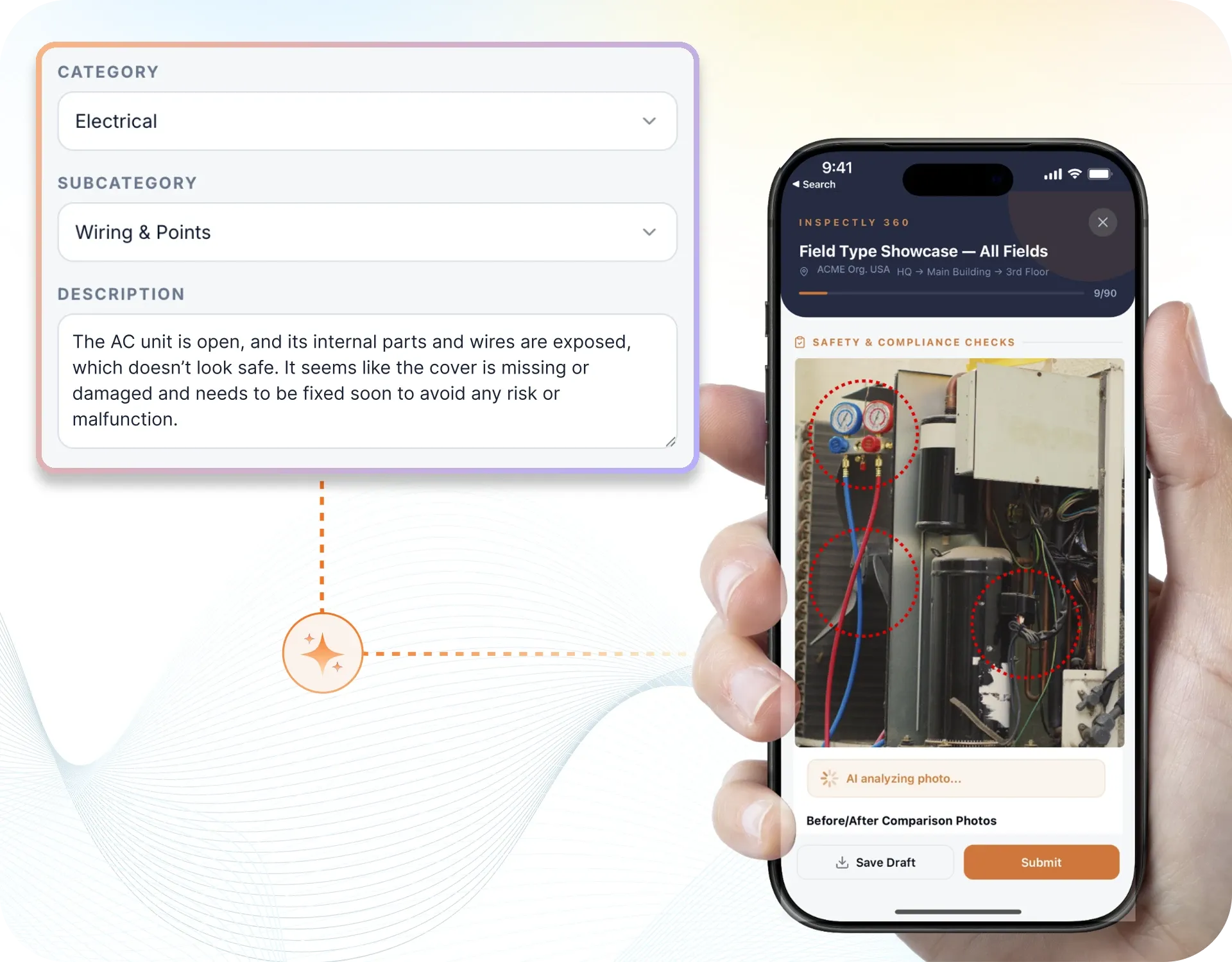
Take a Photo. AI Fills the Form
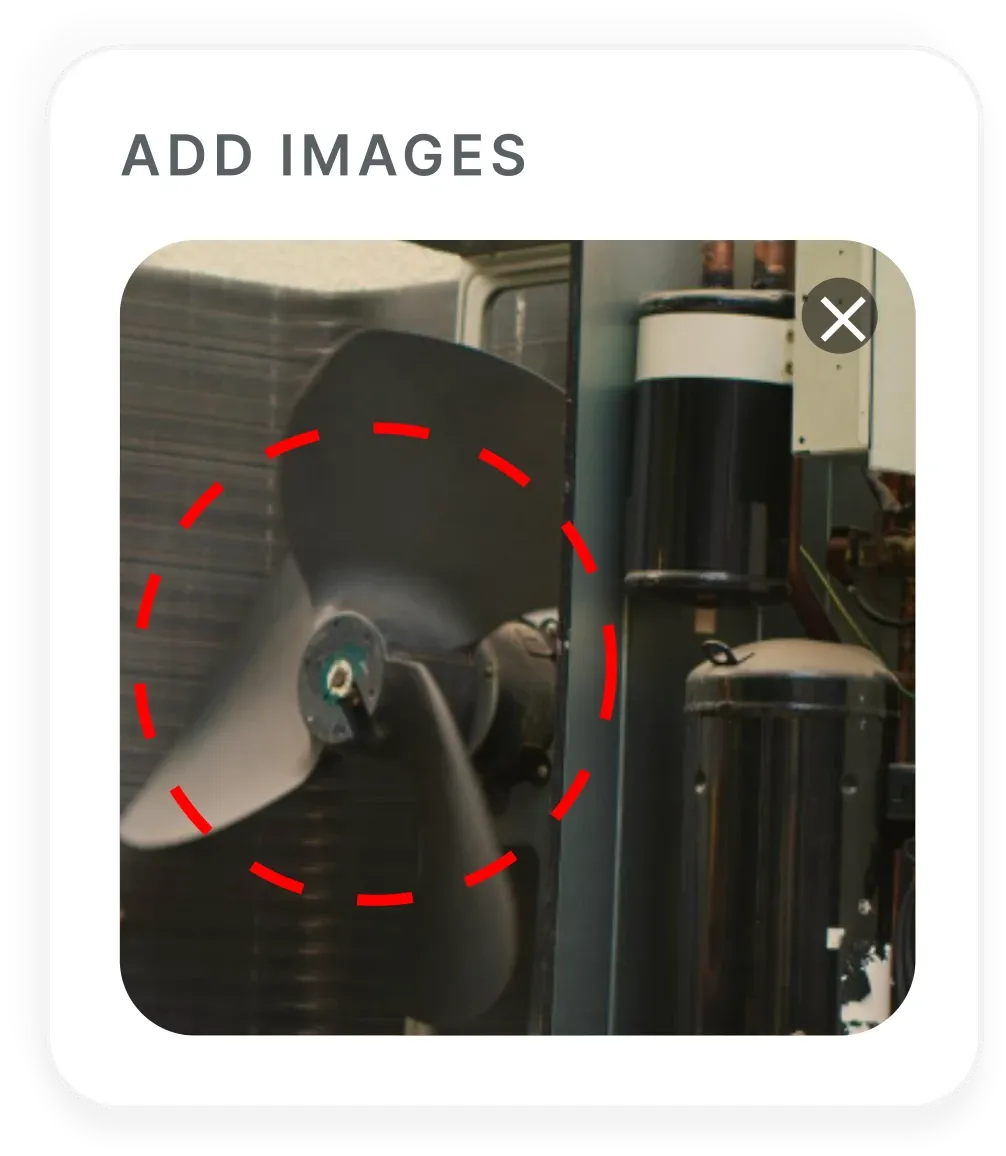
Your inspector takes a photo of any asset or defect. AI reads it and fills the inspection form automatically. No typing. No manual entry.

Convert your checklist into Mobile App
AI audit reporting software is the output layer of an audit programme: it turns structured audit findings, photo evidence, scoring data, approver signatures, and CAPA status into the artifacts every stakeholder actually consumes. Inspectly360 generates branded audit committee packs, regulator-ready archival exports, white-label client reports, evidence indexes, and live dashboards from the same captured data, without analysts copying photos into Word templates at quarter-end.
Available on Mobile
Inspect on iOS and Android with no internet required. Capture photos, let AI flag defects, and generate audit-ready reports in the field.
The pain it solves is the everyday reality of reporting owners: photos in folders, scores in spreadsheets, narratives in Word, distribution lists nobody owns, brand templates on someone's laptop, regulator submissions rejected for failing PDF/A, and white-label client reports rebuilt by hand for every engagement. By the time the committee pack lands, the cycle has moved on and small post-fieldwork updates trigger a full rebuild.
What changes once ai audit reporting software runs on one mobile-first platform.
Reporting stays trustworthy when it mirrors the capture workflow with zero rekeying. Most reporting owners standardise this flow before scaling to additional report types.
Mirror your current committee pack, regulator submission template, and client report formats inside the platform. Change management is lighter because the report skeleton matches what the audience already expects to read.
Audit templates enforce required photos, score weights, signatures, and conditional branches in the field. The report writes itself because the structured data, the photo index, and the approver trail are already in place.
Edge AI ranks audit photos by anomaly score so reviewers triage exception photos first. Humans approve every material conclusion that lands in the report; AI never closes a finding silently and the audit trail records both the suggestion and the human decision.
One generation run produces the audit committee pack, the PDF/A archival export for the regulator, and the white-label client report with that client's brand. Per-recipient distribution lists handle delivery and log who received what.
Findings, scores, CAPA status, and evidence metadata stream to Power BI, Tableau, Looker, and Google Data Studio via API. Audit committees move from static quarterly slides to live dashboards with cross-cycle correlations visible.
Everything your field team does on paper, Inspectly360 does automatically: faster, more accurate, and without the admin.
Your inspector takes a photo of any asset or defect. AI reads it and fills the inspection form automatically. No typing. No manual entry.
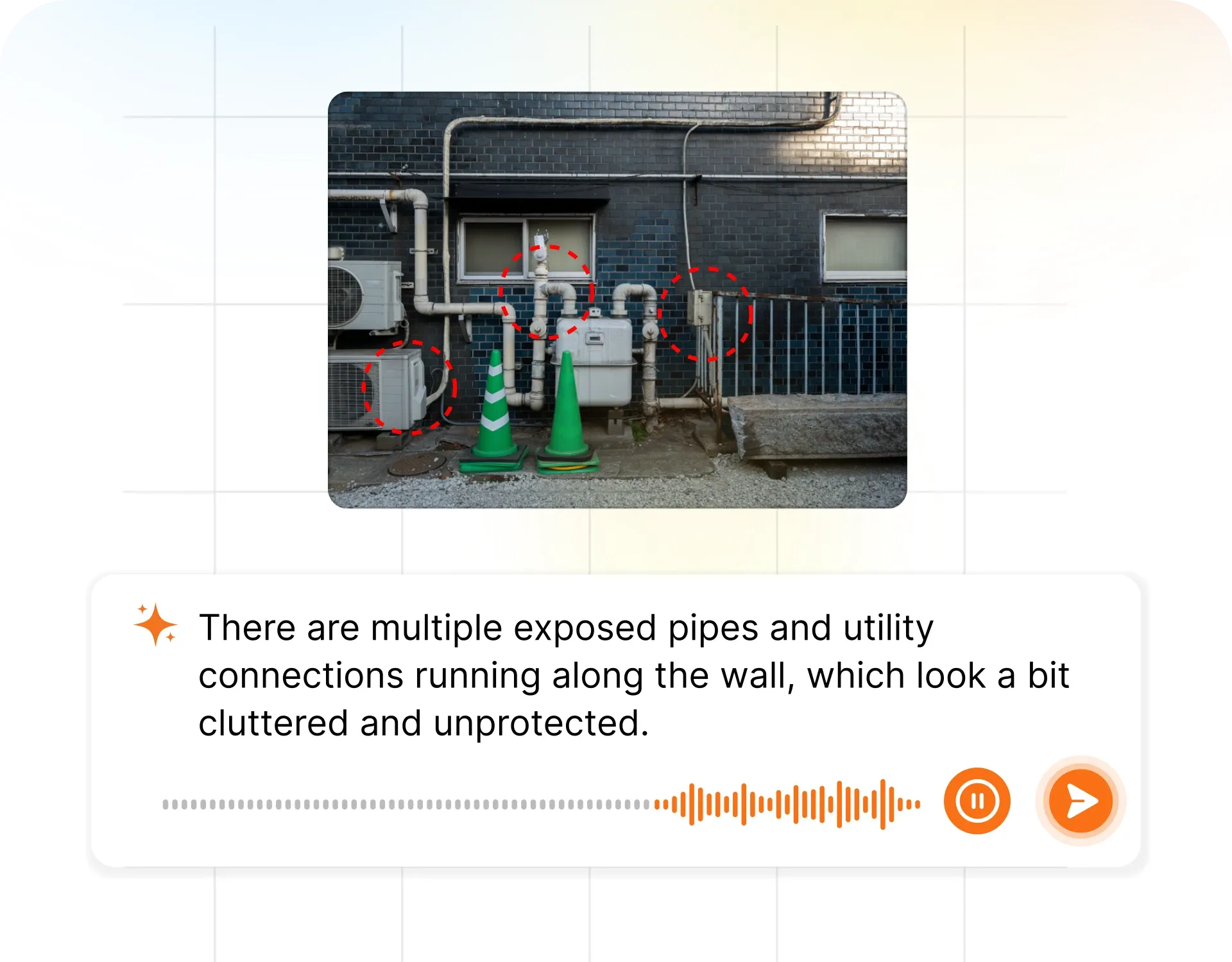
Inspectors speak their observations in any language. AI transcribes and fills the form in real time. Completely hands-free in the field.
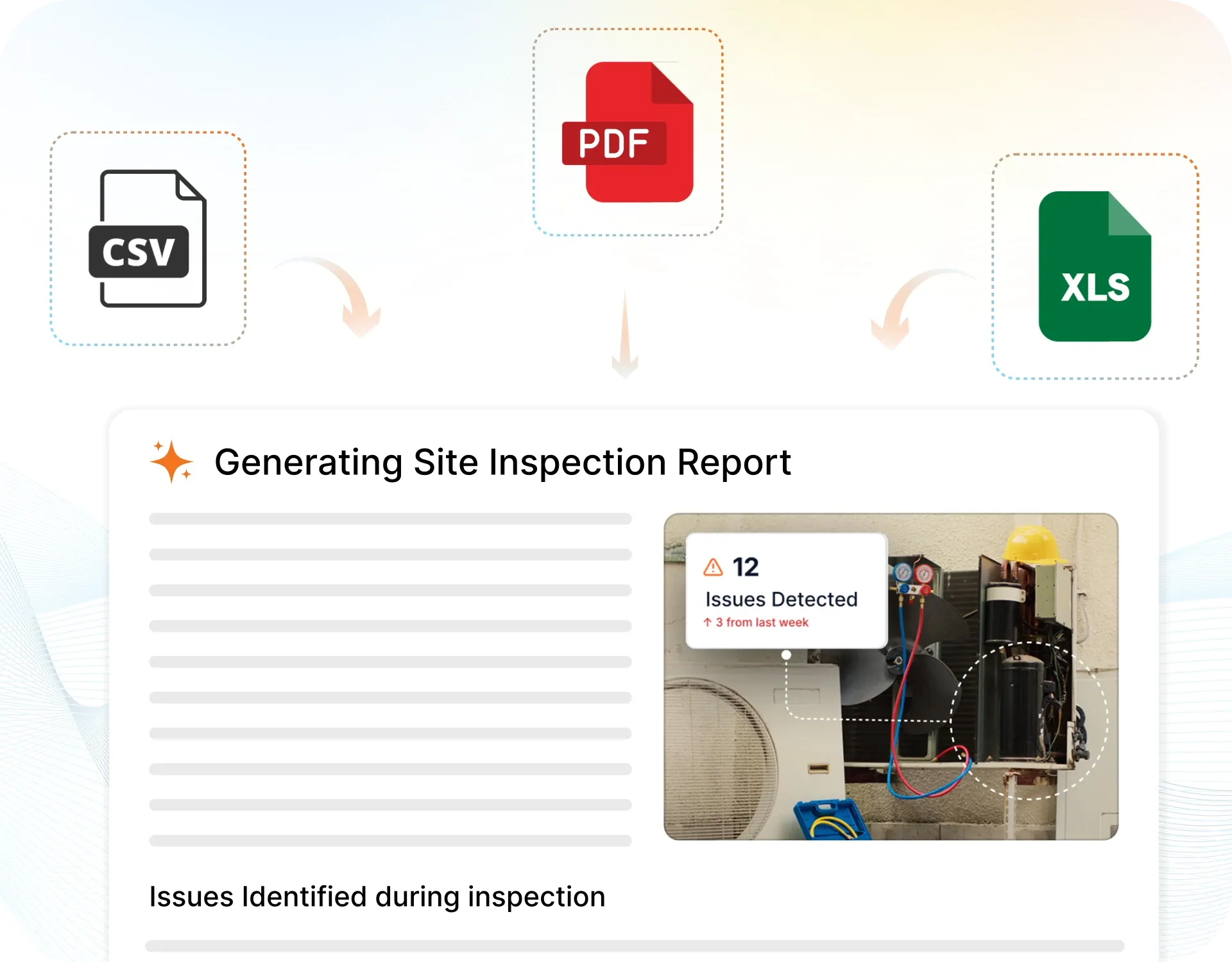
The moment an inspection is submitted, a branded PDF, Excel, or CSV report generates automatically. No manual work. No waiting.
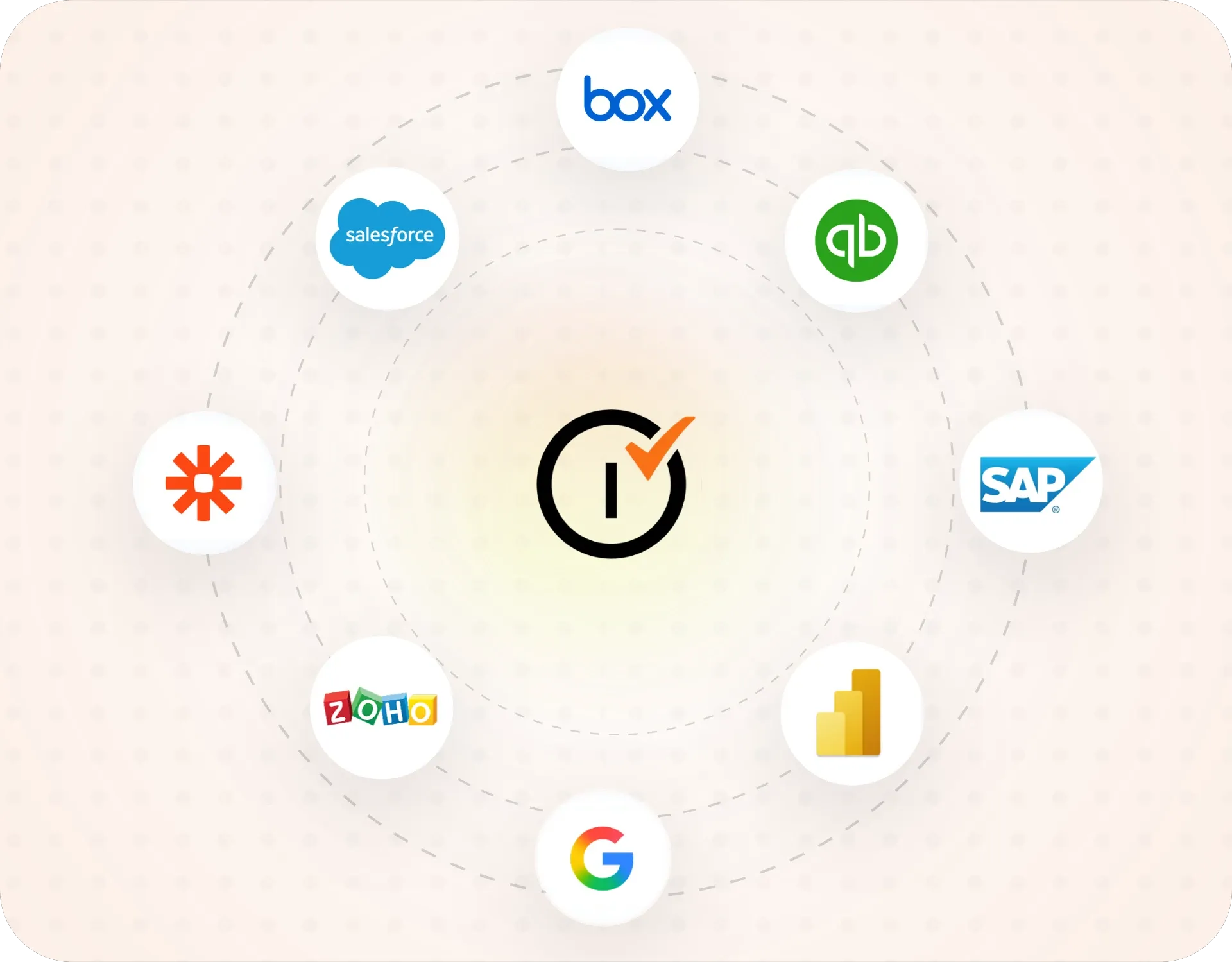
Inspectly360 integrates with the tools your team already uses, including Zoho, Microsoft 365, and SAP. No double entry.
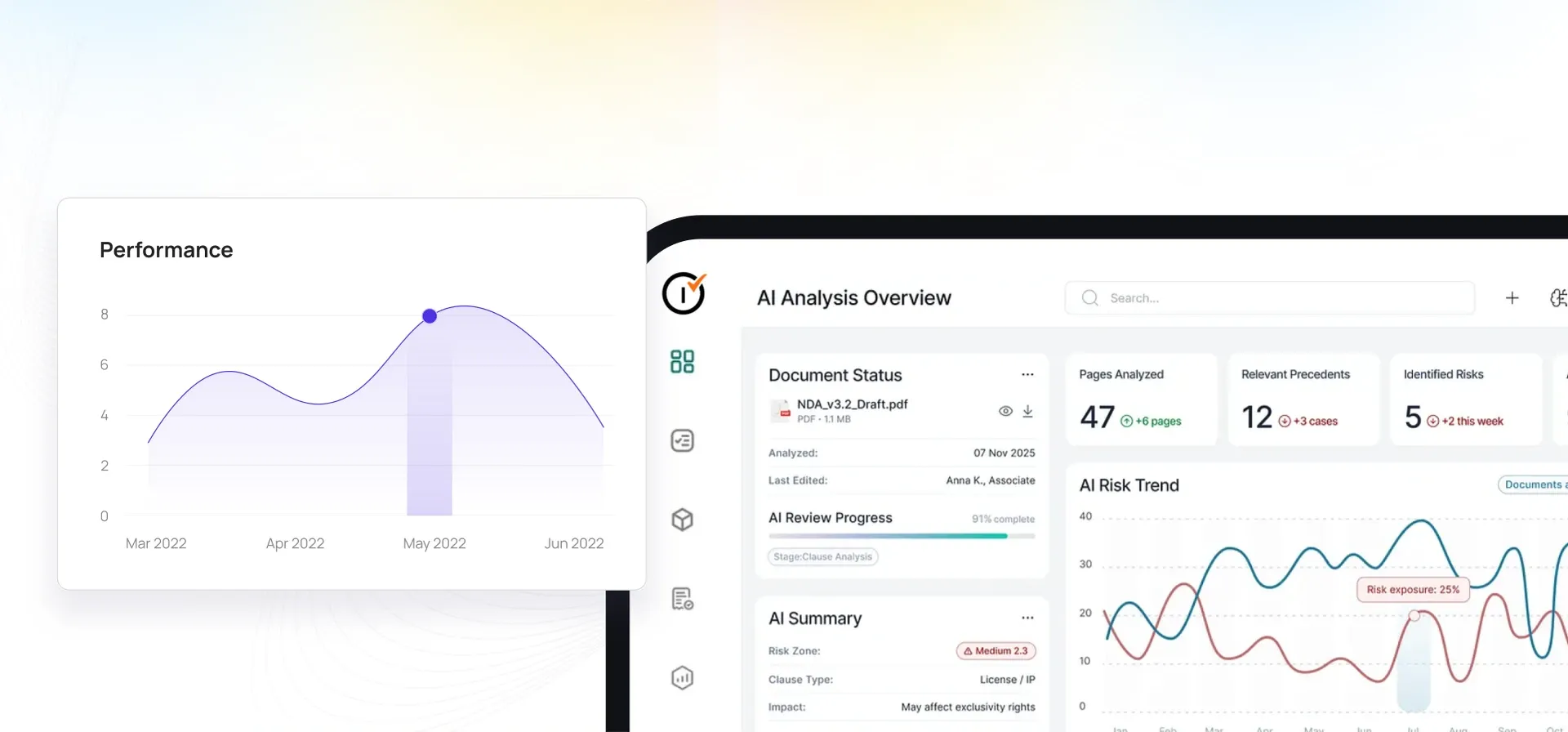
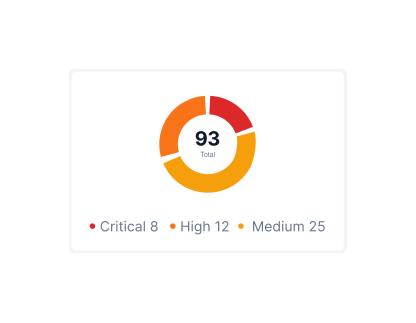
Your operations team sees completion rates, open issues, and compliance scores across all sites in real time. No chasing updates.
Manage every checklist in one connected workspace, capture evidence on mobile at the point of work, and let AI turn field inputs into clear, stakeholder-ready reports in minutes.


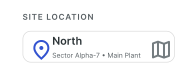
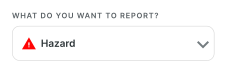
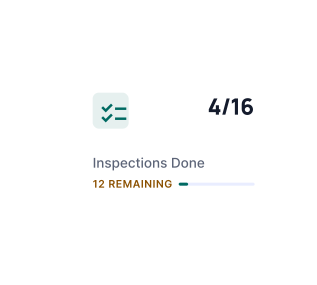
See which checklists your team has in progress across every site, jump into the same inspection with one tap, and keep field, supervisor, and back-office views in sync without sending screenshots on WhatsApp.


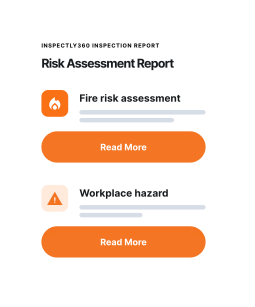
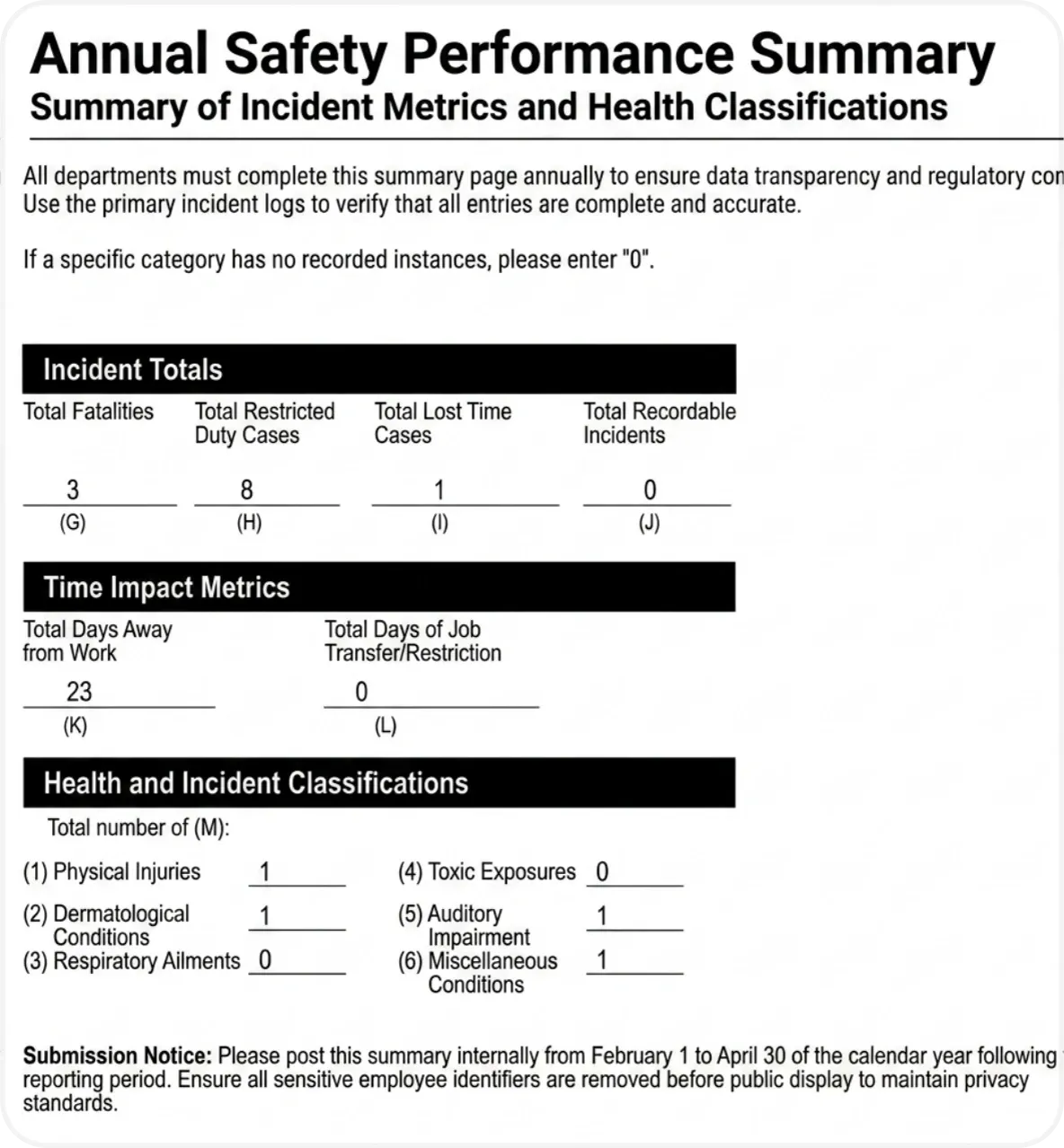


Every team reports differently. Build the report your operations, quality, or compliance leads actually want to read, share it as a branded PDF, and schedule delivery to the stakeholders who need it.

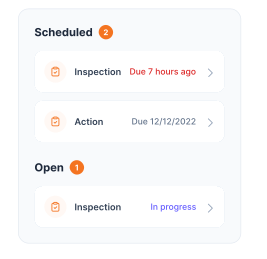

See completion, pass rate, and recurring findings across every checklist and every site, without pulling spreadsheets together at the end of the month.
What changes once ai audit reporting software is standardised on Inspectly360.





“Inspectly360 transformed how we manage site safety inspections. The offline capability alone saved us countless hours. Our compliance rate jumped from 72% to 96% in just three months.”
Sarah Mitchell
Meridian Construction Group

“The AI-powered defect detection has changed how we work. Our inspectors capture photos and the system flags issues we'd have missed. It's like having an expert reviewer on every site visit.”
James Chen
Pacific Manufacturing Co.
“Rolling out digital checklists across multiple projects gave us instant visibility into recurring safety issues. We now resolve critical findings in hours instead of days.”
Olivia Carter
Northbridge Infrastructure
Get started with inspection and audit checklist templates.

Internal and external audits with scoring, evidence, and corrective actions. Full audit trail and report generation.

Compliance-focused inspections with evidence capture and audit trails. Meet regulatory and internal requirements.
Use these apps to run inspections and audits.

by Inspectly360
Audits and inspections with scoring, evidence, and reports.

by Inspectly360
Manage audit schedules, forms, and corrective actions.

by Inspectly360
Generate inspection reports with findings, evidence summaries, and actionable follow-up.

by Inspectly360
Compliance-focused inspections with evidence and audit trails.

by Inspectly360
Analyze inspection trends, recurring issues, and performance metrics across locations.
Per-report distribution lists are managed under RBAC inside the platform rather than a tribal email thread. Internal audit-committee members, internal sponsors, external regulators, and external clients are each scoped to the report types they should receive. Audit-committee members are added on appointment and removed on rotation; co-source partners get scoped time-bound access tied to the engagement letter. A delivery log per recipient records when each version of a report was sent, which matters when an external stakeholder later disputes what they were told and on what date.
Yes. Cover pages, executive-summary layouts, signoff blocks, fonts, and logos are managed centrally in the platform as versioned report templates. When a brand update lands, the next cycle's reports pick up the new template automatically and the report metadata records which template version produced which report. This stops the pattern of designers shipping a new template on Monday and the next quarterly committee pack still using a font that was retired six months ago. Compliance Managers run ai reporting audits on a phone or tablet with AI Audit Reporting Software, keeping one record for each ai reporting and site.
The audit committee pack is designed for governance: a one-page executive summary, scored section roll-ups, repeat-finding trend pages, the universe coverage view, CAPA aging, and a one-click drill from narrative to evidence. The regulator submission strips the governance commentary and focuses on the scope, sampling plan, findings against the regulator's framework, evidence index, and approver signatures in the regulator's required archival format. The same captured data drives both packs; the layout and the audience differ, and the platform supports both as separate templates against one source of truth.
Yes. Inspectly360 exports to PDF/A under the ISO 19005 family of standards, with embedded evidence and tagged accessibility for long-term preservation. PDF/A is the format most long-retention regulators require for submissions that may be requested seven or more years later. Reports can also export to standard PDF for everyday distribution, with the archival version produced automatically alongside the standard version for the same audit cycle. This stops the common cycle of a regulator rejecting a submission for format reasons and the team reformatting and resubmitting weeks later.
Every finding in the report carries an indexed link to the photo, the timestamp, the auditor or approver, and the linked CAPA. Committee members reading the digital version drill from the narrative to the underlying evidence in one click; readers of the printed version use the indexed page references. This removes the most common interaction pattern in committee meetings where a member asks for the evidence behind a finding and the reporting owner promises to send it later. The evidence is in the pack already.
Section score weights are encoded into the audit template and displayed in the report alongside the section roll-up. A committee member can see that, for example, a section combining 60% process controls and 40% physical evidence produced a particular section score and can challenge weighting transparently rather than asking the reporting owner to recalculate offline. Weights can be revised under approval workflow for the next cycle, and the change leaves an audit trail so the committee can see why a weighting shift occurred between reports.
See Inspectly360 in action with a live demo tailored to your needs. No credit card required.