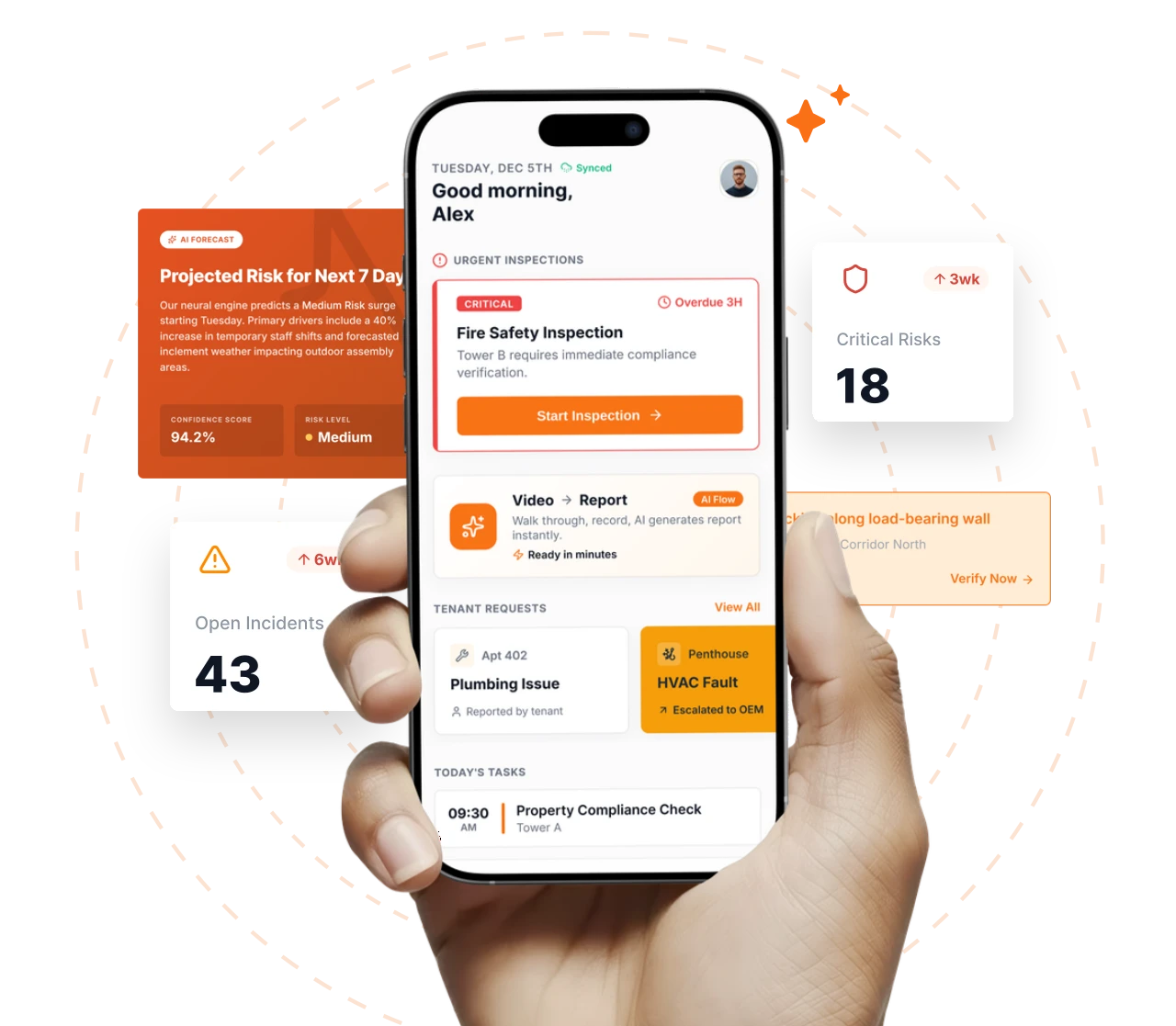
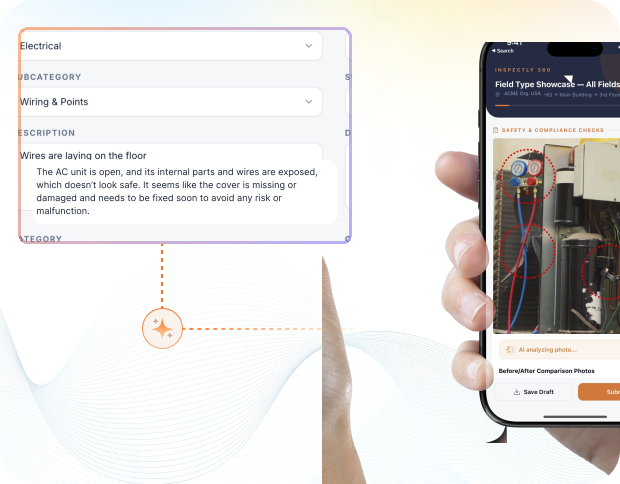
Take a Photo. AI Fills the Form
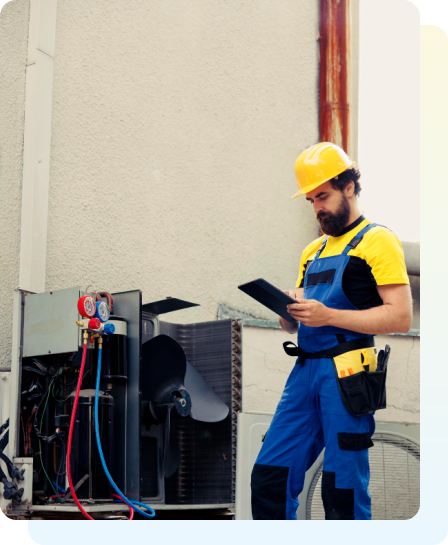
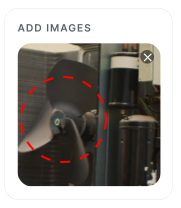
Your inspector takes a photo of any asset or defect. AI reads it and fills the inspection form automatically. No typing. No manual entry.

Convert your checklist into Mobile App
Run consistent pre-use checks for MEWPs (boom lifts and scissor lifts), capture evidence, and keep an auditable inspection record.

Customize with your logo and company details.
Available on App
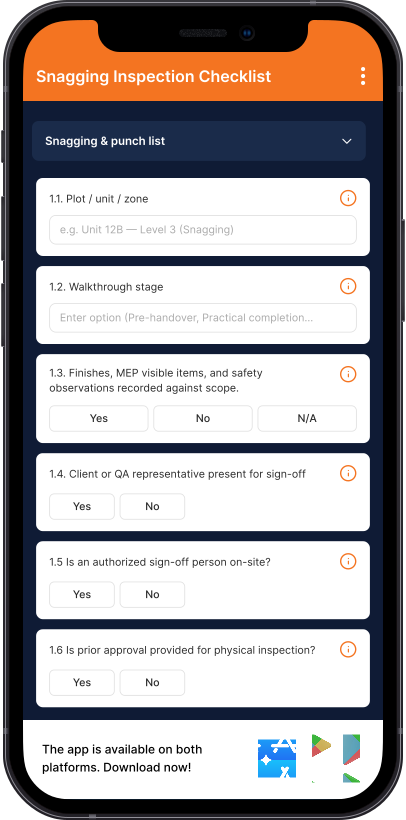
Run inspections on iOS and Android - no internet required. Capture photos, annotate defects, and generate reports in the field.
Run the Aerial Lift Inspection Form on the Inspectly360 app instead of paper. Inspectors capture photo evidence, work offline, and assign corrective actions on the spot, and the report generates itself the moment the inspection is signed off.
Aerial Lift Inspection Form
Aerial Lift Inspection Form Dashboard
Prioritized actions to keep operations running smoothly today.
Total Revenue
$42,680
+12% compared to last month
Active Projects
128
+8 new this week
Open Requests
56
-15 resolved this week
Operational Target
You're on track to meet this month's operational goal.
Target Task
200 ↑
Complete Task
136 ↑
Pending Task
10 ↓
Monthly Performance
Recent Client Activity
Everything your field team does on paper, Inspectly360 does automatically: faster, more accurate, and without the admin.
Your inspector takes a photo of any asset or defect. AI reads it and fills the inspection form automatically. No typing. No manual entry.
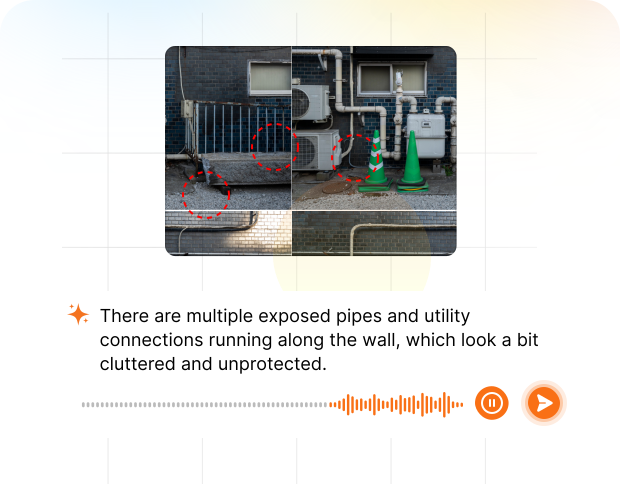
Inspectors speak their observations in any language. AI transcribes and fills the form in real time. Completely hands-free in the field.
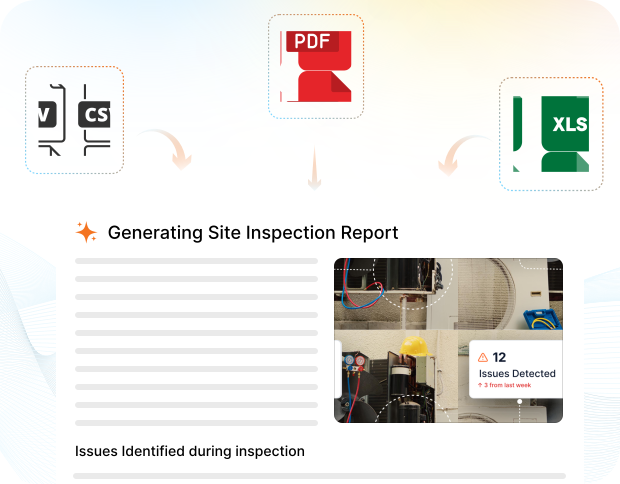
The moment an inspection is submitted, a branded PDF, Excel, or CSV report generates automatically. No manual work. No waiting.

Inspectly360 integrates with the tools your team already uses, including Zoho, Microsoft 365, and SAP. No double entry.
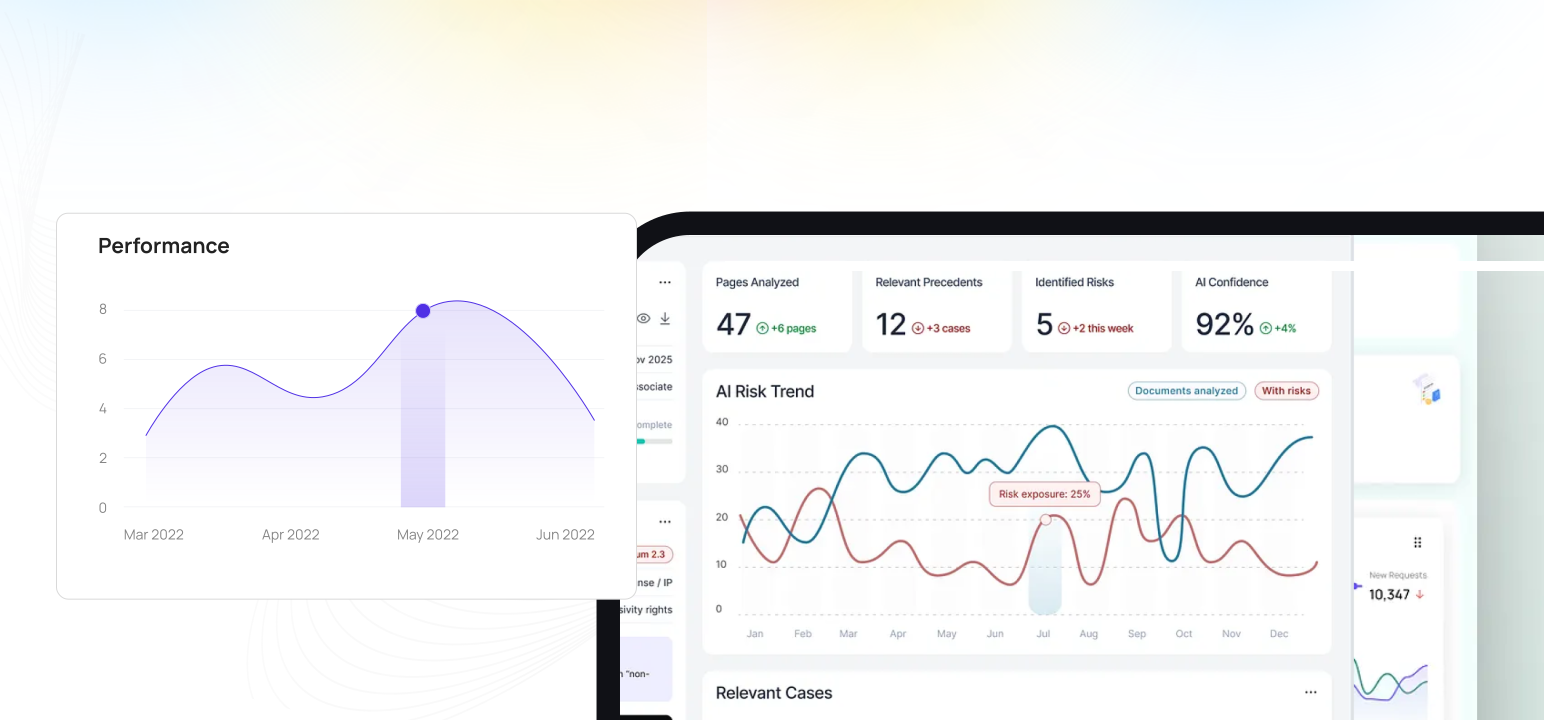
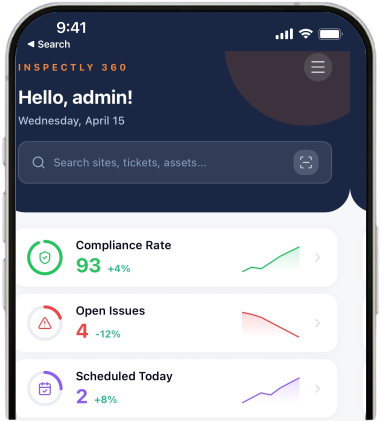
Your operations team sees completion rates, open issues, and compliance scores across all sites in real time. No chasing updates.
Manage every checklist in one connected workspace, capture evidence on mobile at the point of work, and let AI turn field inputs into clear, stakeholder-ready reports in minutes.
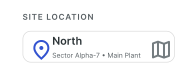
See which checklists your team has in progress across every site, jump into the same inspection with one tap, and keep field, supervisor, and back-office views in sync without sending screenshots on WhatsApp.


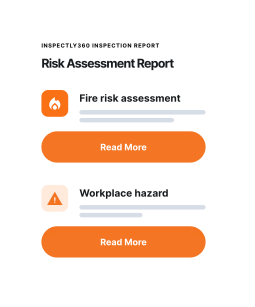
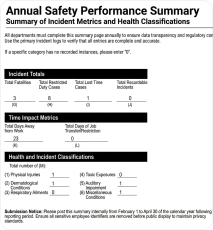


Every team reports differently. Build the report your operations, quality, or compliance leads actually want to read, share it as a branded PDF, and schedule delivery to the stakeholders who need it.
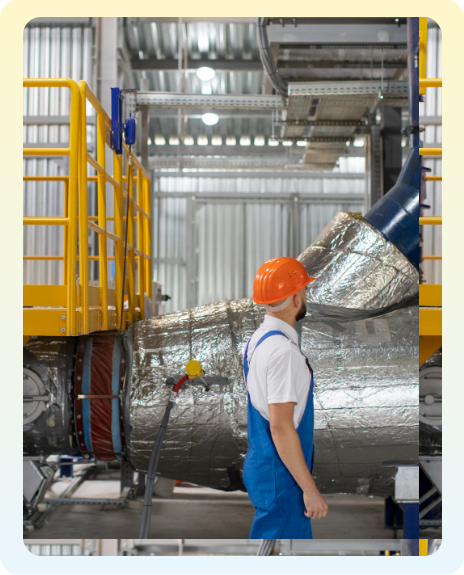
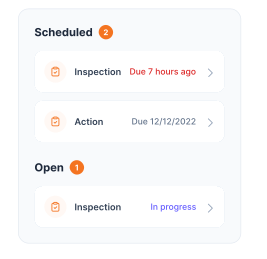
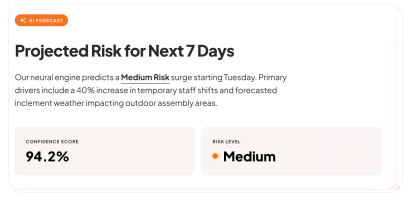
See completion, pass rate, and recurring findings across every checklist and every site, without pulling spreadsheets together at the end of the month.
Hand-picked templates for your specific industry needs.

Pre-handover snagging for new build apartments. Room-by-room finish checks, MEP, and defect tracking before keys.

Snagging and punch list for new build houses. Defect capture, evidence, and closeout before handover.

Kitchen snagging: cabinets, worktops, appliances, tiling, plumbing, and electrical checks.

Bathroom snagging: tiling, sanitaryware, plumbing, ventilation, and finish quality.

Living room snagging: walls, flooring, ceiling, windows, electrical, and finish quality.

Post move-in defects: snagging items found after handover, defect liability tracking, and closeout.
A MEWP inspection is a pre-use safety check for a mobile elevating work platform such as a boom lift or scissor lift. Before the platform is operated, the inspector confirms that controls, the emergency stop, alarms, guardrails, the access gate, harness anchor points, hydraulics, tires, and decals are present, undamaged, and functioning. The check follows the manufacturer's manual and standards such as OSHA 1926.453 and ANSI A92. The aim is simple: catch a defect before the lift is in the air, not after. A documented MEWP inspection gives the operator and the site a verifiable record that the machine was safe to use at the start of the shift.
Run a pre-use inspection before every shift or before the equipment is operated, whichever comes first. Carry out an additional check after any maintenance or repair, after an incident or near miss, and whenever the lift is moved to a new site or handed to a different operator. Annual or interval thorough examinations by a competent person are separate from the daily pre-use check and are usually required by the manufacturer and local regulation. Recording each pre-use inspection in Inspectly360 means the history is timestamped and traceable, so you can show exactly when a machine was last verified safe rather than relying on a signature on a clipboard.
Stop. If a safety-critical item fails, do not operate the lift. Tag the equipment out so nobody else uses it, and raise a maintenance request straight away. Record the failed item with a clear description, severity, and photo evidence so the defect is unambiguous and the repair can be verified against it. In Inspectly360 a failed checkpoint can become a corrective action with an owner and due date, and the equipment stays flagged until a re-inspection confirms the fix with a photo and sign-off. Only return the lift to service once the re-inspection passes, so a tagged-out machine cannot quietly slip back into use.
The form covers three areas. First, equipment identification: site, date and time, equipment type, make and model, asset ID, and hour meter reading, so the result is traceable to a specific machine. Second, the pre-use safety checks: emergency stop, alarms and horn, all control functions, guardrails, the access gate, harness anchor points, decals and capacity labels, hydraulic lines and leaks, tires or tracks, and visible structural damage. Third, documentation and follow-up: pass, fail, or N/A per checkpoint, photos and notes for any defect, a tag-out or maintenance request field, and re-inspection confirmation. Running it digitally enforces the order so no safety-critical item is skipped under time pressure.
Yes. The Inspectly360 mobile app is offline-first, which matters because lifts are often used in basements, plant rooms, partially built structures, and remote sites with no signal. The operator can open the form, work through every checkpoint, capture and annotate photos of any defect, record the hour meter reading, and tag the equipment out without any connection. All entries and images are stored on the device and sync automatically the moment connectivity returns. The pre-use check is never delayed waiting for a network, and no inspection is lost or rewritten later from memory, which is exactly when records become unreliable.
Yes. Every aerial lift inspection in Inspectly360 is timestamped, attributed to the operator who completed it, and stored against the specific asset. Photos carry the time they were taken, and any defect, the corrective action raised from it, and the re-inspection that closed it are linked as one record. When a safety officer, client, or regulator asks for proof that a machine was checked before use, you export the history as a single PDF or share it live rather than searching through clipboards. This supports pre-use inspection requirements under OSHA 1926.453 and ANSI A92 and gives you a defensible record after an incident.
Quick Answer
An aerial lift inspection form is the pre-use safety check operators complete before running a boom lift or scissor lift, covering controls, fall protection, hydraulics, tires, and emergency systems. Run it on the Inspectly360 mobile app to record pass or fail per item, capture photo evidence of defects, tag unsafe equipment out, and keep an auditable record offline.
An aerial lift inspection form is a structured checklist used to verify that a mobile elevating work platform (MEWP), such as a boom lift or scissor lift, is safe to operate before use. It helps operators and supervisors confirm key safety systems, emergency lowering, controls, tyres, outriggers, fluid levels, and physical condition checks are completed consistently at the start of each shift. Defects are recorded with photo evidence so the machine can be tagged out and repaired before it returns to service, keeping the site aligned with OSHA and LOLER pre-use inspection requirements.
A documented inspection record reduces risk, supports compliance, and helps identify defects early so equipment can be tagged out and repaired before it becomes a safety incident.
The pre-use check is signed in seconds without the operator walking the machine. A worn tire, a damaged guardrail, or a sticking control goes unrecorded until it causes an incident on site.
When a safety officer or regulator asks for the inspection history, the forms are on a clipboard in the site office. Half are unreadable, none are photo-evidenced, and nobody can prove the lift was checked that morning.
Aerial lift inspections protect operators and bystanders while improving equipment reliability. A consistent inspection form helps you:
A good aerial lift inspection form covers identification, safety-critical checks, and documentation fields for evidence and sign-off. Common sections include:
Record the inspection context so the result is traceable:
Verify core safety systems and readiness to operate:
Capture evidence and actions for issues found:
Use the form at the start of each shift or before operating the MEWP:
See how this checklist fits into Construction inspection software.
This checklist runs as a mobile inspection app that works fully offline on site, with AI-powered defect detection on every photo. To see it on your own workflows, talk to our team.
Aerial Lift Inspection Form works alongside the Inspectly360 apps, solutions, and construction templates linked below, so teams plan, run, and report inspections in one connected system.
See Inspectly360 in action with a live demo tailored to your needs. No credit card required.