
Take a Photo. AI Fills the Form
Your inspector takes a photo of any asset or defect. AI reads it and fills the inspection form automatically. No typing. No manual entry.

Convert your checklist into Mobile App
Baggage conveyor checklist software is the platform ground handling supervisors, belt loader operators, and GSE technicians use to run digital pre-use, servicing, and handover checklists on baggage belt loaders and keep defensible records across the fleet. Inspectly360 digitises checklist templates with mandatory photo fields on belt condition, side guards, the emergency stop, handrails, rollers, boom, and the handbrake, with defect routing in one record aligned to IATA AHM and IGOM.
Everything your field team does on paper, Inspectly360 does automatically: faster, more accurate, and without the admin.
Your inspector takes a photo of any asset or defect. AI reads it and fills the inspection form automatically. No typing. No manual entry.
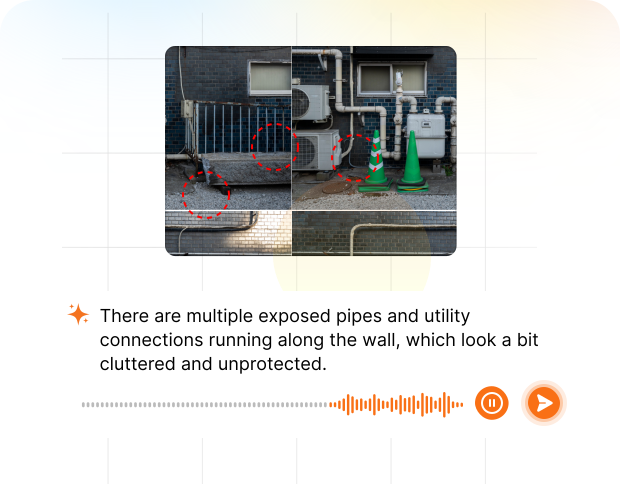
Inspectors speak their observations in any language. AI transcribes and fills the form in real time. Completely hands-free in the field.
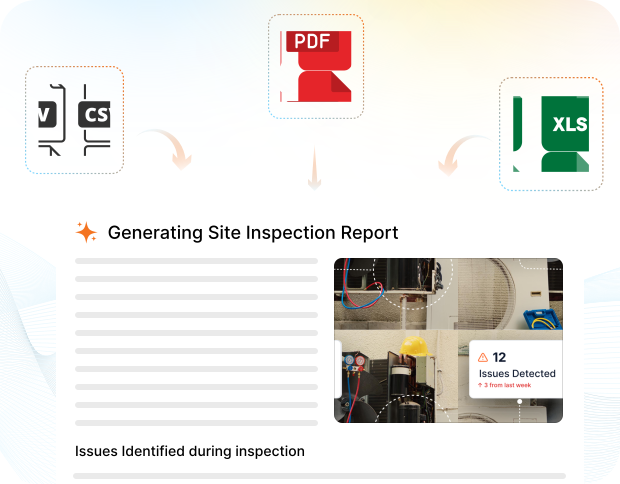
The moment an inspection is submitted, a branded PDF, Excel, or CSV report generates automatically. No manual work. No waiting.

Inspectly360 integrates with the tools your team already uses, including Zoho, Microsoft 365, and SAP. No double entry.
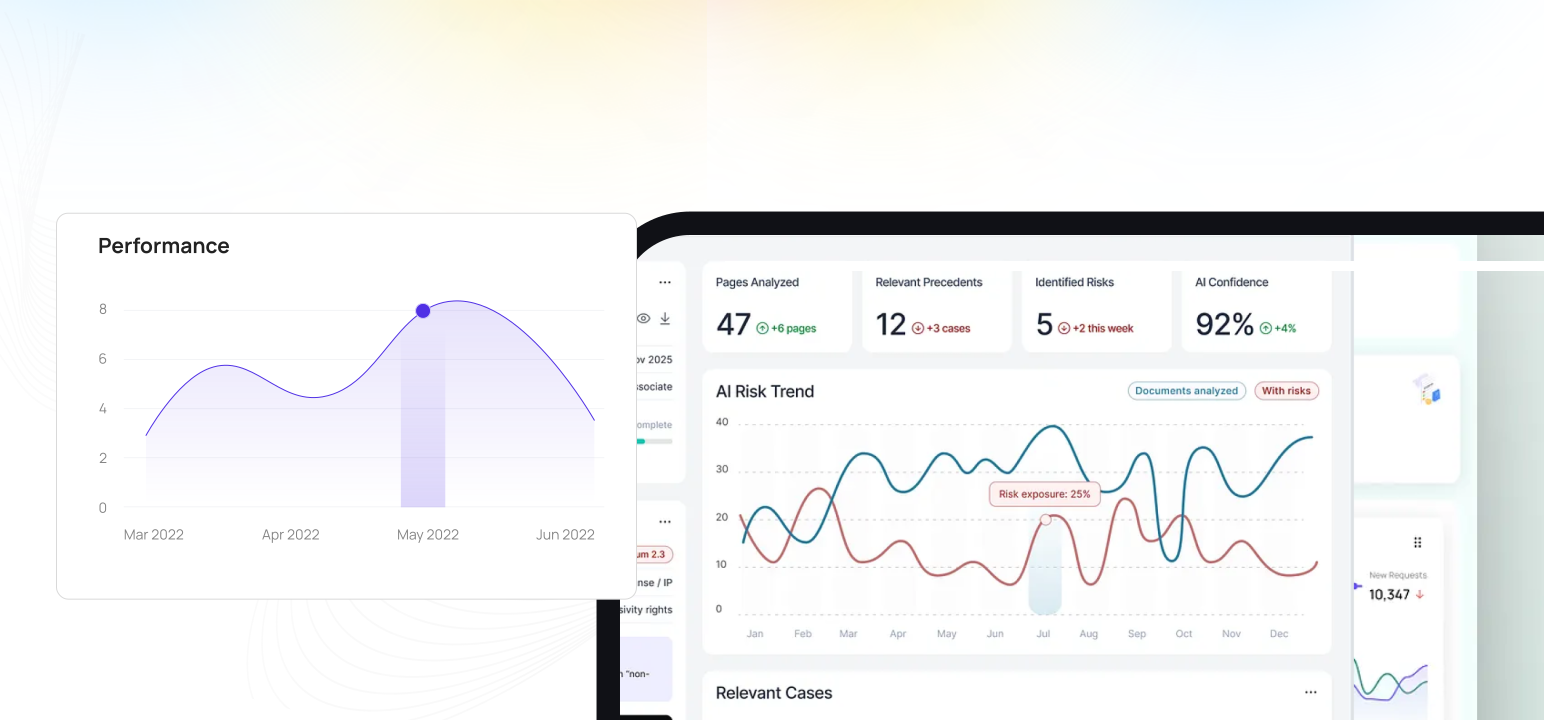
Your operations team sees completion rates, open issues, and compliance scores across all sites in real time. No chasing updates.
What changes once baggage conveyor checklist software runs on one mobile-first platform with photo proof and live dashboards.
Baggage conveyor checklist software is the platform ground handling supervisors, belt loader operators, and GSE technicians use to run digital pre-use, servicing, and handover checklists on baggage belt loaders and keep defensible records across the fleet. Inspectly360 digitises checklist templates with mandatory photo fields on belt condition, side guards, the emergency stop, handrails, rollers, boom, and the handbrake, with defect routing in one record aligned to IATA AHM and IGOM.
Today each base uses a slightly different paper checklist, a belt or e-stop item is ticked with no photo to prove it was checked, and a failed item is a note the operator hopes someone reads. When a checklist is completed in seconds without looking, a frayed belt or a dead emergency stop is ticked as fine, or a defect note is never routed, nobody sees it until a jam, a bag spill, or a hand injury at a pinch point. Across a busy ramp the supervisor cannot tell which belt loaders had a checklist done this shift without checking a folder.
Inspectly360 replaces that with mobile capture on iOS and Android: standard pre-use, servicing, and handover templates run on every QR-tagged belt loader, mandatory photo fields require evidence before submit, and a failed item becomes a tracked defect routed to GSE maintenance. Completion tracking shows which units are done and which are outstanding, and a branded checklist evidence pack exports per unit when ISAGO or a safety auditor asks.
Ramp teams follow this loop for digital belt loader pre-use, servicing, and handover checklists.
Set up standard pre-use, servicing, and handover templates with mandatory photo fields on belt, guards, e-stop, boom, and handbrake.
The operator scans the QR-tagged belt loader to open the correct template for the task and the shift.
Each critical item requires a photo before submit, so belt condition, side guards, and the emergency stop are evidenced, not just ticked.
A failed item becomes a tracked defect routed to GSE maintenance with photo, severity, and location.
Completion shows which belt loaders are done and outstanding, and a branded checklist pack exports per unit for the auditor.
Answers to common long-tail questions, kept on one canonical page to avoid thin duplicate URLs.
Start with the belt loaders at a single base so the pre-use, servicing, and handover templates and the photo fields are validated against real units before rollout to other stations and contracted handlers.
Operators get checklist capture, GSE technicians get servicing checklist and defect sign-off, and the supervisor gets read access to completion and the full checklist trail per belt loader through role-based access.
The platform capabilities that power baggage conveyor checklist software across every site.
Pre-use, servicing, and handover templates run identically on every belt loader across every base. Why it matters: a consistent checklist means findings can be compared across units and stations instead of varying by base.
Critical items such as belt condition, side guards, and the emergency stop require a photo before submit. Why it matters: a mandatory photo proves the check was done rather than ticked in seconds without looking.
A failed checklist item becomes a tracked defect routed to GSE maintenance with photo, severity, and location. Why it matters: a frayed belt or dead e-stop reaches maintenance immediately rather than a note nobody reads.
A handover checklist records the belt loader's condition as it passes between shifts. Why it matters: a handover record closes the gap where a defect crosses shifts unrecorded and is blamed on the wrong operator.
A live view shows which belt loaders have a completed checklist and which are outstanding this shift. Why it matters: the supervisor sees coverage without checking a folder unit by unit.
A branded checklist evidence pack exports per belt loader for the auditor. Why it matters: an ISAGO request becomes a minutes-long export, not a folder of paper checklists.
Ground handling supervisors and belt loader operators comparing Inspectly360 to paper checklists, spreadsheet forms, and WhatsApp photo trails see the difference fastest on digitised pre-use, servicing, and handover templates, mandatory photo fields, defect routing, completion tracking, and fleet-wide consistency aligned to IATA AHM and IGOM.
| Topic | Typical Gaps | With Inspectly360 |
|---|---|---|
| Digitised belt loader checklist templates | Each base uses a slightly different paper pre-use checklist that nobody can compare or update centrally. | Standard pre-use, servicing, and handover templates run on every belt loader across every base. |
| Mandatory photo fields | A belt or e-stop item is ticked with no photo, so there is no proof the check was actually done. | Mandatory photo fields require evidence on belt condition, side guards, and the emergency stop before submit. |
| Defect routing from the checklist | A failed checklist item is a note the operator hopes someone reads before the next shift. | A failed item becomes a tracked defect routed to GSE maintenance with photo, severity, and location. |
| Completion tracking | The supervisor cannot tell which belt loaders had a checklist done this shift without checking the folder. | A live view shows which belt loaders have a completed checklist and which are outstanding this shift. |
| Audit evidence for ISAGO | Completed paper checklists are searched by hand when an ISAGO auditor asks for belt loader records. | A scoped, timestamped checklist evidence pack exports per unit in minutes. |
What changes once baggage conveyor checklist software is standardised on Inspectly360.
Get started with inspection and audit checklist templates.

Use this template to perform a comprehensive safety inspection of light vehicles. This check ensures all critical components are checked ...
Use these apps to run inspections and audits.

by Inspectly360
Streamline facilities inspections with forms, photos, and reports.

by Inspectly360
Building condition and compliance inspections with evidence and follow-ups.

by Inspectly360
Digitize building inspection apps workflows with forms, evidence capture, and automated reporting.

by Inspectly360
Run building inspections on phones and tablets with offline forms, photo evidence, and instant reports.

by Inspectly360
Audit buildings with structured scoring, photo evidence, and corrective action tracking across portfolios.
The operator scans the QR-tagged belt loader at the start of shift, which opens the correct pre-use checklist template for that unit. They work through belt condition and tracking, side guards, the emergency stop, handrails, rollers, pinch points, boom raise and lower, and the handbrake, with mandatory photo fields on the critical items. The checklist records the named operator, the time, and the unit, and a failed item becomes a tracked defect routed to GSE maintenance before the belt loader works a bay. This replaces the paper checklist that varies by base and gives the supervisor proof, per unit, that the pre-use check was done properly rather than ticked in seconds.
Critical checklist items such as belt condition, the side guards, and the emergency stop are set to require a photo before the operator can submit. This stops the common problem where a belt loader checklist is completed in seconds without anyone actually looking at the belt or testing the e-stop. The photo becomes evidence on the record, so a supervisor or auditor can see the actual condition of the belt at the time of the check, not just a tick. Because a frayed belt and a dead emergency stop are the items most likely to cause a jam or a hand injury at a pinch point, requiring photo proof on exactly those items raises the quality of every check.
When an operator marks a checklist item as failed, such as a frayed belt, a missing side guard, or a boom that will not raise, the platform turns it into a tracked defect against the belt loader. The defect carries the photo, the severity, the location, and the failed item named, and it routes to GSE maintenance immediately. It stays open with an owner and a deadline until a technician verifies the fix and signs it off. This closes the gap where a failed item on a paper checklist is just a note the operator hopes someone reads before the next shift, leaving a known fault in service while bags keep loading on the ramp.
Yes. Capture works fully offline on iOS and Android, which matters on the apron, in the GSE workshop, and at remote stands where signal is weak. Operators complete pre-use, servicing, and handover checklists with mandatory photos while offline, and technicians close routed defects, with everything syncing automatically once the device reconnects. Nothing is lost if a checklist is done in a dead spot, and the timestamp reflects when the check was done, not when it synced. This keeps the checklist evidence trail accurate for the supervisor and for an ISAGO auditor reviewing belt loader records across the fleet, the bases, and the shifts.
A handover checklist records the belt loader's condition as it passes from one shift to the next, capturing any open defect, the belt and e-stop status, and a photo of any damage. This closes the common gap where a fault occurs on one shift but is only noticed on the next, and the operator who inherits the unit is blamed for damage they did not cause. The handover record sits on the unit history with the named operators on both sides and the timestamp. The supervisor can see the condition at each handover, so a developing belt or boom problem is traceable across shifts rather than appearing out of nowhere.
A live completion view shows which belt loaders have a completed checklist this shift and which are outstanding, so the supervisor does not have to check a folder unit by unit. Outstanding units surface before they work a bay, which means a belt loader does not start loading bags without its pre-use checklist done. Because the templates are standard across bases, completion can be compared station by station, and a base with consistently low completion is visible to the quality lead. This turns checklist coverage from an assumption into a tracked metric, which an ISAGO auditor and an operator both expect to see evidenced.
Baggage Conveyor Checklist Software on Inspectly360 connects directly to the inspection apps, checklist templates, forms, industries, and adjacent solutions linked below.
See Inspectly360 in action with a live demo tailored to your needs. No credit card required.