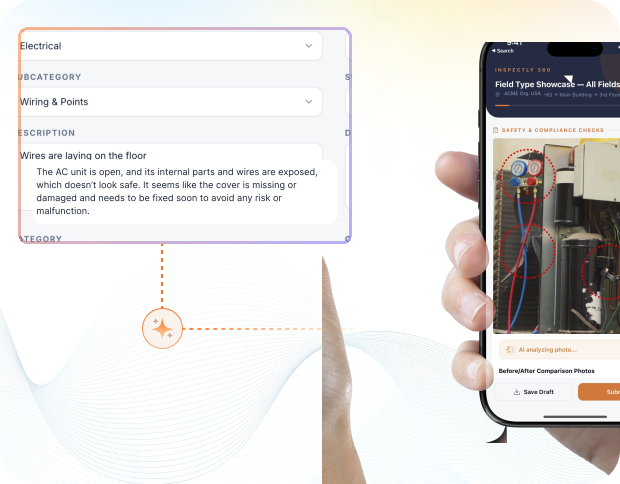
Take a Photo. AI Fills the Form
Your inspector takes a photo of any asset or defect. AI reads it and fills the inspection form automatically. No typing. No manual entry.

Convert your checklist into Mobile App
ELT checklist software is the platform avionics technicians, Part-145 line maintenance engineers, and CAMO continuing airworthiness teams use to run digital 406 MHz emergency locator transmitter checklists across a fleet. Inspectly360 turns the self-test, battery, antenna and coax, mounting, and 14 CFR 91. 207 12-month inspection steps into controlled checklist templates with required photo and sign-off fields, so every check is done the same way at every base.
Everything your field team does on paper, Inspectly360 does automatically: faster, more accurate, and without the admin.
Your inspector takes a photo of any asset or defect. AI reads it and fills the inspection form automatically. No typing. No manual entry.
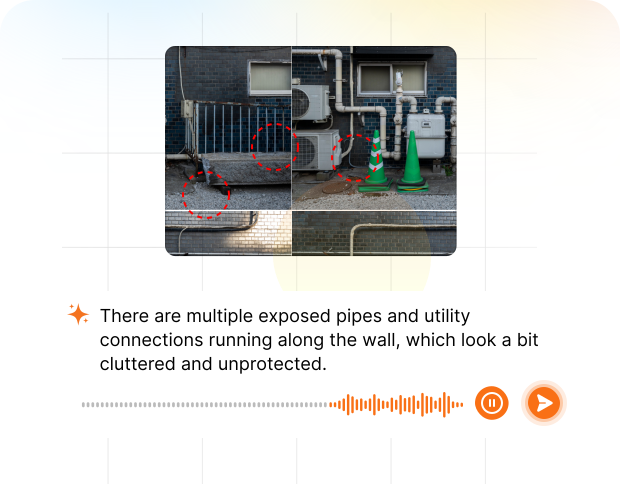
Inspectors speak their observations in any language. AI transcribes and fills the form in real time. Completely hands-free in the field.
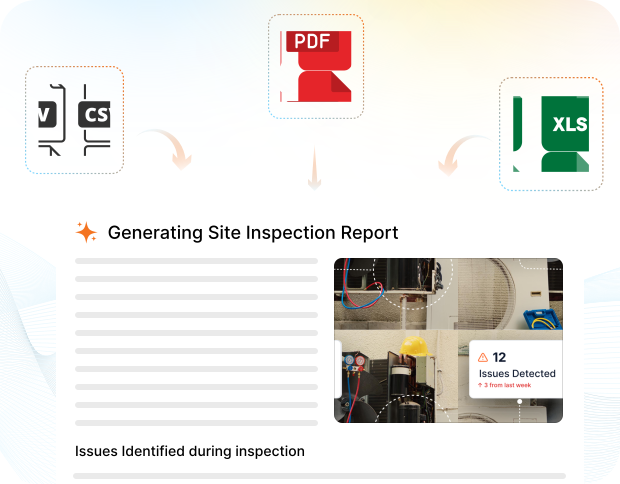
The moment an inspection is submitted, a branded PDF, Excel, or CSV report generates automatically. No manual work. No waiting.

Inspectly360 integrates with the tools your team already uses, including Zoho, Microsoft 365, and SAP. No double entry.
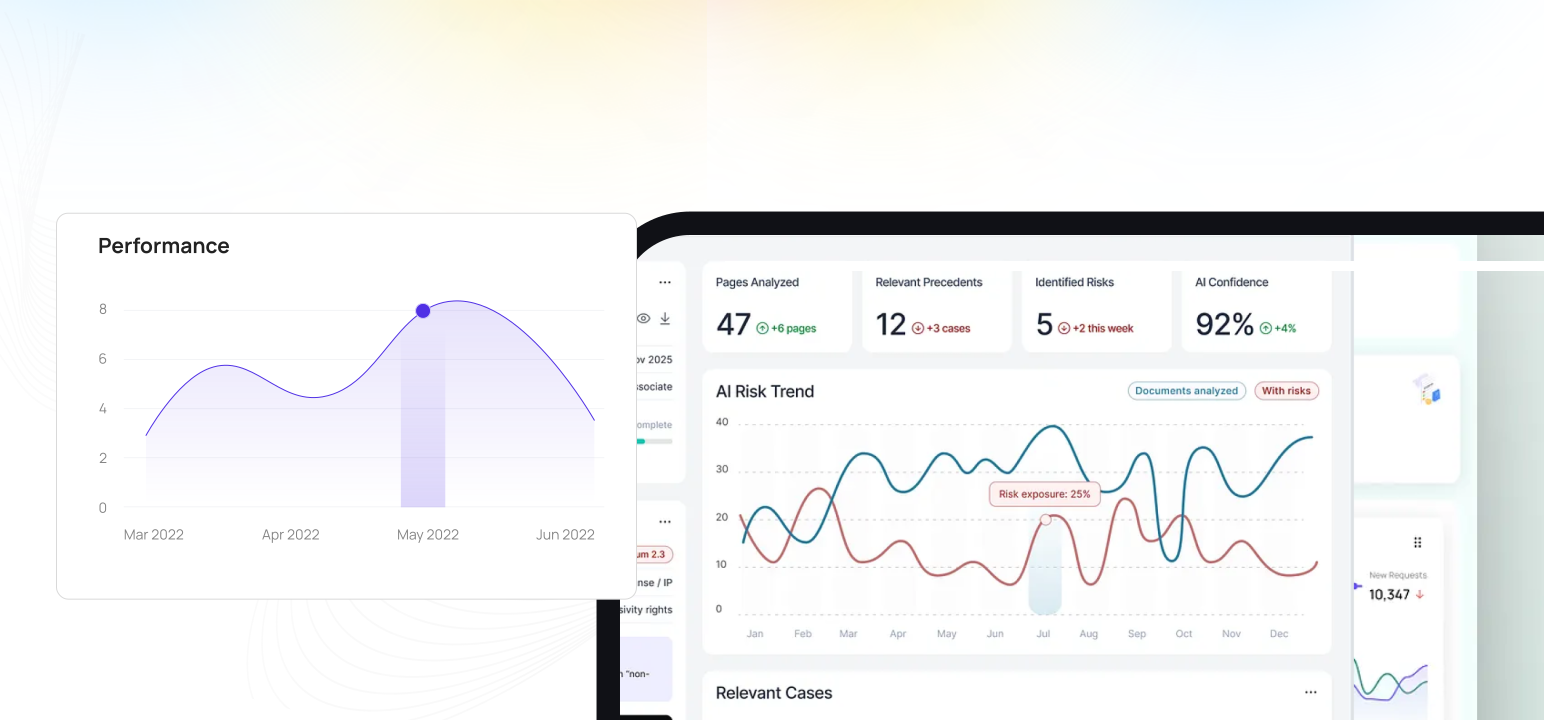
Your operations team sees completion rates, open issues, and compliance scores across all sites in real time. No chasing updates.
What changes once elt (emergency locator transmitter) checklist software runs on one mobile-first platform with photo proof and live dashboards.
ELT checklist software is the platform avionics technicians, Part-145 line maintenance engineers, and CAMO continuing airworthiness teams use to run digital 406 MHz emergency locator transmitter checklists across a fleet. Inspectly360 turns the self-test, battery, antenna and coax, mounting, and 14 CFR 91.207 12-month inspection steps into controlled checklist templates with required photo and sign-off fields, so every check is done the same way at every base.
Today ELT checklists are on paper, and each base tends to use its own version, so steps and wording drift between stations. A ticked paper box carries no photo and no proof the step was done, a failed step has no built-in path to a defect, and an outdated checklist keeps circulating after the procedure changes. Completed sheets sit in folders the quality team cannot see, so fleet consistency is impossible to confirm.
Inspectly360 replaces that with controlled templates on iOS and Android: one current ELT checklist version runs on every device, self-test and battery steps require a photo and named sign-off, a failed step opens a routed defect, and template updates retire the old version everywhere at once. Completed and outstanding checklists roll up per tail number, and the records feed the same continuing airworthiness trail used for inspection, compliance, and audit.
Line and avionics teams follow this loop for digital ELT checklist templates, required evidence, and continuing airworthiness records.
Turn the ELT self-test, battery, antenna, mounting, and 12-month steps into one controlled template with required fields.
Assign QR identity to each 406 MHz beacon so a scanned checklist opens against the correct unit and tail.
Technicians complete each step on iOS or Android, capturing the required photo and sign-off before the checklist closes.
A failed self-test or battery step opens a defect routed to maintenance with location, photo, and severity.
Template updates reach every device at once, and completion rolls up per tail for continuing airworthiness review.
Answers to common long-tail questions, kept on one canonical page to avoid thin duplicate URLs.
Start with a single fleet type so the ELT checklist template, required fields, and defect routing are validated against real serial numbers before rollout to mixed types and other bases.
Technicians get checklist completion, quality teams get template control and completion visibility, and CAMO gets read access to the records per tail number through role-based access.
The platform capabilities that power elt (emergency locator transmitter) checklist software across every site.
One current ELT checklist template runs identically at every base and on every tail. Why it matters: when each station uses its own paper version, checks drift and consistency cannot be proven.
Self-test and battery steps require a photo and named sign-off before the checklist closes. Why it matters: a ticked paper box with no evidence does not prove the step was done.
A failed step opens a defect routed to maintenance with location, photo, and severity. Why it matters: a failed check with no built-in path is the defect that goes unrecorded.
The current checklist version is pushed to every device, retiring the old one at once. Why it matters: an outdated paper checklist circulating after a procedure change produces wrong checks.
Completed and outstanding ELT checklists roll up across tail numbers. Why it matters: the quality team confirms fleet coverage instead of trusting folders it cannot see.
Checklist records feed the same trail used for inspection, compliance, and audit. Why it matters: a checklist that does not become a record is wasted effort at audit time.
Line and avionics teams comparing Inspectly360 to paper checklists, spreadsheet templates, and email trails see the difference fastest on standardised digital ELT checklists, required photo and sign-off fields, conditional defect steps, version control, and fleet-wide consistency per tail number.
| Topic | Typical Gaps | With Inspectly360 |
|---|---|---|
| Standardised checklist template | Each base uses its own paper ELT checklist, so steps and wording differ between stations. | One controlled ELT checklist template runs identically at every base and on every tail. |
| Required photo and sign-off fields | A paper checklist is ticked with no photo and no proof the step was actually done. | Self-test and battery steps require a photo and named sign-off before the checklist closes. |
| Conditional defect steps | A failed step on paper has no built-in path, so the defect may go unrecorded. | A failed step opens a defect routed to maintenance with location, photo, and severity. |
| Version control of the template | An outdated paper checklist keeps circulating after the procedure changes. | The current checklist version is pushed to every device, retiring the old one at once. |
| Fleet-wide checklist completion | Completed paper checklists sit in folders the quality team cannot see in one place. | Live view of completed and outstanding ELT checklists across every tail number. |
What changes once elt (emergency locator transmitter) checklist software is standardised on Inspectly360.
Get started with inspection and audit checklist templates.

Use this template to perform a comprehensive safety inspection of light vehicles. This check ensures all critical components are checked ...
Use these apps to run inspections and audits.

by Inspectly360
Streamline facilities inspections with forms, photos, and reports.

by Inspectly360
Building condition and compliance inspections with evidence and follow-ups.

by Inspectly360
Digitize building inspection apps workflows with forms, evidence capture, and automated reporting.

by Inspectly360
Run building inspections on phones and tablets with offline forms, photo evidence, and instant reports.

by Inspectly360
Audit buildings with structured scoring, photo evidence, and corrective action tracking across portfolios.
Instead of each station running its own paper ELT checklist, one controlled template holds the self-test, battery, antenna and coax, mounting, and 12-month inspection steps and runs identically on every device at every base. When a technician scans the beacon's QR tag, the checklist opens against the correct unit and tail. Because the template is centrally controlled, the wording, the order, and the required fields are the same everywhere, so a check done in one station matches a check done in another. This removes the drift that paper versions accumulate over time and lets the quality team prove that every base follows the same procedure.
Yes. Individual steps can be set to require a photo and a named sign-off before the checklist will close. For an ELT, the self-test result, the battery replacement-before date, and the antenna condition are typical steps where a photo is required as evidence. This means a technician cannot simply tick the box and move on without proof the step was actually done, which is the weakness of a paper checklist. The required fields make the captured evidence consistent across every check, so the resulting record stands up when a continuing airworthiness reviewer or an auditor later looks at how the checklist was completed.
A failed step, such as a self-test that does not pass or a battery past its replacement-before date, opens a conditional defect step within the checklist itself. The defect is routed to line maintenance with the location, a photo, and a severity, and it carries an owner and a deadline. This means a failed check never ends as an isolated note that someone forgets to action, which is the common failure of paper checklists where a failed box has no built-in path. The checklist record links to the defect and its closure, so the full story, from the failed step to the fix, stays on one connected trail for review.
When the ELT procedure changes, the checklist template is updated centrally and the current version is pushed to every device, retiring the previous version everywhere at once. This removes the persistent problem of an outdated paper checklist continuing to circulate at a base after a procedure has changed, which leads technicians to run the wrong checks. Because version control is built in, the record also shows which template version was used for each completed checklist, so a reviewer can confirm that checks done after a change used the new steps. This keeps the whole fleet aligned to the current procedure without reprinting and redistributing paper.
Yes. Checklists run fully offline on iOS and Android, which matters in the hangar, on the line, and at remote stands where signal is weak. A technician scans the beacon, completes the ELT checklist with the required photos and sign-off, and the record syncs automatically once the device reconnects. Nothing is lost if a checklist is completed where there is no coverage, and the timestamp reflects when the work was actually done. This makes the digital checklist usable everywhere a paper one would be, while still capturing the evidence, defect routing, and version control that paper cannot provide on its own.
Each completed ELT checklist becomes a record against the unit serial number and tail, with its photos, sign-off, defects, and template version attached. Those records feed the same continuing airworthiness trail used for inspection, compliance, and audit, so a checklist is not a throwaway sheet but part of the permanent evidence on the beacon. The CAMO team sees completed and outstanding checklists per tail, and the records are available when a compliance or audit pack is exported. This connection means the effort of running the checklist directly produces the evidence the operator needs later, rather than a folder of paper that has to be transcribed.
ELT (Emergency Locator Transmitter) Checklist Software on Inspectly360 connects directly to the inspection apps, checklist templates, forms, industries, and adjacent solutions linked below.
See Inspectly360 in action with a live demo tailored to your needs. No credit card required.