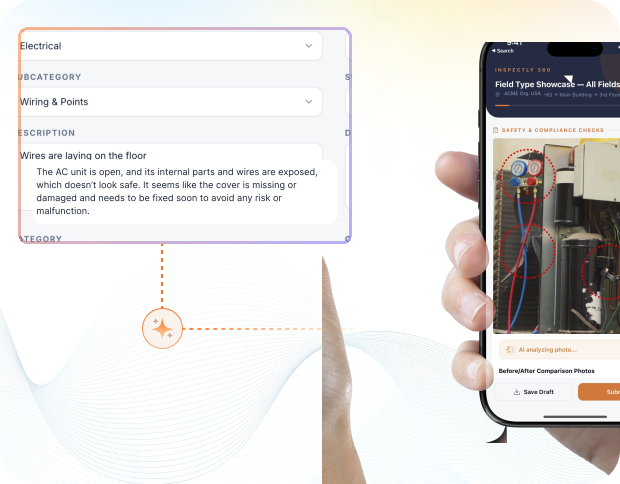
Take a Photo. AI Fills the Form
Your inspector takes a photo of any asset or defect. AI reads it and fills the inspection form automatically. No typing. No manual entry.

Convert your checklist into Mobile App
ELT maintenance software is the platform Part-145 line maintenance engineers, MRO technicians, and CAMO continuing airworthiness teams use to schedule and record 406 MHz emergency locator transmitter servicing across a fleet. Inspectly360 digitises AMM and CMM tasks, MPD task cards, battery overhaul and replacement intervals, antenna and coax servicing, and mounting checks in one record per unit serial number aligned to EASA Part-145 and FAA 14 CFR Part 43.
Everything your field team does on paper, Inspectly360 does automatically: faster, more accurate, and without the admin.
Your inspector takes a photo of any asset or defect. AI reads it and fills the inspection form automatically. No typing. No manual entry.
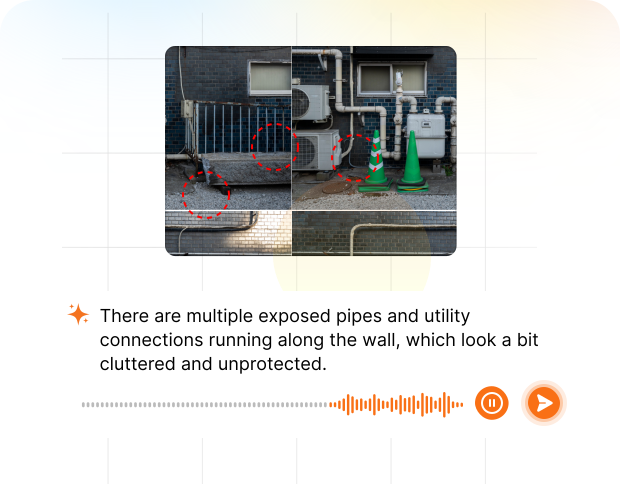
Inspectors speak their observations in any language. AI transcribes and fills the form in real time. Completely hands-free in the field.
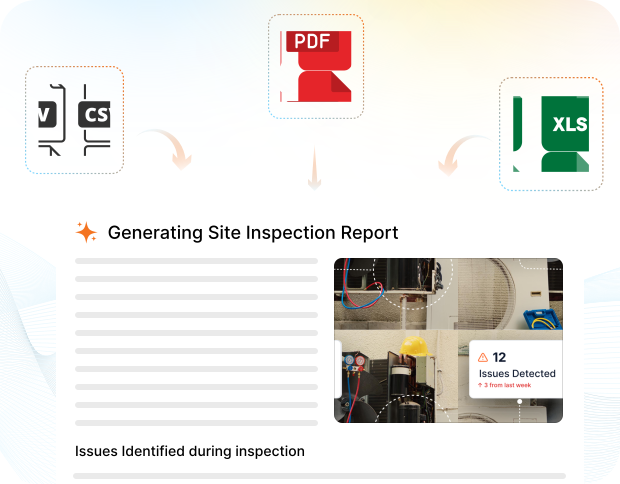
The moment an inspection is submitted, a branded PDF, Excel, or CSV report generates automatically. No manual work. No waiting.

Inspectly360 integrates with the tools your team already uses, including Zoho, Microsoft 365, and SAP. No double entry.
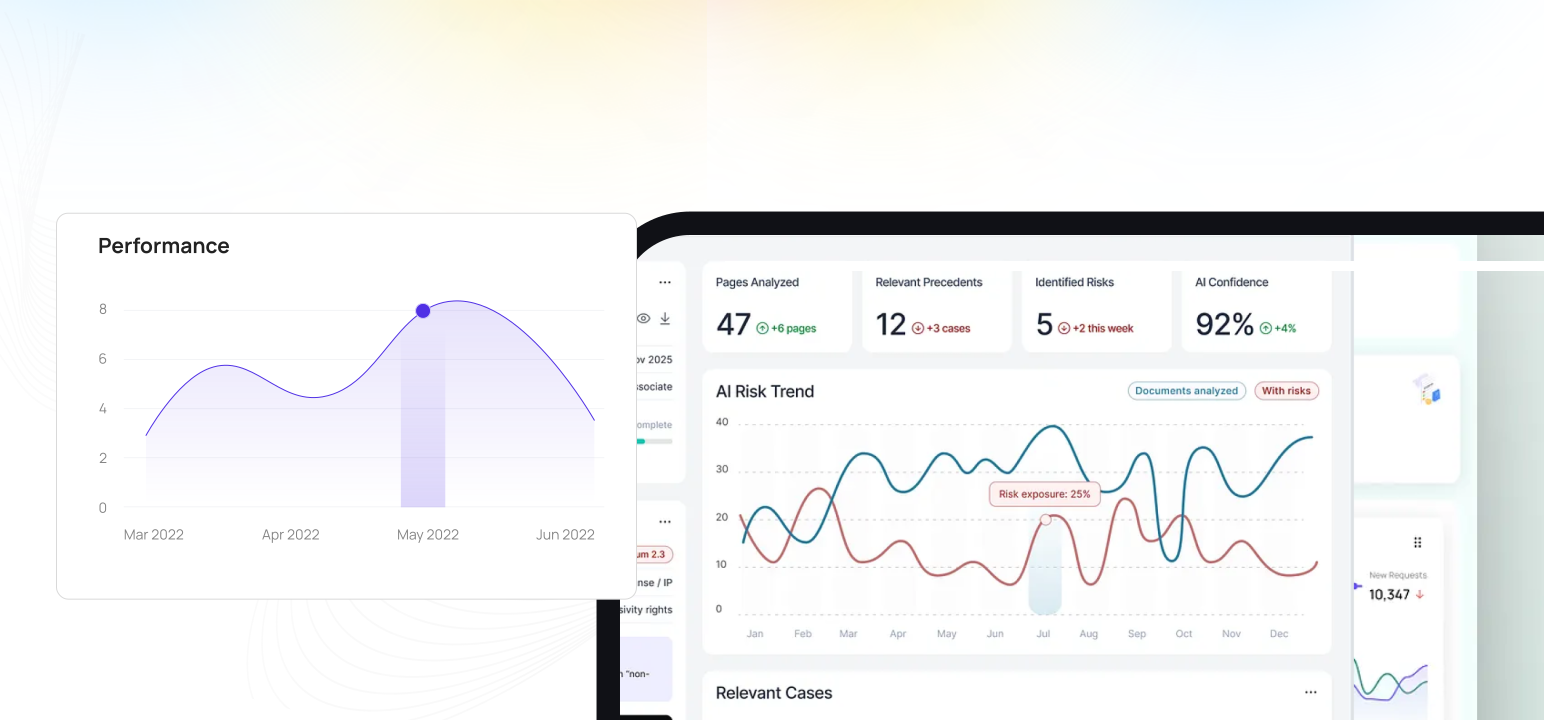
Your operations team sees completion rates, open issues, and compliance scores across all sites in real time. No chasing updates.
What changes once elt (emergency locator transmitter) maintenance software runs on one mobile-first platform with photo proof and live dashboards.
ELT maintenance software is the platform Part-145 line maintenance engineers, MRO technicians, and CAMO continuing airworthiness teams use to schedule and record 406 MHz emergency locator transmitter servicing across a fleet. Inspectly360 digitises AMM and CMM tasks, MPD task cards, battery overhaul and replacement intervals, antenna and coax servicing, and mounting checks in one record per unit serial number aligned to EASA Part-145 and FAA 14 CFR Part 43.
Today the ELT servicing schedule lives across printed task cards and a spreadsheet, the next due date is recalculated by hand, and the proof of last servicing is a card in a binder. When a battery overhaul interval slips, or an antenna defect is noted but not actioned, nobody sees it until a check or an audit finds it. Across a fleet of mixed types, every base plans ELT servicing a little differently, so the CAMO planner cannot see what is due where.
Inspectly360 replaces that with scheduled tasks on iOS and Android: MRO technicians complete AMM and MPD task cards against the asset, battery overhaul clocks raise alerts before intervals fall due, and antenna and coax servicing is logged with photos. Findings route to a tracked defect with owner and deadline, and a branded evidence pack exports per tail number when the regulator asks.
Part-145 and CAMO teams follow this loop for scheduled AMM and MPD task cards, battery overhaul intervals, and continuing airworthiness reviews.
Assign QR identity to each 406 MHz emergency locator transmitter so it carries its own servicing, battery overhaul, and task card history.
Load ELT task cards from the AMM and MPD so each task schedules against the asset with its own due interval.
MRO technicians complete each task card against the asset record with required photos and named sign-off.
Each ELT battery overhaul and replacement interval raises staged alerts so servicing is planned, not discovered overdue.
On every elt (emergency locator transmitter) maintenance cycle, findings become tracked defects with owner and deadline; a branded evidence pack exports per tail number for the authority.
Answers to common long-tail questions, kept on one canonical page to avoid thin duplicate URLs.
Start with a single fleet type so the ELT task cards, battery overhaul intervals, and servicing steps are validated against real serial numbers before rollout to mixed types and other bases.
MRO technicians get task card sign-off, planners get scheduling and visibility, and continuing airworthiness gets read access to the full servicing trail per tail number through role-based access.
The platform capabilities that power elt (emergency locator transmitter) maintenance software across every site.
ELT task cards from the AMM and MPD schedule against the asset with their own due intervals. Why it matters: a task card recalculated by hand is the one that slips past its due date.
Each unit carries its CMM battery overhaul and replacement interval with staged alerts. Why it matters: a missed overhaul interval means a beacon in service past its serviceable life.
Antenna and coax condition and servicing are logged with photos per serial. Why it matters: a corroded coax left unactioned can stop the 406 MHz signal reaching the satellite.
For Aviation teams running elt (emergency locator transmitter) maintenance, findings become tracked defects with owner, deadline, and verified closure. Why it matters: a noted issue with no owner is the gap an audit exposes.
Scheduled tasks, battery intervals, and open defects roll up across tail numbers. Why it matters: the CAMO planner sees what is due where without calling each base.
A branded ELT servicing pack exports per aircraft for the authority. Why it matters: an auditor request becomes a minutes-long export, not a binder search.
Part-145 and CAMO teams comparing Inspectly360 to paper task cards, spreadsheet servicing logs, and WhatsApp photo trails see the difference fastest on AMM and CMM task scheduling, battery overhaul intervals, MPD task card sign-off, antenna and coax servicing, and fleet-wide visibility per tail number.
| Topic | Typical Gaps | With Inspectly360 |
|---|---|---|
| Scheduled AMM and MPD task cards | ELT task cards are printed and filed, so the next due date is recalculated by hand each time. | AMM and MPD ELT tasks schedule against the asset with the next due date tracked automatically. |
| Battery overhaul and replacement interval | Battery overhaul intervals sit in a spreadsheet nobody reconciles against the unit installed. | Each ELT carries its battery interval per the CMM with staged alerts before it falls due. |
| Antenna and coax servicing | Antenna and coax condition noted on a card with no photo and no servicing history. | Antenna and coax servicing logged with photos against the unit serial number history. |
| Fleet-wide maintenance status | CAMO planner calls each base to learn which ELT tasks are due, deferred, or overdue. | Live dashboard of scheduled tasks, battery intervals, and open defects across the fleet. |
| Servicing evidence for the regulator | Task cards photocopied and searched by hand when the authority asks for ELT servicing records. | Scoped, timestamped evidence pack exports per tail number for the auditor in minutes. |
What changes once elt (emergency locator transmitter) maintenance software is standardised on Inspectly360.
Get started with inspection and audit checklist templates.

Use this template to perform a comprehensive safety inspection of light vehicles. This check ensures all critical components are checked ...
Use these apps to run inspections and audits.

by Inspectly360
Streamline facilities inspections with forms, photos, and reports.

by Inspectly360
Building condition and compliance inspections with evidence and follow-ups.

by Inspectly360
Digitize building inspection apps workflows with forms, evidence capture, and automated reporting.

by Inspectly360
Run building inspections on phones and tablets with offline forms, photo evidence, and instant reports.

by Inspectly360
Audit buildings with structured scoring, photo evidence, and corrective action tracking across portfolios.
Each ELT task card from the AMM and MPD is loaded against the unit serial number with its own due interval, so the platform tracks the next due date automatically rather than asking a planner to recalculate it by hand. When a task approaches due, staged alerts let the CAMO team slot it into a planned visit. The task card holds the required steps, photo prompts, and named sign-off, and a completed card stays on the unit record. This removes the common failure where a printed card is filed, the next due date drifts, and the task slips past its interval unnoticed until a check finds it.
Each emergency locator transmitter carries its battery overhaul and replacement interval taken from the manufacturer's CMM, tracked as a clock per serial number. The platform raises staged alerts before the interval falls due, so the battery is planned into a visit rather than discovered overdue. Because the interval is tied to the specific unit, a beacon that moves between tails keeps its own battery history. This prevents the common gap where a battery quietly passes its serviceable life because the spreadsheet was never reconciled against the unit actually installed, which would leave a beacon in service beyond its approved interval.
Yes. Antenna condition, coax routing, and connector integrity are recorded against the unit serial number with photos as evidence. A corroded or damaged coax can stop the 406 MHz signal reaching the Cospas-Sarsat satellite even when the beacon itself self-tests as serviceable, so this servicing matters. If a technician finds a defect, it routes to a tracked task with owner and deadline rather than sitting as a note on a card. The servicing history stays on the unit record, so the next technician sees what was found and actioned last time rather than starting from a blank card.
Yes. Capture works fully offline on iOS and Android, which matters in the hangar, on the line, and at remote stands where signal is weak. Technicians complete task cards and log servicing with photos while offline, and records sync automatically once the device reconnects. Nothing is lost if a task is done in an area with no coverage, and the timestamp reflects when the work was actually done, not when it synced. This keeps the servicing trail accurate for continuing airworthiness review and for any later audit request from the authority.
The fleet dashboard rolls up scheduled ELT tasks, battery overhaul intervals, antenna and coax servicing, and open defects across every tail number, so the CAMO planner sees what is due where without calling each base. Tasks approaching due are visible early enough to plan into a hangar visit rather than triggering an unplanned ground event. Filters by type, base, and due window let planners batch ELT servicing efficiently. This replaces the routine where each base plans ELT work a little differently and the planner reconciles status from separate spreadsheets, which always leaves blind spots between bases.
Every task card, battery change, antenna servicing, defect, and closure is stored with a timestamp, the named person, and photo evidence against the specific serial number and tail. When an auditor asks for ELT servicing records, you export a scoped, branded evidence pack per aircraft covering the audit window in minutes. The trail shows AMM and MPD task completion, battery overhaul intervals, antenna and coax servicing, and the closure of any defect with verified sign-off. This replaces the photocopy-and-search routine that task card binders force, and the evidence is consistent across every base in the fleet.
ELT (Emergency Locator Transmitter) Maintenance Software on Inspectly360 connects directly to the inspection apps, checklist templates, forms, industries, and adjacent solutions linked below.
See Inspectly360 in action with a live demo tailored to your needs. No credit card required.