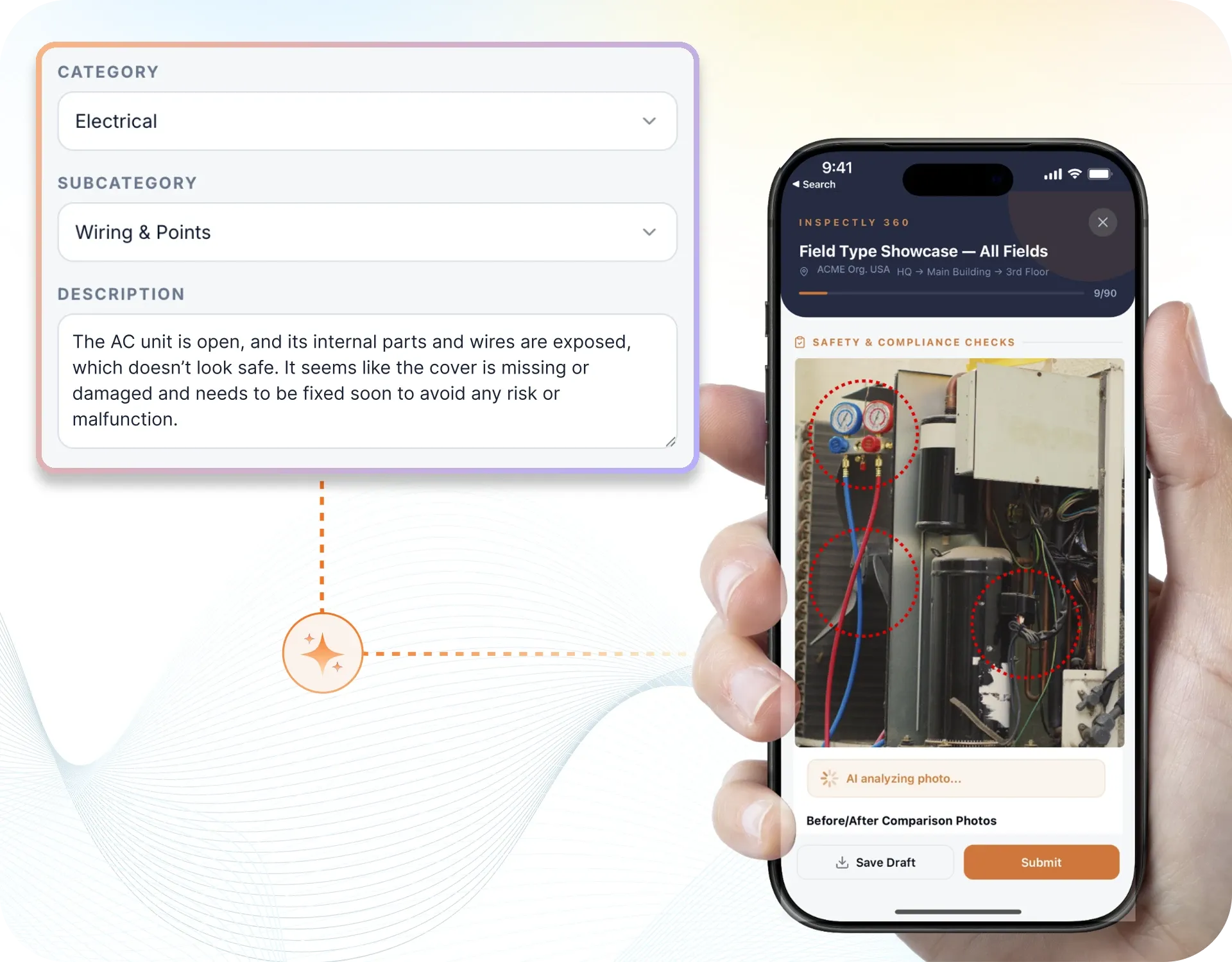
Take a Photo. AI Fills the Form
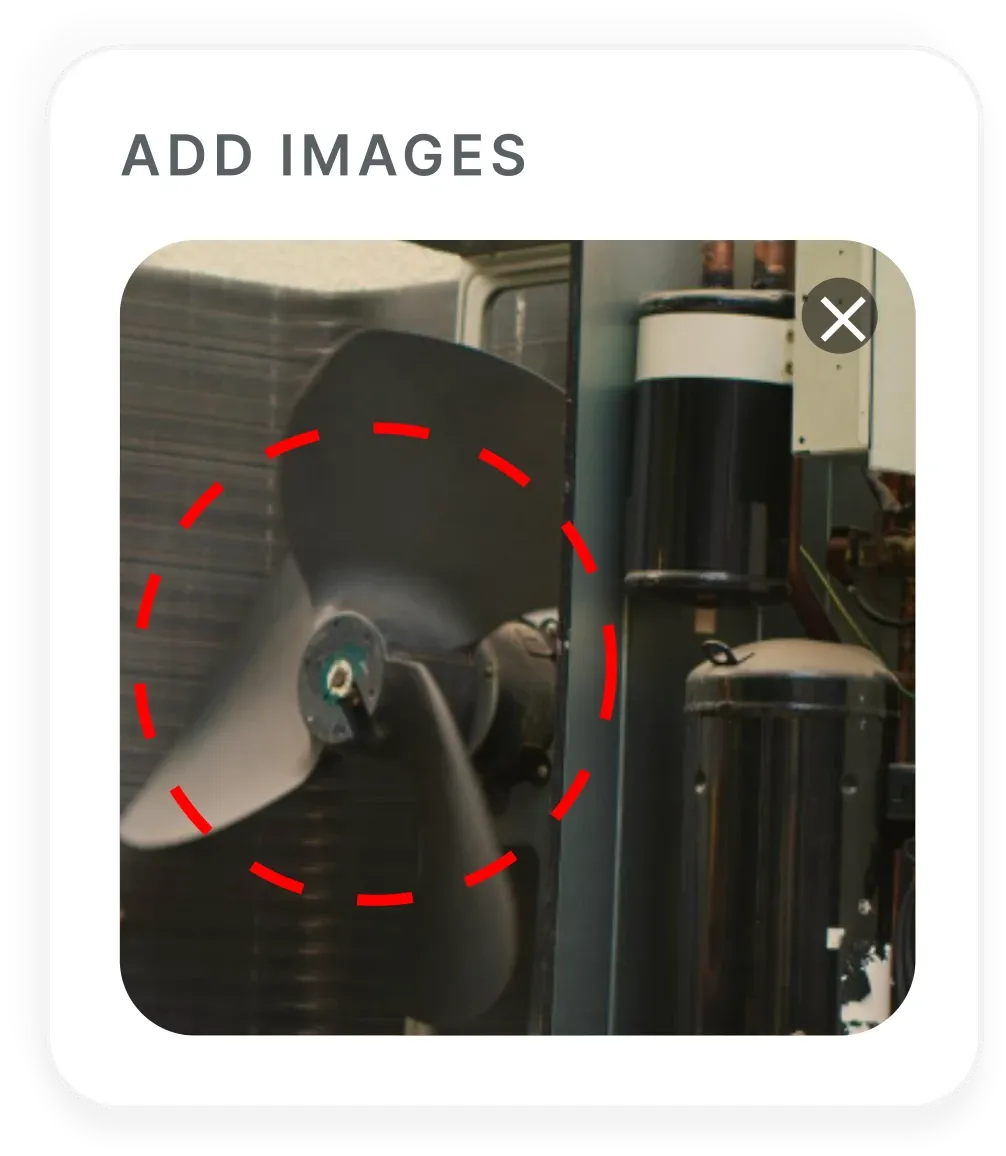
Your inspector takes a photo of any asset or defect. AI reads it and fills the inspection form automatically. No typing. No manual entry.

Convert your checklist into Mobile App
Facility inspection audit software is the digital platform that runs scored FM audits with formal scoping, sampling, weighted controls, working papers, and a defensible evidence trail. It differs from a daily inspection app in three ways: audits carry methodology (scoring rules, sampling logic, weighting), audits require working-paper retention beyond the inspection itself, and audits enforce internal-versus-external engagement boundaries.
Facility inspection audit software is the digital platform that runs scored FM audits with formal scoping, sampling, weighted controls, working papers, and a defensible evidence trail. It differs from a daily inspection app in three ways: audits carry methodology (scoring rules, sampling logic, weighting), audits require working-paper retention beyond the inspection itself, and audits enforce internal-versus-external engagement boundaries. Inspectly360 supports all three on the same mobile platform field crews already use for operational rounds, so the audit sits next to the live data it is testing rather than reconstructing it.
What changes once facility inspection audit software runs on one mobile-first platform.
Most facilities audit programmes follow this sequence when they move off paper working papers and PDF templates.
Define scoring weights, sampling rules, evidence requirements, and working-paper templates per control. ISO 41001 clauses, ISO 9001, internal management standards, and client-specific frameworks each become structured programmes with recorded methodology.
Build the annual audit plan with population sizes, sampling targets, and coverage gaps. Risk-weighted sampling prioritises high-stake assets; statistical sampling supports certification requirements.
Auditors run scored programmes on tablets in plant rooms and basements without connectivity. Working papers, reviewer notes, evidence, and scoring stay attached to the right control with full version history.
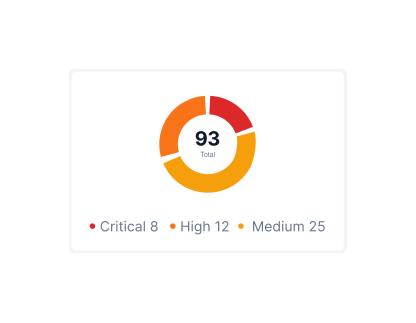
Findings get classified (Major, Minor, Observation, Opportunity for Improvement) per audit methodology. Each classification routes to a CAPA workflow with the appropriate owner, deadline, and verification gate before closure.
Branded audit packs with executive summary, scope, methodology, sampling, findings, scoring, and open CAPAs generate in one click. Audit-committee dashboards show repeat findings, closure rates, and cycle-over-cycle improvement.
Everything your field team does on paper, Inspectly360 does automatically: faster, more accurate, and without the admin.
Your inspector takes a photo of any asset or defect. AI reads it and fills the inspection form automatically. No typing. No manual entry.
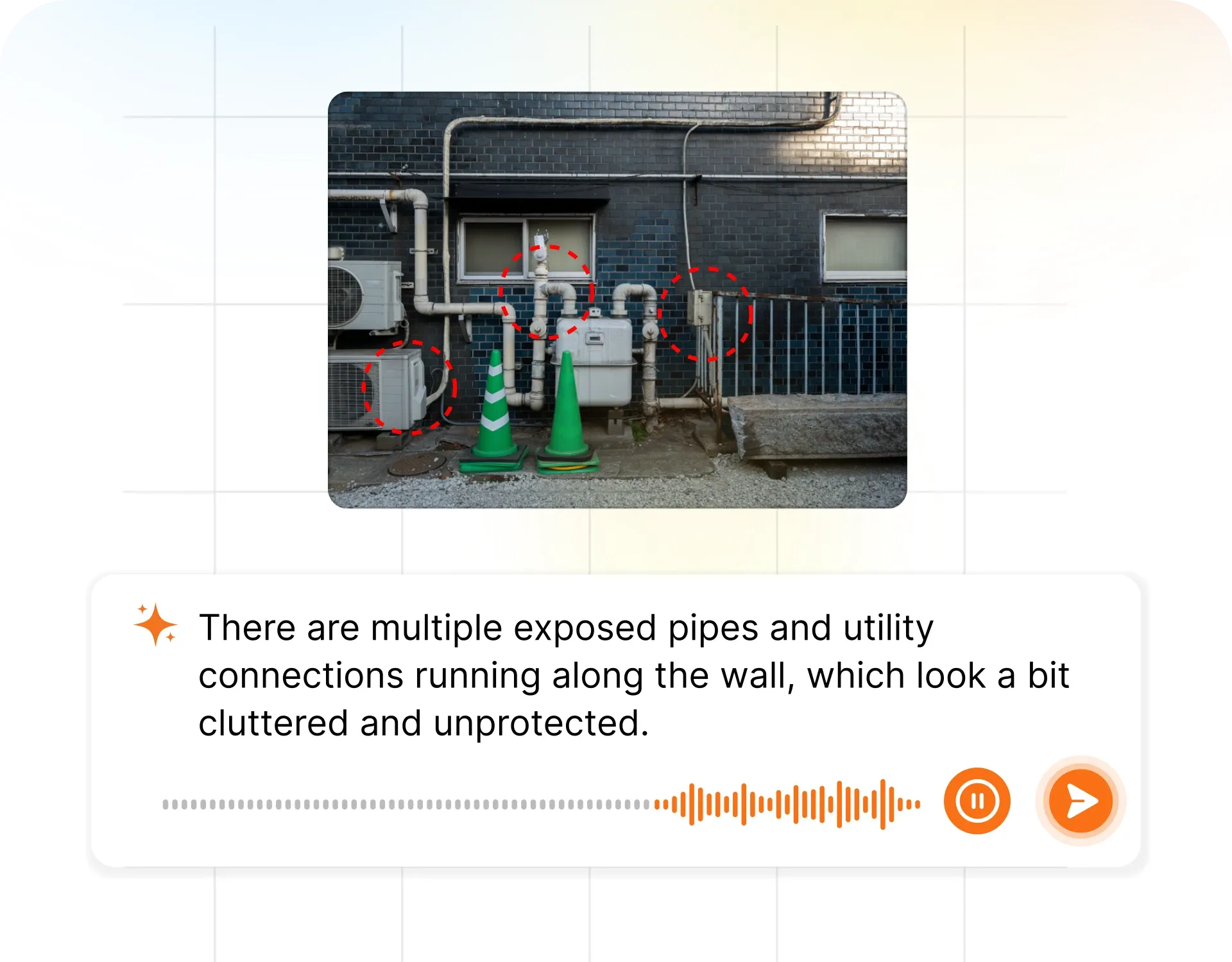
Inspectors speak their observations in any language. AI transcribes and fills the form in real time. Completely hands-free in the field.
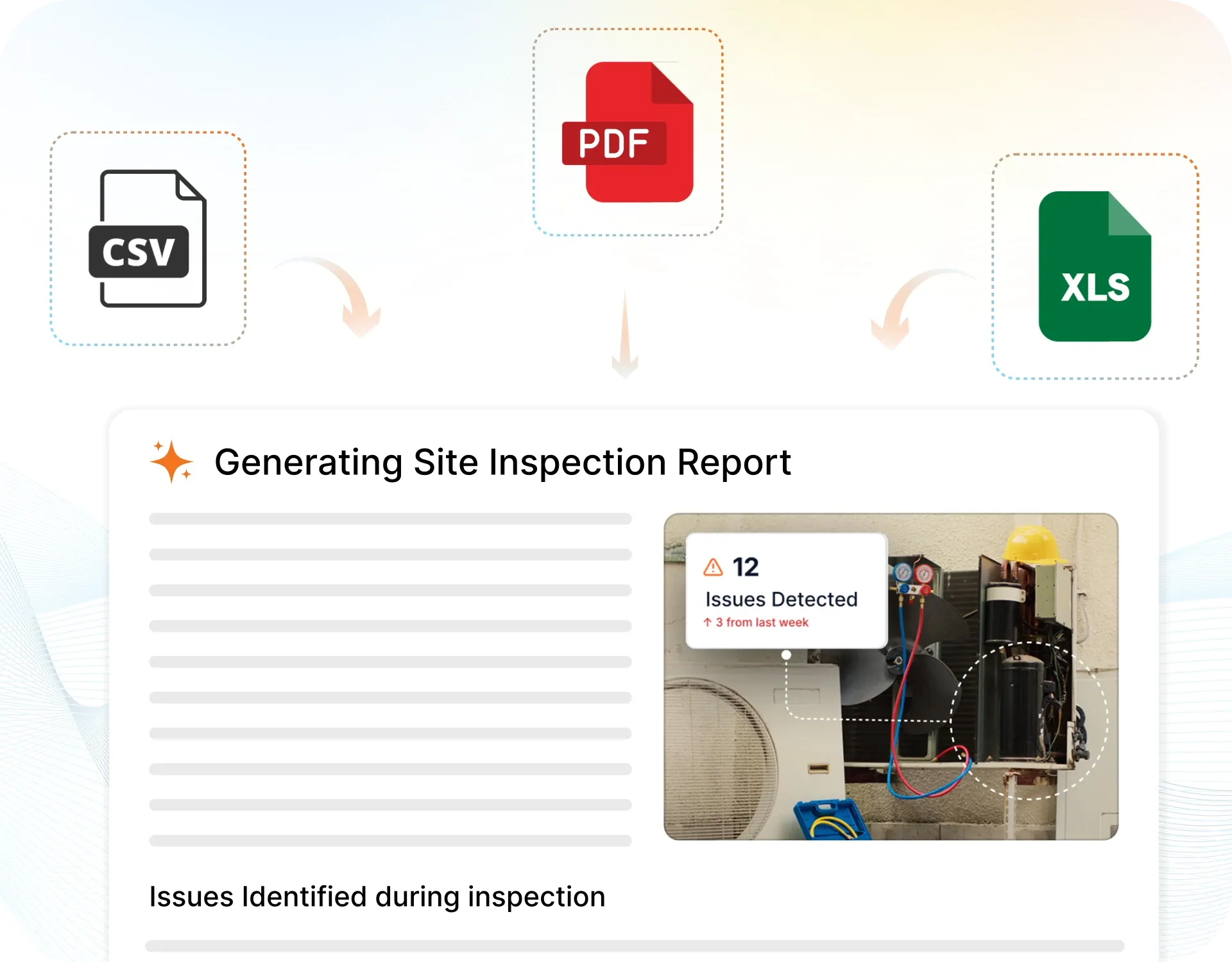
The moment an inspection is submitted, a branded PDF, Excel, or CSV report generates automatically. No manual work. No waiting.
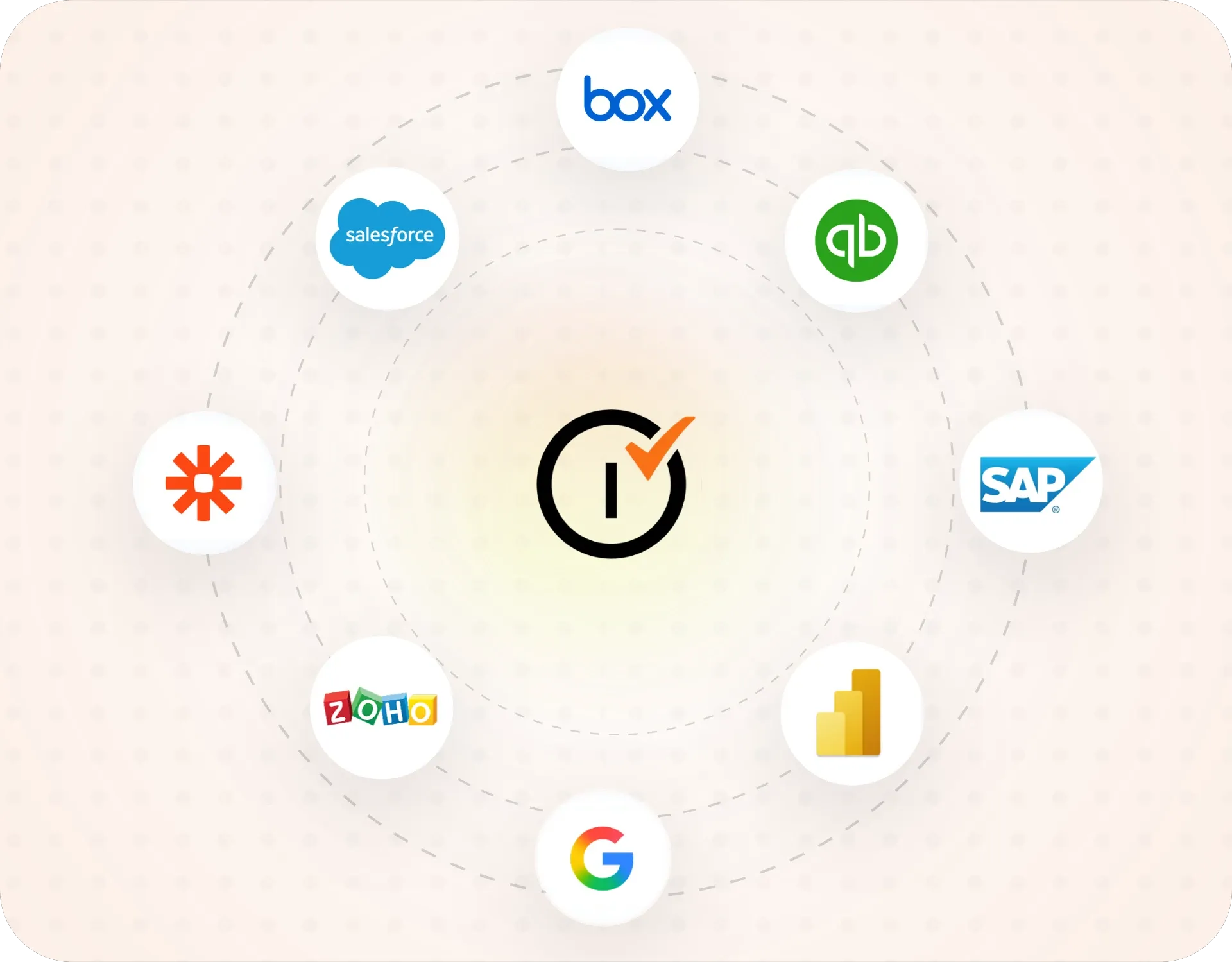
Inspectly360 integrates with the tools your team already uses, including Zoho, Microsoft 365, and SAP. No double entry.
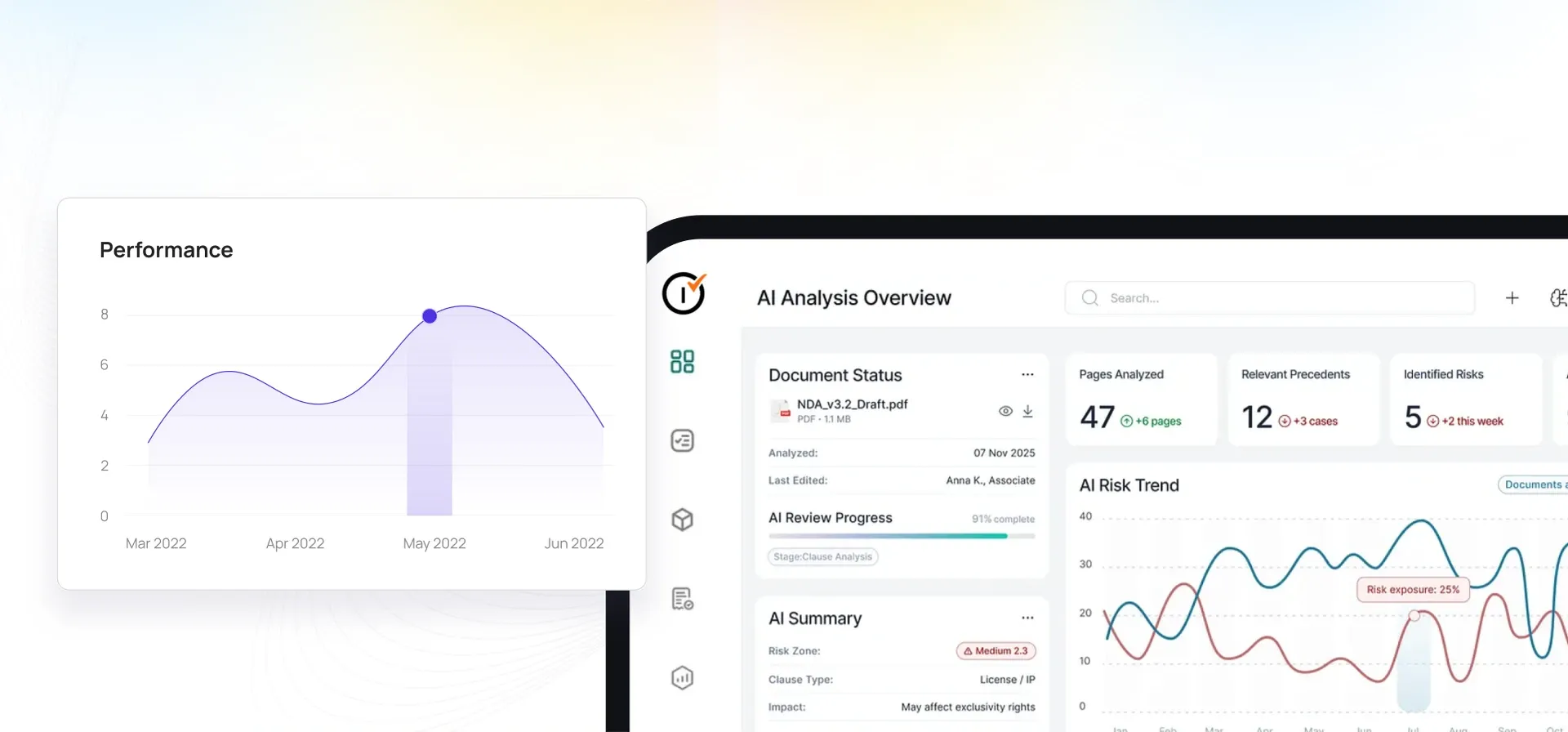
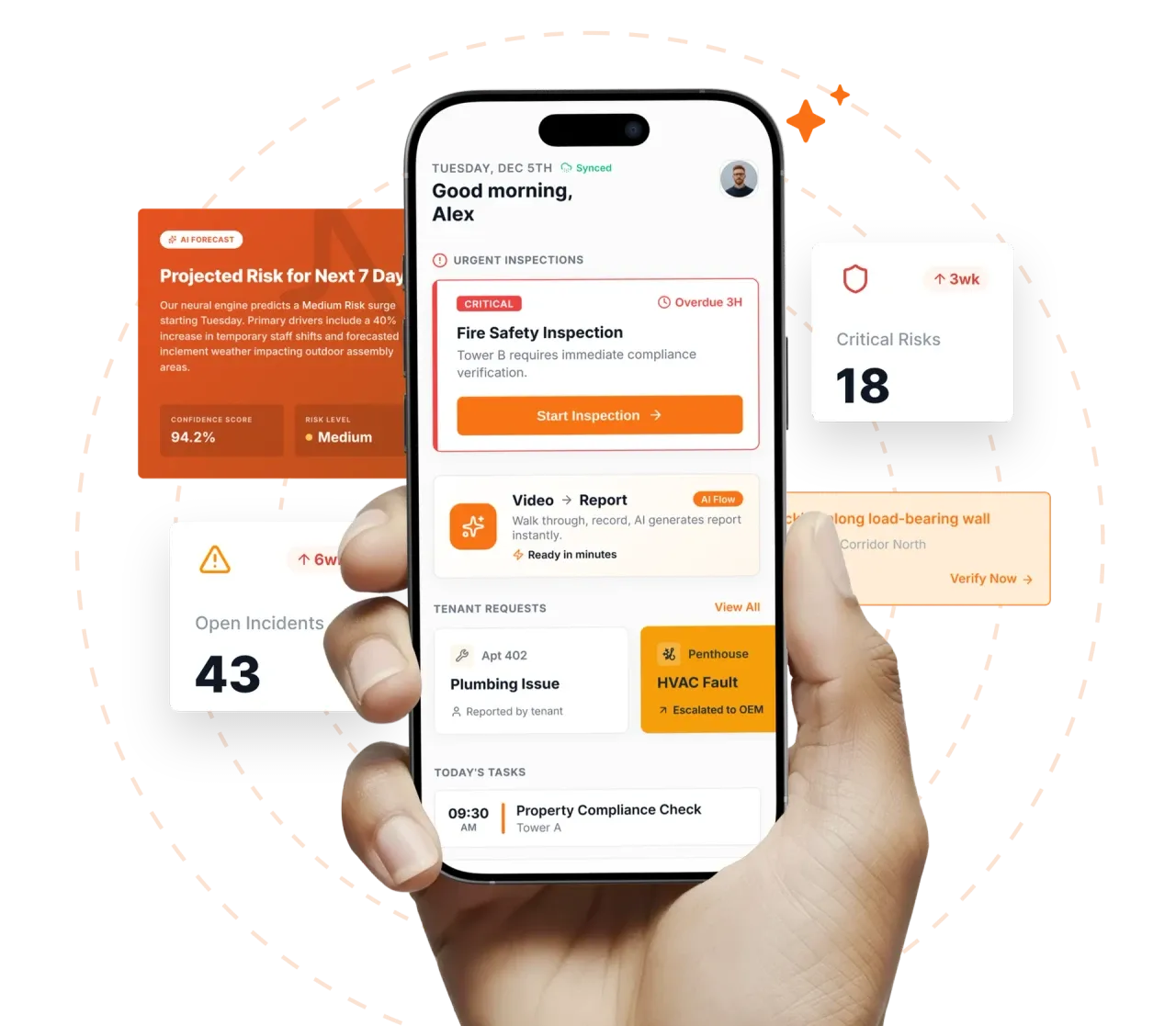
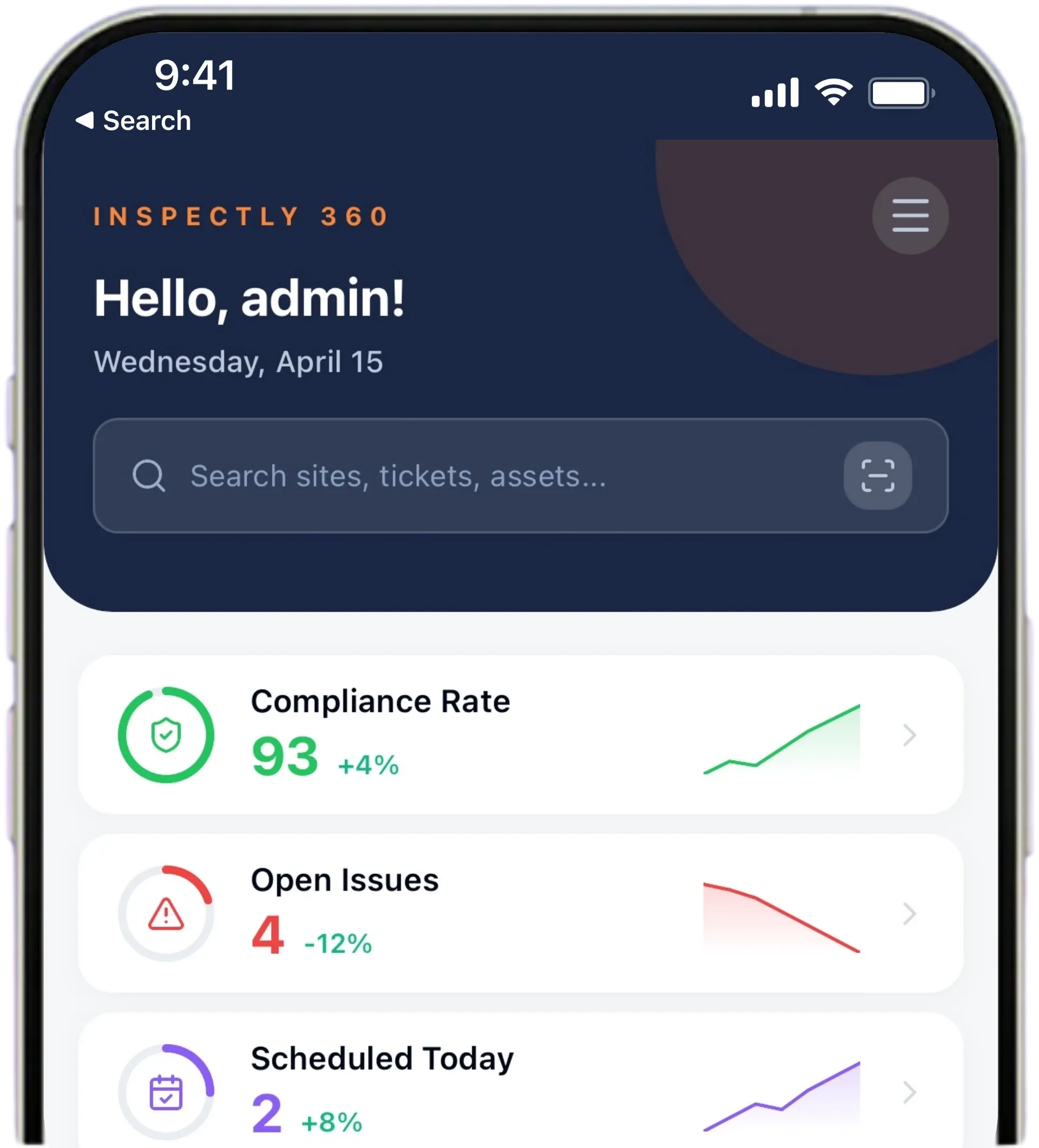
Your operations team sees completion rates, open issues, and compliance scores across all sites in real time. No chasing updates.
Manage every checklist in one connected workspace, capture evidence on mobile at the point of work, and let AI turn field inputs into clear, stakeholder-ready reports in minutes.

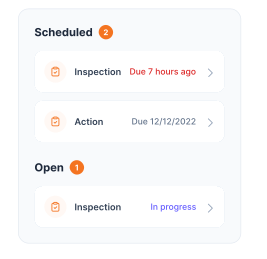
See which checklists your team has in progress across every site, jump into the same inspection with one tap, and keep field, supervisor, and back-office views in sync without sending screenshots on WhatsApp.


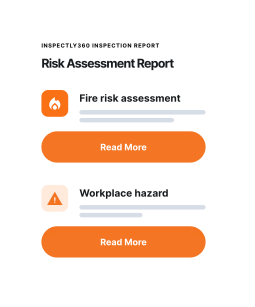
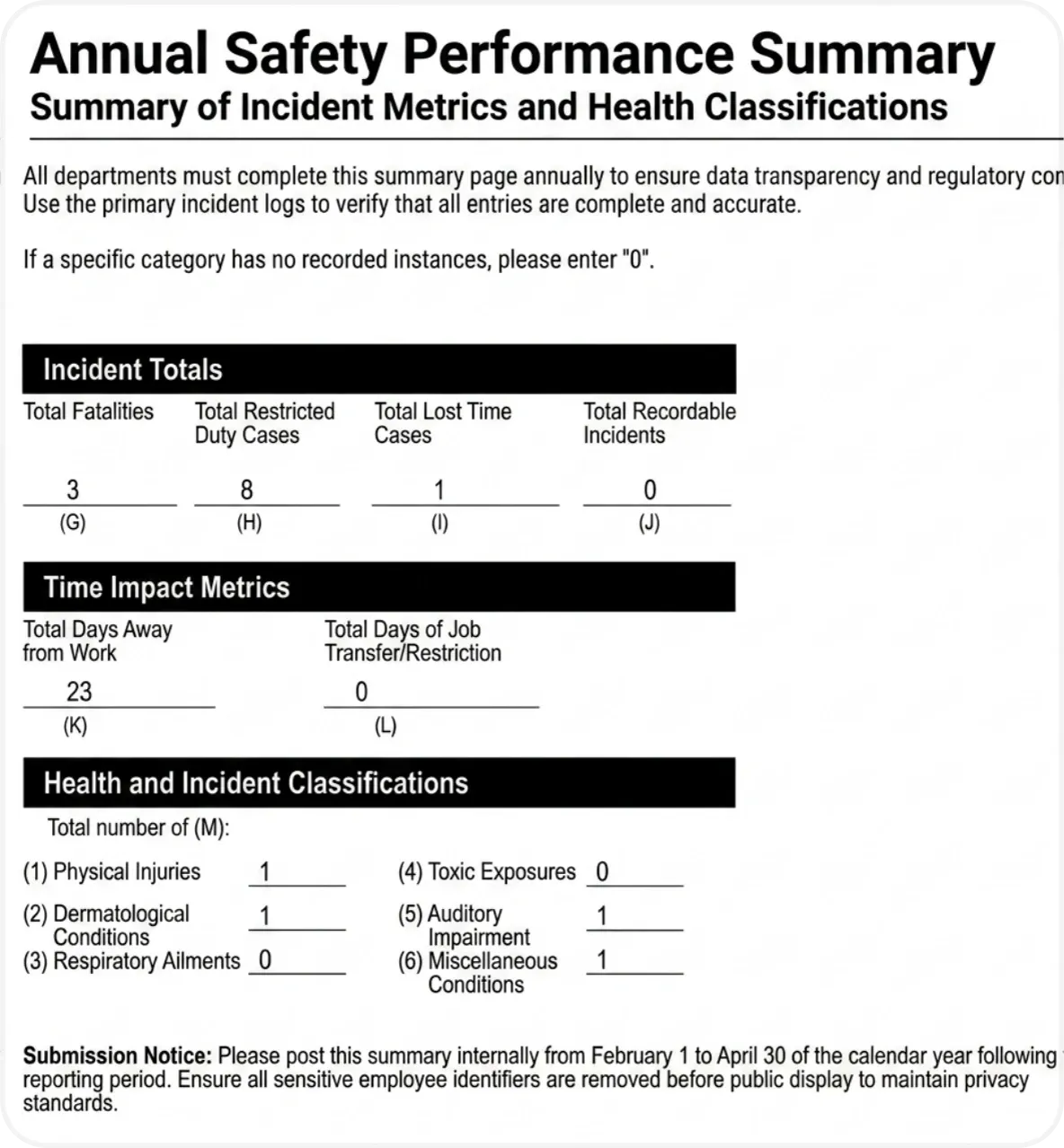


Every team reports differently. Build the report your operations, quality, or compliance leads actually want to read, share it as a branded PDF, and schedule delivery to the stakeholders who need it.

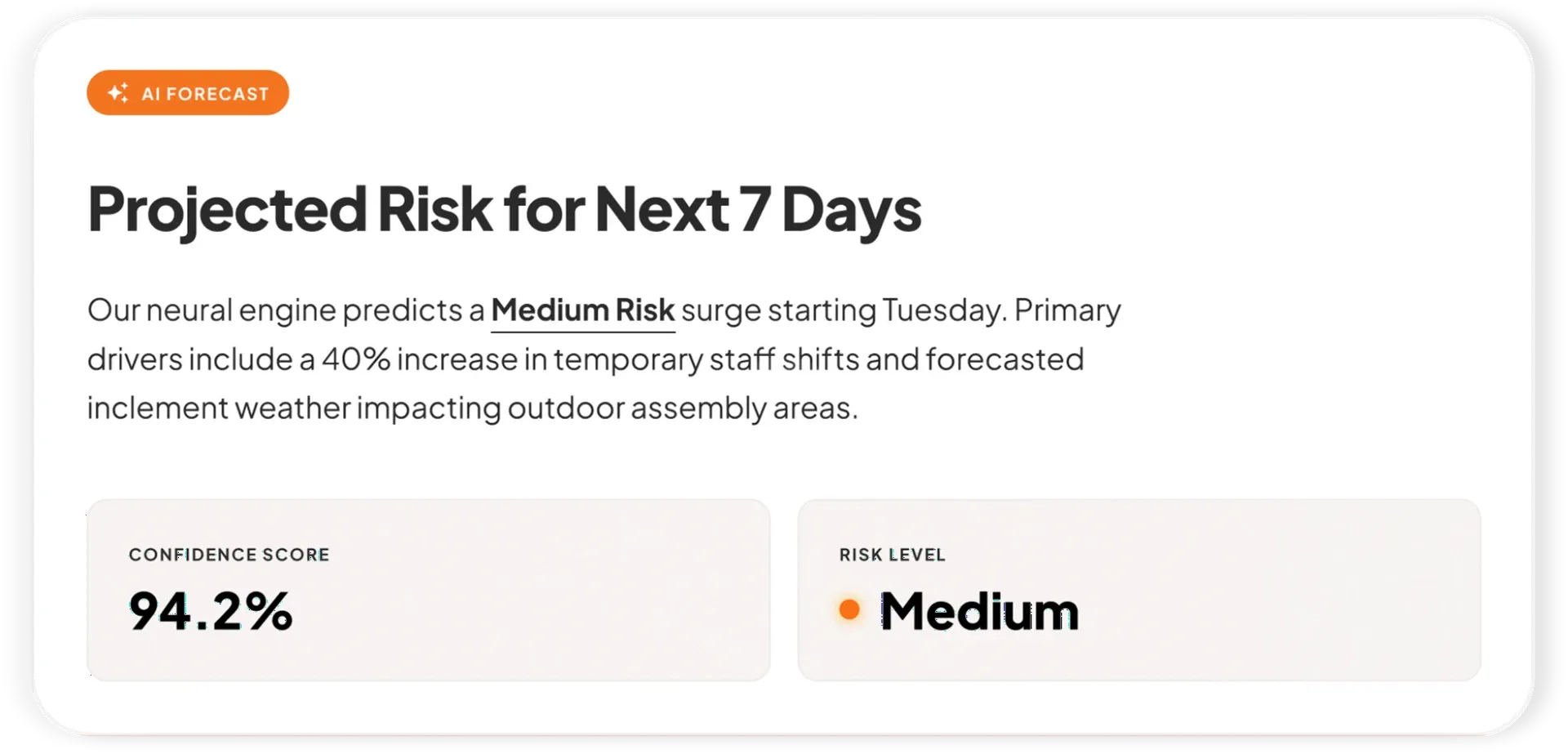
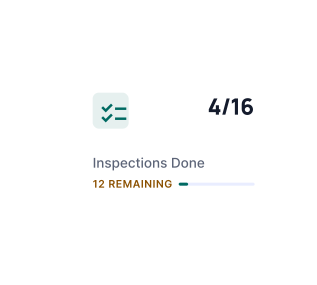
See completion, pass rate, and recurring findings across every checklist and every site, without pulling spreadsheets together at the end of the month.
What changes once facility inspection audit software is standardised on Inspectly360.
Get started with inspection and audit checklist templates.

Internal and external audits with scoring, evidence, and corrective actions. Full audit trail and report generation.

Compliance-focused inspections with evidence capture and audit trails. Meet regulatory and internal requirements.
Use these apps to run inspections and audits.

by Inspectly360
Audits and inspections with scoring, evidence, and reports.

by Inspectly360
Simplify facilities inspections with forms, photos, and reports.

by Inspectly360
Compliance-focused inspections with evidence and audit trails.

by Inspectly360
Building condition and compliance inspections with evidence and follow-ups.

by Inspectly360
Fire safety inspections with extinguisher, exit, and alarm checks.
Scoring methodology is codified into the audit programme rather than left to auditor judgement at scoring time. Each control carries an explicit weight, a scoring rubric (compliant, partial, non-compliant, or numeric scales), and required evidence rules. The platform records the rubric, the weight in force at audit time, the evidence captured, and the auditor's rationale for every score. When an ISO 41001 surveillance body asks 'how did you arrive at this finding', the answer is the audit record itself rather than a reconstruction from memory. Methodology versioning is supported so the rubric used six months ago is still retrievable today.
Finding classification follows the audit programme's methodology. Inspectly360 ships with the standard four-tier model (Major non-conformance, Minor non-conformance, Observation, Opportunity for Improvement) and supports custom classifications per audit framework. Each classification has its own downstream workflow: Majors trigger immediate notification to the FM Director and a 30-day CAPA, Minors get a longer CAPA window, Observations log without mandatory CAPA but feed cycle-over-cycle trending, OFIs feed continuous improvement reviews. Classification consistency across auditors is enforced by the rubric, not by manager review.
Every finding above the classification threshold spawns a CAPA with the finding reference, the evidence, the responsible owner, the deadline (set by classification policy), and the verification rule. The CAPA can require re-inspection with photo proof, supervisor sign-off, or contractor work-order completion before it closes. CAPA closure ties back to the originating audit finding, so when the next surveillance cycle audits the same control, the auditor sees the historical finding, the CAPA, the closure evidence, and the verification. Repeat-finding detection flags any control where the same finding recurs after a closed CAPA.
Internal audit teams have permanent role-based access to their scope with full working-paper write, finding classification, and audit-pack generation rights. External audit firms (Big Four, ISO certification bodies, specialist FM audit firms) get scoped, time-bound RBAC tied to a specific engagement: write access to their audit programme only, read access to evidence supporting the engagement scope, no portfolio visibility outside scope. Engagement closure is workflow-driven; external user access expires automatically with the audit trail retained for the client. Internal and external audits running concurrently on the same platform stay in separate workspaces with no cross-leakage.
ISO 41001 surveillance bodies typically request three cycles of internal audit working papers, management review minutes, CAPA closure evidence, and improvement trends. Inspectly360 supports this with per-programme retention windows that match certification body requirements, immutable working-paper version history, signed reviewer-note chains, and an audit-pack export that bundles the methodology appendix, scoring rationale, finding classification, and CAPA closure into a single signed PDF. Most FM teams use a one-click 'surveillance prep' export that assembles everything the surveillance body asks for; the alternative is a multi-day binder hunt.
Audit cycle planning happens through an annual audit plan view that lists programmes, scope, sampling frames, and assigned audit teams. Sampling supports area-based, asset-based, risk-weighted, and statistical sampling methods. Auditors get assigned a defined sample of meeting rooms, plant rooms, lifts, or assets to inspect rather than the full population, with the platform tracking what was sampled, what was not, and which controls were tested in this cycle versus deferred to next. Coverage gap reporting feeds into the next cycle's plan automatically, so untested controls do not vanish.
Facility Inspection Audit Software on Inspectly360 connects directly to the inspection apps, checklist templates, forms, industries, and adjacent solutions linked below.
See Inspectly360 in action with a live demo tailored to your needs. No credit card required.