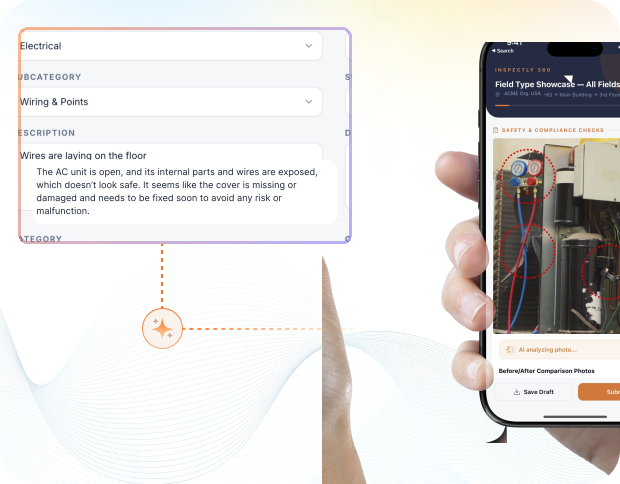
Take a Photo. AI Fills the Form
Your inspector takes a photo of any asset or defect. AI reads it and fills the inspection form automatically. No typing. No manual entry.

Convert your checklist into Mobile App
Overhead bins checklist software is the platform cabin crew, cabin safety managers, and quality teams use to run standardised overhead bin checks the same way on every tail across a fleet. Inspectly360 turns the bin check into a digital template covering latch integrity, structural attachment, weight-limit placards, closing securely under load, and cracks and hinge wear, so every crew runs the same check rather than working from memory.
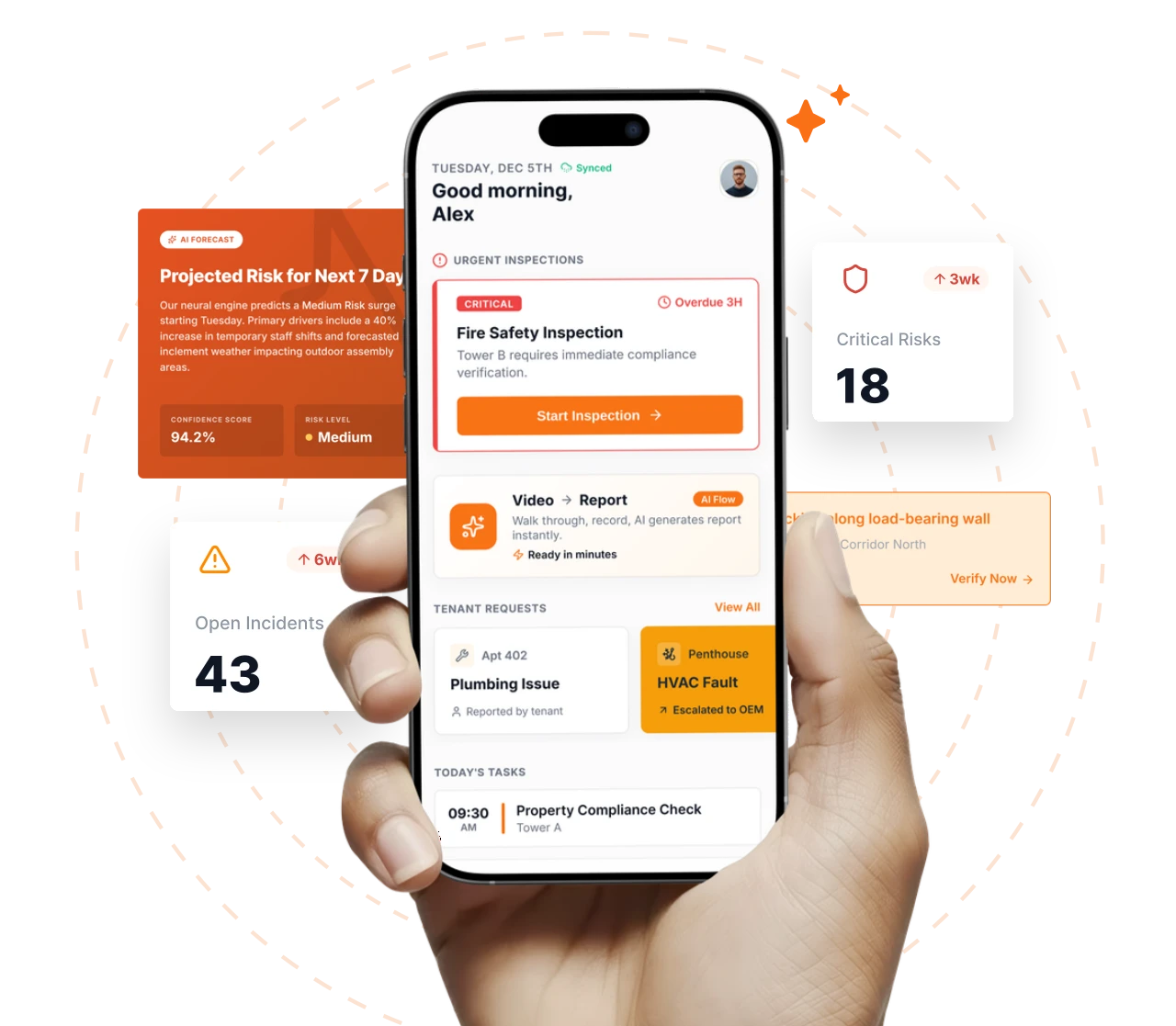
Everything your field team does on paper, Inspectly360 does automatically: faster, more accurate, and without the admin.
Your inspector takes a photo of any asset or defect. AI reads it and fills the inspection form automatically. No typing. No manual entry.
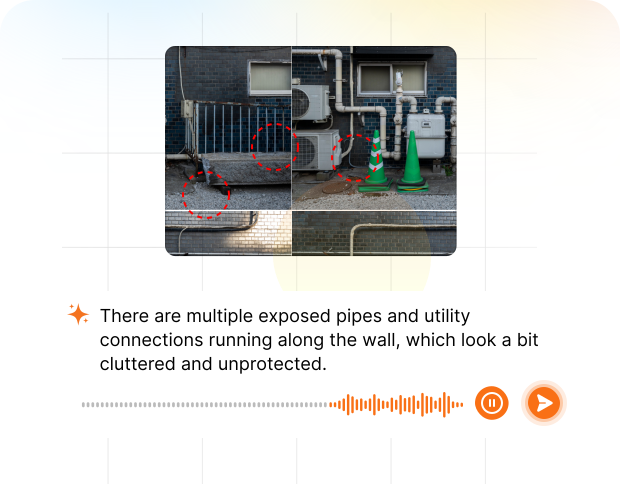
Inspectors speak their observations in any language. AI transcribes and fills the form in real time. Completely hands-free in the field.
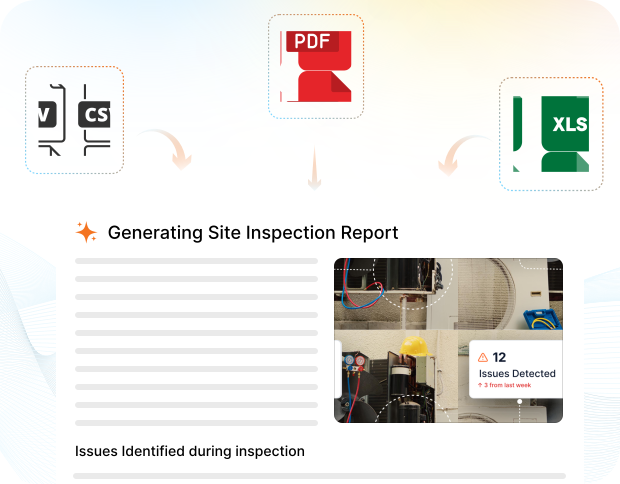
The moment an inspection is submitted, a branded PDF, Excel, or CSV report generates automatically. No manual work. No waiting.

Inspectly360 integrates with the tools your team already uses, including Zoho, Microsoft 365, and SAP. No double entry.
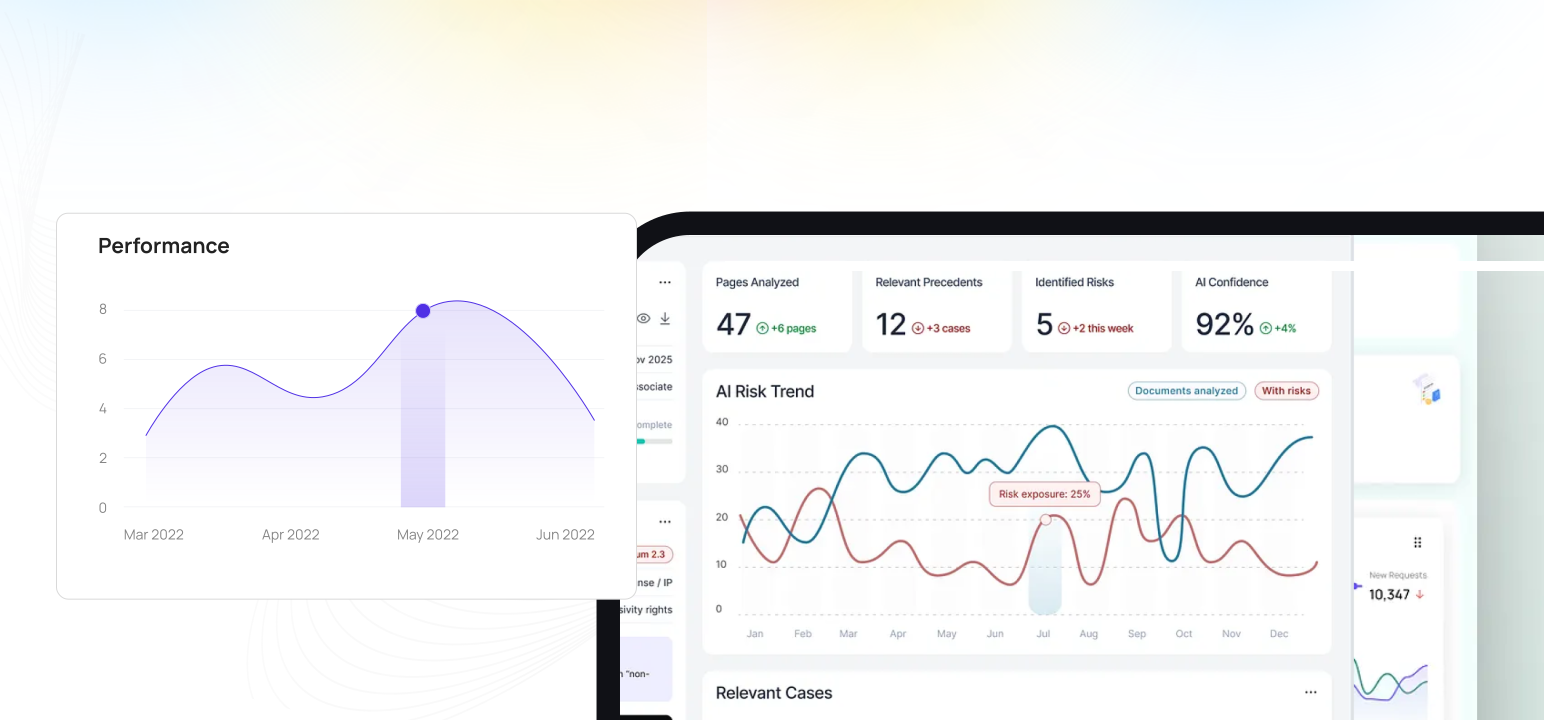
Your operations team sees completion rates, open issues, and compliance scores across all sites in real time. No chasing updates.
What changes once overhead bins checklist software runs on one mobile-first platform with photo proof and live dashboards.
Overhead bins checklist software is the platform cabin crew, cabin safety managers, and quality teams use to run standardised overhead bin checks the same way on every tail across a fleet. Inspectly360 turns the bin check into a digital template covering latch integrity, structural attachment, weight-limit placards, closing securely under load, and cracks and hinge wear, so every crew runs the same check rather than working from memory.
Today the bin check is a paper card or a memorised routine, so coverage varies by who is on board, a crew can skip the closing-under-load check without anyone knowing, and a failed item is a tick with no photo. Across a mixed fleet, each base runs bin checks its own way, so standards are uneven and the cabin safety manager has no consistent record that the check was done, while a bin that will not hold its load is an injury risk in turbulence.
Inspectly360 replaces that with a standardised digital checklist on iOS and Android: mandatory items such as the closing-under-load check cannot be skipped, a failed item requires a photo, and each completed checklist carries a timestamp and named sign-off per bin and tail number. The same template runs across every base for consistent standards, and a fail routes to the inspection and defect workflow so the issue is captured rather than lost.
Cabin crew teams follow this loop to run the overhead bin check the same way on every tail, with proof it was done.
Configure the bin checklist once covering latch, attachment, placard, closing under load, and hinge wear so every crew runs the same items.
Mark the critical items, such as latch integrity and closing under load, as mandatory so they cannot be silently skipped.
Crew complete the checklist on mobile per bin, capturing a photo for any failed item to show the actual condition.
Each completed checklist carries a timestamp and named sign-off per bin and tail so completion is proven, not assumed.
A failed bin item flows into the inspection and defect workflow so the issue is captured and tracked, not lost.
Answers to common long-tail questions, kept on one canonical page to avoid thin duplicate URLs.
Start with a single fleet type so the bin checklist template matches the real cabin configuration before rollout to mixed types and other bases.
Cabin crew get checklist capture, the cabin safety manager gets template control and completion visibility, and quality gets read access to the record through role-based access.
The platform capabilities that power overhead bins checklist software across every site.
One configured template covers every bin item so each crew runs the same check. Why it matters: a standard template removes the variance where coverage depends on who is on board.
Critical items like latch integrity and closing under load are mandatory and cannot be skipped. Why it matters: a silently skipped load check is the gap a digital mandatory item closes.
A failed bin item requires a photo of the condition. Why it matters: a photo lets the next crew and the engineer see the actual fault, not just a tick.
Each checklist carries a timestamp and named sign-off per bin. Why it matters: proof the check was done replaces a verbal assurance that cannot be evidenced.
On overhead bins checklist programmes, A failed item flows into the inspection and defect workflow. Why it matters: a fail that routes to a tracked defect is fixed, where a tick on a card is forgotten.
Checklist completion and fails roll up across tails. Why it matters: the cabin safety manager sees consistent bin standards across every base.
Cabin crew teams comparing Inspectly360 to paper bin cards and memorised checks see the difference fastest on template standardisation, mandatory items, photo evidence on fails, completion tracking, and fleet-wide consistency for latch, attachment, placard, and closing-under-load checks.
| Topic | Typical Gaps | With Inspectly360 |
|---|---|---|
| Template standardisation | Every crew runs the bin check from memory, so coverage varies by who is on board. | One standardised bin template means every crew runs the same check on every tail. |
| Mandatory items | A crew can skip the closing-under-load check and nobody knows it was skipped. | The closing-under-load check is mandatory, so it cannot be silently skipped. |
| Evidence on fails | A failed bin item is a tick with no photo, so the next crew cannot see the condition. | A failed item requires a photo, so the record shows the actual bin condition. |
| Completion tracking | Whether the bin check was done is a verbal assurance with no timestamp. | Each completed checklist carries a timestamp and named sign-off per bin and tail. |
| Fleet consistency | Bin checks differ base to base, so standards are uneven across the fleet. | The same bin checklist runs across every base for consistent standards fleet-wide. |
What changes once overhead bins checklist software is standardised on Inspectly360.
Get started with inspection and audit checklist templates.

Use this template to perform a comprehensive safety inspection of light vehicles. This check ensures all critical components are checked ...
Use these apps to run inspections and audits.

by Inspectly360
Streamline facilities inspections with forms, photos, and reports.

by Inspectly360
Building condition and compliance inspections with evidence and follow-ups.

by Inspectly360
Digitize building inspection apps workflows with forms, evidence capture, and automated reporting.

by Inspectly360
Run building inspections on phones and tablets with offline forms, photo evidence, and instant reports.

by Inspectly360
Audit buildings with structured scoring, photo evidence, and corrective action tracking across portfolios.
An overhead bin checklist on Inspectly360 standardises the bin check into one template every crew runs the same way: latch integrity, structural attachment, weight-limit placards, closing securely under load, and cracks and hinge wear. Instead of each crew working from memory or a paper card with variable coverage, the checklist lists every item and records a pass or fail per bin position and tail number. Critical items are mandatory, so they cannot be skipped. The template is configured once to match the cabin configuration, so the same check runs across every base, giving consistent bin standards rather than a routine that depends on who is on board.
The closing-under-load check and latch integrity are marked mandatory in the template, so the checklist cannot be completed until they are addressed. On a paper card or a memorised check, a crew can skip the load check and nobody knows it was skipped. With mandatory items, the record shows the load check was completed with its pass or fail. This matters because a bin that latches empty but fails under load can open in turbulence with bags inside, which is a direct injury risk. The mandatory rule turns the most safety-relevant bin checks from optional habit into a required, evidenced step on every check.
Yes. The checklist works fully offline on iOS and Android, which matters on the aircraft and at remote stands where signal is weak. Crew complete the bin checklist, capture photos of any failed item, and submit while offline. Records sync automatically once the device reconnects, and the timestamp reflects when the check was actually done, not when it synced. Nothing is lost if a check happens in an area with no coverage. This keeps the completion record accurate and means crew run the same standardised check in real cabin conditions rather than only where there is a connection.
When a crew member marks a bin item as failed, the checklist requires a photo of the condition, and the failed item flows into the inspection and defect workflow as a tracked issue against the bin position and tail number. Instead of a tick on a paper card the next crew never reads, the fail becomes a tracked defect with the photo, location, and severity, routed to line maintenance. This means a latch that will not hold, a loose attachment, or a missing placard is captured and fixed rather than lost. The checklist and the defect workflow connect, so a standard check that finds a fault leads to an actual repair.
Each completed bin checklist carries a timestamp and the named person who signed it off, per bin position and tail number. Instead of a verbal assurance that the check happened, the record shows when it was done, who did it, and the result of every item, including the mandatory closing-under-load check. The cabin safety manager sees completion across the fleet, including any check that was missed or run late. This proof matters for an audit walk and for accountability: it replaces the gap where a check is assumed to have happened but cannot be evidenced, with a defensible record that the standardised bin check was completed.
The same bin checklist template runs across every base, so the check does not differ depending on the station holding the aircraft. The cabin safety manager configures the template once, including the mandatory items, and every crew at every base runs that same check. Completion and fails roll up to a fleet view, so the manager can compare bin standards between bases and tails and see where checks are missed or where the same item repeatedly fails. This replaces the situation where each base runs bin checks its own way, producing uneven standards that nobody can compare or improve fleet-wide.
Overhead Bins Checklist Software on Inspectly360 connects directly to the inspection apps, checklist templates, forms, industries, and adjacent solutions linked below.
See Inspectly360 in action with a live demo tailored to your needs. No credit card required.