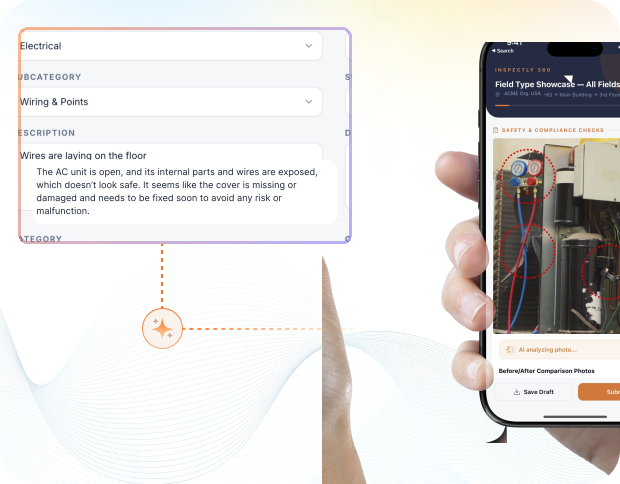
Take a Photo. AI Fills the Form
Your inspector takes a photo of any asset or defect. AI reads it and fills the inspection form automatically. No typing. No manual entry.

Convert your checklist into Mobile App
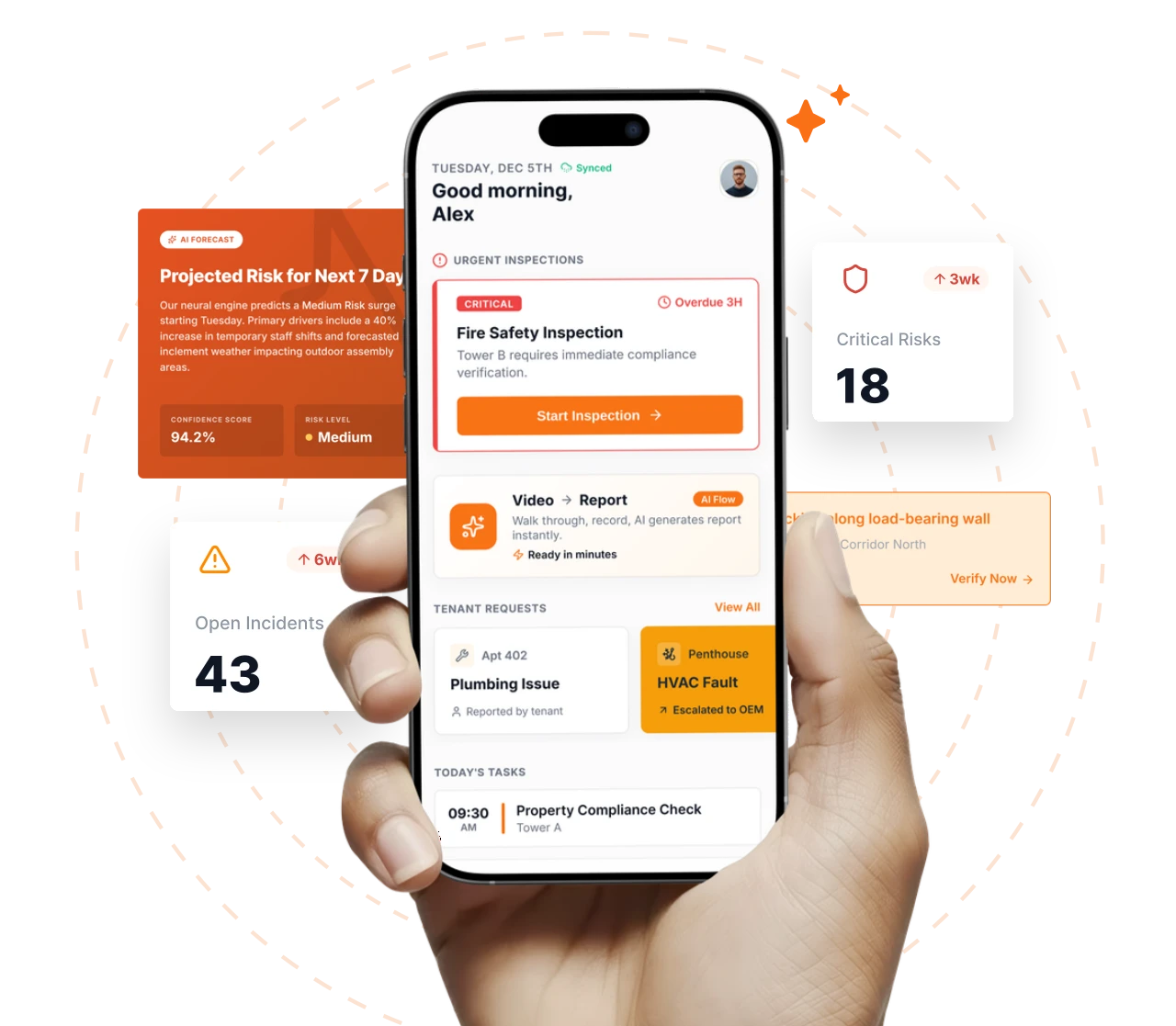
Taxiway maintenance software is the platform airfield maintenance managers, pavement engineers, and maintenance crews use to plan, record, and close taxiway upkeep and keep defensible records across the system. Inspectly360 digitises marking repaint cycles, airfield ground lighting upkeep, pavement crack and joint repair, shoulder grading, and drainage clearance in one record aligned to ICAO Annex 14 and FAA 14 CFR Part 139.
Everything your field team does on paper, Inspectly360 does automatically: faster, more accurate, and without the admin.
Your inspector takes a photo of any asset or defect. AI reads it and fills the inspection form automatically. No typing. No manual entry.
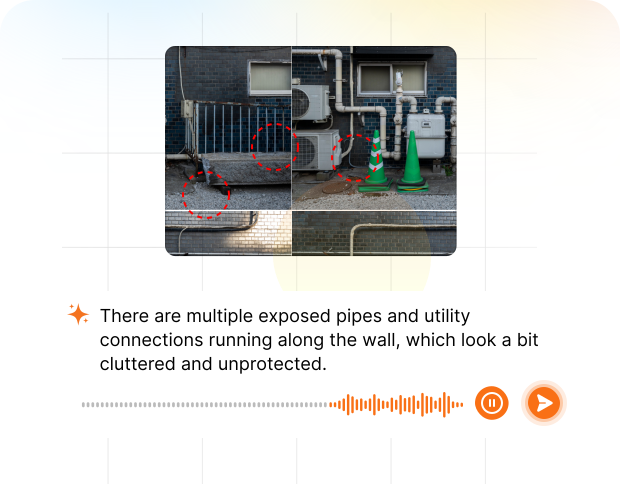
Inspectors speak their observations in any language. AI transcribes and fills the form in real time. Completely hands-free in the field.
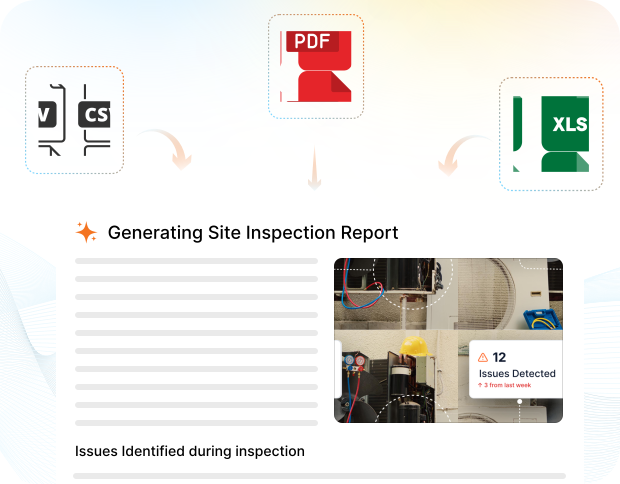
The moment an inspection is submitted, a branded PDF, Excel, or CSV report generates automatically. No manual work. No waiting.

Inspectly360 integrates with the tools your team already uses, including Zoho, Microsoft 365, and SAP. No double entry.
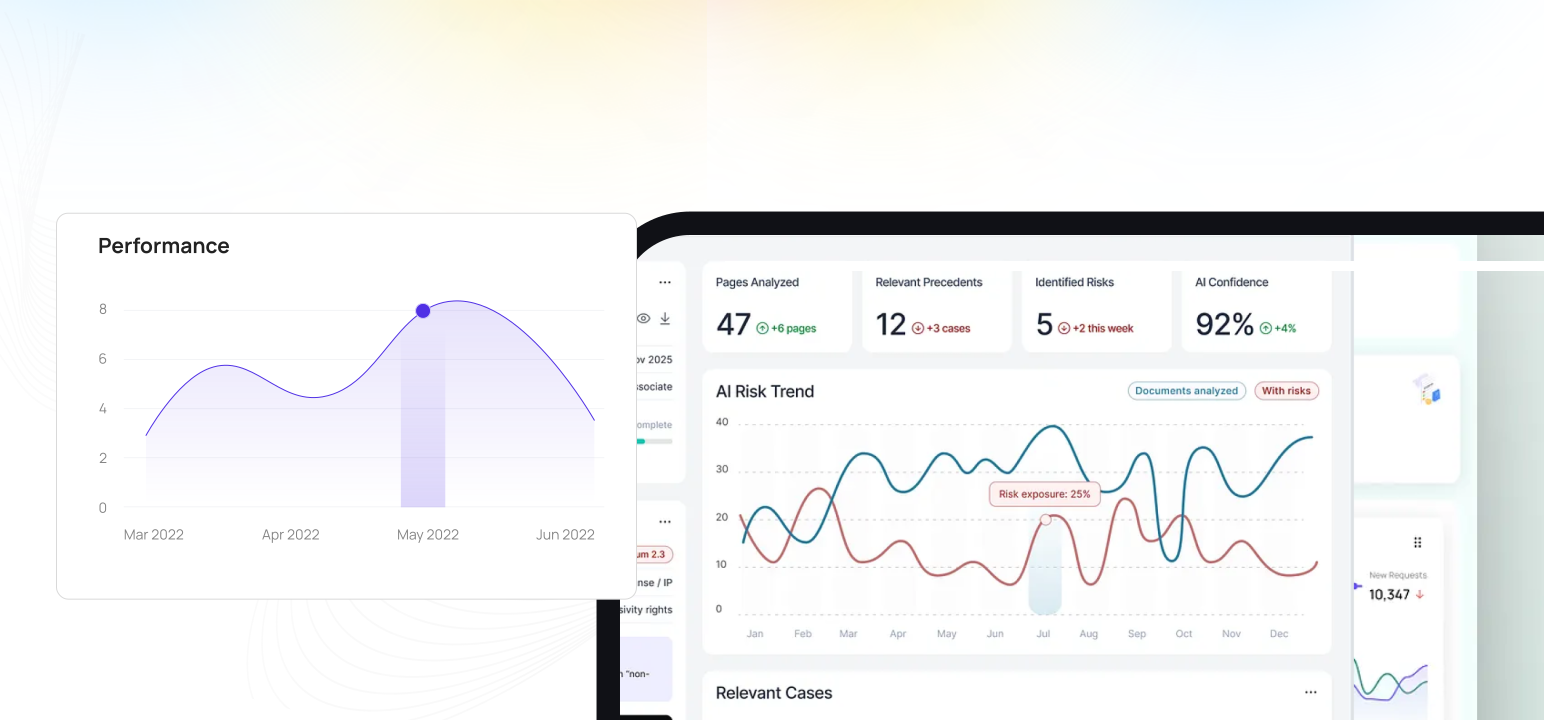
Your operations team sees completion rates, open issues, and compliance scores across all sites in real time. No chasing updates.
What changes once taxiway maintenance software runs on one mobile-first platform with photo proof and live dashboards.
Taxiway maintenance software is the platform airfield maintenance managers, pavement engineers, and maintenance crews use to plan, record, and close taxiway upkeep and keep defensible records across the system. Inspectly360 digitises marking repaint cycles, airfield ground lighting upkeep, pavement crack and joint repair, shoulder grading, and drainage clearance in one record aligned to ICAO Annex 14 and FAA 14 CFR Part 139.
Today the defect list lives in a logbook, the repaint date sits in a spreadsheet, and the proof of last repair is a photo on someone's phone. When a centreline marking fades below standard, a guidance-sign lamp stays out, or a joint failure spreads, nobody sees it until a self-inspection or an audit finds it. Across a taxiway system with mixed segments, every shift tracks work a little differently, so the maintenance manager cannot see what is open and what is overdue.
Inspectly360 replaces that with mobile capture on iOS and Android: crews log defects by segment, route them to a work order with an owner and deadline, and close each one with a repair photo. Repaint cycles, AGL upkeep, shoulder grading intervals, and friction-affecting conditions raise alerts before they fall due, and a branded evidence pack exports per taxiway when the regulator asks.
Airfield maintenance teams follow this loop for logged taxiway defects, scheduled upkeep, and the PCI record.
Divide the taxiway system into segments, marking runs, and AGL circuits so each defect, repaint, and survey is recorded against a known location.
Crews record cracks, joint failures, faded markings, and lamp outages on mobile with a photo and a segment reference, even offline.
Across the taxiway maintenance portfolio, each finding becomes a work order with an owner, deadline, and required closure photo so nothing sits in a logbook.
Repaint cycles, AGL upkeep, and shoulder grading intervals raise staged alerts so upkeep is planned, not discovered overdue.
Crews close work orders with a repair photo and named sign-off; a branded evidence pack exports per taxiway for the authority.
Answers to common long-tail questions, kept on one canonical page to avoid thin duplicate URLs.
Start with one group of taxiways so the segments, marking runs, AGL circuits, and grading intervals are validated against real references before rollout to the rest of the system, runways, and aprons.
Maintenance crews get defect capture and work-order closure, the pavement engineer gets PCI and condition visibility, and the maintenance manager gets the full open-work and overdue view through role-based access.
The platform capabilities that power taxiway maintenance software across every site.
Every crack, joint failure, and surface defect is logged by segment with a photo. Why it matters: a defect with no location is one a crew cannot find again before it spreads across a junction.
Centreline and edge marking repaint is scheduled per segment against condition. Why it matters: faded taxiway markings are a ground-movement risk and an airside finding if left below standard.
Edge and centreline fittings carry service history and outage records per circuit. Why it matters: planned AGL upkeep prevents repeat outages that disrupt night routing.
Shoulder grading and erosion control carry intervals with alerts. Why it matters: an eroding shoulder feeds FOD onto the taxiway and undermines the pavement edge.
Pavement Condition Index scores attach to each segment and trend over time. Why it matters: a declining PCI is the early signal that drives planned rehabilitation over emergency repair.
A branded maintenance records pack exports per taxiway for the authority. Why it matters: an auditor request becomes a minutes-long export, not a logbook search.
Airfield maintenance managers and pavement engineers comparing Inspectly360 to paper work cards, spreadsheet defect logs, and WhatsApp photo trails see the difference fastest on marking repaint cycles, AGL lamp upkeep, pavement crack repair, shoulder grading intervals, and Pavement Condition Index history aligned to ICAO Annex 14 and FAA 14 CFR Part 139.
| Topic | Typical Gaps | With Inspectly360 |
|---|---|---|
| Marking repaint cycles | Faded taxiway centreline and edge markings are repainted when noticed, not on a tracked cycle. | Repaint cycles are scheduled per segment with condition photos driving the next repaint. |
| AGL lamp upkeep | Edge and centreline lamp upkeep is reactive, with no record of which fittings were serviced when. | Each fitting carries its service history and outage record so upkeep is planned per circuit. |
| Pavement crack and joint repair | Cracks and failed joints are photographed but the photo never links to the repair that followed. | Each defect is logged by segment, routed to a work order, and closed with a repair photo. |
| Shoulder grading intervals | Shoulder erosion and grading is handled ad hoc with no interval or condition record. | Shoulder grading carries an interval with alerts and condition photos per segment. |
| Pavement Condition Index history | PCI surveys for taxiways sit in separate reports that nobody compares year over year. | PCI scores attach to each taxiway segment so degradation trends drive rehabilitation. |
What changes once taxiway maintenance software is standardised on Inspectly360.
Get started with inspection and audit checklist templates.

Use this template to perform a comprehensive safety inspection of light vehicles. This check ensures all critical components are checked ...
Use these apps to run inspections and audits.

by Inspectly360
Streamline facilities inspections with forms, photos, and reports.

by Inspectly360
Building condition and compliance inspections with evidence and follow-ups.

by Inspectly360
Digitize building inspection apps workflows with forms, evidence capture, and automated reporting.

by Inspectly360
Run building inspections on phones and tablets with offline forms, photo evidence, and instant reports.

by Inspectly360
Audit buildings with structured scoring, photo evidence, and corrective action tracking across portfolios.
Centreline and edge marking repaint is scheduled per taxiway segment against the condition recorded on inspections rather than repainted only when someone notices fading. The platform holds the last repaint date and condition photos for each marking run, and raises an alert when the next repaint is due. Crews record the repaint against the segment with before-and-after photos so the evidence ties to the schedule. This matters because faded taxiway markings are a ground-movement risk and a clear airside finding if they fall below standard. Tracking repaint as a cycle driven by condition means the work happens on data, not on memory, and the maintenance manager can show every marking run is being kept to standard.
Each crack and failed joint is logged in the field by segment with a photo, so the location is exact rather than a vague note. The finding routes to a work order with an owner and deadline, and the crew closes it with a repair photo and named sign-off. Because every defect carries its history, the pavement engineer can see whether a joint failure at a junction is spreading between surveys or holding stable. This is important on taxiways because junctions and high-turn areas take concentrated stress. When a self-inspection or audit asks what was found and fixed on a segment, the record answers in seconds rather than a search through paper work cards from different shifts.
Yes. Capture works fully offline on iOS and Android, which matters across a large taxiway system where signal is weak between segments and during night maintenance windows. Crews log defects, complete scheduled upkeep, and capture photos while offline, and records sync automatically once the device reconnects. The timestamp reflects when the work was actually completed, not when it synced. Nothing is lost when work is done in a no-coverage area. This keeps the maintenance trail accurate for the pavement engineer and for any later self-inspection or audit review of what was done and when, which is exactly the kind of record gap that paper and patchy connectivity tend to create.
Each edge and centreline fitting is tied to its AGL circuit and carries its service history and outage record, so upkeep is planned per circuit rather than handled reactively. When a fitting is serviced or a lamp replaced, the action is recorded against the fitting with a photo, and the platform keeps a running count of outages per circuit. Because taxiway lighting affects night routing and ground-movement safety, a circuit that keeps failing is visible and can be investigated rather than patched repeatedly. This planned approach replaces the reactive cycle where lamps are replaced one at a time with no record of which fittings were serviced when, which leaves the maintenance manager blind to recurring faults.
Shoulder grading and erosion control carry an interval on each segment with staged alerts, and crews record grading work against the segment with condition photos. This matters because an eroding taxiway shoulder feeds FOD onto the movement area and undermines the pavement edge, both of which are airside concerns. Tracking grading as a scheduled activity with condition evidence means erosion is addressed before it produces FOD or a soft edge, rather than handled ad hoc when it becomes obvious. The pavement engineer can see which shoulders are degrading fastest and prioritise grading accordingly, turning what is often an afterthought into a planned part of the taxiway maintenance program.
Yes. Role-based access scopes each user to the work and segments they are responsible for. A paving, marking, or AGL contractor sees only the work orders assigned to it, while the airfield maintenance team keeps the full view across every segment and circuit. Maintenance crews get defect capture and closure, and the pavement engineer gets read access to PCI and condition history. This prevents a contractor receiving system-wide record access beyond its remit, while still giving the airport a single consolidated view of open and overdue work. Access changes are logged, so the trail shows who could see and sign off on what, and when, which keeps accountability clear across in-house and contracted work.
Taxiway Maintenance Software on Inspectly360 connects directly to the inspection apps, checklist templates, forms, industries, and adjacent solutions linked below.
See Inspectly360 in action with a live demo tailored to your needs. No credit card required.