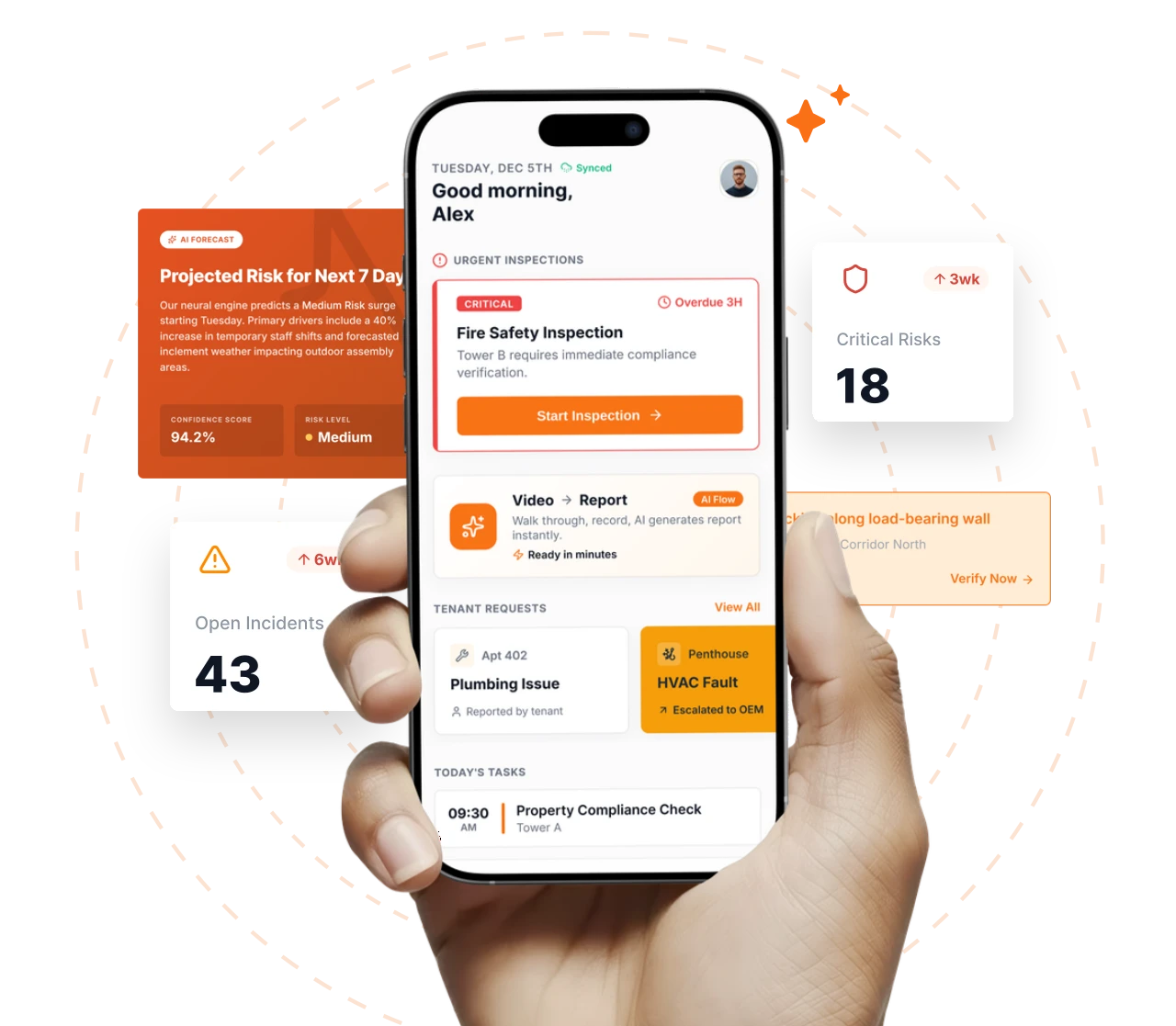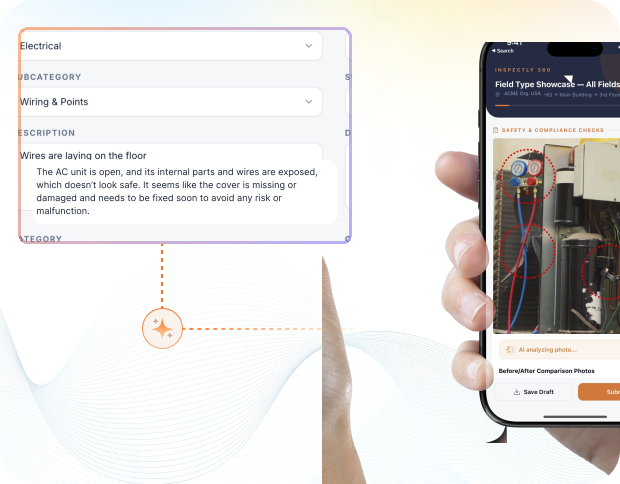
Take a Photo. AI Fills the Form
Your inspector takes a photo of any asset or defect. AI reads it and fills the inspection form automatically. No typing. No manual entry.

Convert your checklist into Mobile App
Commercial airlines audit software is the platform the director of quality, compliance monitoring managers, and internal auditors use to run the airline's internal and external audit programs and keep defensible evidence. Inspectly360 digitises internal station audits, IOSA preparation against the ISARPs, finding management, and corrective action (CAPA) tracking in one record aligned to the IOSA Standards Manual and ICAO Annex 19.
Everything your field team does on paper, Inspectly360 does automatically: faster, more accurate, and without the admin.
Your inspector takes a photo of any asset or defect. AI reads it and fills the inspection form automatically. No typing. No manual entry.
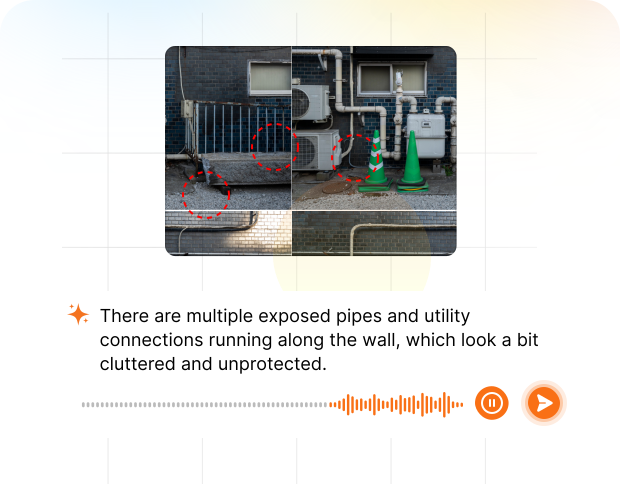
Inspectors speak their observations in any language. AI transcribes and fills the form in real time. Completely hands-free in the field.
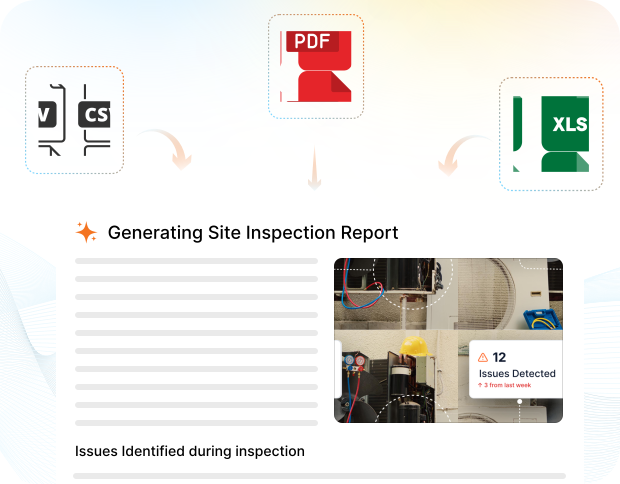
The moment an inspection is submitted, a branded PDF, Excel, or CSV report generates automatically. No manual work. No waiting.

Inspectly360 integrates with the tools your team already uses, including Zoho, Microsoft 365, and SAP. No double entry.
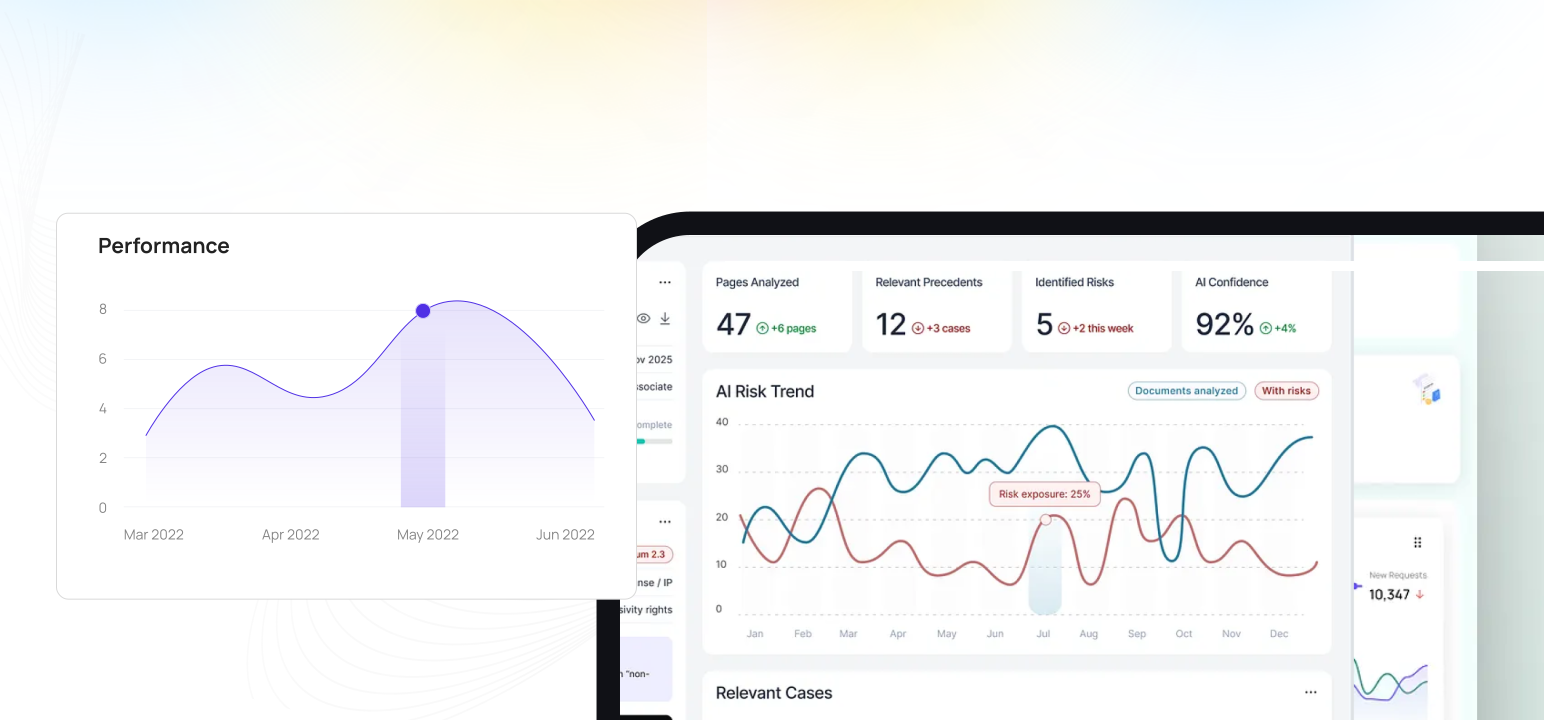
Your operations team sees completion rates, open issues, and compliance scores across all sites in real time. No chasing updates.
What changes once commercial airlines audit software runs on one mobile-first platform with photo proof and live dashboards.
Commercial airlines audit software is the platform the director of quality, compliance monitoring managers, and internal auditors use to run the airline's internal and external audit programs and keep defensible evidence. Inspectly360 digitises internal station audits, IOSA preparation against the ISARPs, finding management, and corrective action (CAPA) tracking in one record aligned to the IOSA Standards Manual and ICAO Annex 19.
Today the annual audit plan sits in a spreadsheet that drifts, IOSA evidence is gathered into folders in the weeks before renewal, and a finding is emailed to a station with no root cause and no tracked corrective action. When a CAPA slips past its deadline, or the same finding recurs at another station, nobody sees the pattern until the next audit cycle exposes it. Across an airline with many stations and process owners, audit records live in different formats, so the director of quality cannot see true audit status in one place.
Inspectly360 replaces that with structured audit management on iOS and Android: auditors run station audits against the relevant standard on mobile, findings carry root cause and a corrective action plan with an owner and deadline, and IOSA evidence is captured against the ISARPs throughout the year. A branded evidence pack exports per audit when the IOSA auditor or the authority asks, and the same audit structure runs across every station.
Quality and audit teams follow this loop for internal station audits, IOSA preparation, and corrective action closure.
Define the audit scope by station and process against the relevant standard or ISARP, and schedule it in the annual audit plan with reminders.
Auditors complete the audit against each requirement on mobile, capturing photos, references, and conformity status as evidence.
Each finding records the non-conformity, its root cause, and the affected requirement so corrective action targets the real issue.
A corrective action plan gets an owner and a deadline, and closure is verified with evidence before the finding is signed off.
Open findings and overdue CAPAs roll up airline-wide, and a branded evidence pack exports per audit for the IOSA auditor.
Answers to common long-tail questions, kept on one canonical page to avoid thin duplicate URLs.
Start with one internal audit program, such as station ground operations, so the audit template, finding workflow, and CAPA tracking are validated against real audits before extending to IOSA preparation across the airline.
Auditors get audit execution, station owners get their findings and corrective actions, and the director of quality gets airline-wide audit status through role-based access.
The platform capabilities that power commercial airlines audit software across every site.
Audits are scheduled per station and process with reminders so the annual plan stays on track. Why it matters: a missed internal audit is a finding in itself at IOSA renewal.
Auditors record conformity against each requirement or ISARP with photos and references. Why it matters: evidence captured against the standard removes the scramble before an external audit.
Each finding records its non-conformity and root cause, not just the symptom. Why it matters: corrective action that targets root cause stops the same finding recurring at another station.
Corrective actions carry an owner, a deadline, and verified closure evidence. Why it matters: a CAPA marked done without proof is the gap an IOSA auditor reopens.
Open findings, overdue CAPAs, and audit completion roll up across stations. Why it matters: the director of quality sees true status without chasing auditors.
A branded evidence pack exports per audit and requirement. Why it matters: an IOSA auditor request becomes a minutes-long export, not a drive search.
Directors of quality and compliance monitoring managers comparing Inspectly360 to Word audit reports, spreadsheet finding logs, and email trails see the difference fastest on IOSA evidence mapping, internal audit scheduling, finding to root cause to CAPA, closure verification, and airline-wide audit status aligned to the IOSA Standards Manual and ICAO Annex 19.
| Topic | Typical Gaps | With Inspectly360 |
|---|---|---|
| Internal audit scheduling across stations | The annual audit plan lives in a spreadsheet that drifts as stations and auditors change. | Audits are scheduled per station and process with reminders so the annual plan stays on track. |
| IOSA evidence against the standard | IOSA evidence is gathered into folders in the weeks before the audit and reconciled by hand. | Evidence is captured against the relevant ISARP throughout the year and ready at renewal. |
| Finding to root cause to CAPA | A finding is emailed to a station with no root cause field and no tracked corrective action. | Each finding carries root cause, a corrective action plan, an owner, and a closure deadline. |
| Airline-wide audit status | The director of quality chases auditors and stations to learn which findings are still open. | Live dashboard shows open findings, overdue CAPAs, and audit completion across the airline. |
| Evidence for the IOSA auditor | Audit reports and closure proof are searched across drives when the IOSA auditor asks. | A scoped, timestamped evidence pack exports per audit and ISARP in minutes. |
What changes once commercial airlines audit software is standardised on Inspectly360.
Get started with inspection and audit checklist templates.

Use this template to perform a comprehensive safety inspection of light vehicles. This check ensures all critical components are checked ...
Use these apps to run inspections and audits.

by Inspectly360
Streamline facilities inspections with forms, photos, and reports.

by Inspectly360
Building condition and compliance inspections with evidence and follow-ups.

by Inspectly360
Digitize building inspection apps workflows with forms, evidence capture, and automated reporting.

by Inspectly360
Run building inspections on phones and tablets with offline forms, photo evidence, and instant reports.

by Inspectly360
Audit buildings with structured scoring, photo evidence, and corrective action tracking across portfolios.
The platform lets you capture evidence against the relevant IOSA Standards and Recommended Practices throughout the year rather than gathering folders in the weeks before renewal. Internal audits map findings to the affected ISARP, and corrective actions carry root cause, an owner, and verified closure. When the IOSA audit window arrives, the evidence is already structured against the standard, so the compliance monitoring manager exports a scoped pack per requirement in minutes. This turns IOSA from a periodic scramble into a continuous process, and it makes recurring non-conformities visible early because findings and their closures are tracked in one place across every station.
Every finding raised in an audit records the non-conformity, its root cause, and the affected requirement. A corrective action plan is then attached with a named owner and a deadline. The CAPA stays open on the dashboard until closure is verified with evidence, not just marked done. Overdue corrective actions are surfaced to the director of quality automatically, so a slipping CAPA is visible before the next audit cycle exposes it. Because closure requires evidence, an auditor reviewing the trail sees what was fixed, who verified it, and when, which is the proof that a spreadsheet finding log cannot provide.
Yes. Audit execution works fully offline on iOS and Android, which matters at outstations, on the ramp, and in areas with weak signal. An auditor completes the audit against each requirement, captures photos and references, and records conformity status while offline. The audit syncs automatically once the device reconnects, and the timestamp reflects when the audit was actually conducted. Nothing is lost if an audit runs in a location with no coverage. This keeps the audit trail accurate and defensible for IOSA and internal review, and it lets auditors work the same way at a hub or a remote station without depending on connectivity.
Because every finding records its root cause and is linked to a requirement, the platform can surface when the same non-conformity appears at more than one station or recurs over time. The director of quality sees the pattern on the dashboard rather than discovering it at the next audit. Corrective actions target the root cause, not just the local symptom, so a systemic issue is addressed across the network rather than fixed repeatedly at individual stations. This is the difference between treating each finding as an isolated email and managing findings as data that reveals where a process, not a single station, needs to change.
Every audit, finding, root cause, corrective action, and closure is stored with a timestamp, the named auditor and owner, and supporting photos and references against the specific station and requirement. When an IOSA or internal auditor asks for records, you export a scoped, branded evidence pack per audit and ISARP covering the window in minutes. The trail shows the audit scope, the findings raised, the corrective actions taken, and the verified closure of each one. This replaces the search across drives and email threads that Word reports and spreadsheet logs force, and the structure is consistent across every audit program in the airline.
Yes. Role-based access scopes each user to the audits and findings they are responsible for. Auditors get audit execution, a station owner sees only the findings and corrective actions assigned to their station, and the director of quality keeps airline-wide visibility. This keeps a station focused on its own corrective actions while the quality function sees the complete picture. Access changes are logged, so the trail shows who could see and sign off on what, and when. For an airline where external auditors and contracted parties are sometimes involved, scoped access prevents anyone receiving audit data beyond their remit.
Commercial Airlines Audit Software on Inspectly360 connects directly to the inspection apps, checklist templates, forms, industries, and adjacent solutions linked below.
See Inspectly360 in action with a live demo tailored to your needs. No credit card required.