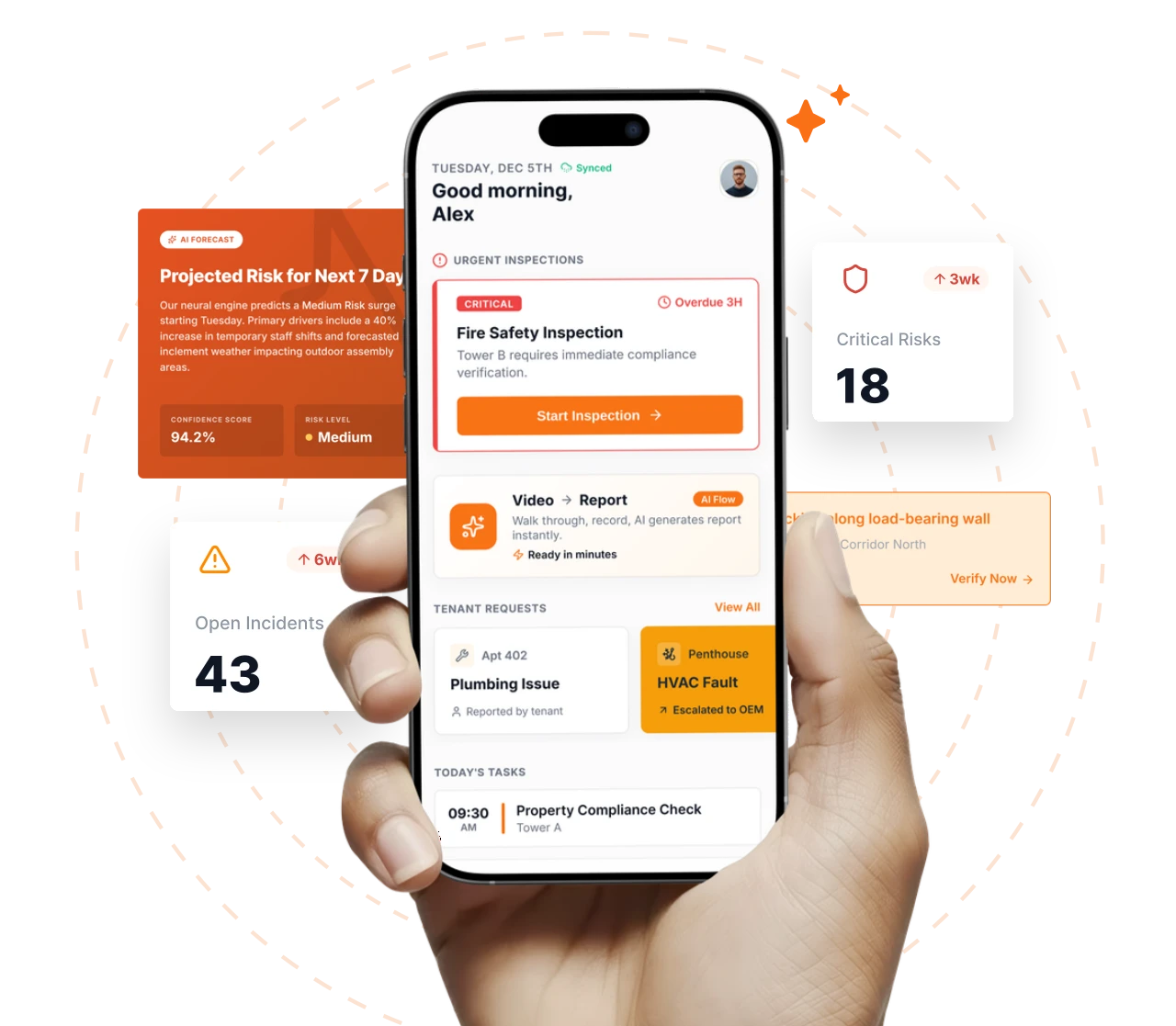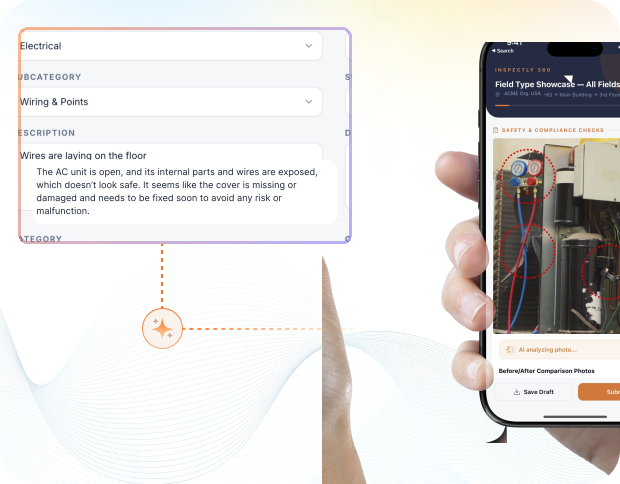
Take a Photo. AI Fills the Form
Your inspector takes a photo of any asset or defect. AI reads it and fills the inspection form automatically. No typing. No manual entry.

Convert your checklist into Mobile App
Commercial airlines safety software is the platform the director of safety, SMS manager, and frontline reporters use to run the airline's safety management system and keep a defensible safety record. Inspectly360 digitises hazard reporting, risk assessment, safety action tracking, and recurring hazard detection in one record aligned to ICAO Annex 19 Safety Management Systems and the operator's SMS manual.
Everything your field team does on paper, Inspectly360 does automatically: faster, more accurate, and without the admin.
Your inspector takes a photo of any asset or defect. AI reads it and fills the inspection form automatically. No typing. No manual entry.
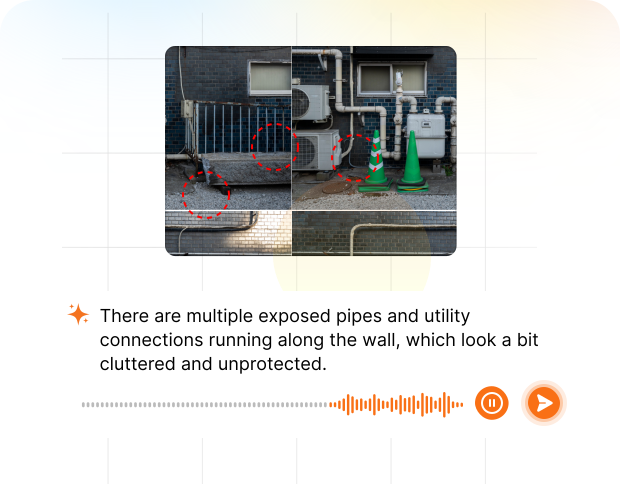
Inspectors speak their observations in any language. AI transcribes and fills the form in real time. Completely hands-free in the field.
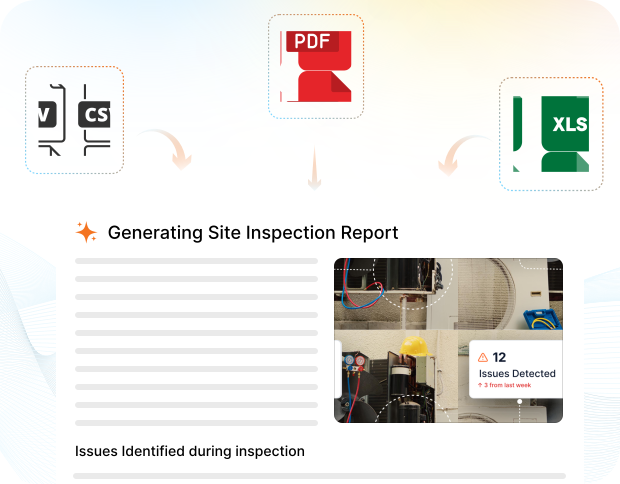
The moment an inspection is submitted, a branded PDF, Excel, or CSV report generates automatically. No manual work. No waiting.

Inspectly360 integrates with the tools your team already uses, including Zoho, Microsoft 365, and SAP. No double entry.
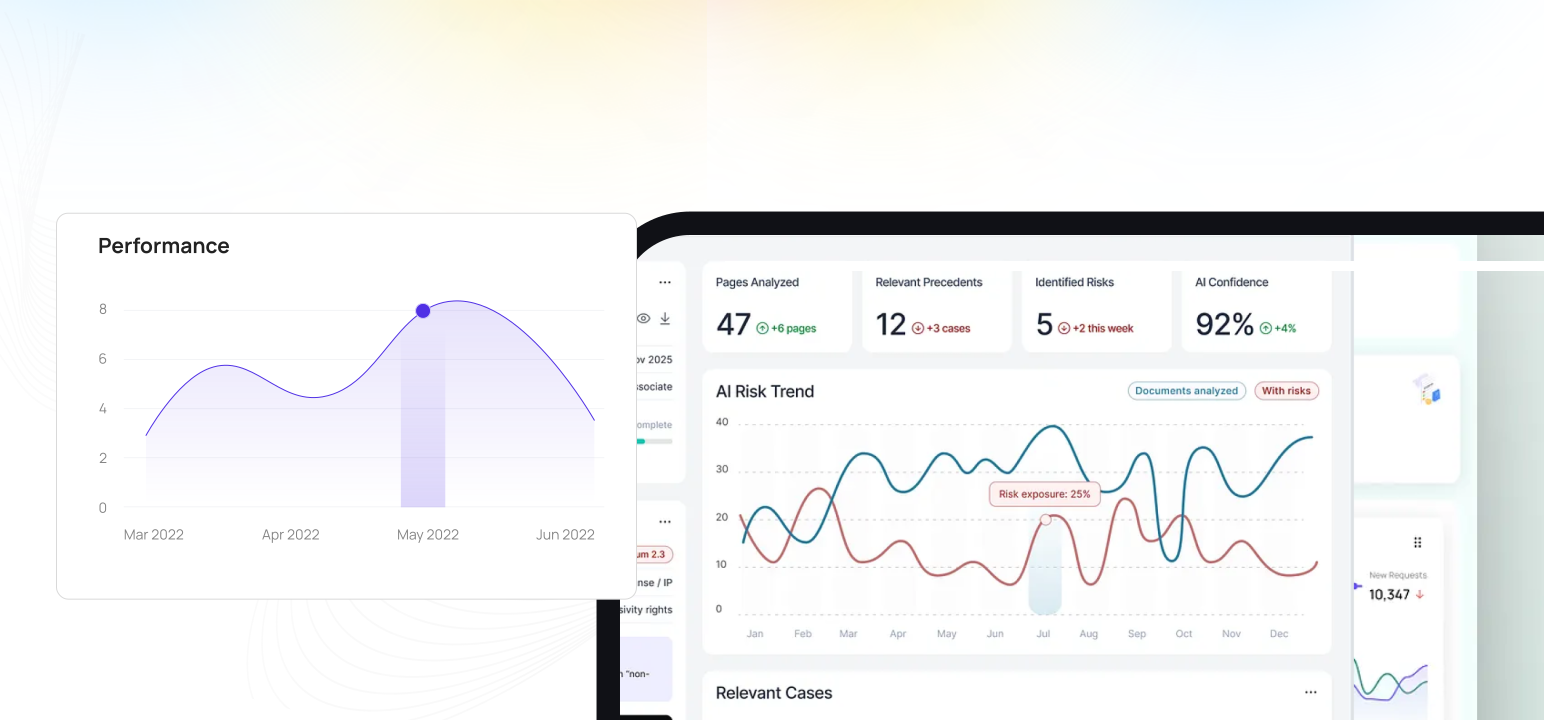
Your operations team sees completion rates, open issues, and compliance scores across all sites in real time. No chasing updates.
What changes once commercial airlines safety software runs on one mobile-first platform with photo proof and live dashboards.
Commercial airlines safety software is the platform the director of safety, SMS manager, and frontline reporters use to run the airline's safety management system and keep a defensible safety record. Inspectly360 digitises hazard reporting, risk assessment, safety action tracking, and recurring hazard detection in one record aligned to ICAO Annex 19 Safety Management Systems and the operator's SMS manual. Commercial airlines safety software for safety management system teams running hazard reporting, risk assessment, and safety action tracking across the whole airline.
Today a hazard goes on a paper form in a box or an email inbox the SMS team may not read for days, risk is judged informally with no consistent matrix, and a mitigation agreed in a meeting is lost in minutes nobody revisits. When the same hazard recurs at different stations, nobody connects the separate reports, and the director of safety compiles the safety picture by hand before each safety review board. Across an airline network, safety data lives in scattered forms and threads, so trends stay hidden until an event makes them obvious.
Inspectly360 replaces that with structured SMS workflows on iOS and Android: anyone reports a hazard in seconds with a photo, each report is assessed against a risk matrix with the rationale recorded, and safety actions carry an owner, a deadline, and verified closure tied to the original hazard. Recurring hazards are flagged with frequency and affected stations, and a live dashboard gives the accountable manager open hazards, risk levels, and overdue actions across the whole airline.
Safety and SMS teams follow this loop for hazard reporting, risk assessment, and safety action closure.
Any team member reports a hazard or occurrence in seconds with a photo, location, and a short description, optionally confidentially.
The SMS team scores each report against the risk matrix and records the rationale and severity on the report itself.
A mitigation or safety action is assigned with a named owner and a deadline, linked to the original hazard.
Actions are verified to closure, and repeated hazards are flagged with frequency and affected stations for root cause review.
Open hazards, risk levels, and overdue actions roll up for the safety review board with an exportable record for the authority.
Answers to common long-tail questions, kept on one canonical page to avoid thin duplicate URLs.
Start with one group, such as ramp or cabin, so the hazard report form, risk matrix, and safety action workflow are validated against real reports before opening reporting across the whole airline.
Frontline staff get hazard reporting, the SMS team gets risk assessment and action management, and the director of safety gets airline-wide safety status through role-based access.
The platform capabilities that power commercial airlines safety software across every site.
Anyone reports a hazard in seconds with a photo and location, optionally confidentially. Why it matters: a report that takes seconds gets filed, while a paper form in a box does not.
Each report is scored against the risk matrix with the rationale recorded on the report. Why it matters: consistent scoring lets the SMS team prioritise the hazards that carry real risk.
Each mitigation carries an owner, a deadline, and verified closure tied to the hazard. Why it matters: an action agreed in a meeting and never tracked is the one that does not happen.
Repeated hazards are flagged with frequency and affected stations. Why it matters: connecting separate reports surfaces a systemic risk before an event makes it obvious.
Open hazards, risk levels, and overdue actions roll up across the airline. Why it matters: the director of safety walks into the safety review board with live data, not a hand-compiled deck.
Hazards, assessments, and closures export for the safety board and the authority. Why it matters: an IOSA or regulator request for SMS evidence becomes a minutes-long export.
Directors of safety and SMS managers comparing Inspectly360 to a paper hazard form, an email safety inbox, and a spreadsheet risk log see the difference fastest on confidential reporting, risk assessment, safety action tracking, recurring hazard detection, and airline-wide safety status aligned to ICAO Annex 19 Safety Management Systems.
| Topic | Typical Gaps | With Inspectly360 |
|---|---|---|
| Frontline hazard reporting | A hazard goes on a paper form in a box or an email inbox the SMS team may not read for days. | Anyone reports a hazard on mobile in seconds with a photo, and it reaches the SMS team immediately. |
| Risk assessment of reports | Risk is judged informally with no consistent matrix and no record of how the score was reached. | Each report is assessed against a risk matrix with the rationale recorded on the report. |
| Safety action tracking | A mitigation is agreed in a meeting and lost in minutes nobody revisits. | Each safety action carries an owner, a deadline, and verified closure tied to the original hazard. |
| Recurring hazard detection | The same hazard recurs across stations with nobody connecting the separate reports. | Repeated hazards are flagged with frequency and affected stations so the root cause is addressed. |
| Safety status for the accountable manager | The director of safety compiles the safety picture by hand before each safety review board. | Live dashboard shows open hazards, risk levels, and overdue actions across the airline. |
What changes once commercial airlines safety software is standardised on Inspectly360.
Get started with inspection and audit checklist templates.

Use this template to perform a comprehensive safety inspection of light vehicles. This check ensures all critical components are checked ...
Use these apps to run inspections and audits.

by Inspectly360
Streamline facilities inspections with forms, photos, and reports.

by Inspectly360
Building condition and compliance inspections with evidence and follow-ups.

by Inspectly360
Digitize building inspection apps workflows with forms, evidence capture, and automated reporting.

by Inspectly360
Run building inspections on phones and tablets with offline forms, photo evidence, and instant reports.

by Inspectly360
Audit buildings with structured scoring, photo evidence, and corrective action tracking across portfolios.
Reporting a hazard takes seconds on mobile: a photo, a location, a short description, and submit. That low friction is the single biggest driver of reporting rates, because a paper form in a box or an email nobody reads discourages people from bothering. Reports can be made confidentially, which encourages frontline staff to raise concerns they might otherwise keep quiet. Every report reaches the SMS team immediately rather than sitting in a tray for days. A higher reporting rate gives the director of safety more of the weak signals that an SMS depends on, surfacing hazards before they contribute to an event.
Each hazard report is scored against the airline's risk matrix, combining severity and likelihood, with the rationale recorded on the report itself. This makes risk assessment consistent rather than an informal judgement that varies by person and leaves no record of how the score was reached. The SMS team prioritises mitigation based on assessed risk, so the hazards that carry real consequence get attention first. Because the assessment lives with the report, the safety review board and an IOSA auditor can see not just the score but the reasoning behind it, which is the documented risk management an SMS under Annex 19 is expected to demonstrate.
Yes. Hazard reporting works fully offline on iOS and Android, which matters on the aircraft, on the ramp, and at outstations with weak signal. A team member captures the hazard with a photo and description while offline, and the report syncs automatically once the device reconnects. The timestamp reflects when the hazard was observed, not when it synced. Nothing is lost if a report is made in an area with no coverage. This means a hazard seen at a remote stand or in the cabin is captured in the moment rather than forgotten by the time the reporter finds signal, which keeps the SMS fed with timely reports.
Because every hazard is captured as structured data with a location and type, the platform flags when the same hazard recurs across stations or over time. The SMS team sees frequency and the affected stations rather than treating each report as isolated. This is how a systemic risk becomes visible: a ground handling hazard reported separately at three stations is connected into one trend with a root cause to address. Recurring hazard detection turns scattered reports into the pattern the director of safety needs to act on proactively, instead of recognising the pattern only after an event makes the connection obvious.
When the SMS team decides on a mitigation, it becomes a safety action linked to the original hazard, with a named owner and a deadline. The action stays open on the dashboard until closure is verified, and overdue actions are surfaced to the SMS manager and director of safety automatically. This replaces the mitigation agreed in a meeting and lost in minutes nobody revisits. The closure trail shows what was done, who verified it, and when, tied back to the hazard that prompted it. That traceability from hazard to assessed risk to closed action is exactly what an IOSA audit and a safety review board expect to see.
Yes. The platform supports confidential reporting so frontline staff can raise a hazard without their name attached, which protects the just-culture environment an effective SMS depends on. Role-based access scopes who can see reports: frontline staff submit, the SMS team manages assessment and actions, and the director of safety keeps airline-wide visibility. Access changes are logged, so the trail shows who could see what, and when. This balance, easy confidential reporting for the frontline and controlled access for the safety function, encourages people to report while keeping sensitive safety data restricted to those who need it.
Commercial Airlines Safety Software on Inspectly360 connects directly to the inspection apps, checklist templates, forms, industries, and adjacent solutions linked below.
See Inspectly360 in action with a live demo tailored to your needs. No credit card required.