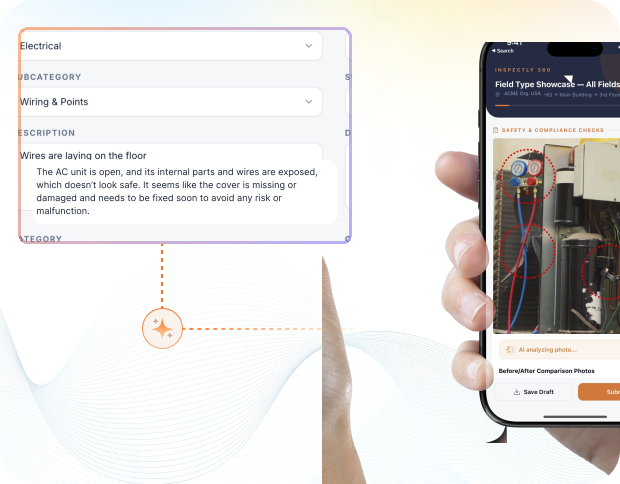
Take a Photo. AI Fills the Form
Your inspector takes a photo of any asset or defect. AI reads it and fills the inspection form automatically. No typing. No manual entry.

Convert your checklist into Mobile App
Runway safety software is the platform airport safety managers, airside operations managers, and airside teams use to capture runway hazards and drive safety actions and keep defensible records across a pavement. Inspectly360 digitises FOD control, wildlife hazard reporting, surface contamination logging, and SMS hazard tracking in one record aligned to ICAO Annex 14, the FAA FOD control program guidance in AC 150/5210-24, and the airport safety management system.
Everything your field team does on paper, Inspectly360 does automatically: faster, more accurate, and without the admin.
Your inspector takes a photo of any asset or defect. AI reads it and fills the inspection form automatically. No typing. No manual entry.
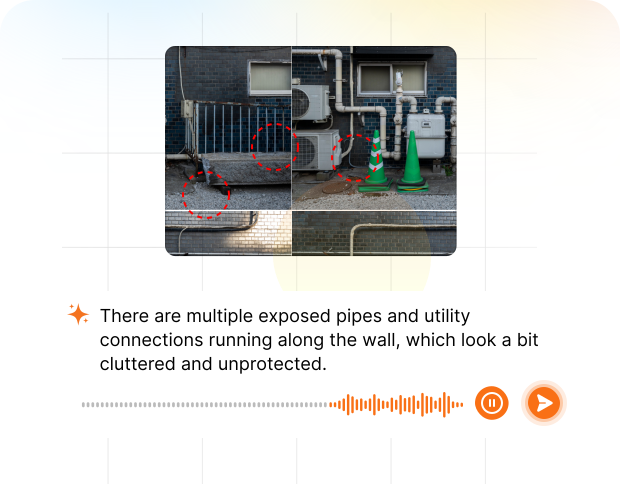
Inspectors speak their observations in any language. AI transcribes and fills the form in real time. Completely hands-free in the field.
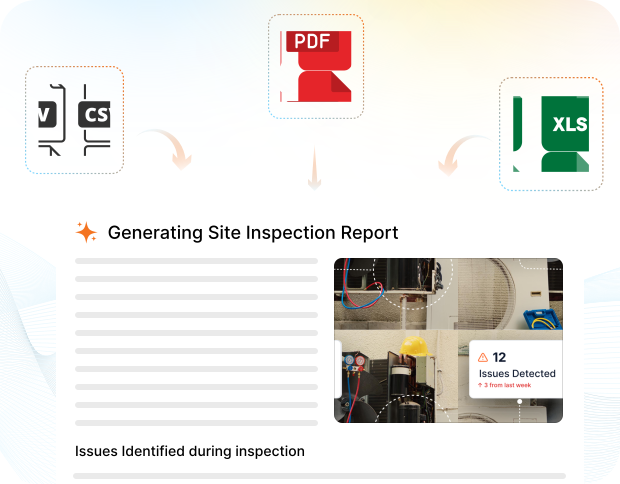
The moment an inspection is submitted, a branded PDF, Excel, or CSV report generates automatically. No manual work. No waiting.

Inspectly360 integrates with the tools your team already uses, including Zoho, Microsoft 365, and SAP. No double entry.
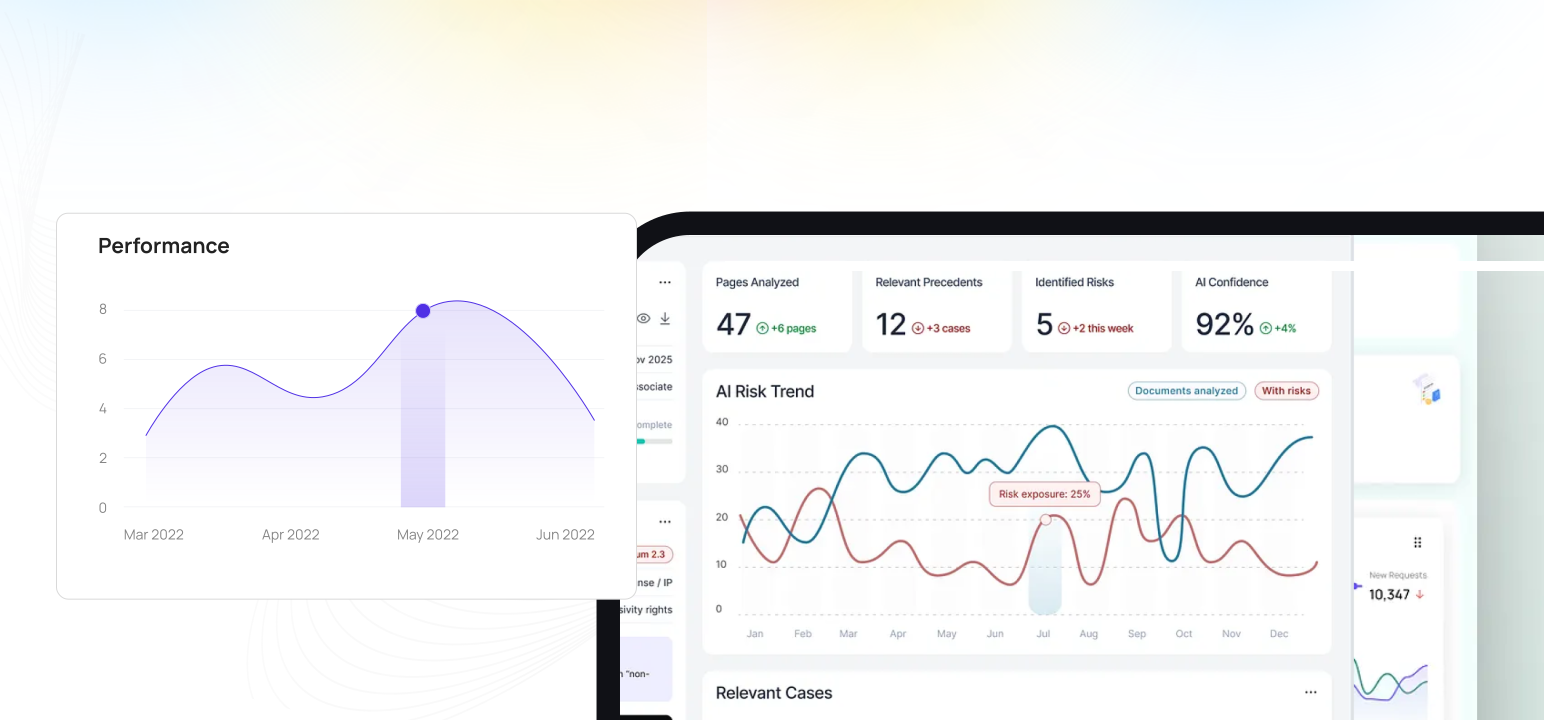
Your operations team sees completion rates, open issues, and compliance scores across all sites in real time. No chasing updates.
What changes once runway safety software runs on one mobile-first platform with photo proof and live dashboards.
Runway safety software is the platform airport safety managers, airside operations managers, and airside teams use to capture runway hazards and drive safety actions and keep defensible records across a pavement. Inspectly360 digitises FOD control, wildlife hazard reporting, surface contamination logging, and SMS hazard tracking in one record aligned to ICAO Annex 14, the FAA FOD control program guidance in AC 150/5210-24, and the airport safety management system.
Today a FOD object is binned without a record, a bird sighting is radioed in and lost, and a hazard noted on a form may never reach the safety manager. When the same FOD source recurs at a runway end, wildlife activity rises before a strike, or a contamination event is cleared without a traceable decision, the pattern is invisible until an incident review asks for it. Across an airfield, every shift records safety a little differently, so the safety manager cannot see where risk is concentrating.
Inspectly360 replaces that with mobile capture on iOS and Android: airside teams log FOD finds, wildlife sightings, and contamination with type, location, and photo, and each hazard routes into the SMS with an owner, risk rating, and tracked mitigation. A live trend view shows where events are concentrating per section, and a branded safety evidence pack exports per runway when a review or audit asks.
Airport safety and airside teams follow this loop for FOD finds, wildlife and contamination hazards, and SMS actions.
Divide the runway and its strip into safety sections so each FOD find, sighting, and hazard is recorded against a known location.
Airside teams log FOD finds, wildlife activity, and contamination on mobile with type, location, and photo, even offline.
Each hazard becomes a tracked SMS record with an owner, risk rating, and mitigation, not a form that never moves.
Mitigations are owned and dated, and the platform shows whether each hazard is open, in progress, or verified closed.
A trend view shows FOD, wildlife, and contamination patterns per section; a safety evidence pack exports per runway.
Answers to common long-tail questions, kept on one canonical page to avoid thin duplicate URLs.
Start with a single runway so FOD, wildlife, and contamination capture and the SMS routing are validated against real safety sections and hazard categories before rollout to taxiways, aprons, and a second runway.
Airside teams get hazard capture, the airside operations manager gets the open-hazard view, and the safety manager gets the SMS trend and closure picture per runway through role-based access.
The platform capabilities that power runway safety software across every site.
Each FOD find is logged by object type, location, and photo. Why it matters: a recurring FOD source at a runway end is only fixable once the pattern is visible rather than binned and forgotten.
Sightings and strikes are logged by species, location, and time. Why it matters: rising activity is the early signal that should drive the wildlife hazard plan before a strike occurs.
Water, snow, ice, and spill contamination is logged with coverage and photo. Why it matters: a contamination decision and its clearance must be traceable for a safety review.
Each hazard routes into the SMS with an owner, risk rating, and mitigation. Why it matters: a hazard with no owner is the gap an incident investigation exposes.
FOD, wildlife, and contamination events trend per section over time. Why it matters: the safety manager targets resources where risk is concentrating instead of guessing.
A branded safety evidence pack exports per runway for a review or audit. Why it matters: a review request becomes a minutes-long export, not a hunt across radio logs and forms.
Airport safety managers and airside operations teams comparing Inspectly360 to paper hazard forms, spreadsheet FOD logs, and radio reports see the difference fastest on FOD find capture, wildlife hazard reporting, surface contamination logging, SMS hazard tracking, and runway-safety trend visibility aligned to ICAO Annex 14, FAA AC 150/5210-24, and the airport SMS.
| Topic | Typical Gaps | With Inspectly360 |
|---|---|---|
| FOD find capture | A FOD object is picked up and binned with no record of what, where, or how often it recurs. | Each FOD find is logged with type, location, and photo so recurring sources are traceable and trended. |
| Wildlife hazard reporting | Bird and animal activity is radioed in and rarely captured as a structured, trendable hazard record. | Wildlife sightings and strikes are logged by species, location, and time to drive the wildlife hazard plan. |
| Surface contamination reporting | Water, snow, ice, and spill contamination is reported verbally with no photo or condition record. | Contamination is logged with type, coverage, and photo so the safety decision and clearance are traceable. |
| SMS hazard tracking | Hazards are noted on a form that may never reach the safety manager or become a tracked action. | Each hazard routes into the SMS with an owner, risk rating, and tracked mitigation to closure. |
| Runway-safety trend visibility | Nobody can see whether FOD, wildlife, or contamination events are rising on a section over time. | A live trend view shows FOD, wildlife, and contamination patterns per section to target the response. |
What changes once runway safety software is standardised on Inspectly360.
Get started with inspection and audit checklist templates.

Use this template to perform a comprehensive safety inspection of light vehicles. This check ensures all critical components are checked ...
Use these apps to run inspections and audits.

by Inspectly360
Streamline facilities inspections with forms, photos, and reports.

by Inspectly360
Building condition and compliance inspections with evidence and follow-ups.

by Inspectly360
Digitize building inspection apps workflows with forms, evidence capture, and automated reporting.

by Inspectly360
Run building inspections on phones and tablets with offline forms, photo evidence, and instant reports.

by Inspectly360
Audit buildings with structured scoring, photo evidence, and corrective action tracking across portfolios.
Every FOD find is logged in the field by object type, location, and photo rather than picked up and binned without a record. Because each find is tied to a runway safety section, the platform shows whether the same kind of debris keeps appearing at a particular end or intersection. That pattern is what a FOD control program under FAA AC 150/5210-24 needs in order to target the source, whether it is a contractor, a vehicle, or a pavement breaking up. The safety manager sees a running count and trend per section, so the response moves from reactive pickup to fixing the cause. A safety review then has a structured FOD record instead of anecdotes.
Wildlife sightings and strikes are logged by species, location, and time, which builds the structured record a wildlife hazard management plan depends on. Instead of a bird sighting being radioed in and lost, each report becomes part of a trend the safety manager can read by section and time of day. Rising activity of a particular species at a runway end is the early signal that should drive dispersal, habitat management, or a NOTAM decision before a strike occurs. When a strike does happen, the prior sightings and any mitigation already in the SMS give the investigation real context rather than starting from a blank page on what was known beforehand.
Yes. Hazard capture works fully offline on iOS and Android, which matters on a live runway where signal is weak and a hazard cannot wait for coverage. Airside teams log FOD finds, wildlife sightings, and contamination with photos while offline, and records sync automatically once the device reconnects. The timestamp reflects when the hazard was actually observed, not when it synced, which keeps the safety trail accurate for an SMS review. Nothing is lost when a hazard is logged at a remote runway end. This reliability matters because a safety record with missing or mistimed events weakens the trend analysis the whole program relies on.
When an airside team member logs a hazard, it does not stop at a form. It routes into the SMS as a tracked record with an owner, a risk rating, and a mitigation that is dated and followed to closure. The platform shows whether each hazard is open, in progress, or verified closed, so nothing sits unactioned. This closes the common gap where a hazard noted on paper never reaches the safety manager or never becomes a tracked action. For the safety manager, every reported hazard is visible in one place with its risk and its mitigation state, which is exactly what an SMS is meant to provide and what an audit will expect to see.
Surface contamination is logged with its type, the affected coverage, and a photo, so water, snow, ice, and spill events are recorded as structured hazards rather than verbal reports. The contamination record holds the decision taken, such as a runway-state report, a clearance action, or a NOTAM, and the clearance that followed. This traceability matters because a contamination event affects braking action and the safety decision behind it must stand up to a review. Tying the report, the decision, and the clearance together on one record means the safety manager can show what was found, what was decided, and how it was resolved, consistently across every duty shift and weather event.
Yes. The safety trend dashboard shows FOD finds, wildlife activity, and contamination events per runway section over time, so a rising pattern is visible rather than hidden in scattered logs. The safety manager can see, for example, that FOD at one runway end has climbed over recent weeks or that wildlife sightings of a species are concentrating at dawn. That picture lets the airport target inspections, sweeping, dispersal, or pavement repair where the data points rather than spreading effort evenly. Trend visibility turns the safety program from reactive to proactive, and it gives the SMS the evidence base it needs to justify where resources are placed and to show that decisions follow the data.
Runway Safety Software on Inspectly360 connects directly to the inspection apps, checklist templates, forms, industries, and adjacent solutions linked below.
See Inspectly360 in action with a live demo tailored to your needs. No credit card required.