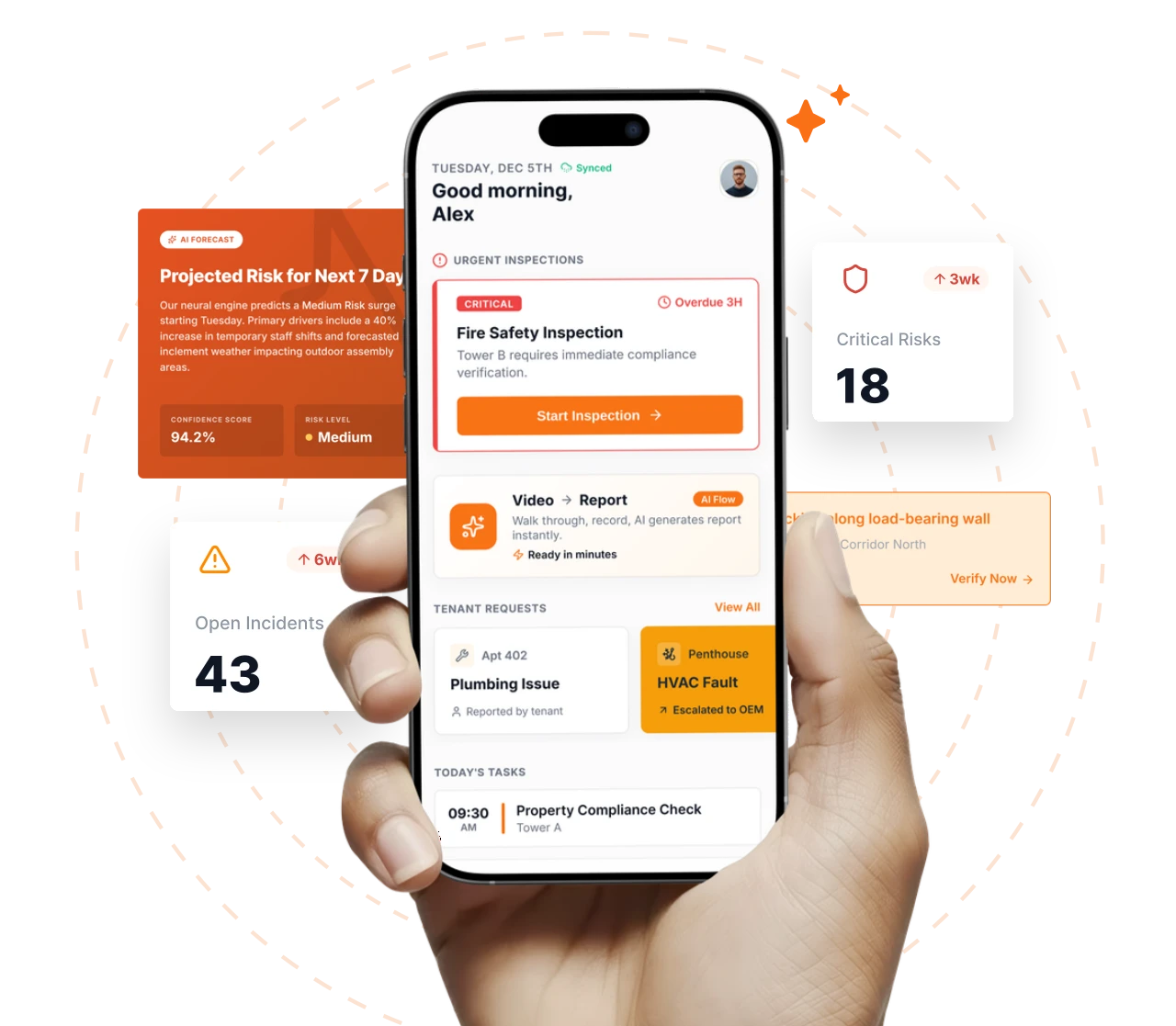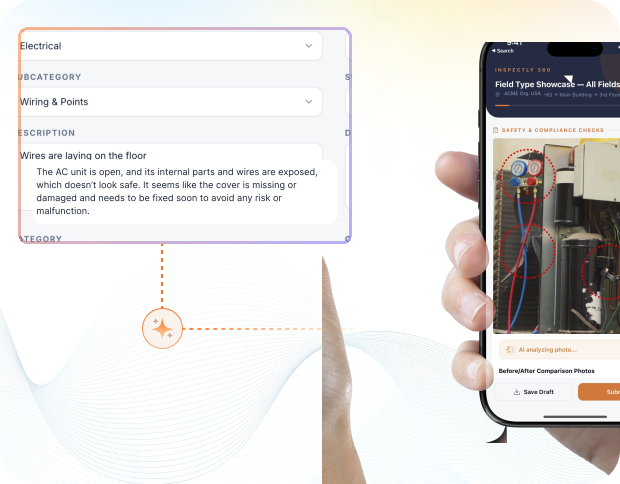
Take a Photo. AI Fills the Form
Your inspector takes a photo of any asset or defect. AI reads it and fills the inspection form automatically. No typing. No manual entry.

Convert your checklist into Mobile App
Life vests checklist software is the platform cabin crew and Part-145 line maintenance teams use to run digitised life vest checklists across a fleet. Inspectly360 turns the preflight stowage checklist, the scheduled inspection checklist, and the CMM overhaul checklist into controlled mobile templates with required photos, conditional steps, and named sign-off, so every life vest check covers the same items at every base.
Everything your field team does on paper, Inspectly360 does automatically: faster, more accurate, and without the admin.
Your inspector takes a photo of any asset or defect. AI reads it and fills the inspection form automatically. No typing. No manual entry.
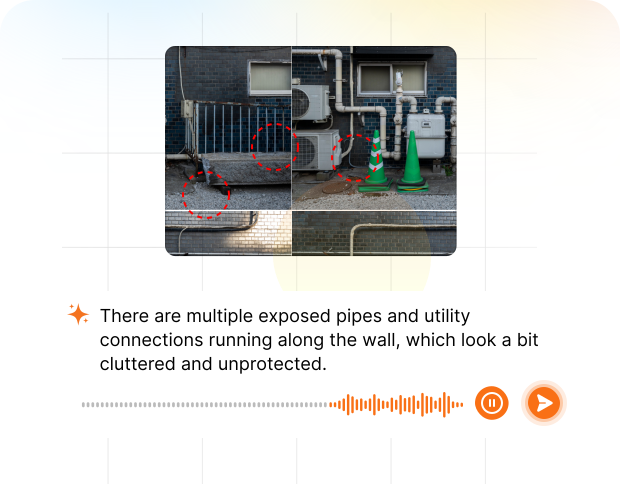
Inspectors speak their observations in any language. AI transcribes and fills the form in real time. Completely hands-free in the field.
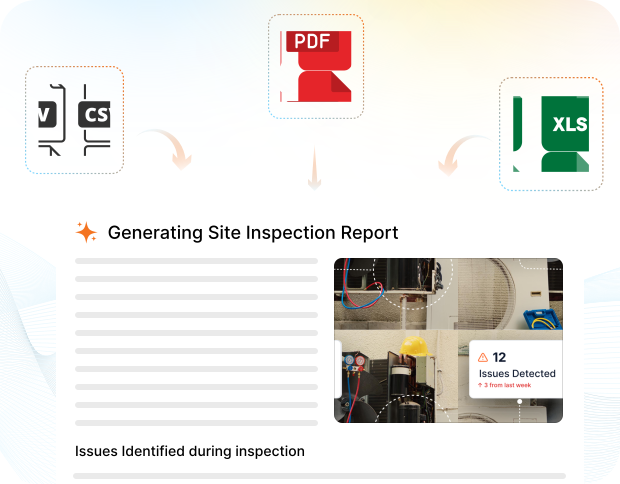
The moment an inspection is submitted, a branded PDF, Excel, or CSV report generates automatically. No manual work. No waiting.

Inspectly360 integrates with the tools your team already uses, including Zoho, Microsoft 365, and SAP. No double entry.
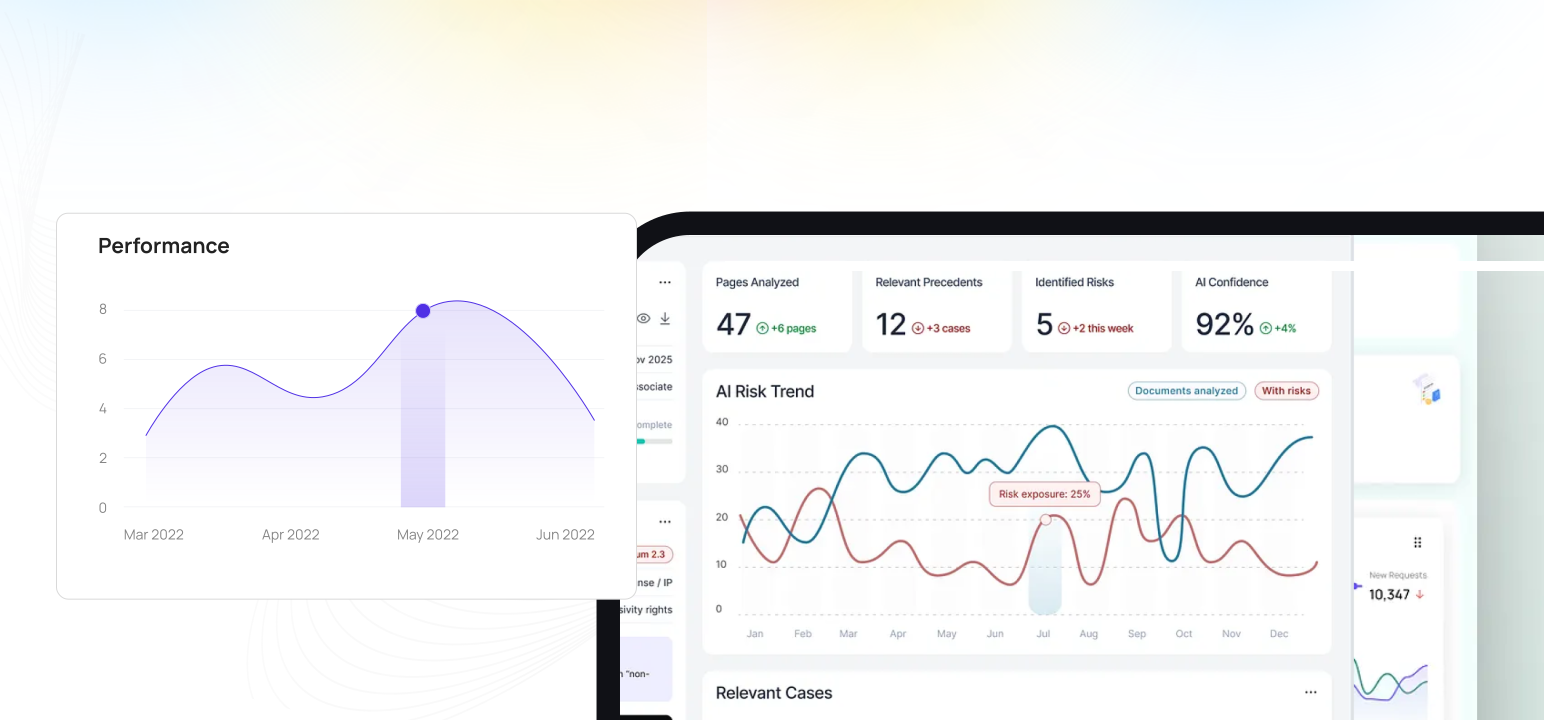
Your operations team sees completion rates, open issues, and compliance scores across all sites in real time. No chasing updates.
What changes once life vests checklist software runs on one mobile-first platform with photo proof and live dashboards.
Life vests checklist software is the platform cabin crew and Part-145 line maintenance teams use to run digitised life vest checklists across a fleet. Inspectly360 turns the preflight stowage checklist, the scheduled inspection checklist, and the CMM overhaul checklist into controlled mobile templates with required photos, conditional steps, and named sign-off, so every life vest check covers the same items at every base.
Today each base prints its own checklist version, a paper sheet is ticked complete even when the stowage photo is blank, and an updated template takes weeks to reach every station. When no two bases check the same items, when a failed item is ticked with no follow-up, or when an old checklist version stays in use because the new one never arrived, the consistency cabin safety depends on breaks down. Across a fleet, no one can see which life vest checklists were actually completed today without collecting paper from every station.
Inspectly360 replaces that with controlled digital templates on iOS and Android: required photo and field steps must be completed before sign-off, a failed item triggers conditional steps that capture the defect and route it, template updates publish to every base at once, and a live view shows which checklists are done, due, or overdue. The result is a consistent, hard-to-skip life vest checklist that produces a complete record every time it is run.
Cabin safety and line maintenance teams follow this loop to run consistent, controlled life vest checklists across the fleet.
The preflight, stowage, and overhaul checklists become controlled templates with required photos and named sign-off steps.
Cabin crew and engineers run the life vest checklist on iOS or Android, completing each step against the asset record.
Required photo and field steps must be completed, so a checklist cannot be signed off with a blank stowage or cylinder field.
A failed item triggers conditional steps that capture the defect with a photo and route it to maintenance for action.
A template update publishes to every base at once, and a live view shows which checklists are done, due, or overdue.
Answers to common long-tail questions, kept on one canonical page to avoid thin duplicate URLs.
Start with one checklist, such as the preflight stowage check, so the steps, required photos, and conditional logic are validated against real use before the overhaul and inspection templates roll out fleet-wide.
Cabin crew get the preflight checklist, line engineers get inspection and overhaul checklists, and cabin safety gets template control and completion visibility through role-based access.
The platform capabilities that power life vests checklist software across every site.
One controlled template runs at every base for each life vest check. Why it matters: when each station uses its own checklist, no two aircraft are checked to the same standard.
Required photo and field steps must be completed before sign-off. Why it matters: a checklist ticked complete with a blank stowage field is a record that proves nothing.
A failed item triggers steps that capture the defect and route it for action. Why it matters: a failed item with no follow-up is how a defect gets ticked and forgotten.
A template update publishes to every base at once. Why it matters: an old checklist version still in use means a station is checking against superseded instructions.
A live view shows which checklists are done, due, or overdue across the fleet. Why it matters: not knowing which checks ran today is a gap cabin safety cannot manage.
Each completed checklist links to the vest serial and tail it covered. Why it matters: a checklist with no asset link cannot prove which life vest was actually checked.
Cabin safety and line maintenance teams comparing Inspectly360 to paper checklists, spreadsheet forms, and photocopied templates see the difference fastest on template consistency, required photos, conditional steps, version control, and completion visibility for life vest checks across a fleet.
| Topic | Typical Gaps | With Inspectly360 |
|---|---|---|
| Template consistency across bases | Each base prints its own life vest checklist version, so no two stations check the same items. | One controlled checklist template runs at every base, so every life vest check covers the same items. |
| Required photos and fields | A paper checklist is ticked complete even when the stowage photo or cylinder field is blank. | Required photo and field steps must be completed before the checklist can be signed off. |
| Conditional steps | A failed item on paper has no follow-up step, so a defect can be ticked and forgotten. | A failed item triggers conditional steps that capture the defect and route it for action. |
| Version control of the template | An updated checklist takes weeks to reach every base, so old versions stay in use. | A template update publishes to every base at once, so outdated versions cannot be used. |
| Completion visibility | No one can see which life vest checklists were completed today without collecting paper. | A live view shows which checklists are done, due, or overdue across the fleet. |
What changes once life vests checklist software is standardised on Inspectly360.
Get started with inspection and audit checklist templates.

Use this template to perform a comprehensive safety inspection of light vehicles. This check ensures all critical components are checked ...
Use these apps to run inspections and audits.

by Inspectly360
Streamline facilities inspections with forms, photos, and reports.

by Inspectly360
Building condition and compliance inspections with evidence and follow-ups.

by Inspectly360
Digitize building inspection apps workflows with forms, evidence capture, and automated reporting.

by Inspectly360
Run building inspections on phones and tablets with offline forms, photo evidence, and instant reports.

by Inspectly360
Audit buildings with structured scoring, photo evidence, and corrective action tracking across portfolios.
Each life vest checklist, the preflight stowage check, the scheduled inspection, and the CMM overhaul, is a single controlled template that runs at every base on iOS and Android. There is no locally printed version, so two stations cannot check different items or use different wording. When the template needs to change, the update publishes to every base at once and the old version becomes unusable. This removes the common problem where each base prints its own checklist and the standard quietly drifts, so cabin safety can be confident that every aircraft is checked to the same life vest standard regardless of where the check is carried out.
Yes. Steps can be marked required, so a checklist cannot be completed until the stowage photo, the count per row, the CO2 cylinder field, and any other mandatory item are filled in. A paper checklist can be ticked complete with blank fields, which produces a record that proves nothing. By enforcing required photos and fields before sign-off, the platform makes sure each completed life vest checklist is a full record with evidence, not a tick exercise. This protects the quality of the data cabin safety and quality assurance rely on, and it removes the temptation to close a checklist quickly when a step has not actually been done.
A failed item triggers conditional steps that capture the defect with a photo and a short description, then route it to line maintenance for action rather than letting it be ticked and forgotten. For example, if a vest is missing under a seat or a tamper seal is broken, the checklist branches to record the seat location, the severity, and the evidence, and creates a tracked defect with an owner. This turns the checklist from a passive record into an active workflow, so a problem found during a life vest check is followed through to resolution rather than noted and lost in a stack of completed paper sheets.
Checklist templates are versioned centrally, so when cabin safety updates a life vest checklist, the new version publishes to every base immediately and the previous version can no longer be used. This solves the problem where an updated checklist takes weeks to reach every station and old versions stay in circulation, meaning some aircraft are checked against superseded instructions. The platform records which template version was used for each completed check, so an audit can confirm the correct version was in force at the time. This keeps the whole fleet aligned to the current standard without the manual effort of reprinting and distributing paper.
Yes. A live view shows which life vest checklists are done, due, or overdue across every base and tail number, so cabin safety no longer has to collect paper to find out what was checked today. The dashboard makes a missed or overdue checklist visible at once, rather than surfacing it later when a problem appears. Because each completed checklist links to the vest serial and tail it covered, the view also shows what was checked and by whom. This gives the safety manager real oversight of life vest checks across the fleet instead of an after-the-fact reconstruction from collected sheets.
Yes. Checklists run fully offline on iOS and Android, which matters in the cabin, in the hangar, and at remote stands where signal is weak. Cabin crew and engineers complete a life vest checklist with required photos while offline, and the completed record syncs automatically once the device reconnects, with the timestamp reflecting when the check was actually done. Nothing is lost if a checklist is run in an area with no coverage. This means the field workflow does not depend on connectivity at the point of capture, so a preflight or overhaul checklist completed in a low-signal area still produces a complete, reliable record once the device is back online.
Life Vests Checklist Software on Inspectly360 connects directly to the inspection apps, checklist templates, forms, industries, and adjacent solutions linked below.
See Inspectly360 in action with a live demo tailored to your needs. No credit card required.