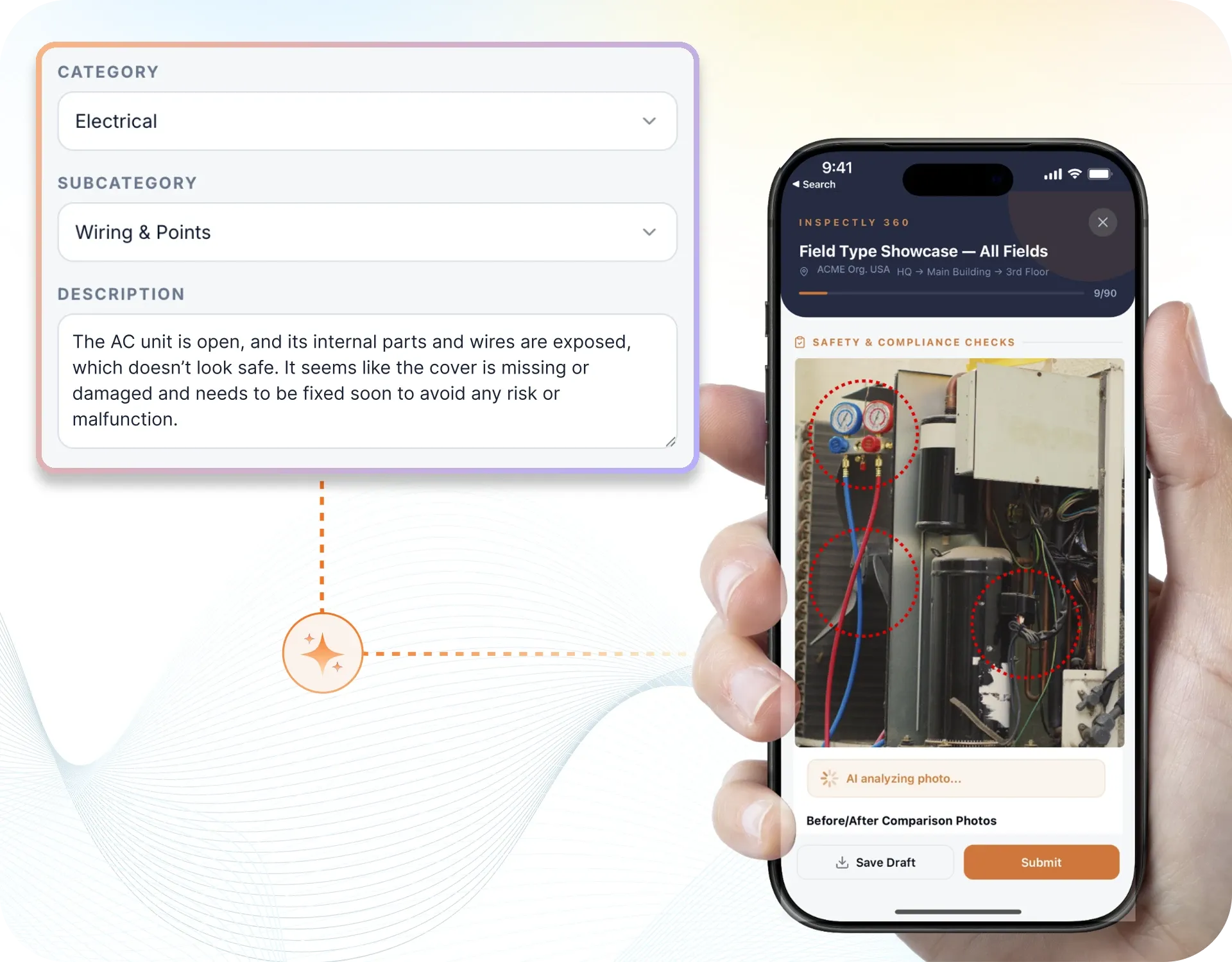
Take a Photo. AI Fills the Form
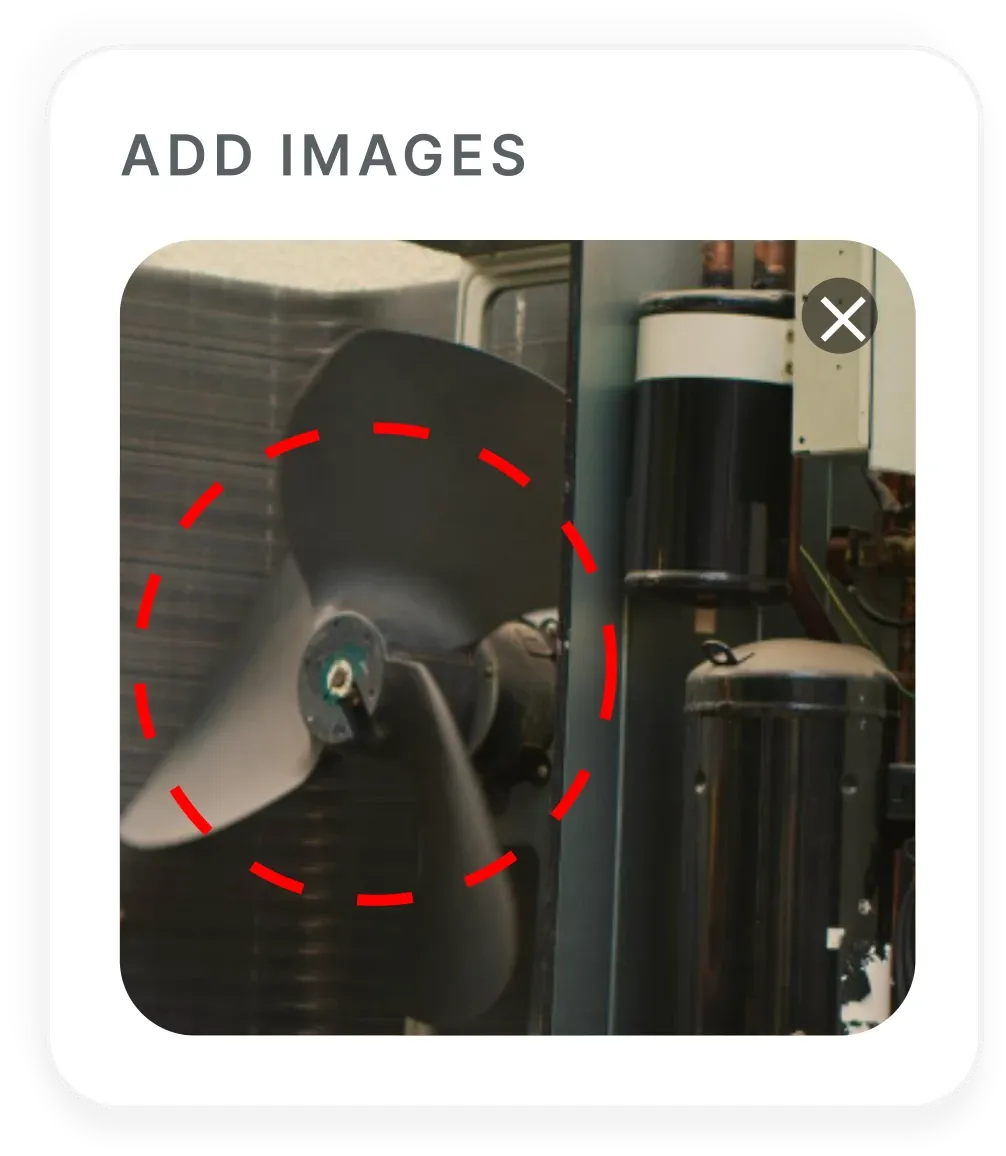
Your inspector takes a photo of any asset or defect. AI reads it and fills the inspection form automatically. No typing. No manual entry.

Convert your checklist into Mobile App
Use this biomedical equipment inspection monthly checklist to review calibration currency and accuracy, electrical safety and leakage test, alarms, batteries, and self-test and physical condition and accessories on health care sites so teams can confirm biomedical equipment is calibrated, electrically safe, and fit for clinical use, scoring each item and raising corrective actions with owners and due dates. Watch for out-of-calibration devices, failed leakage or earth test and flat batteries or silenced alarms. Records support NABH, AERB and manufacturer PPM schedules.

Customize with your logo and company details.
Available on App
Run inspections on iOS and Android - no internet required. Capture photos, annotate defects, and generate reports in the field.
Run the Biomedical Equipment Inspection Monthly Checklist on the Inspectly360 app instead of paper. Inspectors capture photo evidence, work offline, and assign corrective actions on the spot, and the report generates itself the moment the inspection is signed off.
Biomedical Equipment Inspection Monthly Checklist
Biomedical Equipment Inspection Monthly Checklist Dashboard
Prioritized actions to keep operations running smoothly today.
Total Revenue
$42,680
+12% compared to last month
Active Projects
128
+8 new this week
Open Requests
56
-15 resolved this week
Operational Target
You're on track to meet this month's operational goal.
Target Task
200 ↑
Complete Task
136 ↑
Pending Task
10 ↓
Monthly Performance
Recent Client Activity
Everything your field team does on paper, Inspectly360 does automatically: faster, more accurate, and without the admin.
Your inspector takes a photo of any asset or defect. AI reads it and fills the inspection form automatically. No typing. No manual entry.
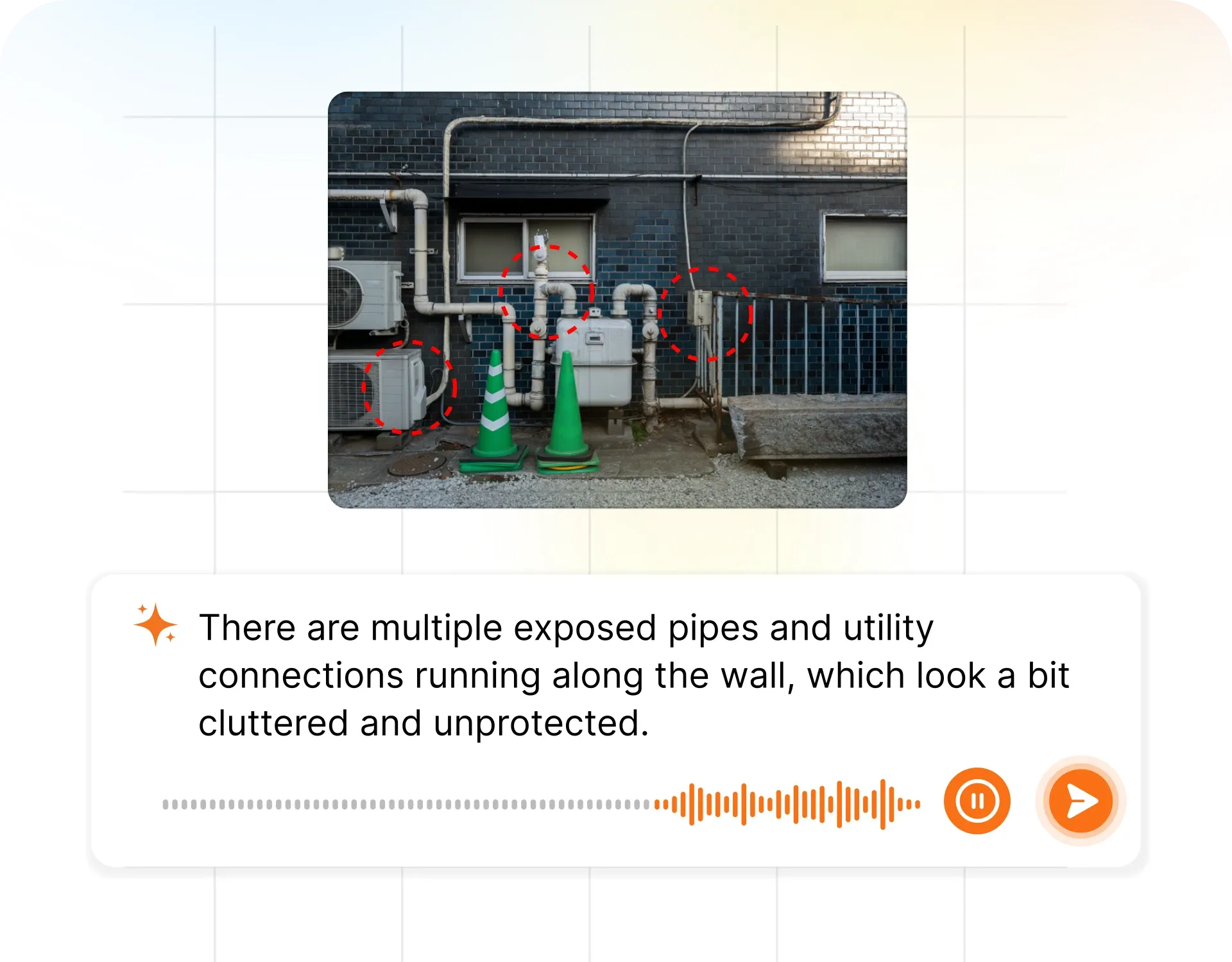
Inspectors speak their observations in any language. AI transcribes and fills the form in real time. Completely hands-free in the field.
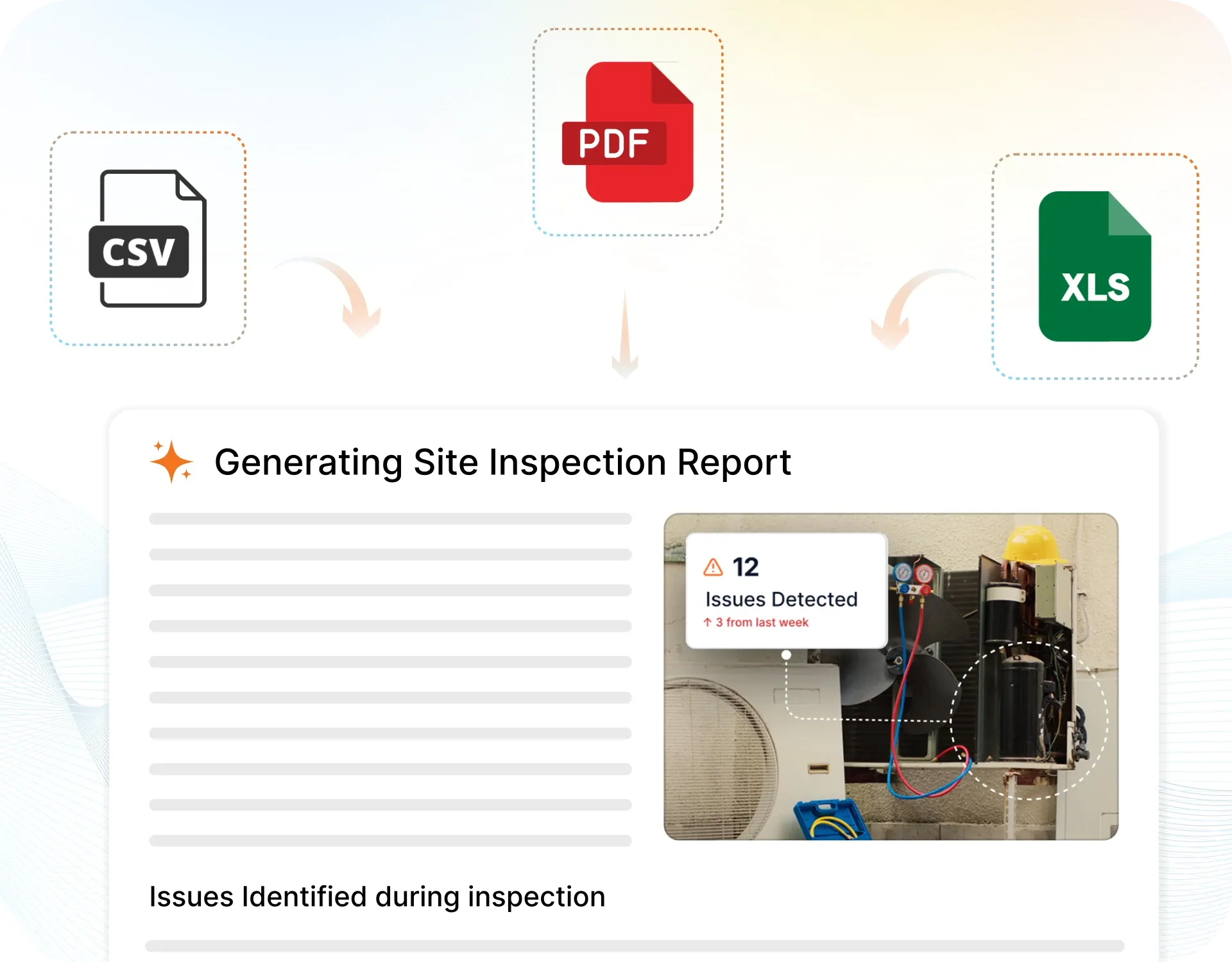
The moment an inspection is submitted, a branded PDF, Excel, or CSV report generates automatically. No manual work. No waiting.

Inspectly360 integrates with the tools your team already uses, including Zoho, Microsoft 365, and SAP. No double entry.
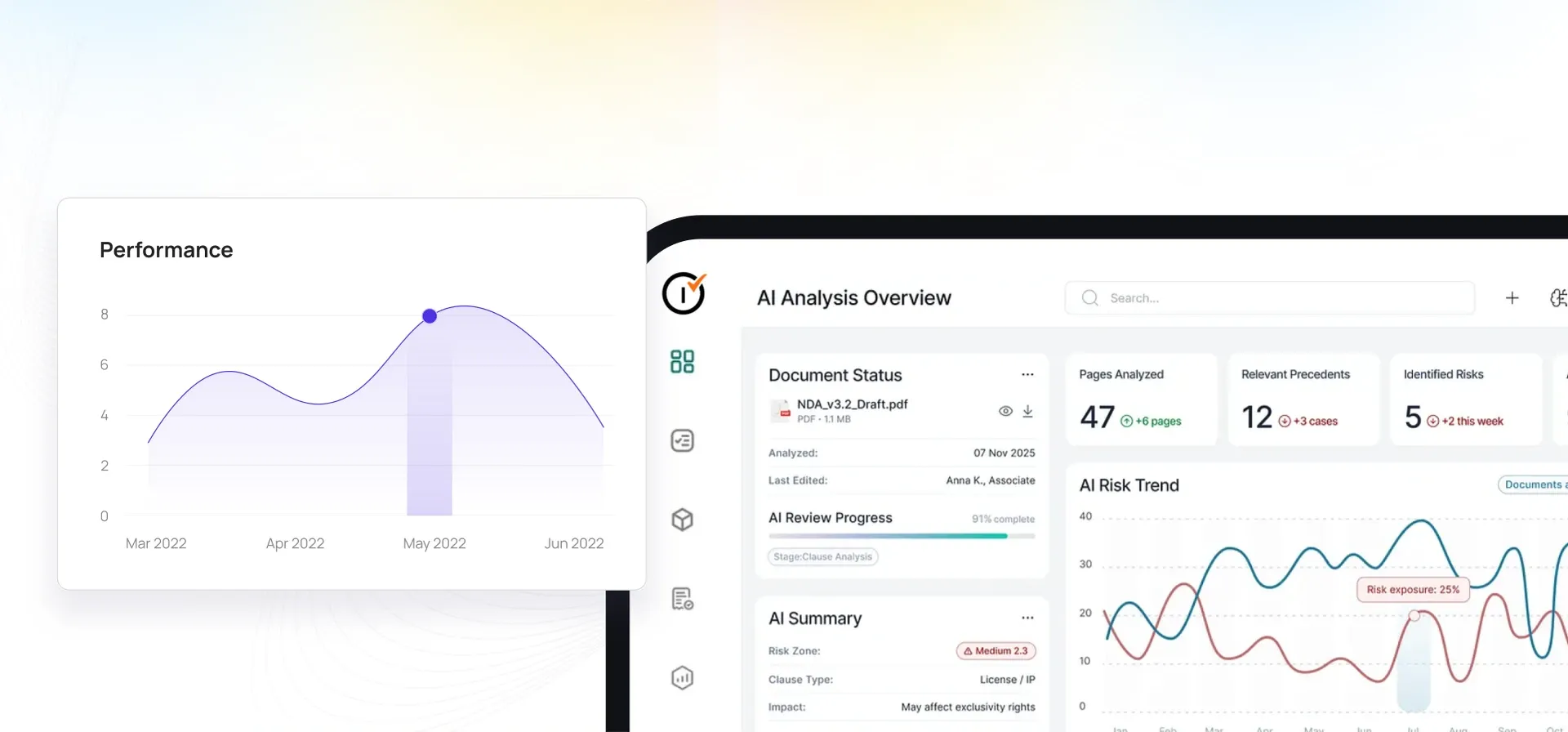
Your operations team sees completion rates, open issues, and compliance scores across all sites in real time. No chasing updates.
Manage every checklist in one connected workspace, capture evidence on mobile at the point of work, and let AI turn field inputs into clear, stakeholder-ready reports in minutes.

See which checklists your team has in progress across every site, jump into the same inspection with one tap, and keep field, supervisor, and back-office views in sync without sending screenshots on WhatsApp.


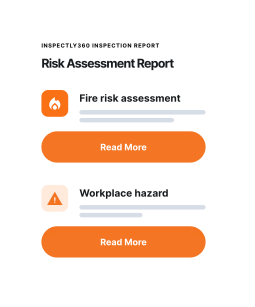
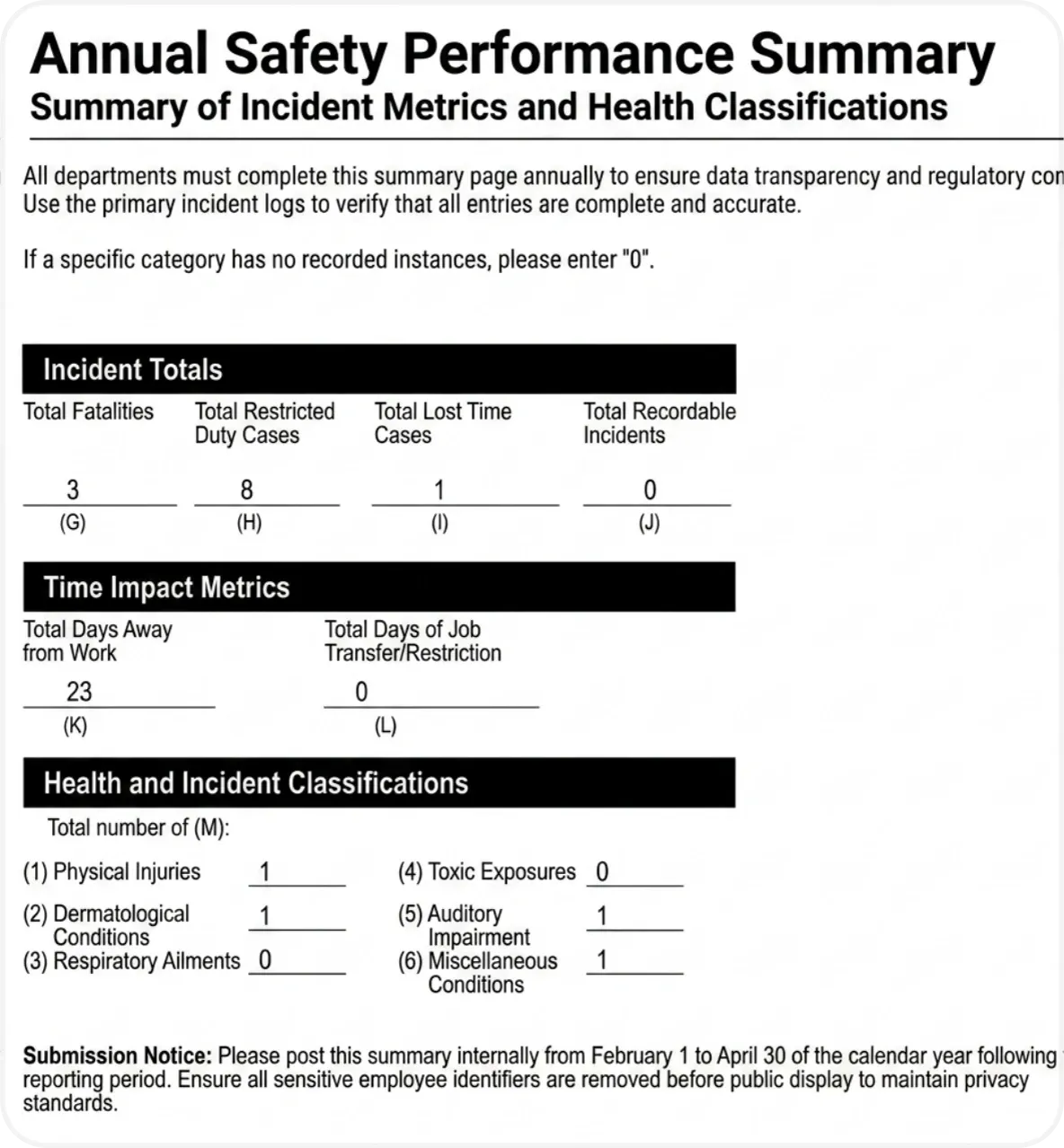


Every team reports differently. Build the report your operations, quality, or compliance leads actually want to read, share it as a branded PDF, and schedule delivery to the stakeholders who need it.

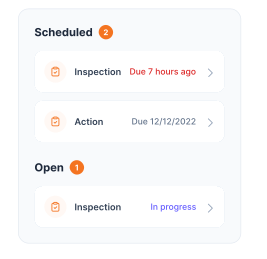

See completion, pass rate, and recurring findings across every checklist and every site, without pulling spreadsheets together at the end of the month.
Hand-picked templates for your specific industry needs.

Healthcare building handover readiness: clinical areas, MEP, and life safety.

Infection control and cleanable finishes snagging.

Nurse station snagging: finishes, power, data, nurse call, and visibility.

Operating room snagging: finishes, HVAC, medical gas, and sterile compliance.
A biomedical equipment monthly inspection is scoped to the cadence and controls that infection control nurses, biomedical engineers, facility managers, NABH coordinators run on a monthly basis, not the one-off walk you use for handover or project close-out. It prompts calibration currency and accuracy, electrical safety and leakage test, alarms, batteries, and self-test and physical condition and accessories, watching specifically for out-of-calibration devices, failed leakage or earth test and flat batteries or silenced alarms, records pass or fail with calibration label photo, safety-test reading and asset tag photo on every critical item, and assigns corrective actions with owners before you sign off. Run digitally in Inspectly360, the monthly record is timestamped, attributed to the inspector, and rolls into trend reports so repeat failures on the same biomedical equipment surface before the next audit. That is the difference between a tick sheet and a NABH, AERB and manufacturer PPM schedules evidence trail you can export on demand.
On this biomedical equipment inspection monthly checklist, infection control nurses, biomedical engineers, facility managers, NABH coordinators verify calibration currency and accuracy, electrical safety and leakage test, alarms, batteries, and self-test and physical condition and accessories in order to confirm biomedical equipment is calibrated, electrically safe, and fit for clinical use, confirm required controls are in place, and capture calibration label photo, safety-test reading and asset tag photo on anything that fails or needs proof. Priority failure modes include out-of-calibration devices, failed leakage or earth test and flat batteries or silenced alarms. Each checkpoint gets pass, fail, or N/A, failures raise a corrective action with an owner and due date, and closure requires re-inspection or photo proof where your health care standard demands it. Teams use terms such as leakage current, calibration due and PPM consistently across sites. The checklist works offline on mobile and syncs to one dashboard so supervisors see completion and open actions without chasing updates. Records align to NABH, AERB and manufacturer PPM schedules so an auditor can be shown the monthly history with photos inline instead of a reconstructed spreadsheet.
This biomedical equipment inspection monthly checklist expects calibration label photo, safety-test reading and asset tag photo on failed or critical items so infection control nurses, biomedical engineers, facility managers, NABH coordinators can prove what was found on site. Findings stay open until closure is verified, and records support NABH, AERB and manufacturer PPM schedules. Run in Inspectly360, every photo, note, and sign-off stays attached to the monthly inspection instead of living in chat threads. Each item records pass, fail, or N/A with a photo on anything that needs proof, so the result is evidence rather than a tick.
Open the Biomedical Equipment Inspection Monthly Checklist page and enter your work email to receive the PDF in your inbox. The PDF is printable and ready to use as-is. For the same monthly inspection running as a live workflow with photo evidence per finding, automatic reports, corrective-action tracking, and offline capture, copy the template into the Inspectly360 app and start inspections in minutes. The PDF suits one-off checks; the digital version is what teams keep using once they run multiple monthly rounds per week.
This biomedical equipment inspection monthly checklist checks calibration currency and accuracy, electrical safety and leakage test, alarms, batteries, and self-test and physical condition and accessories across health care sites. The round exists to confirm biomedical equipment is calibrated, electrically safe, and fit for clinical use. It prioritises failure modes such as out-of-calibration devices, failed leakage or earth test and flat batteries or silenced alarms. Infection control nurses record pass, fail, or N/A on each item, capture photo evidence on anything that needs proof, and assign corrective actions with owners and due dates. Evidence expectations include calibration label photo, safety-test reading and asset tag photo. Each item can carry short guidance so every inspector completes it the same way, and a failed item stays open until the fix is verified with photo proof rather than a status change. The checklist runs offline on a phone or tablet, so a weak signal on health care sites never costs a round, and results sync once the device reconnects. Run in Inspectly360, every finding is timestamped, traceable to whoever completed it, and exports as a single health care report aligned to NABH, AERB and manufacturer PPM schedules, while managers track completion, overdue items, and open corrective actions across every site on one dashboard.
A biomedical equipment inspection monthly checklist is a structured inspection record used by template teams to verify work, capture evidence, and track corrective actions through to closure. It guides infection control nurses through the biomedical equipment inspection monthly checklist step by step to confirm biomedical equipment is calibrated, electrically safe, and fit for clinical use, checking calibration currency and accuracy, electrical safety and leakage test, alarms, batteries, and self-test and physical condition and accessories and watching for out-of-calibration devices, failed leakage or earth test and flat batteries or silenced alarms. Each checkpoint takes pass, fail, or N/A with calibration label photo, safety-test reading and asset tag photo on anything that needs proof, building the continuous evidence health care teams need for NABH, AERB and manufacturer PPM schedules. It replaces paper forms and ad-hoc spreadsheets with one auditable workflow you can run from a phone or tablet, including offline. Each finding is timestamped, photo-evidenced, and traceable to the inspector who recorded it. Run digitally in Inspectly360, the same checklist drives the inspection, the report, and the corrective-action tracker so the loop from observation to verified fix lives in one system.
This biomedical equipment inspection monthly checklist is designed for infection control nurses, biomedical engineers, facility managers, NABH coordinators working in health care. It is equally useful for site teams running daily checks, maintenance crews on planned schedules, contractors completing handover walks, and managers running multi-site oversight. Inspectly360 supports role-based access so you can assign the checklist to specific team members, restrict edits, and track completion across sites in real time. The same record is visible to the field user, the supervisor approving findings, and the manager reading the dashboard, which keeps everyone working from one source of truth.
Yes. Health Care teams copy this biomedical equipment inspection monthly checklist into Inspectly360 and adapt it to how infection control nurses, biomedical engineers, facility managers, NABH coordinators actually work on site. Add or reorder health care-specific checkpoints, change scoring or pass/fail logic against NABH, AERB and manufacturer PPM schedules, add conditional questions that appear only when an earlier answer triggers them, attach reference documents and standard operating procedures, and save the result as your own organisational template. Customised templates roll out across every site, are versioned so historical inspections still reference the version active at the time, and can be locked so only quality or compliance leads can edit them. This enforces a single health care standard across multiple locations without losing flexibility for site-specific variations.
Yes. In Inspectly360, every finding on this biomedical equipment inspection monthly checklist can become a corrective action with an owner from your infection control nurses, biomedical engineers, facility managers, NABH coordinators pool, a due date, severity, and the photo evidence required to close it. Owners are notified, due dates trigger reminders, and overdue items escalate to the supervisor automatically. Re-inspections verify the fix has actually been completed, with photos and a digital signature on closure, which matters when NABH, AERB and manufacturer PPM schedules require demonstrable proof of remediation rather than a tick box. The full chain, from the question that flagged the issue, through the assigned action, the closure evidence, and the verification, is preserved as an auditable record you can export as a single PDF or share live with a client or auditor.

A biomedical equipment inspection monthly checklist is the monthly deep check that confirm biomedical equipment is calibrated, electrically safe, and fit for clinical use that health care teams use to verify calibration currency and accuracy, electrical safety and leakage test, alarms, batteries, and self-test and physical condition and accessories, assign owners to failures, and close issues with proof. Common failure modes include out-of-calibration devices, failed leakage or earth test and flat batteries or silenced alarms. It supports NABH, AERB and manufacturer PPM schedules with timestamped, photo-evidenced records. Biomedical engineering teams own the round. Run it in the Inspectly360 mobile app to work offline, generate reports automatically, and keep a defensible audit trail.
A biomedical equipment inspection monthly checklist is the monthly deep check that confirm biomedical equipment is calibrated, electrically safe, and fit for clinical use that health care teams use to check calibration currency and accuracy, electrical safety and leakage test, alarms, batteries, and self-test and physical condition and accessories, capture photo evidence, and track corrective actions to closure. Its job is to confirm biomedical equipment is calibrated, electrically safe, and fit for clinical use. It replaces the paper tick sheet and the WhatsApp photo with one inspection record per monthly round, attributed to the inspector and the site. Inspectors specifically watch for out-of-calibration devices, failed leakage or earth test and flat batteries or silenced alarms.
Used by infection control nurses, biomedical engineers, facility managers, NABH coordinators on health care sites, a digital biomedical equipment inspection monthly checklist replaces the paper form, the WhatsApp photo, and the spreadsheet log with one inspection record. Every finding carries a timestamp, the photo evidence captured at the asset, and the owner who has to close it, building the continuous trail health care teams need for NABH, AERB and manufacturer PPM schedules.
Biomedical engineering teams still miss out-of-calibration devices, failed leakage or earth test and flat batteries or silenced alarms when rounds are ticked without calibration label photo, safety-test reading and asset tag photo.
Without a single inspection record, teams reconstruct calibration currency and accuracy, electrical safety and leakage test, alarms, batteries, and self-test and physical condition and accessories evidence from phones instead of proving NABH, AERB and manufacturer PPM schedules readiness.
A biomedical equipment inspection monthly checklist helps teams keep template work consistent, safe, and auditable, with the documented evidence needed for NABH, AERB and manufacturer PPM schedules. The checklist supports infection control nurses and supervisors to:
A complete biomedical equipment inspection monthly checklist should cover the context of the inspection, the checkpoints you need to verify, and space for evidence and follow-up. Key elements include:
Record where and when this biomedical equipment inspection monthly checklist runs:
Define what each biomedical equipment inspection monthly checklist checkpoint verifies and how results are scored:
Make every biomedical equipment inspection monthly checklist finding traceable and actionable:
Follow these steps to use your biomedical equipment inspection monthly checklist effectively:
See how this checklist fits into Health Care inspection software.
This checklist runs as a mobile inspection app that works fully offline on site, with AI-powered defect detection on every photo. To see it on your own workflows, talk to our team.
See Inspectly360 in action with a live demo tailored to your needs. No credit card required.