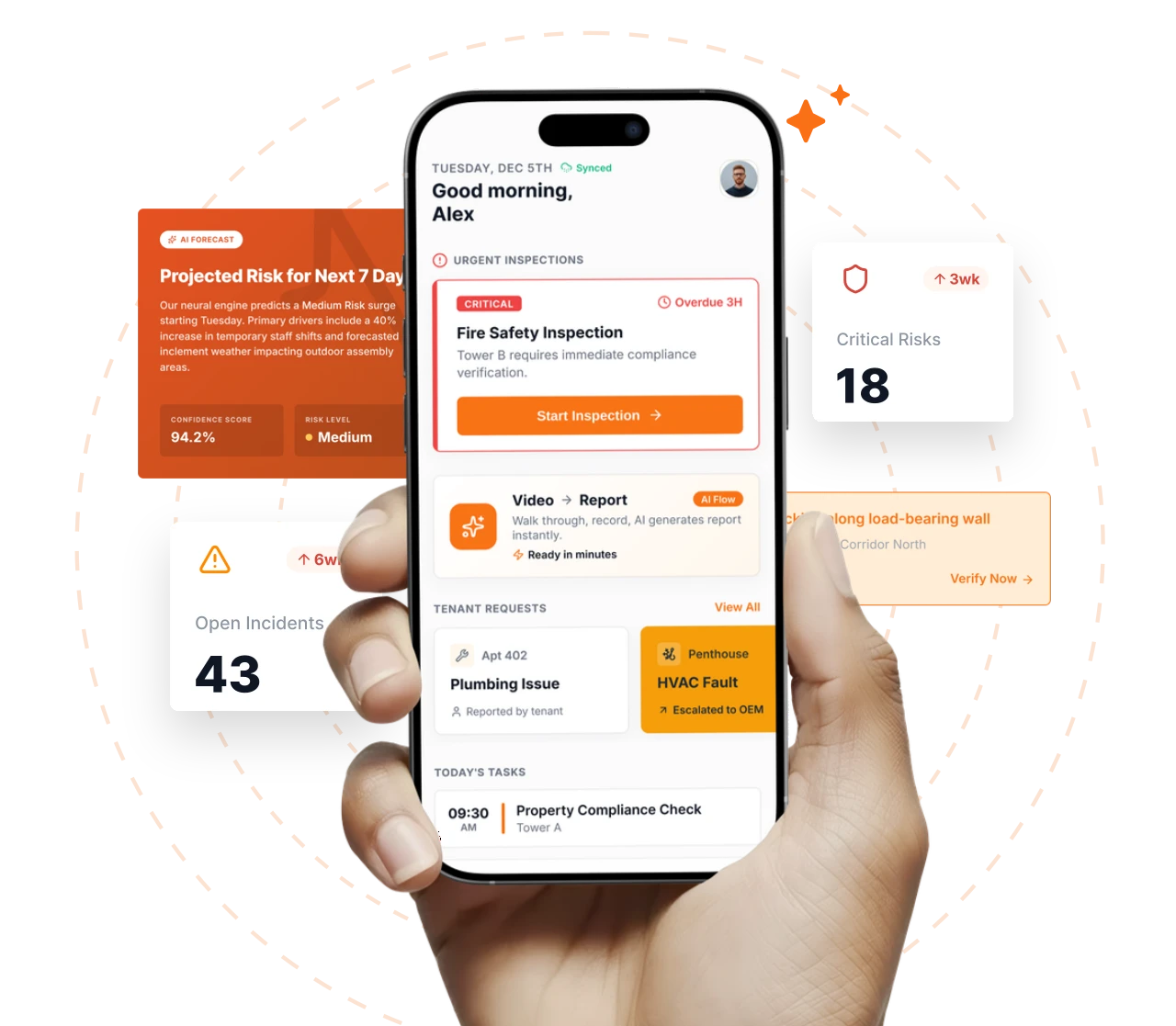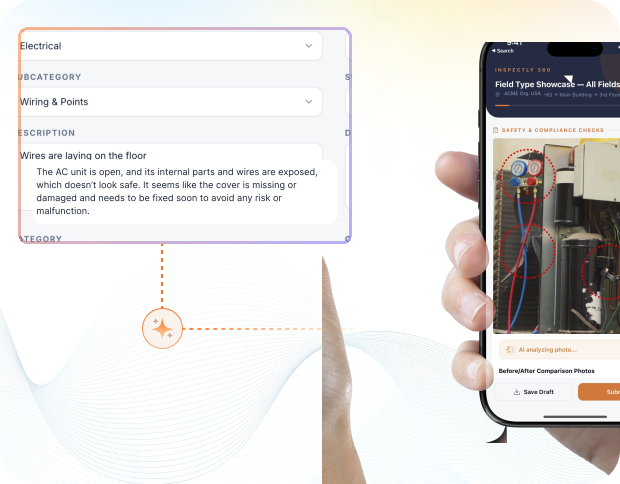
Take a Photo. AI Fills the Form
Your inspector takes a photo of any asset or defect. AI reads it and fills the inspection form automatically. No typing. No manual entry.

Convert your checklist into Mobile App
Cabin interior checklist software is the platform cabin appearance managers, cabin crew, and Part-145 line maintenance engineers use to run standardised cabin walks and keep defensible records across a fleet. Inspectly360 digitises seat condition and serviceability, seat belts and buckles, tray tables, placards and safety briefing cards, IFE units, and carpet and trim checks against CS-25 cabin requirements and 14 CFR 25.
Everything your field team does on paper, Inspectly360 does automatically: faster, more accurate, and without the admin.
Your inspector takes a photo of any asset or defect. AI reads it and fills the inspection form automatically. No typing. No manual entry.
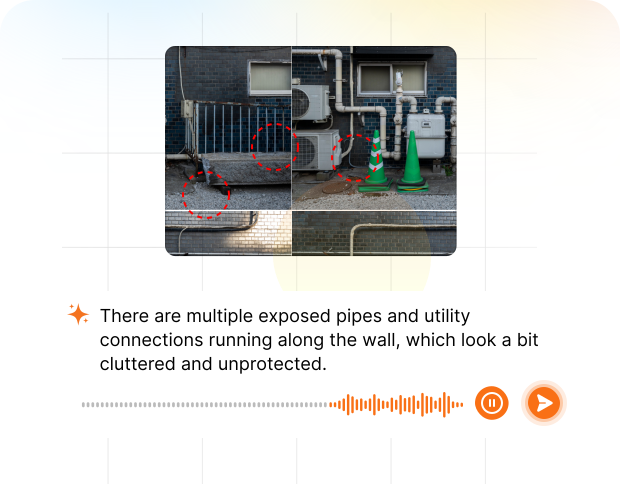
Inspectors speak their observations in any language. AI transcribes and fills the form in real time. Completely hands-free in the field.
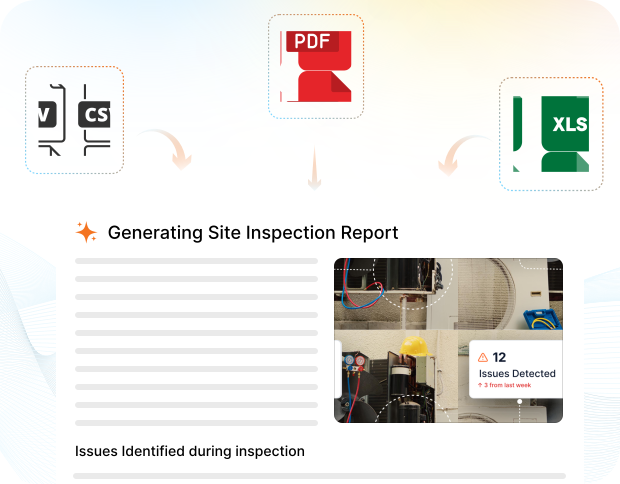
The moment an inspection is submitted, a branded PDF, Excel, or CSV report generates automatically. No manual work. No waiting.

Inspectly360 integrates with the tools your team already uses, including Zoho, Microsoft 365, and SAP. No double entry.
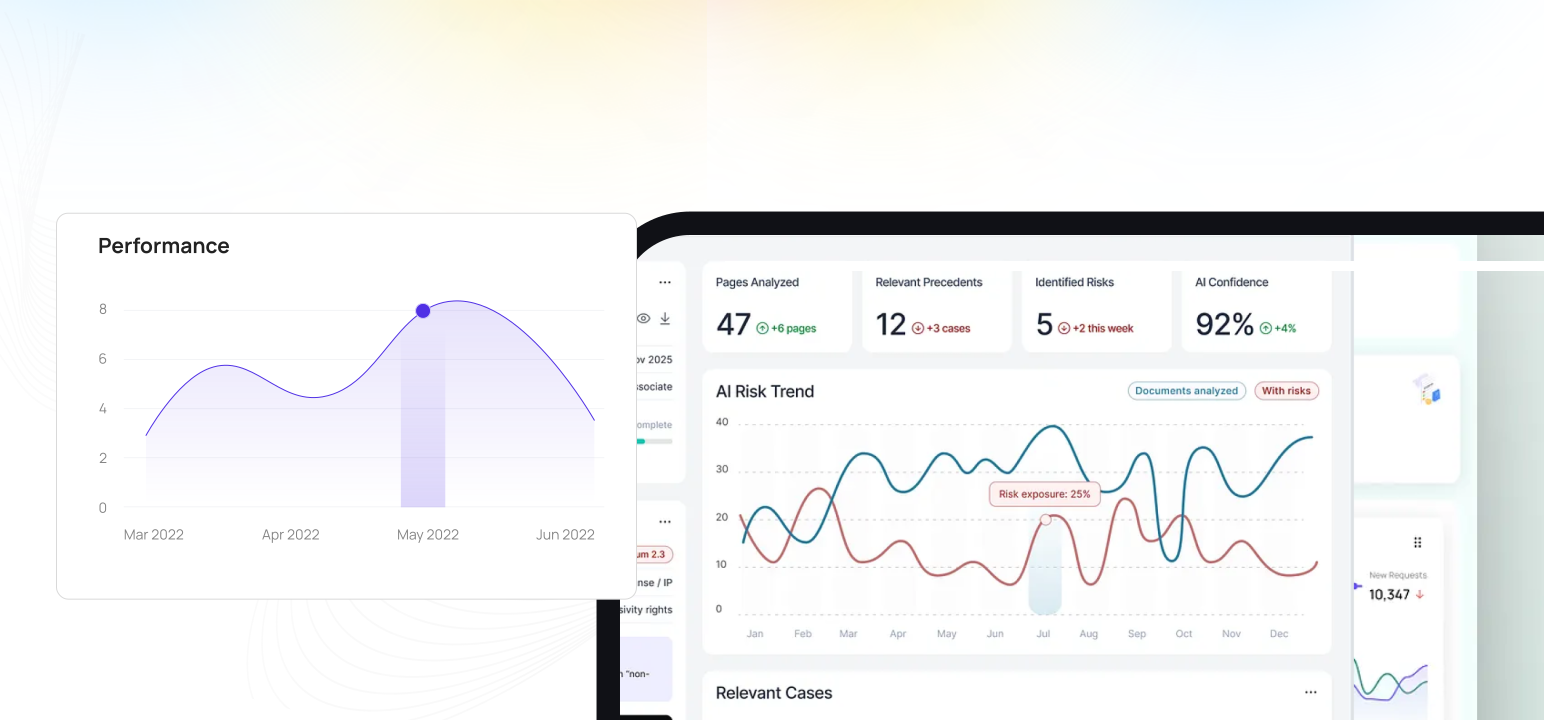
Your operations team sees completion rates, open issues, and compliance scores across all sites in real time. No chasing updates.
What changes once cabin interior checklist software runs on one mobile-first platform with photo proof and live dashboards.
Cabin interior checklist software is the platform cabin appearance managers, cabin crew, and Part-145 line maintenance engineers use to run standardised cabin walks and keep defensible records across a fleet. Inspectly360 digitises seat condition and serviceability, seat belts and buckles, tray tables, placards and safety briefing cards, IFE units, and carpet and trim checks against CS-25 cabin requirements and 14 CFR 25.853 material flammability.
Today the cabin walk is a paper card filled differently by every crew, the torn seat cover is noted but not routed, and the missing safety briefing card is only caught when a quality walk finds it. Across a mixed fleet, each base runs the cabin check its own way, so the appearance manager cannot compare cabin standards between tail numbers or see which faults are still open.
Inspectly360 replaces that with mobile capture on iOS and Android: crew run a structured cabin checklist per zone, log seat, placard, tray table, belt, and IFE checks with a photo, and any fail becomes a tracked defect routed to line maintenance with owner and deadline. A branded evidence pack exports per tail number when quality assurance or the regulator asks for the cabin condition record.
Cabin appearance and cabin crew teams follow this loop for boarding walks, turnaround checks, and continuing airworthiness reviews.
Assign QR identity to cabin zones, seat groups, and IFE units so each fault attaches to a specific location and tail number.
Crew work through seat condition, belts, tray tables, placards, and safety cards per zone on mobile, capturing photos for any fail.
Crew confirm carpet, curtain, and trim condition against the cabin material flammability standard, flagging damaged or non-conforming items.
Each failed item becomes a defect with owner, severity, and deadline so a torn cover or dead IFE screen is not lost between rotations.
Verified closures stay on the asset record and a branded cabin condition pack exports per tail number for quality assurance.
Answers to common long-tail questions, kept on one canonical page to avoid thin duplicate URLs.
Start with a single fleet type so the cabin zone map, seat group layout, and checklist items match the real cabin configuration before rollout to mixed types and other bases.
Cabin crew get checklist capture, line engineers get defect sign-off, and the appearance manager gets read access to the full cabin condition trail per tail number through role-based access.
The platform capabilities that power cabin interior checklist software across every site.
Every crew runs the same structured seat, placard, belt, and tray table check per zone. Why it matters: a consistent checklist removes the gap where one crew checks less than another.
A torn cover, jammed recline, or frayed belt is logged against the specific seat group with a photo. Why it matters: a precise location lets the engineer fix the right seat without a hunt.
Required placards and seat-back safety briefing cards are checked per cabin zone. Why it matters: a missing safety card found on an audit walk is a finding that is easy to prevent.
Carpet, curtain, and trim condition is checked against the cabin material flammability standard. Why it matters: a non-conforming or damaged trim item is a cabin safety and audit risk.
Dead screens and faulty seat-back units carry a tracked defect across rotations. Why it matters: untracked IFE faults pile up and become a passenger experience and dispatch problem.
Open cabin appearance and serviceability faults roll up across tail numbers. Why it matters: the appearance manager sees cabin standards without calling each base.
Cabin appearance and cabin safety teams comparing Inspectly360 to paper cabin cards, spreadsheet defect logs, and WhatsApp photo trails see the difference fastest on seat serviceability, placard and safety card checks, IFE faults, trim and carpet flammability standards, and fleet-wide cabin appearance visibility aligned to CS-25 cabin requirements and 14 CFR 25.853 material flammability.
| Topic | Typical Gaps | With Inspectly360 |
|---|---|---|
| Seat condition and serviceability | A torn seat cover or jammed recline is noted on a paper card the next crew never sees. | Each seat row is checked against a standard list with a photo and the defect routed to line maintenance. |
| Placards and safety briefing cards | A missing seat-back safety card or worn placard is missed until an audit walk finds it. | The checklist forces a placard and safety card check per cabin zone with a pass or fail and photo. |
| Tray tables and seat belts | A loose tray table latch or frayed seat belt is reported verbally and forgotten by pushback. | Belt, buckle, and tray table checks are logged per seat group with the fault visible to the engineer. |
| IFE and trim faults | Dead IFE screens and scuffed trim build up because nobody tracks them across rotations. | IFE and trim faults carry a tracked defect with owner and deadline across every tail number. |
| Fleet cabin appearance status | The appearance manager calls each base to learn which cabins have open standards faults. | A live dashboard shows open cabin appearance and serviceability faults across the fleet. |
What changes once cabin interior checklist software is standardised on Inspectly360.
Get started with inspection and audit checklist templates.

Use this template to perform a comprehensive safety inspection of light vehicles. This check ensures all critical components are checked ...
Use these apps to run inspections and audits.

by Inspectly360
Streamline facilities inspections with forms, photos, and reports.

by Inspectly360
Building condition and compliance inspections with evidence and follow-ups.

by Inspectly360
Digitize building inspection apps workflows with forms, evidence capture, and automated reporting.

by Inspectly360
Run building inspections on phones and tablets with offline forms, photo evidence, and instant reports.

by Inspectly360
Audit buildings with structured scoring, photo evidence, and corrective action tracking across portfolios.
A cabin interior checklist on Inspectly360 covers the items a cabin walk checks: seat condition and serviceability, seat belts and buckles, tray table latches, recline function, placards and seat-back safety briefing cards, IFE units, and carpet, curtain, and trim condition. Each item is a pass or fail with a photo against the cabin zone and seat group. The template is built once to match your cabin configuration, so every crew runs the same check rather than each one working from memory. A failed item becomes a tracked defect routed to line maintenance, so a torn cover or missing safety card is fixed before it shows up on a quality walk.
Consistency comes from a single standardised template that every crew uses. Instead of one crew checking seat covers closely and another skipping them, the checklist lists each item and requires a pass or fail per cabin zone. A fail needs a photo, so the record shows the actual condition, not just a tick. The appearance manager configures the standard once, including placard and safety card checks and trim condition against the flammability standard. Because every walk follows the same structure across the fleet, the manager can compare cabin standards between tail numbers and bases, and spot which cabins repeatedly fail the same item.
Yes. The checklist works fully offline on iOS and Android, which matters on the aircraft and at remote stands where signal is weak or absent. Crew complete the cabin walk, capture photos of any failed seat, placard, or trim item, and submit while offline. Records sync automatically once the device reconnects, and the timestamp reflects when the walk was actually done, not when it synced. Nothing is lost if a check happens in an area with no coverage. This keeps the cabin condition trail accurate and complete for quality assurance and continuing airworthiness review.
When a crew member marks a seat item as failed, such as a jammed recline, a frayed seat belt, or a broken tray table latch, the platform creates a tracked defect against that specific seat group and tail number. The defect carries a photo, a severity, an owner, and a deadline, and routes to line maintenance immediately. Because the seat group is identified precisely, the engineer fixes the right seat without searching the cabin. The defect stays open until a verified closure is recorded, so a noted fault is not lost between rotations or buried on a paper card the next crew never reads.
The checklist includes items for carpet, curtains, seat dress covers, and trim condition checked against the cabin material flammability standard set in 14 CFR 25.853. Crew flag damaged, heavily worn, or visibly non-conforming items with a photo, and the item routes to line maintenance for assessment against the approved material specification. The platform does not replace the engineering decision on conformity, but it captures the field condition consistently and creates a record that the item was identified and actioned. This closes the common gap where a damaged or unapproved trim item sits in service because nobody logged it for review.
Yes. Every completed cabin checklist and every open defect rolls up to a fleet dashboard, so the appearance manager sees which cabins have open serviceability or appearance faults across all tail numbers without calling each base. The dashboard shows open and overdue defects, recurring failed items, and the bases where cabin standards slip most often. This replaces the routine of phoning each station for a verbal status. The manager can focus attention on the cabins and bases that need it, and prove cabin condition with timestamped, photo-backed records rather than a feeling that standards are being met.
Cabin Interior Checklist Software on Inspectly360 connects directly to the inspection apps, checklist templates, forms, industries, and adjacent solutions linked below.
See Inspectly360 in action with a live demo tailored to your needs. No credit card required.