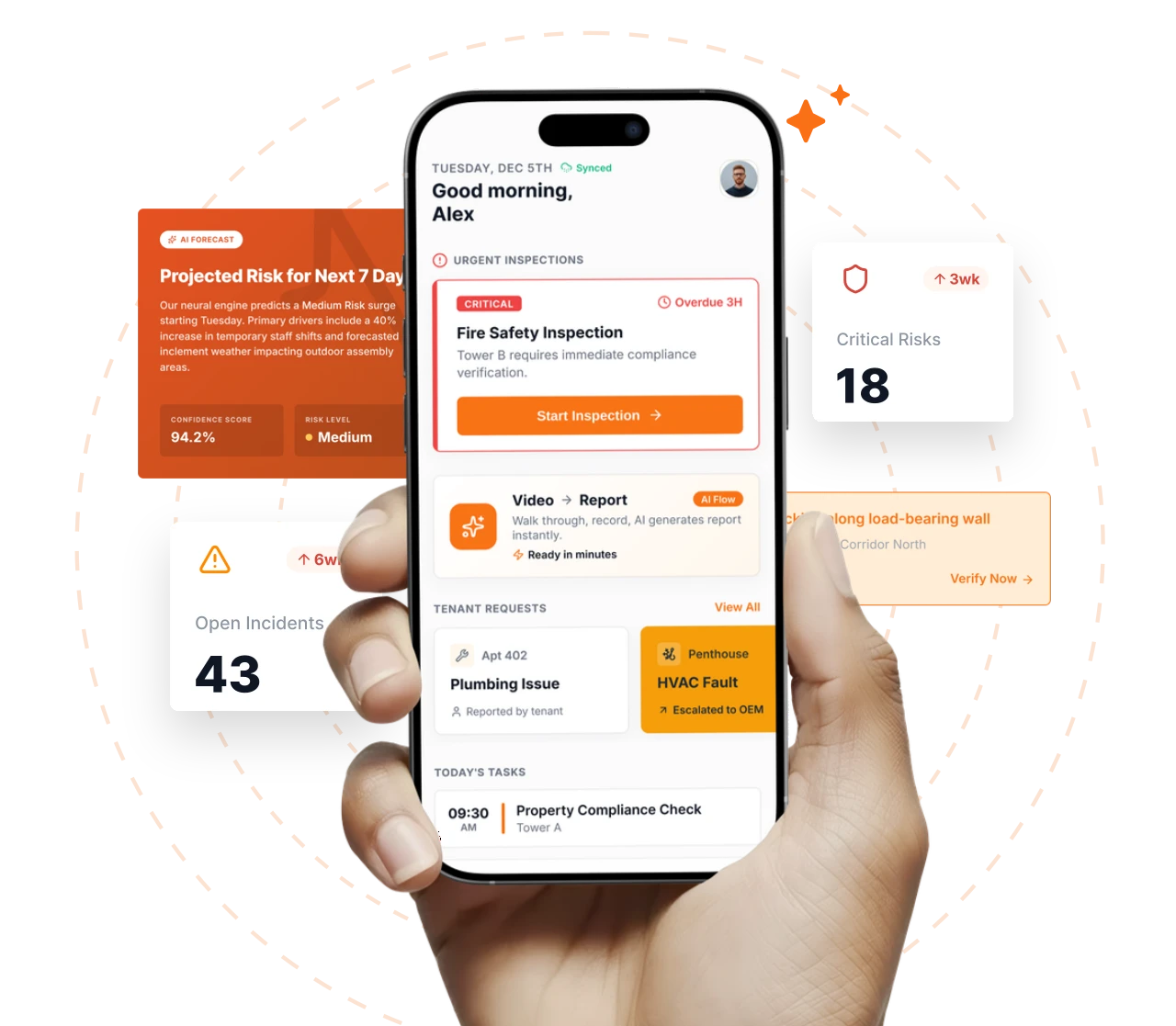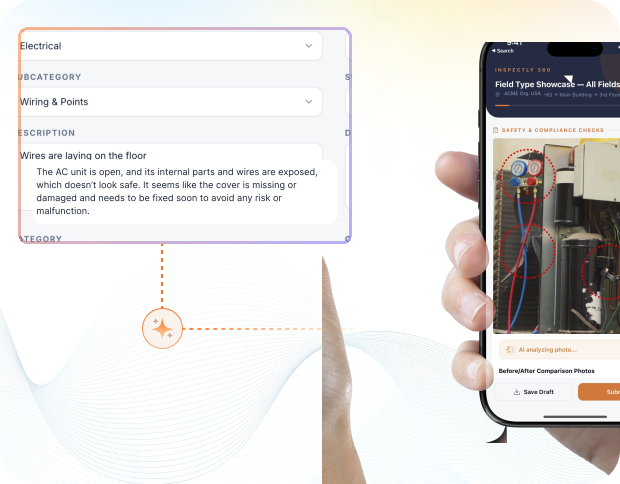
Take a Photo. AI Fills the Form
Your inspector takes a photo of any asset or defect. AI reads it and fills the inspection form automatically. No typing. No manual entry.

Convert your checklist into Mobile App
Overhead bins safety software is the platform cabin safety managers, cabin crew, and quality teams use to identify overhead bin hazards, rank risk, and track safety actions across a fleet. Inspectly360 digitises hazard capture for bin latch failure, overload, falling-object risk, and structural cracks, ranks each hazard by risk, and tracks the safety management system action to verified closure in one record per tail number.
Everything your field team does on paper, Inspectly360 does automatically: faster, more accurate, and without the admin.
Your inspector takes a photo of any asset or defect. AI reads it and fills the inspection form automatically. No typing. No manual entry.
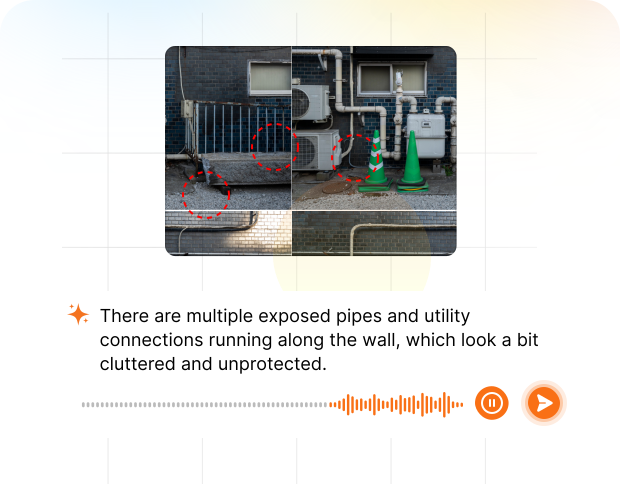
Inspectors speak their observations in any language. AI transcribes and fills the form in real time. Completely hands-free in the field.
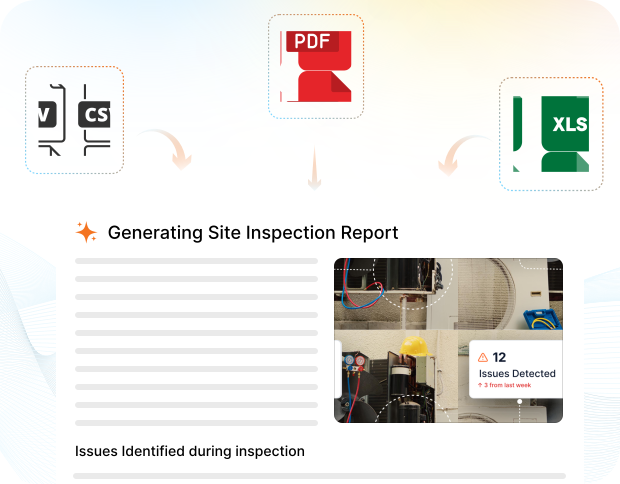
The moment an inspection is submitted, a branded PDF, Excel, or CSV report generates automatically. No manual work. No waiting.

Inspectly360 integrates with the tools your team already uses, including Zoho, Microsoft 365, and SAP. No double entry.
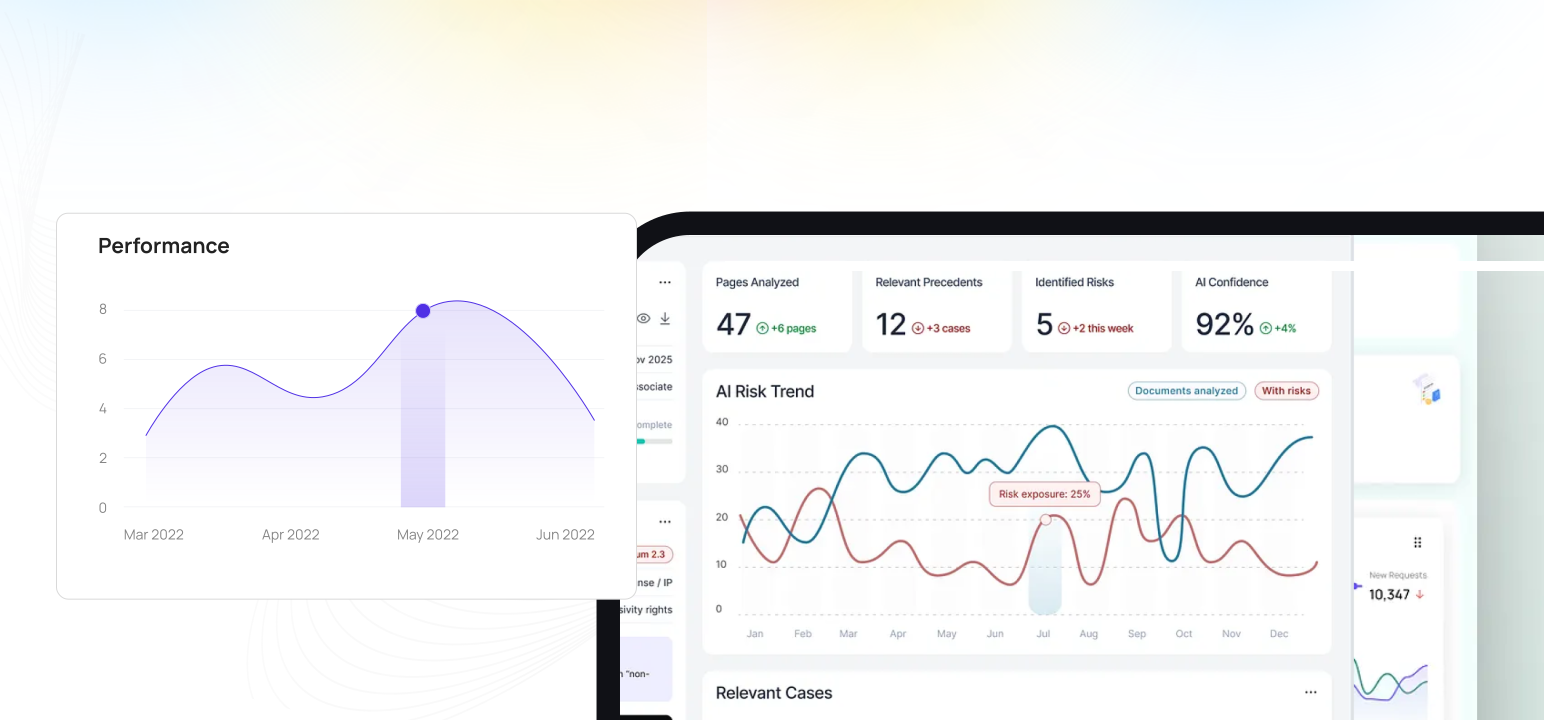
Your operations team sees completion rates, open issues, and compliance scores across all sites in real time. No chasing updates.
What changes once overhead bins safety software runs on one mobile-first platform with photo proof and live dashboards.
Overhead bins safety software is the platform cabin safety managers, cabin crew, and quality teams use to identify overhead bin hazards, rank risk, and track safety actions across a fleet. Inspectly360 digitises hazard capture for bin latch failure, overload, falling-object risk, and structural cracks, ranks each hazard by risk, and tracks the safety management system action to verified closure in one record per tail number.
Today a bin latch that pops open in turbulence or an overloaded bin is mentioned verbally and never reaches a hazard log, bin hazards are not ranked so a falling-object risk sits with a cosmetic scuff, and a safety action agreed in a meeting is hard to track to closure. Across a mixed fleet, the same latch pops open across tails but nobody sees the pattern, so the cabin safety manager treats symptoms rather than causes, and a falling bag from an open bin is a real injury risk.
Inspectly360 replaces that with mobile hazard capture on iOS and Android: crew log a bin hazard with a photo, each hazard is risk ranked so the most serious are actioned first, and the SMS action carries an owner, deadline, and verified closure. Recurring bin hazards are flagged across tails. A branded safety pack exports per tail number, and the cabin safety manager sees open and overdue bin hazards ranked by risk across the whole fleet.
Cabin safety teams follow this loop from overhead bin hazard report to ranked risk, SMS action, and verified closure.
Crew log a bin hazard such as a latch that pops open, an overloaded bin, or a structural crack on mobile with a photo and location.
Each hazard is ranked by likelihood and severity so a falling-object latch risk is separated from a cosmetic scuff.
On every overhead bins safety cycle, A safety action is assigned with an owner and deadline so the response is tracked, not agreed and forgotten in a meeting.
The platform flags when the same bin hazard recurs across tails so the root cause is fixed, not the symptom.
Actions close only with verified evidence, and a branded bin safety pack exports per tail number for the SMS record.
Answers to common long-tail questions, kept on one canonical page to avoid thin duplicate URLs.
Start with a single fleet type so the bin hazard categories and risk ranking model are validated against real cabin layouts before rollout to mixed types and other bases.
Cabin crew get hazard capture, the cabin safety manager gets risk ranking and action assignment, and quality gets read access to the full SMS trail through role-based access.
The platform capabilities that power overhead bins safety software across every site.
Crew log latch failures, overload, and structural cracks on mobile with a photo. Why it matters: a hazard captured at the bin enters the SMS record instead of evaporating as a verbal mention.
Each bin hazard is ranked by likelihood and severity. Why it matters: a falling-object latch risk buried among cosmetic items is the one most likely to injure a passenger.
Across multi-site overhead bins safety rounds, each safety action carries an owner, deadline, and verified closure. Why it matters: an action agreed in a meeting with no owner is the one that never gets done.
The platform flags bin hazards that recur across tails. Why it matters: a repeating latch failure needs a root-cause fix, not the same temporary response again.
Safety actions close only with verified evidence. Why it matters: an action marked done without proof is the gap an investigation finds after an injury.
Open and overdue bin hazards roll up ranked by risk across tails. Why it matters: the cabin safety manager sees the real risk picture without calling each base.
Cabin safety teams comparing Inspectly360 to verbal hazard reports, spreadsheet logs, and paper hazard cards see the difference fastest on hazard capture, risk ranking, SMS action tracking, recurring hazard detection, and fleet-wide overhead bin safety visibility for latch failure, overload, and falling-object risk.
| Topic | Typical Gaps | With Inspectly360 |
|---|---|---|
| Hazard identification | A bin latch that pops open in turbulence is mentioned verbally and never reaches a hazard log. | Crew log the bin hazard on mobile with a photo so it enters the SMS record immediately. |
| Risk ranking | Bin hazards are not ranked, so a falling-object latch risk sits with a cosmetic scuff. | Each hazard is risk ranked so the most serious bin risks are actioned first. |
| SMS action tracking | A safety action is agreed in a meeting and its closure is hard to track afterwards. | Each safety action carries an owner, deadline, and verified closure on the SMS record. |
| Recurring bin hazards | The same latch pops open across tails but the pattern is never seen. | Recurring bin hazards are flagged across tails so root causes get fixed, not symptoms. |
| Fleet bin safety status | The cabin safety manager calls each base to learn which bin hazards are open. | A live dashboard shows open and overdue bin hazards ranked by risk across the fleet. |
What changes once overhead bins safety software is standardised on Inspectly360.
Get started with inspection and audit checklist templates.

Use this template to perform a comprehensive safety inspection of light vehicles. This check ensures all critical components are checked ...
Use these apps to run inspections and audits.

by Inspectly360
Streamline facilities inspections with forms, photos, and reports.

by Inspectly360
Building condition and compliance inspections with evidence and follow-ups.

by Inspectly360
Digitize building inspection apps workflows with forms, evidence capture, and automated reporting.

by Inspectly360
Run building inspections on phones and tablets with offline forms, photo evidence, and instant reports.

by Inspectly360
Audit buildings with structured scoring, photo evidence, and corrective action tracking across portfolios.
Cabin crew log a bin hazard on mobile in seconds, selecting the hazard type, capturing a photo, and noting the bin position and tail number. A latch that pops open in turbulence, an overloaded bin, a structural crack, or a falling-object risk enters the safety management system record immediately rather than being mentioned verbally and forgotten. Because capture is fast and works offline, crew actually report rather than skipping it. Each hazard then flows into risk ranking and action assignment. This closes the gap where a real bin risk is known to the crew but never reaches the cabin safety manager or the SMS record, leaving a latch failure to recur.
Each bin hazard is ranked by likelihood and severity using a consistent model, so a high-risk item like a latch that lets a loaded bin open in turbulence is separated from a low-risk cosmetic scuff. The ranking drives the order in which the cabin safety manager assigns and tracks actions, so attention goes to the hazards most likely to cause an injury from a falling object. Because ranking is applied the same way across the fleet, the manager can compare risk between tails and bases. This replaces a flat hazard list where a serious falling-object latch risk sits unnoticed among minor items, undermining the SMS.
Each safety action raised from a bin hazard carries an owner, a deadline, and a required verified closure step. Instead of an action agreed in a safety meeting and then hard to track, the platform holds the action, the responsible person, and the evidence needed to close it. The action stays open until closure is verified with proof. The cabin safety manager sees all open and overdue bin actions on one dashboard, ranked by risk. This gives the SMS a clear, defensible trail showing each hazard was identified, ranked, actioned, and closed, which is exactly what a safety audit and an injury investigation both look for.
Yes. Because every bin hazard is structured with its type, bin position, and tail number, the analytics view surfaces when the same hazard recurs across the fleet. If the same latch type pops open repeatedly, or a particular bin position keeps showing a falling-object risk, it is flagged as recurring with frequency and affected tails. This lets the cabin safety manager push for a root-cause fix rather than applying the same temporary response again and again. A repeating bin hazard is the early signal of a design or wear issue, and seeing the pattern is what turns reactive safety into prevention of an injury.
Yes. Hazard capture works fully offline on iOS and Android, which matters on the aircraft and at remote stands where signal is weak. Crew log a bin hazard with a photo while offline, and the record syncs automatically once the device reconnects. The timestamp reflects when the hazard was reported, not when it synced, which keeps the SMS trail accurate. Nothing is lost if a hazard is reported in an area with no coverage. This makes hazard reporting practical in real cabin conditions, so the SMS record captures what crew actually see rather than only what they remember to report later.
Bin safety shares the same asset records as bin inspection and maintenance on Inspectly360, so a hazard logged against a bin latch or structure links to that asset and its history. A hazard can trigger an inspection or a maintenance task, and a fault found on inspection can be raised as a hazard if it carries a safety risk. This means the cabin safety manager, line engineer, and quality team work from connected records rather than separate logs. The fix is targeted to the right bin position, recorded against it, and the safety, inspection, and maintenance trails reinforce one another on one record per tail number.
Overhead Bins Safety Software on Inspectly360 connects directly to the inspection apps, checklist templates, forms, industries, and adjacent solutions linked below.
See Inspectly360 in action with a live demo tailored to your needs. No credit card required.