How does a maintenance technician record a finding while still working on the asset?
The constraint in the field is not willingness, it is hands. A technician holding a tool, wearing gloves, or working at height cannot type a description without stopping the job, putting something down, and often removing a glove. What usually happens instead is a short note, or no note until later.
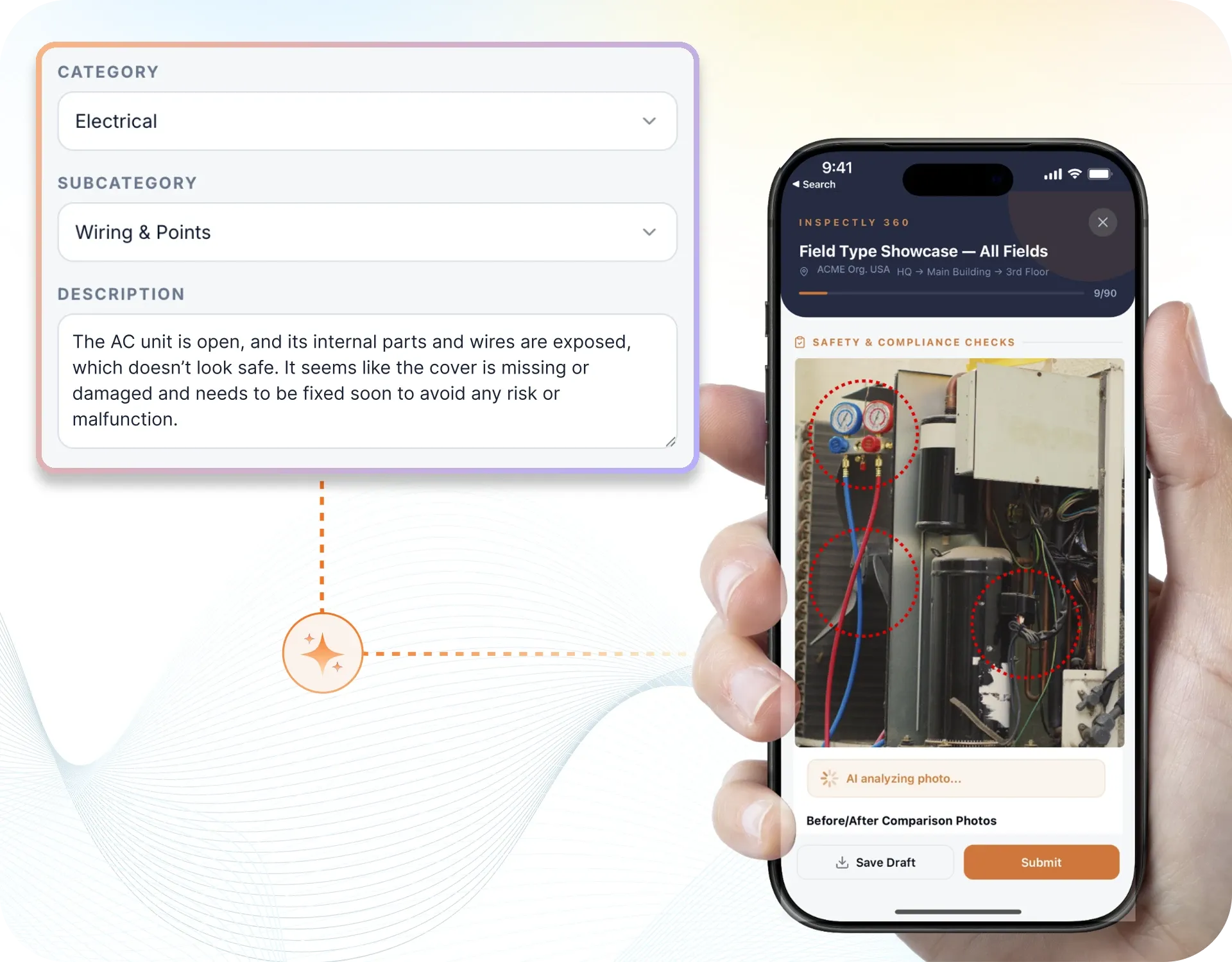
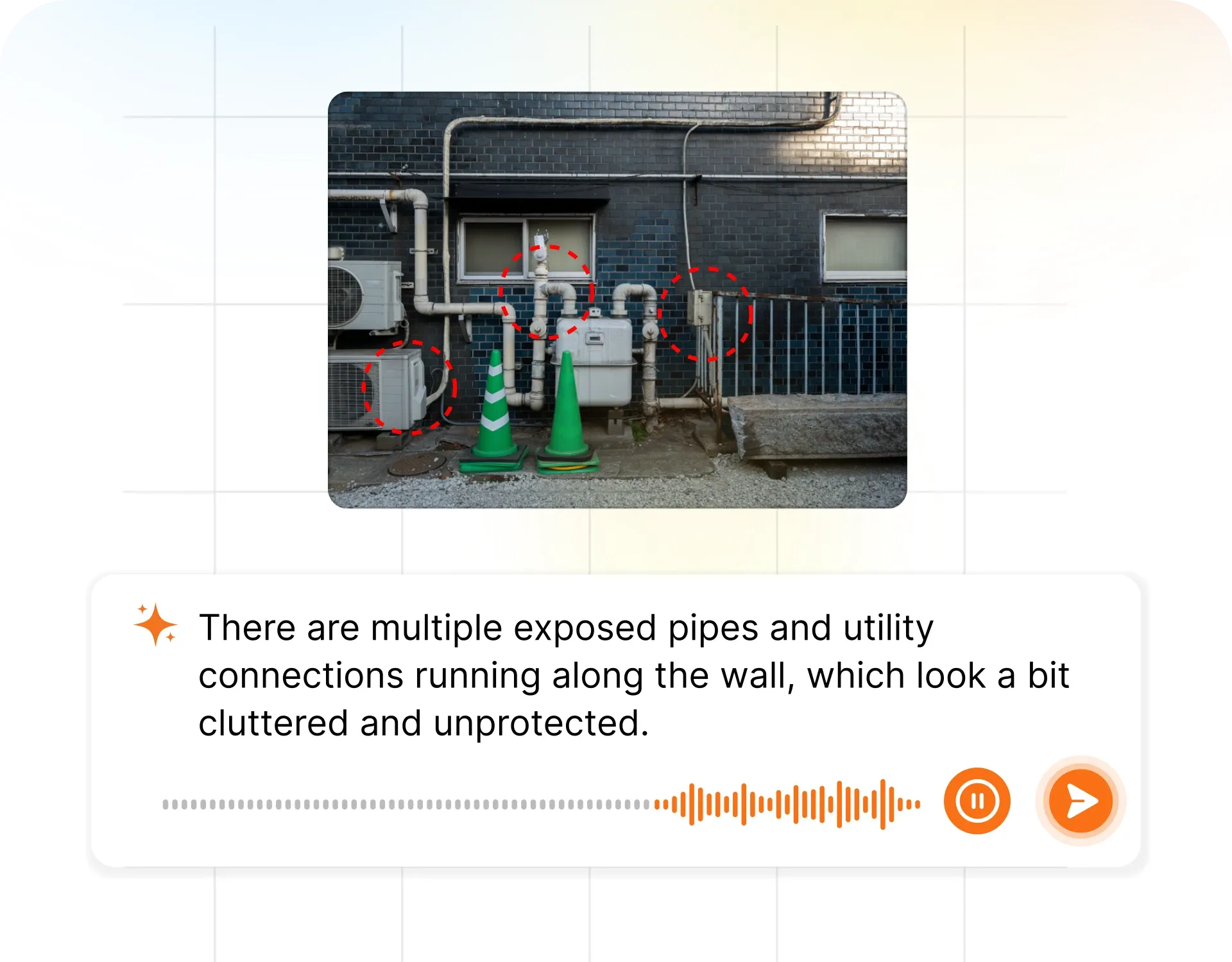
Speaking removes that interruption. The technician describes what they see against the item they are working on, and the AI transcribes it, interprets the finding, and fills the appropriate fields on the form. The work does not pause, and the inspector does not have to hold the observation in their head until they reach somewhere they can write it down.
The quality difference shows in the detail. People will say far more than they will patiently type, so a finding captured by voice tends to carry the context that a typed note omits: what was heard, where exactly it was, what condition the surrounding equipment was in. Voice can be mixed with typing and with photo capture on the same inspection, so the inspector uses whichever is fastest for each item.
The same hands-free flow holds in the languages field teams actually speak. Voice input handles English, Hindi, Marathi, and others, so an inspector describes a finding in the language they think in rather than translating it into form English first. Because the interpretation runs against the checklist item on the device, the flow keeps working on sites with weak or no signal, and the record syncs when the connection returns.