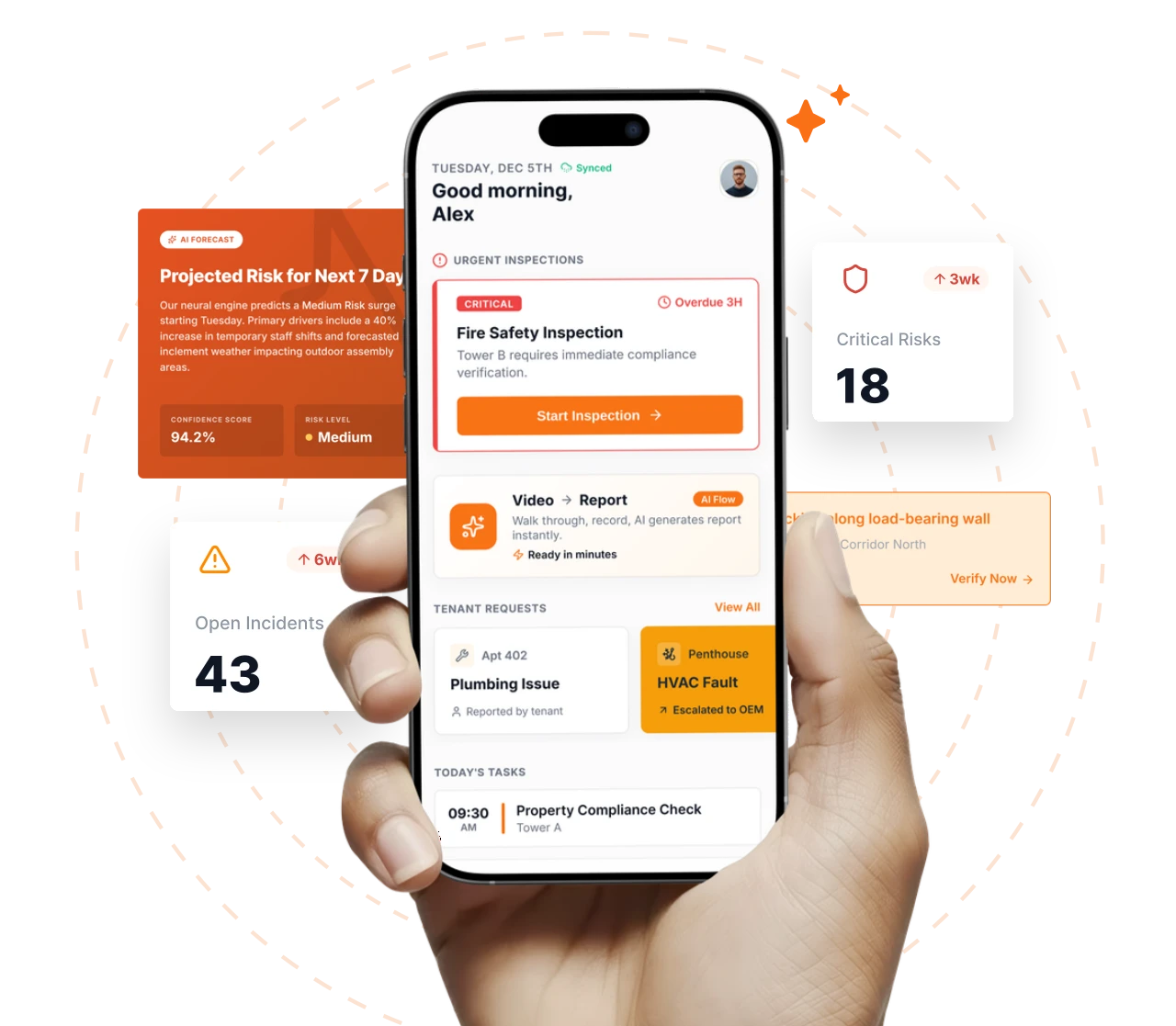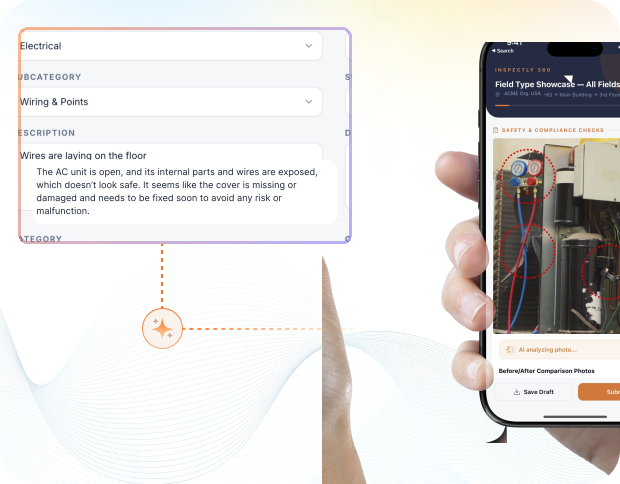
Take a Photo. AI Fills the Form
Your inspector takes a photo of any asset or defect. AI reads it and fills the inspection form automatically. No typing. No manual entry.

Convert your checklist into Mobile App
Common area inspection management software is the governance layer above the inspection itself: who runs what lobby walk, when the stairwell check is due, who reviews the pool round, who can change a template, and how exceptions close before the body corporate meeting. Inspectly360 ties scheduling, RBAC, template versioning, scoring rules, and programme analytics so FM directors see coverage gaps before residents, committees, or regulators do.
Everything your field team does on paper, Inspectly360 does automatically: faster, more accurate, and without the admin.
Your inspector takes a photo of any asset or defect. AI reads it and fills the inspection form automatically. No typing. No manual entry.
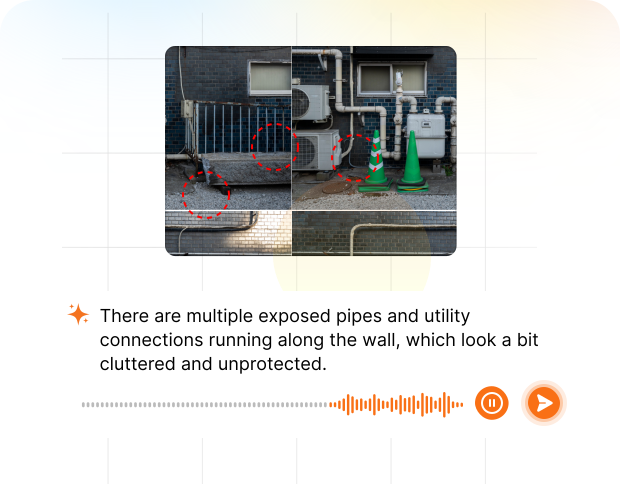
Inspectors speak their observations in any language. AI transcribes and fills the form in real time. Completely hands-free in the field.
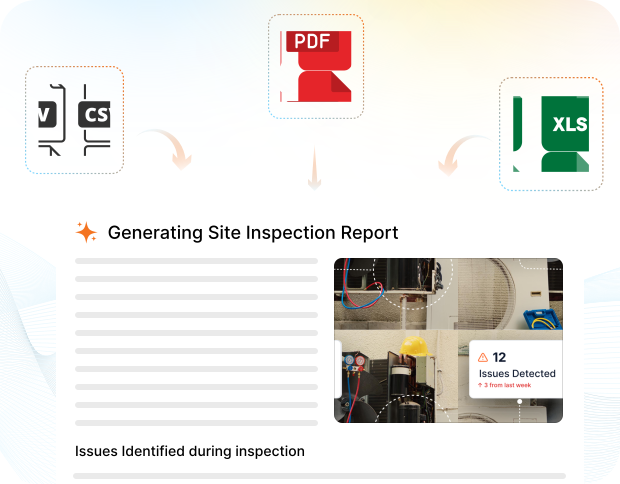
The moment an inspection is submitted, a branded PDF, Excel, or CSV report generates automatically. No manual work. No waiting.

Inspectly360 integrates with the tools your team already uses, including Zoho, Microsoft 365, and SAP. No double entry.
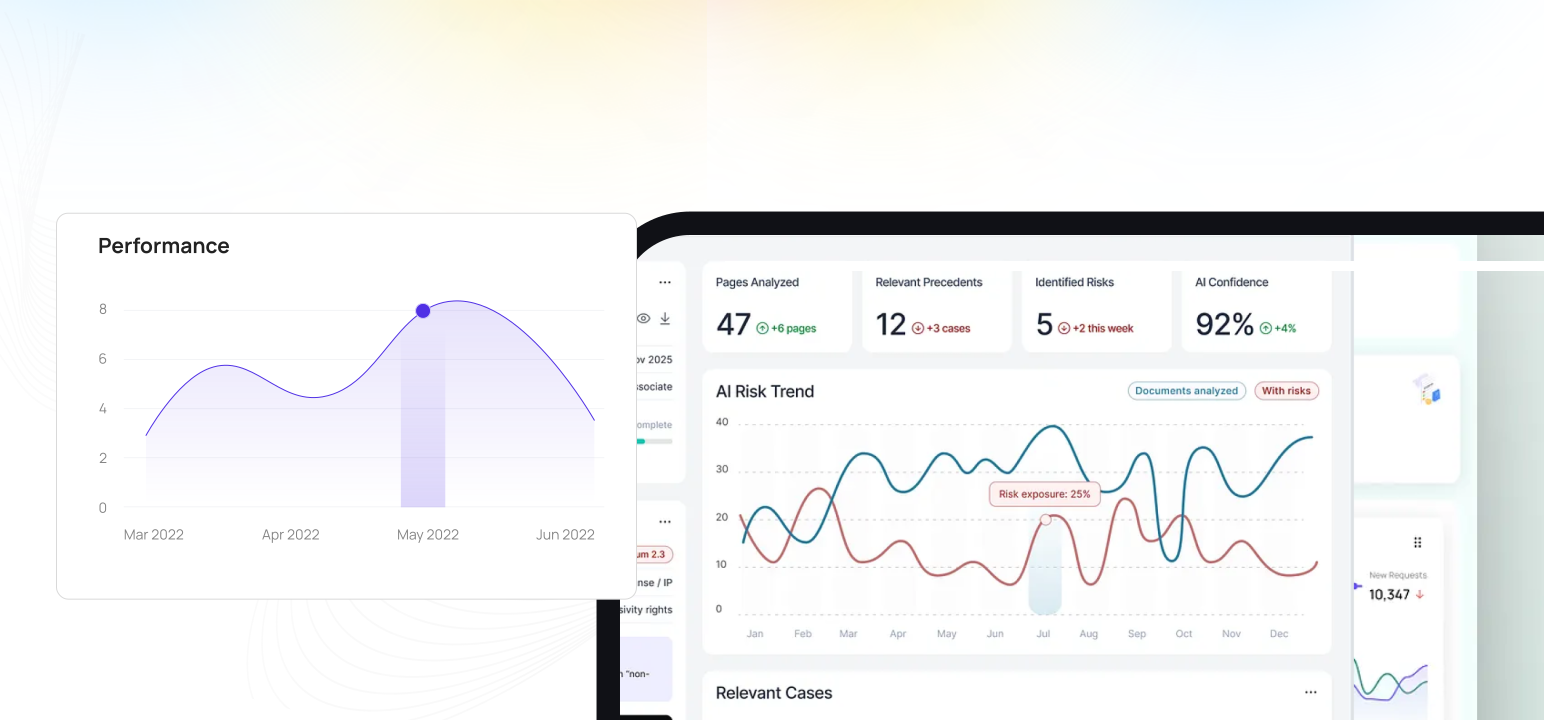
Your operations team sees completion rates, open issues, and compliance scores across all sites in real time. No chasing updates.
What changes once common area inspection management software runs on one mobile-first platform with photo proof and live dashboards.
Common area inspection management software is the governance layer above the inspection itself: who runs what lobby walk, when the stairwell check is due, who reviews the pool round, who can change a template, and how exceptions close before the body corporate meeting. Inspectly360 ties scheduling, RBAC, template versioning, scoring rules, and programme analytics so FM directors see coverage gaps before residents, committees, or regulators do. Where common area inspection software is the mobile app and the captured record, common area inspection management software is the operating discipline that keeps the programme consistent across towers, operators, and contractor changes.
For FM directors, the management layer ends the era of three regional spreadsheets and three versions of the same lobby checklist. One approved template library publishes the correct version to every tower automatically. Scheduling pushes recurring lobby, corridor, stairwell, elevator, mail room, gym, and pool programmes to the right inspector with reassignment built in for absent staff. RBAC scopes cleaning vendors to their zones and committee observers to read-only tower views.
The outcome is a programme that survives building-manager change, tower acquisition, and portfolio restructuring. Coverage stays predictable; closure stays verified; the REIT operator sees the same metrics across every region without anyone rebuilding the deck for the quarterly owner report.
Most FM directors implement these governance controls in this order before scaling across the full common-area portfolio.
Version every lobby, corridor, stairwell, elevator, mail room, gym, and pool checklist template with RBAC so only approved owners publish changes. End the era of three different versions of the same lobby walk across three towers.
Hourly lobby checks, daily corridor cleaning, weekly stairwell walks, monthly fire-egress rounds, and amenity pre-opening inspections. Calendar-based or condition-based, with automatic reassignment when concierge staff change shifts.
Building managers see their towers. Cleaning vendors see only their assigned lobbies and corridors. Body corporate committees get read-only views. FM directors see the portfolio. RBAC enforced at capture and approval.
Required photos, signatures, conditional branches, and geofence validation reduce subjective pass or fail drift across shifts, towers, and contractors inspecting the same amenity lounge.
Heatmaps highlight overdue lobby walks and aging resident issues. Escalations fire automatically when stairwell or pool round deadlines approach or pass, before the committee agenda is finalised.
Answers to common long-tail questions, kept on one canonical page to avoid thin duplicate URLs.
Inspectly360 sits as the programme governance and field-evidence layer beside CAFM and IWMS platforms that already hold asset registers, lease data, and maintenance history. CAFM scheduling modules handle asset-centric PM; Inspectly360 governs the human inspection programme — who walks which lobby, when the pool round is due, how exceptions close. Failed items push to the CMMS as work orders; programme coverage metrics pull into the FM director's portfolio dashboard without re-keying tower reports.
Procurement should validate six enterprise requirements: SSO via SAML or OIDC with SCIM provisioning for contractor lifecycle; RBAC granular enough to scope a cleaning vendor to specific lobbies across specific towers; template versioning with approval workflows so only FM leads publish changes; offline mobile capture verified in real stairwells and parking lobbies; configurable retention per body corporate agreement; and API integration documented for the property-management system already in place.
Common-area programme governance carries resident PII, contractor credentials, and body corporate records subject to strata legislation and owner disclosure rules. Inspectly360 enforces server-side RBAC so committee observers cannot edit templates, contractors cannot see other towers' data, and audit logs record every template publish, schedule change, and closure override. Regional data residency supports GDPR, Australian Privacy Act, and India DPDP obligations common in multi-region REIT portfolios.
Building-manager turnover and tower acquisition are the highest-risk moments for programme drift. Inspectly360 supports operator handover packs that export the active programme library, schedule cadence, open issues, and vendor scorecards for the incoming manager. New acquisitions inherit the corporate parent programme with tower-specific overrides rather than starting from a blank Excel calendar. The first 90 days run with dual reporting so the FM director validates coverage before decommissioning legacy tools.
The platform capabilities that power common area inspection management software across every site.
FM directors comparing Inspectly360 to CAFM scheduling modules, Excel-driven inspection calendars, and generic workflow apps care about five things specific to common-area programme governance: whether lobby and corridor coverage is predictable across towers, whether cleaning contractor access is bounded by zone, whether the template library survives building-manager change, whether closure workflows verify the fix before the committee sees it, and whether programme metrics roll up to the REIT without a weekend compile.
| Topic | Typical Gaps | With Inspectly360 |
|---|---|---|
| Multi-tower coverage predictability | Lobby, corridor, and amenity schedules live in Excel per tower. Coverage gaps invisible until a resident complaint reaches the body corporate, and a newly acquired tower inherits the gap without ever knowing the parent schedule existed. | Scheduled common-area programmes publish to every tower automatically. Coverage heatmaps surface overdue lobby walks and at-risk amenity obligations before residents notice, and new acquisitions inherit the approved cadence the moment they onboard. |
| Cleaning contractor and committee RBAC | Cleaning vendors, concierge staff, and committee observers get whole-folder access or work in parallel paper files. Contractor work, resident data, and committee visibility co-mingle without enforced boundaries. | Cleaning vendors, concierge teams, and body corporate observers get scoped, role-based access to their assigned zones and towers only. Resident data stays protected; closure proof stays traceable to a named actor on the right scope. |
| Template library discipline through manager change | Three versions of the daily lobby checklist live on three regional drives. Building managers run different rounds depending on which file they opened, and a new manager onboarding inherits whichever copy they were sent by email. | Versioned template library with publishing approvals. Only approved owners change templates; every tower runs the current approved version. Manager changes inherit the controlled library, not a frozen snapshot. |
| Common-area-specific closure workflow | Resident issues closed in email replies between building managers and cleaning vendors. No verification gate; complaints often resurface a week later proving the closed fix never actually happened in the corridor or lobby. | Every failed item carries owner, AMC vendor link, deadline, and photo-verification gate before closure. Vendor scorecards update from real closure data, not from vendor self-attestation. |
| Programme metrics for FM directors and REIT operators | Programme metrics rebuilt manually from tower reports each month. Coverage rate, closure cycle, and vendor posture differ in every region's deck, so the FM director cannot compare like-for-like at portfolio level. | Programme metrics roll up the same way across every tower: coverage, closure cycle, vendor scorecard, amenity compliance. Corporate real estate and the FM director see one consistent picture without rebuilding it for the owner report. |
What changes once common area inspection management software is standardised on Inspectly360.
Get started with inspection and audit checklist templates.

Standard site-level inspections for construction, safety, and compliance. Capture conditions, photos, and follow-ups in one place.

Inspect assets and equipment: condition, location, photos, and maintenance history. Track condition over time.

Complete work orders with checklist items, photos, and sign-off. Track completion and proof of work.

Preventive and corrective maintenance inspections. Log repairs, parts, and condition with photos and follow-ups.
Use these apps to run inspections and audits.

by Inspectly360
Inspect common area with structured checks, photo evidence, and corrective action tracking.

by Inspectly360
Run common area inspections on phones and tablets with offline forms, photo evidence, and instant reports.

by Inspectly360
Audit common area inspection programmes with weighted scoring, photo evidence, and corrective action tracking.
by Inspectly360
Run common area inspections on Android phones and rugged tablets with offline forms and photo capture.
Inspectly360 supports programme inheritance from a corporate parent with tower-specific overrides. When a REIT acquires a tower running hourly lobby checks instead of the corporate standard of every two hours, the FM director maps the acquired cadence as a tower override while the corporate library remains the system of record. During the 90-day integration window, both cadences report side by side so the director can harmonise or retain justified differences. Open issues, vendor contracts, and historical evidence import against the tower record without re-typing.
Yes. RBAC scopes vendors at the zone level within a tower. A lobby and corridor vendor may differ from the gym and pool specialist within the same building. Each vendor sees only their assigned zones, receives only their scheduled rounds, and appears on only their scorecard. The building manager sees the combined tower view. This supports the common mixed-vendor model in large residential towers where amenity specialists hold separate AMC contracts from general cleaning contractors. Because access is enforced per zone on the server, an amenity specialist never sees the lobby vendor's work or another tower's data, and each vendor's scorecard reflects only their own zones, so the building manager can hold each AMC to its own SLA while keeping one combined view of the tower.
Committee observer roles are configured with read-only permissions scoped to their tower: they can view programme status, recent round evidence, open issues, and vendor scorecards but cannot edit templates, change schedules, close issues, or see other towers' data. Observer access logs record every view for governance transparency. When the committee composition changes after an AGM, the property manager revokes outgoing members and provisions incoming members through SCIM or manual invite without disturbing the active programme. That gives a body corporate committee genuine transparency over how their tower is maintained without handing them any control that belongs to the FM team, and because every view is logged, there is a clear governance record of who saw what, which matters when a committee questions a decision after the fact.
Yes. Condition-based triggers tighten mail room and parcel-room round frequency when overflow sensors, access-log volume, or manual flags indicate high traffic, which is common during holiday seasons or after a new e-commerce locker installation. The schedule returns to baseline automatically when conditions normalise. Building managers configure thresholds per tower rather than editing calendars manually each November. That means coverage rises to meet a parcel surge while it is happening and steps back down on its own afterwards, so the team neither under-serves a Christmas overflow nor wastes rounds on an empty parcel room in February.
Template publishing requires approval from designated FM leads or property managers before changes reach field devices. Body corporate-governed towers can require an additional committee notification step for templates affecting fire egress, pool safety, or accessibility checks. Version history shows who changed what and when; field devices sync only the approved version. Building managers cannot fork templates locally without the approval chain, which prevents the three-version drift problem. The optional committee-notification step matters in body corporate-governed towers because a change to a fire-egress, pool-safety, or accessibility check is a governance decision, not just an operational one, so the people accountable for it are informed before it reaches the field rather than discovering it at the next audit.
Yes. Inspectly360 integrates via REST API with Yardi Voyager, MRI Software, Planon, Archibus, and most enterprise CAFM platforms. Asset master data, lease boundaries, and contractor contracts flow into the programme layer so schedules attach to the correct zones and vendors. Failed inspection items push back as work orders with photo evidence. The integration is bidirectional: CAFM stays the asset record; Inspectly360 governs the inspection programme on top. That keeps the CAFM as the single asset record while the inspection layer it was never built to run lives in Inspectly360, so a failed lobby or amenity item becomes a work order in the system the FM team already uses, raised from verified field evidence rather than a phone call, with nothing re-keyed between the two.
Common Area Inspection Management Software on Inspectly360 connects directly to the inspection apps, checklist templates, forms, industries, and adjacent solutions linked below.
See Inspectly360 in action with a live demo tailored to your needs. No credit card required.