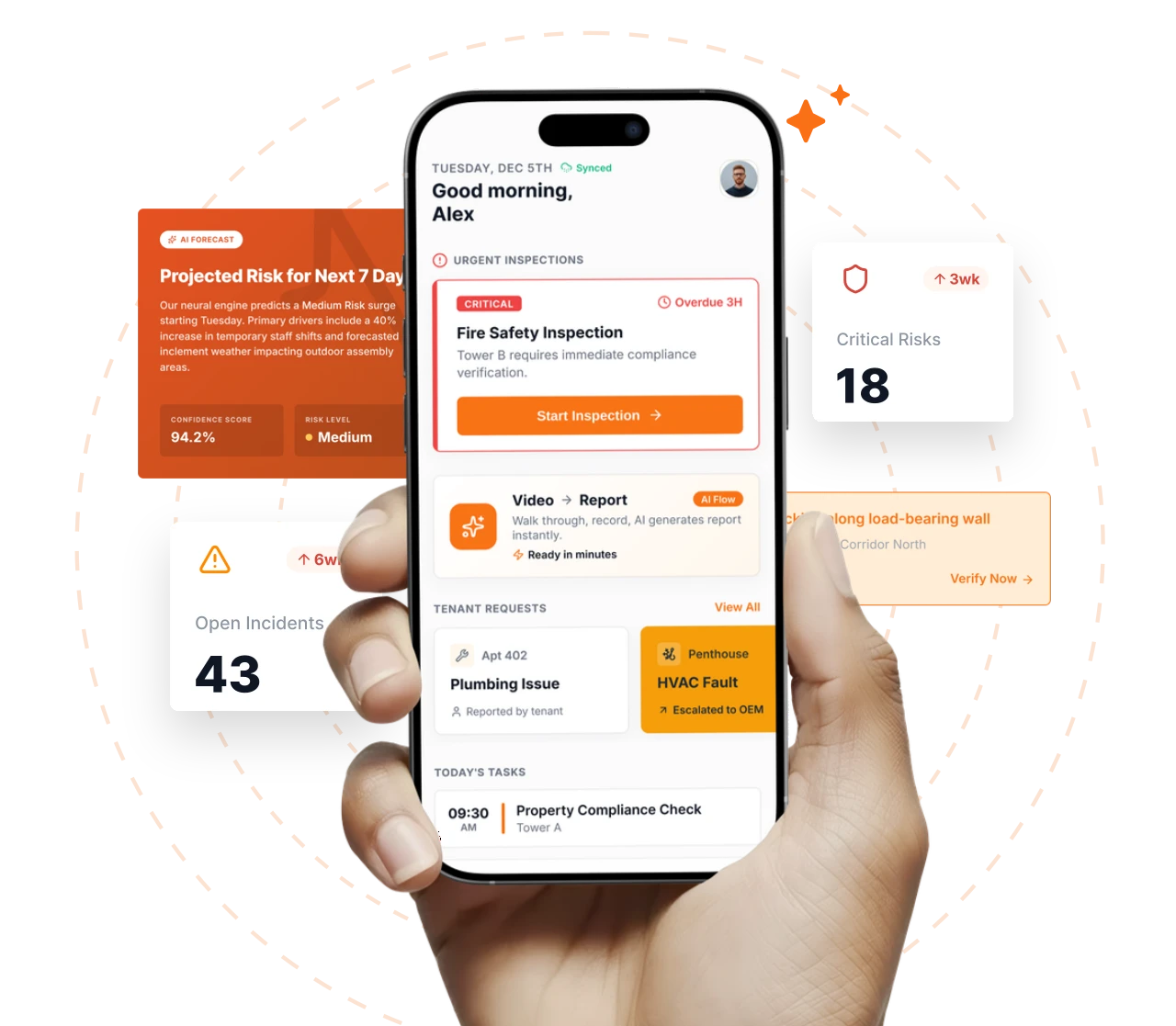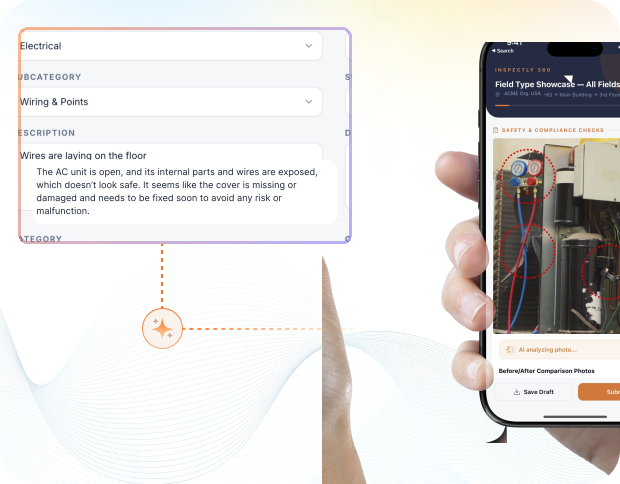
Take a Photo. AI Fills the Form
Your inspector takes a photo of any asset or defect. AI reads it and fills the inspection form automatically. No typing. No manual entry.

Convert your checklist into Mobile App
De-icing vehicle checklist software is the platform de-icing supervisors, GSE technicians, and operators use to digitise pre-use, fluid, and handover checklist templates and run them consistently across the de-icing rig fleet. Inspectly360 turns paper pads and PDF forms into mobile checklists with required fields, mandatory photo and value capture, and defect routing in records aligned to IATA AHM and IGOM.
Everything your field team does on paper, Inspectly360 does automatically: faster, more accurate, and without the admin.
Your inspector takes a photo of any asset or defect. AI reads it and fills the inspection form automatically. No typing. No manual entry.
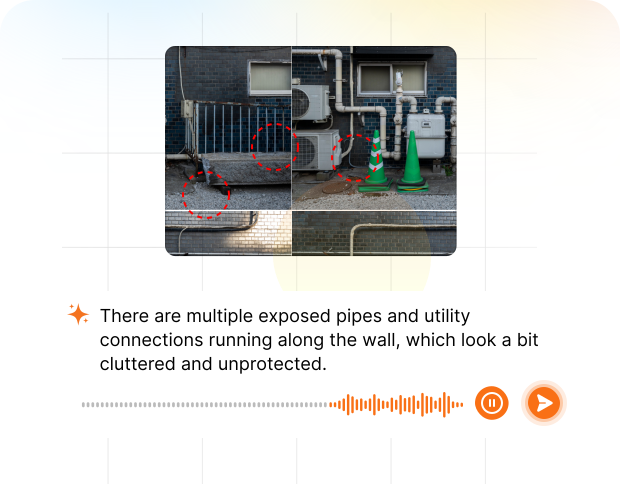
Inspectors speak their observations in any language. AI transcribes and fills the form in real time. Completely hands-free in the field.
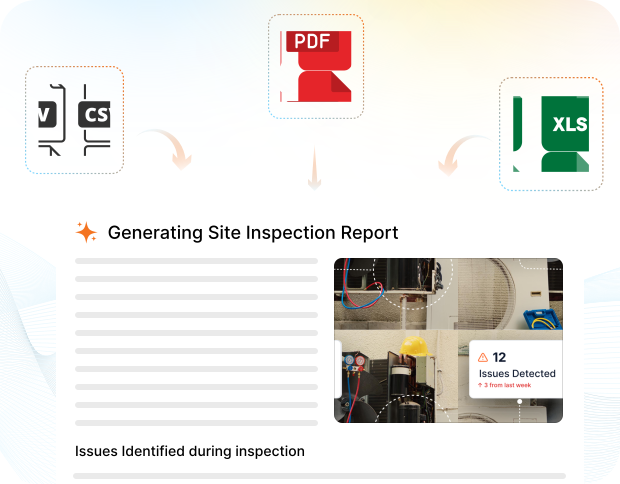
The moment an inspection is submitted, a branded PDF, Excel, or CSV report generates automatically. No manual work. No waiting.

Inspectly360 integrates with the tools your team already uses, including Zoho, Microsoft 365, and SAP. No double entry.
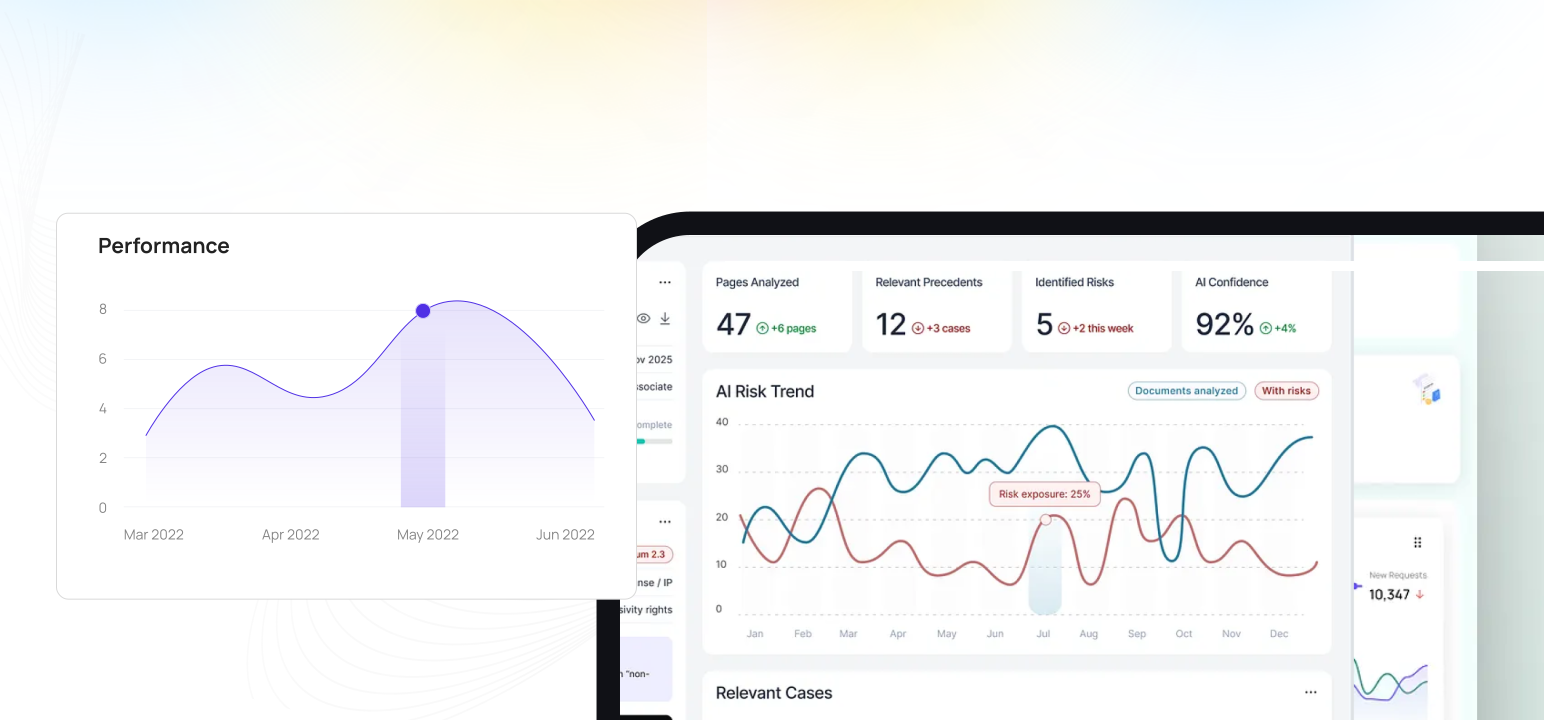
Your operations team sees completion rates, open issues, and compliance scores across all sites in real time. No chasing updates.
What changes once de-icing vehicle checklist software runs on one mobile-first platform with photo proof and live dashboards.
De-icing vehicle checklist software is the platform de-icing supervisors, GSE technicians, and operators use to digitise pre-use, fluid, and handover checklist templates and run them consistently across the de-icing rig fleet. Inspectly360 turns paper pads and PDF forms into mobile checklists with required fields, mandatory photo and value capture, and defect routing in records aligned to IATA AHM and IGOM.
Today the de-icing rig checklist is a paper pad or a PDF, every operator fills it slightly differently, and a ticked fluid-concentration item is no proof the reading was taken. When a critical item is skipped, a failed item is circled but never reaches the workshop, or completion quality drops on a rushed frost morning, nobody sees it until a rig fails on the pad or sprays fluid at the wrong concentration. Across a busy season the supervisor cannot tell which rigs have a completed checklist today without walking the pads, so consistency is a hope rather than a fact.
Inspectly360 replaces that with mobile checklists on iOS and Android: each template carries required fields and mandatory photos and values for critical items like fluid concentration, the refractometer reading, the heater, and fall protection in the basket, a failed item routes straight to a tracked defect, and validation makes every completion consistent across operators and shifts. The supervisor sees completed, missed, and failed checklists across the fleet on one dashboard, and a branded record exports per rig when the operator or an auditor asks.
Ramp teams follow this loop to digitise de-icing rig checklist templates and run them consistently across the fleet.
Turn pre-use, fluid, and handover paper checklists into mobile templates with required fields and mandatory photo and value capture.
Attach the right checklist to open-basket and enclosed-cab rigs so the correct template opens when an operator scans the rig.
Operators complete the checklist on iOS or Android, with validation ensuring fluid concentration and refractometer items are not skipped.
Where de-icing vehicle checklist evidence has to hold up, A failed checklist item becomes a tracked defect with owner and deadline straight from the completion.
The supervisor reviews completed, missed, and failed checklists on a dashboard and exports records per rig.
Answers to common long-tail questions, kept on one canonical page to avoid thin duplicate URLs.
Start with a single checklist such as the daily pre-use template so the required fields and defect routing are validated against real rigs before rolling out fluid and handover checklists.
Operators get checklist completion, technicians get defect handling and servicing checklists, and the supervisor gets read access to completion records per rig through role-based access.
The platform capabilities that power de-icing vehicle checklist software across every site.
Pre-use, fluid, and handover checklists become mobile templates with required fields. Why it matters: a consistent template removes the variation that paper pads introduce across operators and shifts.
Critical items like fluid concentration, the refractometer reading, and fall protection require a value or photo before submission. Why it matters: a required field is the difference between a reading that was taken and a box that was ticked.
A failed item becomes a tracked defect with owner and deadline. Why it matters: a failure circled on paper that never reaches the workshop is the gap that causes a rig failure on a frost morning.
Scanning a rig opens the correct checklist for an open-basket or enclosed-cab unit. Why it matters: the right template for an enclosed-cab rig differs from an open-basket one, and matching it avoids the wrong checklist.
Completed, missed, and failed checklists roll up across the fleet. Why it matters: the supervisor sees checklist coverage without walking the pads at the start of a frost shift.
A branded checklist record exports per rig for the operator or auditor. Why it matters: a request for checklist history becomes a minutes-long export, not a search through pads.
De-icing supervisors and GSE technicians comparing Inspectly360 to paper checklist pads, PDF forms, and spreadsheet templates see the difference fastest on digitised pre-use templates, mandatory photo and value fields, consistent completion, defect routing from a checklist item, and fleet-wide visibility aligned to IATA AHM and IGOM.
| Topic | Typical Gaps | With Inspectly360 |
|---|---|---|
| Digitised checklist templates | The de-icing rig checklist is a paper pad or a PDF that each operator fills slightly differently. | Each checklist template is digitised with required fields so every completion captures the same items. |
| Mandatory photo and value fields | A checklist item like the fluid concentration check can be ticked with no value or evidence it was done. | Critical items such as fluid concentration and refractometer readings require a value or photo before submission. |
| Defect routing from an item | A failed checklist item is circled on paper and may never reach the workshop. | A failed item routes to a tracked defect with owner and deadline straight from the checklist. |
| Consistent completion across operators | Completion quality depends on which operator filled the pad and how rushed the frost morning was. | Required fields and validation make every checklist completion consistent across operators and shifts. |
| Fleet-wide checklist visibility | The supervisor cannot see which rigs have a completed checklist today without checking pads. | A live dashboard shows completed, missed, and failed checklists across the de-icing rig fleet. |
What changes once de-icing vehicle checklist software is standardised on Inspectly360.
Get started with inspection and audit checklist templates.

Use this template to perform a comprehensive safety inspection of light vehicles. This check ensures all critical components are checked ...
Use these apps to run inspections and audits.

by Inspectly360
Streamline facilities inspections with forms, photos, and reports.

by Inspectly360
Building condition and compliance inspections with evidence and follow-ups.

by Inspectly360
Digitize building inspection apps workflows with forms, evidence capture, and automated reporting.

by Inspectly360
Run building inspections on phones and tablets with offline forms, photo evidence, and instant reports.

by Inspectly360
Audit buildings with structured scoring, photo evidence, and corrective action tracking across portfolios.
Your pre-use, fluid, and handover paper checklists are rebuilt as mobile templates with the same items, plus required fields and mandatory photos or values for the critical ones like fluid concentration, the refractometer reading, the heater, and basket fall protection. Each template is attached to the relevant rig type, so when an operator scans a rig, the correct checklist opens automatically. The structure mirrors what your team already knows, which keeps the change small, but the digital version enforces consistency that a paper pad cannot. The result is the same checklist your operation already trusts, running on iOS and Android, with every completion captured against the rig, the operator, and the time.
On paper, any item can be ticked whether or not the check was done, which is why a completed pad is weak proof. In the digital template, critical items require a value or a photo before the checklist can be submitted. An operator cannot close a pre-use check claiming the fluid concentration is in range without the value field that records the refractometer reading, and a basket fall-protection check can require a photo. This raises completion quality across every operator and frost morning, because the template enforces the same standard rather than relying on how thorough or rushed an individual happens to be during a busy de-icing window.
Yes. Checklist completion works fully offline on iOS and Android, which matters on the de-icing pad, at remote stands, and at outstations where signal is weak in winter conditions. Operators and technicians complete checklists with photos and values while offline, and records sync automatically once the device reconnects. Nothing is lost if a checklist is completed in a dead spot during a frost event, and the timestamp reflects when the work was done, not when it synced. This keeps the checklist record accurate for the supervisor and for any auditor reviewing checklist completion across the de-icing rig fleet and the pads.
A failed checklist item routes straight to a tracked defect with a photo, a severity, the failed item named, and the rig it belongs to. Instead of a circle on a pad that may never reach the workshop, the failure becomes an owned action with a deadline that stays open until a technician verifies the fix. This closes the most common checklist gap, where an operator spots a failing heater or a poor spray pattern, marks it on paper, and the rig keeps operating because nobody in the workshop ever saw the page. The supervisor sees failed checklists on the dashboard, so a serious item is visible immediately, not after the rig fails on the pad.
Critical de-icing values such as the fluid type, the refractometer Brix reading, the fluid concentration, and the fluid temperature are captured as required value fields on the checklist rather than as a tick. Because Type I to Type IV fluids must be at the right concentration and temperature to deliver the intended holdover time, recording the actual value makes the reading reviewable and flags anything outside range before the fluid goes on the aircraft. The values stay on the rig record, so a recurring concentration drift on one rig is visible to the supervisor and technician rather than lost across separate paper cards. This turns the checklist into usable de-icing data, not just a completed form.
Yes. Each rig type carries its own checklist template, so an open-basket rig gets its basket, harness, and fall-protection checks while an enclosed-cab rig gets the checks relevant to its configuration. When an operator scans a rig, the platform opens the correct checklist for that type, which avoids the paper-pad problem of using a generic form that does not fit the rig. You can run pre-use, fluid, and handover checklists per type from the same system, and the completion dashboard rolls them all up so the supervisor sees coverage across the mixed de-icing fleet at a glance during a frost morning.
De-Icing Vehicle Checklist Software on Inspectly360 connects directly to the inspection apps, checklist templates, forms, industries, and adjacent solutions linked below.
See Inspectly360 in action with a live demo tailored to your needs. No credit card required.