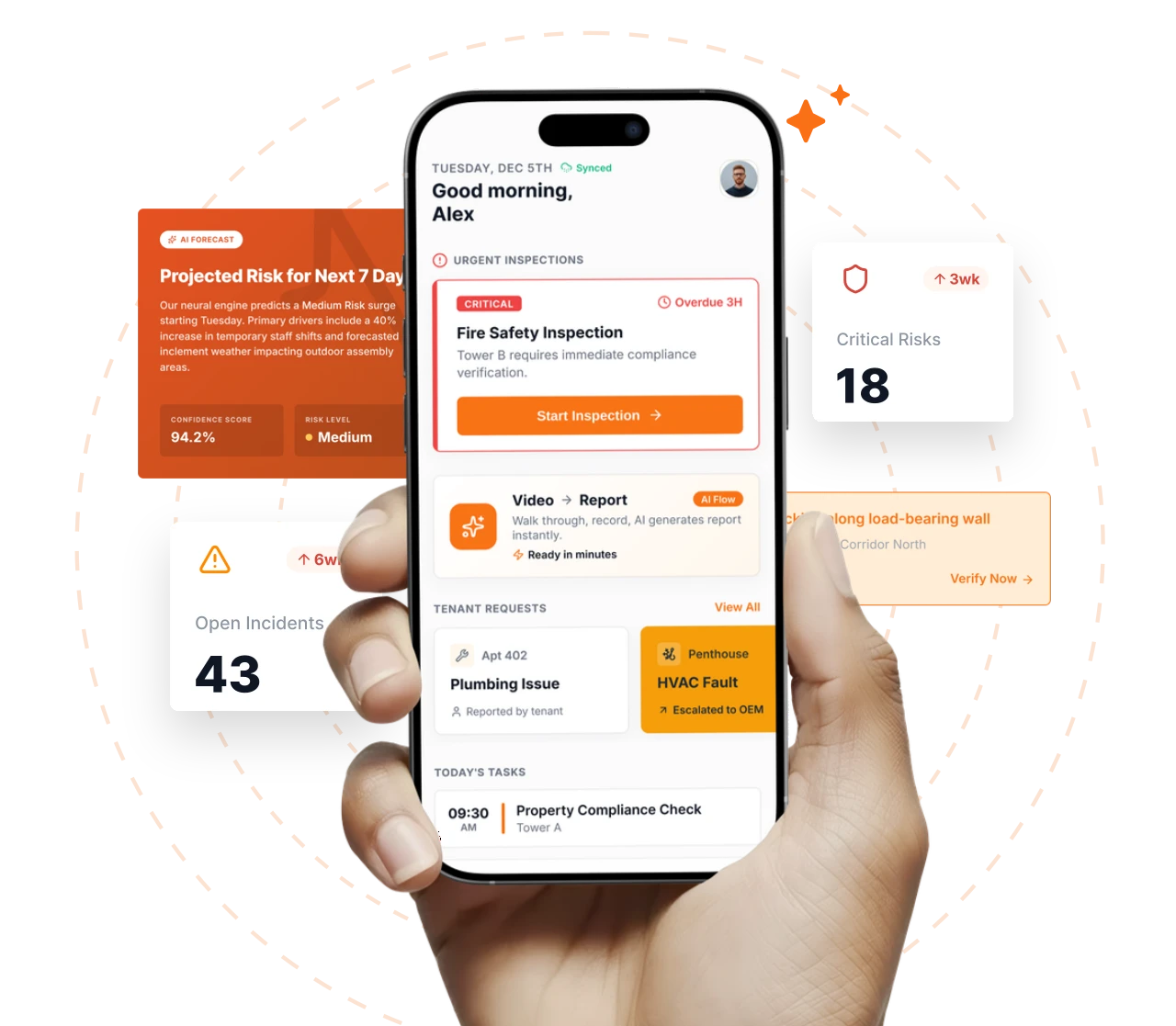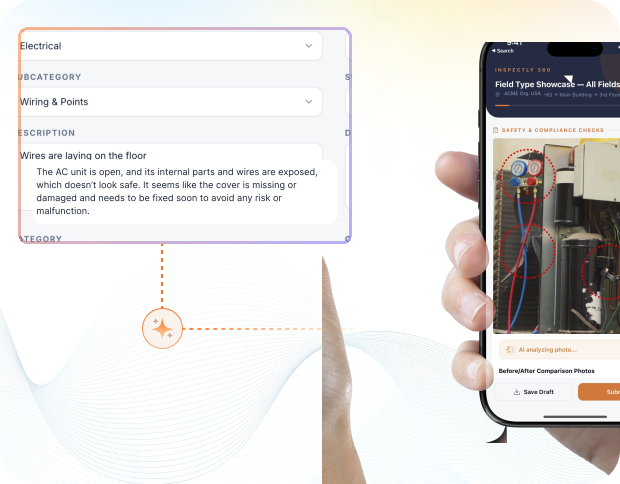
Take a Photo. AI Fills the Form
Your inspector takes a photo of any asset or defect. AI reads it and fills the inspection form automatically. No typing. No manual entry.

Convert your checklist into Mobile App
De-icing vehicle safety software is the platform ramp safety managers and de-icing supervisors use to log ramp hazards, fall-protection and fluid-handling risks, and boom-near-aircraft near-misses, and to track risk controls in a safety management system. Inspectly360 digitises hazard reporting, near-miss capture, basket fall-protection checks, and the risk control tracking that maps to ISO 45001 and IATA IGOM across the de-icing operation.
Everything your field team does on paper, Inspectly360 does automatically: faster, more accurate, and without the admin.
Your inspector takes a photo of any asset or defect. AI reads it and fills the inspection form automatically. No typing. No manual entry.
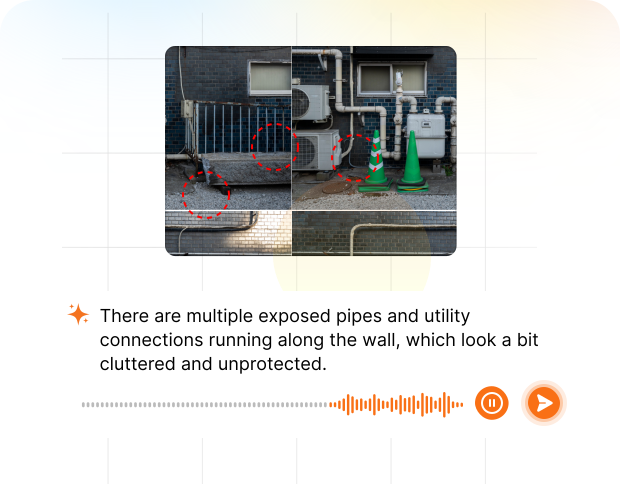
Inspectors speak their observations in any language. AI transcribes and fills the form in real time. Completely hands-free in the field.
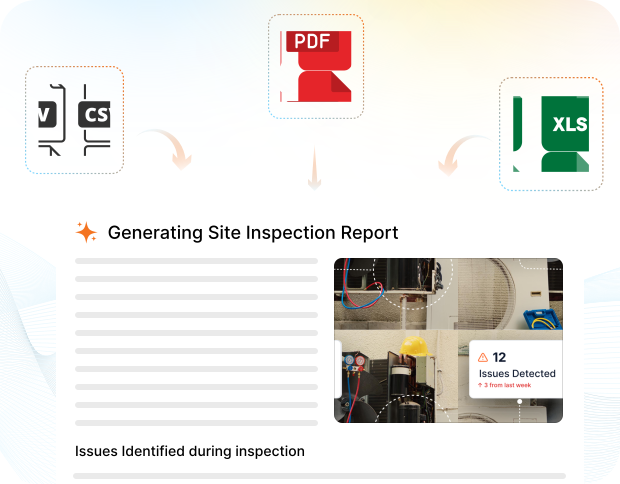
The moment an inspection is submitted, a branded PDF, Excel, or CSV report generates automatically. No manual work. No waiting.

Inspectly360 integrates with the tools your team already uses, including Zoho, Microsoft 365, and SAP. No double entry.
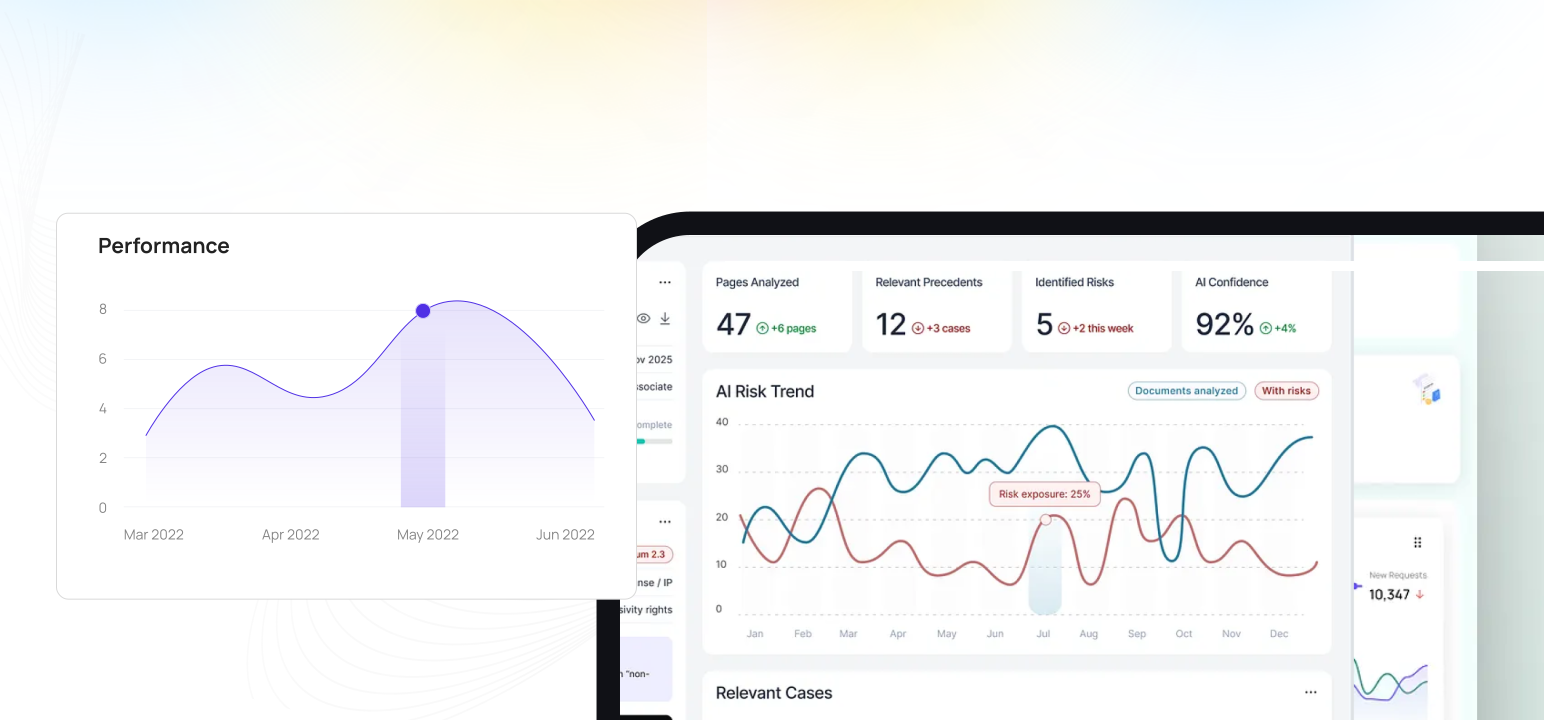
Your operations team sees completion rates, open issues, and compliance scores across all sites in real time. No chasing updates.
What changes once de-icing vehicle safety software runs on one mobile-first platform with photo proof and live dashboards.
De-icing vehicle safety software is the platform ramp safety managers and de-icing supervisors use to log ramp hazards, fall-protection and fluid-handling risks, and boom-near-aircraft near-misses, and to track risk controls in a safety management system. Inspectly360 digitises hazard reporting, near-miss capture, basket fall-protection checks, and the risk control tracking that maps to ISO 45001 and IATA IGOM across the de-icing operation.
Today a de-icing ramp hazard is mentioned at handover, fall protection in the basket is assumed rather than checked before an operator works at height, and a near-miss between the boom and an aircraft is reported verbally if at all. When a fluid spill creates a slip hazard, a harness anchor is worn, or a control has no owner, nobody sees the pattern until a fall, a fluid-handling injury, or an aircraft contact makes it public. Across a busy de-icing season every shift handles safety reporting a little differently, so the safety manager cannot see where hazards cluster by rig, stand, or shift.
Inspectly360 replaces that with mobile capture on iOS and Android: operators and supervisors log hazards and near-misses with photo, location, and severity against the SMS, basket fall-protection checks are recorded before work at height, each risk control carries an owner and a deadline, and recurring hazards surface by rig and stand. Controls close with verified sign-off, and a branded SMS evidence pack exports per rig or stand when an ISAGO or SMS auditor asks for the de-icing safety trail.
Ramp safety teams follow this loop for hazard reporting, fall-protection checks, and risk control closure.
Operators and supervisors log a de-icing ramp hazard or boom-near-aircraft near-miss on mobile with photo, location, the rig, and severity.
Harness, anchor, and rail checks are recorded against the rig before the operator works at height in the basket.
Across multi-site de-icing vehicle safety rounds, the report is assessed against the SMS risk matrix so the severity and likelihood drive the right response.
Each control is assigned with an owner and a deadline, and repeat hazards surface by rig, stand, and shift for root-cause fixes.
Controls close with verified sign-off, and a branded SMS evidence pack exports per rig or stand for the auditor.
Answers to common long-tail questions, kept on one canonical page to avoid thin duplicate URLs.
Start with a single de-icing pad or base so the hazard form, fall-protection checks, and risk control workflow are validated against real rigs and stands before rollout to other stations and contracted handlers.
Operators get hazard and near-miss capture, supervisors get risk assessment and control assignment, and the safety manager gets read access to the full SMS trail per rig and stand through role-based access.
The platform capabilities that power de-icing vehicle safety software across every site.
Operators log a de-icing ramp hazard or near-miss on mobile with photo, location, and severity in seconds. Why it matters: a hazard captured at the point of work is acted on, not lost at a verbal handover.
Harness, anchor, and rail checks are recorded against the rig before work at height in the basket. Why it matters: a fall from a de-icing basket is a life-changing injury, and an assumed harness is no protection at all.
Fluid spills and slip hazards around the rig are captured with the rig and a photo. Why it matters: hot glycol fluids and icy aprons create burn and slip risks that recur until the root cause is fixed.
Near-misses between the boom and an aircraft are captured with the rig, the stand, and a photo. Why it matters: a boom contact with an aircraft is a costly damage and safety event the trend can help prevent.
Each control carries an owner, a deadline, and verified closure on the SMS record. Why it matters: a control agreed after an incident but never owned is the gap the next event exposes.
Hazards, near-misses, and open controls roll up across rigs and stands, and a branded SMS pack exports per rig or stand. Why it matters: the safety manager sees where de-icing hazards cluster and proves the trail to an auditor in minutes.
Ramp safety managers and de-icing supervisors comparing Inspectly360 to paper hazard forms, spreadsheet logs, and verbal near-miss reports see the difference fastest on ramp hazard capture, basket fall-protection checks, fluid-handling and slip-hazard reporting, boom-near-aircraft near-misses, risk control tracking, and fleet-wide SMS visibility aligned to ISO 45001 and IATA IGOM.
| Topic | Typical Gaps | With Inspectly360 |
|---|---|---|
| Ramp hazard reporting | A de-icing ramp hazard is mentioned at handover and lost before anyone records or acts on it. | A ramp hazard is logged on mobile with photo, location, and severity against the SMS in seconds. |
| Basket fall-protection checks | Fall protection in the basket is assumed rather than checked, with no record before an operator works at height. | Basket harness, anchor, and rail checks are recorded against the rig before the operator works at height. |
| Fluid-handling and slip hazards | A fluid spill or a slip hazard around the rig is reported verbally, if at all, with no record. | Each fluid-handling and slip hazard is captured with the rig, the circumstances, and a photo for review. |
| Boom-near-aircraft near-misses | A near-miss between the boom and an aircraft is reported verbally with no record or trend. | Each near-miss is captured with the rig, the stand, and a photo so the safety review sees the pattern. |
| Evidence for the safety auditor | Hazard forms are searched by hand when an ISAGO or SMS auditor asks for de-icing safety records. | A scoped, timestamped SMS evidence pack exports per rig or stand in minutes. |
What changes once de-icing vehicle safety software is standardised on Inspectly360.
Get started with inspection and audit checklist templates.

Use this template to perform a comprehensive safety inspection of light vehicles. This check ensures all critical components are checked ...
Use these apps to run inspections and audits.

by Inspectly360
Streamline facilities inspections with forms, photos, and reports.

by Inspectly360
Building condition and compliance inspections with evidence and follow-ups.

by Inspectly360
Digitize building inspection apps workflows with forms, evidence capture, and automated reporting.

by Inspectly360
Run building inspections on phones and tablets with offline forms, photo evidence, and instant reports.

by Inspectly360
Audit buildings with structured scoring, photo evidence, and corrective action tracking across portfolios.
An operator or supervisor logs a de-icing ramp hazard on mobile in seconds, with a photo, the location, the rig involved, and a severity, against the safety management system. Instead of a hazard mentioned at handover and lost, the report is captured at the point of work and routed for assessment. The platform classifies it against the SMS risk matrix so severity and likelihood drive the response, and any control is assigned with an owner and a deadline. Because every hazard is tied to a rig and a stand, the safety manager can later see where de-icing hazards cluster, which turns one-off reports into a pattern the team can actually act on before the season's next frost event.
Fall protection is captured as a recorded check before an operator works at height in the de-icing basket: the harness, the anchor point, and the basket rails are confirmed against the rig rather than assumed. A worn harness or a damaged anchor becomes a tracked defect that holds the rig back until it is fixed. Because a fall from a raised de-icing basket is a life-changing injury, making the check a required record rather than a verbal habit closes the most serious gap in the operation. The history stays on the rig, so a recurring fall-protection issue on one unit is visible to the supervisor and the safety manager over the season.
Fluid spills, hot-glycol handling hazards, and icy slip hazards around the rig are captured on mobile with the rig, the circumstances, and a photo. De-icing fluids are applied hot and the apron around a de-icing pad is frequently wet and icy, so burns and slips are recurring risks rather than one-offs. By logging each one against the SMS with a location, the platform lets the safety manager see where these hazards repeat by stand or shift and fix the root cause, such as a drainage or surface issue, rather than treating each slip as an isolated event. Controls assigned from these reports carry owners and deadlines to closure.
A near-miss between the de-icing boom and an aircraft is captured with the rig, the stand, the circumstances, and a photo, against the SMS. Boom contact with an aircraft is a costly damage and safety event, and near-misses are the leading indicator that precedes one. By recording each near-miss rather than relying on a verbal mention, the platform builds the trend that shows which stands, rigs, or procedures repeatedly bring the boom too close to the airframe. The safety review uses that pattern to target controls, such as positioning guidance or spotter requirements, before a near-miss becomes an actual contact during a high-tempo de-icing morning.
Yes. Capture works fully offline on iOS and Android, which matters on the de-icing pad, at remote stands, and at outstations where signal is weak in winter conditions. Operators and supervisors log hazards, record fall-protection checks, and capture near-misses while offline, and records sync automatically once the device reconnects. Nothing is lost if a report is made in a dead spot during a frost event, and the timestamp reflects when the event happened, not when it synced. This keeps the SMS trail accurate for the safety manager and for an ISAGO or SMS auditor reviewing de-icing safety records across the fleet and the stands.
Each risk control raised from a hazard or near-miss carries an owner and a deadline, and it stays open and visible until the owner completes it and the action is verified and signed off. Because the control is tied to its originating report, the trail shows the hazard, the control that addressed it, and the proof it was applied together. Repeat hazards by rig, stand, and shift surface on the dashboard so the team fixes the root cause rather than the symptom. This closes the common SMS failure where a control is agreed after an incident but never assigned, so nobody owns it and nobody can prove it was ever put in place before the next event.
De-Icing Vehicle Safety Software on Inspectly360 connects directly to the inspection apps, checklist templates, forms, industries, and adjacent solutions linked below.
See Inspectly360 in action with a live demo tailored to your needs. No credit card required.