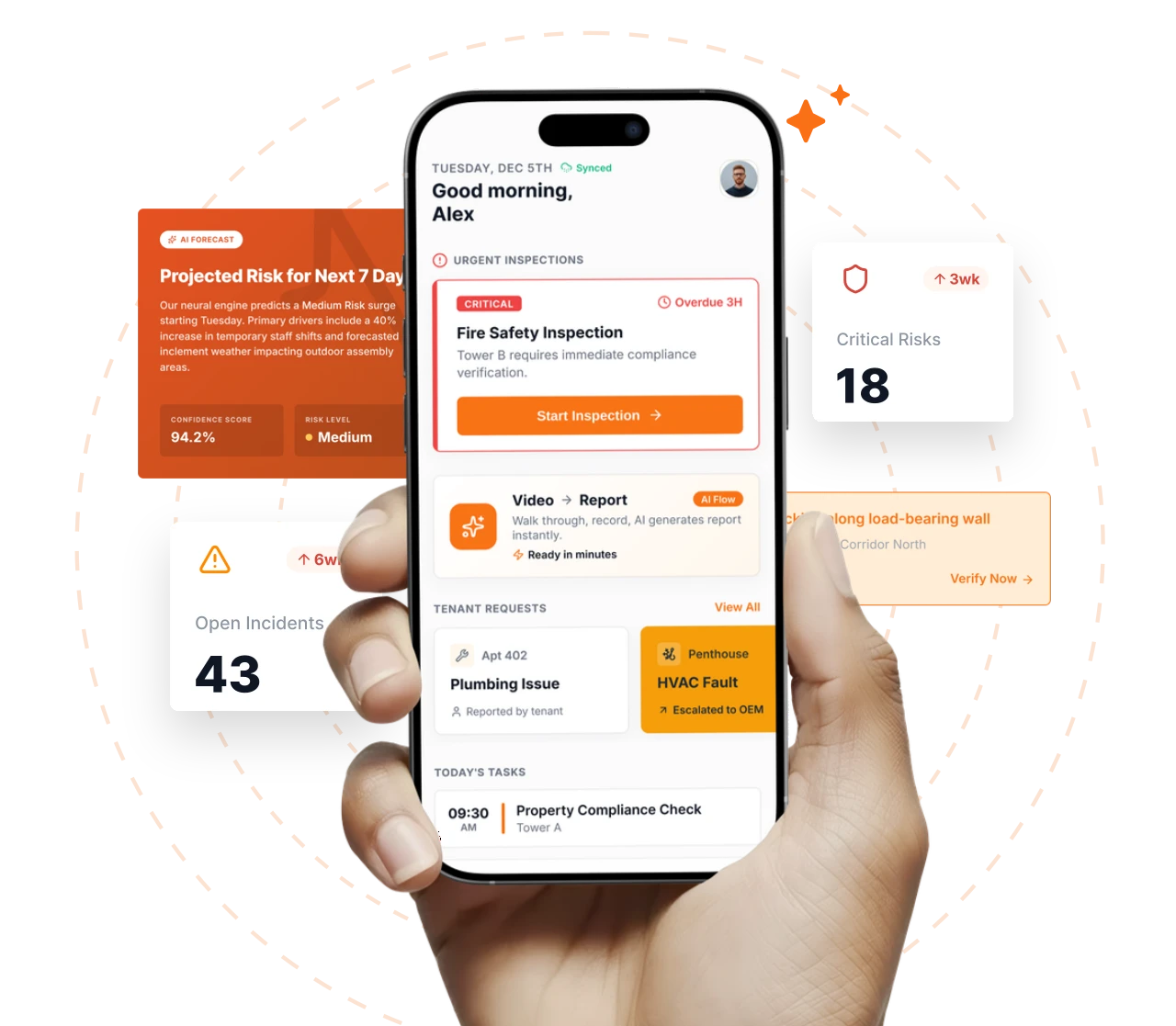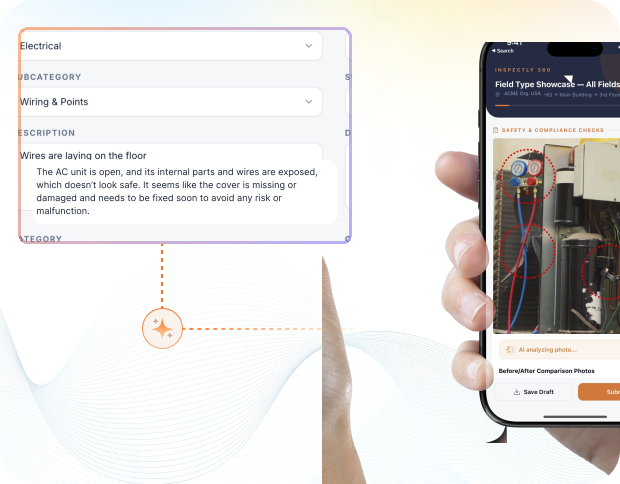
Take a Photo. AI Fills the Form
Your inspector takes a photo of any asset or defect. AI reads it and fills the inspection form automatically. No typing. No manual entry.

Convert your checklist into Mobile App
De-icing vehicle compliance software is the platform airside operations managers, de-icing supervisors, and compliance leads use to hold fluid concentration records, holdover time documentation, and regulatory evidence for the de-icing fleet in one defensible record. Inspectly360 digitises fluid type and concentration tracking, HOT documentation, serviceability clocks, and the evidence that maps to SAE AMS1424, SAE AMS1428, SAE ARP6257, IATA IGOM, ISAGO, and local CAA airside rules.
Everything your field team does on paper, Inspectly360 does automatically: faster, more accurate, and without the admin.
Your inspector takes a photo of any asset or defect. AI reads it and fills the inspection form automatically. No typing. No manual entry.
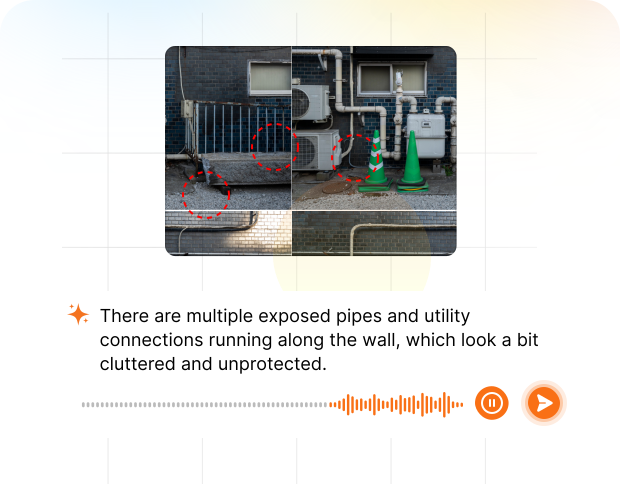
Inspectors speak their observations in any language. AI transcribes and fills the form in real time. Completely hands-free in the field.
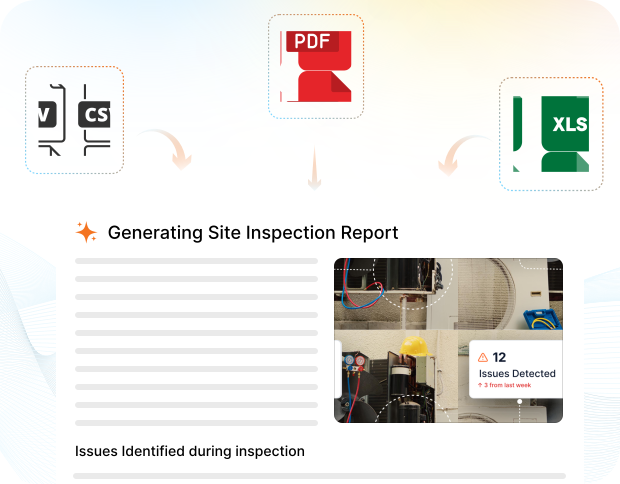
The moment an inspection is submitted, a branded PDF, Excel, or CSV report generates automatically. No manual work. No waiting.

Inspectly360 integrates with the tools your team already uses, including Zoho, Microsoft 365, and SAP. No double entry.
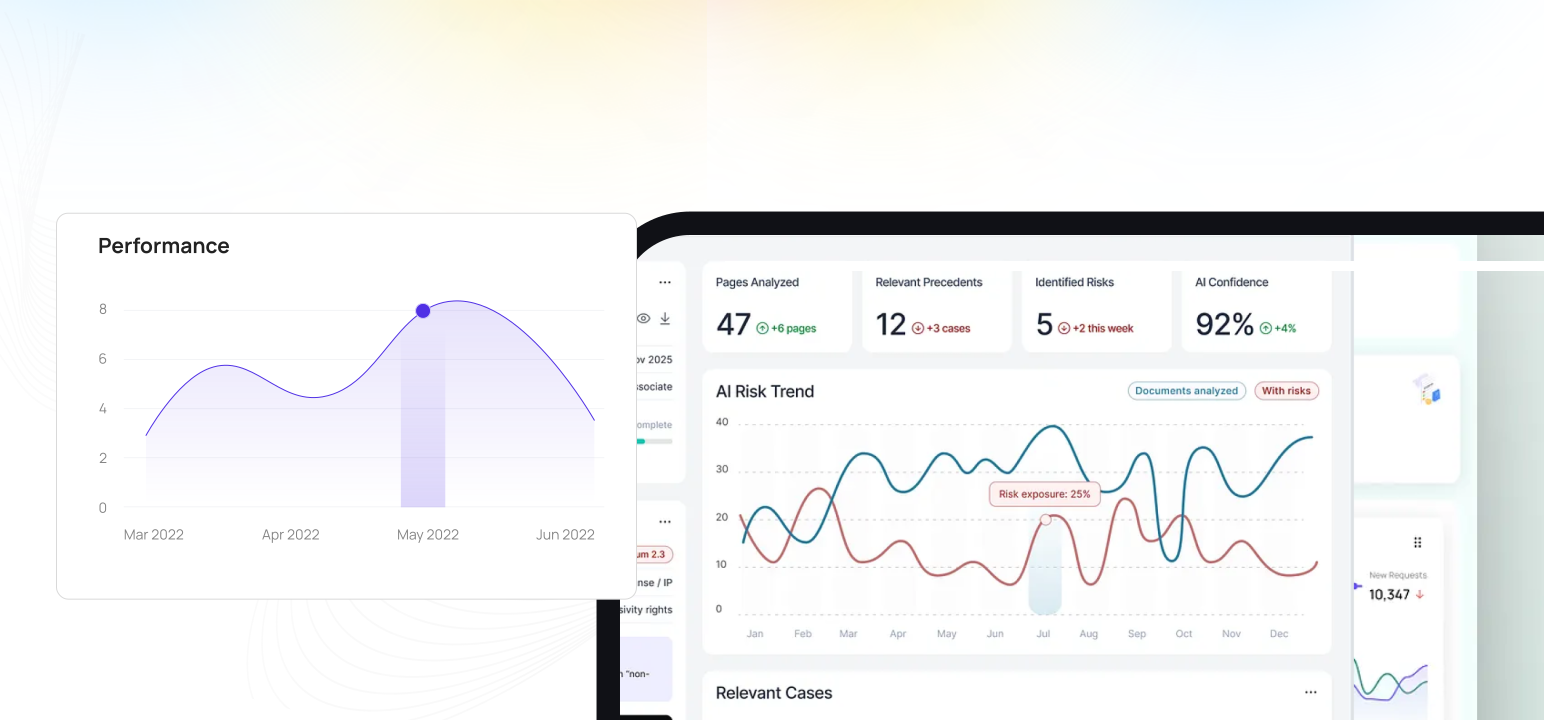
Your operations team sees completion rates, open issues, and compliance scores across all sites in real time. No chasing updates.
What changes once de-icing vehicle compliance software runs on one mobile-first platform with photo proof and live dashboards.
De-icing vehicle compliance software is the platform airside operations managers, de-icing supervisors, and compliance leads use to hold fluid concentration records, holdover time documentation, and regulatory evidence for the de-icing fleet in one defensible record. Inspectly360 digitises fluid type and concentration tracking, HOT documentation, serviceability clocks, and the evidence that maps to SAE AMS1424, SAE AMS1428, SAE ARP6257, IATA IGOM, ISAGO, and local CAA airside rules.
Today the fluid concentration is read verbally at the rig, the holdover time used for an application is a judgement with no documented basis, and the evidence for an ISAGO requirement is scattered across phones and email. When a fluid is applied below its specified concentration, a HOT is exceeded without a record, or a Type IV batch cannot be tied to its SAE standard, nobody sees the gap until an incident review or a CAA inspection finds it. Across several shifts every supervisor holds compliance a little differently, so the airside manager cannot state fleet status with confidence.
Inspectly360 replaces that with mobile capture on iOS and Android: each application records the fluid type, concentration, and temperature against the rig, the holdover time applied is documented with its conditions and table reference, and Type I to Type IV fluids are tracked to SAE AMS1424 or AMS1428 with batch evidence. Serviceability clocks tie rig status to clearance, gaps raise alerts before they bite, and a branded evidence pack exports per rig or application when a CAA inspector or ISAGO auditor asks.
Airside compliance teams follow this loop for fluid record capture, HOT documentation, and regulatory evidence.
Attach SAE AMS1424, SAE AMS1428, IGOM, ISAGO, and local CAA requirements to each de-icing rig and each fluid type as tracked items.
Each application records the fluid type, concentration, and temperature against the rig with a timestamp and the refractometer reading.
The holdover time applied is documented with the fluid type, the weather conditions, and the HOT table reference used.
Pre-use and service serviceability clocks and refractometer calibration determine whether each rig is cleared to de-ice today.
A scoped, branded evidence pack exports per rig or application for a CAA inspector or ISAGO auditor in minutes.
Answers to common long-tail questions, kept on one canonical page to avoid thin duplicate URLs.
Start with a single de-icing pad or base so the requirement map, fluid record fields, and HOT documentation are validated against real rigs and fluids before rollout to other stations and contracted handlers.
De-icing supervisors get evidence capture and clearance, the compliance lead gets requirement control, and the airside manager gets read access to the full compliance trail per rig and application through role-based access.
The platform capabilities that power de-icing vehicle compliance software across every site.
Each application records the fluid type, concentration, and temperature against the rig with the refractometer reading. Why it matters: a fluid applied below its specified concentration gives an aircraft less protection than the crew believe it has.
The HOT applied is documented with the fluid type, conditions, and the table reference used. Why it matters: an undocumented or exceeded holdover time is a recognised contributor to takeoff icing events and an evidence gap in any review.
Type I, II, III, and IV fluids are tracked to SAE AMS1424 or AMS1428 with batch evidence. Why it matters: a batch that cannot be tied to its SAE standard is the gap an auditor and an incident investigation both expose.
Pre-use, service, and refractometer calibration status determine whether a rig is cleared to de-ice today. Why it matters: a rig with an uncalibrated refractometer producing concentration records is a compliance and safety risk.
Fluid record, HOT, and serviceability status roll up across rigs and applications. Why it matters: the airside manager states de-icing compliance without asking each shift during a busy season.
A branded compliance pack exports per rig or application for the regulator. Why it matters: a CAA or ISAGO request becomes a minutes-long export, not a fluid-log search.
Airside operations managers and de-icing supervisors comparing Inspectly360 to paper fluid logs, spreadsheet expiry trails, and email evidence see the difference fastest on fluid concentration records, holdover time documentation, fluid type and standard tracking, serviceability clocks, and fleet-wide compliance status aligned to SAE AMS1424, SAE AMS1428, SAE ARP6257, IATA IGOM, ISAGO, and local CAA airside rules.
| Topic | Typical Gaps | With Inspectly360 |
|---|---|---|
| Fluid concentration records | Fluid concentration and temperature are read verbally with no record tying them to the rig or the aircraft. | Each application records the fluid type, concentration, and temperature against the rig with a timestamp. |
| Holdover time documentation | The holdover time used for an application is a verbal judgement with no documented basis or record. | Each application documents the HOT applied with the fluid type, conditions, and the table reference used. |
| Fluid standard and type tracking | Whether a fluid meets the relevant SAE standard for its type is assumed, not evidenced per batch. | Type I, II, III, and IV fluids are tracked to SAE AMS1424 or AMS1428 with batch evidence on one record. |
| Fleet-wide compliance status | The airside manager cannot say which rigs or applications are out of compliance without asking each shift. | A live dashboard shows fluid record, HOT, and serviceability status across the de-icing fleet. |
| Evidence pack for the regulator | Records are gathered by hand when a CAA inspector or ISAGO auditor asks for de-icing compliance proof. | A scoped, timestamped evidence pack exports per rig or application in minutes. |
What changes once de-icing vehicle compliance software is standardised on Inspectly360.
Get started with inspection and audit checklist templates.

Use this template to perform a comprehensive safety inspection of light vehicles. This check ensures all critical components are checked ...
Use these apps to run inspections and audits.

by Inspectly360
Streamline facilities inspections with forms, photos, and reports.

by Inspectly360
Building condition and compliance inspections with evidence and follow-ups.

by Inspectly360
Digitize building inspection apps workflows with forms, evidence capture, and automated reporting.

by Inspectly360
Run building inspections on phones and tablets with offline forms, photo evidence, and instant reports.

by Inspectly360
Audit buildings with structured scoring, photo evidence, and corrective action tracking across portfolios.
Each de-icing application records the fluid type, the concentration, and the fluid temperature against the rig with a timestamp, drawn from the refractometer reading taken at the rig. Because Type I and the thickened Type II, III, and IV fluids must be applied within their specified concentration and temperature to perform, the value fields make the application reviewable rather than a verbal judgement. A reading outside the expected range flags before the fluid goes on the aircraft. The records stay tied to the rig and the application, so when a review or a CAA inspector asks how a particular aircraft was de-iced, the concentration and temperature are on the record rather than reconstructed from memory.
Each application documents the holdover time applied along with the fluid type, the prevailing weather conditions, and the HOT table reference used to derive it. Holdover time is the window in which the applied fluid protects the aircraft, and an undocumented or exceeded HOT is a recognised contributor to takeoff icing events. By capturing the basis for the HOT at the point of application, the record shows not just the time used but why it was valid for the conditions. When an incident review or an auditor asks how the holdover time for a flight was determined, the documentation answers it directly rather than leaving the supervisor to defend a verbal judgement after the fact.
Each fluid type is set up against its SAE standard: Type I against SAE AMS1424 and the thickened Type II, III, and IV fluids against SAE AMS1428. Batch evidence, including delivery and specification records, attaches to the fluid so the platform can show a given batch met its standard. The ground de-icing process itself is framed by SAE ARP6257. When an auditor or an investigator asks whether the fluid used was to specification, the record ties the application to the batch and the batch to the standard. This closes the gap where standard compliance is assumed rather than evidenced, which is exactly what an ISAGO assessment of de-icing operations checks.
Serviceability clearance is driven by the rig's pre-use check, service status, and refractometer calibration. If a pre-use check is missed, an open defect is safety-critical, a service interval is overdue, or the refractometer is out of calibration, the rig shows as not cleared to de-ice until the issue is resolved. This turns a verbal judgement into a recorded rule, because a rig with an uncalibrated refractometer would otherwise produce concentration records that look valid but are not. The clearance status sits on the rig record with the evidence behind it, so an ISAGO auditor sees both the rule and the proof that a rig in service met it.
Yes. Capture works fully offline on iOS and Android, which matters on the de-icing pad, at remote stands, and at outstations where signal is weak in winter conditions. Supervisors record fluid concentration, document holdover time, and check serviceability clearance while offline, and records sync automatically once the device reconnects. Nothing is lost if a check is done in a dead spot during a frost event, and the timestamp reflects when the application happened, not when it synced. This keeps the compliance trail accurate for the airside manager and for a CAA inspector or ISAGO auditor reviewing fluid and HOT evidence across the fleet.
Every fluid record, holdover time entry, serviceability clearance, and requirement is stored with a timestamp, the named person, and photo or batch evidence against the specific rig or application. When a CAA inspector or ISAGO auditor asks for de-icing compliance proof, you export a scoped, branded evidence pack per rig or application covering the audit window in minutes. The trail shows fluid type, concentration, and temperature, the HOT applied with its basis, fluid-to-standard mapping, and serviceability clearance with verified sign-off. This replaces the gather-from-everywhere routine that paper fluid logs and email trails force, and the evidence is consistent across every shift and base in the operation.
De-Icing Vehicle Compliance Software on Inspectly360 connects directly to the inspection apps, checklist templates, forms, industries, and adjacent solutions linked below.
See Inspectly360 in action with a live demo tailored to your needs. No credit card required.