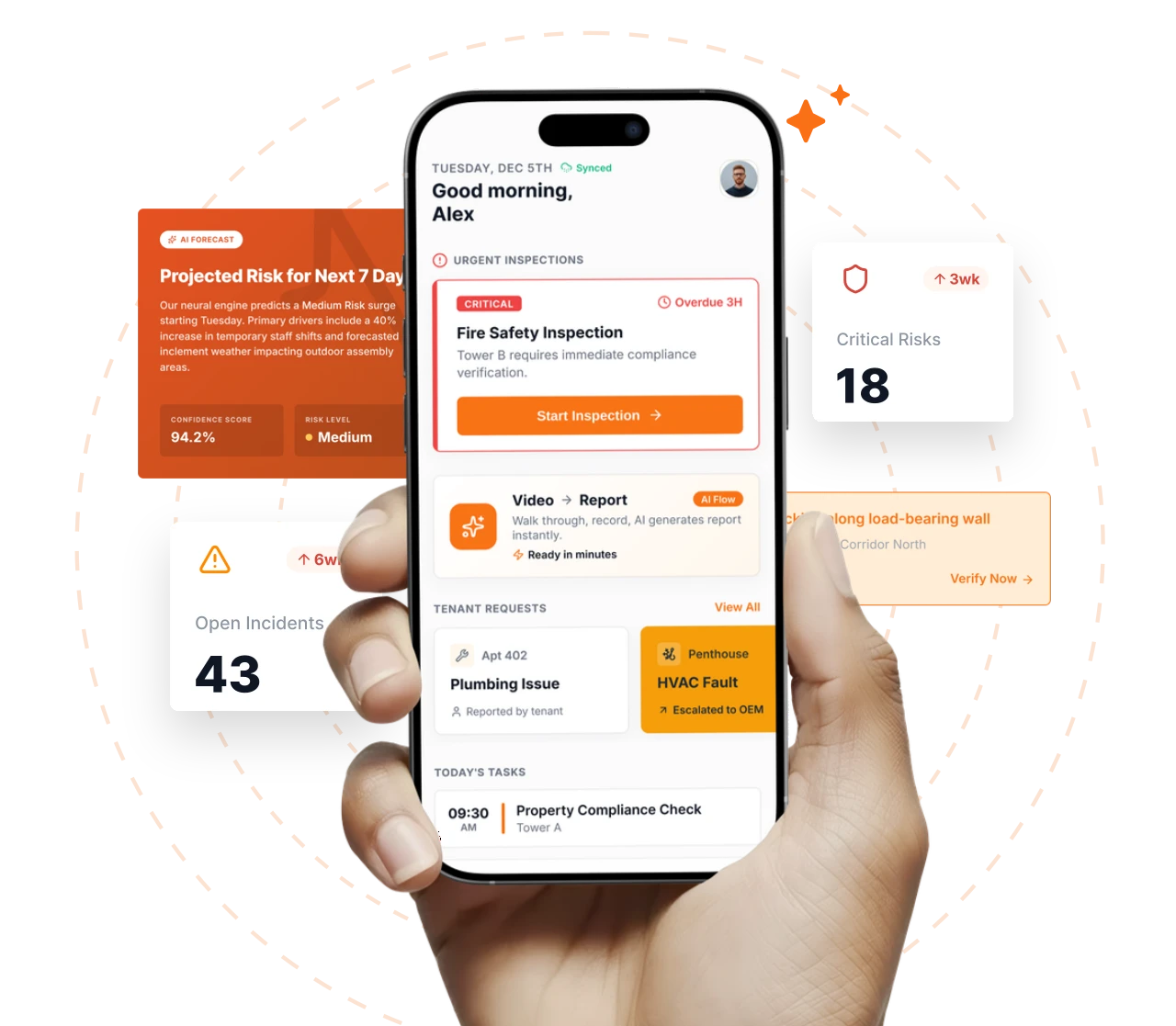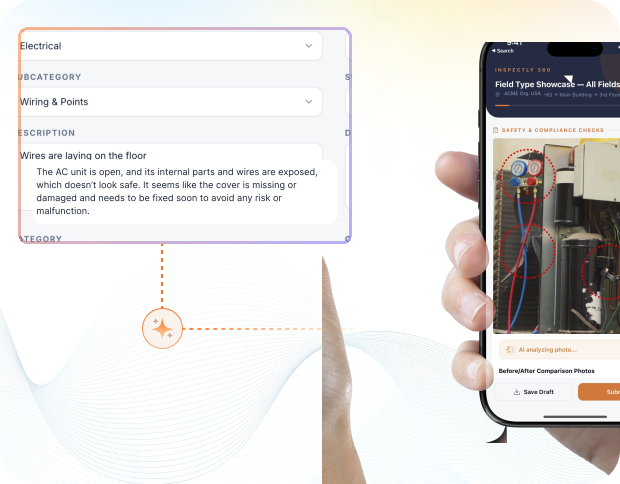
Take a Photo. AI Fills the Form
Your inspector takes a photo of any asset or defect. AI reads it and fills the inspection form automatically. No typing. No manual entry.

Convert your checklist into Mobile App
De-icing vehicle maintenance software is the platform GSE maintenance managers, fleet engineers, and technicians use to run scheduled servicing and component intervals on airport de-icing rigs and keep defensible records across the fleet. Inspectly360 digitises planned servicing, heater servicing, pump and nozzle servicing, the refractometer calibration interval, and boom and basket hydraulics in one history aligned to IATA AHM, SAE GSE, and SAE ARP6257.
Everything your field team does on paper, Inspectly360 does automatically: faster, more accurate, and without the admin.
Your inspector takes a photo of any asset or defect. AI reads it and fills the inspection form automatically. No typing. No manual entry.
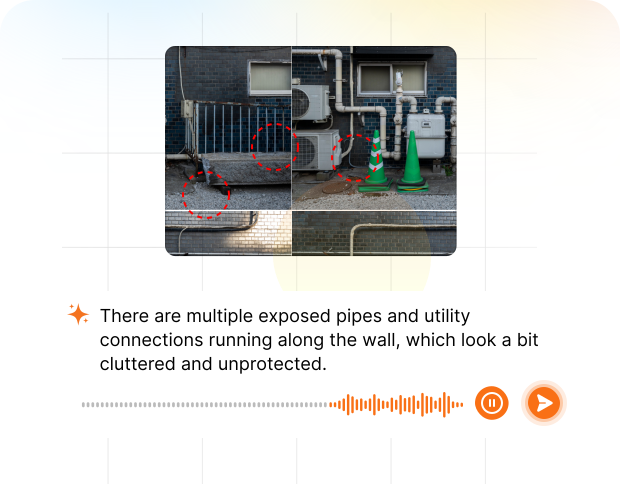
Inspectors speak their observations in any language. AI transcribes and fills the form in real time. Completely hands-free in the field.
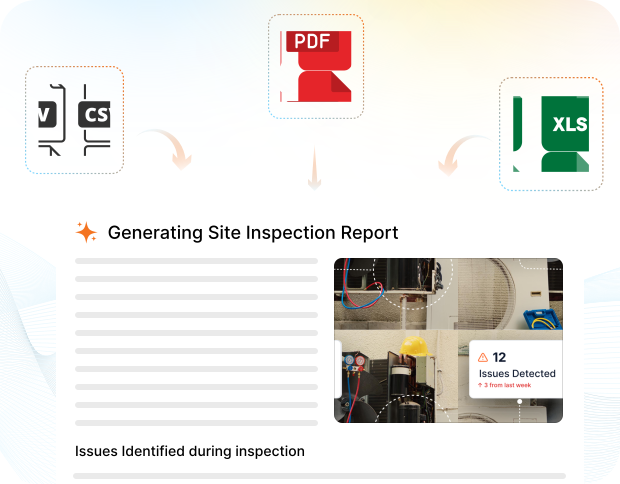
The moment an inspection is submitted, a branded PDF, Excel, or CSV report generates automatically. No manual work. No waiting.

Inspectly360 integrates with the tools your team already uses, including Zoho, Microsoft 365, and SAP. No double entry.
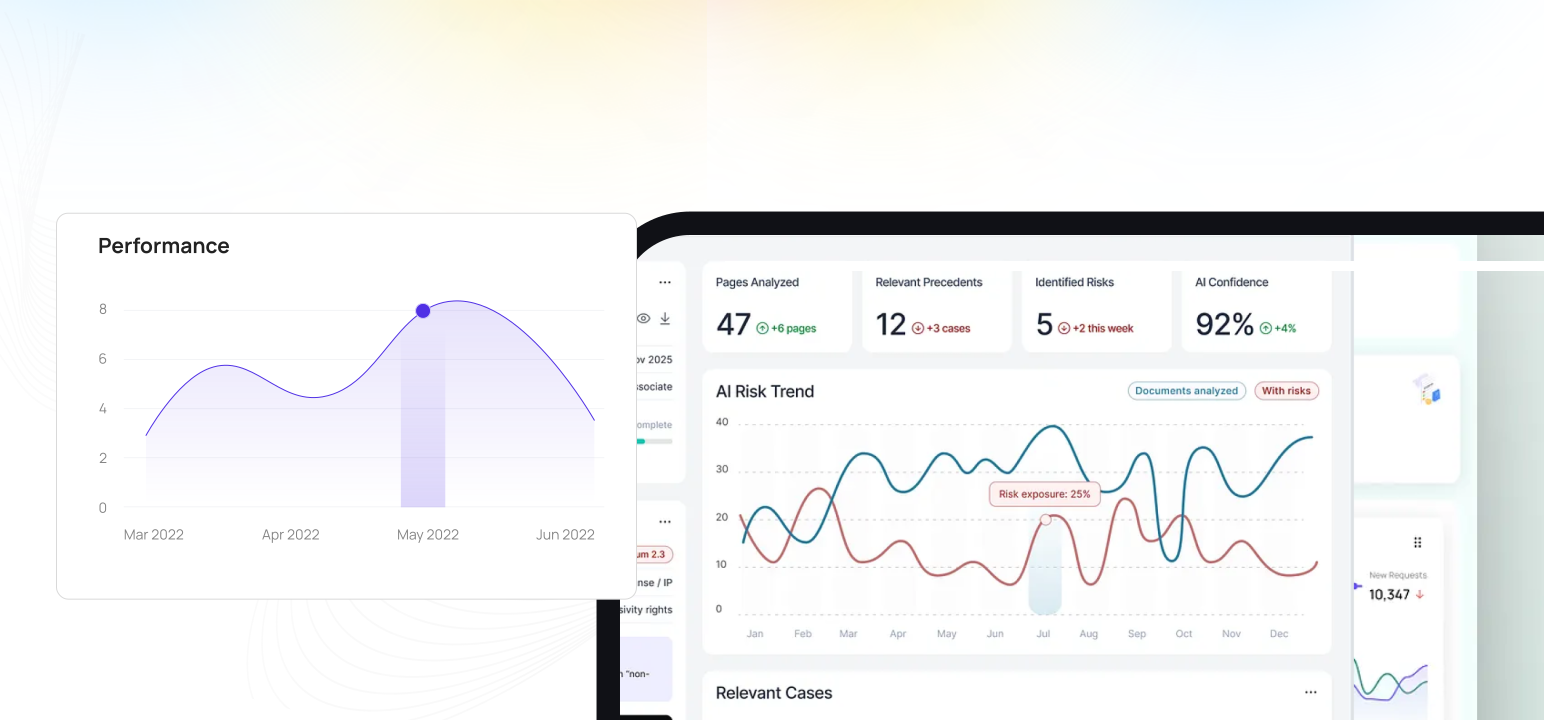
Your operations team sees completion rates, open issues, and compliance scores across all sites in real time. No chasing updates.
What changes once de-icing vehicle maintenance software runs on one mobile-first platform with photo proof and live dashboards.
De-icing vehicle maintenance software is the platform GSE maintenance managers, fleet engineers, and technicians use to run scheduled servicing and component intervals on airport de-icing rigs and keep defensible records across the fleet. Inspectly360 digitises planned servicing, heater servicing, pump and nozzle servicing, the refractometer calibration interval, and boom and basket hydraulics in one history aligned to IATA AHM, SAE GSE, and SAE ARP6257.
Today the service plan lives on a workshop whiteboard, the heater and pump hours are copied into a spreadsheet, and the proof of the last refractometer calibration is a memory. When a rig runs past its service interval, a pump or nozzle service is missed, or the refractometer drifts out of calibration unnoticed, nobody sees it until the rig fails during a frost event or sprays fluid at the wrong concentration. Across a fleet of open-basket and enclosed-cab rigs, every technician records work a little differently, so the maintenance manager cannot plan with confidence ahead of the season.
Inspectly360 replaces that with mobile capture on iOS and Android: technicians log scheduled services, heater and pump servicing, and boom and basket hydraulics against the QR-tagged rig, meter readings drive component interval clocks, and the refractometer calibration interval is tracked with the certificate and next-due date. Parts and labour stay on the rig record, and a branded service history exports per rig when ISAGO or the operator asks for the maintenance trail.
De-icing rig maintenance teams follow this loop for scheduled servicing, component changes, and calibration sign-off.
Assign QR identity to each de-icing rig and attach its scheduled service intervals, heater and pump servicing, and refractometer calibration interval.
Technicians log engine and pump hours against the rig so heater, pump, and nozzle servicing clocks run on real usage, not estimates.
Planned services, nozzle servicing, and boom and basket hydraulics jobs are completed against the rig record with photos, parts, and named sign-off.
Service, component, and refractometer calibration clocks raise staged alerts so rigs and instruments are planned in before they fall overdue.
Jobs close with verified sign-off and the calibration certificate attached, and a branded service history exports per rig for ISAGO or the operator.
Answers to common long-tail questions, kept on one canonical page to avoid thin duplicate URLs.
Start with a single rig type so the service plan, heater and pump intervals, and refractometer calibration clocks are validated against real fleet numbers and manufacturer schedules before rollout to mixed types and other bases.
Technicians get job capture and sign-off, fleet engineers get service plan and calibration control, and the maintenance manager gets read access to the full service history per rig through role-based access.
The platform capabilities that power de-icing vehicle maintenance software across every site.
Each rig carries its manufacturer service intervals with staged alerts before a service falls due. Why it matters: a de-icing rig run past its service interval risks a breakdown during the one frost event it is needed for.
Engine and pump hours drive heater, pump, and nozzle servicing intervals per rig. Why it matters: a heater or pump serviced on real hours avoids both premature work and a failure that leaves an aircraft without effective de-icing.
Each refractometer carries its calibration interval, certificate, and next-due date. Why it matters: a refractometer out of calibration produces concentration readings that quietly undermine holdover time and protection.
Boom and basket hydraulics jobs are signed off against the rig with parts, photos, and the technician named. Why it matters: a hydraulics overhaul with no traceable record is the gap an audit exposes and a basket failure that follows.
Rigs due, in service, and overdue roll up across fleet numbers. Why it matters: the maintenance manager plans the workshop ahead of the season without chasing whiteboards and spreadsheets.
On every de-icing vehicle maintenance cycle, A branded service history exports per fleet number for the auditor. Why it matters: an ISAGO request becomes a minutes-long export, not a drawer of job cards.
GSE maintenance managers and fleet engineers comparing Inspectly360 to paper job cards, spreadsheet service logs, and workshop whiteboards see the difference fastest on service interval tracking, heater and pump servicing, refractometer calibration intervals, boom and basket hydraulics records, and fleet planning aligned to IATA AHM, SAE GSE, and SAE ARP6257.
| Topic | Typical Gaps | With Inspectly360 |
|---|---|---|
| Scheduled service interval tracking | De-icing rig service intervals live on a whiteboard that drifts out of date between shifts. | Each rig carries its service interval with staged alerts before the next service falls due. |
| Heater and pump servicing | Heater and pump servicing hours are copied by hand and rarely reconciled against the actual rig. | Meter readings drive heater and pump servicing intervals on real hours, not guesswork. |
| Refractometer calibration interval | Refractometer calibration is done when someone remembers, with no record of the last or next date. | Each refractometer carries its calibration interval with a certificate and the next-due date tracked. |
| Boom and basket hydraulics records | A boom or basket hydraulics overhaul is recorded on a job card that is hard to retrieve later. | Each hydraulics job is signed off against the rig with parts, photos, and the technician named. |
| Audit evidence for ISAGO | Job cards are searched by hand when an ISAGO auditor asks for the service history of a rig. | A scoped, timestamped service history exports per rig in minutes. |
What changes once de-icing vehicle maintenance software is standardised on Inspectly360.
Get started with inspection and audit checklist templates.

Use this template to perform a comprehensive safety inspection of light vehicles. This check ensures all critical components are checked ...
Use these apps to run inspections and audits.

by Inspectly360
Streamline facilities inspections with forms, photos, and reports.

by Inspectly360
Building condition and compliance inspections with evidence and follow-ups.

by Inspectly360
Digitize building inspection apps workflows with forms, evidence capture, and automated reporting.

by Inspectly360
Run building inspections on phones and tablets with offline forms, photo evidence, and instant reports.

by Inspectly360
Audit buildings with structured scoring, photo evidence, and corrective action tracking across portfolios.
Each de-icing rig is tagged by fleet number and carries its manufacturer service plan, with intervals set by calendar time, engine hours, or pump hours. The platform tracks each interval and raises staged alerts before a service falls due, so the maintenance manager plans the rig into the workshop during a quiet window ahead of the season rather than discovering it overdue when a frost event needs it. The service history, parts used, and technician sign-off stay on the rig record. When an auditor or the operator asks which rigs are approaching service across the fleet, the dashboard answers in seconds instead of a manual reconciliation against a workshop whiteboard that drifts out of date.
Each refractometer is tracked against the rig with its calibration interval, the last calibration certificate, and the next-due date. The platform raises staged alerts before the calibration falls due, so the instrument is recalibrated on schedule rather than drifting unnoticed. This matters because the refractometer is what confirms fluid concentration on the pre-use check, and an uncalibrated instrument produces readings that quietly undermine holdover time. When the certificate is renewed, it attaches to the rig record, so the trail shows the instrument was in calibration on any date a concentration reading was taken. This closes the common gap where calibration is done when someone remembers, with no record of the last or next date.
Technicians log engine and pump hours against the rig at service. Those readings drive heater, pump, and nozzle servicing clocks, so a pump seal, a heater component, or a nozzle is serviced on actual hours rather than a calendar estimate that ignores how hard the rig worked through the season. A rig that ran heavy frost mornings reaches its servicing interval sooner than a lightly used spare, and the clocks reflect that per rig. This avoids both premature work that wastes parts and overdue servicing that risks a heater or pump failure mid-event. The reading history stays on the rig so trends are visible to the fleet engineer over time.
Yes. Capture works fully offline on iOS and Android, which matters in the GSE workshop, on the de-icing pad, and at outstations where signal is weak. Technicians complete scheduled services, record meter readings, and sign off heater, pump, and boom and basket hydraulics jobs with photos while offline, and records sync automatically once the device reconnects. Nothing is lost if a job is done in a dead spot, and the timestamp reflects when the work was done, not when it synced. This keeps the service history accurate for the maintenance manager and for an ISAGO auditor reviewing the maintenance trail of a de-icing rig.
A boom or basket hydraulics job is recorded against the rig with the parts used, photos of the work, and the technician named at sign-off. Because the record sits on the rig history rather than a loose job card, the next engineer can see when the boom or basket hydraulics were last worked on, what parts went in, and who did the work. The job also resets the relevant component clock, so the next interval is tracked from the correct point. This closes the common gap where a load-bearing hydraulics overhaul on the basket an operator stands in is done but the paper card is filed somewhere the next shift cannot retrieve it during a fault investigation.
Every scheduled service, component change, calibration, and sign-off is stored with a timestamp, the named technician, parts used, and photo or certificate evidence against the specific fleet number. When an ISAGO auditor asks for the maintenance history of a rig, you export a scoped, branded service history covering the audit window in minutes. The trail shows planned services completed on schedule, heater and pump servicing driven by real hours, refractometer calibration with certificates, and boom and basket hydraulics jobs with verified sign-off. This replaces the search-the-drawer routine that paper job cards force, and the evidence is consistent across every technician and base in the operation.
De-Icing Vehicle Maintenance Software on Inspectly360 connects directly to the inspection apps, checklist templates, forms, industries, and adjacent solutions linked below.
See Inspectly360 in action with a live demo tailored to your needs. No credit card required.