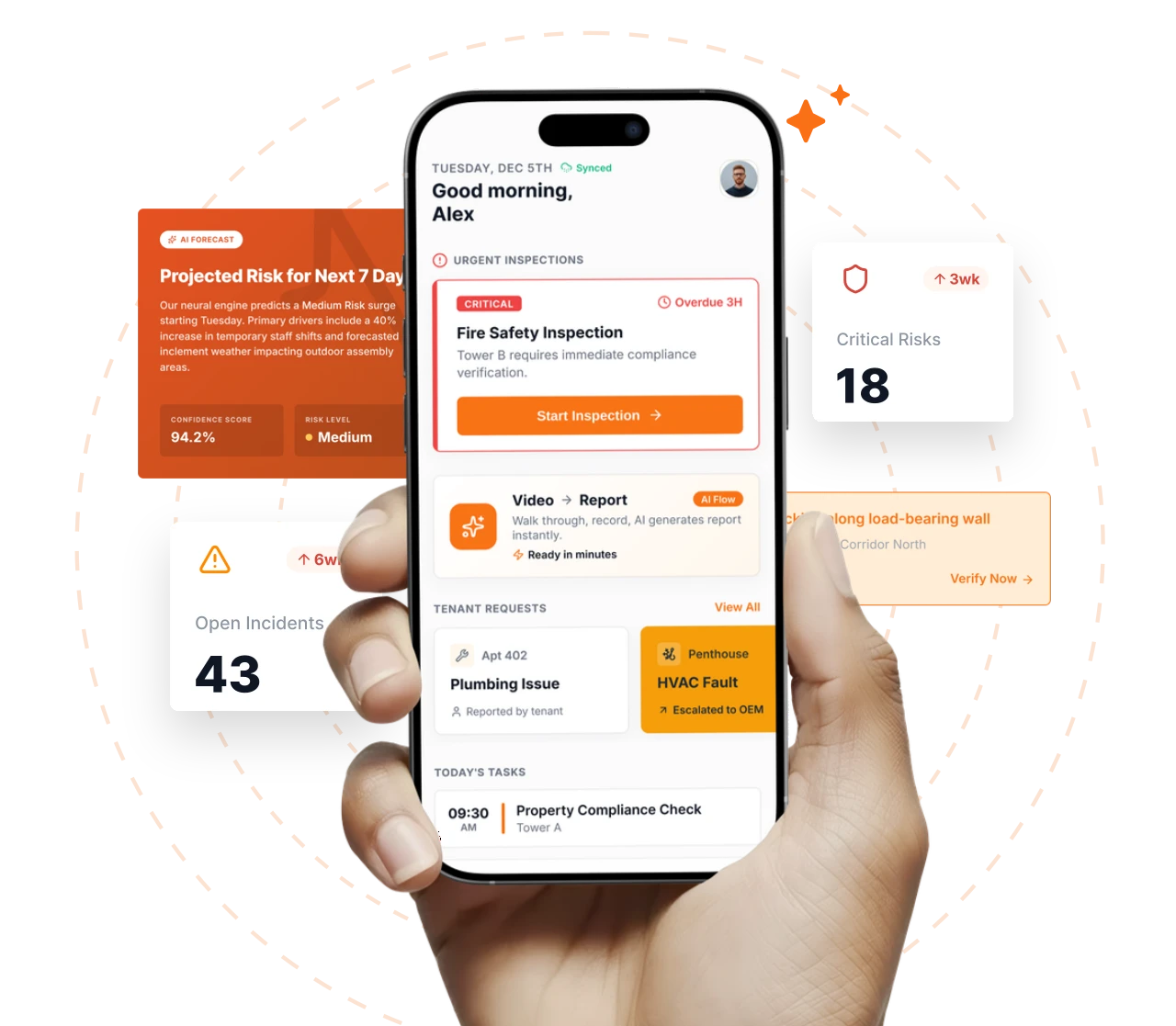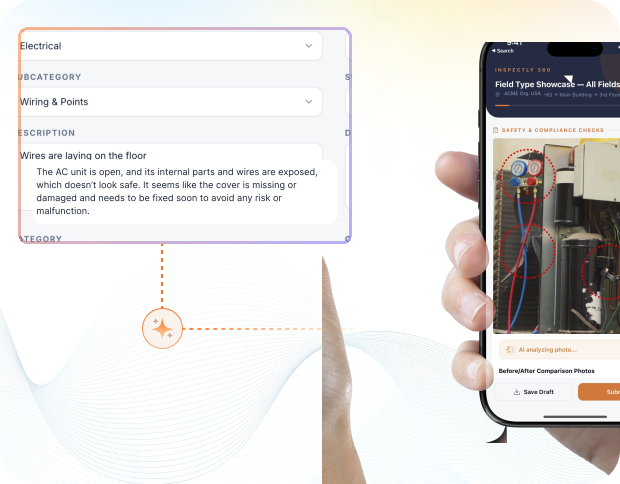
Take a Photo. AI Fills the Form
Your inspector takes a photo of any asset or defect. AI reads it and fills the inspection form automatically. No typing. No manual entry.

Convert your checklist into Mobile App
Site safety inspection compliance software is the regulatory-proof layer beside the field safety platform: it carries the statutory JSA evidence, the PTW records, the OSHA 1904 recordable trails, the NFPA 70E electrical safety records, the ISO 45001 documented information, and the corporate insurance audit records that OSHA 1926, OSHA 1910, ISO 45001, CDM 2015, NFPA 70E, Work at Height Regulations 2005, and local work safety law each require.
Everything your field team does on paper, Inspectly360 does automatically: faster, more accurate, and without the admin.
Your inspector takes a photo of any asset or defect. AI reads it and fills the inspection form automatically. No typing. No manual entry.
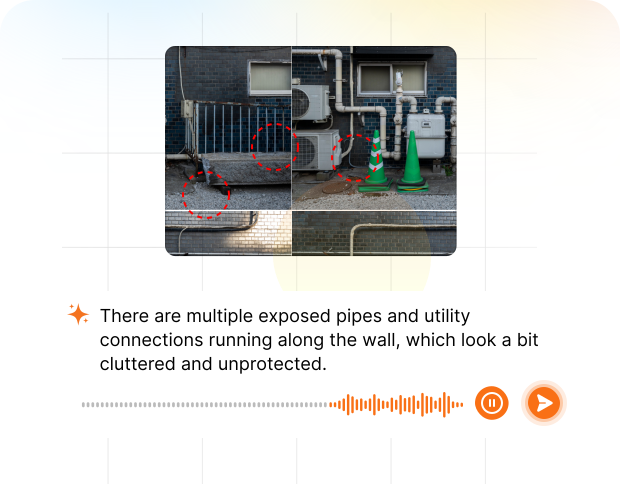
Inspectors speak their observations in any language. AI transcribes and fills the form in real time. Completely hands-free in the field.
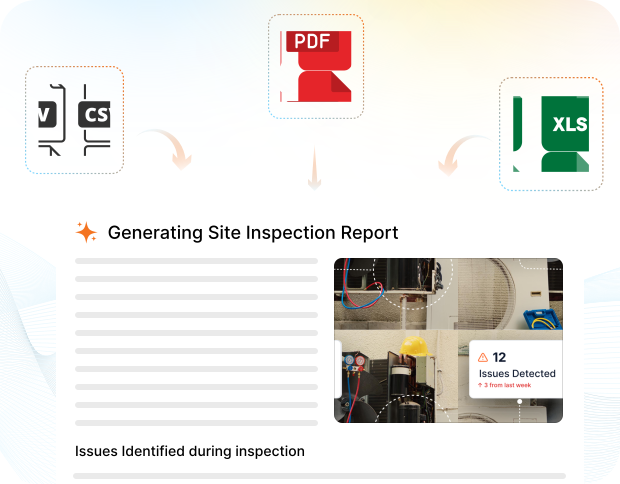
The moment an inspection is submitted, a branded PDF, Excel, or CSV report generates automatically. No manual work. No waiting.

Inspectly360 integrates with the tools your team already uses, including Zoho, Microsoft 365, and SAP. No double entry.
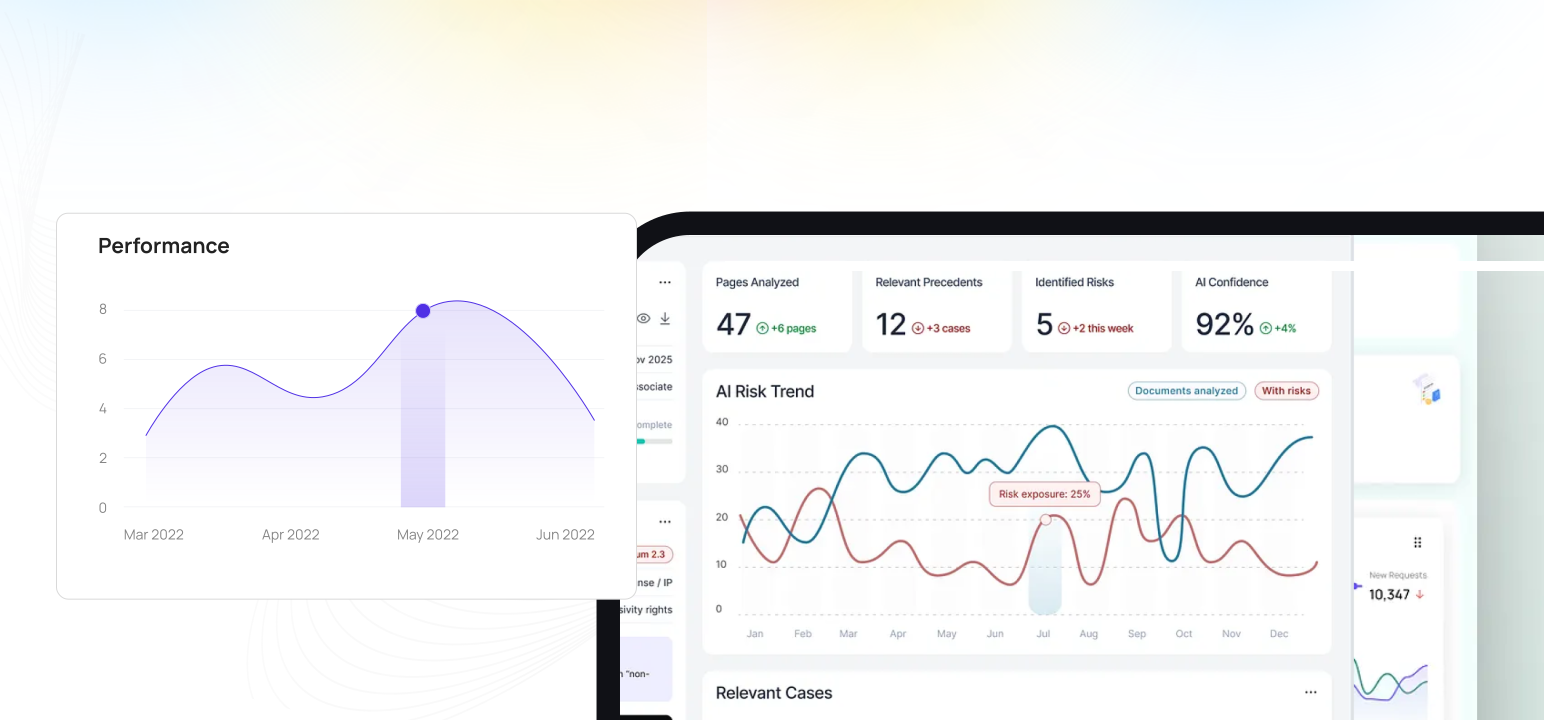
Your operations team sees completion rates, open issues, and compliance scores across all sites in real time. No chasing updates.
What changes once site safety inspection compliance software runs on one mobile-first platform with photo proof and live dashboards.
Site safety inspection compliance software is the regulatory-proof layer beside the field safety platform: it carries the statutory JSA evidence, the PTW records, the OSHA 1904 recordable trails, the NFPA 70E electrical safety records, the ISO 45001 documented information, and the corporate insurance audit records that OSHA 1926, OSHA 1910, ISO 45001, CDM 2015, NFPA 70E, Work at Height Regulations 2005, and local work safety law each require. Inspectly360 is built for principal contractors, HSE directors, and corporate safety leads who carry personal accountability for OSHA visits, ISO 45001 surveillance, NFPA audits, and corporate insurance audit obligations.
For compliance programmes, the platform replaces paper safety files, PDF statutory folders, and Excel compliance trackers with one defensible record aligned to OSHA 29 CFR 1926 (construction), 1910 (general industry), 1904 (recordkeeping), ISO 45001 occupational health and safety management system, CDM 2015 principal contractor obligations, NFPA 70E electrical safety, Work at Height Regulations 2005, WSH Regulations for Singapore, NBC Part 7 for India, and local work safety law.
For the HSE director, the compliance record survives the full retention window (5 years OSHA 1904, 10 years corporate insurance retention, longer per regional law) with audit-grade event logs that survive litigation hold. OSHA inspector visits, ISO 45001 surveillance, NFPA audits, and corporate insurance audits open with the same evidence the field captured.
Site safety compliance runs a different cadence to field execution; the five-step loop below is what principal contractors standardise to keep regulatory proof intact across the full retention window.
Tag every safety template item with the regulatory framework it satisfies (OSHA 1926 subparts, OSHA 1910 subparts, OSHA 1904 recordkeeping, ISO 45001 clauses, CDM 2015 regulations, NFPA 70E articles, Work at Height Regulations 2005, NFPA 70 NEC).
OSHA 300/300A/301 generation, OSHA reporting windows (8-hour fatality, 24-hour hospitalisation), ISO 45001 management review cycles, NFPA arc-flash labelling review, and Work at Height Regulations weekly inspections schedule against site programme dates.
Compliance safety workflows capture timestamped photos, geofenced location, named operative identity, credential validity at submission, and the statutory template version in force.
OSHA inspector packs, OSHA 300 logs, ISO 45001 surveillance evidence, NFPA arc-flash audit packs, HSE inspector packs, and corporate insurance audit submissions export from the same record.
Audit-grade event logs, statutory inspection records, credential validity history, and CAPA closure trails preserve for the configured retention window. Insurance claims years after a site retires open with the original record intact.
Answers to common long-tail questions, kept on one canonical page to avoid thin duplicate URLs.
Inspectly360 sits as the principal contractor's compliance-evidence layer beside OSHA Injury Tracking Application (ITA), HSE RIDDOR portal, and corporate EHS recordkeeping systems. OSHA ITA continues to run electronic 300A submission. HSE's RIDDOR portal continues to run statutory incident notifications. Inspectly360 produces the principal contractor's evidence trail that each authority expects to see. Statutory inspector packs export in the format each regulator accepts.
Principal contractors should validate seven retention requirements: configurable retention per regulatory framework (5 years OSHA 1904, 6 years CDM 2015, 10 years corporate insurance product liability, 30 years for certain workers' comp claims); audit-grade event logs that survive litigation hold; encrypted at-rest evidence; regional data residency; certified retention expiry with final exports; legal-hold flags that pause retention purges during active claims; and bulk export to corporate archive systems.
Production compliance safety programmes carry operative PII (training records, medical fitness, incident-related personal data), contractor data, and inspection evidence that OSHA, HSE, ISO 45001 auditors, and corporate insurance auditors may request years later. Inspectly360 supports configurable retention, audit-grade event logs, encrypted at-rest evidence, regional data residency, and legal-hold flags.
Existing paper safety files, PDF statutory folders, and Excel compliance trackers batch-import as searchable evidence against the same site and contractor. Historical statutory inspections carry forward with original evidence attached.
The platform capabilities that power site safety inspection compliance software across every site.
Principal contractors and HSE directors comparing Inspectly360 to paper safety files, PDF statutory folders, and Excel compliance trackers care about five things specific to site safety compliance: whether OSHA inspector unannounced visits open with proof rather than reconstruction, whether ISO 45001 documentation survives surveillance, whether recordable classification follows OSHA 1904 correctly, whether NFPA 70E electrical safety obligations meet for arc-flash work, and whether warranty/insurance defence opens with original evidence.
| Topic | Typical Gaps | With Inspectly360 |
|---|---|---|
| OSHA inspector unannounced visit readiness | OSHA inspectors arrive unannounced; the site team scrambles through paper files, photo galleries, and email threads for the last 12 weeks of safety inspections. Findings on documentation gaps surface every visit. | OSHA inspector packs export in one click with the last 12 weeks of JSAs, PTWs, toolbox talks, near-misses, recordables, and CAPA closure trails. The inspector sees the same record the site captured. |
| ISO 45001 documentation through surveillance | ISO 45001 surveillance auditors ask for documented information; the HSE team scrambles to compile templates, approval workflows, change audit trails, and CAPA closure trails from different folders. | Audit-grade event logs, versioned safety templates, scored programme history, and CAPA closure trails export in one click. ISO 45001 surveillance opens with proof rather than reconstruction. |
| OSHA 1904 recordable classification accuracy | Recordable classification (privacy case, restricted work, days away, hospitalisation) happens by safety officer judgement weeks after the incident. Classification drift between sites is common; OSHA citations on incorrect classification follow. | Recordable classification follows structured OSHA 1904 decision logic at incident capture. Privacy case rules under 1904.29(b)(7) apply automatically. Classification consistency across sites becomes a property of the workflow. |
| NFPA 70E electrical safety compliance | Arc-flash hazard analysis lives in PDF files. PPE category decisions happen at work-zone level by varying competence. Energised work permit (EEWP) approval depends on supervisor memory of the latest NFPA 70E revision. | Arc-flash boundary data, incident energy values, and PPE categories sync from electrical drawings into the JSA workflow. EEWP approval gates require qualified-electrical-worker credential validation. |
| Insurance defence years after incident | A workers' compensation claim arrives years after the incident; the principal contractor cannot find the original JSA, the witness statements, or the CAPA closure photos. The claim settles on cost because the evidence does not exist. | Claims open with the full incident record, the original JSA evidence, witness statements, and CAPA closure trail intact for the configured retention window. Many claims close on evidence rather than on cost. |
What changes once site safety inspection compliance software is standardised on Inspectly360.
Get started with inspection and audit checklist templates.

Safety inspections with hazard identification, corrective actions, and compliance reporting. Offline capture and evidence.
Report incidents and near-misses with details, photos, location, and timeline. Ready for safety or quality review.
Use these apps to run inspections and audits.

by Inspectly360
Manage construction compliance workflows with documented evidence and audit-ready records.

by Inspectly360
Track construction compliance obligations, deadlines, and evidence trails across active sites.

by Inspectly360
Run construction safety checks with hazard tracking, corrective actions, and closure verification.
by Inspectly360
Complete daily and task-specific site safety apps with PPE, plant, and exclusion zone verification on mobile.

by Inspectly360
Run construction safety inspections with hazard checks, evidence capture, and closure tracking.
OSHA 1904.39 requires fatality reporting within 8 hours and inpatient hospitalisation, amputation, or eye-loss reporting within 24 hours. Inspectly360 triggers automatic reporting workflows when an incident classification meets the reporting threshold: the HSE director and corporate safety lead receive immediate notification; the OSHA report draft is generated with the required fields (employer name, location, incident description, contact name and phone); and the report is submitted via OSHA's online portal or phone within the statutory window. Missed reporting windows stop being possible because the workflow enforces the gate rather than relying on someone remembering the clock during the chaos of a serious incident.
Incident capture follows OSHA 1904 decision logic at the point of capture: was the incident work-related under 1904.5? Did it result in death, days away from work, restricted work, transfer, medical treatment beyond first aid, loss of consciousness, or a significant injury or illness diagnosed by a physician? Privacy-case rules under 1904.29(b)(7) apply automatically for the specific injury types the standard names. Classification consistency across sites becomes a property of the workflow rather than the individual safety officer's interpretation, which is what stops the OSHA citations that follow from a recordable being logged as first aid, or the reverse, on one site but not another.
Arc-flash boundary data, incident-energy values, and PPE categories sync from electrical drawings (ETAP, SKM PowerTools, EasyPower) into the JSA workflow, so the inspector works from the engineered values rather than a guess. Energised Electrical Work Permit (EEWP) approvals gate on validation of the qualified-electrical-worker credential, and PPE selection follows the NFPA 70E Table 130.7(C)(15) categories with arc-flash labelling synced to the asset record. Energised work cannot start until the EEWP is active, and any LOTO override is routed through the qualified-person approval chain rather than waved through locally. The effect is that the arc-flash control written on the drawing is the control the field actually works under, with the evidence captured at the permit.
Retention is configured per regulatory framework: five years under OSHA 1904 for recordable incident records, six years under CDM 2015 for principal-contractor documentation, ten years under corporate insurance for product-liability exposure, and up to thirty years in certain workers'-compensation jurisdictions for serious-injury claims. Audit-grade event logs survive the full retention window, and legal-hold flags pause any retention purge while a claim is active, so a record can never be deleted out from under live litigation. Because each framework's clock runs independently against the record it applies to, a single incident can be held to the longest applicable requirement without forcing every record onto one blanket retention period.
The Work at Height Regulations 2005 require a risk assessment for any work at height, the hierarchy of control (avoid, prevent, mitigate), and demonstrated inspection competency. Inspectly360 captures the risk assessment per work zone, builds the hierarchy of control into the JSA template, validates competent-person credentials at PTW issuance, and produces the inspection records required under regulation 12 and Schedule 7. Falls from height remain the largest single cause of fatal injury in UK construction, so the value is not the paperwork but the gate: work at height cannot start until the assessment, the controls, and the competent person are all in place and recorded. The evidence that the duty was met is then a by-product of the work, ready for an HSE inspector on request.
Yes. Regulatory templates fork per jurisdiction: OSHA 1926 and 1910 in the US, CDM 2015 and the Work at Height Regulations in the UK, the WSH Regulations in Singapore, NBC Part 7 in India, and the NCC in Australia. Each site carries the framework that applies to it, while the corporate template library still holds a single global baseline that every jurisdiction inherits, so the common controls stay common and only the local requirements diverge. Audit data lands in the region configured for the site, and portfolio-level dashboards aggregate compliance status across jurisdictions without moving raw records across borders. A compliance director gets one estate-wide view of who is in date and who is not, while each site answers to its own regulator on its own terms.
Site Safety Inspection Compliance Software on Inspectly360 connects directly to the inspection apps, checklist templates, forms, industries, and adjacent solutions linked below.
See Inspectly360 in action with a live demo tailored to your needs. No credit card required.