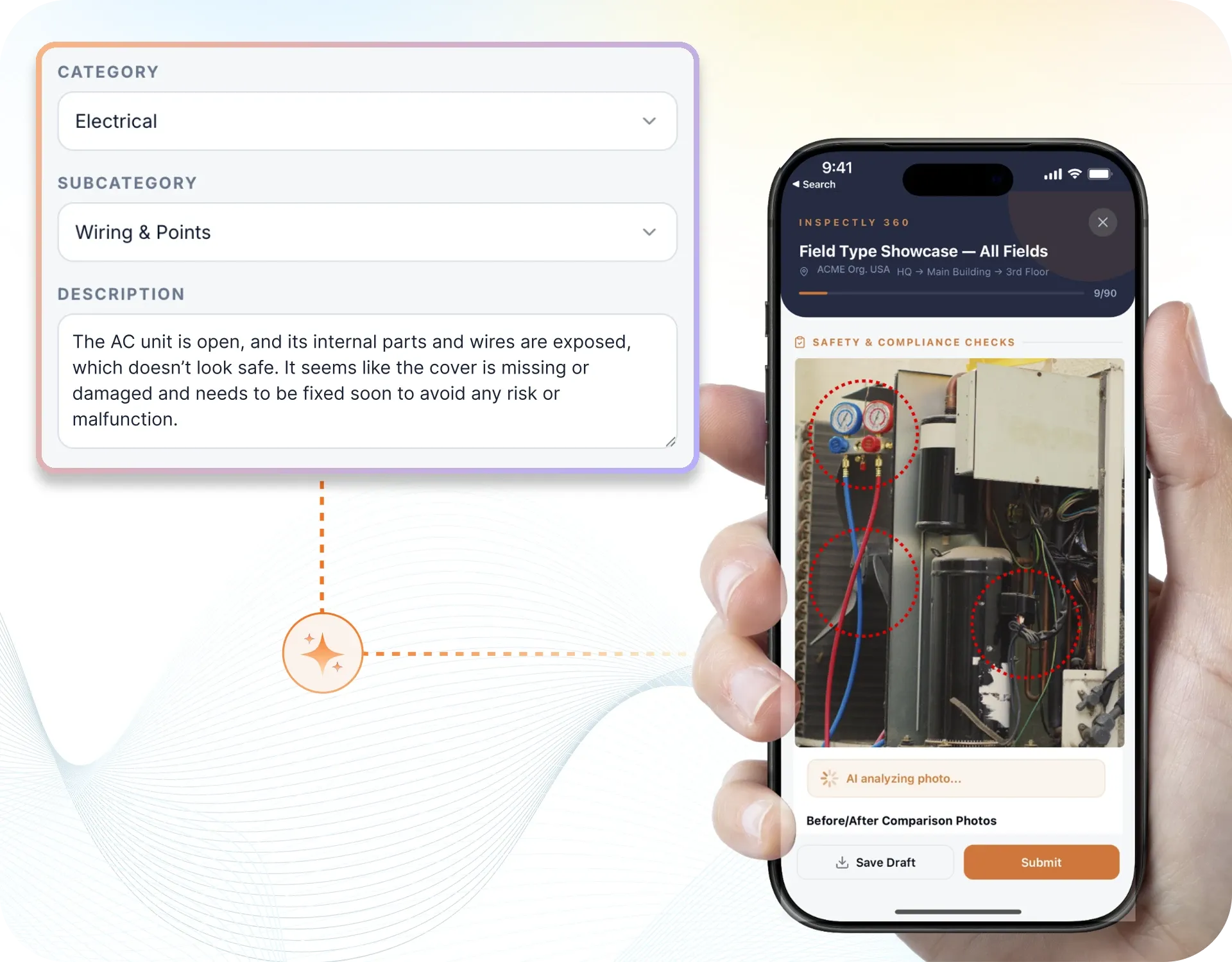
Take a Photo. AI Fills the Form
Your inspector takes a photo of any asset or defect. AI reads it and fills the inspection form automatically. No typing. No manual entry.

Convert your checklist into Mobile App
The property inspection app in Inspectly360 lets teams run move-in, move-out, and condition inspections on a phone instead of paper. Inspectors use standardized templates, attach photos to findings, and tie records to the right site. It replaces paper condition reports, Excel snag lists, and scattered phone photos with one structured, audit-ready record per property.
The property inspection app in Inspectly360 lets real estate and facilities teams run digital inspections on a phone instead of paper. Property inspections require consistency and clear documentation, so the platform standardizes field capture with structured templates, photo evidence on every finding, and repeatable scored outputs. Each record is tied to the right site, and findings route to contractors with an owner and a due date. Reports build automatically for owners, managers, and contractors. The result is faster decisions, fewer disputes over condition, and audit-ready documentation that supports RERA, handover, and tenancy requirements across the whole portfolio.
Use configurable templates for consistent inspections across sites and asset types.
Explore FeatureKeep findings tied to the right site with GPS verification and inspection context.
Explore FeatureCapture photos for findings so follow-ups are unambiguous.
Explore FeaturePlan and repeat inspections on a cadence that fits your portfolio.
Explore FeatureRoute findings to responsible parties for faster corrective actions.
Explore FeatureGenerate consistent outputs for owners, managers, and contractors.
Explore FeatureConfigure inspection templates for each asset class, covering move-in, move-out, condition, and handover checks, while keeping consistent structure and scoring across the portfolio.
Field teams complete inspections on a phone, capture photos at the exact checklist item, and the record is GPS-stamped to the correct site. The app works offline at remote properties.
Any failed item creates a corrective action with an owner and a due date, and routes a notification to the contractor or maintenance team responsible for the fix.
Inspectly360 builds a structured report as each inspection is submitted, ready for owners, managers, and contractors, with photos and findings included.
Efficient digital checklists
Property managers, owners, and contractors run move-in, move-out, snag, and PPM checks on mobile. AI photo analysis catches cracks, leaks, and finishing defects on the spot.
When a defect is logged, the contractor sees the job, fixes it, and uploads proof. The inspector verifies the close. No more self-certified vendor sign-offs.
Teams inspect multiple properties with standardized templates and consistent outputs.
Capture condition with structured fields and photo evidence for accountability.
Send clear findings to contractors and verify resolution with evidence.
Everything your field team does on paper, Inspectly360 does automatically: faster, more accurate, and without the admin.
Your inspector takes a photo of any asset or defect. AI reads it and fills the inspection form automatically. No typing. No manual entry.
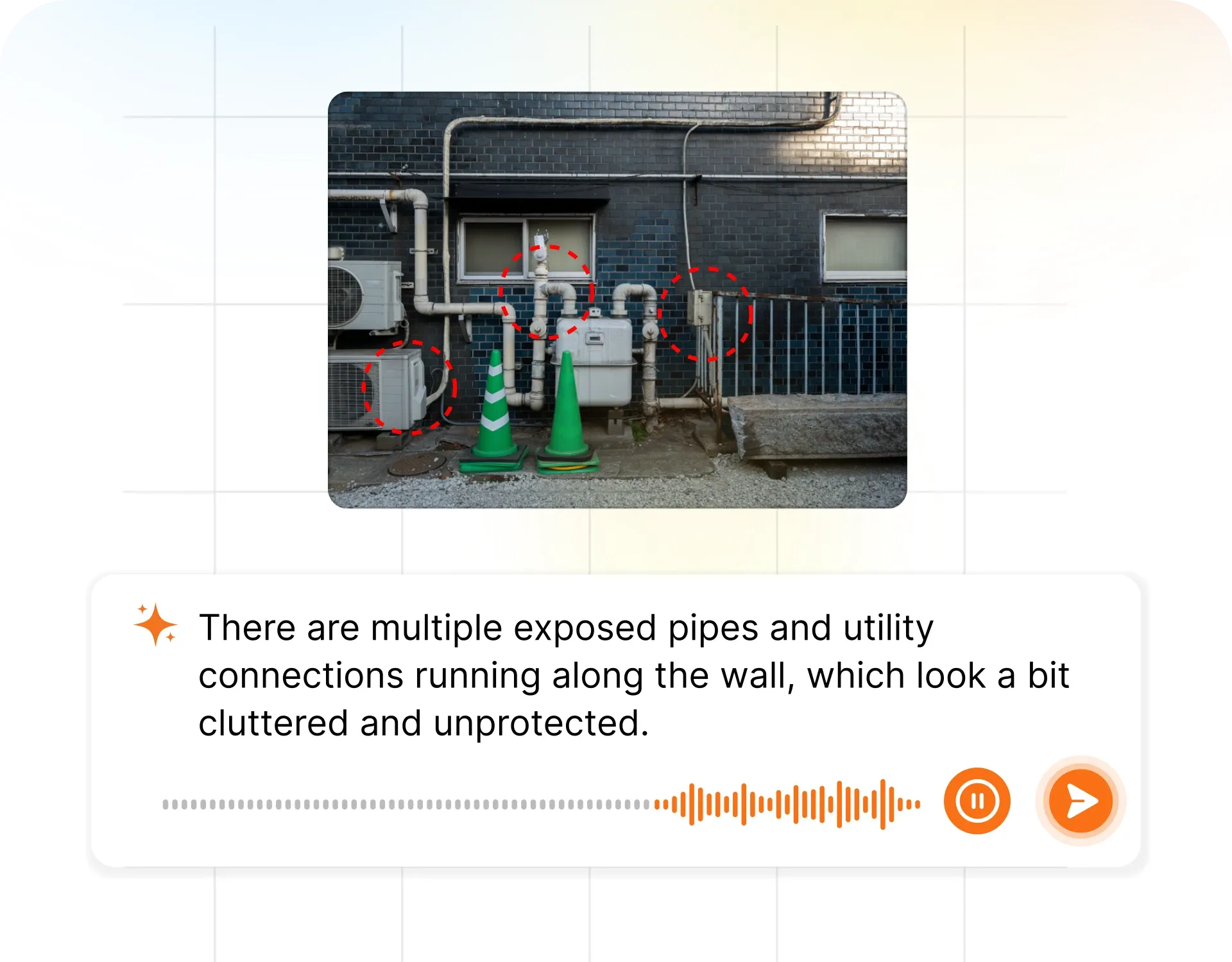
Inspectors speak their observations in any language. AI transcribes and fills the form in real time. Completely hands-free in the field.
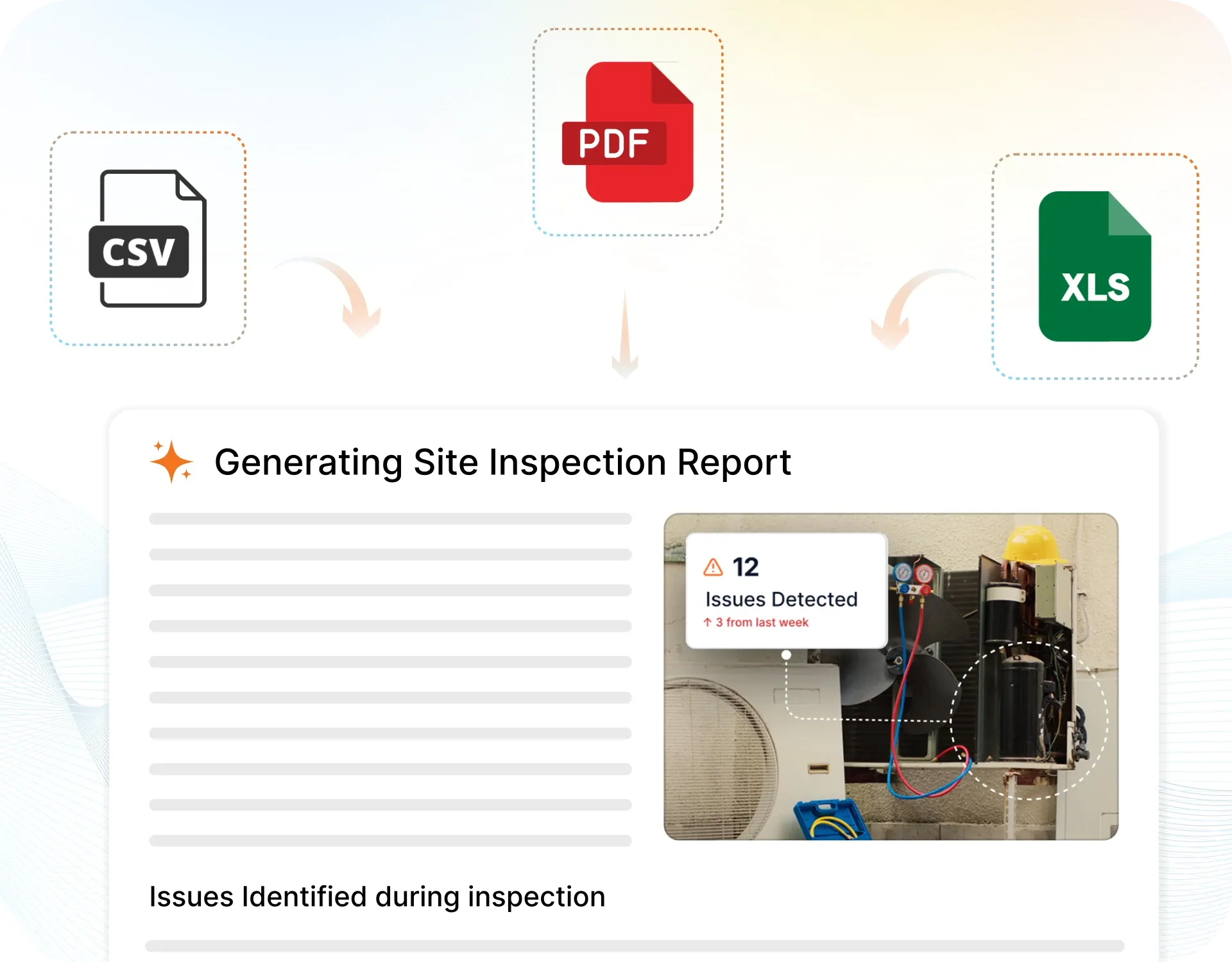
The moment an inspection is submitted, a branded PDF, Excel, or CSV report generates automatically. No manual work. No waiting.
Inspectly360 integrates with the tools your team already uses, including Zoho, Microsoft 365, and SAP. No double entry.
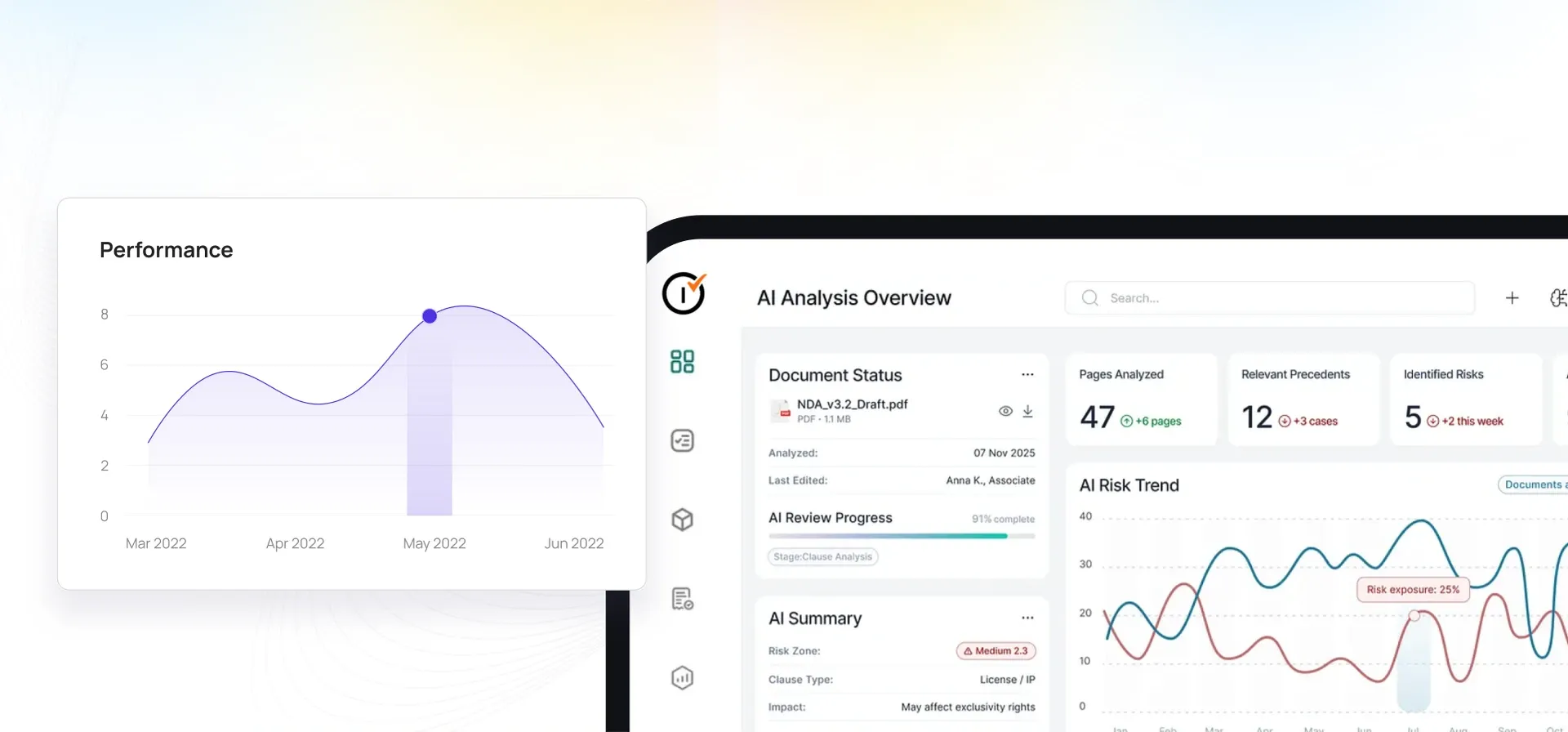
Your operations team sees completion rates, open issues, and compliance scores across all sites in real time. No chasing updates.
A property inspection app lets a property manager, facilities manager, or realtor run real estate inspections on a phone or tablet instead of paper. It carries the inspection checklist, captures photos and notes against each item, and produces the report automatically once the inspection is submitted.
Inspectly360 covers the full inspection: scheduling the visit, completing a structured checklist on site, attaching photo evidence of any defect, and sharing a finished report with owners, tenants, or contractors. Because the data is digital from the first tap, there is no second round of typing it into a spreadsheet later.
Pen-and-paper inspections create three recurring problems. Handwriting gets misread, so the data is wrong before it is even filed. Paper forms are hard to update and easy to lose, and a portfolio that must keep historical records ends up with a filing cabinet nobody can search. And every paper inspection still has to be written up by hand, which can take hours per property.
Spreadsheets organise the data slightly better but solve none of this. Updating them means re-keying, photo handling is clumsy, and the final report still has to be assembled manually before it can be shared.
Inspectly360 standardises field capture so every inspection across a portfolio is run the same way:
Schedule the visit and choose the template for the property type, or build a custom checklist. Review the property's past inspection reports and open maintenance requests so you arrive with full context.
Work through the checklist, marking items complete, incomplete, or in need of repair. Photograph and annotate damage or maintenance issues. Assign urgent repairs to a contractor without leaving the app.
The report is generated automatically from the checklist, photos, and notes, then shared with the relevant stakeholders. Corrective actions are tracked on the dashboard until each one is confirmed closed.
A single platform handles the full range of real estate inspections:
Yes. Inspectly360 lets you configure templates per asset class, so an apartment, a commercial unit, and a residential building can each have their own inspection structure while keeping consistent scoring and reporting across the portfolio. A move-in inspection can differ from a move-out or condition check, but the data still rolls up the same way. This means inspectors capture exactly the right detail for each property type without juggling separate tools. Managers get comparable results across the whole portfolio, and the team can configure your existing paper inspection forms into digital templates for you at no extra cost.
Yes. In Inspectly360 you can capture photos at the exact checklist item, so every property inspection finding has clear visual proof. Instead of a vague note about damage or wear, the inspector attaches a photo of the precise issue, whether it is a crack, a leak, a broken fixture, or a snag at handover. The photo travels with the corrective action to the contractor responsible for the fix, which removes disputes about what was actually wrong. For move-in and move-out checks, dated photo evidence protects both the owner and the tenant by recording condition objectively.
Yes. Inspectly360 lets you set recurring schedules and reminders, so inspections happen consistently across your portfolio without manual chasing. You can plan daily, weekly, monthly, or quarterly checks to match each property and contract. Inspectors receive reminders when a check is due, and managers can see which inspections are completed and which are overdue on a live dashboard. This keeps periodic condition checks, tenancy inspections, and compliance reviews on track. Scheduled inspections also make it easier to demonstrate a regular, documented inspection routine during RERA, audit, or owner reviews.
A property inspection app turns move-in and move-out checks into a structured, photographed record that protects both owner and tenant. In Inspectly360, the inspector works through a standardized condition template room by room, photographs the state of each area, and the record is dated and tied to the correct property. The same template runs at move-out, so the two inspections can be compared directly. Any new damage is documented with photo evidence and routed as a corrective action. This removes arguments over deposits and condition, because the record is objective, consistent, and available to everyone involved.
Yes. The Inspectly360 property inspection app works fully offline on iOS and Android, which matters because vacant units, basements, plant rooms, and remote properties often have no reliable signal. Inspectors complete inspections, capture photos, and record findings with no connection at all. Everything is stored on the device and syncs automatically once a connection returns. The record is still GPS-stamped to confirm the inspection happened at the right property. This means a portfolio inspection round is never held up by connectivity, and no condition data or photo is lost between the site and the dashboard.
Book a free demo. We will configure this feature against your workflow and show how it runs at your sites.

