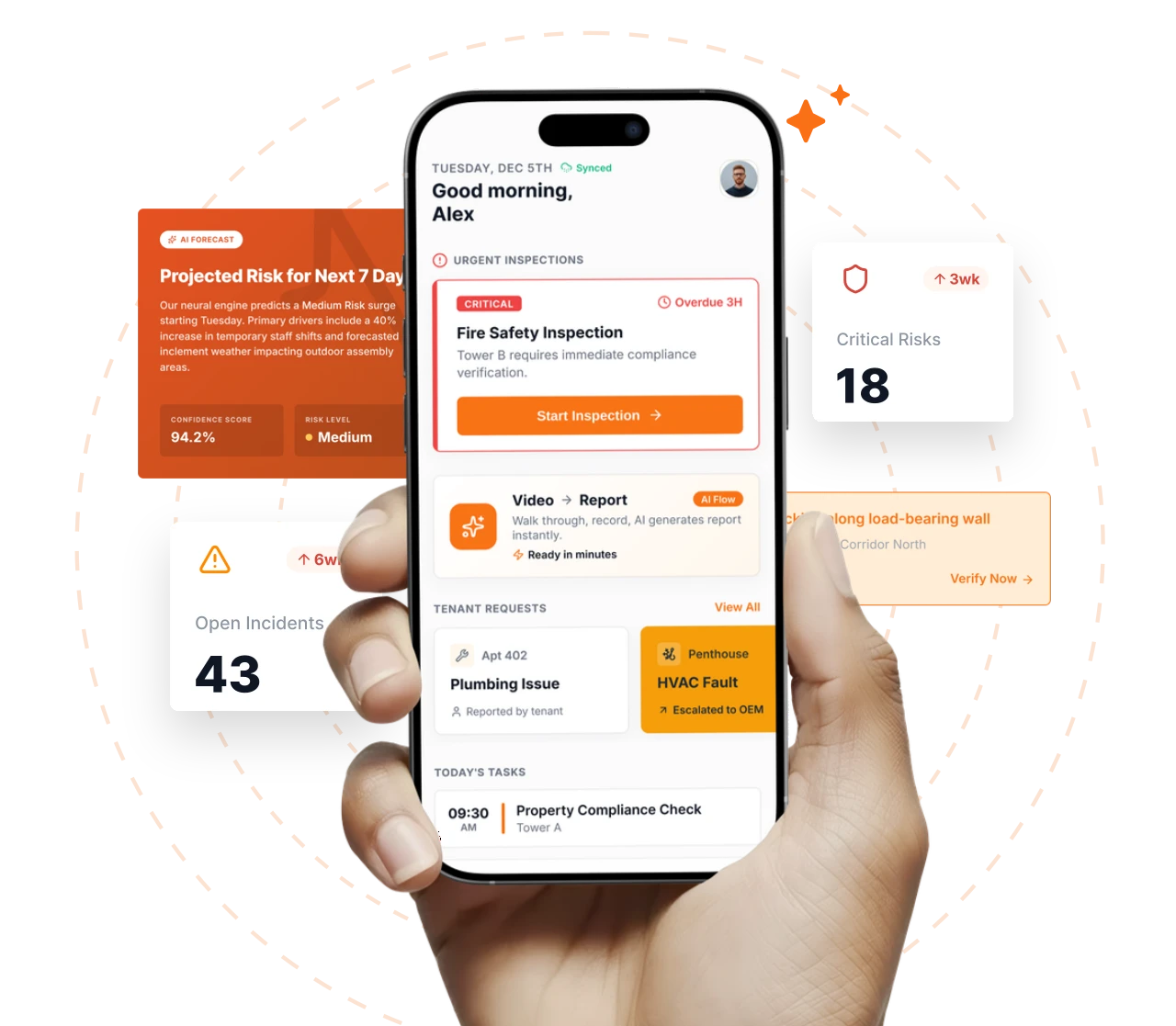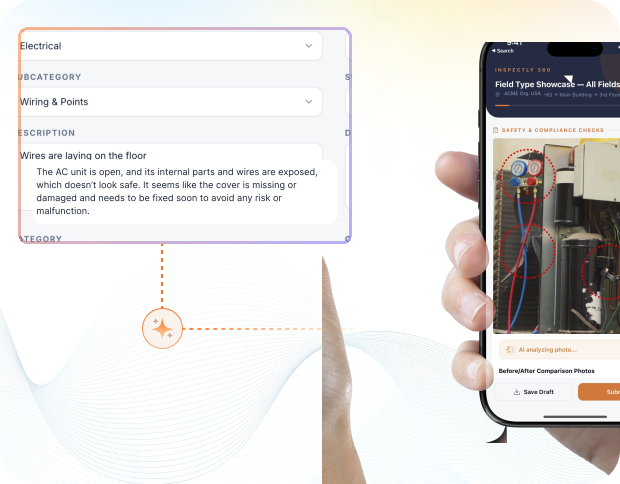
Take a Photo. AI Fills the Form
Your inspector takes a photo of any asset or defect. AI reads it and fills the inspection form automatically. No typing. No manual entry.

Convert your checklist into Mobile App
Building inspection monitoring software is the real-time visibility layer that turns field-captured building inspection data into a live operating picture of a property portfolio. It differs from reporting (retrospective, compiled, weekly) by being continuous, automated, and forward-looking.
Everything your field team does on paper, Inspectly360 does automatically: faster, more accurate, and without the admin.
Your inspector takes a photo of any asset or defect. AI reads it and fills the inspection form automatically. No typing. No manual entry.
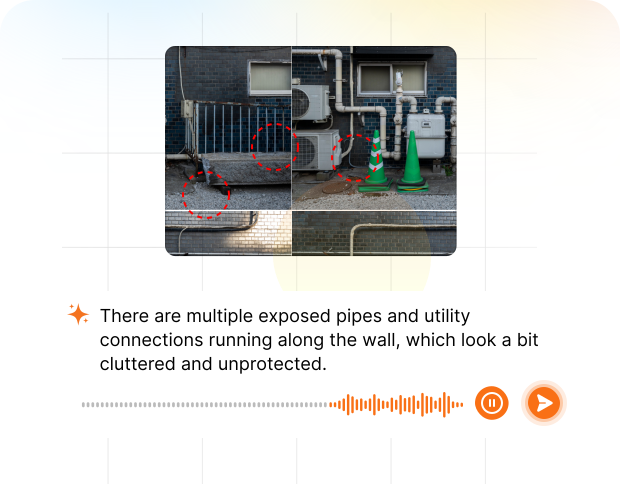
Inspectors speak their observations in any language. AI transcribes and fills the form in real time. Completely hands-free in the field.
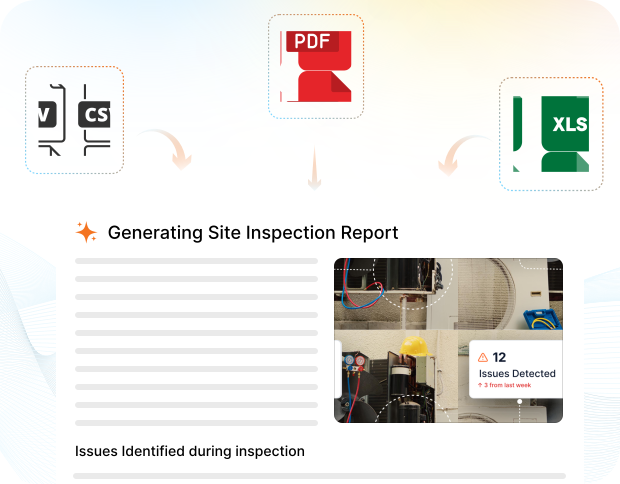
The moment an inspection is submitted, a branded PDF, Excel, or CSV report generates automatically. No manual work. No waiting.

Inspectly360 integrates with the tools your team already uses, including Zoho, Microsoft 365, and SAP. No double entry.
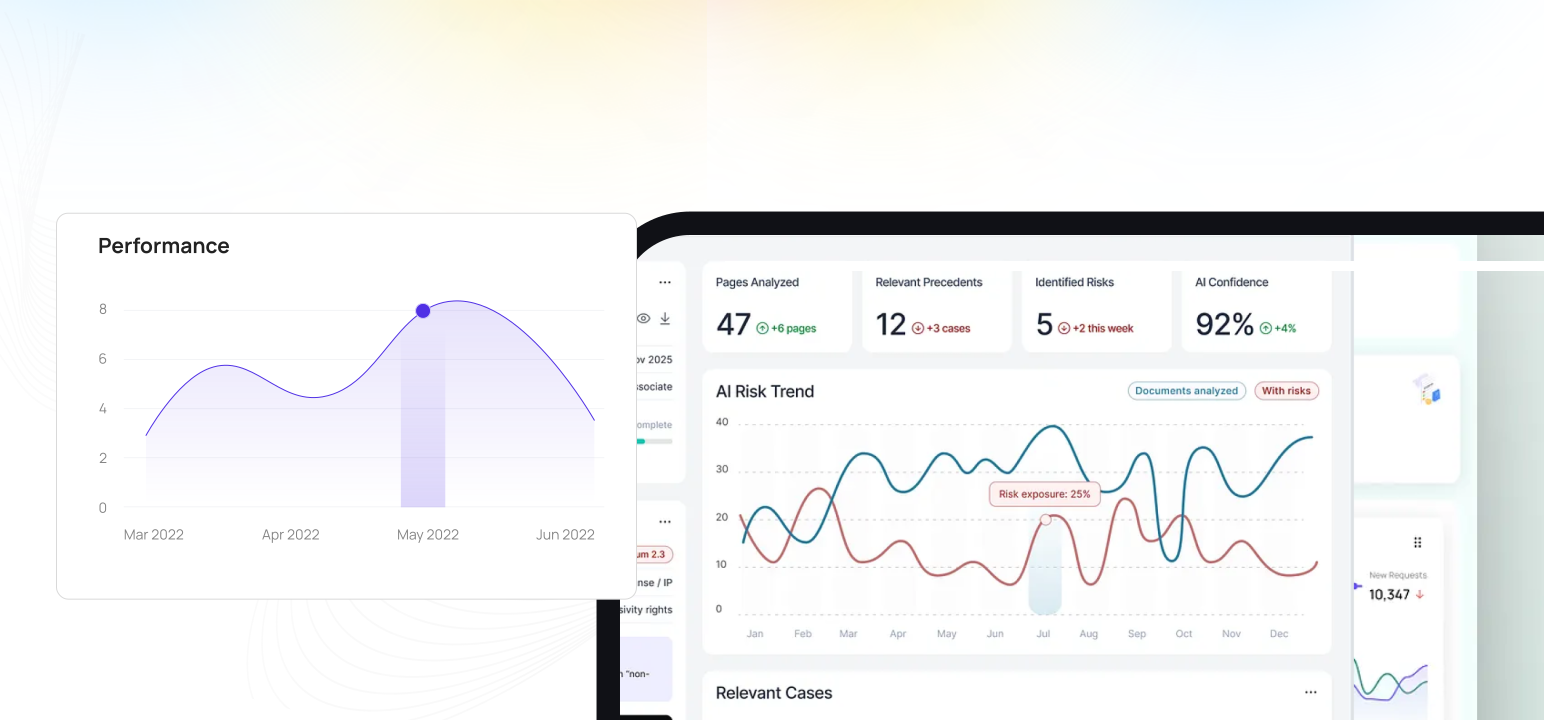
Your operations team sees completion rates, open issues, and compliance scores across all sites in real time. No chasing updates.
What changes once building inspection monitoring software runs on one mobile-first platform with photo proof and live dashboards.
Building inspection monitoring software is the real-time visibility layer that turns field-captured building inspection data into a live operating picture of a property portfolio. It differs from reporting (retrospective, compiled, weekly) by being continuous, automated, and forward-looking. Inspectly360 converts every captured inspection, snag, statutory attestation, and CAPA into live dashboards, AI daily briefings, natural-language queries, and statutory risk scores per building, designed for portfolio managers, building owners, REIT operations leads, and lender relationship teams who need to know what is happening across every property right now rather than what happened last week.
The problem most portfolio-scale building monitoring programmes share is signal-to-noise. Raw inspection dumps, property manager emails, statutory deadline spreadsheets, and contractor reports each carry truth but none of them carry attention. By the time the portfolio manager reads the Sunday-night deck, the material issue is already a tenant complaint or an authority enforcement notice. Inspectly360 closes the gap with prioritisation per building: the AI Daily Briefing surfaces what matters, Statutory Risk Scoring ranks buildings by exposure, anomaly detection focuses attention on the buildings worth oversight.
The outcome is portfolio governance owners, REIT boards, and lenders actually trust. Owner meetings open with a live dashboard rather than a Sunday-compiled deck. Quarterly board reviews focus on the three buildings that need a decision rather than the 80 that do not. Statutory enforcement risk surfaces before it realises. Lender due diligence pulls structured evidence per building rather than reconstruction.
Most portfolio teams enable monitoring in this order before expanding the monitored signals across the full property portfolio.
Mobile inspections, building registries, statutory document expiry dates, snag records, and contractor closure data feed into the monitoring layer. No manual data entry; everything captured in the field flows into the dashboard automatically with metadata intact.
Building, region, and portfolio-level dashboards show inspection completion, open snags, statutory deadlines, and compliance risk scoring. Role-based: owners see portfolio, regional leads see region, property managers see assigned buildings. Threshold tuning per signal.
Every morning, management receives a plain-language summary covering which buildings had snags, what is overdue, what statutory deadlines are approaching this week, and what needs attention today. Briefing scope is configurable per role.
Portfolio managers and owners type a question ('which buildings have fire NOC expiring this quarter', 'which lift contractors have the worst closure times') and get an answer instantly. No filter-builder learning curve.
Compliance Risk Scoring continuously ranks buildings by missed inspections, overdue snags, and document expiry. Anomaly Detection flags suspicious submission patterns per building. Owner board-pack export consolidates the live view into a one-click PDF for governance forums.
Answers to common long-tail questions, kept on one canonical page to avoid thin duplicate URLs.
Property management system (PMS) and IWMS reporting modules typically batch-process inspection and snag data into scheduled reports built around lease cycles. Inspectly360 monitoring is event-driven: every field capture, every CAPA state change, every statutory document expiry recalculates the per-building dashboard in real time. Architecturally, the portfolio manager sees the current state of every building rather than the most-recent batch. Integration with the PMS and IWMS is bidirectional: lease and tenant data flow in, inspection coverage and statutory risk scores flow back so the PMS report and the live monitoring dashboard reflect the same reality.
Portfolio-scale building monitoring fails when every signal becomes an alert. Threshold tuning starts conservative (alerts only on critical statutory risk and life-safety findings) and widens as portfolio governance capacity grows. The platform supports per-role alert routing so the Building Manager sees site-level alerts, the Property Manager sees building alerts, the Portfolio Manager sees regional alerts, and the Owner sees portfolio-critical alerts only. Quiet-hours and weekend-deferral rules prevent overnight notifications. Most portfolios reach a stable alert rate within 90 days as thresholds calibrate to the portfolio's natural rhythm.
Owner board meetings, REIT investor reviews, and lender quarterly check-ins expect curated views, not live dashboards. Inspectly360 supports one-click board-pack export with the previous month's portfolio performance, top statutory risks per building, snag closure summaries, building condition trends, and forward-looking renewal pipeline. The lender due-diligence export packages the same evidence at a building-by-building level. Both packs regenerate from live data each time, so the board pack, the lender pack, and the live monitoring dashboard always reconcile. Custom layouts can be configured per governance forum.
Portfolio managers, building owners, and lender relationship teams are not desk-bound. The full dashboard is mobile-accessible with optimised views for portfolio overview, building drill-down, open critical snags, and statutory deadline pipeline. Push notifications surface critical escalations so the user does not have to actively check. Owners typically use the mobile dashboard for the morning briefing and the building drive-by. Lender surveyors use it during site visits to retrieve underlying evidence per building. Desktop dashboard handles deeper analysis and board-pack preparation.
The platform capabilities that power building inspection monitoring software across every site.
Portfolio managers, building owners, REIT operations leads, and lender relationship teams comparing Inspectly360 to property management system reporting, static BI dashboards, owner email decks, and IWMS reporting modules see the difference fastest on five dimensions: per-building data freshness, AI briefing automation across the portfolio, statutory risk scoring per property, natural-language portfolio query speed, and anomaly detection signal-to-noise across multi-building captures.
| Topic | Typical Gaps | With Inspectly360 |
|---|---|---|
| Per-building data freshness | Owner meeting deck assembled from property manager emails on Sunday night. Decisions sit on a snapshot that is already a week old by review time. | Live dashboards update as field crews capture data per building. Portfolio managers see what is happening at every property right now. |
| AI daily briefing across the building portfolio | Portfolio managers read raw data dumps or chase property managers for context. Material issues per building hide in the noise; nobody reads the report. | Plain-language AI Daily Briefing arrives every morning: which buildings had snags, what is overdue, what statutory deadlines are approaching this week. |
| Statutory risk scoring per property | Statutory risk discovered when an authority visits or a tenant complains. The risk picture lives only in property manager memory. | Compliance Risk Scoring ranks buildings in real time by missed inspections, overdue snags, and document expiry per property. |
| Natural-language portfolio queries | Owner asks 'which buildings have fire NOC expiring this quarter'. The answer requires an analyst, a filter chain, and half a day. | Portfolio manager types the question; the platform returns the filtered answer, chart, or table instantly. No analyst chain. |
| Anomaly detection signal-to-noise per building | Anomalies in inspection submissions per building (too-fast captures, identical responses across units, off-geofence patterns) surface months later in a forensic review. | Anomaly detection per building prioritises the 2 percent of submissions worth a manager's attention; the dashboard answers 'which buildings need oversight today'. |
What changes once building inspection monitoring software is standardised on Inspectly360.
Get started with inspection and audit checklist templates.
This checklist is designed for conducting thorough workplace inspections to identify hazards and ensure compliance with safety regulations. It promotes...

This template is used to conduct a fire extinguisher inspection every 30 days to determine if the equipment meets the...
Use these apps to run inspections and audits.

by Inspectly360
Building condition and compliance inspections with evidence and follow-ups.

by Inspectly360
Property and real estate inspections, condition reports, and tenant checks.

by Inspectly360
Streamline facilities inspections with forms, photos, and reports.

by Inspectly360
Audits and inspections with scoring, evidence, and reports.

by Inspectly360
Compliance-focused inspections with evidence and audit trails.
The dashboard is event-driven rather than batch-refreshed per building. When a field crew submits an inspection at a building, captures a CAPA closure, or a statutory document expiry crosses a threshold, the building's dashboard tile updates within seconds. There is no overnight ETL cycle and no scheduled report build. Most users see sub-second tile refresh per building. For very large portfolios (over 5,000 buildings), some heavy aggregations cache for up to 60 seconds to control compute cost; the cache window is configurable. The point is that owner decisions sit on current state per building, not on the most-recent batch.
The AI Daily Briefing is role-scoped per building portfolio. Owners typically receive a portfolio briefing covering yesterday's material building events, today's priorities, this week's statutory deadlines, and the highest-risk buildings. Portfolio Managers receive a regional cut. Property Managers receive a per-building briefing focused on their assigned buildings and contractor scorecards. REIT Operations leads receive an investor-grade briefing for quarterly reporting context. Delivery time is configurable (default 7:00am local). Briefing tone, length, and signal weighting can be customised per organisation. Because each role receives a briefing scoped to what they can actually act on, an owner is not buried in per-building detail and a property manager is not handed a portfolio summary they cannot use, so the briefing drives action at the right level rather than becoming noise everyone learns to ignore.
The statutory risk score per building is a weighted composite of four signals: missed inspections (weighted by overdue duration), open CAPAs (weighted by age and severity), document expiry (fire NOC, lift licence, EICR, occupancy certificate, weighted by days to expiry), and anomaly density per building. Each signal is normalised to a 0-to-100 scale and combined into the building risk score. Weights are configurable per organisation so a healthcare portfolio can weight statutory document expiry heavily while a logistics portfolio can weight CAPA closure heavily. The methodology is transparent and visible to owners; lender auditors can see how the score is built.
The executive dashboard is a curated, leadership-grade view designed for building owners, REIT board members, and investment committee chairs. It shows portfolio statutory risk distribution, top-five buildings by risk, contractor scorecard headlines, building condition trend summary, statutory renewal pipeline for the next 60 days, and material owner-level escalations. It deliberately does not show every open snag or every inspection; that level of detail belongs to the operational dashboard used by property managers. Both run from the same data per building; the cut is what differs.
Role-based filtering scopes what each user sees per building. A Property Manager sees their assigned buildings only. A Portfolio Manager sees the buildings in their region. An Owner sees the full portfolio. A Lender Surveyor gets scoped, time-bound access to the due-diligence scope (specific buildings, specific obligations, specific date range). Users can hold multiple roles when the operating model requires: a Portfolio Manager acting as Property Manager for one building gets both views with a role switcher. Permission boundaries are server-enforced so a tampered request cannot escalate visibility.
Anomaly detection runs on submission patterns per building rather than on individual findings. Common flagged patterns include too-fast submissions (a 50-control inspection completed in two minutes at a single building), identical responses across units within a building, photos reused across multiple unit inspections, submissions captured outside the assigned building geofence, and night-shift submission clusters with all-perfect scores. Each anomaly surfaces to management as a review prompt with the underlying signals; the platform does not block field work. Anomaly thresholds tune per building portfolio so the dashboard prioritises the 2 percent of submissions worth review.
Building Inspection Monitoring Software on Inspectly360 connects directly to the inspection apps, checklist templates, forms, industries, and adjacent solutions linked below.
See Inspectly360 in action with a live demo tailored to your needs. No credit card required.