
“Inspectly360 transformed how we manage site safety inspections. The offline capability alone saved us countless hours. Our compliance rate jumped from 72% to 96% in just three months.”
Sarah Mitchell
Meridian Construction Group

Convert your checklist into Mobile App
Looking for clinical asset utilization software built around how your hospital tracks equipment? We provide it. Inspectly360 delivers a tailored utilization solution on our mobile platform, configured to your departments and status data and integrated with the inventory and CMMS tools you already run. Book a demo to scope it.
Clinical asset utilization software is what biomedical and operations leaders use to measure how effectively medical equipment is used: what is in active use, what sits idle, and where demand outstrips supply. Inspectly360 provides a clinical asset utilization solution tailored to your operation, built on our mobile platform, turning location and status data into utilization figures and integrated with the inventory register you already run.
The pain is spending on new devices while identical ones sit idle two floors away. Without utilization tracking, nobody can show which assets are underused, which wards are short, or whether a rental was needed. Capital requests are argued from anecdote, and idle assets are invisible.
Operations and biomedical leaders standardise this loop before scaling it.
Device location, status, and in-use signals feed a utilization record, so availability and active use are visible per device and department.
The system highlights devices sitting idle or below expected use, so equipment that could be redeployed is no longer invisible.
Utilization by department shows where demand outstrips supply and where assets sit spare, so imbalances are visible side by side.
Leaders redeploy underused devices to short wards, so a capital or rental request is tested against spare capacity first.
Equipment utilization analytics roll up by model and department, so capital reviews and rental decisions rest on evidence.
Clinical asset utilization covers how effectively medical equipment is used across departments, from usage capture through idle-asset detection to redeployment. The scope below is the optimisation layer, distinct from the basic inventory register it builds on.
Templates align to Joint Commission EC.02.04.01, AAMI EQ56.
Inspectly360 is the utilization and optimisation layer. It builds on the device register that inventory maintains and feeds usage evidence to finance and capital-planning processes. It does not replace the inventory system or the finance ledger; it turns the location and status data those systems hold into utilization figures that inform allocation, rental, and capital decisions across departments.
Validate three things in the pilot. First, that the available tracking signals produce utilization figures your teams trust for real decisions. Second, that idle-asset and demand views map to how you allocate equipment between wards. Third, that utilization analytics support the capital and rental decisions you actually make. Run one device type across a few wards so the optimisation case is proven on real usage before it scales.
Utilization data influences spending decisions, so its integrity matters. Inspectly360 enforces role-based access so wards see their own utilization and central teams see the estate, and it reports only figures the underlying data supports. Records are retained so a capital or rental decision can be traced back to the utilization evidence behind it.
What Clinical Asset Utilization Software covers for your team.
Operations leaders comparing Inspectly360 to guesswork see the difference on five points: idle-asset visibility, demand balance, rental justification, capital evidence, and redeployment.
| Capability | Without Inspectly360 | With Inspectly360 |
|---|---|---|
| Idle-asset visibility | Idle devices are invisible; a ward buys or rents while identical assets sit unused elsewhere in the hospital. | Idle and underused assets are surfaced by department, so spare capacity is visible before a purchase is made. |
| Demand balance | Which wards are short and which are spare is a matter of opinion, so allocation follows the loudest request. | Utilization by ward shows demand against supply side by side, so allocation follows evidence, not volume. |
| Rental justification | Rentals are ordered on assumption, and nobody checks whether an owned device was available first. | Availability data tests whether an owned device was free before a rental is approved, cutting avoidable hire. |
| Capital evidence | Capital requests for more devices are argued from anecdote with no utilization figures behind them. | Utilization analytics by model support or challenge a capital request with real usage evidence. |
| Redeployment | Underused equipment stays where it was bought because no one can see it could serve a busier ward. | Underused devices are identified for redeployment, so existing assets meet demand before new spend. |
Manage every checklist in one connected workspace, capture evidence on mobile at the point of work, and let AI turn field inputs into clear, stakeholder-ready reports in minutes.


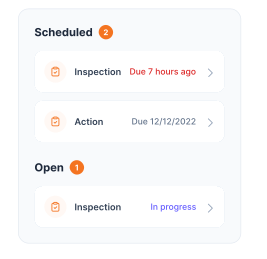
See which checklists your team has in progress across every site, jump into the same inspection with one tap, and keep field, supervisor, and back-office views in sync without sending screenshots on WhatsApp.


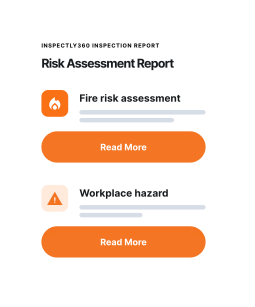


Every team reports differently. Build the report your operations, quality, or compliance leads actually want to read, share it as a branded PDF, and schedule delivery to the stakeholders who need it.


See completion, pass rate, and recurring findings across every checklist and every site, without pulling spreadsheets together at the end of the month.
What changes once clinical asset utilization software is standardised on Inspectly360.






“Inspectly360 transformed how we manage site safety inspections. The offline capability alone saved us countless hours. Our compliance rate jumped from 72% to 96% in just three months.”
Sarah Mitchell
Meridian Construction Group

“The AI-powered defect detection has changed how we work. Our inspectors capture photos and the system flags issues we'd have missed. It's like having an expert reviewer on every site visit.”
James Chen
Pacific Manufacturing Co.
“Rolling out digital checklists across multiple projects gave us instant visibility into recurring safety issues. We now resolve critical findings in hours instead of days.”
Olivia Carter
Northbridge Infrastructure
Get started with inspection and audit checklist templates.

Test medical-gas alarms: area and master alarms, alarm activation, audible and visual indicators, pressure conditions, sensor response, and panel status, with test results.

Inspect pulse oximeters for operational readiness: device identification, physical condition, display and controls, SpO2 sensor, probe and cable, battery and power, alarm functionality, cleaning and disinfection, and a functional oxygen-saturation readout check, with corrective actions.
Inspect glucometers and their testing components: device identification, physical condition, display and buttons, battery, test-strip condition and storage, control-solution verification, cleaning and contamination checks, and error indicators, with corrective actions.
Inspect the autoclave or steam sterilizer as equipment: chamber condition, door, locking mechanism and gasket, pressure and temperature indicators, controls and cycle settings, alarms, water supply and drainage, leaks and corrosion, cycle records, and sterilization indicators.
Use these apps to run inspections and audits.

by Inspectly360
Simplify facilities inspections with forms, photos, and reports.

by Inspectly360
Building condition and compliance inspections with evidence and follow-ups.

by Inspectly360
Digitize building inspection apps workflows with forms, evidence capture, and automated reporting.

by Inspectly360
Run building inspections on phones and tablets with offline forms, photo evidence, and instant reports.

by Inspectly360
Audit buildings with structured scoring, photo evidence, and corrective action tracking across portfolios.
Inventory tracking answers what equipment exists and where it is. Utilization software answers how effectively that equipment is used: what is in active use, what sits idle, and where demand outstrips supply. The two are related, and Inspectly360 links utilization to the inventory register rather than duplicating it, but they serve different decisions. Inventory keeps the register accurate; utilization turns that register into optimisation, showing where spare capacity could meet demand before new spend. If your problem is finding devices and counting them, start with inventory. If your problem is buying or renting equipment while identical assets sit idle, clinical asset utilization software is the page that addresses it.
Utilization is built from the location, status, and in-use signals the product genuinely captures for a device, combined over time into usage and availability figures. Inspectly360 is deliberate about reporting only what the data supports, so utilization figures are defensible rather than inferred from assumptions. The richness depends on how devices are tracked in your environment, and the pilot validates that the available signals produce figures your teams trust. The point is to move allocation and capital decisions from anecdote toward evidence, using real usage and availability data, without overclaiming a precision the underlying tracking cannot support. Honest, defensible figures are more useful than impressive ones that cannot be trusted.
Rentals are often ordered on the assumption that no owned device is free, when in fact an identical unit sits idle on another ward. Utilization software makes availability visible, so before a rental is approved the team can check whether an owned device could meet the need. Over time, utilization analytics also show which device types are genuinely short, so rentals are used where they are truly needed rather than by default. This directly targets avoidable hire spend, which is one of the clearest returns from healthcare asset optimization, because the data turns a habitual rental decision into a quick evidence check against spare owned capacity.
Yes. When a ward requests more of a device type, utilization analytics show whether existing units are genuinely at capacity or whether underused assets could be redeployed instead. This lets finance and biomedical leaders support a well-founded capital request with usage evidence, or challenge a duplicate purchase where spare capacity exists. Equipment utilization analytics by model and department give capital reviews a factual basis rather than competing anecdotes from wards. The result is capital spent where utilization proves it is needed, and existing assets worked harder before new money is committed, which is exactly the optimisation this page is designed to support.
Yes. Utilization is most valuable exactly where equipment is shared or could be shared across wards, departments, and buildings, because that is where idle assets and imbalanced demand hide. Analytics roll up by model, department, and site, so a biomedical or operations lead can see where spare capacity in one area could serve a shortage in another. Role-based access lets a ward see its own utilization while central teams see the whole estate. Because the data ties to the device register, the utilization picture stays consistent with the inventory, and redeployment decisions are made against a shared, trusted view rather than separate departmental spreadsheets.
See Inspectly360 in action with a live demo tailored to your needs. No credit card required.