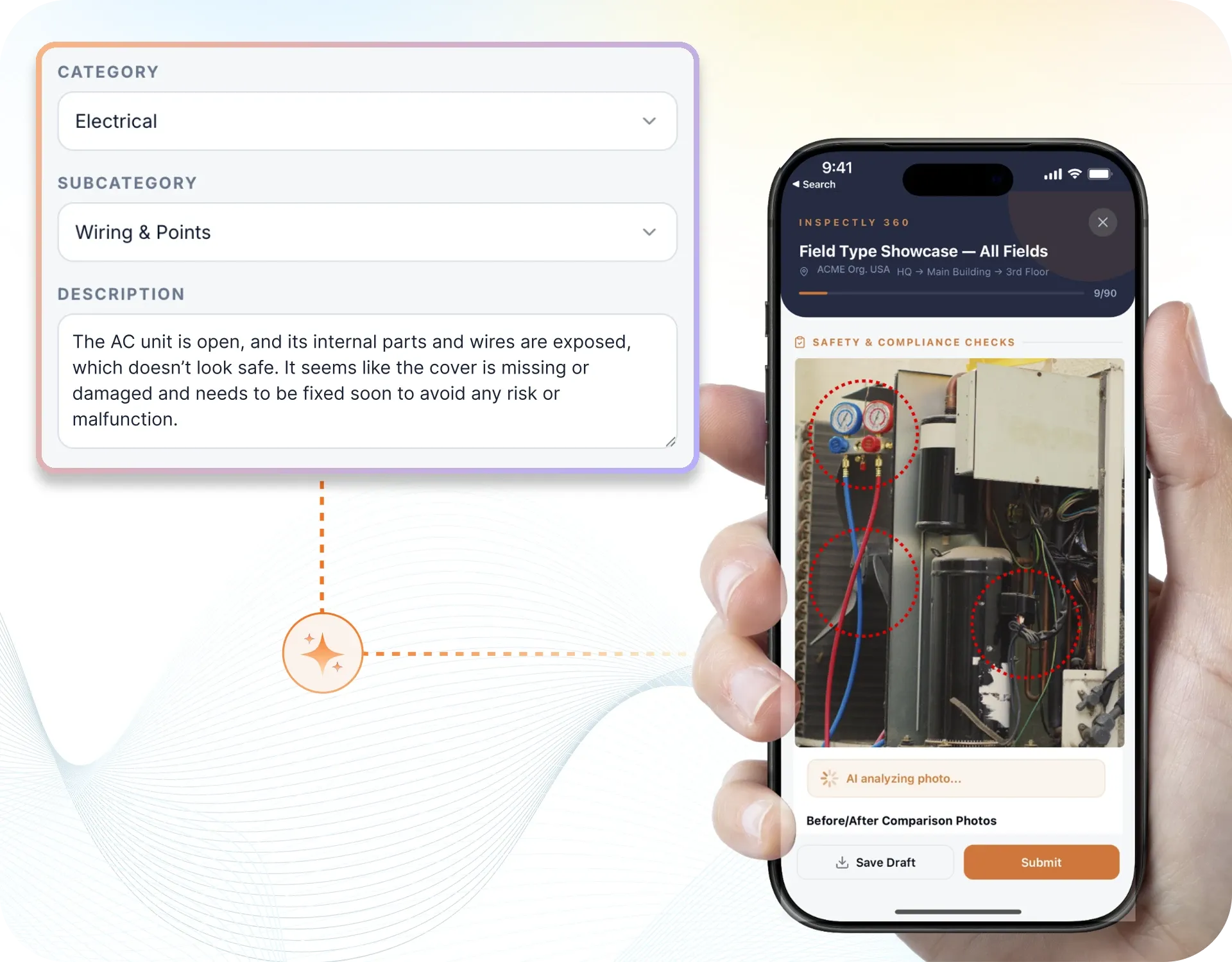
Take a Photo. AI Fills the Form
Your inspector takes a photo of any asset or defect. AI reads it and fills the inspection form automatically. No typing. No manual entry.

Convert your checklist into Mobile App
The mystery shopper app in Inspectly360 lets reviewers run secret shopper visits on a phone using one standardized scorecard. It captures photo and GPS evidence tied to each finding and produces a formatted report the moment a visit is submitted. It replaces paper evaluation forms, spreadsheet rollups, and slow agency reporting with a single platform.
The mystery shopper app in Inspectly360 turns secret shopper visits into structured, comparable data across every location. Reviewers complete one standardized scorecard on a mobile app that works offline. AI helps fill the form from photos and voice notes. Managers see scores, evidence, and corrective actions on a live dashboard instead of waiting days for a consolidated spreadsheet. The result is consistent experience measurement, verifiable evidence behind every score, and faster coaching conversations with the store and venue teams who need them.
Use consistent criteria across locations so results are directly comparable.
Explore FeatureAttach photos and annotations to findings for clearer review and coaching.
Explore FeatureTrack outcomes over time and identify where coaching is needed most.
Explore FeatureAlert managers and stakeholders the moment a critical finding is logged.
Explore FeatureGenerate consistent branded reports for training and management review.
Explore FeatureKeep programs organized with role-based access and review workflows.
Explore FeatureList your brand standards and service KPIs, then turn each one into a clear, scorable question with a drag-and-drop builder. Add conditional logic and required photo evidence.
Reviewers open the scorecard on the mobile app, complete the visit, and capture photos and voice notes. GPS confirms the visit happened at the correct location.
The app generates a formatted report the moment the visit is submitted, pulling scores, photos, and comments together with no manual assembly.
Managers review results on a live dashboard, assign corrective actions on weak findings, and track each one to verified closure.
hotel quality assurance app
retail store auditing app
food inspection tasks
Auditors complete brand-standard, service, and loss-prevention checks on a phone, in store, with photo evidence and geo-tagged submissions. No notepads, no rewrites later.
Submissions are tied to the store’s location and the actual visit time. Anomaly detection catches forms filled from a café or rubber-stamped after the fact.
Dashboards show how each store performs across visits, by region, by category. AI catches the recurring issues that drag scores down without anyone investigating.
Run consistent scorecards across stores and coach managers with evidence-backed findings.
Capture service outcomes with structured scoring and evidence across properties.
Benchmark locations consistently with standardized criteria and reporting.
Everything your field team does on paper, Inspectly360 does automatically: faster, more accurate, and without the admin.
Your inspector takes a photo of any asset or defect. AI reads it and fills the inspection form automatically. No typing. No manual entry.
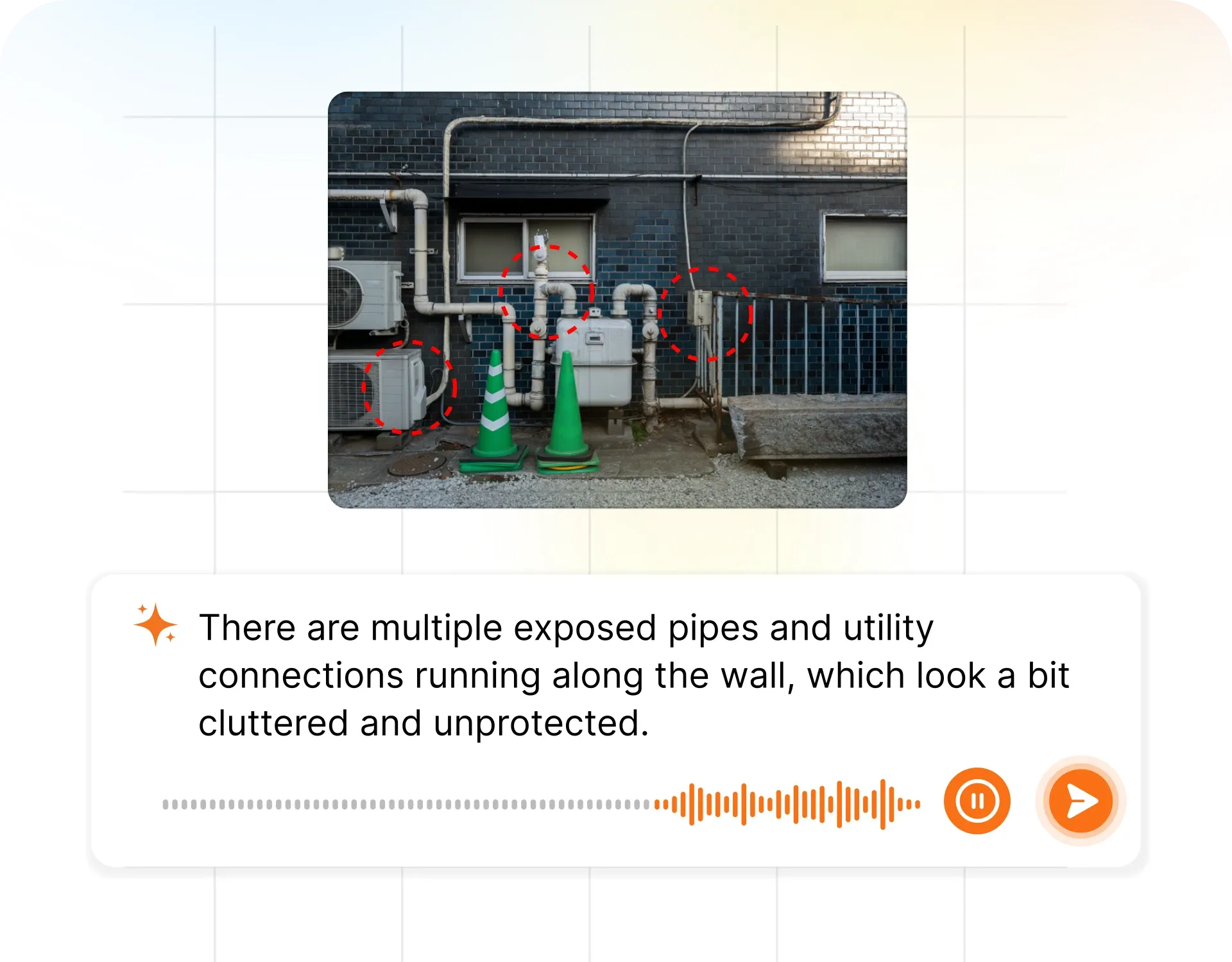
Inspectors speak their observations in any language. AI transcribes and fills the form in real time. Completely hands-free in the field.
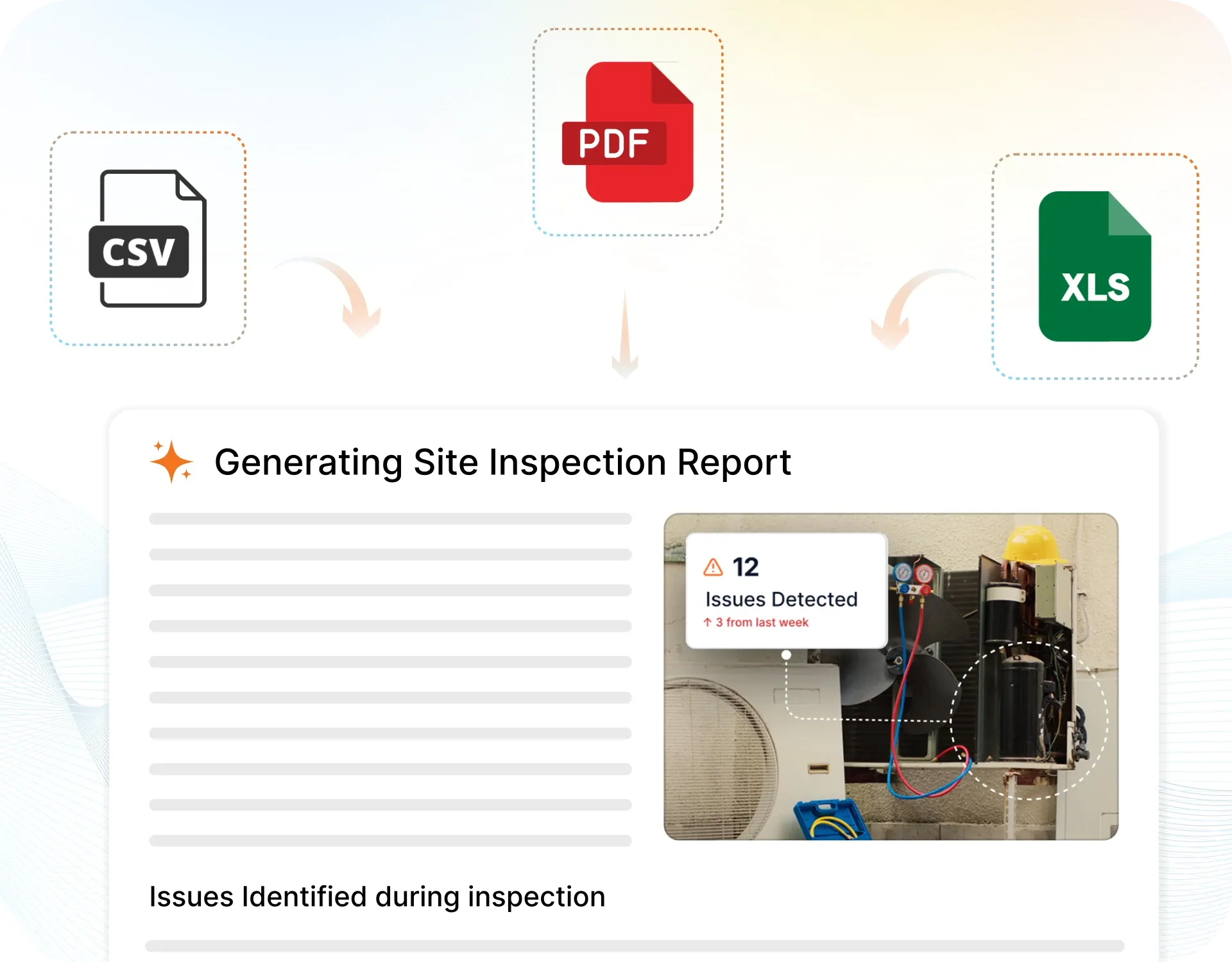
The moment an inspection is submitted, a branded PDF, Excel, or CSV report generates automatically. No manual work. No waiting.
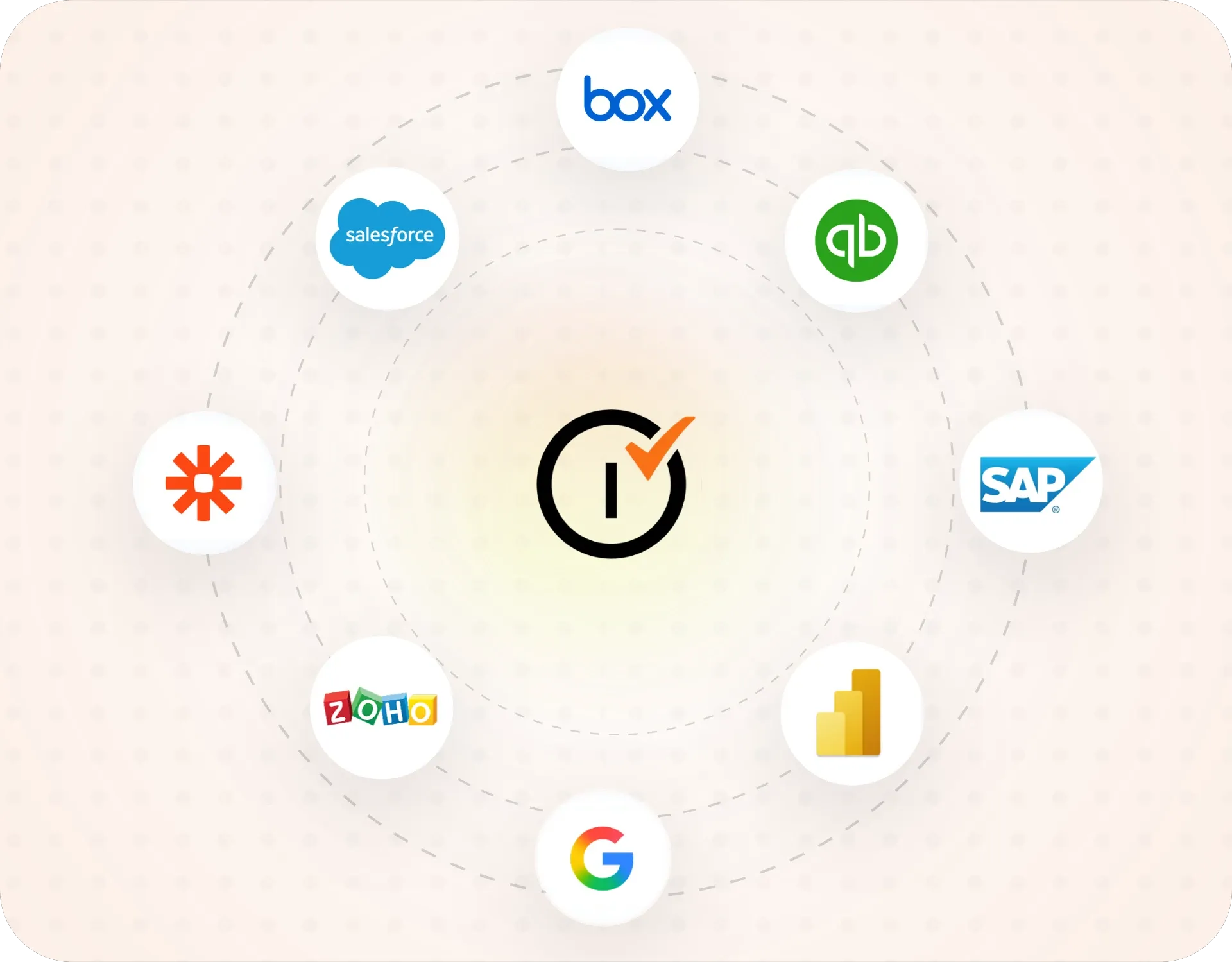
Inspectly360 integrates with the tools your team already uses, including Zoho, Microsoft 365, and SAP. No double entry.
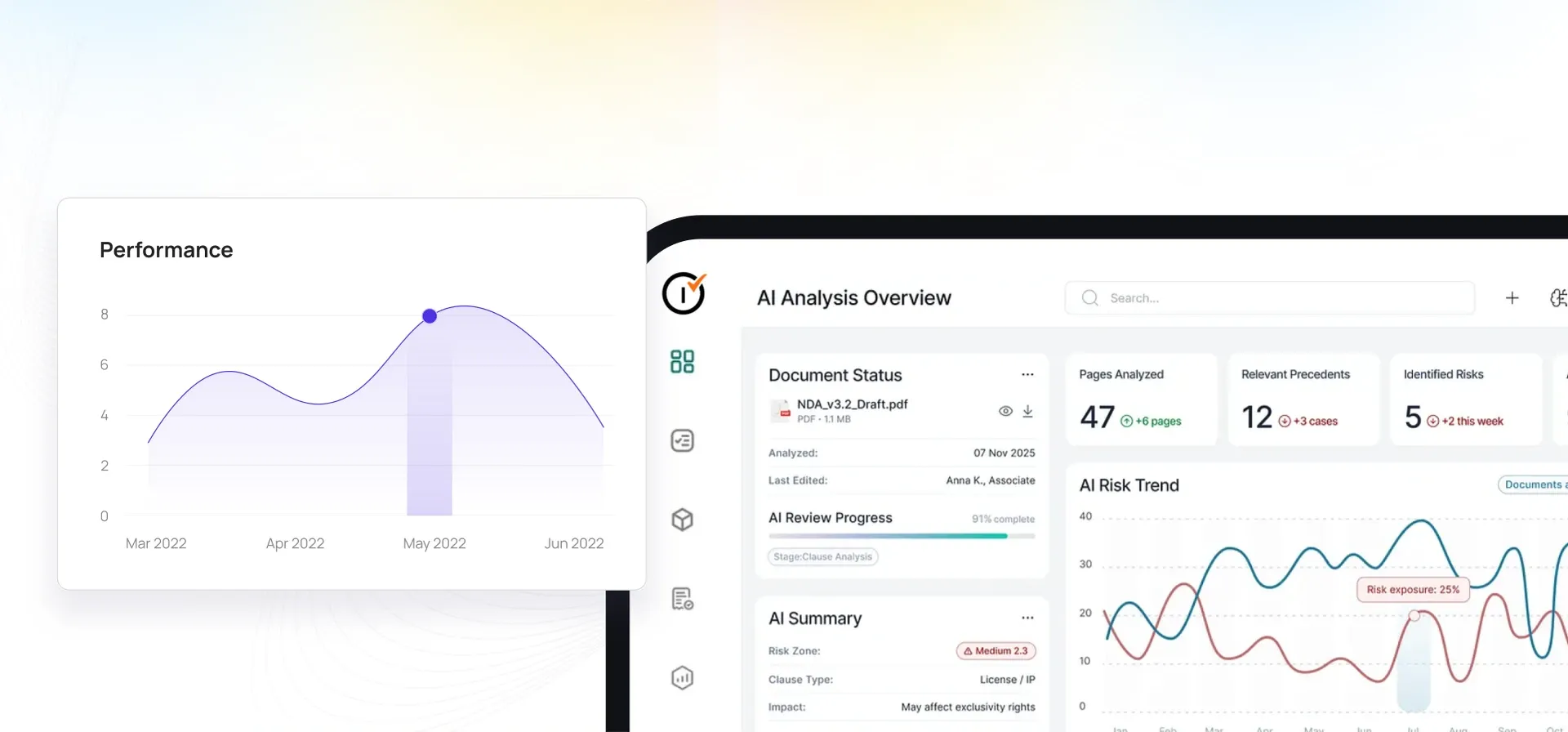
Your operations team sees completion rates, open issues, and compliance scores across all sites in real time. No chasing updates.
A mystery shopper software is a digital platform that helps businesses manage mystery shopping audits and see how their services, staff, and locations are experienced by customers. Often called secret shopper software, it lets organizations evaluate customer experience, operational standards, and compliance in a structured, repeatable way.
By using mystery shopper audit software, businesses can simplify inspection processes, standardize evaluations, and monitor performance across multiple locations. While management teams oversee operations through a centralized system, mystery shoppers use a dedicated mobile application to collect accurate, real-time audit data directly from the field.
This approach gives businesses unbiased, customer-centric feedback that drives continuous improvement and supports consistent service quality.
Most mystery shopper software platforms consist of two core components that work together:
Through the web portal, managers can create and assign customized audit checklists, schedule mystery shopping visits, monitor ongoing inspections, and analyze detailed performance reports. The platform is secure, role-based, and designed to give full visibility into operations.
On the other hand, mystery shoppers use the mobile app to access assigned surveys or checklists and capture on-site data efficiently. The app typically includes advanced features such as photo uploads, offline functionality, and automated syncing.
This real-time data flow enables businesses to quickly identify operational gaps, compliance issues, and service inconsistencies, allowing them to take immediate corrective actions.
Additionally, advanced platforms like Inspectly360 allow businesses to assign, track, and manage corrective actions directly from the dashboard, ensuring accountability and continuous improvement.
Mystery shopping software is widely used across industries where customer experience, compliance, and service quality are critical. While it is most commonly associated with retail audits and hospitality inspections, its applications extend far beyond these sectors.
Hospitality (Hotels & Resorts): Mystery shoppers evaluate the complete guest journey: booking, check-in, room cleanliness, and service quality. This helps maintain consistent brand standards across locations.
Restaurants & Food Service: Restaurants use secret shopper audits to monitor food quality, hygiene standards, service speed, and upselling techniques. Real-time insights help improve customer satisfaction and operational efficiency.
Healthcare & Assisted Living: In care homes and medical facilities, mystery shopping ensures that safety, dignity, and care standards are consistently maintained. It provides an unbiased view of patient or resident experience.
Retail Stores: Retail brands use mystery shopping to assess store layout, product availability, visual merchandising, and staff performance. Photo-based audits provide real-time visibility into store execution.
Banking & Financial Services: Banks use mystery shopping to evaluate customer service quality, regulatory compliance, and staff professionalism, especially during complex customer interactions.
Overall, any industry that relies on customer interaction, service delivery, or strict compliance standards can significantly benefit from implementing mystery shopper software.
Secret shopper software provides an all-in-one platform that simplifies audit management, improves operational visibility, and enhances decision-making.
Solutions like Inspectly360 give organizations one place to implement, monitor, and evaluate mystery shopping programs as they scale across locations.
With real-time synchronization between mobile apps and web dashboards, businesses can instantly access audit data. This eliminates delays and allows for faster analysis and immediate corrective actions.
Customizable checklists and standardized workflows ensure that all mystery shoppers follow the same evaluation criteria. This consistency leads to reliable and comparable data across multiple locations.
Mystery shoppers can capture photos, videos, and detailed observations during audits. These are automatically attached to reports, along with auto-generated scores and visual analytics, helping businesses identify patterns and recurring issues.
Businesses can improve transparency by sharing audit results and performance insights with stakeholders or clients. This strengthens trust and fosters better collaboration.
By combining data collection, reporting, and analytics into a single platform, businesses can reduce operational costs, eliminate manual processes, and save time while improving efficiency.
Mystery shopping software should include a comprehensive set of features designed to deliver actionable insights and improve customer experience management.
The platform should allow businesses to create fully customizable checklists and surveys tailored to specific locations, departments, or service standards.
Many platforms like Inspectly360 also provide pre-built templates that can be easily modified, allowing businesses to adapt quickly without starting from scratch.
An effective scheduling system helps plan and automate mystery shopping visits. Features like notifications and reminders ensure audits are conducted on time across all locations.
A dedicated mobile app is essential for fast, reliable data collection. It should enable auditors to complete checklists, upload media, and submit reports directly from the field.
Offline functionality is critical for remote locations, allowing data to sync automatically once connectivity is restored.
The ability to capture and upload photos (and optionally videos or audio) provides strong visual evidence of findings, improving the accuracy and credibility of audit reports.
Geo-tagging ensures that audits are conducted at the correct location, while time stamps provide context for when inspections took place. These features enhance data authenticity and reliability.
Instant reporting capabilities allow businesses to generate and share audit reports immediately. This accelerates issue resolution and reduces manual effort.
The software should enable managers to assign corrective actions directly from audit findings and track their progress over time, ensuring accountability and continuous improvement.
Advanced analytics tools help businesses identify trends, measure KPIs, compare performance across locations, and uncover recurring issues.
Visual dashboards with graphs and charts make it easier for stakeholders to interpret data and make informed decisions.
A centralized dashboard provides a real-time overview of all audits, performance metrics, and operational insights, enabling better control and faster decision-making.
Choosing the right mystery shopping software is crucial for maximizing ROI and ensuring long-term scalability.
Different platforms offer varied pricing models: some charge per user, others charge by audit volume.
For example, Inspectly360 defines a "user" as someone with dashboard access, meaning businesses do not incur additional costs for mystery shoppers using only the mobile app.
The software should grow with your business. Whether you expand to new locations or increase audit frequency, the platform should handle increased demand without requiring major changes.
Look for flexible pricing plans and modular features that allow easy scaling.
An intuitive interface ensures both managers and mystery shoppers can use the platform efficiently with minimal training.
Cross-device compatibility, especially on mobile, is essential for smooth field operations.
Real-time data capture and reporting are critical for quick decision-making. Platforms like Inspectly360 enable instant insights, helping businesses respond proactively to issues and maintain high service standards.
Each finding carries photo and GPS evidence captured during the visit, so the report is anchored to a place and a time rather than to a reviewer's account of it. That matters in mystery shopping more than in most inspection work, because the whole programme depends on the visit being genuine and the reviewer is usually working alone and unannounced. If a location questions a result, the evidence attached to the scorecard answers it directly. It also protects good reviewers, whose work is otherwise easy to dispute simply because nobody else was there. Because the report is produced the moment the visit is submitted, there is no window in which results can be revised after the fact.
That is the purpose of a standardised scorecard. Every reviewer works from the same criteria in the same order, so a score reflects the location rather than who happened to visit it. Without that, benchmarking is meaningless, because a generous reviewer and a strict one produce numbers that cannot be compared and the resulting league table measures personalities. Consistent criteria also make coaching defensible, since a manager being shown a low score can see the specific standard that was missed rather than an overall impression. Performance trends then become usable, because a change in a location's score over time reflects a change in the location and not a change in the rota.
Notifications fire the moment a critical finding is logged, rather than waiting for the visit report to be circulated. The distinction matters because mystery shopping usually operates on a reporting cycle, and a serious issue found on the first of the month is of little use to anyone if it surfaces in a summary three weeks later. Routing it immediately means a food safety lapse, a licensing problem, or a service failure gets attention while it is still today's problem. The full scorecard still follows as the formatted report, so the immediate alert does not replace the record. It simply stops the most urgent findings travelling at the speed of the slowest part of the process.
Access is controlled by role, and programmes run through a review workflow before results are published. This exists because mystery shopping results are sensitive: they name locations, they influence bonuses and coaching conversations, and a result released before it has been checked can do real damage if a reviewer has misapplied a criterion. Keeping visibility scoped means a regional manager, a brand standards team, and an individual location manager each see what is appropriate to them rather than everything. It also keeps the programme credible with the locations being measured, because results arrive through a known process rather than appearing to circulate informally before anyone official has looked at them.
The useful shift is from a score to the evidence behind it. A number on its own invites argument and defensiveness, while an annotated photo of the specific shortfall gives a manager something concrete to work through with their team. Performance trends then show where coaching is actually needed, which is rarely where the last bad visit happened. A location that scores poorly once usually had a bad shift, while a location drifting downward over several visits has a process or staffing problem worth someone's time. Using trends to direct coaching effort, and evidence to make the conversation specific, is what separates a programme that improves standards from one that only records them.
Book a free demo. We will configure this feature against your workflow and show how it runs at your sites.

