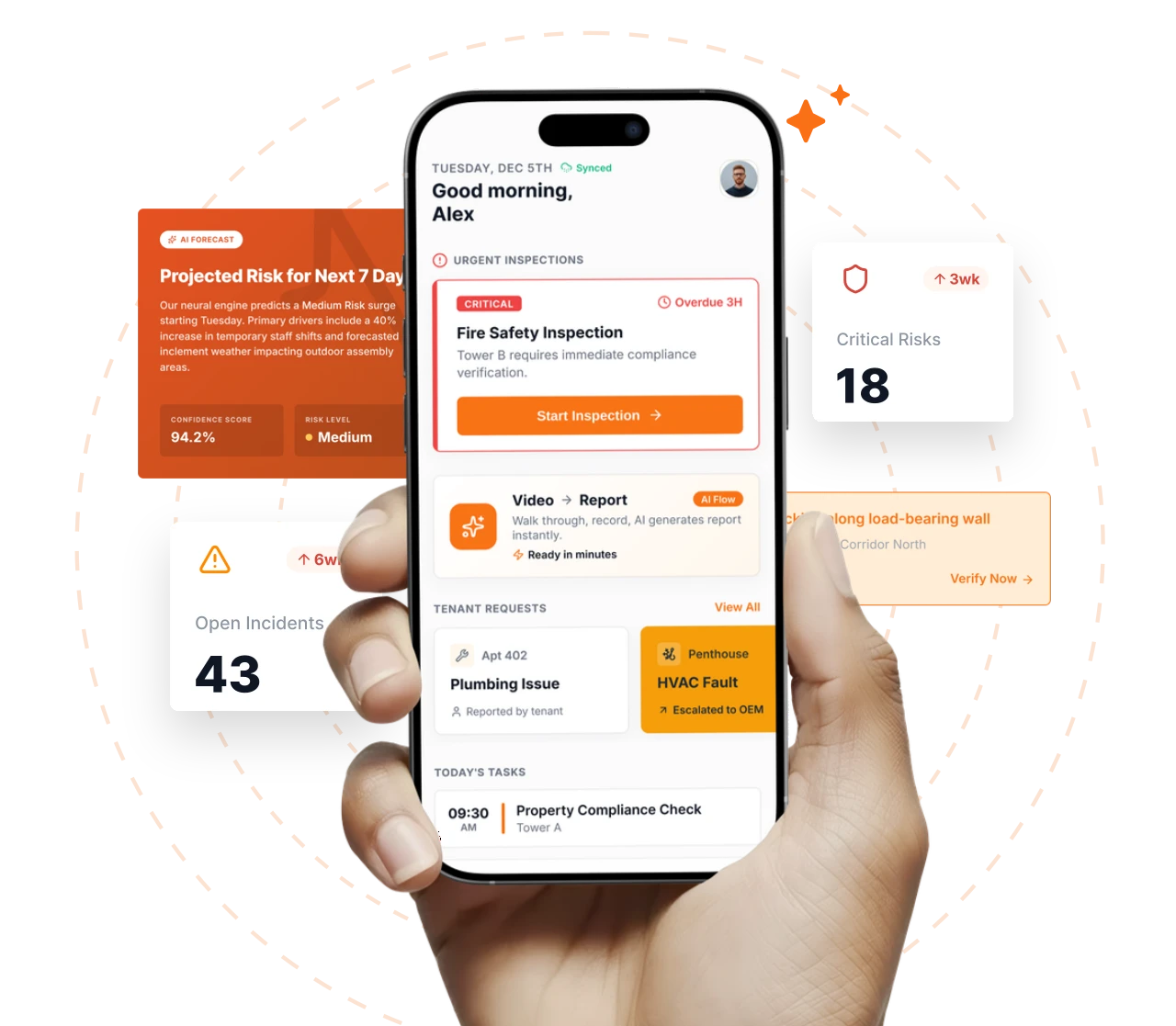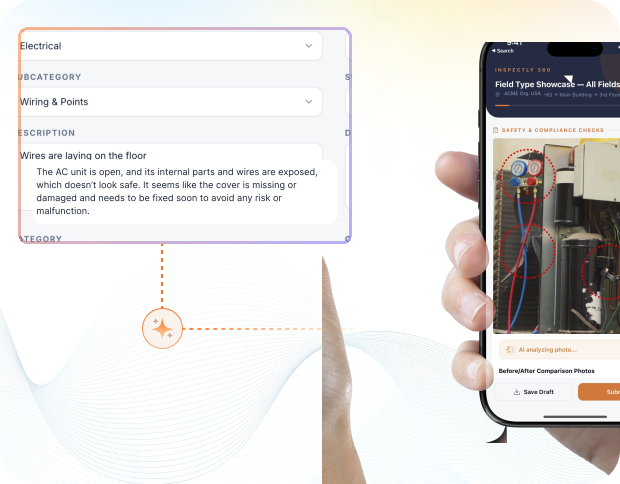
Take a Photo. AI Fills the Form
Your inspector takes a photo of any asset or defect. AI reads it and fills the inspection form automatically. No typing. No manual entry.

Convert your checklist into Mobile App
Building inspection tracking software is the operational visibility layer for building portfolios. It tracks every snag from log through verified closure, every statutory deadline through renewal cycles, every defect through its contractual liability period, every contractor's closure performance against SLA, and every building's condition decay trend for capex planning. Inspectly360 consolidates these five dimensions into one structured record per building, per snag, per contractor, per statutory obligation rather than fragmenting them across Excel snag lists, contractor emails, AMC vendor spreadsheets, and property manager memory.
Everything your field team does on paper, Inspectly360 does automatically: faster, more accurate, and without the admin.
Your inspector takes a photo of any asset or defect. AI reads it and fills the inspection form automatically. No typing. No manual entry.
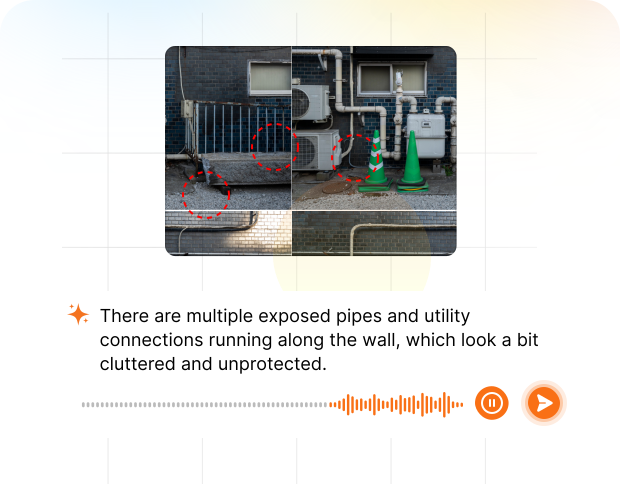
Inspectors speak their observations in any language. AI transcribes and fills the form in real time. Completely hands-free in the field.
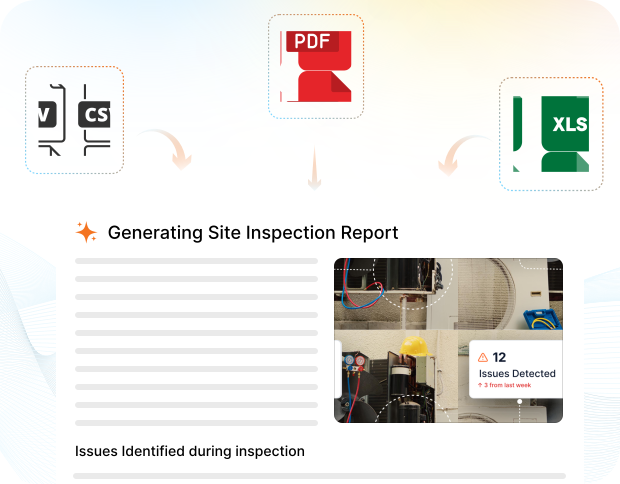
The moment an inspection is submitted, a branded PDF, Excel, or CSV report generates automatically. No manual work. No waiting.

Inspectly360 integrates with the tools your team already uses, including Zoho, Microsoft 365, and SAP. No double entry.
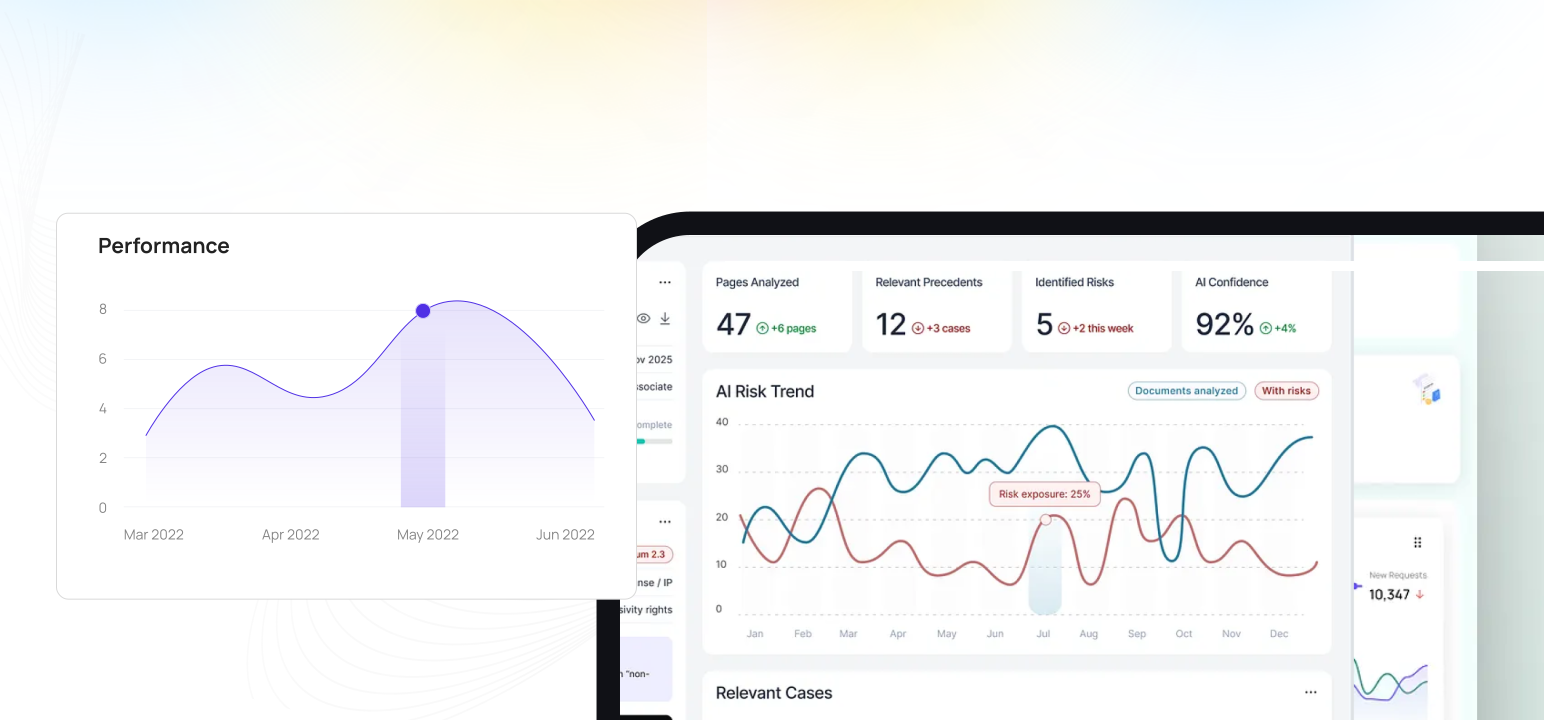
Your operations team sees completion rates, open issues, and compliance scores across all sites in real time. No chasing updates.
What changes once building inspection tracking software runs on one mobile-first platform with photo proof and live dashboards.
Building inspection tracking software is the operational visibility layer for building portfolios. It tracks every snag from log through verified closure, every statutory deadline through renewal cycles, every defect through its contractual liability period, every contractor's closure performance against SLA, and every building's condition decay trend for capex planning. Inspectly360 consolidates these five dimensions into one structured record per building, per snag, per contractor, per statutory obligation rather than fragmenting them across Excel snag lists, contractor emails, AMC vendor spreadsheets, and property manager memory.
The problem most building portfolios share is dispute exposure. Snags that 'closed' in WhatsApp resurface as tenant complaints; defects in the liability period get challenged at warranty expiry; statutory renewals lapse silently between cycles; contractor renewals happen on relationship rather than data. Inspectly360 ends the exposure by giving each tracked dimension its own structured record with owners, deadlines, evidence, and audit trail retained through the relevant cycle.
The outcome is governance by evidence rather than by recollection. Snag disputes meet timestamped photo verification. DLP expiry conversations rest on tracked closure data, not on whose memory is louder. Statutory renewals happen 90 days proactively rather than at the authority visit. Contractor renewals open with six months of structured scorecard data. Capex planning rests on photo-backed condition trends rather than on the loudest property manager.
Most portfolio managers turn on tracking in this order before expanding the tracked dimensions across the full building portfolio.
Agree the dimensions that matter: snag closure time by severity, statutory deadline adherence, defects liability period closure rate, contractor scorecard, building condition trend. Each KPI ties to a dispute-exposure target (snag dispute rate, DLP cost-allocation rate, renewal lapse rate).
Every raised snag carries owner, deadline, severity, liability-period marker, and verification rule. Status moves from open to in-progress to in-verification to closed; photo proof is required at the verification gate before closure registers.
Fire NOC, lift licence, EICR, gas safety, and occupancy renewal dates track per building. Escalation fires 90, 60, 30, 14, and 7 days before expiry to tiered roles so deadlines are anticipated, not absorbed.
Every defect carries the contractual DLP marker (typically 12 months from handover for finishing, 60 months for structural). Open defects approaching DLP expiry surface for owner-contractor cost allocation; closed defects retain evidence beyond DLP for warranty claims.
Each contractor builds up a six-month scorecard. Each building accumulates a condition trend with AI-assisted decay detection. Capex planning packs export from condition trends; renewal packs export from contractor scorecards.
Answers to common long-tail questions, kept on one canonical page to avoid thin duplicate URLs.
Capital project teams rotate. Main contractors move on after handover. Original property managers transfer to other portfolios. Snag tracking has to survive these rotations or the warranty period becomes a cost-allocation argument. Inspectly360 attaches each snag to the building, the obligation, the contractor (organisation rather than individual), and the DLP marker. Personnel rotation does not break the snag chain. When a new property manager inherits a building, the open snag list and the DLP-relevant defects are immediately visible with full context.
DLP disputes at warranty expiry typically turn on three questions: was the defect raised within the DLP, did the contractor close it within the contractual response window, and is the closure verified by photo evidence. Inspectly360 retains the answer to all three per defect. The DLP expiry dashboard surfaces defects that need owner-contractor resolution before the warranty window closes. Closed defects retain evidence post-DLP for any subsequent warranty claim. This structured evidence approach typically compresses DLP disputes from weeks of email argument to days of evidence review.
Statutory deadline ageing across a building portfolio is the single biggest source of compliance failure. Inspectly360 implements tiered escalation: a fire NOC due 90 days hence notifies the building manager; 60 days notifies the property manager; 30 days notifies the portfolio manager; 14 days escalates to the head of compliance; 7 days escalates to the FM director. Tiered escalation prevents the single-person dependency that lets renewals lapse when the responsible owner is on leave or has rotated out. The deadline pipeline is portfolio-visible so quarterly governance reviews see what is approaching.
Capex planning typically runs on five-year cycles with annual updates. Inspectly360 feeds capex planning by tracking building condition trends from condition inspections, snag patterns, and statutory inspection findings. AI-assisted decay detection identifies buildings whose condition score is degrading faster than expected, assets approaching end-of-life, and systems showing recurring failure. The capex planning pack exports the trend data per building with forward-looking forecasts so the next budget cycle starts on evidence rather than on the loudest property manager's wish list.
The platform capabilities that power building inspection tracking software across every site.
Property managers, building owners, main contractors, and capex planning teams comparing Inspectly360 to property management system tracking, Excel snag lists, and email-driven follow-up see the difference fastest on five dimensions: snag closure verification, statutory deadline ageing discipline, defects liability period tracking, contractor performance defensibility, and building condition decay trend evidence for capex planning.
| Topic | Typical Gaps | With Inspectly360 |
|---|---|---|
| Snag closure verification | Snags 'closed' by contractors with WhatsApp photos. Tenants raise the same issue weeks later because nobody verified the fix; disputes drag on without evidence. | Every snag tracked from log through assignment to photo-verified closure. Contractors upload proof; property managers verify before closure moves to closed. |
| Statutory deadline ageing | Open statutory items age silently. Fire NOC and lift licence renewals discovered when a tenant complains or an authority visits unannounced. | Time-based escalation rules notify property managers, owners, and statutory contractors 90, 60, 30 days before fire NOC, lift licence, EICR, occupancy renewals expire. |
| Defects liability period tracking | Defects raised in the 12-month liability period after handover live in contractor emails. The warranty window closes without anyone reconciling open items against the contract. | Every snag carries a liability-period marker. Open defects approaching DLP expiry surface for owner-contractor cost allocation; closed defects retain evidence post-DLP. |
| Contractor performance scorecard | Contractor performance discussed at the renewal meeting based on relationship perception. Renewal decisions sit on instinct, not data. | Live contractor scorecards track on-time closure, repeat-snag rate, quality scores, SLA breach frequency per statutory cycle. Renewal conversations sit on structured data. |
| Building condition decay trend for capex | Building condition tracked in property manager memory. Capital replacement decisions sit on anecdote rather than photo-backed history per property. | Every condition inspection photo attaches to the building record. AI trends wear and decay across cycles; capex planning sits on evidence with forward-looking forecasts. |
What changes once building inspection tracking software is standardised on Inspectly360.
Get started with inspection and audit checklist templates.
This checklist is designed for conducting thorough workplace inspections to identify hazards and ensure compliance with safety regulations. It promotes...

This template is used to conduct a fire extinguisher inspection every 30 days to determine if the equipment meets the...
Use these apps to run inspections and audits.

by Inspectly360
Building condition and compliance inspections with evidence and follow-ups.

by Inspectly360
Property and real estate inspections, condition reports, and tenant checks.

by Inspectly360
Streamline facilities inspections with forms, photos, and reports.

by Inspectly360
Audits and inspections with scoring, evidence, and reports.

by Inspectly360
Compliance-focused inspections with evidence and audit trails.
A raised snag becomes a tracked task with an assigned contractor (typically the main contractor for capital projects, the AMC vendor for operational snags, or the in-house maintenance team for routine issues), a deadline, a severity classification, and a verification rule. Status moves open to in-progress to in-verification to closed. The verification rule scales with severity: low-severity snags may close on a self-attested contractor photo, medium-severity require a property manager sign-off after photo upload, high-severity and Critical require a re-inspection with photo proof and a named approver before closure registers. The audit trail records every state change with timestamp and actor.
Each building carries its statutory obligation register (fire NOC, lift licence, EICR, gas safety, occupancy certificate, RERA documentation). Each obligation has a renewal date and a tiered escalation policy. The standard pattern: 90 days before expiry notifies the building manager, 60 days notifies the property manager, 30 days notifies the portfolio manager, 14 days escalates to the head of compliance, 7 days escalates to the FM director. Tiered escalation across roles prevents the single-person dependency that lets renewals lapse when the responsible owner is on leave or has rotated out. The portfolio dashboard surfaces the rolling pipeline so quarterly governance reviews see what is approaching.
Each contractor builds up a six-month scorecard across five dimensions: on-time closure rate (weighted 40 percent), mean time to respond (20 percent), repeat-snag rate (20 percent), evidence quality (10 percent), SLA breach frequency (10 percent). Methodology is configurable per contract: a lift maintenance AMC may weight closure timeliness heavily, while a snag-closure subcontractor may weight repeat-snag rate. Scorecards are visible to the contractor so renewal conversations are predictable rather than ambushes. The underlying breach and closure trail is retained for evidence; renewal-review packs export the scorecard with the supporting data.
Building condition decay tracking aggregates condition inspections, snag patterns, statutory inspection findings, and AI-assisted photo analysis into a building condition score that updates per inspection cycle. AI detects decay faster than expected, identifies systems approaching end-of-life, and surfaces recurring failure patterns. Capex planning packs export the trend data per building with forward-looking forecasts: which buildings need major intervention in the next 12 months, which are stable, which are degrading faster than the portfolio norm. This shifts capex prioritisation from the property manager's wish list to evidence-backed replacement schedules.
Every defect carries a DLP marker. The marker records the contractual DLP duration (typically 12 months for finishing, 60 months for structural under most building contracts, longer under RERA for structural), the handover date that anchors the DLP, and the cost-allocation policy. Defects raised within DLP are contractor-liable; defects raised after DLP are owner-liable absent specific warranty terms. The DLP expiry dashboard surfaces defects approaching the warranty window close so owner-contractor cost-allocation conversations happen before DLP expiry rather than after. Closed defects retain evidence post-DLP for any subsequent warranty or insurance claim.
Snag dispute resolution typically turns on five evidence questions: was the snag raised within the contractual window, was it documented with adequate photo evidence, was the assigned contractor notified, was closure attempted within the SLA, and is closure verified by photo proof. Inspectly360 retains evidence against each of these per snag with timestamps, signatures, and chain of custody. Snag dispute packs export with the full evidence chain. This structured approach typically converts disputes from weeks of WhatsApp argument and email reconstruction to a same-day evidence review. Both tenants and owners benefit from defensible structured evidence.
Building Inspection Tracking Software on Inspectly360 connects directly to the inspection apps, checklist templates, forms, industries, and adjacent solutions linked below.
See Inspectly360 in action with a live demo tailored to your needs. No credit card required.