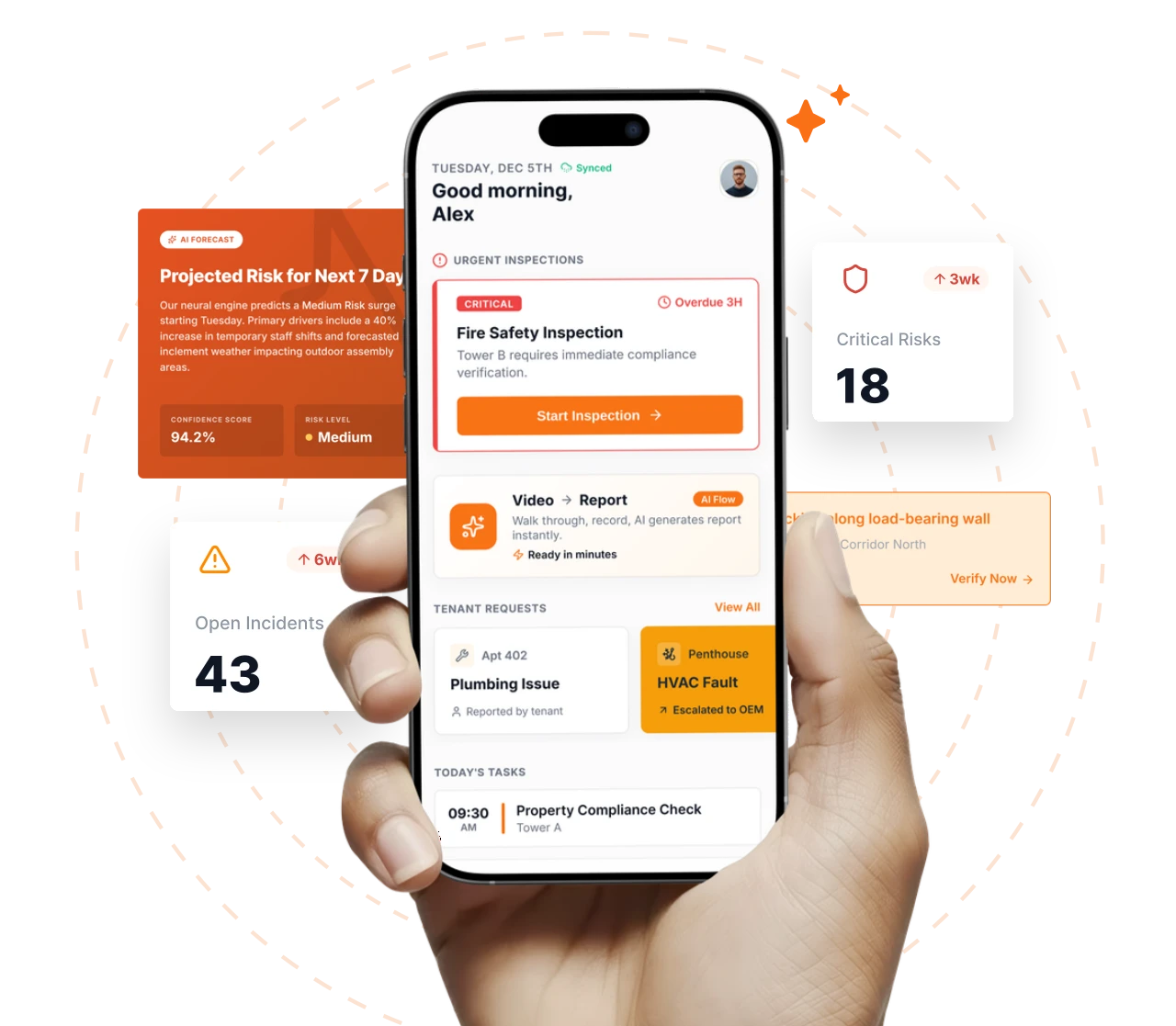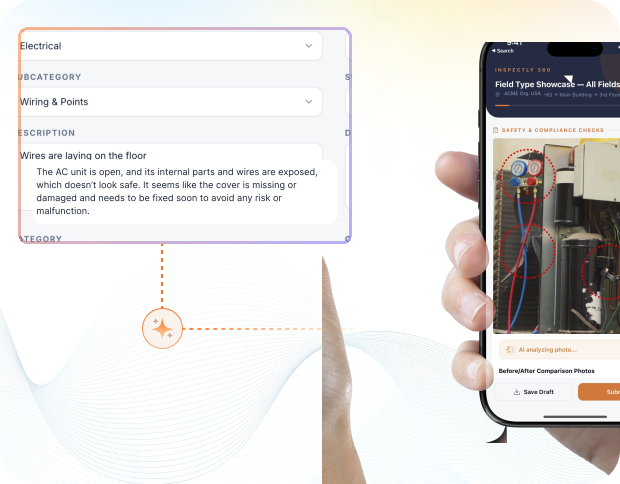
Take a Photo. AI Fills the Form
Your inspector takes a photo of any asset or defect. AI reads it and fills the inspection form automatically. No typing. No manual entry.

Convert your checklist into Mobile App
corridor inspection compliance software is a structured system that Hospital Estates Leads, Fire Safety Managers, and Responsible Persons use to map regulatory obligations to field workflows and produce statutory evidence chains regulators accept across primary egress routes. Corridor inspection compliance software mapping fire safety, BS 5266 emergency lighting, and ADA routes to workflows with statutory clocks and event logs.
Everything your field team does on paper, Inspectly360 does automatically: faster, more accurate, and without the admin.
Your inspector takes a photo of any asset or defect. AI reads it and fills the inspection form automatically. No typing. No manual entry.
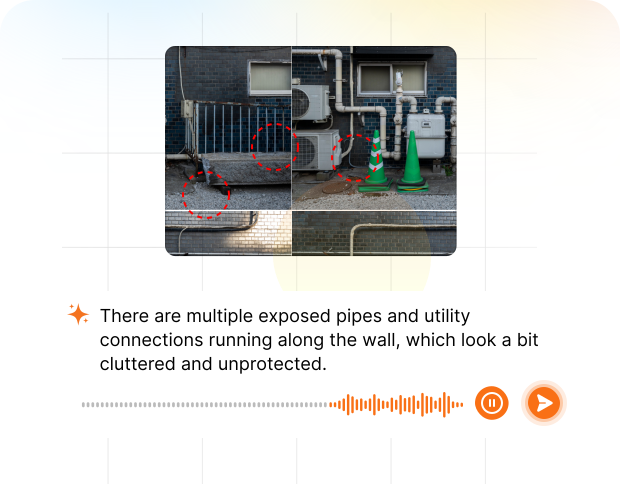
Inspectors speak their observations in any language. AI transcribes and fills the form in real time. Completely hands-free in the field.
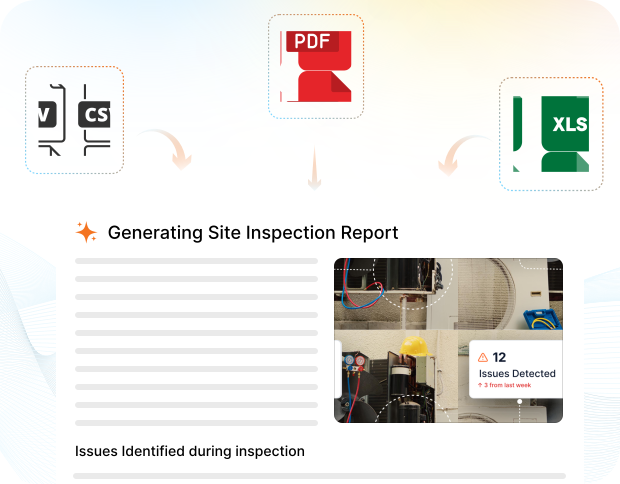
The moment an inspection is submitted, a branded PDF, Excel, or CSV report generates automatically. No manual work. No waiting.

Inspectly360 integrates with the tools your team already uses, including Zoho, Microsoft 365, and SAP. No double entry.
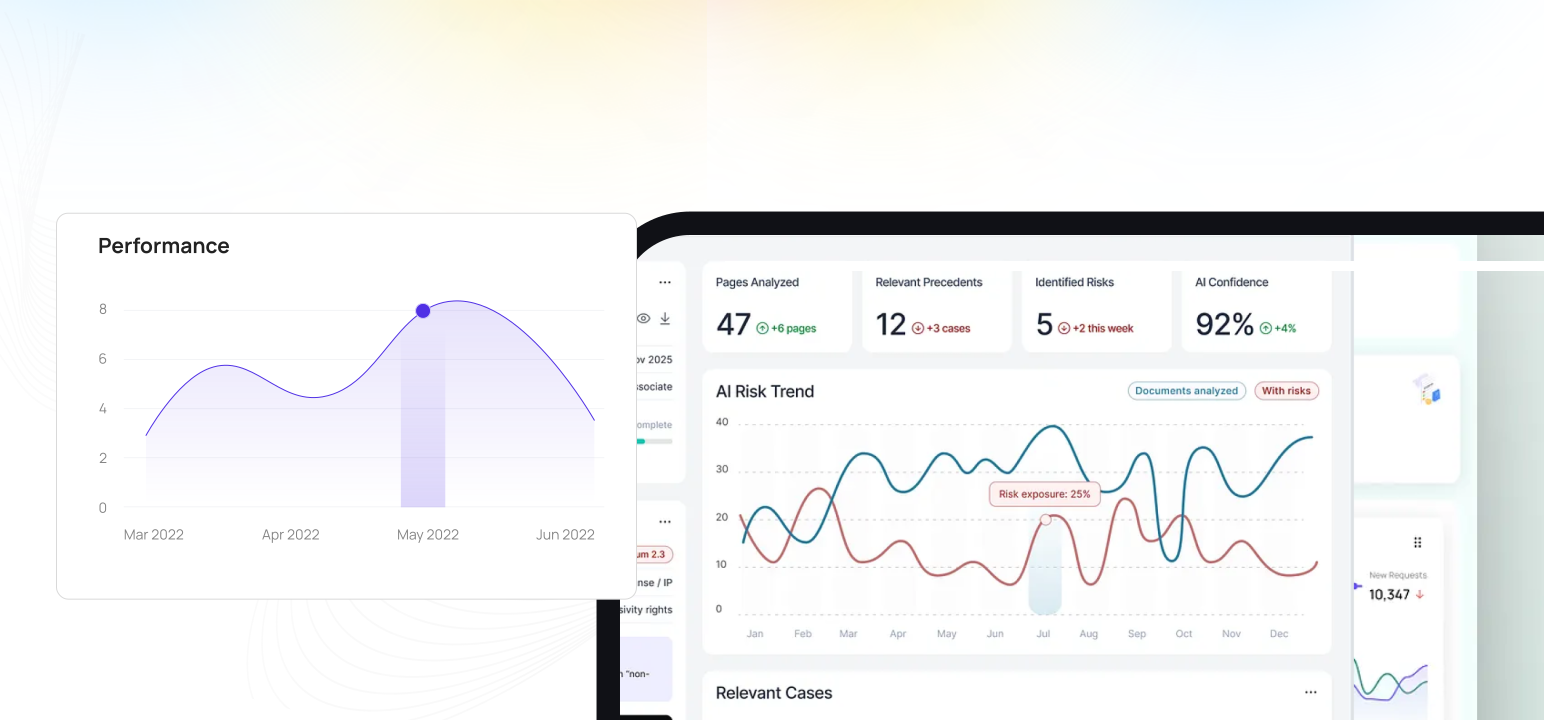
Your operations team sees completion rates, open issues, and compliance scores across all sites in real time. No chasing updates.
What changes once corridor inspection compliance software runs on one mobile-first platform with photo proof and live dashboards.
corridor inspection compliance software is a structured system that Hospital Estates Leads, Fire Safety Managers, and Responsible Persons use to map regulatory obligations to field workflows and produce statutory evidence chains regulators accept across primary egress routes. Corridor inspection compliance software mapping fire safety, BS 5266 emergency lighting, and ADA routes to workflows with statutory clocks and event logs. Inspectly360 captures photo evidence, offline mobile rounds, statutory renewal clocks, and audit-ready exports for every programme.
For field teams, compliance workflows connect directly to mobile capture already running on site. Failed items, audit findings, compliance gaps, and overdue closures feed the compliance layer automatically without parallel spreadsheet maintenance.
For leadership, compliance replaces compiled status decks with operational data that updates from every completed walk. Trends, exceptions, and portfolio comparisons use the same evidence record auditors and regulators will ask for later.
Teams typically implement corridor compliance workflows in this sequence before scaling across every site.
corridor compliance programmes establish the operating discipline inspectors and managers rely on daily. Site-specific overrides attach without breaking the corporate baseline; evidence stays linked to the asset record from capture through closure.
On every corridor inspection compliance cycle, corridor compliance programmes establish the operating discipline inspectors and managers rely on daily. Site-specific overrides attach without breaking the corporate baseline; evidence stays linked to the asset record from capture through closure.
For Healthcare teams running corridor inspection compliance, corridor compliance programmes establish the operating discipline inspectors and managers rely on daily. Site-specific overrides attach without breaking the corporate baseline; evidence stays linked to the asset record from capture through closure.
In Healthcare corridor inspection compliance operations, corridor compliance programmes establish the operating discipline inspectors and managers rely on daily. Site-specific overrides attach without breaking the corporate baseline; evidence stays linked to the asset record from capture through closure.
Across the corridor inspection compliance portfolio, corridor compliance programmes establish the operating discipline inspectors and managers rely on daily. Site-specific overrides attach without breaking the corporate baseline; evidence stays linked to the asset record from capture through closure.
Answers to common long-tail questions, kept on one canonical page to avoid thin duplicate URLs.
Inspectly360 sits as the corridor compliance evidence layer beside Planon, IBM TRIRIGA, Archibus, FSI Concept Evolution, MRI Manhattan, and contractor tools already in place. Those systems stay the system of record for lease, space, and PPM. Inspectly360 produces structured inspection evidence, scoring, and SLA defensibility those platforms reference but do not collect.
Single-site teams typically pilot the most painful programme first and measure completion rate, closure time, and compile hours saved. Multi-site operators pilot one programme across three to five sites and measure cross-site consistency. In every case the pilot keeps the existing CAFM as the system of record while Inspectly360 produces the compliance layer on top.
Corridor operations involve multiple parties: building owner, FM aggregator, contractors, accessibility advisors, and regulators. RBAC scopes each party to entitled inspections and evidence. Contractor self-certification is replaced by QR-scan and GPS-verified inspector identity. Tenant-facing and regulator-facing reports stay scoped to what each stakeholder is entitled to see.
Procurement and legal should validate SSO via SAML or OIDC, granular RBAC, offline capture verified in real back-of-house zones, configurable retention aligned to lease and regulatory windows, export formats acceptable to auditors, and documented CAFM integration paths. Cross-jurisdiction portfolio operators align regional data residency to local data protection regulators.
The platform capabilities that power corridor inspection compliance software across every site.
Teams comparing Inspectly360 to paper logs, spreadsheets, and generic forms for corridor compliance care about five dimensions where structured evidence, compliance, and portfolio visibility outperform manual tools.
| Topic | Typical Gaps | With Inspectly360 |
|---|---|---|
| Regulatory Reform (Fire Safety) Order evidence mapping | Door-hung tick sheets, paper rotation charts, and WhatsApp cleaner photos leave regulatory reform (fire safety) order evidence mapping contested when the tenant, auditor, or regulator asks for proof. The centre manager reconstructs from memory or email threads that do not carry GPS timestamps, named inspector identity, or photo evidence per fixture. | Inspectly360 captures QR-scanned zone ID, geofenced location, timestamped photos, and named inspector sign-off so regulatory reform (fire safety) order evidence mapping is defensible on the day of the review. SLA cycles enforce on the device; missed windows raise alerts before the complaint arrives. |
| NFPA 101 and Approved Document B egress evidence | Door-hung tick sheets, paper rotation charts, and WhatsApp cleaner photos leave nfpa 101 and approved document b egress evidence contested when the tenant, auditor, or regulator asks for proof. The centre manager reconstructs from memory or email threads that do not carry GPS timestamps, named inspector identity, or photo evidence per fixture. | Inspectly360 captures QR-scanned zone ID, geofenced location, timestamped photos, and named inspector sign-off so nfpa 101 and approved document b egress evidence is defensible on the day of the review. SLA cycles enforce on the device; missed windows raise alerts before the complaint arrives. |
| BS 5266 emergency lighting compliance history | Door-hung tick sheets, paper rotation charts, and WhatsApp cleaner photos leave bs 5266 emergency lighting compliance history contested when the tenant, auditor, or regulator asks for proof. The centre manager reconstructs from memory or email threads that do not carry GPS timestamps, named inspector identity, or photo evidence per fixture. | Inspectly360 captures QR-scanned zone ID, geofenced location, timestamped photos, and named inspector sign-off so bs 5266 emergency lighting compliance history is defensible on the day of the review. SLA cycles enforce on the device; missed windows raise alerts before the complaint arrives. |
| ADA continuous-route accessibility verification | Door-hung tick sheets, paper rotation charts, and WhatsApp cleaner photos leave ada continuous-route accessibility verification contested when the tenant, auditor, or regulator asks for proof. The centre manager reconstructs from memory or email threads that do not carry GPS timestamps, named inspector identity, or photo evidence per fixture. | Inspectly360 captures QR-scanned zone ID, geofenced location, timestamped photos, and named inspector sign-off so ada continuous-route accessibility verification is defensible on the day of the review. SLA cycles enforce on the device; missed windows raise alerts before the complaint arrives. |
| Cross-jurisdiction fire safety compliance pack export | Door-hung tick sheets, paper rotation charts, and WhatsApp cleaner photos leave cross-jurisdiction fire safety compliance pack export contested when the tenant, auditor, or regulator asks for proof. The centre manager reconstructs from memory or email threads that do not carry GPS timestamps, named inspector identity, or photo evidence per fixture. | Inspectly360 captures QR-scanned zone ID, geofenced location, timestamped photos, and named inspector sign-off so cross-jurisdiction fire safety compliance pack export is defensible on the day of the review. SLA cycles enforce on the device; missed windows raise alerts before the complaint arrives. |
What changes once corridor inspection compliance software is standardised on Inspectly360.
Get started with inspection and audit checklist templates.

Standard site-level inspections for construction, safety, and compliance. Capture conditions, photos, and follow-ups in one place.

Inspect assets and equipment: condition, location, photos, and maintenance history. Track condition over time.

Complete work orders with checklist items, photos, and sign-off. Track completion and proof of work.

Preventive and corrective maintenance inspections. Log repairs, parts, and condition with photos and follow-ups.
Use these apps to run inspections and audits.

by Inspectly360
Inspect corridor with structured checks, photo evidence, and corrective action tracking.

by Inspectly360
Run corridor inspections on phones and tablets with offline forms, photo evidence, and instant reports.

by Inspectly360
Audit corridor inspection programmes with weighted scoring, photo evidence, and corrective action tracking.

by Inspectly360
Run corridor inspections on Android phones and rugged tablets with offline forms and photo capture.
Corridor compliance software produces evidence chains across Approved Document B, BS 9999, NFPA 101, the Regulatory Reform (Fire Safety) Order 2005, BS 8214, the FDIS scheme, BS 5266, ADA Title III, HTM 64, and Joint Commission EOC, all backed by audit-grade event logs that cannot be silently edited. That gives the Responsible Person a defensible record against the overlapping fire and life-safety obligations a corridor carries, rather than a separate evidence set for each. When a fire authority or an FDIS assessor asks how the escape routes and fire doors meet their duties, the answer is an export of evidence captured as the work happened, not a reconstruction assembled after the question is asked. Because the same inspection data serves every framework, one corridor programme satisfies the fire, egress, and accessibility requirements together.
Statutory clocks track the fire NOC renewal, the ADA audit cycle, the FDIS cycle, the BS 5266 emergency-lighting cycle, and the fire risk assessment, each with 30, 60, and 90 day alerts ahead of the deadline. An overdue obligation escalates before the regulatory deadline passes rather than surfacing once it has already lapsed, so an expired fire risk assessment or a missed BS 5266 test is caught while there is still time to act. This matters because corridor compliance failures are rarely dramatic on the day; they are quiet lapses, a function test that slipped or an FDIS cycle nobody booked, that only become visible when a fire officer looks or, worse, in an actual evacuation. Putting each obligation on a tracked clock with staged alerts turns life-safety compliance from a thing the team hopes is current into a live position they can see and act on.
Compliance evidence exports carry the structured rubric results, photo evidence, named inspector sign-off, and GPS timestamps, in formats acceptable to fire authorities and FDIS assessors. That means a reviewer receives a complete, structured record rather than a loose set of photos or an unsupported assertion that the escape routes are safe. Because each fire door and each luminaire is evidenced individually, a fire officer can see exactly which assets were checked and how, rather than taking the result on trust. The export is produced from the same inspection data captured during normal egress walks, so it is available on demand for an enforcement visit rather than commissioned specially each time, which is what turns a fire-authority visit from a scramble into a straightforward handover of a record that already exists.
Obligation registers map the fire and life-safety requirements to the scheduled walks, with mandatory evidence rules so the proof each obligation demands has to be captured before a walk can close. Overdue obligations escalate before their deadlines pass, so a missed function test or fire-door audit surfaces as an alert rather than as a gap discovered at inspection. That means the specific duties that apply to a corridor, under the Fire Safety Order, BS 5266, and the FDIS scheme, are built into the routine the team already runs rather than living in a separate compliance document nobody references on shift. Because the obligations are tied to the schedule, a route that needs a more frequent check gets it automatically, and the evidence that the duty was met is a by-product of the routine work rather than a separate exercise.
Export profiles scope each pack to the fields appropriate for its recipient: fire-authority packs exclude commercial data, GDPR exports exclude internal CAPA commentary, and tenant packs include only the lease-relevant performance metrics. That means one underlying record can be shared safely with very different audiences, each seeing what they need and nothing they should not. A fire authority gets the structured fire-door and egress evidence without the commercial detail; a tenant gets the relevant performance without the internal remediation discussion. Because the scoping is built into the export profile rather than done by hand each time, there is no risk of an internal note or a piece of personal data slipping into a regulator or tenant disclosure, which is exactly the kind of error manual redaction tends to produce.
When a fire-safety regulation or standard changes, the template version update links to the relevant obligation-register entries with documented effective dates, and the version history is preserved, so the change is tracked rather than applied silently. It is always clear which version of the rubric a given walk was run against and when the building moved to the updated requirement. That matters because compliance is judged against the standard in force at the time, so being able to show that each egress walk met the rules that applied on the day, and that the programme moved to the new rules on a recorded date, is what protects the Responsible Person when a standard such as BS 5266 or NFPA 80 is revised. The update flows from the obligation register to the scheduled walks, so the change reaches the field rather than staying in a document.
Corridor Inspection Compliance Software on Inspectly360 connects directly to the inspection apps, checklist templates, forms, industries, and adjacent solutions linked below.
See Inspectly360 in action with a live demo tailored to your needs. No credit card required.