
“Inspectly360 transformed how we manage site safety inspections. The offline capability alone saved us countless hours. Our compliance rate jumped from 72% to 96% in just three months.”
Sarah Mitchell
Meridian Construction Group

Convert your checklist into Mobile App
Looking for EV charging management software built around how your team runs its charging estate? We provide it. Inspectly360 delivers a tailored EV charging solution on our platform, configured to your sites and chargers and integrated with the charger network and energy data you already run. Book a demo to scope it.
EV charging management software manages EV charging stations, charging sessions, and energy use across sites. Inspectly360 provides an EV charging solution tailored to your operation, built on our records, maintenance, and reporting platform and configured to your sites and chargers, integrated with the charger network and energy data you already run.
Without it, EV chargers are unmanaged assets. Charging station monitoring does not exist, a broken charger is discovered by a frustrated driver, energy usage is unattributed, and there is no reporting to show utilisation or cost. As fleets electrify, the charging estate becomes a blind spot.
Charging operators standardise this loop before scaling the network.
EV charging stations are brought into one view for charger management, so the whole estate's status is visible rather than each unit standing alone.
Charging sessions and EV charger monitoring track each session and station status, so a fault or an offline charger is seen, not reported by a driver.
Energy usage is tracked and load management balances demand, so charging stays within site capacity and energy cost is controlled.
User management sets who can charge where, and remote charger management handles resets and configuration without a site visit.
Charging analytics and charging reports show utilisation, energy, and uptime, so the charging estate is managed for cost and availability.
Inspectly360 is the charging operations layer. It manages chargers, sessions, energy, access, and analytics, and connects to broader energy management and fleet systems. It owns the charging estate's operation, uptime, load, and utilisation, feeding energy and usage data to the wider systems without being absorbed into generic energy monitoring.
Validate four things in the pilot. First, that your chargers connect for monitoring and remote management. Second, that session and energy tracking work for your setup. Third, that load management fits your site capacity. Fourth, that analytics and access control meet your operation, fleet or public. Run one site so charging operations are proven before scaling the network.
Charging data supports cost, access, and reliability, so its integrity matters. Inspectly360 enforces role-based access so site operators manage their chargers and network leads see the estate. Sessions, energy, and faults are logged and retained, so utilisation, cost, and uptime can be evidenced and any charging record traced.
What EV Charging Management Software covers for your team.
Charging operators comparing Inspectly360 to unmanaged chargers see the difference on five points: uptime, session visibility, energy control, remote management, and utilisation.
| Capability | Without Inspectly360 | With Inspectly360 |
|---|---|---|
| Uptime | A broken charger is discovered by a frustrated driver, so downtime is long and reputation suffers. | EV charger monitoring flags a fault or offline unit immediately, so downtime is caught and cut. |
| Session visibility | Charging sessions are untracked, so nobody knows how the chargers are actually being used. | Charging sessions and station status are tracked, so usage of every charger is visible. |
| Energy control | Energy usage is unattributed and demand is uncontrolled, risking capacity limits and high cost. | Energy usage is tracked and load management balances demand, so charging stays within capacity and cost. |
| Remote management | Fixing or configuring a charger needs a site visit, so simple issues cause long outages. | Remote charger management handles resets and configuration, so many issues are fixed without a visit. |
| Utilisation | There is no charging analytics, so investment in chargers is not matched to how they are used. | Charging analytics show utilisation and demand, so the estate is sized and located from evidence. |
Manage every checklist in one connected workspace, capture evidence on mobile at the point of work, and let AI turn field inputs into clear, stakeholder-ready reports in minutes.


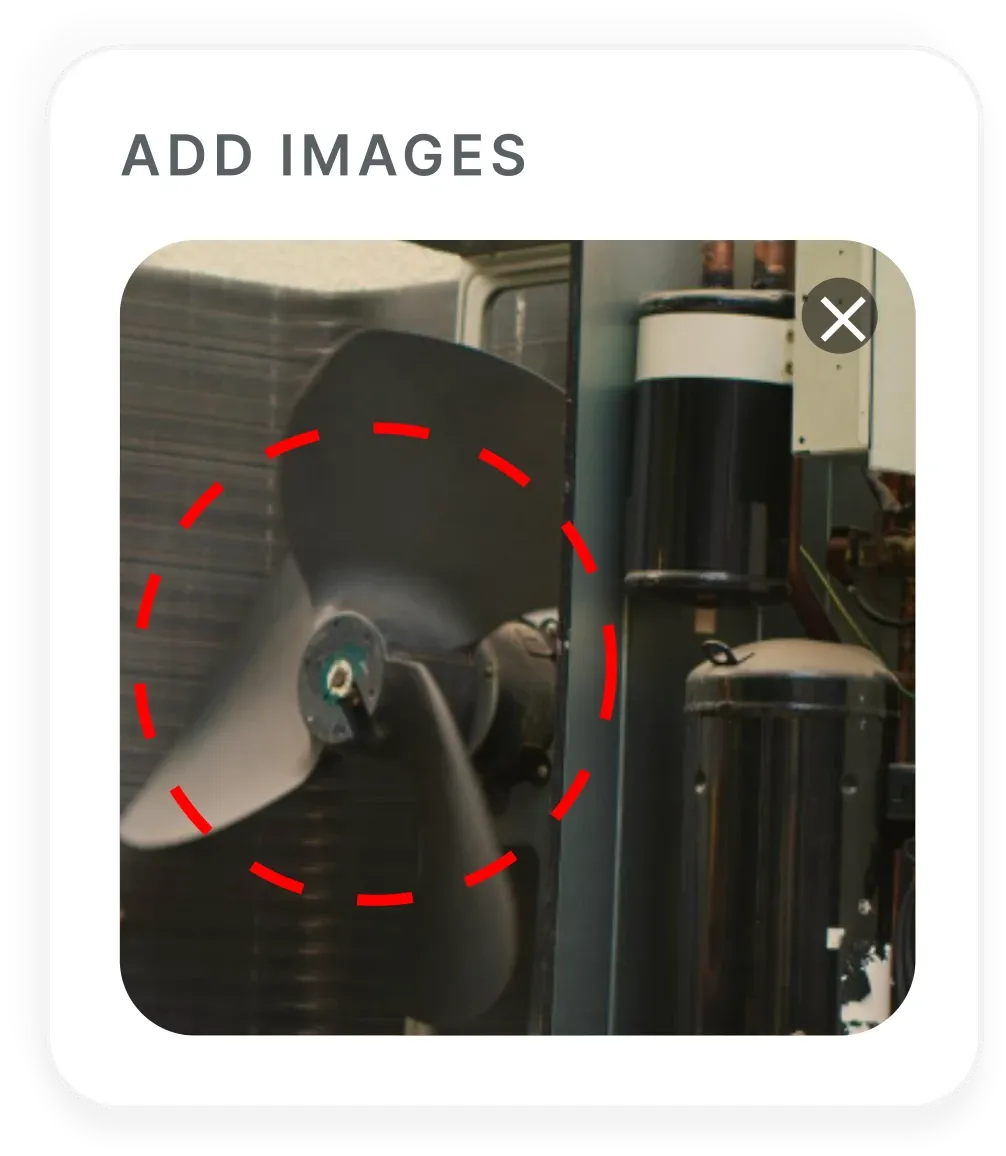


See which checklists your team has in progress across every site, jump into the same inspection with one tap, and keep field, supervisor, and back-office views in sync without sending screenshots on WhatsApp.


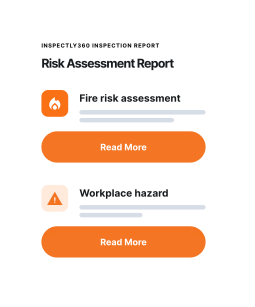



Every team reports differently. Build the report your operations, quality, or compliance leads actually want to read, share it as a branded PDF, and schedule delivery to the stakeholders who need it.

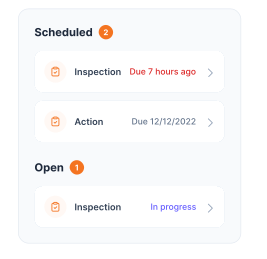

See completion, pass rate, and recurring findings across every checklist and every site, without pulling spreadsheets together at the end of the month.
What changes once ev charging management software is standardised on Inspectly360.






“Inspectly360 transformed how we manage site safety inspections. The offline capability alone saved us countless hours. Our compliance rate jumped from 72% to 96% in just three months.”
Sarah Mitchell
Meridian Construction Group

“The AI-powered defect detection has changed how we work. Our inspectors capture photos and the system flags issues we'd have missed. It's like having an expert reviewer on every site visit.”
James Chen
Pacific Manufacturing Co.
“Rolling out digital checklists across multiple projects gave us instant visibility into recurring safety issues. We now resolve critical findings in hours instead of days.”
Olivia Carter
Northbridge Infrastructure
Get started with inspection and audit checklist templates.

Prepare and validate an ENERGY STAR benchmarking submission: property and building information, reporting period, utility and meter data, electricity and fuel consumption, data completeness and validation, Portfolio Manager entry and review, and recordkeeping.

Use this Drilling Rig Daily safety check to verify critical checkpoints and safety controls, compliance records and sign-off and corrective actions with photo evidence on energy…
Use these apps to run inspections and audits.

by Inspectly360
Simplify facilities inspections with forms, photos, and reports.

by Inspectly360
Building condition and compliance inspections with evidence and follow-ups.

by Inspectly360
Digitize building inspection apps workflows with forms, evidence capture, and automated reporting.

by Inspectly360
Run building inspections on phones and tablets with offline forms, photo evidence, and instant reports.
by Inspectly360
Audit buildings with structured scoring, photo evidence, and corrective action tracking across portfolios.
EV charging management software is specifically about managing charging infrastructure: chargers, sessions, energy for charging, access, and utilisation. Generic energy or facility monitoring watches building energy and systems broadly but does not manage the charging operation, control charger access, handle sessions, or provide charging analytics. As EV adoption grows, the charging estate becomes a distinct operational domain with its own needs, uptime, session management, load balancing, and driver access, that a general monitoring tool does not address. Inspectly360 keeps this page focused on EV charging infrastructure rather than blurring into broad energy monitoring, because managing chargers well requires charger-specific capabilities. It connects to wider energy and facility systems but owns the charging operation itself.
EV charger monitoring continuously tracks each station's status, and alerts fire immediately when a charger goes offline or faults, so the operator knows before a driver does. Many issues can then be resolved through remote charger management, a reset or reconfiguration, without dispatching someone to site, which dramatically cuts outage time for common problems. Where a site visit is needed, it is dispatched with knowledge of the fault rather than after a driver complaint. The biggest driver of lost trust in charging is arriving at a broken charger, so proactive fault detection and remote resolution are central to running a reliable estate. Uptime becomes a managed metric rather than something discovered through user frustration.
Yes. Energy usage is tracked per charger and session, and load management balances charging demand so the total draw stays within the site's electrical capacity. This matters because uncontrolled simultaneous charging can exceed capacity limits, risk trips, or trigger expensive demand charges. Load management can stagger or throttle charging to keep within limits and to charge when energy is cheaper where that applies. For sites with many chargers or shared capacity with other building loads, this control is essential to avoid both technical problems and high energy costs. It turns charging from an uncontrolled draw on the site into a managed load that fits within the available capacity and is optimised for cost where the setup allows.
Yes. Operators charging a fleet use it to manage the chargers their vehicles depend on, tracking sessions, energy per vehicle or driver where supported, and ensuring the fleet is charged and ready. User management controls access so the right vehicles and drivers use the chargers, and analytics show utilisation and energy cost for the fleet's charging. As fleets electrify, reliable depot and site charging becomes operationally critical, because a fleet vehicle that cannot charge cannot work. Managing the charging estate, its uptime, capacity, and utilisation, is therefore part of keeping the fleet running. This connects to broader fleet management while focusing specifically on the charging infrastructure the electric fleet relies on.
Charging analytics and reports show how the estate is actually used: utilisation per charger and site, energy consumption, session patterns, uptime, and cost. This evidence lets operators make informed decisions, which sites need more chargers, which are underused, how to price charging, and where demand justifies investment, rather than guessing. For a growing charging network, matching investment to real usage is what makes it viable, and analytics are what provide that basis. Reports also demonstrate the estate's performance and reliability, which matters for internal accountability and, for public or shared charging, for the users who depend on it. Because the analytics are built from session and energy data, they reflect real operation rather than assumptions about how chargers are used.
See Inspectly360 in action with a live demo tailored to your needs. No credit card required.