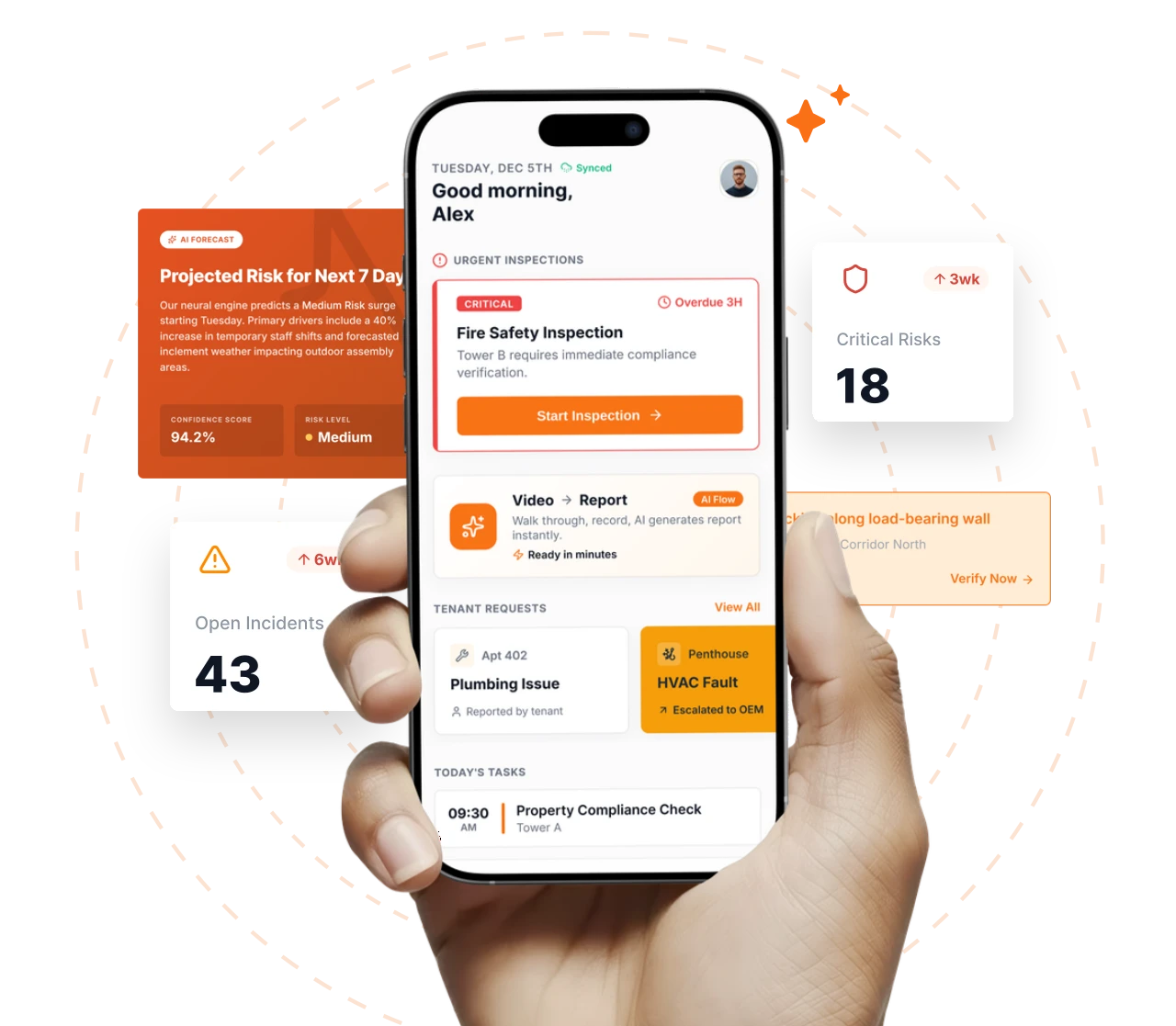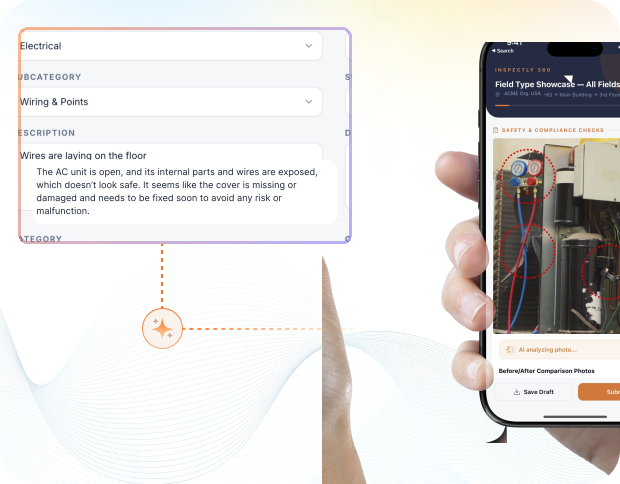
Take a Photo. AI Fills the Form
Your inspector takes a photo of any asset or defect. AI reads it and fills the inspection form automatically. No typing. No manual entry.

Convert your checklist into Mobile App
Facade inspection compliance software is the regulatory-proof layer beside the field facade platform: it carries the Building Safety Act 2022 Higher-Risk Building Gateway evidence, the EWS1 records, the Approved Document B fire safety compliance, the BS 8414 fire-performance certificate references, the cladding identification database, and the Defective Premises Act 1972 defence records.
Everything your field team does on paper, Inspectly360 does automatically: faster, more accurate, and without the admin.
Your inspector takes a photo of any asset or defect. AI reads it and fills the inspection form automatically. No typing. No manual entry.
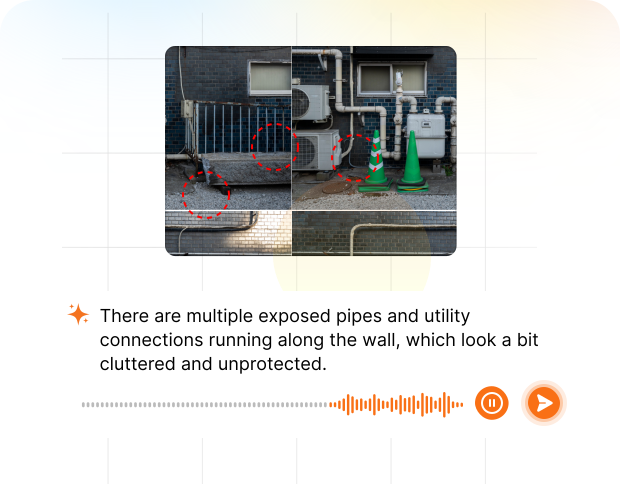
Inspectors speak their observations in any language. AI transcribes and fills the form in real time. Completely hands-free in the field.
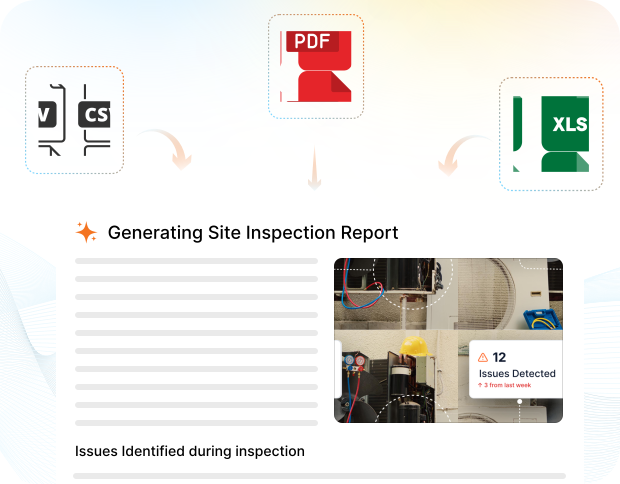
The moment an inspection is submitted, a branded PDF, Excel, or CSV report generates automatically. No manual work. No waiting.

Inspectly360 integrates with the tools your team already uses, including Zoho, Microsoft 365, and SAP. No double entry.
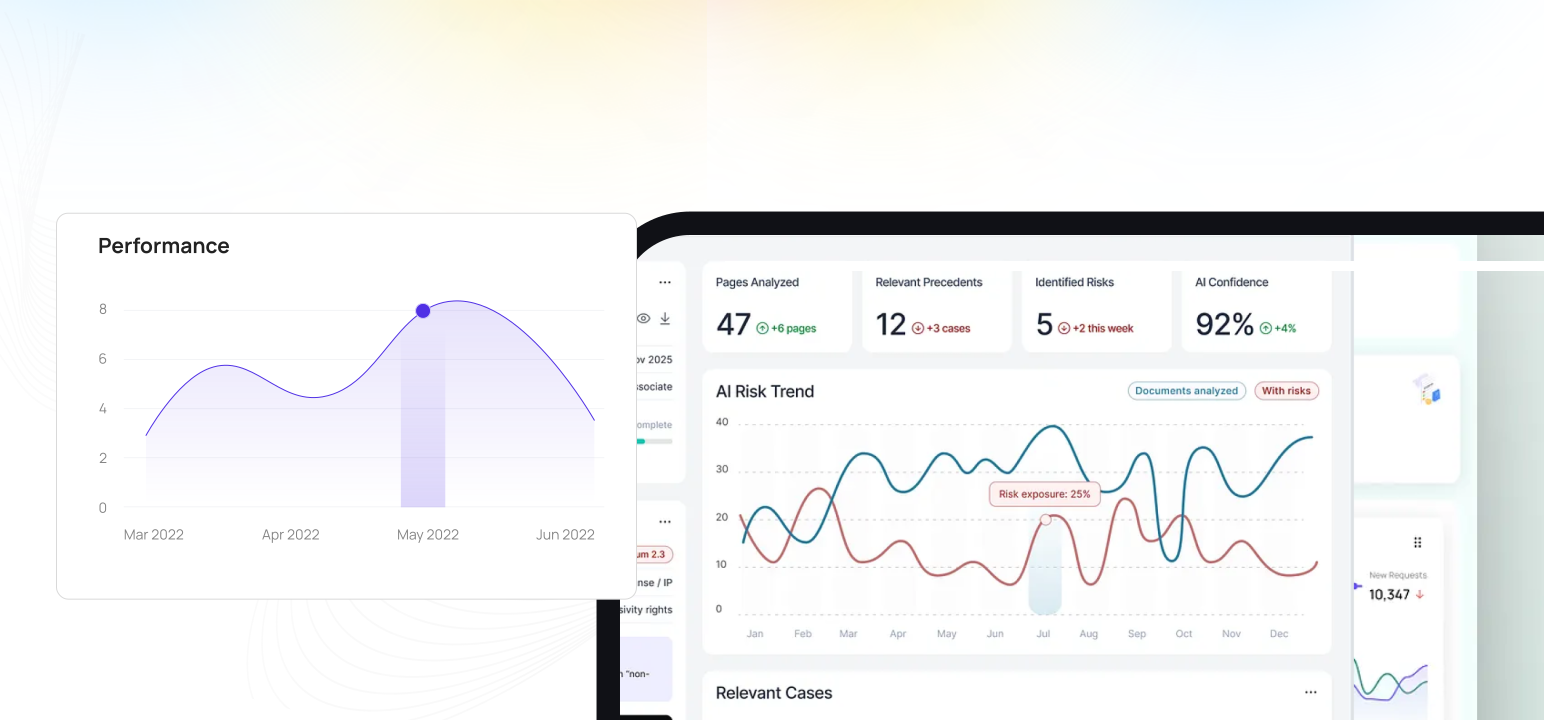
Your operations team sees completion rates, open issues, and compliance scores across all sites in real time. No chasing updates.
What changes once facade inspection compliance software runs on one mobile-first platform with photo proof and live dashboards.
Facade inspection compliance software is the regulatory-proof layer beside the field facade platform: it carries the Building Safety Act 2022 Higher-Risk Building Gateway evidence, the EWS1 records, the Approved Document B fire safety compliance, the BS 8414 fire-performance certificate references, the cladding identification database, and the Defective Premises Act 1972 defence records. Inspectly360 is built for Accountable Persons, building owners, FM directors, and corporate compliance officers who carry personal accountability for Higher-Risk Building safety, EWS1 lender review, and Defective Premises Act claim defence post-Grenfell.
For compliance programmes, the platform replaces paper facade compliance files, PDF statutory folders, and Excel compliance trackers with one defensible record aligned to Building Safety Act 2022, Defective Premises Act 1972 (as amended), EWS1 form requirements, Approved Document B (Fire Safety), BS 8414 large-scale fire test for non-loadbearing exterior cladding, BS 9414 facade fire performance, Hackitt Review recommendations, and local building regulation.
For the Accountable Person, the compliance record survives the full Defective Premises Act window (30 years for new claims under Building Safety Act 2022 amendments, 15 years for legacy retrospective claims) with audit-grade event logs that survive litigation hold.
Facade compliance runs a different cadence to field surveys; the five-step loop below is what Accountable Persons standardise.
Tag every facade template item with the regulatory framework it satisfies (Building Safety Act 2022 Higher-Risk Building obligations, EWS1 form requirements, Approved Document B clauses, BS 8414 test methodology, BS 9414 facade fire performance).
Higher-Risk Building Gateway cycles, EWS1 review cadence, Approved Document B annual reviews, BS 8414 test certificate renewal tracking, and mandatory occurrence reporting windows schedule against building programme dates.
Compliance facade inspections capture timestamped photos, geofenced location, named inspector identity (with PII Ind where required), and the statutory template version in force.
Building Safety Regulator Gateway submissions, EWS1 mortgage lender packs, Approved Document B compliance reports, BS 8414 certificate registers, and resident safety packs export from the same record.
Audit-grade event logs, statutory inspection records, cladding identification database, and CAPA closure trails preserve for the configured retention window.
Answers to common long-tail questions, kept on one canonical page to avoid thin duplicate URLs.
Inspectly360 sits as the Accountable Person's compliance-evidence layer beside the Building Safety Regulator's Gateway portal. The portal continues to run statutory Higher-Risk Building submissions. Inspectly360 produces the structured evidence the Accountable Person submits.
Accountable Persons should validate seven retention requirements: configurable retention per regulatory framework (30 years for new Defective Premises Act claims under Building Safety Act 2022, 15 years for legacy retrospective claims, 12 years residential JCT); audit-grade event logs that survive litigation hold; encrypted at-rest evidence; regional data residency aligned to UK GDPR; certified retention expiry; legal-hold flags; and bulk export to corporate archive systems.
Production facade compliance programmes carry resident PII, Accountable Person personal data, facade engineer PII Ind certifications, contractor data, and inspection evidence that the Building Safety Regulator, mortgage lenders, insurance auditors, and Defective Premises Act claimants may request decades later. Inspectly360 supports configurable retention, audit-grade event logs, encrypted at-rest evidence, regional data residency, and legal-hold flags.
Existing paper facade compliance files, PDF statutory folders, and Excel compliance trackers batch-import as searchable evidence against the same building. Historical cladding system identification, EWS1 forms, BS 8414 certificates, and remediation records seed from existing records.
The platform capabilities that power facade inspection compliance software across every site.
Accountable Persons and building owners comparing Inspectly360 to paper facade compliance files, PDF statutory folders, and Excel compliance trackers care about five things specific to facade compliance: whether Building Safety Act 2022 Higher-Risk Building Gateway submissions survive regulator review, whether EWS1 records meet mortgage lender requirements, whether Approved Document B fire safety obligations meet for residential buildings, whether BS 8414 fire-performance evidence ties to test certificates, and whether Defective Premises Act 1972 defence opens with original evidence decades later.
| Topic | Typical Gaps | With Inspectly360 |
|---|---|---|
| Building Safety Act 2022 Higher-Risk Building Gateway submissions | Higher-Risk Building Gateway documentation lives in disconnected systems. The Accountable Person cannot reliably produce the Golden Thread; Building Safety Regulator reviews surface evidence gaps repeatedly. | Higher-Risk Building Gateway evidence trails carry across construction and occupation phases with the Accountable Person assigned. The Golden Thread of information maintains. |
| EWS1 mortgage lender compliance | EWS1 forms exist as standalone PDFs. Mortgage lender review increasingly requires supporting evidence; the FM team scrambles to compile cladding identification, test certificates, and remediation records. | EWS1 forms generate with structured supporting evidence: cladding system identification per panel, BS 8414 test certificate references, ACM grade where applicable, named facade engineer PII Ind details, remediation history. |
| Approved Document B fire safety compliance | Approved Document B fire safety obligations for residential and commercial buildings live in commissioning documents. Subsequent facade alterations may inadvertently void compliance. | Approved Document B compliance parameters bind to the asset record. Facade alterations validate against current Approved Document B at submission. |
| BS 8414 fire-performance traceability | Cladding system fire-performance certificates live in PDF folders. After Grenfell, building owners discovered they did not know which BS 8414 test certificates applied to their cladding. | Every cladding system ties to manufacturer, product code, batch, BS 8414 / BS 9414 test certificate reference, test report number, and certifying body. |
| Defective Premises Act 1972 defence decades later | A Defective Premises Act claim arrives 25 years after construction; the building owner cannot find original survey records, the cladding identification, or the remediation history. The claim settles on cost because the evidence does not exist. | Configurable retention per Defective Premises Act window (30 years for new claims under Building Safety Act 2022 amendments, 15 years for legacy retrospective claims). Audit-grade event logs survive litigation hold. |
What changes once facade inspection compliance software is standardised on Inspectly360.
Get started with inspection and audit checklist templates.

Standard site-level inspections for construction, safety, and compliance. Capture conditions, photos, and follow-ups in one place.

Inspect assets and equipment: condition, location, photos, and maintenance history. Track condition over time.

Complete work orders with checklist items, photos, and sign-off. Track completion and proof of work.

Preventive and corrective maintenance inspections. Log repairs, parts, and condition with photos and follow-ups.
Use these apps to run inspections and audits.

by Inspectly360
Manage construction compliance workflows with documented evidence and audit-ready records.

by Inspectly360
Track construction compliance obligations, deadlines, and evidence trails across active sites.

by Inspectly360
Inspect facade with structured checks, photo evidence, and corrective action tracking.

by Inspectly360
Run facade inspections on phones and tablets with offline forms, photo evidence, and instant reports.
by Inspectly360
Execute construction apps workflows with field evidence capture and accountable follow-up actions.
For compliance purposes, Higher-Risk Buildings, meaning those over 18 metres or 7 storeys with residential use, must hold structured information through Gateway One (design intent), Gateway Two (construction completion), and Gateway Three (occupation with mandatory occurrence reporting). Inspectly360 carries that Gateway evidence trail with the Accountable Person named against it, so the duty-holder is explicit rather than assumed. The Golden Thread of information is maintained across the construction phase, the handover, and the in-use phase, so the compliance record is continuous rather than reset each time responsibility moves. For a compliance lead, this means the building's status against each Gateway is a live position on the dashboard rather than a question answered by digging through a project archive, and an upcoming obligation surfaces before it is missed.
For a mortgage lender review, the EWS1 form is generated with its structured supporting evidence attached rather than as a standalone PDF: cladding system identification per panel with manufacturer, product code, and batch; BS 8414 or BS 9414 test certificate references; ACM grade where applicable; the named facade engineer with PII Ind certification details; and the remediation history. A lender's review then opens with complete evidence rather than the bare form, which is what avoids the back-and-forth that stalls a sale or remortgage. Because the evidence is structured rather than buried in a report, a lender's specific query about one elevation or one panel type can be answered directly. The same pack serves leaseholders, valuers, and insurers, so one compliant record satisfies every party that asks.
Retention is configured per claim window: 30 years for new claims under section 1 of the Defective Premises Act 1972 as extended by the Building Safety Act 2022, 15 years for legacy retrospective claims, and 12 years for residential JCT contracts under the original 1972 windows. Audit-grade event logs survive any litigation hold placed during the full retention window, so the compliance record cannot be altered or purged while a claim is live. For a compliance lead, the value is that each building's evidence is kept automatically for exactly as long as the relevant claim window requires, without anyone tracking 30-year deadlines by hand. When a window finally closes, the record is purged under the corporate retention policy, with a certified export available first, so retention is neither indefinite by neglect nor cut short by error.
Approved Document B compliance parameters are bound to the asset record: fire-resistance ratings, compartmentation, fire barriers, escape routes, and fire-stopping at penetrations. Facade alterations are validated against the current Approved Document B at the point of submission, so a change that would compromise compartmentation or fire-stopping is caught before it proceeds rather than discovered in a later fire-safety review. Because the fire-safety parameters live on the asset record rather than in a design document on a shared drive, the compliance position of each elevation is a live, queryable fact. That matters most during refurbishment or re-cladding, which is exactly when uncontrolled facade changes drift a building out of Approved Document B compliance without anyone formally signing it off.
Every cladding system is tied to its manufacturer, product code, batch, BS 8414 large-scale test certificate reference, test report number, and certifying body, so the fire-performance basis of each system is recorded rather than assumed. The cladding identification database that results becomes the post-Grenfell Golden Thread, giving a compliance lead a single authoritative source for what is actually on each building. Where a system cannot be tied to a valid BS 8414 test, that gap is itself recorded as a compliance exposure rather than left ambiguous, which is precisely the situation lenders, insurers, and the Building Safety Regulator now probe. Because the data is held per system and per elevation, a question about one building's cladding can be answered from the record instead of by commissioning a fresh investigation.
Yes. Regulatory templates fork per jurisdiction: the UK Building Safety Act 2022 and Approved Document B, the EU EPBD energy directive, the US IBC, and the Australian NCC Section J. Each building carries the regulatory framework that applies to it, while a single corporate baseline holds the common facade-compliance criteria that every jurisdiction shares, so only the local requirements diverge. Compliance data lands in the region configured for the building, and portfolio dashboards aggregate compliance status across jurisdictions without moving raw records across borders. A compliance director gets one estate-wide view of which buildings are in date against their own local regime, while each building answers to its own regulator on its own terms, which is what an owner needs when one portfolio spans the post-Grenfell UK regime and very different overseas codes.
Facade Inspection Compliance Software on Inspectly360 connects directly to the inspection apps, checklist templates, forms, industries, and adjacent solutions linked below.
See Inspectly360 in action with a live demo tailored to your needs. No credit card required.