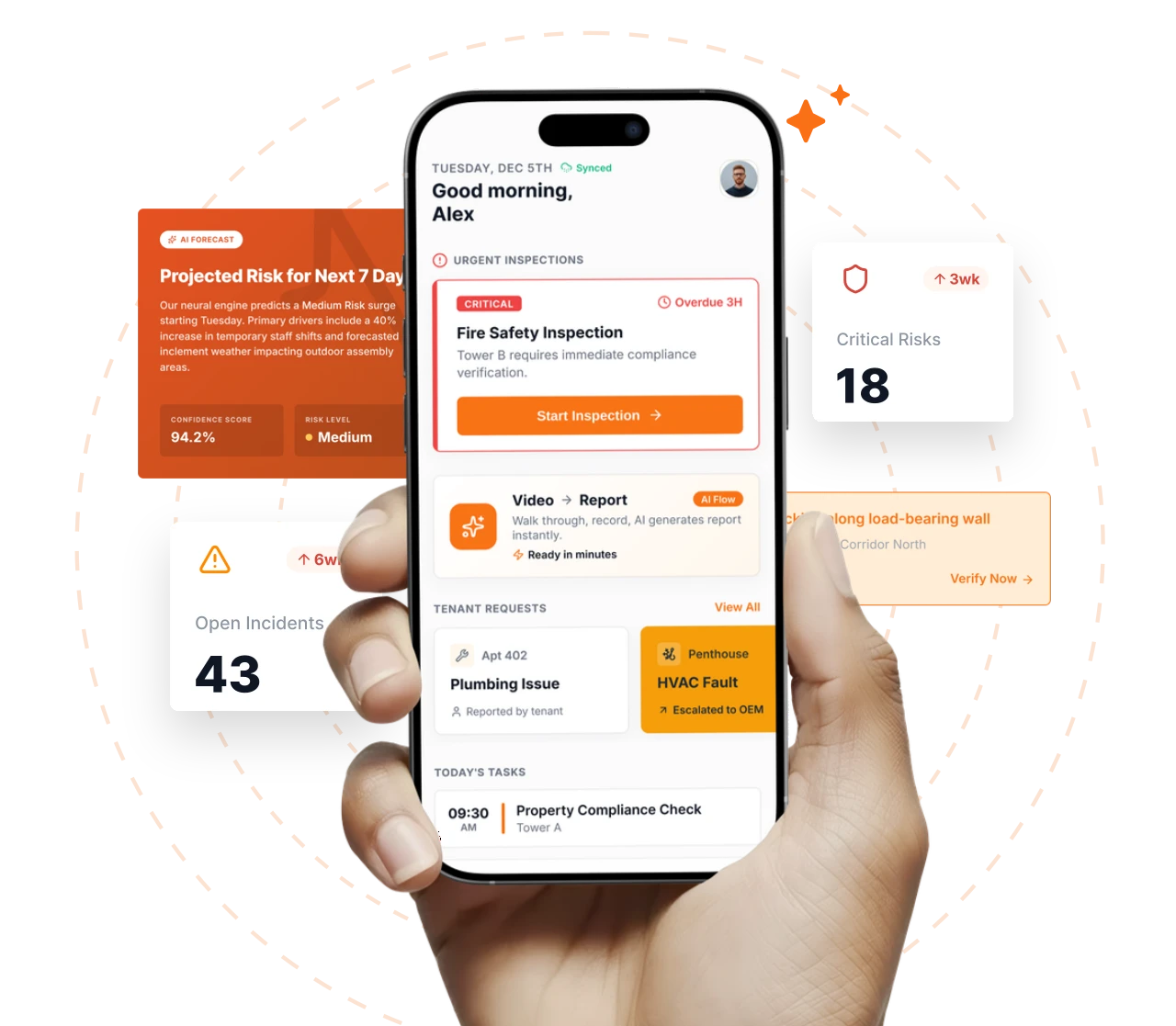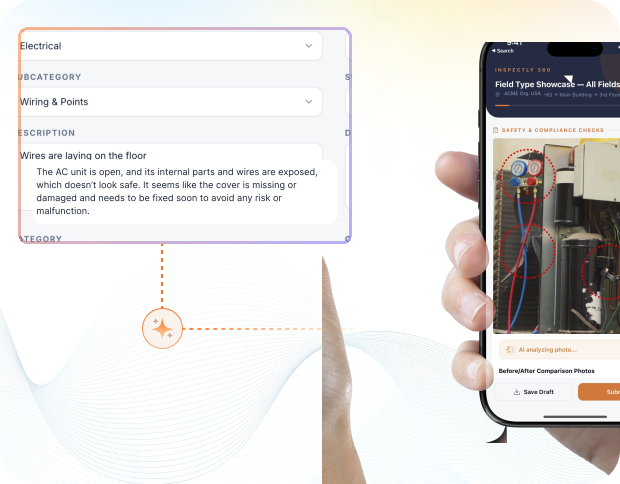
Take a Photo. AI Fills the Form
Your inspector takes a photo of any asset or defect. AI reads it and fills the inspection form automatically. No typing. No manual entry.

Convert your checklist into Mobile App
Snagging inspection audit software is a scored-audit system that turns the snag walk from a list-builder into a measurable, weighted, evidence-led programme aligned to ISO 9001 documented-information requirements, NHBC standards, and the project quality plan. Inspectly360 is built for quality directors, internal auditors, and contract administrators who need scored snag programmes that survive ISO 9001 surveillance, NHBC technical inspection, and JCT or NEC contract administrator review, and who carry personal accountability for the handover quality the field actually delivered.
Everything your field team does on paper, Inspectly360 does automatically: faster, more accurate, and without the admin.
Your inspector takes a photo of any asset or defect. AI reads it and fills the inspection form automatically. No typing. No manual entry.
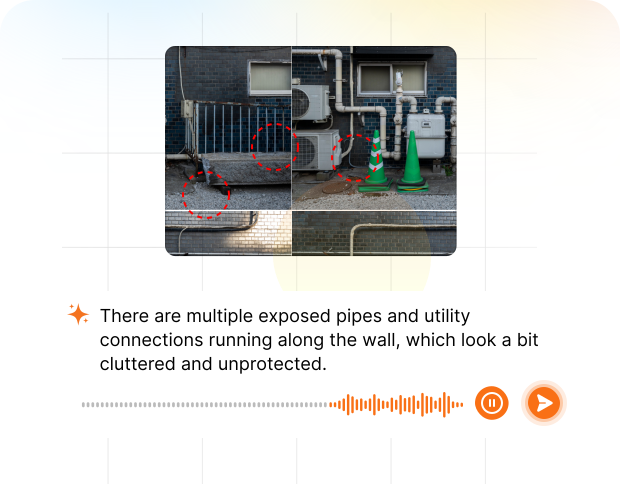
Inspectors speak their observations in any language. AI transcribes and fills the form in real time. Completely hands-free in the field.
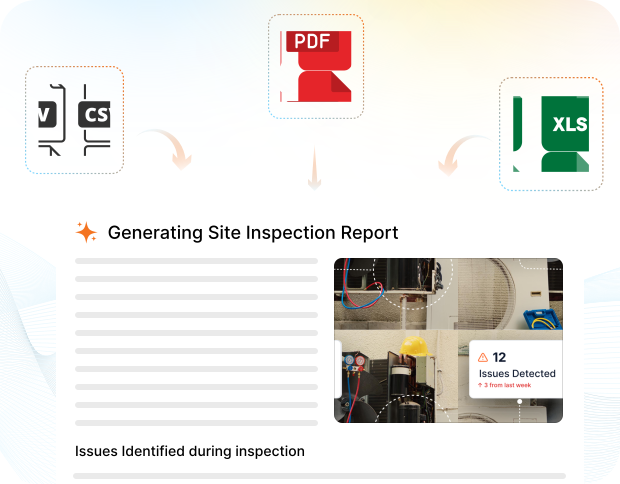
The moment an inspection is submitted, a branded PDF, Excel, or CSV report generates automatically. No manual work. No waiting.

Inspectly360 integrates with the tools your team already uses, including Zoho, Microsoft 365, and SAP. No double entry.
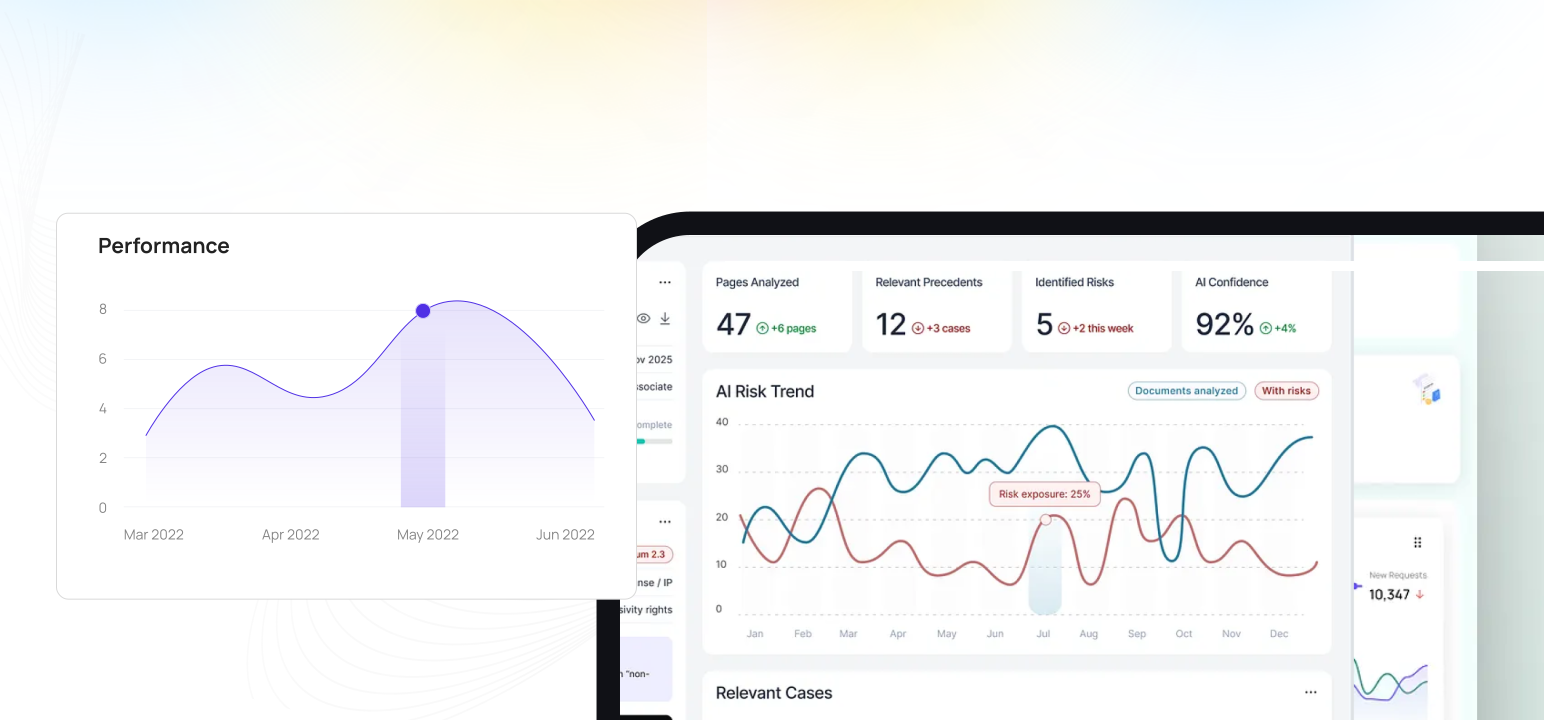
Your operations team sees completion rates, open issues, and compliance scores across all sites in real time. No chasing updates.
What changes once snagging inspection audit software runs on one mobile-first platform with photo proof and live dashboards.
Snagging inspection audit software is a scored-audit system that turns the snag walk from a list-builder into a measurable, weighted, evidence-led programme aligned to ISO 9001 documented-information requirements, NHBC standards, and the project quality plan. Inspectly360 is built for quality directors, internal auditors, and contract administrators who need scored snag programmes that survive ISO 9001 surveillance, NHBC technical inspection, and JCT or NEC contract administrator review, and who carry personal accountability for the handover quality the field actually delivered.
For the audit team, the platform replaces Excel audit workbooks, paper audit files, and ad-hoc photo galleries with weighted scoring per item and per section, critical-failure rules that force overall fail on flagged items, mandatory photo evidence at capture, and a closed-loop CAPA workflow that requires verified closure rather than asserted closure. The score the contract administrator sees on the audit PDF is the score the audit programme built from the field record, not a number reconstructed at the end of the audit cycle.
For the quality director, scored audit results aggregate by project, by trade, by subcontractor, and by contract type. Repeat findings surface across projects. CAPA closure rates per trade become the leading indicator of subcontractor performance. The next ISO 9001 surveillance audit opens with audit-grade event logs and CAPA closure trails ready, not with a Friday-afternoon compile cycle.
Scored snag audits follow a more disciplined cadence than field snag walks. The five-step loop below is what quality directors standardise across projects.
Author weighted audit templates per project type (residential JCT, commercial NEC, infrastructure FIDIC, residential NHBC) with item weights, section weights, and critical-failure rules. The library lives in version control with named approvers and a change audit trail aligned to ISO 9001 documented-information requirements.
Audits schedule against quality plan milestones (foundation audit, structural audit, MEP audit, finish audit, pre-handover audit, post-handover audit). Each audit carries its own scored template, its own audit window, and its own named auditor.
Auditor runs the scored walk on the device. Every finding requires photo evidence with minimum count, required angle, and AI defect categorisation at capture. Submissions that lack required evidence are rejected at submission; the dispute trail stays defensible.
Audit findings auto-route to named owners with deadline, severity-matched verification, and photo-verified closure. Critical findings escalate to the construction director and the contract administrator. Repeat findings carry the full audit history rather than appearing as fresh issues.
Scored audit PDFs export with the evidence index, the CAPA trail, and the version of the audit template in force. Portfolio dashboards aggregate scored results across projects, trades, and subcontractors, which is what informs next-cycle procurement decisions.
Answers to common long-tail questions, kept on one canonical page to avoid thin duplicate URLs.
Start with one scored audit template on one project type at one stage (typically the pre-handover audit on a single residential block, where the snag volume is high but the handover date is still negotiable). Run two cycles in parallel with the existing Excel audit; measure auditor cycle time, finding-evidence completeness, and CAPA closure rate against the corporate quality plan. Layer the weighted scoring once the master template is trusted, switch on critical-failure rules once the closure workflow is established, and roll the validated audit template to similar projects in waves rather than mandate it across the portfolio in one cycle.
Quality and IT should validate seven enterprise audit requirements: SSO via SAML or OIDC; RBAC scoped to project, audit template, and auditor role; offline mobile capture verified on a real audit walk rather than a demo room; configurable retention aligned to ISO 9001 documented-information requirements (commonly 7 years, longer for residential JCT 12-year DLP); regional data residency for global operators; audit-grade event logs that survive litigation hold; and the documented integration path into the project management and quality stack already in place. Validate these during the pilot rather than after; they are the most common late-stage disqualifiers when teams skip them up front.
Production scored audit programmes carry client purchaser data, subcontractor PII, audit findings, and CAPA trails that ISO 9001 surveillance auditors, NHBC technical inspectors, and contract administrators may request years later. Inspectly360 supports configurable retention per contract type, audit-grade event logs (who edited which audit template, who approved which version, who closed which finding, who reviewed which CAPA), encrypted at-rest evidence, and regional data residency. Audit-grade event logs are append-only and survive litigation hold, which is what mature QMS programmes need at customer-audit time.
Existing Excel audit workbooks, paper audit files, and ad-hoc photo galleries batch-import as searchable evidence against the same project, block, and unit. Historical audit findings carry forward as closed CAPA items with the original evidence attached. The corporate audit template library publishes to active projects on the effective date; projects already in audit continue with the version in force at audit time, which is what protects ISO 9001 documented-information requirements during the transition.
The platform capabilities that power snagging inspection audit software across every site.
Quality directors comparing Inspectly360 to Excel audit workbooks, paper audit files, and generic forms apps care about five things specific to scored snag auditing: whether weighted scoring reflects real handover risk, whether photo evidence is enforced at the source, whether CAPA actually closes verified rather than asserted, whether audit findings survive ISO 9001 surveillance, and whether scored programmes roll up across projects to drive procurement decisions.
| Topic | Typical Gaps | With Inspectly360 |
|---|---|---|
| Weighted snag audit scoring | Snag audit scores are flat percentages from Excel checklists. A 95% score on a unit with one critical structural snag looks identical to a 95% score on a unit with 50 minor finish defects. The score does not distinguish handover-blocking issues from cosmetic ones. | Weighted scoring per item and per section; critical-failure rules force overall fail when a flagged item fails regardless of total. NHBC critical defects, JCT material breaches, and project quality plan critical items carry the right weight in the score the contract administrator sees. |
| Photo evidence enforcement on audit findings | Audit findings are recorded as text in Excel. Photo evidence is suggested but not enforced; the auditor moves on under handover pressure. Six months later the DLP claim arrives and the photo that would have closed the dispute does not exist. | Photo evidence is mandatory per audit finding with minimum count, required angle, AI defect categorisation at capture, and on-device watermark. Audit findings without evidence cannot submit; the dispute trail stays defensible. |
| Closed-loop CAPA on audit findings | Audit findings get assigned in an email; nobody owns closure; the next audit re-discovers the same finding because the corrective action was never verified. Repeat findings become the dominant pattern, and the audit programme loses credibility with the project team. | Every audit finding routes to a named owner with deadline, severity-matched verification, and photo-verified closure. Repeat-finding rate drops because closure is verified, not asserted, and the audit programme earns the credibility that drives next-cycle behaviour. |
| ISO 9001 and NHBC audit defensibility | ISO 9001 surveillance auditors and NHBC technical inspectors ask for documented information; the QC team scrambles to compile Excel audit workbooks, photo galleries, and CAPA trails from different folders. Surveillance findings on evidence gaps surface repeatedly. | Audit-grade event logs, versioned audit templates, scored audit history, and CAPA closure trails export in one click. ISO 9001 documented-information requirements meet; NHBC technical inspections open with proof rather than narrative. |
| Scored audit rollup across the portfolio | Each project produces its own audit score in its own workbook. The quality director compiles across projects on Friday afternoons; portfolio-wide audit trends are reconstructed weeks after they happened. | Portfolio dashboards aggregate scored audit results by project, by trade, by subcontractor, and by contract type in real time. Procurement, quality, and operations see the same scored trend, which is what drives the next tender qualification round. |
What changes once snagging inspection audit software is standardised on Inspectly360.
Get started with inspection and audit checklist templates.

Catch defects before handover and generate punch list reports in minutes. Room-by-room finish checks, evidence, and corrective actions.

Pre-handover snagging for new build apartments. Room-by-room finish checks, MEP, and defect tracking before keys.

Utilize this Scaffolding Safety Inspection Checklist to spot hazards, verify stability, and ensure compliance with safety standards before work begins.

Capture job details, measurements, work performed, photos, and sign-offs in one structured field service report form.
Use these apps to run inspections and audits.
by Inspectly360
Audit snagging programmes with weighted scoring, photo evidence, and corrective action tracking across sites.

by Inspectly360
Execute construction audits with structured findings, assignment tracking, and verified closure.
by Inspectly360
Run programme and package audits with weighted apps, findings, actions, and client-ready summaries.

by Inspectly360
Run snagging inspections with structured punch lists, photo mark-ups, and verified closure across handover projects.
by Inspectly360
Run construction quality assurance workflows with inspection evidence, review controls, and closure tracking.
Each audit item carries a configurable weight (commonly 1-10 or low-medium-high-critical). Section weights aggregate item scores so a 30-item structural audit section can outweigh a 60-item cosmetic finish section. Critical-failure rules attach to flagged items: any critical-item fail forces an overall fail regardless of total score, which is what makes the score meaningful at handover. A 95% audit score on a unit with one critical structural snag and a 95% on a unit with 50 minor finish defects are not the same handover outcome, and weighted scoring is how the contract administrator distinguishes them.
Each audit item supports photo-evidence rules: minimum photo count, maximum count, required angle (front, top, side, close-up), mandatory AI defect categorisation, on-device watermark, and required mark-up annotation. The submission flow rejects findings that lack required evidence rather than warning then accepting; the auditor cannot complete the audit until evidence is in place. For audits where signal is unavailable, validation runs locally on the device so the rule holds offline. The audit-trail event log records every evidence rule that fired and how it was satisfied.
Audit findings auto-route to a named owner based on trade, severity, and project assignment. The owner receives the finding with deadline, severity-matched verification rules, and required closure evidence. Verified closure means photo-evidence upload, severity-matched approval (a critical finding may require a third-party inspector approval, a minor finding may require only the package PM), and a final verification by the auditor or quality director. Asserted closure (subcontractor says they fixed it, PM accepts the word for it) does not pass verified closure; that is what stops the same finding from appearing again at the next audit.
ISO 9001 surveillance auditors expect documented information governance: versioned templates, approval workflows, change audit trails, internal audit evidence, and CAPA closure trails. Inspectly360 produces all of these as audit-grade event logs that export in one click. NHBC technical inspectors look for evidence against NHBC Standards: scored audit history per unit, photo evidence per finding, CAPA trails for closed defects, and version control on the residential audit templates in force at audit time. The platform produces both bodies of evidence from the same data captured during the original audit walk.
Yes. Portfolio dashboards aggregate scored audit results by project type, by trade, by named subcontractor, by contract framework, and by audit cycle. Trend analysis surfaces repeat findings across projects (a subcontractor whose paint defect rate runs 12% across three projects versus the 3% portfolio average). CAPA closure rate per trade becomes a leading indicator of subcontractor performance. Procurement uses the scored portfolio data to qualify the next tender list, which changes subcontractor selection from a relationship-led process to an evidence-led one.
When the same finding appears against the same unit, the same trade, or the same component, the platform surfaces the original audit history rather than treating it as fresh. The owner sees the original photos, the original CAPA, the original closure photos, and the auditor's reason for re-opening. Repeat-finding rate per trade and per subcontractor surfaces on the portfolio dashboard, and repeat-defect patterns trigger AI alerts so the construction director sees the trend before it consumes the next handover timeline. Fresh findings carry no prior context; repeat findings carry full history, and the distinction matters for procurement.
Snagging Inspection Audit Software on Inspectly360 connects directly to the inspection apps, checklist templates, forms, industries, and adjacent solutions linked below.
See Inspectly360 in action with a live demo tailored to your needs. No credit card required.