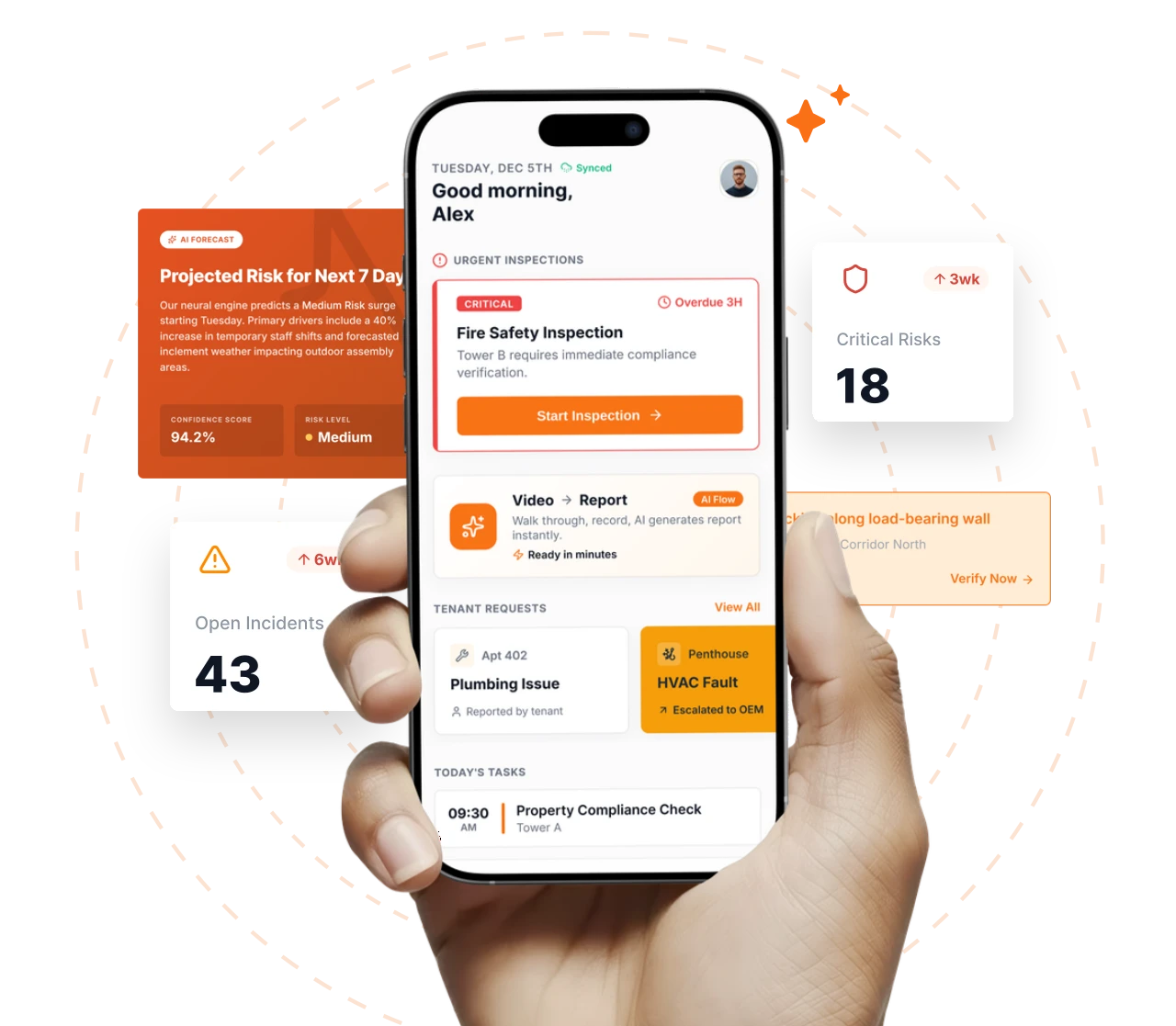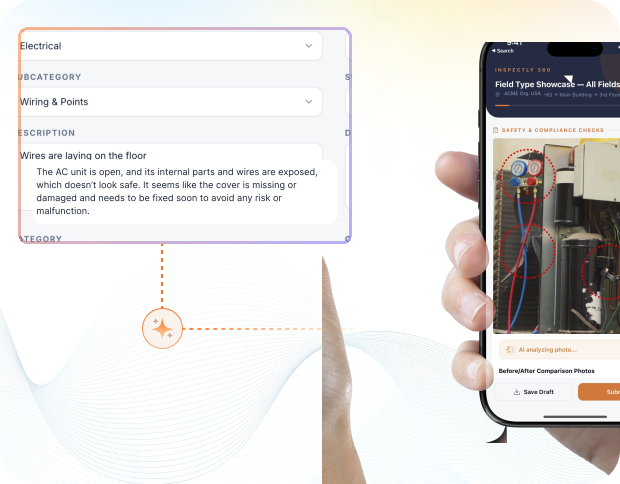
Take a Photo. AI Fills the Form
Your inspector takes a photo of any asset or defect. AI reads it and fills the inspection form automatically. No typing. No manual entry.

Convert your checklist into Mobile App
Building inspection compliance software is the platform building owners, developers, and property compliance leads use to prove that the statutory inspections each building depends on actually happened, with the right evidence, at the right time, by the right person. Inspectly360 turns fire safety NOCs, lift licences, electrical safety certificates (EICR), gas safety certificates, occupancy certificates, RERA handover obligations, and energy performance certifications into mobile-ready inspections with required photos, digital attestations, and immutable timestamps retained per building per obligation.
Everything your field team does on paper, Inspectly360 does automatically: faster, more accurate, and without the admin.
Your inspector takes a photo of any asset or defect. AI reads it and fills the inspection form automatically. No typing. No manual entry.
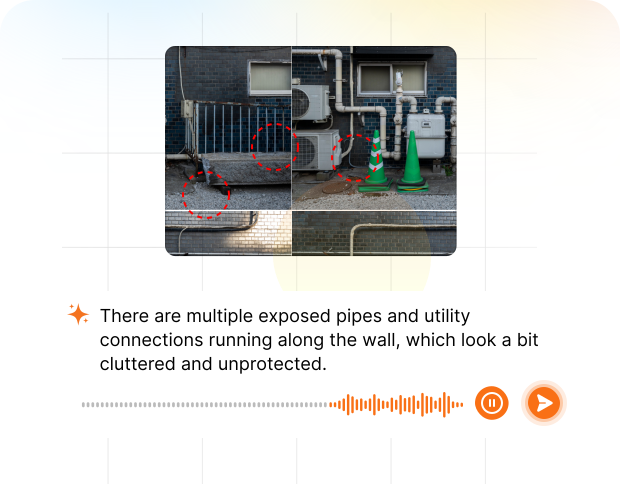
Inspectors speak their observations in any language. AI transcribes and fills the form in real time. Completely hands-free in the field.
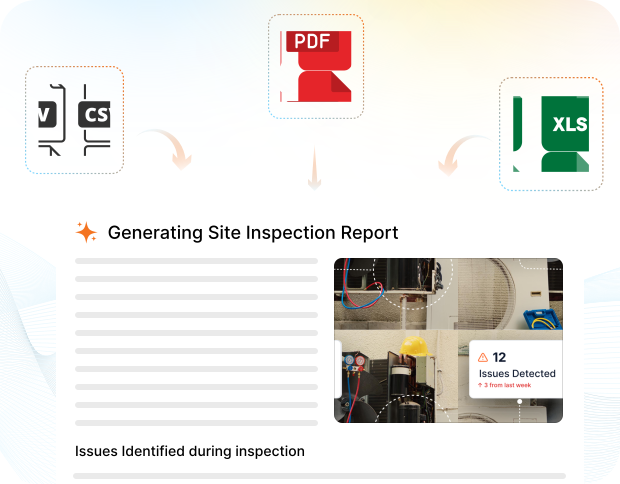
The moment an inspection is submitted, a branded PDF, Excel, or CSV report generates automatically. No manual work. No waiting.

Inspectly360 integrates with the tools your team already uses, including Zoho, Microsoft 365, and SAP. No double entry.
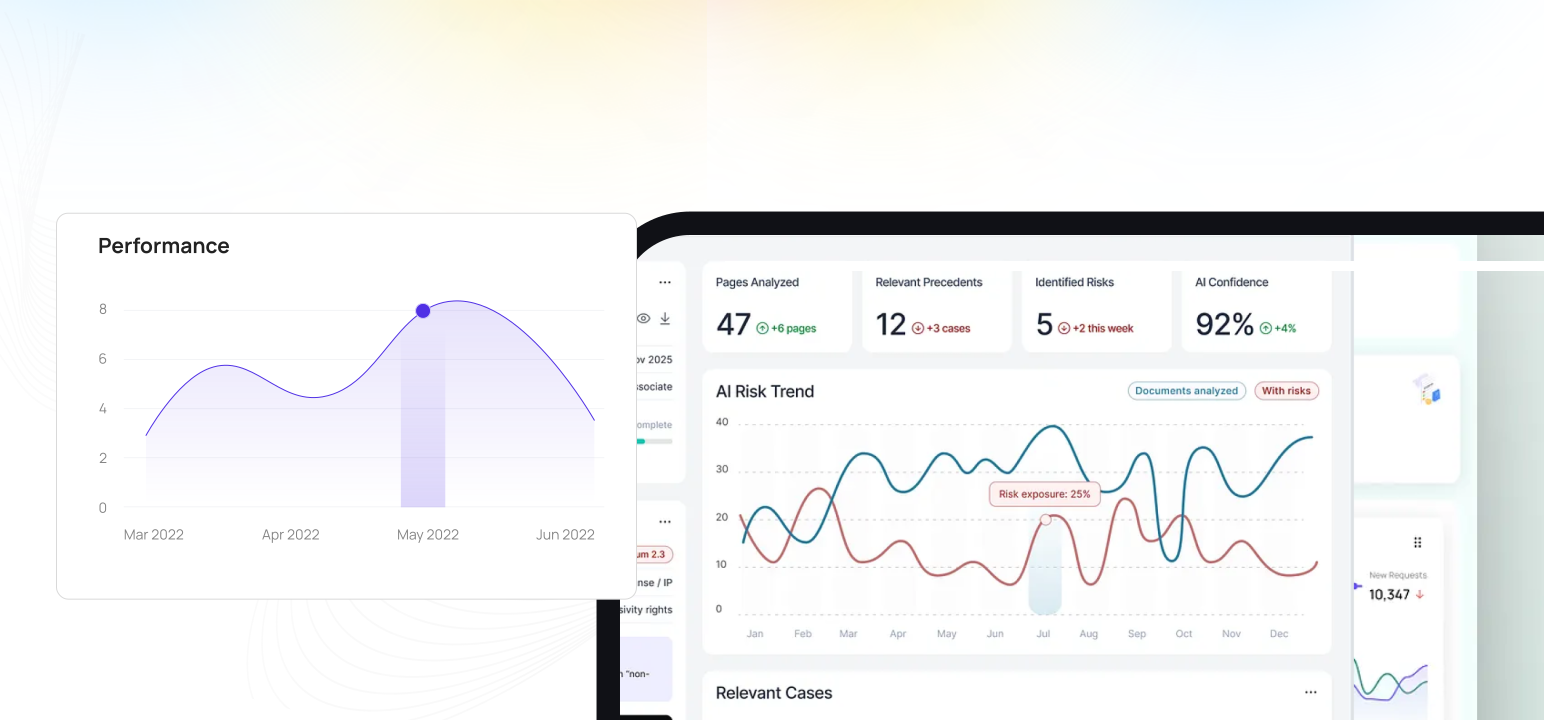
Your operations team sees completion rates, open issues, and compliance scores across all sites in real time. No chasing updates.
What changes once building inspection compliance software runs on one mobile-first platform with photo proof and live dashboards.
Building inspection compliance software is the platform building owners, developers, and property compliance leads use to prove that the statutory inspections each building depends on actually happened, with the right evidence, at the right time, by the right person. Inspectly360 turns fire safety NOCs, lift licences, electrical safety certificates (EICR), gas safety certificates, occupancy certificates, RERA handover obligations, and energy performance certifications into mobile-ready inspections with required photos, digital attestations, and immutable timestamps retained per building per obligation.
The problem most building compliance programmes face is per-building evidence fragmentation. Statutory records live in different binders per building, different drives per property manager, and different vendor inboxes per contractor. When a fire safety officer visits one building, the compliance lead scrambles through that building's evidence. When a lender reviews a refinance, the due-diligence team reconstructs years of records across the portfolio. Inspectly360 ends the fragmentation by holding all statutory evidence per building per obligation in one queryable record.
The outcome is per-building compliance readiness as a default state. RERA defect liability claims meet structured evidence. Occupancy certificate evidence retrieves cleanly on resale or refinance. Multi-jurisdictional portfolios stay regulatorily consistent per region without losing portfolio rollup. Authority visits get the evidence they need in seconds; lender due-diligence gets it in minutes.
Most building compliance programmes follow this rollout sequence before expanding to the full statutory footprint per building.
Inventory statutory obligations per building: fire NOC, lift licence per lift, EICR or electrical safety per panel, gas safety per fitting, occupancy certificate, RERA handover documentation, energy performance certificate, planning-permission conditions. Each obligation records jurisdiction, regulator, renewal cadence, and evidence requirement.
Translate each obligation into a mobile template with required photos, measurement fields where the regulator demands them, attestation rules, and conditional branches. Residential buildings inherit residential statutory templates; commercial inherit commercial; mixed-use inherits both.
Inspectors capture photos, scan QR codes on lifts and electrical panels, and digitally sign attestations offline. Every record carries timestamp, geolocation, inspector identity, building reference, and signed chain of custody from capture to retention.
Fire NOC, lift licence, EICR, gas safety, and energy performance renewals trigger 90, 60, 30-day alerts to named owners per building. The workflow tracks submission, regulator response, and the renewed certificate back into the building's obligation register.
Compliance Risk Scoring ranks buildings by missed inspections, overdue CAPAs, and document expiry. Authority submission packs export per building, per obligation, per date in one click when a fire safety officer, lift inspector, or insurer arrives.
Answers to common long-tail questions, kept on one canonical page to avoid thin duplicate URLs.
RERA-specific templates cover the handover snag list, the move-in checklist, defect liability period inspections (typically 12 months from handover for finishing, 5 years for structural), and the statutory documentation a builder must produce per RERA. The platform retains immutable, timestamped photo evidence per unit, per common area, per amenity, retained through the full RERA liability window. When a buyer raises a defect during the liability period, the relevant inspection record retrieves within seconds rather than reconstruction. RERA filings and authority submissions export with the full evidence chain attached.
Templates are scoped per jurisdiction. An Indian building runs RERA, state-specific fire NOC, lift licence under the local Lifts and Escalators Act, and occupancy certificate. A UK building runs EICR, gas safety per the Gas Safety Regulations, energy performance certification, fire safety per the Regulatory Reform (Fire Safety) Order, and accessibility under the Equality Act. A UAE building runs Civil Defence requirements, lift maintenance per local code, and accessibility. A US building runs OSHA-style records, ADA accessibility, occupancy code, and local building code. Regional RBAC keeps regional compliance teams in their lane; portfolio rollup preserves jurisdictional context.
Occupancy certificates are the building-level statutory pivot point: granted at construction completion, referenced at every subsequent transaction (resale, refinance, conversion, change of use). Inspectly360 retains the occupancy certificate alongside the underlying inspection chain (structural sign-off, fire safety verification, electrical certification, water and sanitation) so that when a refinance lender, an acquiring investor, or a planning authority requests verification, the full evidence chain pulls in seconds. Conversion and change-of-use applications draw on the same evidence chain so the regulator review starts on structured evidence rather than reconstruction.
Lender due diligence on refinance, securitisation, or acquisition typically requires statutory evidence going back five to ten years. Inspectly360 retains per-building statutory evidence with configurable retention windows (default aligned to lender expectations, extended for jurisdictions like RERA that mandate longer periods). The chain-of-custody log records every event: capture, approval, retention policy applied, export events. Lender auditors granted scoped time-bound access to the due-diligence scope pull the evidence directly rather than receiving curated email packages. This typically compresses due-diligence timelines from weeks to days.
The platform capabilities that power building inspection compliance software across every site.
Building owners, developers, property compliance leads, and lender relationship teams comparing Inspectly360 to GRC modules, statutory tracking spreadsheets, and generic compliance apps see the difference fastest on five dimensions: RERA defect liability defensibility, occupancy certificate evidence depth, statutory deadline visibility per building, authority record retrieval speed, and multi-jurisdiction statutory mapping across global building portfolios.
| Topic | Typical Gaps | With Inspectly360 |
|---|---|---|
| RERA defect liability defensibility | Move-in inspection photos in tenant phones; RERA defect liability disputes contested with verbal memory. Builders lose claims they could have defended with structured evidence. | Move-in and move-out photo evidence with tenant and owner signatures, timestamped per unit, retained through the RERA liability window. Defect liability claims meet structured evidence. |
| Occupancy certificate evidence | Occupancy certificate evidence scattered across municipal corporation files, builder drives, and email threads. Verification on resale or refinance takes weeks of reconstruction. | Occupancy certificate evidence retained per building with the underlying inspection chain (structural, fire, electrical, water) intact for resale, refinance, or authority verification. |
| Statutory deadline visibility per building | Fire NOC, lift licence, electrical certificate, and occupancy certificate dates in property manager spreadsheets. Renewals lapse silently per building between cycles. | Statutory dates per building with renewal alerts 90, 60, and 30 days before expiry. Compliance Risk Scoring ranks buildings before authorities visit or lender reviews land. |
| Authority record retrieval | Fire safety officer or lift inspector visits trigger binder hunts. Evidence reassembly takes hours while the inspector waits or returns with an enforcement notice. | Inspection history filters per building, per obligation, per date in seconds. Authority submission packs export with full evidence trail in one click. |
| Multi-jurisdictional statutory mapping | Indian buildings under RERA and fire NOC, UK buildings under EICR and gas safety, US buildings under occupancy code, UAE buildings under Civil Defence. Each jurisdiction runs different workflows. | Jurisdiction-specific obligation registers per building scope. Portfolio dashboards roll up statutory risk without losing local regulatory context. |
What changes once building inspection compliance software is standardised on Inspectly360.
Get started with inspection and audit checklist templates.
This checklist is designed for conducting thorough workplace inspections to identify hazards and ensure compliance with safety regulations. It promotes...

This template is used to conduct a fire extinguisher inspection every 30 days to determine if the equipment meets the...
Use these apps to run inspections and audits.

by Inspectly360
Compliance-focused inspections with evidence and audit trails.

by Inspectly360
Building condition and compliance inspections with evidence and follow-ups.

by Inspectly360
Fire safety inspections with extinguisher, exit, and alarm checks.

by Inspectly360
Streamline facilities inspections with forms, photos, and reports.

by Inspectly360
Audits and inspections with scoring, evidence, and reports.
RERA proof packs assemble the structured statutory evidence a builder must produce for RERA authority filings and that a buyer needs for defect liability disputes. The pack covers the handover snag list with photo evidence per unit, the move-in checklist with tenant and owner signatures, defect liability period inspections through the 12-month finishing and 5-year structural windows, and the supporting documentation (occupancy certificate, fire NOC, structural sign-off, completion certificate). Inspectly360 generates the pack in one click with timestamps, signatures, and chain of custody intact. The pack is RERA authority-ready and serves as defensible evidence for both builder and buyer in any subsequent dispute.
Occupancy certificates anchor every subsequent building transaction. Inspectly360 retains the occupancy certificate alongside the full underlying inspection chain (structural sign-off, fire safety verification, electrical certification, water and sanitation, building code compliance, planning condition satisfaction) per building. When a refinance lender, an acquiring investor, or a planning authority requests verification, the full evidence chain pulls in seconds rather than weeks of reconstruction. Change-of-use applications (residential to commercial, conversion to short-stay) draw on the same chain so the regulator review starts on structured evidence rather than memory.
Each building's fire NOC carries its own obligation record: issue date, expiry date, issuing authority, fire safety officer's recommendations, and the pre-audit inspection programme that must run before each renewal. In jurisdictions with annual renewal (most Indian states, several UAE jurisdictions), the renewal workflow fires 90 days before expiry: schedule pre-audit, run NFPA-aligned or local fire code aligned pre-audit programme, close any open findings, prepare submission pack, submit to fire department, track response. If the regulator requests remediation, the workflow loops back. The renewed NOC certificate uploads against the building's obligation record. This pattern repeats every renewal cycle.
Electrical inspection cycles vary by jurisdiction: EICR in the UK runs 5-year cycles for commercial buildings and at change of tenancy for residential; Indian electrical safety inspections typically run annually for commercial; US electrical inspections follow local code. Each building's electrical inspection obligation carries the cycle, the assigned electrical contractor, the inspector certification requirement, and the certificate retention rule. The platform schedules each cycle automatically, tracks the inspection through completion, retains the signed certificate, and surfaces upcoming cycles 90, 60, 30 days before due. Failed electrical findings escalate per severity (Category 1 immediate, Category 2 within 28 days, etc).
Every lift in a building carries its own asset record with the lift licence number, statutory inspection cadence (typically annual or biannual depending on jurisdiction), assigned AMC vendor and certified inspector, last inspection date, next due date, and certificate file. A 30-storey commercial building with eight lifts has eight separate obligation records, each with its own renewal cycle and inspection history. The platform alerts the building manager and the lift AMC vendor 60 and 30 days before each statutory inspection, schedules automatically, and tracks the signed certificate back into the lift's asset record. The building dashboard ranks lifts by days-to-next-inspection so the manager sees the rolling renewal pipeline per lift.
Yes. Planning-permission conditions that carry ongoing compliance obligations (operational hours, deliveries, noise monitoring, environmental management, parking arrangements, signage limitations, refuse management) attach to the building as a compliance programme. The platform tracks each condition with its monitoring cadence, the evidence requirement, and the responsible owner. Compliance evidence accumulates per condition over time and supports planning enforcement defence if the local authority queries adherence. This is particularly relevant for hospitality, retail, and mixed-use buildings where planning conditions can include 20 or more ongoing obligations beyond the construction-completion sign-off.
Building Inspection Compliance Software on Inspectly360 connects directly to the inspection apps, checklist templates, forms, industries, and adjacent solutions linked below.
See Inspectly360 in action with a live demo tailored to your needs. No credit card required.